The Musings of Jaime David
@jaimedavid.blog@jaimedavid.blog

The writings of some random dude on the internet

1,089 posts
1 follower

Month: December 2025

  • Courage in the Unknown: Doing Hard Things While Afraid

    Courage in the Unknown: Doing Hard Things While Afraid

    There is a strange power in choosing to act while fear is present. Fear, after all, is a natural and unavoidable part of life. It signals risk, potential pain, and uncertainty, but it does not have to be a stop sign. One of the most profound realizations I have had in life is that the moments that shape us most often come not from certainty or careful planning, but from stepping into situations we cannot fully control, into challenges that loom large and intimidating, and doing so with our hearts racing and our minds uncertain. The act of doing something hard, precisely because it is hard, is transformative—not because the fear disappears, but because we learn to move in spite of it.

    Fear has a way of exaggerating possibilities. When facing a difficult choice or a daunting task, the mind constructs worst-case scenarios that feel tangible, immediate, and paralyzing. We imagine failure in vivid detail: the embarrassment, the disappointment, the doors that might close forever. Yet stepping forward even when these thoughts are present is a statement of courage. It is the conscious decision to prioritize growth, experience, and self-trust over the mind’s dramatization of danger. In a sense, doing the hard thing while afraid is a rebellion against the tyranny of our own imagination. It acknowledges the fear, respects it, but refuses to let it dictate the boundaries of what is possible.

    Perhaps the most humbling aspect of this process is that there is no blueprint. Life does not hand us clear instructions for navigating every difficult choice or uncertain endeavor. Often, the path forward is a foggy one. We do not know how things will unfold, and planning, while useful, can only take us so far. This requires a certain faith—not necessarily religious faith, but a trust in the resilience of life itself, in our own adaptability, and in the possibility that even if outcomes are not ideal, they are rarely as catastrophic as we predict. We discover that our capacity to cope, to adjust, and to find unexpected solutions is greater than we imagined. Every step taken without certainty becomes a testament to our resourcefulness and determination.

    Uncertainty, surprisingly, can carry a subtle thrill. There is something undeniably exhilarating about stepping into the unknown, about feeling that mix of nervousness and anticipation that pulses through the body when the outcome is unclear. It awakens a sense of aliveness, a heightened awareness that is difficult to replicate in safe, predictable situations. The mind is sharper, the senses are more alert, and even the simplest actions feel charged with intensity. Fear and excitement often coexist in these moments, intertwining in a way that makes the experience deeply compelling. It is not just courage that emerges—it is the sensation of truly feeling alive, of engaging with life at its most raw and immediate level.

    The process of moving forward despite fear is not a linear one. Fear does not magically disappear once action begins; it often persists, and sometimes it intensifies. But each small act of courage, each decision to engage with the hard, the unfamiliar, or the intimidating, chips away at its power. Over time, a pattern emerges: the things that once seemed insurmountable gradually become manageable, the unknown becomes less terrifying, and our confidence in our ability to face uncertainty grows. This is the paradox of courage: it is not the absence of fear, but the choice to act in its presence, and with each choice, fear loses a little of its grip.

    Faith in uncertainty also transforms the way we perceive outcomes. When we accept that results may be unpredictable, we open ourselves to possibilities that rigid expectations would block. Success might look different than imagined, and failure might be less destructive than feared. There is freedom in this ambiguity. By acting despite not knowing, we engage with life in a fuller, more authentic way, unshackled from the constraints of imagined worst-case scenarios. Even if we fail, we gain insight, resilience, and often a sense that the consequences were survivable, manageable, and even instructive. Fear becomes a teacher rather than a jailer.

    It is also worth noting that doing hard things while afraid builds a profound sense of self-trust. We learn to rely not solely on preparation or external validation, but on our inner capacity to navigate uncertainty. This trust is empowering; it allows us to step into new challenges with the knowledge that, regardless of outcome, we are capable of handling what comes. It is a reminder that life rarely unfolds in neat, predictable lines, and that mastery of fear is less about controlling circumstances than about mastering ourselves. Each act of courage reinforces this truth, and gradually, a pattern of resilience takes shape that carries over into every facet of life.

    This approach to challenge also shifts our relationship with fear itself. Instead of seeing fear as a signal to retreat, we begin to see it as a companion on the journey. Fear indicates that we are on the edge of growth, that we are encountering something significant. By acknowledging fear and acting alongside it, we cultivate a richer, more nuanced understanding of ourselves. We learn that fear is not a marker of weakness but a guidepost pointing toward experiences that matter, toward challenges that are worth facing, and toward life fully lived rather than cautiously endured.

    Perhaps the most profound insight comes when we look back on the moments we feared most. The anticipation often outweighs the reality, the imagined disasters rarely occur, and the experience itself—filled with uncertainty, struggle, and vulnerability—becomes a source of pride, learning, and strength. There is a strange irony in this: the fear we carried so heavily before acting often diminishes in retrospect, leaving behind only the rewards of having acted despite it. The act itself, not the outcome, proves transformative, and we begin to understand that courage is not measured by success but by the willingness to confront what terrifies us.

    Living this way requires both patience and persistence. Fear does not vanish overnight, and the inclination to seek certainty is deeply human. Yet the more we practice moving forward despite not knowing, the more comfortable we become with the unknown. We learn to embrace the tension of uncertainty as a fertile space for growth, creativity, and yes, even exhilaration. The flutter of the unknown can energize us, sharpen our perception, and make the journey thrilling in ways safe and predictable paths rarely do. We learn that life’s richness is found not in ease or predictability, but in the willingness to engage with what is hard, what is uncomfortable, and what challenges us to stretch beyond our habitual limits.

    Ultimately, doing hard things while afraid is about trust: trust in ourselves, trust in the process, and trust in life’s capacity to unfold in ways we cannot fully predict. It is about stepping into the unknown with open eyes and a willing heart, acknowledging fear without letting it dictate our choices, and finding the courage to act even when the path ahead is unclear. It is about embracing the tension between vulnerability and strength, between uncertainty and determination, and discovering that the act of facing the hard itself carries its own rewards. The uncertainty that once felt paralyzing can now feel alive, exciting, and full of possibility.

    Courage, then, is less a heroic burst of invincibility than a quiet, persistent willingness to engage with life’s uncertainties. It is the accumulation of countless moments when we step forward, not because we are fearless, but because we trust that we can handle what comes, and because we believe that even if things do not go as planned, the outcome is rarely as dire as fear predicts. In this way, fear and uncertainty cease to be barriers and become guides, teachers, and companions on the journey toward a fuller, braver, more resilient, and unexpectedly exhilarating life.
  • Clarity in the Chaos: Why Endless Possibilities Calm Me Instead of Overwhelming Me

    Clarity in the Chaos: Why Endless Possibilities Calm Me Instead of Overwhelming Me

    For many people, the idea of having too many choices feels suffocating. The phrase “too many options” is usually followed by anxiety, indecision, paralysis. We live in a culture that constantly warns us about burnout, overload, and the mental strain of abundance. Choice fatigue is treated almost like a universal law of the human experience. The more doors in front of you, the harder it becomes to walk through any of them. And I understand that perspective. I really do. I’ve felt that paralysis before. I’ve watched people freeze under the weight of possibility, terrified of making the wrong move, terrified that every decision closes off a better life that could have been. But for me, something strange happens when the number of options grows. Instead of panic, I feel clarity. Instead of confusion, I feel energized. Instead of fear, I feel excitement.

    This might sound backward, especially in a world that constantly tells us to simplify, narrow down, cut back, focus on one thing. We’re taught that clarity comes from reduction, that peace comes from limitation. Pick a lane. Choose a path. Eliminate distractions. And yet, when I’m faced with a wide open field of possibilities, something in my brain clicks into place. The chaos organizes itself. The noise becomes information instead of threat. The abundance doesn’t crush me; it reassures me. Because to me, more possibilities don’t mean more chances to fail. They mean more chances for things to go right.

    I think part of this comes down to how we interpret uncertainty. For a lot of people, uncertainty feels like danger. The unknown becomes a looming shadow filled with worst-case scenarios. If nothing is guaranteed, then anything could go wrong. But I tend to experience uncertainty differently. To me, uncertainty is spacious. It’s breathable. It’s a reminder that the future hasn’t hardened yet, that it’s still soft and malleable, still responsive to effort, still open to surprise. When there’s only one path forward, failure feels catastrophic. When there are many paths, failure feels survivable. It becomes just one outcome among many, not the end of the story.

    Having many options also strips perfection of its power. If there is only one “right” choice, then that choice becomes sacred, fragile, terrifying. Every decision carries unbearable weight. But when there are many viable paths, perfection loses its grip. You stop chasing the mythical best possible outcome and start looking for a good enough one, a meaningful one, a workable one. And strangely, that’s when things start to feel clearer. The pressure eases. The fear quiets. You’re no longer trying to engineer a flawless future; you’re engaging with a living, evolving present.

    I’ve noticed that when people talk about being overwhelmed by choices, they’re often haunted by the idea of regret. What if I choose wrong. What if I miss out. What if the life I could have had is better than the one I end up with. Regret becomes this looming specter that turns every decision into a potential tragedy. But abundance reframes regret for me. If there are many possibilities, then no single choice holds the monopoly on happiness. Joy is no longer scarce. Meaning isn’t locked behind one correct answer. If one path doesn’t work out, there are others. Different, yes, but not necessarily worse.

    This mindset doesn’t come from blind optimism or denial of reality. I know things don’t always work out. I know plans fall apart. I know effort doesn’t guarantee success. But I also know that life rarely collapses completely because of one imperfect choice. More often, it bends, reroutes, adapts. And the more possible routes there are, the more room there is for adaptation. Possibility becomes a safety net, not a threat.

    There’s also something deeply human about imagining different futures. We’re storytelling creatures. We’re constantly running simulations in our heads, picturing what might happen if we do this instead of that. For some people, that internal storytelling becomes overwhelming, a loop of what-ifs that never resolves. For me, it feels like exploration. I’m not trapped in indecision; I’m mapping a landscape. Each possibility teaches me something about what I value, what excites me, what scares me, what I’m willing to risk. The abundance of options becomes a mirror, reflecting parts of myself I might not notice otherwise.

    Clarity, for me, doesn’t come from certainty. It comes from contrast. When I can see multiple paths side by side, I can feel which ones resonate and which ones don’t. My intuition has something to push against. When there’s only one option, it’s harder to tell if I want it or if I’m just accepting it because it’s there. Choice, paradoxically, helps me listen to myself better.

    I think this is especially true in creative and intellectual spaces. When you’re writing, for example, having only one idea can feel terrifying. If that idea fails, everything collapses. But when you have many ideas, you’re free to experiment. You can follow one thread, abandon it, return to another. Creativity thrives on possibility. It needs room to wander, to make mistakes, to circle back. For me, life feels similar. When there are many potential directions, I feel more alive, more engaged, more willing to try.

    There’s also a quiet comfort in knowing that progress doesn’t have to be linear. Too many choices can feel overwhelming if you believe that you must choose once and then stick with that choice forever. But life rarely works that way. We revise. We pivot. We change our minds. We grow. Possibility means you’re allowed to evolve. You’re not locking yourself into a single identity or destiny. You’re acknowledging that who you are today might not be who you are tomorrow, and that’s okay.

    Some people crave closure, a sense of finality that comes with narrowing things down. I get that. There’s safety in commitment, in knowing where you stand. But I’ve learned that openness doesn’t mean a lack of commitment. You can commit to growth, to curiosity, to effort, without committing to a single rigid outcome. You can move forward while still acknowledging that other futures exist. That awareness doesn’t weaken your resolve; it strengthens it, because your commitment is to the process, not just the result.

    Another reason abundance brings me clarity is that it reframes success. When success is defined narrowly, as one specific outcome, the stakes become unbearable. Anything less feels like failure. But when success can take many forms, it becomes more attainable, more humane. You stop measuring your life against one imagined ideal and start recognizing progress in smaller, quieter victories. Things don’t have to go perfectly to go positively. In fact, they rarely do. And that’s okay.

    There’s a subtle but important distinction between chaos and complexity. Chaos is noise without meaning. Complexity is richness with structure. Many choices can feel chaotic if you don’t trust yourself to navigate them. But if you do, if you believe that you can learn, adapt, and recover, then complexity becomes stimulating rather than overwhelming. It becomes an invitation instead of a warning sign.

    Trust plays a huge role here. Trust in your ability to make decisions, even imperfect ones. Trust in your resilience if things don’t work out. Trust that you’re not one mistake away from total ruin. When that trust exists, possibility becomes exciting. It becomes a reminder that your life isn’t fragile glass, but something flexible, something that can absorb impact and keep moving.

    I think a lot of people were taught, explicitly or implicitly, that the world is unforgiving. That one wrong move can ruin everything. That there’s a narrow window for success and if you miss it, you’re done. In that kind of worldview, too many choices are terrifying, because every choice feels like a test you can fail permanently. But I’ve come to believe that life is far more forgiving than we’re led to think. Not easy, not fair, not gentle all the time, but forgiving in the sense that it allows for course correction. Possibility is evidence of that forgiveness.

    There’s also joy in not knowing exactly how things will turn out. Anticipation, curiosity, surprise. When everything is predetermined, life feels flat. When there are many potential futures, each day feels charged with possibility. Even mundane moments carry a quiet sense of potential, a feeling that something unexpected could emerge. That feeling keeps me engaged with the present instead of obsessing over a single imagined endpoint.

    This doesn’t mean I never feel overwhelmed. I do. There are moments when the noise gets loud, when the options blur together, when decision-making feels heavy. But even in those moments, I’d rather have too many doors than none. I’d rather feel briefly overwhelmed by abundance than permanently trapped by scarcity. Overwhelm can be managed. Scarcity suffocates.

    At its core, my relationship with possibility is tied to hope. Not naive hope that everything will work out perfectly, but grounded hope that something can work out well enough. That even if things go wrong, they won’t go wrong in every possible way at once. That there are multiple ways to build a meaningful life, multiple definitions of success, multiple forms of happiness. Possibility reminds me that the story isn’t over yet.

    And maybe that’s why abundance gives me clarity. Because clarity, for me, isn’t about knowing exactly what will happen. It’s about knowing that I’m not stuck. That I’m not boxed in. That I’m allowed to imagine, to try, to fail, to adjust. The more possibilities there are, the more room there is for grace, for learning, for unexpected joy.

    Another layer to why possibility feels calming rather than overwhelming for me is how I view failure itself. A lot of fear around choices comes from fear of failing, but when I really sit with that fear and examine it, most failures aren’t actually that terrifying. Unless a failure can realistically make me sick, injured, dead, or imprisoned, it doesn’t carry the kind of existential weight people often assign to it. It might be uncomfortable. It might be embarrassing. It might sting my pride or force me to recalibrate. But those things are survivable. They’re temporary. They don’t define me unless I let them.

    I think many people are taught to treat all failures as catastrophic, as moral indictments or permanent stains. Fail the wrong class, pick the wrong job, say the wrong thing, and suddenly it feels like your entire future is compromised. But when I zoom out, most failures are just information. They tell me what didn’t work, what didn’t fit, what needs adjustment. They don’t erase my worth or my potential. In a landscape full of possibilities, failure becomes just another data point, not a verdict.

    There’s even a strange sense of calm I find in this realization. A kind of zen. When you stop inflating failure into something monstrous, it loses its power to terrify you. You’re no longer walking on eggshells, terrified that one misstep will end everything. You can move more freely, more honestly. You can try things without the constant background noise of dread. That freedom makes abundance feel manageable, even comforting.

    Ironically, accepting failure is what makes possibility feel lighter. When failure isn’t the end of the world, choices stop feeling like traps. They become experiments. Explorations. Attempts. Some will work. Some won’t. And that’s fine. The world doesn’t collapse because you chose wrong; it simply responds, and you respond back.

    This mindset also strips fear of its urgency. If the worst realistic outcome is disappointment, inconvenience, or the need to start again, then fear doesn’t get to dominate the decision-making process. Caution still has a place, especially when health, safety, or freedom are on the line. But outside of those high-stakes boundaries, fear becomes background noise instead of a command. I can acknowledge it without obeying it.

    And that’s where the calm really comes from. Knowing that I don’t need to avoid every possible failure to live a good life. Knowing that I’m allowed to stumble, to misjudge, to learn the hard way sometimes. Possibility paired with survivable failure isn’t overwhelming; it’s liberating. It means I don’t have to get it right the first time, or even the second. I just have to keep engaging, keep moving, keep choosing.

    In that context, even a future full of unknowns doesn’t feel threatening. It feels open. And openness, to me, is peace.

    So when people talk about choice overload and decision fatigue, I understand the concern. I don’t dismiss it. But I also know that for some of us, possibility is not a burden. It’s a lifeline. It’s the thing that keeps us moving forward when certainty would paralyze us. It’s the quiet reassurance that even if the path ahead isn’t clear, there are many paths, and that somewhere among them, there are outcomes that are good, meaningful, and worth striving for, even if they’re imperfect.

    Because perfection was never the goal. Growth was. Meaning was. Motion was. And in a world full of possibilities, those things feel not just attainable, but inevitable in some form. And that, strangely and beautifully, brings me peace.

  • Censorship and the Power of Language: Adapting, Not Constraining

    Censorship and the Power of Language: Adapting, Not Constraining

    In a recent video from CerosTV, the issue of censorship and its impact on the way we communicate was discussed. Ceros expressed concerns over how banning words and phrases limits our ability to effectively convey ideas, suggesting that the growing prevalence of censorship is fundamentally altering the way we speak. While I don’t disagree with the sentiment that censorship is problematic, I believe the argument that censorship is ruining the way we speak may be overstated. In fact, I would argue that despite the limitations imposed by censorship, language remains an incredibly adaptable and dynamic tool for communication. Rather than constraining the way we speak, censorship has pushed us to be more creative and resourceful in how we express ourselves.

    First and foremost, it’s important to acknowledge that censorship is an issue. The banning of words or phrases, whether for political, moral, or social reasons, can create an environment where the free exchange of ideas is hindered. The underlying principle of censorship—that certain words or phrases are too dangerous or offensive to be used—often comes with the unintended consequence of stifling open dialogue and limiting freedom of expression. There’s a valid concern that when certain words are removed from our vocabulary, we lose the ability to discuss important topics freely, leaving us with fewer avenues to challenge, explore, and express diverse ideas. The point Ceros made about censorship limiting our ability to convey ideas is valid, especially when it comes to complicated or controversial discussions.

    However, while censorship is undeniably a challenge, the idea that it ruins the way we speak seems like a broader, more extreme claim. Language, by its nature, is fluid, evolving, and adaptable. Yes, there are words and phrases that are now considered off-limits or controversial due to societal changes and legal restrictions, but this doesn’t mean communication itself is broken or irreparably damaged. On the contrary, it simply pushes us to find alternative ways to express ourselves, showcasing the flexibility and creativity inherent in human language.

    Take, for example, how people continue to discuss sensitive topics despite censorship. Over the years, as certain words have become banned or stigmatized, people have developed new ways of saying the same thing—using synonyms, euphemisms, or entirely new expressions to convey their intended meaning. For instance, people might avoid using certain slurs or derogatory terms by substituting them with neutral or less harmful words, or they might adjust their language to be more inclusive and respectful while still communicating the essence of their message. These adaptations demonstrate the richness of language, not its limitations. The fact that we find workarounds when faced with censorship only proves how resilient and resourceful we are when it comes to communicating.

    In many ways, this process of finding new expressions is not an indication that communication has been destroyed but that it has evolved. Language isn’t a static thing. It changes constantly, influenced by societal values, technological advances, and shifting cultural norms. The fact that we’ve seen language adapt over time in response to censorship is just another chapter in its ongoing evolution. Think about how much the English language has already transformed in the past century, or even just the past few decades. New words and phrases are constantly entering our lexicon, while others fall out of use. In this context, censorship is merely a catalyst for further linguistic innovation rather than an insurmountable barrier.

    Moreover, the ability to adapt language to fit new contexts is not exclusive to those with advanced vocabularies or elite education. In fact, one of the most powerful aspects of language is that it is accessible to everyone. While a sophisticated vocabulary can certainly help communicate more nuanced ideas, it is not a prerequisite for effective communication. People with all levels of education and experience are constantly finding ways to communicate complex ideas, even when they lack access to a vast vocabulary. Creativity in language is not about knowing the “right” words; it’s about understanding how to combine the words you do know in ways that resonate with your audience. In that sense, censorship is not so much a barrier as it is a challenge to overcome, a challenge that people continue to rise to by finding new methods of expression.

    Think about how we communicate in the digital age. The rise of social media, texting, and online forums has shown us just how adaptable language can be. In these spaces, people often invent new slang, abbreviations, and codes to get their points across in ways that are both concise and impactful. Emojis, GIFs, and memes have become a vital part of communication, adding layers of meaning that words alone cannot convey. These new forms of expression emerged not because the old forms were “ruined,” but because language evolves to meet the needs of its speakers. The fact that people continue to communicate effectively in these new formats, even under the constraints of censorship, is a testament to the versatility and resilience of language.

    Furthermore, it’s worth considering the role that context plays in communication. In many situations, people can convey the same idea using different language depending on the context in which they’re speaking. A concept that may be deemed inappropriate in one setting might be perfectly acceptable in another, provided the speaker knows how to navigate the different expectations. For example, in a professional environment, certain language choices may be more appropriate than in casual or informal settings. Censorship does not eliminate the possibility of expression—it simply encourages people to think more critically about when, where, and how they express certain ideas. In this way, censorship challenges us to become more aware of our language use, but it doesn’t necessarily limit our ability to communicate effectively.

    The key takeaway here is that language is not limited by censorship. While censorship may restrict the use of certain words, it doesn’t erase the entire capacity for communication. People have always found ways to communicate under constraints, and they will continue to do so. In fact, many of the most important and innovative ideas in history were shared during times of censorship or repression, proving that the human drive to communicate and express ideas cannot be stifled by bans on language alone.

    In conclusion, while censorship is undeniably problematic and can limit our ability to express ourselves freely, it is not accurate to say that it ruins the way we speak. Language is incredibly adaptable, and even in the face of censorship, people have proven time and again that they can find new ways to convey the same ideas. Rather than breaking down communication, censorship has sparked linguistic creativity and forced us to rethink how we express ourselves. Language will continue to evolve, as it always has, and we will continue to find new ways to communicate—whether censorship likes it or not.

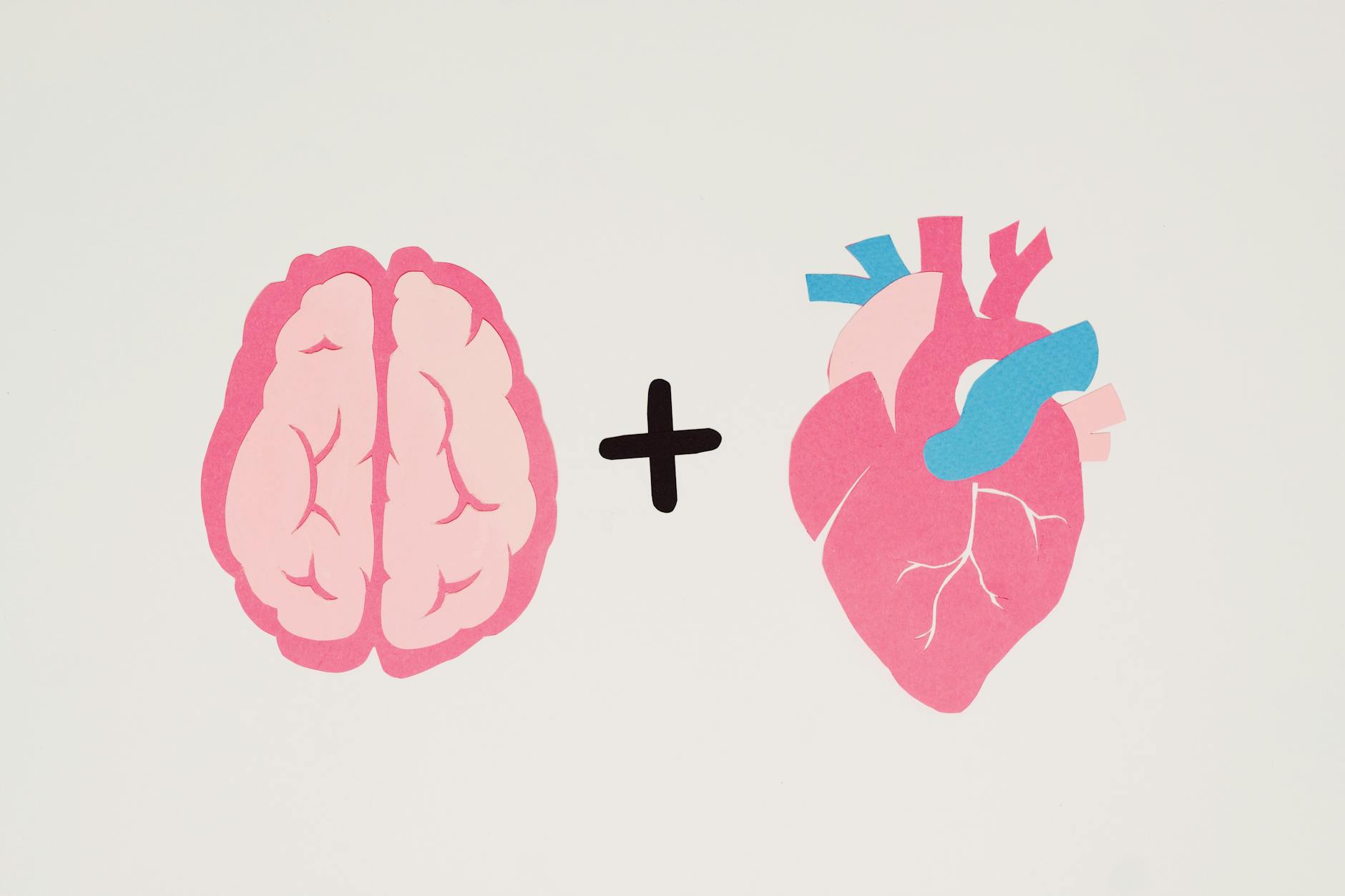
  • Brains and Heart: How Senku and Luffy Feel Like Two Halves of Me

    Brains and Heart: How Senku and Luffy Feel Like Two Halves of Me

    There are some characters you admire from a distance, and then there are characters who quietly take up residence inside you. They don’t replace who you are, but they help you understand yourself in sharper contrast. Senku Ishigami from Dr. Stone and Monkey D. Luffy from One Piece fall firmly into that second category for me. On the surface, they could not be more different. One is logic incarnate, a walking encyclopedia fueled by caffeine, chemistry, and calculations. The other is instinct, emotion, appetite, and an almost reckless devotion to freedom and people. And yet, the more I think about it, the more I realize they represent two sides of me that are constantly in conversation, sometimes in harmony, sometimes in tension. Senku is my brain. Luffy is my heart.

    What makes this comparison meaningful to me isn’t just personality traits, but worldview. These characters don’t just behave differently; they approach reality differently. Senku confronts the world as a series of solvable problems. Luffy confronts it as a moral landscape defined by bonds, freedom, and gut-level justice. One asks “how does this work?” while the other asks “who is being hurt?” I recognize both impulses in myself, and I’ve spent much of my life trying to reconcile them.

    Senku represents the part of me that needs understanding before action. He wants data. He wants mechanisms. He wants to know the chain of cause and effect before he commits to a path. This is the side of me that loves science, technology, systems, and learning for its own sake. The side that feels calmer when things make sense, even if the sense is grim. Senku doesn’t deny reality, no matter how harsh it is. Humanity was petrified for thousands of years? Okay. That’s the situation. What now? He doesn’t waste energy mourning what cannot be changed. He channels that energy into reconstruction.

    That mindset feels deeply familiar to me. When things go wrong, my instinct is often to analyze. To break the situation down. To understand what failed, why it failed, and what could be built differently next time. It’s not that I don’t feel emotion, but that emotion often comes after analysis, or gets filtered through it. Senku’s confidence in science as a stabilizing force mirrors my own reliance on knowledge as a grounding tool. When the world feels chaotic, learning feels like resistance.

    But Senku alone is not the full picture of who I am. If he were, I’d be missing something essential. That’s where Luffy comes in.

    Luffy is the opposite kind of certainty. He doesn’t calculate outcomes. He doesn’t weigh probabilities. He doesn’t care about systems in the abstract. He cares about people, and more specifically, about how people are treated. Luffy doesn’t need to understand the political structure of a kingdom to know it’s wrong. He only needs to see someone crying, enslaved, or crushed by power. His decisions are not driven by logic but by an internal moral compass that is unwavering, even if it’s not articulate.

    That, too, is me.

    There is a part of me that reacts instantly and emotionally to injustice, cruelty, and suffering. A part that doesn’t want a spreadsheet or a theory before taking a stance. A part that believes some things are wrong on sight, no explanation required. Luffy embodies that raw moral clarity. He doesn’t argue philosophy. He punches the problem. He frees people not because it’s strategic, but because it’s right. And he does it without expecting gratitude, recognition, or reward.

    That’s the heart side of me. The side that loves fiercely, commits deeply, and refuses to abandon people once they matter. The side that believes loyalty is sacred, that freedom is non-negotiable, and that no system is legitimate if it crushes human dignity. Luffy doesn’t care how the world is “supposed” to work. He cares about how it actually affects the people in front of him.

    What’s fascinating to me is that neither Senku nor Luffy is complete on their own, and neither am I. Senku without heart could easily become detached, cold, or utilitarian. Luffy without thought could become reckless, destructive, or naive. But both characters avoid those pitfalls precisely because they surround themselves with others who balance them. Senku builds a Kingdom of Science, not a Kingdom of Senku. Luffy builds a crew, not an army. Both understand, intuitively or intellectually, that no one way of being is sufficient.

    I feel that tension internally all the time. My brain wants to plan, predict, and understand. My heart wants to act, protect, and care. Sometimes they align perfectly. Sometimes they clash. There are moments where my analytical side tells me to be cautious, while my emotional side tells me to jump in anyway. Senku would say, “Let’s figure this out first.” Luffy would say, “I don’t care. We’re doing this.”

    And honestly? I need both voices.

    Senku represents the part of me that believes progress is built. That nothing meaningful happens without effort, patience, and knowledge. That systems matter, and that understanding them gives you leverage against chaos. He’s the side of me that thinks long-term, that worries about infrastructure, sustainability, and unintended consequences. He’s the part that wants to know not just that something should be done, but how it can be done without collapsing everything else.

    Luffy represents the part of me that believes some things are worth risking everything for. That waiting for perfect information can be a form of complicity. That courage sometimes looks like ignorance because it refuses to be paralyzed by fear. He’s the side of me that doesn’t ask permission, that doesn’t care about legitimacy granted by corrupt systems, that believes chosen family matters more than authority.

    What connects Senku and Luffy, and what connects both of them to me, is that neither is motivated by domination. Senku doesn’t want to rule the world. Luffy doesn’t want to conquer it. Senku wants everyone to have access to knowledge. Luffy wants everyone to be free. Those goals are different in method but similar in spirit. Both reject hierarchies that exist solely to control. Both see value in people as they are, not as tools.

    That alignment matters to me deeply. I’ve never been interested in power for its own sake. I don’t want to sit at the top of anything. What I care about is reducing unnecessary suffering and expanding people’s ability to live authentically. Senku approaches that through science and technology. Luffy approaches it through direct confrontation with oppression. I find myself pulled toward both strategies, depending on the situation.

    There’s also something important about how both characters relate to failure. Senku expects it. He plans for it. Failure is part of the scientific process. Luffy doesn’t dwell on it. He gets knocked down, gets back up, and keeps moving. Failure doesn’t define him. Both approaches are healthy in different ways. Sometimes you need reflection. Sometimes you need resilience. Sometimes you need both.

    In my own life, I’ve learned that over-relying on one side can be dangerous. If I live only in Senku mode, I risk becoming detached, overthinking everything, and missing moments where action matters more than analysis. If I live only in Luffy mode, I risk burnout, impulsivity, and charging into situations that require more preparation. The balance isn’t always clean, but recognizing both sides helps me understand why I react the way I do.

    Another reason this comparison resonates with me is how both characters inspire others. Senku inspires people by teaching them. By demystifying the world. By showing that knowledge is attainable. Luffy inspires people simply by being himself. By refusing to bend. By standing up when everyone else is afraid. Those are two very different kinds of leadership, and I see pieces of both in how I try to exist in the world.

    I like explaining things. I like helping people understand complex ideas in accessible ways. That’s Senku energy. But I also have moments where I can’t stay neutral, where I feel compelled to take a stand even if it costs me comfort or approval. That’s Luffy energy. One builds slowly. The other erupts suddenly. Both are honest.

    It’s also worth noting that neither Senku nor Luffy is particularly concerned with how they’re perceived. Senku doesn’t soften his personality to be liked. Luffy doesn’t perform intelligence or sophistication to be respected. They are authentic to a fault. That authenticity, in different forms, is something I strive for. I don’t want to pretend to be purely rational when I’m emotional, or purely emotional when I’m analytical. I am both. And pretending otherwise only creates internal friction.

    Senku reminds me that caring about science, technology, and learning isn’t cold or detached. It’s a way of caring about the future. Luffy reminds me that caring about people doesn’t require perfect logic or justification. Sometimes it just requires showing up. Together, they form a kind of internal dialogue that helps me navigate a world that often demands you pick one or the other.

    If Senku is my brain, then Luffy is my heart not because he’s sentimental, but because he’s uncompromising in what he values. My heart isn’t soft in the sense of being fragile. It’s soft in the sense of being open. Luffy’s heart is open to pain, loyalty, grief, and joy without filters. Senku’s brain is open to information without fear. I admire both forms of openness.

    Ultimately, seeing myself reflected in these two characters helps me accept my own contradictions. I can love logic and still act on emotion. I can care about systems and still punch metaphorical tyrants when necessary. I don’t have to choose between understanding the world and fighting for the people in it. Senku and Luffy show, in their own exaggerated anime ways, that those impulses don’t have to cancel each other out.

    They can coexist. They can even complement each other.

    And in that sense, they don’t just represent two sides of me. They represent the ongoing process of trying to live with both my brain and my heart fully engaged, even when it’s messy, even when it’s hard, and even when the world makes that balance feel impossible.

  • Blood Meridian Is Filmable Now, Actually: Shock, Cinema, and the End of the “Unadaptable” Myth

    Blood Meridian Is Filmable Now, Actually: Shock, Cinema, and the End of the “Unadaptable” Myth

    Content Advisory:
    This post references difficult historical themes, intense subject matter, and emotionally heavy ideas. While specific details are intentionally softened and indirect, readers should be aware that Blood Meridian is widely known for confronting humanity’s darker chapters.

    For decades, Blood Meridian, or the Evening Redness in the West has occupied a peculiar, almost legendary place in conversations about literature and film. It is frequently described as “unfilmable,” grouped alongside other works that are supposedly too extreme, too bleak, or too philosophically dense to ever be translated to the screen. The logic behind this claim is familiar. The novel is said to be too harsh, too uncompromising, too episodic, and too resistant to traditional storytelling norms. It does not provide an easy lead character to root for, it does not offer tidy moral lessons, and it certainly does not end on a reassuring note. Because of this, the argument goes, no major studio would touch it, no director could do it justice, and no audience would willingly sit through it.

    For a long time, that argument carried weight. But the more I think about it, the less convincing it becomes.

    My own relationship with Blood Meridian did not begin with a casual read-through. Like many people in recent years, I first encountered it through long-form analysis, particularly a Wendigoon video that explored its themes, historical grounding, and philosophical underpinnings. In a strange way, that indirect introduction feels fitting. Blood Meridian often reads like a story filtered through layers of legend, history, and something colder and more distant than ordinary narration. Even when summarized or discussed rather than read line by line, its tone comes through clearly. You can sense that this is a book that does not aim to comfort the reader or provide an easy emotional foothold.

    That intensity is exactly why it gained its reputation. But intensity alone does not make something impossible to adapt. What matters is context, and the cultural and cinematic context surrounding Blood Meridian has changed dramatically since its publication in 1985.

    The film world we live in now is not the film world of the mid-1980s. Over the years, audiences have been exposed to increasingly challenging material, both narratively and stylistically. Filmmakers have experimented with fractured structures, morally ambiguous characters, and themes that refuse to resolve neatly. Stories no longer need to reassure viewers at every turn. In many cases, discomfort itself has become part of the artistic experience.

    Because of that shift, the claim that Blood Meridian is inherently “unfilmable” feels less like a hard truth and more like an assumption that has gone unchallenged for too long.

    At the heart of the unfilmable argument are two main ideas. The first is that cinema cannot depict the kind of relentless wrongdoing and moral emptiness found in McCarthy’s novel without either glamorizing it or driving viewers away entirely. The second is that the book’s philosophical weight, especially its ideas about conflict, fate, and power as embodied by Judge Holden, would be flattened or oversimplified on screen. Decades ago, these concerns made sense. Today, they are far easier to question.

    If there truly were a firm boundary on what cinema could responsibly depict, large portions of modern film history simply would not exist. There are entire categories of movies built around pushing limits, testing audience tolerance, and confronting viewers with ideas and imagery designed to unsettle rather than entertain. Some of these films are intentionally provocative, others more abstract or symbolic, but all of them demonstrate that filmmakers have repeatedly crossed lines once thought uncrossable. Whether these projects are universally praised is irrelevant. Their mere existence proves that the medium itself is capable of going further than many people assume.

    Beyond shock-driven cinema, there are also films that challenge audiences in quieter but equally demanding ways. Movies like Everything Everywhere All At Once show that viewers are willing to follow stories that are structurally unconventional, tonally unpredictable, and emotionally overwhelming. That film may be playful on the surface, but it is also chaotic, dense, and deeply existential. Its success is a reminder that audiences do not need everything spelled out for them, nor do they require constant reassurance to stay engaged.

    In that environment, Blood Meridian starts to feel not less filmable, but more so.

    Its reputation as an “unadaptable” work has less to do with technical impossibility and more to do with hesitation. Adapting it would require a willingness to resist smoothing its edges or reframing it into something safer. It would require trust in the audience and confidence in the material. Those qualities are rare, but they are not unheard of.

    One of the most striking things about Blood Meridian is its refusal to operate within familiar moral frameworks. It does not ask readers to identify with its characters in conventional ways. It does not suggest that hardship leads to personal growth or that suffering is ultimately justified by some greater good. Events unfold, actions occur, and consequences are often absent or delayed. The world of the novel feels indifferent, governed less by justice than by momentum.

    This outlook can be unsettling, but it is not alien to cinema. Some of the most impactful films ever made share that same emotional register. They place viewers inside situations where clarity erodes and certainty disappears. They do not rush to provide answers or reassurance. Instead, they allow unease to linger. These are not films designed for casual rewatching or background viewing, but they leave lasting impressions precisely because they refuse to soften their perspective.

    A faithful adaptation of Blood Meridian would need to operate in that space. It would need to abandon the idea that every story must be rewarding in a conventional sense. It would not be a sweeping, romanticized western filled with heroic imagery and nostalgic longing. It would be stark, emotionally demanding, and intentionally uncomfortable. The focus would not be on spectacle for spectacle’s sake, but on atmosphere, implication, and accumulation.

    Visually, the novel almost seems to invite cinematic treatment. McCarthy’s descriptions of the land are vivid without being sentimental. The desert, the plains, and the open sky are not presented as symbols of freedom or opportunity, but as vast, impersonal forces. Heat presses down. Distances feel endless. Silence carries weight. A skilled director could use these elements to create a film that feels less like a traditional narrative and more like an extended confrontation with environment and history.

    The most frequently cited obstacle, however, remains Judge Holden. He is often described as the reason Blood Meridian cannot be adapted, a figure so unsettling and conceptually slippery that no performance could capture him. He exists somewhere between a character and an idea, speaking in grand, unsettling terms about order, dominance, and inevitability. He seems untouched by time or consequence.

    But cinema has grappled with figures like this before. Characters who feel less like individuals and more like forces of nature have appeared in many films, often to great effect. The key is not explanation, but presence. Judge Holden does not need to be decoded or softened. He needs to be portrayed with restraint, allowed to unsettle simply by existing within the story. Ambiguity, when handled carefully, can be far more powerful than clarity.

    Modern audiences may be more prepared for such a figure than ever. Conversations about systemic harm, historical injustice, and recurring cycles of conflict are no longer fringe topics. Many people are already grappling with the idea that some patterns repeat not because they are misunderstood, but because they are deeply embedded. Blood Meridian strips away comforting narratives and forces that realization into the open. A film adaptation could do the same without spelling everything out.

    Critics often worry that bringing this story to the screen would be irresponsible or excessive. But that criticism misunderstands the source material. The novel does not dwell on harsh realities because it finds them entertaining. It does so because avoiding them would be dishonest. Much of what it depicts is rooted in real historical conditions, even if rendered through heightened, almost mythic language. To erase or overly soften that context would undermine the very reason the book still provokes discussion decades later.

    Of course, such a film would not appeal to everyone. It would not be designed for mass-market appeal or broad demographics. It would likely generate debate, discomfort, and strong reactions. Some viewers would disengage. Some critics would question its necessity. That response would not signal failure. It would signal that the adaptation remained true to its intent.

    What ultimately convinces me that Blood Meridian is filmable is not just the existence of challenging cinema, but the growing recognition that art does not always need to reassure. Films have proven that they can exist without clear moral lessons, without comforting resolutions, and without guarantees that everything will turn out fine. Discomfort, when purposeful, can be meaningful.

    Adapting Blood Meridian would require a director willing to commit fully to that philosophy. Not excess for its own sake, but conviction. A refusal to dilute the material. A willingness to let silence, implication, and atmosphere do as much work as dialogue or action. It would require trust in both the story and the audience.

    The idea of the “unfilmable book” persists in part because it elevates literature by suggesting it exists beyond the reach of other art forms. But cinema is not lesser than literature. It is simply different. At its best, it can confront the same difficult questions, explore the same ambiguities, and sit with the same unease. Blood Meridian does not need to be protected from adaptation. It needs to be approached with honesty and courage.

    In a world where cinema has repeatedly pushed past once-accepted limits, insisting that Blood Meridian is simply too much feels less like insight and more like caution. The real barrier has never been the medium. It has always been the willingness to see it through.

  • Thinking Ten Steps Ahead in a World That Keeps Getting Worse

    Thinking Ten Steps Ahead in a World That Keeps Getting Worse

    There was a time when thinking a few steps ahead was considered cautious, maybe even a little anxious. You planned for tomorrow, maybe next week, possibly next year if you were especially organized or ambitious. Now, that mindset feels almost quaint. These days, it feels like you have to think ten steps ahead just to survive emotionally, financially, socially, and sometimes physically. Not because you want to be paranoid, but because the world has repeatedly proven that if you don’t anticipate the bullshit, the bullshit will find you anyway.

    Everything feels more fragile now. Systems that once pretended to be stable are openly cracking. Institutions that were supposed to protect people feel indifferent at best and hostile at worst. The social contract, such as it ever existed, feels like it’s been quietly shredded while everyone argues about whose fault it is. In that kind of environment, reactive thinking isn’t enough. You can’t just wait for things to happen and then deal with them. By the time you’re reacting, you’re already behind, already scrambling, already paying a price you didn’t agree to.

    For me, thinking ten steps ahead isn’t some new survival tactic I picked up during the last few years of chaos. It’s something I’ve been doing for as long as I can remember. Long before the headlines felt apocalyptic, before every week brought a new crisis, before instability became the baseline rather than the exception. I didn’t frame it as strategy back then. It was instinct. It was adaptation. It was what you do when you learn early on that the world doesn’t give you much margin for error.

    When you grow up in environments where things can shift suddenly, where stability is conditional, you learn to read patterns fast. You learn that what people say matters less than what they do. You learn that systems often fail quietly before they fail loudly. You learn to ask, “Okay, but what happens after this?” and then, “What happens after that goes wrong too?” That kind of thinking doesn’t come from pessimism. It comes from experience.

    What’s wild is that the very way of thinking that used to make me feel out of place, overly cautious, or even misunderstood now feels necessary just to function. The world has caught up to the mindset. Everyone is suddenly talking about backup plans, exit strategies, side hustles, digital footprints, contingency savings, mutual aid, community networks, and worst-case scenarios. Things that once made you sound dramatic now make you sound realistic.

    The pace of collapse, or at least perceived collapse, has changed how time itself feels. News cycles move faster, but consequences linger longer. A bad policy decision doesn’t just affect one sector, it ripples across everything. A corporate failure doesn’t just cost jobs, it destabilizes entire communities. A political shift doesn’t just change laws, it reshapes how safe people feel existing in public. In that environment, thinking one step ahead is basically walking blindfolded.

    Thinking ten steps ahead is less about predicting the future perfectly and more about understanding how interconnected everything has become. One disruption triggers another. One ignored warning turns into a full-blown crisis. One “temporary” measure becomes permanent. If you don’t account for that layering effect, you end up shocked over and over again, wondering how things got this bad when the signs were always there.

    For people like me, this kind of thinking isn’t exhausting in the way people assume. What’s exhausting is being told to stop overthinking, to relax, to trust the process, when the process has repeatedly proven untrustworthy. What’s exhausting is watching people dismiss obvious warning signs and then act stunned when those warnings turn into reality. Anticipation, for me, reduces anxiety. It creates mental room. It means fewer surprises, fewer moments of feeling trapped or cornered.

    There’s also a moral dimension to thinking ahead that doesn’t get talked about enough. When you anticipate how things might go wrong, you’re not just protecting yourself. You’re thinking about how your choices affect others. You’re considering who gets hurt first when systems fail, who gets left behind, who doesn’t have the same buffers or privileges. Thinking ahead is an act of empathy in a world that increasingly rewards shortsightedness.

    A lot of modern bullshit thrives on people not thinking past the immediate moment. Corporations rely on consumers not reading the fine print. Governments rely on citizens not connecting today’s policy to tomorrow’s consequences. Social media thrives on outrage without reflection, reaction without analysis. The less people think ahead, the easier they are to manipulate. Anticipatory thinking is quietly subversive in that sense. It makes you harder to control.

    Of course, there’s a cost to it. You see the storm clouds before the rain starts. You feel the tension before others acknowledge it exists. You sometimes sound alarmist even when you’re being measured. You prepare for things that don’t always happen, and people point to that as proof you worried for nothing. What they don’t see is how many disasters were avoided because you were ready, how many times preparation softened the blow.

    The phrase “things are getting worse” gets thrown around a lot, sometimes lazily, sometimes hyperbolically. But even stripping away nostalgia and doomscrolling, there’s a real sense that the margin for error has shrunk. Housing is less forgiving. Work is less secure. Healthcare is more precarious. Social relationships are more strained. One bad break can cascade into multiple crises. In that reality, foresight isn’t optional, it’s adaptive.

    What frustrates me is how often anticipatory thinking is pathologized instead of understood. It gets labeled as anxiety, paranoia, negativity, or trauma response, without acknowledging that sometimes the environment actually is unstable. Sometimes the danger isn’t imagined. Sometimes being calm about obvious risks is the irrational position. There’s a difference between catastrophic thinking and informed vigilance, but that nuance gets lost a lot.

    I’ve spent years watching patterns repeat. Economic cycles that screw the same people over and over. Political promises that evaporate once elections are over. Cultural conversations that pretend to be new while recycling the same power dynamics. Once you see those patterns, you can’t unsee them. And once you can’t unsee them, planning ahead stops feeling optional. It becomes a responsibility to yourself.

    Thinking ten steps ahead doesn’t mean you stop hoping for better outcomes. It means you don’t stake your survival on hope alone. It means you ask hard questions early. It means you build flexibility into your life where you can. It means you don’t assume systems will catch you if you fall, because too often they don’t. That doesn’t make you cynical. It makes you honest.

    There’s also something deeply lonely about this way of thinking. When you’re already mentally preparing for consequences others haven’t even considered, conversations can feel out of sync. You’re talking about long-term impacts while others are focused on immediate convenience. You’re weighing trade-offs while others are chasing reassurance. That gap can create distance, even with people you care about.

    At the same time, it creates a strange clarity. You learn what actually matters when things go sideways. You learn which relationships are resilient and which ones are conditional. You learn what you’re willing to compromise on and what you’re not. Anticipating bullshit forces you to define your values more sharply, because every contingency plan is also a statement about what you’re trying to protect.

    I don’t think everyone needs to think ten steps ahead all the time. That would be unbearable. But I do think we’re living in an era where pretending things will just work out is a luxury many people no longer have. The gap between those who anticipate and those who don’t is widening, not because one group is smarter, but because one group is responding to reality as it is rather than as they wish it were.

    For me, this mindset isn’t about doom. It’s about agency. It’s about refusing to be caught completely off guard by systems that have shown their hand again and again. It’s about choosing preparedness over denial. It’s about staying grounded when the world feels increasingly unmoored.

    If there’s one thing I’ve learned, it’s that thinking ahead doesn’t mean you lose your humanity. If anything, it helps you preserve it. When chaos hits, the people who have thought ahead are often the ones who can still show up for others, who can still offer support, who can still make choices instead of just reacting. That matters more than ever.

    So yes, I think ten steps ahead. I always have. Not because I want the world to get worse, but because I’ve learned what happens when you assume it won’t. And in a time where bullshit feels endless and stability feels conditional, that kind of thinking isn’t pessimism. It’s survival. It’s care. It’s adaptation. And it’s one of the few tools that still feels honest in an increasingly dishonest world.

  • Share Your Hopes for 2026: New Year’s Submissions Now Open ✨🎆

    As we wrap up 2025 and look ahead to 2026, I’m asking for submissions of poetry, stories, and artwork that reflect on your hopes, dreams, and resolutions for the new year. Whether it’s a personal goal, a societal wish, or a creative piece that celebrates new beginnings, I want to feature your work as we step into the future!

    🗓 Submission Deadline: December 28, 2025
    📧 How to Submit: Send your work to jaimedavid327@gmail.com or submit via https://docs.google.com/forms/d/e/1FAIpQLSf7DeTfFC0J59oNRpxUHGcqAIjaDaC3TAukZVYK9SdWT4pDlg/viewform?usp=dialog.


    Include a brief bio and any relevant links if you’d like!

    Let’s inspire each other with hope and creativity as we move into the new year. Looking forward to reading your visions for 2026!

  • The Unbreakable Threads of One Piece: How Friendship, Labels, and Luffy’s Emotional Revolution Shape the Heart of the Story

    The Unbreakable Threads of One Piece: How Friendship, Labels, and Luffy’s Emotional Revolution Shape the Heart of the Story

    Across decades of storytelling, One Piece has remained one of the most powerful and enduring narratives in anime and manga, not only because of its sprawling world, epic battles, and imaginative characters, but because of its profound exploration of friendship and the human heart. Beneath the layers of humor, adventure, and chaos, there is a deep emotional core that binds the series together. This emotional core is built on a single, unshakable truth: friendship is the force that drives the entire story, and it is a force that transcends labels, languages, boundaries, and backgrounds. At the center of this force stands Monkey D. Luffy, a young pirate whose simple dreams mask an extraordinary ability to break down walls—not only the physical ones he punches through, but the emotional and metaphorical barriers that people build around their hearts. Through his intentional simplicity, his unwavering loyalty, and his fearless compassion, Luffy becomes the kind of friend anyone would aspire to have, and more importantly, the kind of friend we aspire to be.

    One of the defining elements of One Piece is that Oda doesn’t write friendship as a convenient narrative mechanic or a shallow theme meant to be repeated. Instead, friendship in One Piece is something that is lived, breathed, and fought for. It is something that takes different shapes depending on who is experiencing it, but it ultimately connects everyone through a shared sense of purpose, loyalty, and emotional truth. The world of One Piece is filled with trauma, oppression, discrimination, and suffering, but these dark forces never fully extinguish the light of connection that the Straw Hat crew brings with them. That light stands opposed to the labeling, categorizing, and divisive tendencies of the world. In the Grand Line, people are labeled by their race, their value, their allegiance, or the price on their head. But with Luffy, those labels mean nothing. He doesn’t see fishmen, giants, cyborgs, nobodies, monsters, or criminals. He sees people. He sees potential friends.

    This is what makes Luffy such an unusual and endearing protagonist. His intelligence is often played off as comedic, yet he possesses the deepest emotional wisdom in the story: he understands that labels serve only to isolate and diminish; friendship serves to unite and uplift. From his earliest moments as a young pirate, we see him defy the conventions of what a pirate, a captain, or even a hero should be. He doesn’t recruit based on strength or skill. He never asks whether someone is useful. He simply asks whether someone is hurting, whether someone dreams, and whether someone needs a hand. This is most evident in how the Straw Hat crew comes together. Every member of his crew was someone living behind emotional walls—walls built to hide pain, fear, rejection, or shame. And every time, Luffy showed up, punched a hole straight through those walls, and reached inside with a hand full of warmth and sincerity.

    One of the most iconic examples of this emotional demolition comes from Nami’s devastating moment in Arlong Park. Nami’s life had been defined by manipulation and exploitation. She bore her pain silently, believing herself unworthy of true friendship because her childhood trauma taught her that trust only leads to loss. When she finally collapses under the weight of her suffering, begging for help despite her deep shame, Luffy does not lecture her, question her motives, or analyze her past. He simply places his treasured straw hat—his dream itself—on her head and tells her he will handle it. When Luffy walks toward Arlong Park, tearing through physical barriers with every punch, he is also tearing apart the psychological prison Nami lived in. He is destroying the walls built around her heart so she can breathe again. And when he defeats Arlong, it symbolizes more than a victory in battle. It symbolizes the liberation of a friend who had been locked in suffering for years.

    Another powerful moment comes from Robin’s story at Enies Lobby. Robin’s entire existence had been defined by the world’s labels: demon, monster, criminal, weapon. She accepted these titles because she believed that was all she was allowed to be. She lived in isolation and fear, believing she had no right to live, no right to dream, and no right to belong. Luffy’s fight to save her isn’t just about rescuing a crew member. It’s about demolishing the cruel labels the world forced upon her. When she finally cries out, “I want to live!”, she is breaking through her own emotional barriers, but she only has the courage to do so because Luffy and the others smashed the walls from the outside. Luffy literally orders his crew to burn down the flag symbolizing Robin’s oppression, proving that he doesn’t care about the world’s judgments, labels, or systems. He cares about the person behind them.

    The theme of friendship running deeper than labels extends beyond the core crew. Luffy’s entire journey is marked by encounters with people who believed themselves unworthy of companionship or who were rejected by the world for reasons beyond their control. Sabo believed he had lost everything, only to rediscover the power of brotherhood. Law walked a path of revenge and trauma until Luffy gave him room to breathe and dream again. Jinbe, labeled as an enemy and a criminal by the world, found acceptance and brotherhood through Luffy’s straightforward trust. Even characters like Bon Clay, whose identity is fluid and who exists outside conventional definitions, are embraced by Luffy without question or hesitation. Luffy does not care about gender, appearance, species, origin, or stigma. He only cares about the heart.

    This is what makes Luffy such a transformative force in the story. His ability to break down emotional and metaphorical walls is rooted in his refusal to treat people as anything other than equals. While many shonen protagonists fight for justice or peace, Luffy fights for freedom—the freedom to live, to dream, to choose, to be seen. And he does this not through sophisticated arguments or philosophical monologues, but through action, presence, and sincerity. He enters people’s lives like a storm of authenticity, shattering the false narratives they have internalized about themselves. He makes them believe they are worthy of love, loyalty, and a place in the world.

    Friendship in One Piece is not passive. It is active, fierce, demanding, and transformative. It requires sacrifice, vulnerability, and courage. It pulls characters out of despair and guides them toward redemption. Through Luffy’s eyes, friendship is not an obligation or a token of convenience; it is a sacred bond. His repeated acts of risking his life for his friends are not born from a hero complex or a need for validation, but from an instinctive understanding that connection is the strongest force in the world. He will walk into hell if it means someone he cares about will find a way back to the light.

    One of the most underrated aspects of One Piece is how it shows friendship as something that evolves. Luffy does not demand emotional transformation from his friends; he creates a space where transformation becomes possible. He doesn’t pressure Zoro to reveal his inner thoughts or force Sanji to talk about his past. Instead, he allows them to grow at their own pace, while providing unwavering support in the background. This kind of emotional patience is rare in protagonists. It illustrates that true friendship does not control or dictate. It nurtures and uplifts.

    Luffy’s friendships also transcend the binary distinctions that dominate society. He doesn’t seek out friends because they fit neatly into categories. In fact, the mismatched nature of the Straw Hat crew—pirate hunter, thief, liar, cyborg, skeleton musician, reindeer doctor, archaeologist labeled a demon—shows that labels are meaningless in the face of genuine connection. The crew is a testament to what happens when people choose each other not based on status or similarity, but based on authenticity and mutual respect. This theme becomes even more powerful when considering the various races and species across the world: fishmen who are discriminated against, giants treated as weapons, minks forced into hiding. Luffy’s refusal to see anyone as less-than allows the story to illustrate a profound truth: labels are often constructed to divide, but friendship exists to unify.

    In many ways, Luffy becomes a mirror for others. Through him, characters are forced to confront not only their potential but their fears, insecurities, and hidden wounds. His optimism challenges cynicism. His trust challenges doubt. His emotional honesty challenges denial. And his relentless pursuit of freedom challenges every system of oppression he encounters. Luffy’s journey is more than a pirate adventure. It is a revolution of the heart.

    Another layer to the theme of deep friendship in One Piece is the way it embraces emotional vulnerability. Luffy is not a traditional stoic hero. He laughs loudly, cries openly, gets scared, gets angry, and expresses love without shame. His emotions are not weaknesses—they are strengths that inspire the people around him. His willingness to feel deeply encourages his friends to do the same. This emotional openness dismantles the toxic narratives in many heroic stories that equate strength with emotional suppression. Instead, One Piece teaches that true strength comes from emotional courage, the bravery to care deeply even when the world punishes you for it.

    Throughout the series, emotional walls represent fear, shame, and conditioning. When Luffy breaks these walls—sometimes with his fists, sometimes with his heart—he is liberating people from the prisons built around them. Every island, every arc, every new ally serves as a testament to the idea that emotional freedom is just as vital as physical freedom. Luffy fights dragons, tyrants, government organizations, and world-shaking enemies, yet his greatest victories are the ones where he gives someone back their sense of self-worth and belonging.

    And this is why Luffy is a friend to aspire to. He represents the best qualities of companionship: loyalty without condition, acceptance without judgment, courage without hesitation, and love without limitations. He embodies the ideal of being someone who believes in others so strongly that they begin to believe in themselves. He never abandons his friends, never belittles their dreams, never questions their value. Instead, he amplifies their strengths and shields their vulnerabilities. Being Luffy’s friend means being seen, understood, and valued for who you are, not who the world says you must be.

    It is this combination of emotional bravery, unshakable loyalty, and boundless compassion that makes One Piece resonate so deeply with audiences across the world. It teaches that friendship is not a label you give someone. It is a bond forged through shared struggles, dreams, and moments of raw humanity. It teaches that labels have the power to divide, but friendship has the power to rebuild what is broken. And it teaches that sometimes, the greatest heroes are not the strongest or smartest, but the ones who show up, who care deeply, and who refuse to let anyone face their burdens alone.

    In the end, One Piece is not merely a story about pirates searching for treasure. It is a story about people searching for acceptance, meaning, and connection in a world that often tries to strip those things away. It is a story where friendship becomes a form of rebellion, a force stronger than oppression, and a beacon that guides people through the darkest seas. Luffy’s journey reminds us that while the world may attempt to define us through labels, the bonds we create through genuine friendship have the power to redefine everything.

    And that may be the deepest treasure One Piece has to offer: a reminder that walls—no matter how powerful or deeply rooted—can always be broken, especially when someone reaches for you with a heart that refuses to let go.

    Fediverse Reactions
  • Explore the Other Worlds of Jaime David: Blogs, Podcast, Books, and More (Repost)

    Explore the Other Worlds of Jaime David: Blogs, Podcast, Books, and More (Repost)

    Time for my occasionally post shilling my stuff. Lol.

    Over the years, I’ve poured myself into countless creative projects—blogs, podcasts, books, and more. Each one reflects my passions, curiosities, and perspectives, and I want to take a moment to share them with you. I know how easy it is to scroll past content online, to overlook what doesn’t immediately grab attention. But these works are important to me, and I hope you’ll give them a look—they’re invitations into a world shaped by curiosity, creativity, and the love of discovery.

    While many people know my original blog, The Musings of Jaime David, I want to shine a light on my other projects—spaces that explore specific interests, push creative boundaries, and offer perspectives you might not find elsewhere.

    Let’s start with my blogs. Each one began from a personal curiosity or desire to explore a topic deeply.

    Anime, Comics, and Manga is my dedicated space for exploring the worlds of storytelling and visual artistry that have fascinated me since childhood. I grew up captivated by the characters, intricate narratives, and imaginative universes that creators built, and this blog became a place to share that passion. It goes beyond simple reviews—here, I dive into both mainstream and obscure works, analyzing themes, character development, cultural impact, and the ways these stories resonate with audiences globally. Over time, the blog has evolved from a personal hobby into a space for critical reflection, discussion, and celebration of the creativity and depth these media offer.

    Jaime David Music grew from my love for music—not just listening, but reflecting on how sound shapes emotion, culture, and identity. This blog isn’t just reviews or playlists; it’s a space where I explore trends, artistry, and the emotional resonance of music.

    Jaime David Science is a playground for anyone curious about the natural world, technology, and discoveries that make us stop and wonder. I strive to make science approachable, intriguing, and sometimes delightfully strange. It’s for the casual learner and the enthusiast alike.

    Jaime David Gaming is where I dive into games—video games, board games, and more. Gaming has always been a lens for storytelling, strategy, and human behavior. Here, I share reflections, analysis, and commentary for anyone who enjoys the craft and thought behind play.

    Oddities in Media started as a way to notice the small, overlooked, or strange aspects of pop culture. Over time, it’s become a space to dig into the weird, the unexpected, and the culturally fascinating in movies, music, games, and beyond. It’s about exploring creativity with curiosity and nuance.

    Let’s Be Different Together is my space for mental health, individuality, and social reflection. It’s for anyone who has ever felt different or misunderstood and seeks thoughtful exploration of society, human behavior, and personal growth.

    The Interfaith Intrepid is for those interested in spirituality, culture, and philosophy. Here, I explore faith, religious traditions, and cultural intersections with nuance and empathy, striving to foster dialogue in a world too often divided by belief.

    Of course, The Musings of Jaime David remains my most personal and experimental blog, where I write freely—essays, reflections, philosophical musings, and more. But I want to make sure my other spaces get their due. Each blog has its own flavor, its own purpose, and something unique to offer.

    Beyond blogs, The Jaime David Podcast is a place to explore ideas in conversation. I revisit old writings, reflect on creative processes, and dive into cultural phenomena. The podcast is a chance to experience my thoughts in real-time, in a personal and engaging way.

    I’ve also channeled my creativity into books. Wonderment Within Weirdness, my debut novel, explores the extraordinary and the unexpected. My Powerful Poems distills reflections and emotions into concentrated lyrical moments. Some Small Short Stories experiments with brief narratives that highlight the small moments revealing larger truths. Each project is a window into different facets of my imagination and curiosity.

    Finally, my Jaime David Newsletter connects readers directly to all of my creative work—blogs, podcast episodes, book updates, and insights that don’t always appear elsewhere. It’s a direct line to stay updated and engaged.

    These projects exist not just for my own expression but as invitations to explore, reflect, and discover. They are separate, but they share a common thread: curiosity, creativity, and connection. I encourage you to explore beyond my original blog—dive into the other sites, listen to the podcast, read the books, and subscribe to the newsletter. There’s a universe of ideas, creativity, and expression waiting, and I hope you’ll find something that surprises, delights, or inspires you.

    also want to take a moment to invite you to explore all of my other projects. While The Musings of Jaime David may be my original and most personal blog, my other sites each offer something unique—spaces for music, science, gaming, mental health, spirituality, media analysis, and more. By checking them out, reading, listening, and engaging, you’re not just exploring different facets of my creativity—you’re actively supporting the growth of my work overall. Every visit, comment, share, or subscription helps these projects thrive, allows me to continue creating, and encourages me to keep experimenting and exploring new ideas. Your support helps these endeavors reach more people, spark conversations, and foster communities around curiosity and creativity.

    So if something in my work sparks your interest, I hope you’ll take the time to dive into my other blogs, listen to the podcast, explore my books, and subscribe to the newsletter. Each project is a reflection of my passions, and your engagement helps keep this creative universe alive.

    Fediverse Reactions