The Musings of Jaime David
@jaimedavid.blog@jaimedavid.blog

The writings of some random dude on the internet

1,089 posts
1 follower

Month: February 2026

  • The Double-Edged Sword Within: Why We Must Confront the Dark Potential of Our Strengths

    The Double-Edged Sword Within: Why We Must Confront the Dark Potential of Our Strengths

    There is a quiet danger that lives inside every human strength. We are often encouraged to identify our gifts, sharpen them, weaponize them for success, and celebrate them as markers of growth. We are told to lean into what makes us powerful. We are taught to build brands around our talents. We are told that self-awareness means knowing what we are good at and what we are not. But there is a deeper layer of self-awareness that most people never touch. It is not enough to know your strengths. It is not even enough to know your weaknesses. It is not enough to vaguely accept that “everyone is capable of bad.” The deeper and more uncomfortable truth is this: the very strengths that help you grow, succeed, inspire, and lead can also be used—intentionally or unintentionally—to harm others.

    Most people recoil at this idea. It feels wrong to associate something good with something destructive. It feels like a betrayal of the self to suggest that what makes you admirable could also make you dangerous. But maturity demands that we confront the full spectrum of our potential. If we only see our strengths as pure, we are not fully awake to who we are. If we cannot imagine the ways our gifts might wound, manipulate, dominate, or silence others, then we are not truly self-aware. We are comfortable. And comfort can be blinding.

    Consider intelligence. Intelligence is celebrated universally. It opens doors. It allows us to analyze, synthesize, create, innovate. It fuels discovery. It drives progress. But intelligence can also rationalize cruelty. It can construct elaborate justifications for harmful systems. It can humiliate others with precision. It can manipulate through rhetoric. It can gaslight with surgical skill. The smarter someone is, the more complex their moral justifications can become. Intelligence, when detached from empathy, becomes one of the most efficient tools of harm imaginable.

    Or consider charisma. Charisma inspires. It uplifts. It brings people together. It motivates movements and fosters connection. But charisma can also deceive. It can cloak exploitation in charm. It can rally people behind destructive causes. It can override critical thinking in others. The same magnetism that makes someone an inspiring leader can also make them an effective manipulator. The line between inspiration and influence is thin, and without awareness, it can easily be crossed.

    Even empathy—often considered the purest strength—has its shadow. Deep empathy allows us to understand others, to comfort them, to hold space for pain. But empathy can also be used strategically. Someone who understands your vulnerabilities intimately can exploit them. They can tailor manipulation with frightening precision. Empathy without integrity becomes emotional surveillance.

    Ambition? It builds companies, movements, art, and revolutions. It pushes us to break ceilings and defy expectations. Yet ambition can also trample others. It can justify stepping over colleagues. It can erode relationships in pursuit of status. It can convince someone that the ends justify the means. Drive becomes domination when left unchecked.

    Discipline builds resilience, health, mastery. But discipline can morph into rigidity. It can produce judgment toward those who struggle differently. It can foster environments where flexibility and humanity are dismissed as weakness. A disciplined person can unintentionally shame those who move at a different pace.

    Even kindness can have a shadow. Kindness can become performative. It can become a tool for control. It can create indebtedness. It can become martyrdom that manipulates others into guilt. There is a version of kindness that rescues people not to empower them but to feel superior to them.

    The point is not that strengths are bad. The point is that strengths are powerful. And power is never neutral. Power amplifies intention, awareness, and character. If we are unaware of how our strengths can harm, then harm becomes more likely—not because we are evil, but because we are unconscious.

    The reason this is so difficult to confront is ego. Ego does not like to imagine itself as dangerous. Ego wants to be the hero of the story. It wants to see strengths as proof of moral goodness. It wants to believe that if something feels aligned with growth, it cannot also be destructive. To truly examine the shadow side of your strengths requires a form of ego death. It requires the willingness to see yourself not just as capable of generic wrongdoing, but as capable of using your best qualities in your worst ways.

    Ego death is not about self-hatred. It is not about diminishing yourself. It is about dissolving the illusion that you are purely benevolent because you possess admirable traits. It is about stepping outside the narrative where you are always the protagonist and recognizing that, in someone else’s story, your strengths may have hurt them. That realization is destabilizing. It shakes identity. It challenges self-concept. It forces humility.

    Humility is the gateway to ethical strength. Without humility, strength becomes self-justifying. With humility, strength becomes accountable.

    Many people never reach this stage of awareness. And that is understandable. It is uncomfortable. It requires sitting with cognitive dissonance. It requires revisiting moments where you may have used your gifts poorly. It requires admitting that your confidence may have silenced someone. That your logic may have invalidated someone’s feelings. That your leadership may have overshadowed someone’s voice. That your decisiveness may have bulldozed nuance.

    But this confrontation is not about self-condemnation. It is about expansion. When you acknowledge the full potential of your strengths—both good and bad—you gain control over them. When you refuse to see the shadow, the shadow operates autonomously. When you shine light on it, you integrate it.

    Integration is the goal. To integrate your shadow is to say: I know what I am capable of. I know how sharp my words can be. I know how persuasive I can become. I know how dominant I can appear. I know how strategic my empathy can be. I know how relentless my ambition can feel to others. And because I know this, I choose consciously how to wield these qualities.

    This is the difference between innocence and maturity. Innocence says, “I would never hurt someone with my strengths.” Maturity says, “I absolutely could, and that is why I must be vigilant.”

    History provides countless examples of individuals whose strengths built movements, institutions, and empires—and whose unchecked shadows led to harm. Vision without humility becomes authoritarianism. Confidence without accountability becomes tyranny. Conviction without nuance becomes fanaticism. None of these begin as obvious evils. They begin as strengths amplified without introspection.

    On a personal level, the harm is often quieter but just as real. A person who prides themselves on honesty may become brutally insensitive. A person who values efficiency may become dismissive of others’ emotional processes. A person who excels at debate may treat every conversation like a battleground. A person who thrives on independence may emotionally neglect those who need reassurance.

    The tragedy is that these individuals often still see themselves as acting from their strengths. They are “just being honest.” They are “just being efficient.” They are “just being logical.” They are “just being independent.” Without examining the shadow, harm hides inside virtue.

    To reach the point of recognizing this requires deep introspection. It may require feedback that stings. It may require therapy, reflection, journaling, meditation, or difficult conversations. It may require hearing that someone felt diminished by your brilliance or pressured by your drive. It may require accepting that intention does not erase impact.

    And this is where many people retreat. Because to accept that your strengths can cause harm—even unintentionally—means relinquishing moral perfection. It means admitting that growth is not linear. It means admitting that your gifts are not inherently virtuous. They are tools. Tools can build or destroy depending on how they are used.

    The beauty of this realization is not in self-punishment. It is in responsibility. When you understand your capacity for harm through your strengths, you become more careful, more compassionate, more intentional. You pause before using your persuasive abilities. You check in before applying your analytical skills to someone’s emotional expression. You soften your ambition with collaboration. You temper your confidence with curiosity.

    This is advanced self-awareness. It is not flashy. It is not easily marketable. It does not fit neatly into inspirational slogans. It is quiet work. It is internal work. It is the work of asking, “How might this gift of mine become a blade if I am not careful?”

    We often hear about embracing our weaknesses. But embracing the dangerous potential of our strengths may be even more critical. Weaknesses are obvious. They are visible. They trip us publicly. Strengths, however, can mask harm because they are socially rewarded. A driven person is praised. A charismatic speaker is applauded. A sharp debater is admired. Society does not always question the collateral damage.

    But ethical growth requires that we do.

    There is also a paradox here: acknowledging the shadow of your strengths can actually make those strengths more powerful in positive ways. When intelligence is paired with humility, it becomes wisdom. When charisma is paired with accountability, it becomes trustworthy leadership. When ambition is paired with empathy, it becomes collaborative excellence. When discipline is paired with flexibility, it becomes sustainable growth.

    In other words, the shadow is not something to eliminate. It is something to understand and integrate. The potential for harm is not proof that your strength is flawed. It is proof that your strength is potent. And potency demands responsibility.

    This kind of self-examination requires courage. It requires looking at yourself without the comforting filter of ego. It requires being willing to say, “I am capable of more harm than I want to believe.” It requires recognizing that your brightest qualities cast the darkest shadows.

    Not everyone will reach this point. Some may not want to. Some may feel threatened by the idea. Some may interpret it as an attack on self-esteem. But true self-esteem is not fragile. True confidence can withstand scrutiny. True growth requires discomfort.

    To know your full potential—both good and bad—is to step into adulthood in a profound way. It is to move beyond simplistic narratives of hero and villain and accept that you contain both capacities. It is to recognize that your strengths are not inherently moral; your choices are.

    And when you choose to wield your strengths with awareness of their shadow, you transform them. You move from unconscious power to conscious power. From naive confidence to grounded wisdom. From ego-driven growth to ethically anchored growth.

    The goal is not to fear your strengths. It is not to suppress them. It is not to walk on eggshells around your own capabilities. The goal is integration. The goal is to know yourself so fully that you cannot accidentally weaponize your gifts without noticing.

    Because the most dangerous harm often comes not from those who believe they are evil, but from those who believe they are unquestionably good.

    So examine your intelligence. Examine your charisma. Examine your empathy. Examine your ambition. Examine your discipline. Examine your kindness. Ask yourself how each could become harmful if distorted by ego, insecurity, fear, or unchecked desire. Ask yourself where you may have already crossed subtle lines. Ask yourself who may have felt the edge of your strength more sharply than you intended.

    This is not self-destruction. It is self-mastery.

    And self-mastery is not achieved by polishing your strengths alone. It is achieved by confronting the reality that every strength contains the seed of harm. Only when you accept this can you truly choose how to grow.

    Your strengths are powerful. That is why they matter. That is why they must be handled with care. And that is why awareness of their shadow is not optional for those who seek real, lasting growth.

    To know your strength only as light is to see half the picture. To know it as both light and shadow is to finally see yourself whole.

    Fediverse Reactions
  • The Musings of Jaime David – An Introduction by Jaime David

    The Musings of Jaime David – An Introduction by Jaime David

    My name is Jaime David, and The Musings of Jaime David is the foundation of everything I create. This is not just a blog. It is the origin point. It is where my voice first began to take itself seriously. It is where I decided that thinking deeply was not something to apologize for. It is where I learned that writing is not simply expression, but excavation.

    When I started this blog, I did not have a grand blueprint. I had intensity. I had curiosity. I had questions that refused to sit quietly in the background of my mind. Over time, those questions turned into essays. Those essays turned into poems. Those poems and stories turned into books. But even as my work expanded, this blog remained the core. It is the soil from which everything else grows.

    On The Musings of Jaime David, you will find long-form reflections that refuse to skim the surface. I write about philosophy, about emotion, about identity, about meaning. I explore fiction because storytelling allows us to approach truth sideways. I write poetry because sometimes rhythm can say what analysis cannot. I dive into personal introspection because understanding oneself is both the hardest and most necessary project we undertake.

    This space is intentionally sincere. I am not interested in performative vulnerability. I am interested in honest vulnerability. I am not interested in shallow takes. I am interested in wrestling with complexity. As Jaime David, I want my name associated with depth, with reflection, with creative courage. This blog is my promise that I will continue to think out loud in ways that challenge both myself and my readers.

    If you enter this space, know that you are stepping into my mind unfiltered. You will encounter uncertainty. You will encounter conviction. You will encounter contradictions. And through it all, you will encounter me—Jaime David—committed to writing that feels alive.

    Fediverse Reactions
  • YouTube’s Latest Move: Now I Can’t Even Watch Videos Without Signing In

    YouTube’s Latest Move: Now I Can’t Even Watch Videos Without Signing In

    Date: February 23, 2026

    You know what? I thought YouTube had already done everything they could possibly do to make this situation worse. I was wrong.

    YouTube just started requiring sign-in to use the site.

    That’s right. As of now, if you try to access YouTube on the web without being signed in, you can’t watch videos anymore. You have to sign in. And the app is still okay for now, but let’s be real—they’re probably going to require sign-in on the app too soon enough.

    So let me get this straight: YouTube wrongfully terminated my manager channels, then deleted my author channel for “circumventing” that wrongful termination, they’re probably about to delete my Luffymonkey0327 channel next, and NOW they’re making it so I can’t even use YouTube as a regular viewer without signing in?

    So I’m about to be locked out completely from using YouTube. From watching anything. From accessing the platform in any capacity.

    This is so fucking stupid. Like, for real.

    The Timeline of YouTube Screwing Me Over

    Let me recap this nightmare timeline because it just keeps getting worse:

    A few days ago: YouTube terminated my manager channels for “spam, deceptive practices, and scams” despite those channels being completely inactive with zero content.

    Shortly after: I filed appeals. YouTube rejected them within 5 hours with generic template responses providing zero evidence or specifics.

    After I filed BBB complaint: YouTube deleted my JaimeDavid327 author channel for “circumvention policy” because having content channels after they wrongfully terminated my manager channels apparently equals circumvention.

    Now – February 23, 2026: YouTube starts requiring sign-in to watch videos on the web. App is okay for now, but that’s probably temporary.

    Coming soon, probably: My Luffymonkey0327 channel gets deleted for “circumvention” too, and YouTube requires sign-in on the app, completely locking me out of the platform I’ve used for years.

    I Can’t Even Be a Viewer Anymore

    Think about how absurd this is. I’m not asking to upload videos. I’m not asking to manage channels. I’m not even asking to comment or interact.

    I just want to watch videos. That’s it. Just watch.

    And YouTube is about to take that away from me too because they’ve decided that everyone needs to sign in, and I can’t sign in because they’ve terminated all my accounts and banned me from creating new ones.

    So not only have they destroyed my ability to be a creator on their platform—they’re now destroying my ability to even be a viewer.

    I can’t create. I can’t manage my existing content. And soon, I won’t even be able to watch.

    Complete and total lockout from YouTube. For what? For having inactive manager channels that their broken automated systems incorrectly flagged?

    The App Is Okay… For Now

    Right now, the YouTube app still lets you watch videos without signing in. So technically, I can still access YouTube on mobile without an account.

    But let’s be real—how long is that going to last?

    If YouTube is implementing mandatory sign-in on the web, they’re absolutely going to extend that to the app. Maybe not today. Maybe not this week. But soon. Because that’s clearly the direction they’re going.

    And when they do? I’m completely locked out. From everything. Forever.

    Can’t watch on web. Can’t watch on app. Can’t watch on TV. Can’t watch anywhere. Because I don’t have an account. Because YouTube terminated all my accounts. Because YouTube won’t let me create new accounts.

    Total platform ban. For a creator who did nothing wrong.

    This Feels Deliberately Targeted

    You know what’s fucked up? The timing of all this.

    YouTube terminates my channels → I file complaints → YouTube deletes more of my channels → I document everything publicly → YouTube implements mandatory sign-in that will lock me out completely.

    Does that feel like coincidence to anyone?

    I know YouTube’s sign-in requirement probably isn’t specifically about me. They’re probably doing it for broader reasons—data collection, ad targeting, whatever corporate bullshit justification they have.

    But from my perspective? It feels like one more way YouTube is systematically removing me from their platform.

    First my manager channels. Then my author channel. Soon my meme channel. And now my ability to even watch videos.

    Systematic erasure. Complete removal. Total elimination.

    Whether it’s intentional or not, the effect is the same: I’m being erased from YouTube entirely.

    So Fucking Stupid

    I can’t even articulate how stupid this all is anymore.

    I’m a Hispanic creator who did nothing wrong. I had inactive manager channels that YouTube’s broken systems flagged incorrectly. I filed legitimate appeals that were rejected with template responses. I made public complaints documenting discrimination and harassment. YouTube responded by deleting more of my channels.

    And now they’re implementing policies that will lock me out completely from even using their platform as a viewer.

    This isn’t just about my channels anymore. This isn’t just about being unable to create content. This is about being completely banned from YouTube—as a creator, as a viewer, as a user—for violations I didn’t commit.

    How is that fair? How is that just? How is that acceptable?

    It’s not. It’s fucking stupid.

    My Luffymonkey0327 Channel Is Still Up… For Now

    As of right now, my meme/mashup channel is still live: https://youtube.com/@luffymonkey0327?si=H64a-BY4Spu4Cdb6

    Still there. Still public. Still inaccessible to me, but at least it exists.

    For now.

    But I’m still expecting the deletion email. Still waiting for YouTube to find another “circumvention violation” and delete this one too. Still knowing that it’s probably just a matter of time before YouTube completes the systematic destruction of everything I built on their platform.

    And when they do? When Luffymonkey0327 is gone and the app requires sign-in too?

    I’ll be completely erased from YouTube. Like I never existed. Like my years of work, my 500+ subscribers, my creative output, my Hispanic voice—none of it ever mattered.

    Direct Message to YouTube and Google—You’re Making This Worse

    Neal Mohan, YouTube CEO: Your platform is now implementing policies that will completely lock out creators you’ve wrongfully terminated. Do you understand that you’re not just destroying channels anymore—you’re erasing people completely from your platform? Is that the YouTube you want to lead?

    Sundar Pichai, Google CEO: Your subsidiary is systematically erasing a Hispanic creator from their platform—first as a creator, now as a viewer. How does that align with Google’s supposed commitment to inclusion and diversity?

    Ruth Porat, Google President: YouTube is making this situation exponentially worse with every decision. Mandatory sign-in will lock out wrongfully terminated users completely. Does that seem wise from a business, legal, or ethical perspective?

    James Manyika, Google Senior Vice President: A Hispanic creator is being systematically erased from YouTube—their channels deleted, their access removed, soon their ability to even watch videos eliminated. Does that represent responsible technology and society practices?

    YouTube Support, Google Support: You’re implementing policies that will completely lock me out. I can’t create, can’t manage my content, and soon won’t even be able to watch. How is that acceptable for someone who was wrongfully terminated?

    Every single decision you make proves my point about discrimination, harassment, and systematic targeting. You’re making it worse. Stop.

    To the Major YouTubers: This Affects Everyone

    Smosh, PewDiePie, Markiplier, SomeOrdinaryGamers, ReviewTechUSA, Amazing Atheist, Secular Talk, Humanist Report, MrBeast, Jacksepticeye, Nexpo, Vaush, HasanAbi, Hank Green

    YouTube is now requiring sign-in to watch videos. That might not affect you directly, but think about what it means:

    Any creator YouTube wrongfully terminates can now be completely locked out—not just from creating, but from even watching videos.

    If YouTube can do this to me—systematic channel deletions followed by complete platform lockout—they can do it to anyone. Your fans who get wrongfully banned won’t just lose their channels. They’ll lose access to watching your content too.

    This is about platform control. This is about YouTube having absolute power to not just remove your ability to create, but to remove your ability to participate in any capacity.

    Please, if you see this, share it. Make noise about it. Because mandatory sign-in combined with wrongful terminations equals complete erasure of users from the platform.

    And that should terrify everyone.

    I Don’t Even Know What to Do Anymore

    A few days ago, I was talking about escalating to FTC, CFPB, FCC, California officials, even the President. I was ready to fight as far as necessary.

    But now? What’s even the point?

    YouTube is systematically destroying everything. My channels are being deleted one by one. My ability to access the platform is being eliminated step by step. Soon I won’t even be able to watch videos.

    What am I fighting for at this point? Access to a platform that’s actively erasing me?

    Maybe I should just give up. Maybe I should accept that YouTube has won. Maybe I should acknowledge that small Hispanic creators have no power against massive tech corporations that can delete your work, ban your accounts, and lock you out completely without consequence.

    Maybe that’s just reality. And fighting against reality is pointless.

    I don’t know. I’m tired. I’m upset. I’m frustrated. And I’m watching in real-time as YouTube implements policies that will complete my erasure from their platform.

    So fucking stupid. All of it. Just… so fucking stupid.

    What Happens When the App Requires Sign-In Too

    When YouTube inevitably extends mandatory sign-in to the app—and they will—here’s what my YouTube experience becomes:

    Web: Can’t access. Requires sign-in. Account terminated.

    App: Can’t access. Requires sign-in. Account terminated.

    TV: Can’t access. Requires sign-in. Account terminated.

    Everywhere: Complete lockout. Total ban. Absolute erasure.

    I won’t be able to watch cooking tutorials. I won’t be able to watch educational content. I won’t be able to watch music videos. I won’t be able to watch news coverage. I won’t be able to watch entertainment. I won’t be able to watch anything.

    Banned from YouTube entirely. For violations I didn’t commit.

    And YouTube will say it’s because I “circumvented” their termination by having channels that existed before their wrongful termination. They’ll say it’s policy enforcement. They’ll say it’s keeping the platform safe.

    But it’s discrimination. It’s harassment. It’s systematic erasure of a Hispanic creator who dared to speak up about their broken systems.

    This Is What Happens When You Fight Back

    Let me be clear about what I’ve learned from this experience:

    When you fight back against tech platforms, they destroy you more thoroughly.

    I filed appeals. They deleted more channels.

    I filed BBB complaints. They deleted more channels.

    I documented discrimination. They implemented policies that will lock me out completely.

    Fighting back doesn’t lead to justice. It leads to more punishment.

    And maybe that’s the lesson YouTube wants creators to learn: Don’t fight. Don’t complain. Don’t make noise. Because if you do, we’ll systematically erase you from the platform until you don’t exist anymore.

    Is that the world we want? Where corporations can discriminate and retaliate with complete impunity?

    I don’t know anymore. I’m too tired to care.

    To Everyone Reading This

    Share this if you want. Amplify it if you care. Tag YouTube executives and major creators if you think it matters.

    But honestly? I don’t know if anything matters when YouTube can just implement policy after policy that systematically erases you from their platform.

    My manager channels: Gone.

    My author channel: Gone.

    My meme channel: Probably next.

    My ability to watch on web: About to be gone.

    My ability to watch on app: Soon to be gone.

    Complete erasure. Total elimination. Systematic destruction.

    And for what? For having inactive manager channels that YouTube’s automation incorrectly flagged?

    So fucking stupid.

    I’m Jaime David. I’m a Hispanic creator. And I’m watching in real-time as YouTube systematically erases me from their platform—first as a creator, now as a viewer, soon as a user entirely.

    Fuck YouTube. Fuck their broken systems. Fuck their discriminatory practices. Fuck their mandatory sign-in that will complete my erasure.

    I did nothing wrong. And I’m being erased anyway.

    So fucking stupid. All of it.

    Welcome to 2026, where tech platforms have absolute power and users have zero rights.

    This is what accountability looks like when there is none.

  • If Not Now, Then When: On Confessing Love in an Uncertain World

    If Not Now, Then When: On Confessing Love in an Uncertain World

    There are moments in life when the outside world grows so loud, so chaotic, so heavy, that it forces you to take inventory of what actually matters. Not in an abstract way. Not in a poetic social media quote kind of way. But in a visceral, gut-level way. The kind of inventory that asks you a simple question: If everything feels unstable, what is still worth holding onto? And for me, the answer was immediate. Her. My best friend. The person who has been in my life for over a decade. The person who has seen me evolve, stumble, grow, recalibrate, and rise again. The person I love.

    The state of the world lately has felt dark. Uncertain. Tense. I am not going to spiral into the specifics here because that is not the point of this piece. The point is that the atmosphere has felt heavy enough to shake me out of waiting. Heavy enough to make me confront the uncomfortable truth that tomorrow is not guaranteed. That someday is not promised. That hypothetical perfect moments are often just excuses dressed up as patience.

    For a long time, I told myself I would wait. Wait for a clearer sign. Wait for her to possibly say something first. Wait for a moment that felt undeniably cinematic and obvious. But the more uncertain things felt externally, the more absurd that waiting began to feel internally. I realized I was not actually waiting for the “right” moment. I was waiting for a safe one. And there is no perfectly safe moment to tell someone you love them.

    So I told her.

    I told my best friend that I love her.

    Not in a dramatic, pressure-filled way. Not in a grand gesture. Not with paragraphs of overexplanation like I might have done years ago. I said it simply. Clearly. Calmly. I knew the weight of the words. I did not use them lightly. I had resisted them for a long time because I respect what they mean. But when I said them, they did not feel explosive. They felt natural. They felt aligned. They felt overdue.

    And when I said them, something surprising happened.

    A weight lifted.

    For years, I had carried this quiet truth. Even though she once knew I liked her long ago, even though we navigated that chapter and remained close, even though life moved forward and we grew separately and together, there was still something unspoken in the background. A thread that never snapped. A truth that matured rather than disappeared. Saying “I love you” did not create something new in that moment. It acknowledged something that had been real for a long time.

    And I felt free.

    That freedom was not dependent on her response. As of writing this, she has not said anything yet. And that is okay. Truly. I did not confess to extract an answer. I did not confess to secure a relationship. I confessed because I value honesty. Because I believe in radical compassion, radical empathy, and radical honesty not just as ideas, but as practices. Because if I expect the world to be kinder, braver, and more open, then I have to model that in my own life.

    We are living in a time where outrage travels faster than understanding. Where fear is amplified. Where division is profitable. Where hate is loud. In that kind of climate, I had two options. I could sink into cynicism. I could doom-scroll. I could let anxiety about external powers dictate my internal life. Or I could choose something else.

    I chose love.

    Not abstract love. Not vague goodwill toward humanity. But specific love. Directed love. The kind of love that looks someone in the metaphorical eye and says, “You matter to me. You mean something to my life. I care about you deeply.”

    If the world feels like it is getting colder, then I want to be warmer. If public discourse feels more hostile, then I want my private relationships to be more tender. I may not control legislation, institutions, or global narratives. But I control whether I hide my heart or share it.

    And I was tired of hiding.

    Years ago, when I first developed feelings for her, I was anxious. Nervous. Overthinking every word. When I eventually told her I liked her back then, it felt monumental and terrifying. I overexplained. I sought reassurance. I worried about losing the friendship. That younger version of me equated vulnerability with risk of abandonment. And when my feelings were not reciprocated at the time, I was crushed.

    But here is what I am most proud of: I stayed.

    I did not ghost her. I did not withdraw in resentment. I did not punish her for not feeling the same. I chose to continue the friendship because I genuinely cared about her as a person. Not as a romantic outcome. Not as a prize. But as a human being who enriched my life. That choice changed everything. It allowed the friendship to deepen organically over the years. It allowed trust to grow. It allowed us to experience life side by side, even if not romantically.

    That earlier confession, painful as it was, laid groundwork. It made emotional honesty part of our history. So when I told her I love her now, it did not feel like a bomb being dropped into a pristine platonic space. It felt like an evolution. A deepening. A continuation of a thread that had been visible before.

    This time, I did not need reassurance. I did not need to ask whether we would still be friends. I already knew we would. Because our bond has survived honesty before. That knowledge changed the energy entirely. I was nervous, yes. But I was steady. Grounded. Calm. I spoke the truth and let it stand on its own.

    And that calmness told me something profound about my own growth.

    In the past, I might have confessed in order to resolve tension inside myself. This time, I confessed because I wanted her to know. Because it felt unfair, almost, to keep that depth of care hidden. Because love that stays locked away can slowly turn into regret. And regret is heavier than rejection.

    I do not know what she feels. I am not in her mind. She may need time. She may feel similarly. She may not. All of those possibilities are real. But my peace does not hinge on which branch reality takes. That is the biggest difference between who I was and who I am now.

    I am not writing this to analyze her silence. I am not writing this to decode social media posts or search for hidden signals. I am writing this because the act itself mattered. The act of telling someone you love them, when you mean it, is an act of courage. And courage is contagious.

    If you are reading this and you are holding onto a truth about how much someone means to you, ask yourself what you are waiting for. Are you waiting for certainty? For guarantees? For perfect timing? Or are you waiting because you are afraid?

    Fear is understandable. Vulnerability is terrifying. But uncertainty is universal. We do not know how much time we have with the people we care about. We do not know which conversations will be our last. We do not know when circumstances might shift unexpectedly.

    So if not now, when?

    This is not advice to recklessly confess feelings without reflection. This is not encouragement to ignore boundaries or pressure someone. It is encouragement to examine whether silence is protecting you or imprisoning you. It is encouragement to consider whether expressing love might free you more than hiding it ever could.

    When I told her I love her, I did not feel like I was jumping off a cliff. I felt like I was stepping into alignment. The words felt simple. Ordinary. And powerful at the same time. They felt like stating a fact rather than launching a campaign.

    And afterward, I felt lighter.

    That lightness told me I had done the right thing for myself.

    We talk often about wanting a better world. Less hate. Less division. More empathy. More compassion. But those macro desires are built from micro actions. From telling people they matter. From choosing honesty over self-protection. From responding to fear not with withdrawal, but with connection.

    Radical compassion is not just about forgiving enemies or advocating for strangers. It is also about refusing to let fear silence your love. Radical empathy is not only about understanding societal suffering. It is about recognizing that the people closest to you deserve to know how deeply they are valued. Radical honesty is not blunt cruelty. It is truth delivered with care.

    This confession was all three.

    And no matter what happens next, I will not regret it.

    Because the alternative would have been continuing to wait for a hypothetical future that may never arrive. Continuing to wonder. Continuing to carry a truth alone. I would rather live with clarity than with “what if.”

    So if you have someone in your life who means a great deal to you, do not assume they know. Do not assume there will always be another chance. Tell them. In your own way. In your own timing. With respect and gentleness. But tell them.

    We cannot control the direction of the country. We cannot single-handedly fix the world. But we can strengthen our bonds. We can deepen our connections. We can create pockets of sincerity in a landscape that often rewards posturing.

    Love is not weakness in chaotic times. It is resistance.

    And whether her answer is yes, no, or something in between, I am proud of myself for choosing love over fear.

    If not now, then when?

  • YouTube Just Proved My Point: They Terminated My Author Channel and Called It “Circumvention”

    YouTube Just Proved My Point: They Terminated My Author Channel and Called It “Circumvention”

    This just happened. Today. Right now.

    I got an email from YouTube. And honestly, I don’t even know what to say anymore except: YouTube just deleted my author channel. My JaimeDavid327 channel. Gone.

    Remember how I said my content channels were still up? Remember how I pointed out the absurdity that YouTube terminated my inactive manager channels but left my actual content channels live? Remember how that inconsistency proved this was automated bullshit?

    Well, YouTube just “fixed” that inconsistency by deleting more of my shit.

    And their reason? Get this: “Circumvention policy.”

    Let me share the full email I just received, verbatim:


    Hi Jaime David Podcast,

    We have reviewed your channel and found a violation of Circumvention policy. Because of this, we have removed your channel from YouTube.

    We know this is probably very upsetting news, but it’s our job to make sure that YouTube is a safe place for all. If we think a channel severely violates our policies, we take it down to protect other users on the platform – but if you believe we’ve made the wrong call, you can appeal this decision. You’ll find more information about the policy in question and how to submit an appeal below.

    What our policy says

    When your YouTube channel is terminated, you are prohibited from using, possessing, or creating any other YouTube channels. This applies to all of your existing channels as well as any new channels you create or acquire, or in which you prominently feature.

    Learn more

    How we find violations

    We use a combination of automated systems and human reviews to detect violations of our Community Guidelines.

    How this affects your channel

    We have permanently removed your channel from YouTube. Going forward, you won’t be able to access, possess, or create any other YouTube channels.

    What you can do next

    There are steps you can take if you want to appeal this decision:

    If you have any further questions, please feel free to reach out to us here.

    Sincerely, The YouTube team


    Let Me Translate What YouTube Just Did

    YouTube’s logic, if you can even call it that:

    1. Terminate my manager channels for “spam, deceptive practices, and scams” (no evidence provided)
    2. Wait for me to file BBB complaint calling out their bullshit
    3. Notice that my content channels are still up
    4. Decide that having content channels while my manager channels are terminated = “circumvention”
    5. Delete my author channel for the “crime” of existing after they wrongfully terminated other channels

    I’m being punished for “circumventing” a termination that was wrongful in the first place.

    Do you see how absolutely fucking insane this is? They terminated channels without cause, and now they’re using that wrongful termination as justification to terminate MORE channels because those channels “violate” the first termination by continuing to exist.

    This is circular logic. This is Kafkaesque punishment. This is YouTube doubling down on their mistake by making it worse.

    My JaimeDavid327 Author Channel Is Gone

    My author channel. The channel where I promoted my creative writing work. The channel that represented my professional identity as a writer. The channel with my pen name, my books, my author platform.

    Gone.

    Not because I violated any actual policy. Not because I posted spam or scams or deceptive content. But because YouTube decided that having a content channel after they wrongfully terminated my manager channels constitutes “circumvention.”

    I didn’t circumvent anything. These channels existed before the terminations. They were always there. I didn’t create them to get around a ban—they were my original channels that the manager accounts were supposed to manage.

    But YouTube doesn’t care about that. Their automated system saw: terminated account + other channels = circumvention. Flag. Delete. Done.

    My Luffymonkey0327 Channel Is Still Up… For Now

    As of right now, my Luffymonkey0327 channel with 500+ subscribers is still live: https://youtube.com/@luffymonkey0327?si=H64a-BY4Spu4Cdb6

    But you know what? I won’t be surprised when YouTube deletes that one too.

    In fact, I’m expecting it. Because that’s how this works now. YouTube terminated my manager channels wrongfully, then used that wrongful termination as justification to terminate my author channel, and there’s absolutely no reason they won’t do the same thing to my meme/mashup channel.

    They’re systematically destroying everything I built on their platform, using their own mistakes as justification for further destruction.

    And when they do delete Luffymonkey0327? They’ll send me another email about “circumvention policy” and tell me I can appeal (even though appeals are meaningless and result in template rejections in five hours).

    At This Point, I Don’t Even Know If It’s Worth It

    You know what the worst part is? I was prepared to escalate this. I was ready to file complaints with the FTC, CFPB, and FCC. I was prepared to contact California mayors and Governor Newsom. I was even willing to go nuclear and bring this to President Trump and VP Vance despite not liking them, despite knowing the risks, despite understanding the potential consequences for everyone.

    But at this point, I don’t even know if it’s fucking worth it.

    What’s the point? YouTube just proved they’ll keep deleting my channels no matter what I do. They’ll use their own wrongful terminations as justification for more terminations. They’ll call it “circumvention” when channels that existed before their mistakes continue to exist after their mistakes.

    It’s just fucking stupid.

    I file a BBB complaint calling out their bullshit, and their response is to delete more of my channels? I document their discriminatory practices, and they respond with more discrimination?

    What am I even fighting for at this point? Channels that YouTube will just keep deleting no matter what I do?

    This Feels Like Discrimination—Strongly

    I said before that it felt like discrimination. That after being ignored, dismissed, and denied recourse, I couldn’t help but wonder if my ethnicity played a role in how I was being treated.

    Now? It feels like discrimination even more strongly.

    I’m a Hispanic creator. My name is Jaime David. My author channel represented my work as a Hispanic writer. And YouTube just deleted it, using a circular logic justification that punishes me for their own wrongful termination.

    They are definitely discriminating against me. It feels like that. Strongly.

    This isn’t just broken automation anymore. This is systematic destruction of a creator’s work, using policy violations that stem from YouTube’s own mistakes. This is YouTube saying “we wrongfully terminated your manager channels, and because we did that, we’re now justified in terminating everything else you have.”

    How is that not targeted harassment? How is that not discrimination?

    The Timing Is Suspicious As Fuck

    Let’s talk about timing, shall we?

    • I file BBB complaint: documented YouTube’s wrongful terminations, inadequate appeals, discriminatory practices
    • YouTube receives BBB complaint (presumably)
    • YouTube suddenly “reviews” my author channel and finds “circumvention violation”
    • YouTube deletes my author channel

    You’re telling me that’s coincidence?

    You’re telling me YouTube just happened to discover a “circumvention violation” on a channel that had been sitting there untouched since the original terminations, right after I filed a formal complaint documenting their failures?

    This feels like retaliation. This feels like YouTube punishing me for speaking up, for filing complaints, for making noise about their broken systems.

    And if that’s what this is—if YouTube is retaliating against me for exercising my right to file consumer complaints—then that’s not just discrimination. That’s illegal.

    So Fucking Upsetting

    I’m just… I’m fucking upset. I’m angry. I’m frustrated. I’m exhausted.

    I built those channels. I created content. I invested time and energy and creativity. I built an audience—small as it was. I had plans. I had goals. I was working toward something.

    And YouTube is systematically destroying it all, using bullshit circular logic and policy violations that stem from their own wrongful terminations.

    My manager channels: Gone. My author channel: Gone. My meme/mashup channel: Probably next.

    Everything I built on YouTube is being erased, and there’s nothing I can do about it because their appeal process is a joke and their “circumvention” accusation is based on their own fucking mistakes.

    This is discrimination. This is harassment. This is retaliation. This is corporate abuse of power. This is everything wrong with how tech platforms treat small creators who have no leverage, no resources, no voice.

    And it’s so fucking upsetting.

    Direct Message to YouTube and Google Leadership

    Neal Mohan, YouTube CEO – You just deleted my author channel and called it “circumvention” because your systems wrongfully terminated my manager channels first. Do you understand how insane that is? Do you see how this is systematic discrimination and harassment of a Hispanic creator? Is this really the YouTube you want to lead?

    Sundar Pichai, Google CEO – Your subsidiary just proved my point about discriminatory practices by deleting more of my channels in what appears to be retaliation for filing consumer complaints. Is this how Google wants to be known? As a company that retaliates against users who speak up about wrongful treatment?

    Ruth Porat, Google President – YouTube just made this situation exponentially worse by engaging in what looks like retaliatory deletion of channels. From a business and legal perspective, does that seem wise?

    James Manyika, Google Senior Vice President – A Hispanic creator files discrimination complaints and YouTube responds by deleting more of their channels using circular logic that punishes them for YouTube’s own mistakes. Does that align with responsible technology practices?

    YouTube Support, Google Support – You just deleted my author channel for “circumvention” of a wrongful termination. You’re literally punishing me for your own mistakes. How is that acceptable?

    You all knew my contact information. You knew where to find me. You could have fixed this at any point. Instead, you made it worse. You proved every single thing I said about your discriminatory, broken, unjust systems.

    Congratulations. You just validated everything I’ve been saying.

    To the Major YouTubers: YouTube Is Doubling Down

    Smosh, PewDiePie, Markiplier, SomeOrdinaryGamers, ReviewTechUSA, Amazing Atheist, Secular Talk, Humanist Report, MrBeast, Jacksepticeye, Nexpo, Vaush, HasanAbi, Hank Green

    If you see this: YouTube just deleted another one of my channels. Not for actual policy violations, but for “circumventing” their wrongful termination of my manager channels. They’re using their own mistakes as justification to delete more channels.

    This is what YouTube does when creators speak up. This is what happens when you file complaints. They don’t fix their mistakes—they double down and delete more of your work.

    If they can do this to me—if they can systematically destroy a small creator’s channels using circular logic and retaliation—they can do it to anyone.

    Please, if you see this, share it. Amplify it. Make people understand what YouTube is doing. Because this isn’t just about my channels anymore.

    This is about what YouTube does to creators who dare to fight back.

    I Don’t Know What I’m Going to Do Now

    I said I was prepared to escalate this to FTC, CFPB, FCC, California government, even the President. I said I was willing to go as far as necessary to hold YouTube accountable.

    But now? I don’t even know if it matters.

    YouTube just proved they’ll keep deleting my channels regardless of what I do. They’ll keep finding new policy violations to justify their actions. They’ll keep using circular logic and retaliation to punish me for speaking up.

    What’s the point of filing more complaints if YouTube just responds by deleting more of my work?

    What’s the point of escalating to government officials if YouTube has already destroyed everything I was fighting to protect?

    Maybe they’ve won. Maybe this is what happens when you’re a small creator fighting a massive corporation—you lose. You always lose. Because they have all the power and you have none.

    I don’t know. I’m tired. I’m upset. I’m angry. And I don’t know if I have the energy to keep fighting when YouTube keeps proving that fighting back just makes them delete more of your shit.

    My Luffymonkey0327 Channel Is Probably Next

    I’m looking at my Luffymonkey0327 channel right now: https://youtube.com/@luffymonkey0327?si=H64a-BY4Spu4Cdb6

    It’s still there. For now. 500+ subscribers. Years of work. Memes and mashups that people enjoyed enough to follow.

    But I’m expecting the deletion email any moment now.

    Because that’s the pattern, right? YouTube terminated my manager channels. Then they terminated my author channel for “circumventing” that termination. So obviously the next step is terminating my meme/mashup channel for the same bullshit reason.

    And when they do, I won’t be surprised. I’ll just be… done.

    Done with YouTube. Done with fighting. Done with hoping that accountability and justice and fairness mean anything when you’re a small creator facing a massive corporation that can delete your work on a whim and face zero consequences.

    This Is Discrimination. This Is Harassment. This Is Retaliation.

    Let me be absolutely clear about what YouTube just did:

    Discrimination: Targeting a Hispanic creator with systematic channel deletions based on wrongful initial terminations and circular logic.

    Harassment: Continuing to delete channels despite BBB complaints, public documentation, and repeated calls for actual human review.

    Retaliation: Deleting my author channel shortly after I filed formal consumer complaints documenting YouTube’s failures.

    This is not okay. This is not acceptable. This is not how companies should treat users.

    But YouTube doesn’t care. They’ve proven that. They responded to my complaints by deleting more of my channels.

    What am I supposed to do with that?

    To Everyone Reading This: I Don’t Even Know Anymore

    I don’t know if I’m going to file those FTC complaints. I don’t know if I’m going to contact California officials. I don’t know if I’m going to escalate to the President.

    Because what’s the fucking point?

    YouTube just demonstrated that speaking up, filing complaints, and fighting back results in them deleting more of your work. They use their own wrongful terminations as justification for further terminations. They call it “circumvention” when you have the audacity to have channels that existed before they started their discrimination campaign.

    Maybe that’s the lesson here: Don’t fight back. Don’t file complaints. Don’t make noise. Because tech platforms will just punish you more for daring to challenge them.

    Is that the world we want to live in? Where corporations can discriminate, harass, and retaliate with impunity, and fighting back just makes things worse?

    I don’t know. I’m just… I’m so fucking tired.

    Share this if you want. Amplify it if you care. Tag YouTube executives and major creators if you think it matters.

    But honestly? I don’t know if anything matters anymore when YouTube can just keep deleting your channels using their own mistakes as justification.

    My author channel is gone. My Luffymonkey0327 channel is probably next. And YouTube will call it “policy enforcement” while I call it what it actually is:

    Discrimination. Harassment. Retaliation. Systematic destruction of a Hispanic creator’s work.

    Fuck YouTube. Fuck their broken systems. Fuck their discriminatory practices. Fuck their retaliation.

    I’m Jaime David. I’m a Hispanic creator. And YouTube just proved every single thing I said about them by deleting my author channel for “circumventing” their own wrongful terminations.

    Congratulations, YouTube. You’ve shown your true colors.

    And I don’t know if I even have the energy to keep fighting anymore.

  • Into the Weeds: Memory, Isolation, and the Fragility of Safety

    Into the Weeds: Memory, Isolation, and the Fragility of Safety

    There is a part of the story of Karina Vetrano that always strikes me, not because of the violence itself, but because of the place where it happened—the weeds. The dense, tangled, quietly isolating weeds near her Howard Beach home, where she went for a jog, are the stage on which this tragedy unfolded. And in many ways, they are familiar. I know them—not in the sense of danger, but as a place my friends and I wandered years before, around 2011, 2012, 2013, 2014. We ventured into those weeds as if they were a world apart from the streets, a private wilderness tucked inside the city.

    At first glance, the weeds were serene. Towering, lush, almost untamed, they offered a quiet calm, a sense of distance from the chaos of our daily lives. The air felt different there. Still. Gentle. You could almost believe the world outside did not exist. There was a rhythm to walking through them, a meditative cadence in the crunch of overgrown stems and the muted rustle of leaves. In that isolation, there was a strange peace, a sort of innocent escape that seemed to exist only for us.

    But that peace was always shadowed by the other reality of the weeds—the evidence of others who had been there, lingering there. Trash, old personal items, the occasional discarded piece of furniture. They told stories that weren’t ours. People had been living in those weeds, or at least seeking refuge there. Perhaps for moments, perhaps for days. Each piece of evidence carried a reminder: this serenity was not absolute. There were secrets in the weeds, as silent and hidden as the wind among the leaves. And in that, a subtle fear lingered.

    The isolation that made the weeds so captivating was the same isolation that made them dangerous. It was easy to imagine, even then, how quickly someone could disappear in such a place, how no one would know. The safety we felt was conditional, fragile, dependent on luck and familiarity. At the time, that realization was abstract, something only partially understood. Only years later, with the story of Karina Vetrano, did the abstract become a terrifying reality.

    In August 2016, Karina Vetrano went for her run. What should have been a simple, everyday act—a jog in her neighborhood—became the last journey she would take. The weeds that once felt like a sanctuary for my friends and me became the scene of a horror too real to comprehend. Chanel Lewis’ crime, his invasion of that space, shattered the illusion of safety those weeds once offered. And even now, reading about the details—the isolation, the density of the foliage, the absence of witnesses—it resonates with a painful familiarity. That could have been any of us. That could have been anyone who sought solitude in the weeds, anyone who stepped off the familiar path and into the quiet of overgrown spaces.

    There is a peculiar tension in spaces like this, a tension between allure and danger. The weeds were beautiful in their own wild way, offering a closeness to nature rare in a city like New York. They offered freedom, the chance to explore, to wander unobserved. But they also held a hidden truth: the same isolation that allows for peace also allows for harm. In those weeds, the world’s indifference is total. No one is watching. No one notices. And in that indifference, the human capacity for violence can manifest unnoticed.

    I remember walking through the weeds with friends, laughing, feeling the soft sway of the plants brushing our arms, feeling invincible in our small bubble of adventure. We would joke about what might be out there—homeless people, animals, even “ghosts” of past trespassers—but the jokes were tethered to a sense of thrill, not true fear. It was a controlled danger, one that let us feel alive without real consequences. Reading about Karina Vetrano, I realize that thrill can be easily disrupted. The line between safe exploration and genuine danger is thin, sometimes impossibly so.

    The weeds also reveal something about human curiosity and resilience. They are spaces that invite us to step outside our routines, to find solitude, to connect with something larger than ourselves—even if that “larger” is only a patch of untamed nature. They offer a mirror of our own capacity for wandering, for risk, for embracing both the beautiful and the frightening. But they also teach humility. We are not masters of the spaces we enter. We are visitors, vulnerable to forces beyond our control.

    Karina’s story, and the violence that occurred in the weeds, underscores the fragility of safety, especially in spaces that appear removed from human oversight. It reminds us that beauty and danger coexist. That serenity can mask peril. That isolation can be both restorative and threatening. And it reminds us, too, of the random contingency of life—the fact that a simple act, like choosing to jog, can intersect with another person’s capacity for harm in ways no one anticipates.

    Reflecting on my own experiences in those weeds, I recognize a blend of nostalgia and fear. Nostalgia for the peace, the quiet adventure, the freedom to explore without consequence. Fear, because the weeds I knew and loved were the same weeds where tragedy struck. They are a space suspended between innocence and horror, a reminder that human life is precarious, even in places that feel safe. And that is a truth that echoes far beyond Howard Beach, beyond Karina Vetrano, beyond my own memories.

    In writing this, I do not wish to sensationalize the violence or claim ownership over her story. Karina Vetrano’s life, and her tragic death, belong to her and her family. What strikes me is the intersection of personal memory with a broader truth: the weeds, these small urban wildernesses, contain stories, histories, and potentials we often overlook. They are sites of quiet exploration and hidden peril, of beauty and risk intertwined. They remind us to approach the world with both curiosity and caution, to honor the spaces that allow for wonder, and to respect the unseen forces that can transform that wonder into danger.

    The weeds teach us, ultimately, about vigilance, about humility, and about empathy. They remind us that the world contains both tranquility and threat, often side by side, and that we navigate our lives within that complex landscape. And they remind us, painfully, that someone like Karina Vetrano—someone running, laughing, living—can encounter danger in a space as deceptively benign as overgrown weeds.

    Walking through those weeds years ago, I felt freedom. Reading about her story, I feel a sobering awareness. The weeds are not just plants; they are mirrors of human experience. They are spaces of choice, risk, serenity, and fragility. They are reminders of how close life and death can be, how ordinary acts can intersect with the extraordinary randomness of human behavior. And they are a place where memory, reflection, and caution meet—a place where we learn, as I have, that even in peace there is a shadow, and that beauty and horror are often inseparable.

  • Four Years Later: Connor, Silence, and the Things Addiction Leaves Behind

    Four Years Later: Connor, Silence, and the Things Addiction Leaves Behind

    Before You Read: A Necessary Disclaimer

    I need to say something before you continue.

    What you’re about to read is the heaviest thing I have ever shared publicly.

    Not just on this blog.

    On any blog.

    On any platform.

    This is not a dramatic exaggeration. It is a sincere warning. I have written about difficult topics before. I have written about personal growth, loneliness, identity, frustration, politics, science, and the complexity of being human. But this piece is different.

    This one carries real loss.
    Real death.
    Real names.
    Real consequences.

    It deals with addiction.
    It deals with overdose.
    It deals with guilt.
    It deals with silence.
    It deals with the uncomfortable reality of how society treats certain kinds of grief.

    And it is deeply personal.

    Before anything else, there is something I want to address directly.

    If Connor’s family ever finds this piece — and they may — they might recognize who I am. They might know my real name. They might wonder why I chose to share this under a pen name.

    The answer is simple, and it is not evasive.

    I am a writer.

    The name you see attached to this post is not a mask I hide behind. It is the identity I built my work around. It is the name under which I publish, think, reflect, and create. It is consistent across my writing. It is part of the creative life I have intentionally constructed.

    Choosing to publish this under my pen name is not about distancing myself from Connor or from accountability. It is about continuity. This is the space where I write honestly. This is the name attached to my voice. This is where my reflections live.

    If his family reads this, I want them to understand that nothing about the name changes the sincerity behind these words.

    This is not anonymity as avoidance.

    It is authorship.

    There is something else I want to say — something that does not fit cleanly inside the story itself, but feels important to acknowledge here.

    Connor’s humor was one of the most inspiring things about him.

    When I met him in seventh grade, he wasn’t just funny in the casual, classroom-disruption way. He was imaginative. He was a storyteller. He would spin these wildly elaborate narratives out of thin air — cinematic, chaotic, ridiculous in the best way.

    There was one running bit in particular: over-the-top, action-movie-style stories about our school bus driver. I won’t go into detail here. But they were absurd. Explosive. Dramatic. Completely unnecessary — and absolutely hilarious.

    It sounded like something pulled straight out of a high-budget action film.

    He committed to the bit every time.

    And he was good at it.

    Looking back now, I sometimes think that if Connor had found steadier ground — if life had bent differently — writing might have been a real knack for him. He had the imagination for it. The instinct for escalation. The rhythm of storytelling.

    I don’t know if he ever considered that path.

    But I know this:

    A scene in my debut novel, Wonderment Within Weirdness, was directly inspired by those bus-driver stories.

    There is a school bus action battle scene in that book.

    That’s all I will say about it.

    It exists because of him.

    I chose not to place this in the body of the story you’re about to read because I did not want to dilute the emotional focus. But it matters to me that this is said somewhere.

    Connor did not just influence my memories.

    He influenced my creativity.

    He influenced my imagination.

    He influenced my writing.

    And if you are someone who has read my work before this post, then in some quiet, indirect way, you have already encountered a small echo of him.

    If you are here for something light, this is not that post.

    If you are here to skim, this is not that post.

    If you are here looking for tidy conclusions or inspirational platitudes, you will not find them.

    This story does not resolve cleanly.
    It does not tie itself into a neat moral.
    It does not offer a satisfying arc.

    It is layered. It is uncomfortable. It is honest.

    And honesty can be heavy.

    I debated sharing this for a long time.

    Years, actually.

    Part of me believed that some stories are meant to stay private. That some grief is better processed quietly. That naming things publicly makes them more real in a way that can’t be undone.

    But there is another part of me — the part that believes in documentation, in storytelling, in refusing to let silence erase people — that knows this story deserves to exist outside of my head.

    Still, I want to be clear about what you’re walking into.

    This piece discusses:

    • Substance use disorder.
    • Fentanyl and overdose.
    • The death of someone I once loved as a friend.
    • The aftermath of that death.
    • The complicated emotions that come with distance, boundaries, and unresolved conversations.
    • The societal discomfort surrounding overdose deaths.
    • Survivor’s guilt.
    • Anger.
    • Silence from people who once shared history with the person who died.

    It also includes reflections shaped by reporting, court proceedings, and the broader fentanyl crisis in the United States.

    If any of these topics are triggering or overwhelming for you, I encourage you to pause here. Protect your peace. There is no obligation to read this.

    This is not written to shock.
    It is not written to sensationalize.
    It is not written to exploit tragedy for engagement.

    It is written because grief that goes unnamed turns into something heavier.

    And because overdose deaths are too often reduced to statistics.

    I want to make something else clear:

    This is not a takedown.
    This is not an indictment.
    This is not an attempt to assign blame to individuals in my past.

    There are people mentioned in this story — former classmates, a friend’s mother, legal actors — who are human beings navigating their own grief, guilt, and complexity. This piece reflects my perspective and my emotional processing. It does not claim to hold the full truth of anyone else’s experience.

    Memory is imperfect.
    Grief reshapes perception.
    Time alters narrative.

    I am not presenting myself as the hero of this story.
    I am not presenting myself as the villain either.

    I am presenting myself as human.

    You will read about a friendship that meant a great deal to me.
    You will read about how addiction changes people.
    You will read about how I eventually stepped away.
    You will read about how that choice still lives with me.
    You will read about how I found out two years after the fact that my former friend had died.
    You will read about how I tried to share that information with others who once knew him.
    You will read about silence.

    There will be frustration in these words.

    There will be anger.

    There will be moments where I question people’s empathy.

    But I ask that you read those moments with nuance.

    Grief is rarely tidy.
    It is rarely calm.
    It is rarely perfectly diplomatic.

    When someone dies young — especially in a way that carries stigma — emotions do not arrive filtered.

    Another thing I want to say before you begin:

    This is not a universal story about addiction.

    It is one story.

    Addiction is complex. It intersects with mental health, trauma, environment, neurobiology, economics, policy, and access to care. It is not reducible to one choice, one moment, or one person. It is also not fully explainable from the outside.

    I am not an addiction specialist.
    I am not a clinician.
    I am not writing from professional authority.

    I am writing from lived proximity.

    From having watched someone change.
    From having tried to stay.
    From having eventually stepped back.
    From having later read about the final hours of a life I once knew closely.

    If you are someone who has struggled with substance use, please know that this piece is not written in judgment of you.

    If you are someone who has lost someone to overdose, please know that I see you. I understand that grief in this category carries a unique weight — one shaped not only by loss but by stigma.

    If you are someone who has distanced yourself from a person battling addiction, you may recognize parts of yourself here. That recognition is not condemnation. It is reflection.

    I also need to say this clearly:

    This post may challenge how you think about empathy.

    It may challenge how you respond to uncomfortable news.

    It may challenge assumptions about what we owe people from our past.

    It may challenge the way society ranks certain deaths as more mournable than others.

    That is intentional.

    Not to provoke.
    Not to shame.
    But to invite reflection.

    The silence that followed when I shared news of his death affected me deeply. But silence can come from many places — shock, avoidance, guilt, confusion, fear of saying the wrong thing.

    I am not claiming to know the internal worlds of the people who did not respond.

    I am only sharing how it felt.

    And feelings, even when raw, are valid data points in a human story.

    You should also know that this piece does not romanticize addiction.

    It does not glamorize self-destruction.

    It does not attempt to make tragedy poetic.

    It attempts to hold two truths at once:

    Someone can be funny, magnetic, formative in your life — and also deeply unwell.

    Someone can be loved — and still lose to a substance.

    You can step away from someone — and still grieve them.

    You can feel anger at the system — and still understand individual accountability exists within it.

    Complexity is uncomfortable.

    But I am no longer interested in flattening complexity to make it easier to digest.

    This is also a boundary-setting disclaimer.

    If you choose to read this piece, I ask that you do so with care.

    Do not screenshot it for gossip.
    Do not mine it for drama.
    Do not reduce it to a headline.
    Do not weaponize it in conversations disconnected from its context.

    This is not content.

    This is a memory.

    This is not a spectacle.

    This is a person who once made me laugh in seventh grade.

    I have tried to write this in a way that preserves dignity — his dignity, his mother’s dignity, my own.

    That doesn’t mean it will be comfortable.

    But discomfort is not the same as harm.

    Another reason this disclaimer is long is because I understand the internet.

    I understand how quickly nuance can be lost.

    How easily people skim.

    How rapidly opinions form without full context.

    So let me say this plainly:

    If you are not in a space to engage thoughtfully, it is okay to skip this.

    If you feel defensive while reading, pause and ask yourself why.

    If you feel called out, consider whether that feeling is about me — or about something unresolved in yourself.

    This piece is not about being right.

    It is about being honest.

    And honesty, especially about death, requires care.

    I am aware that by publishing this, I am making something private public.

    That choice carries risk.

    There may be people who feel exposed.
    There may be people who disagree with my framing.
    There may be people who wish I had stayed silent.

    I have considered that.

    And still, I believe that stories like this deserve to be told — not to shame, but to illuminate.

    Because overdose deaths often happen quietly.
    They are whispered about.
    They are softened in obituaries.
    They are avoided in conversation.

    And in that avoidance, people disappear twice.

    First physically.

    Then socially.

    I am not willing to let that happen here.

    This is also, in a strange way, an act of closure.

    Not neat closure.
    Not cinematic closure.

    But personal closure.

    Writing allows me to integrate fragmented memories — middle school laughter, high school reconnection, adult distance, a courtroom transcript, a petition I found two years too late — into one narrative.

    Without integration, grief lingers as loose threads.

    With integration, it becomes part of your story instead of something that ambushes you from the dark.

    Finally, I want you to understand something important:

    This post is heavy because the subject is heavy.

    But it is not hopeless.

    There is sadness here.
    There is anger.
    There is frustration.

    But there is also gratitude.

    Gratitude that I knew him when I did.
    Gratitude for the ways he changed my life at a formative age.
    Gratitude that I am still here.
    Gratitude that some people did respond with care.
    Gratitude that I can write this at all.

    If you choose to continue, read slowly.

    Sit with it.

    Resist the urge to rush to judgment — of him, of me, of anyone.

    This is not a morality tale.

    It is a human one.

    And human stories deserve patience.

    Thank you for taking that on.

    There is one more thing I need to say before you begin.

    The reason I am choosing to share this publicly now is not impulsive.

    For a long time, I kept this story private. Even after I found out what happened. Even after I read the reporting. Even after I processed the anger and the grief and the silence. I sat with it.

    Part of me felt that this wasn’t my story to tell.

    But then something shifted.

    His family chose to go public.

    They shared his story in major outlets — in The New York Times, in Newser. They allowed the details of his final day, his struggle, the legal aftermath, and the broader fentanyl crisis to be documented publicly.

    That was not a small decision.

    That was intentional.

    When a family chooses to bring something that painful into the public record, it changes the landscape of what is private and what is part of a larger conversation.

    They did not hide him.

    They did not obscure what happened.

    They did not soften it into something vague.

    They told the truth.

    And because they told the truth, I no longer feel like I am exposing something secret by telling my side of knowing him.

    I am not breaking silence.

    The silence was already broken — by courage.

    By transparency.

    By a mother willing to say, “This happened to my son.”

    And when I saw that, something in me settled.

    I realized that if his family could carry their grief publicly in order to confront stigma and tell the reality of overdose, then I could carry my small, personal piece of knowing him publicly too.

    Not to add noise.

    Not to center myself.

    But to add dimension.

    The news articles tell the story of his death.
    They tell the story of addiction.
    They tell the story of the courtroom.

    This post tells the story of a seventh-grade classroom.
    Of laughter.
    Of a friendship that once felt formative.
    Of distance.
    Of boundaries.
    Of what it feels like to find out too late.
    Of what it feels like when others don’t respond.

    Both can exist.

    Both are true.

    And I would not be sharing this if his family had chosen privacy.

    That distinction matters to me.

    This is not an act of exposure.
    It is an act of remembrance within a story that has already entered the public record.

    If anything, I hope it reinforces what their decision to go public already makes clear:

    He was more than the headline.
    More than the court case.
    More than the statistic.

    He was known in classrooms.
    He was known in friend groups.
    He was known in ordinary, unremarkable, human ways.

    And those versions of him deserve space too.

    So I am choosing to add my voice — carefully, respectfully, and with the awareness that this is shared grief, not owned grief.

    Now you can begin.


    Connor

    Two months from now, it will be four years since Connor died.

    Even writing that feels strange. Four years sounds like something that should have softened by now. Something that should sit neatly in the past, filed away, manageable.

    It doesn’t.

    Grief doesn’t follow the calendar. It doesn’t respect logic or timelines or the quiet agreements we make with ourselves about how long mourning is supposed to last. It circles back. It tightens around anniversaries. It resurfaces when you hear a certain song, or when you catch yourself laughing at something he would have found funny too, and then the laughter goes hollow.

    Four years. And some mornings it still feels like the ground is slightly uneven beneath me.

    His name was Connor Barr.

    And before anything else, I need to make something clear. I was never involved in the kind of life he ended up in. I never used substances. I never got mixed up in that world. In that sense, we were opposites. Different coping mechanisms. Different paths. Different outcomes.

    So how did we become friends?

    We met in seventh grade.

    Back then, I was lonely. Not casually lonely — the kind of lonely that becomes its own ecosystem. The kind that reshapes how you move through a hallway, how you eat lunch, how you convince yourself that invisibility is the same as safety. I had very few friends. I struggled socially in ways I couldn’t fully articulate at the time. School felt like something to endure rather than enjoy — a place I showed up to and waited through.

    Connor changed that.

    He was magnetic. Funny in a way that didn’t feel performed or forced. He had this quality — rare in middle schoolers, rare in most people — of making a room feel lighter without seeming to try. The kind of kid who could make a classroom burst out laughing with a single well-timed line and then look almost surprised that it worked. Being around him made things easier. More bearable. For someone like me, who had spent months on the periphery of everything, that mattered more than I probably understood at the time.

    That year became a turning point. For the first time in a long time, I wasn’t invisible. I had a place to stand. A person who actually saw me.

    You don’t forget that. You can’t.

    He left the school in eighth grade, but we stayed in touch — the way you do when a friendship has genuine roots. In high school, even though we were at different schools, our friendship deepened rather than faded. He blended into my friend group seamlessly, as if he’d always been there. It felt natural. Easy.

    But as we grew up, something darker started to surface.

    At first it wasn’t obvious. Or maybe it was subtle enough that I didn’t want to see it. When you care about someone, you can rationalize a lot. You can explain things away. You can interpret instability as just going through a hard time, erratic behavior as stress, withdrawal as needing space.

    But over time, the signs became harder to ignore.

    Psychiatric struggles. Instability that ran deeper than circumstance. And then — slowly, unmistakably — addiction.

    Addiction rarely arrives loudly. It doesn’t announce itself at the door. It edges in. It borrows. It takes a little more than it gives back, and then a little more than that. And by the time you understand what you’re dealing with, the person you love has already reorganized themselves around something you can’t reach.

    By the time college came around, the spiral was clearer. There were falling-outs. Reconciliations. Distance. Attempts to reconnect that felt hopeful and then didn’t.

    In late 2018, we tried again. He seemed like he was finding some footing. I let myself believe it. I think I needed to.

    But by 2020, I was exhausted in a way I didn’t have language for. Being his friend had become emotionally overwhelming — not because I had stopped caring, but because caring had started to cost me things I didn’t know how to keep giving. I wanted to be steady for him. I tried to be. But there’s a particular kind of helplessness in watching someone struggle with something that doesn’t respond to love or loyalty or presence.

    You cannot compete with addiction. That’s not a metaphor. It is a physiological and psychological reality. Addiction rewires the brain’s reward system so fundamentally that it changes what a person responds to, what they pursue, what they are able to prioritize. You can be a good friend. You can be patient and present and honest. And addiction will still outbid you every time.

    In 2021, he tried to reach out again. And I didn’t respond.

    I told myself I was protecting my peace. I told myself I had done what I could.

    That was the last time we spoke.

    In April 2022, Connor died of a fentanyl overdose in his mother’s Brooklyn basement. He was 25 years old.

    April has always carried a heavy weight for me, though I didn’t fully realize it until the events surrounding Connor. April 2022, the month he died, is seared into my memory, but the significance stretches back further. April 2019 was when my uncle, on my dad’s side, passed away. He was a quiet, grounding presence in my life, someone whose calm words, stories, and humor could always lift the weight of a difficult day. Losing him hit me hard. The grief was raw, fresh, and unrelenting. At that time, I don’t think I would have said I struggled deeply with mental health, but his passing shifted something in me. It began a period of emotional vulnerability, a time when the world felt heavier, and life’s losses piled up one after the other.

    By 2020, when I reached a breaking point in my friendship with Connor, that grief from losing my uncle was still very much present. My emotional reserves were low. I was exhausted, hurting, and struggling to find peace within myself. Connor’s instability — the unpredictability, the reckless choices, the chaos that seemed to surround him — became too much for me to bear. I wanted to be a grounding presence for him, to offer support and stability where I could, but I was already stretched thin. My own grief and inner turmoil made it impossible to continue being the friend I knew he needed. It was a painful, heartbreaking realization, but I had to step back.

    In 2021, Connor tried to reach out. He attempted to reconnect, to bridge the distance that had grown between us. But I could not respond. I didn’t want to hurt him, and I wanted the best for him, but I was in a place where engaging would have been emotionally unsustainable. I was still carrying my uncle’s death, still processing grief that felt unfinished, and I could not take on the additional emotional weight of Connor’s struggles. Not responding was not a lack of care; it was a recognition of my own limits, of my human capacity to manage pain and maintain boundaries.

    By April 2022, when Connor died, I was already two years removed from our friendship. I did not know what had happened until 2024. Yet even knowing I had cut him off, I still wanted the best for him. I wanted him to grow, to heal, to become the person I believed he could be. I believed at that point that everyone had the capacity for change, even people struggling with addiction. But he never got the chance to experience that change. His death, compounded by my grief for my uncle and the losses I had carried over the years, hit with a force that was devastating.

    Reflecting on this now, I understand more about human limits, grief, and the ways timing shapes our lives. The convergence of my uncle’s death, my own mental health struggles, and the complexities of my friendship with Connor created a painful intersection of loss and helplessness. I was trying, but there are moments in life when even the best intentions cannot prevent tragedy. And in those moments, all we can do is bear witness to the loss, honor the memory of those who are gone, and carry forward the lessons and love they left behind.

    I didn’t find out Connor died in 2022.

    I found out in 2024. Two years after it happened. A friend stumbled across a petition his mom had created, and that’s how I learned — not from a phone call, not from a mutual friend reaching out, but from a link in a message that I almost didn’t open.

    When I first found out how Connor died, it was through a petition. His mom had made it, one of those online calls to action, and a friend of mine had stumbled across it and sent it to me. At first, I almost didn’t want to open it. There was a quiet dread in my chest, a small voice whispering, don’t look, don’t find out, maybe it’s not real. But curiosity, that stubborn, unavoidable part of me, won out. I clicked the link. And then the words hit me like a physical force. The words made sense, they described what had happened, but they didn’t compute. They couldn’t. My mind refused to accept it. Connor was gone. Connor, who had once filled my days with laughter, with wild stories and magnetic energy, was gone. And just like that, in a simple click, a single moment, the life I had known him in became irrevocably history.

    It felt surreal in every sense of the word. I kept reading and re-reading the lines, scrolling back up and down, hoping, somehow, that I had misunderstood. That it was a mistake. That maybe the date was wrong, maybe it wasn’t him, maybe there was some clerical error. The mind has these ways of protecting itself from unbearable truths, and I clung to it desperately. I remembered how he used to make us laugh in seventh grade, the way he had bounced into my life with this irrepressible energy that made loneliness, mine at the time, almost bearable. I remembered his stories about the school bus driver, wild and ridiculous action-movie-style tales that made the mundane seem epic. He had been alive then. He had been vibrant and funny, a storyteller who could make a joke out of anything. And now, according to this petition, he wasn’t.

    The words didn’t feel real, and yet the evidence was concrete. Dates, names, descriptions. His mother had poured her grief into it, her desire for justice palpable through every line. And the surreal feeling was compounded by the way I learned it. I didn’t hear it from a friend who had seen him last, I didn’t stumble across a news clipping in passing. I found out through an online petition. It felt clinical in a way that hurt more than it should. It was a page of pixels, digital and distant, but it carried a grief and a reality that no screen could diminish. I wanted to close it, to turn it away, to pretend the message hadn’t arrived, but I couldn’t. I couldn’t look away.

    And then came the wave of memories, unbidden and relentless. I saw him in my mind’s eye as he had been at our middle school, walking down the hall with that half-smile, mischievous and knowing, always a step ahead, always making people laugh without even trying. I saw the way he would tell his stories, the way he could bend reality just enough to make everything larger than life. And I remembered how, despite the paths we had both taken, despite the differences in our choices and lifestyles, he had been a friend to me, someone who had made my lonely days lighter, even if only in small doses. And now he was gone.

    The grief was immediate, raw, and yet confusing. It didn’t feel like the grief I had known with my uncle. Losing my uncle was a slow unraveling of certainty and comfort, a grounding loss that reshaped my inner world. Connor’s death, discovered in this disembodied, digital way, was something else entirely. It was shocking. It was surreal. And it was accompanied by a strange guilt, the kind that gnaws quietly. Questions like could I have done more? Could I have reached him before it was too late? Did my decision to step away from him in 2020 contribute in some small, unknowable way? floated endlessly. Even knowing the timeline — that I had cut him off before this, that he had tried to reach out in 2021, that I didn’t respond — did not soften it. It only layered complexity onto a grief that already felt too large to hold.

    I remember sitting there for what felt like hours after opening the petition, staring at the screen, feeling my chest tighten in ways I didn’t know were possible. I wanted to scream, to cry, to do something — anything — but words felt hollow. They felt inadequate to the reality I was facing. And I also felt this acute sense of disorientation. Connor had existed in my life, in shared histories and laughter, and now, as I stared at the petition, it felt like a veil had been lifted from some hidden truth. A life I thought I understood, a story I thought had a certain continuity, had ended abruptly, violently, tragically. And there was nothing I could do to change that.

    There was also anger, buried deep beneath the initial shock. Anger that the circumstances of his death were so preventable in ways that no one really could control, yet that someone, somewhere, had sold him the substance that ended his life. Anger at the world for being cruel in ways that felt indiscriminate. Anger at myself for not being able to reach him in ways that mattered at the end, for not knowing the full scope of what he was going through, for missing the signs that might have hinted at where he was heading. That anger intertwined with grief in a way that was almost physical, a tension in my chest that made breathing feel deliberate, laborious, painful.

    And alongside grief and anger came a strange sort of nostalgia, tinged with heartbreak. I remembered the moments that made him remarkable to me. His humor, his storytelling, the way he could make people laugh without thinking twice. The same humor that had inspired a scene in my debut novel, Wonderment Within Weirdness. The school bus driver story, wild and improbable, had been a small seed in my imagination, a memory that I carried with me through writing, through life. I realized then how much of his energy, his imaginative spark, had touched my life, had shaped my creative instincts. And yet now, the person behind those stories was gone, lost in a way that no creative homage could ever fully compensate for.

    There was also a heavy sense of isolation in learning this way. When I shared the petition with people who had known him from middle school, hoping they might feel some connection, some empathy, the response — or lack thereof — was staggering. Most left my messages on read, some blocked me, and many didn’t open them at all. Only a handful, three out of dozens, actually cared. And that added another layer of surreal pain. How could people who knew him, who shared parts of their childhoods with him, not care? It was incomprehensible. And in that incomprehension, the surrealness of the whole moment deepened. It was like being caught between the digital reality of the petition and the human reality of shared experiences, and realizing that the two did not align. That the collective memory of a life could be fractured so easily, so painfully.

    Even now, thinking about that day, I feel the dissonance. A friend’s message, a petition, and suddenly a full, irrevocable truth lands in your lap. It is not mediated by the intimacy of a phone call, or the warmth of a face-to-face conversation. It is a headline, a petition, a document — a marker that something real, something irretrievable, has occurred. And yet it is in this stark, unembellished confrontation with reality that the depth of human grief becomes most evident. Surrealness and grief are intertwined in ways I could not have predicted.

    There is also the guilt, quiet but persistent, that comes from knowing that I had stepped away before it was too late, that I had set boundaries for my own mental health but still feel the pull of what if. The what if is an insidious companion, whispering possibilities that will never exist, paths that will never be walked, conversations that will never happen. The surreal nature of the petition — a cold, digital marker of something that once lived — amplifies that what if, making it tangible, painful, and impossible to resolve.

    And yet, amid the shock, the grief, the anger, the nostalgia, and the guilt, there was also a sense of responsibility. Seeing his story shared publicly, knowing that his family had brought it to the news through Newser and the New York Times, stirred in me a desire to bear witness. If they had made his story public, then I wanted to share mine as well. I wanted to honor his memory, to acknowledge the bond we had, the joy he had brought me, and the tragedy of a life cut short. And doing so, even through a pen name, even through words that cannot repair the loss, felt like a small, necessary act of love and remembrance.

    The surrealness of that moment lingers because it was a collision of worlds: the personal and intimate memories of friendship, the cold, external reality of his death, the digital documentation of a petition, and the public exposure of his story through media. It was impossible to reconcile fully, and maybe it never will be. But it was real. And in acknowledging its reality, I could begin to process my grief, to situate my own experience in the broader narrative of loss, empathy, and memory.

    Surrealness is, in many ways, the way grief chooses to manifest when tragedy is sudden, unexpected, and mediated by distance — emotional, temporal, and digital. It is the feeling of knowing and not knowing simultaneously, of experiencing a reality that your mind cannot fully accept, and of staring at evidence that is undeniable but somehow detached. When I learned about Connor through that petition, I experienced all of this, and more. The world became simultaneously smaller and larger: smaller because the life I had known him in was now irretrievably gone, larger because the public sharing of his story made it part of a collective consciousness that I could not escape, and that would not let me.

    Ultimately, learning about his death in that way, through a petition, through his mother’s grief, through the mediated reality of digital documentation, taught me something profound about loss, memory, and the human heart. It taught me that grief can be surreal, that love can endure even across boundaries of life and death, and that bearing witness is both a privilege and a responsibility. And it reminded me, painfully and beautifully, that Connor existed, that he mattered, and that even though he is gone, the imprint of his humor, his stories, and his friendship remains, indelible, haunting, and profoundly human.

    When I finally read the full story — the reporting, the court details, the timeline — it felt like the ground shifted. Like something I had been standing on without knowing it had quietly given way beneath me long before I looked down.

    He had just returned from rehab in Florida. One of many. Over the years there had been at least ten inpatient programs. More than a dozen sober living houses. Multiple states. Relapses. Attempts. Psychiatric interventions stretching back to his teenage years.

    On the day he died, he withdrew cash. Bought what was likely sold as heroin. It contained fentanyl.

    He used in the basement.

    Upstairs, his mother paced for hours, listening, hoping he would come up. Eventually she went down and found him.

    The article quoted her saying something that hasn’t left me:

    “There is a hierarchy of dying… and drug overdoses are at the bottom.”

    That line contains a whole world of pain. It explains, without excusing, why so many people go quiet. Why grief over overdose deaths happens in isolation. Why families light candles in private while the world scrolls past.

    Because the truth is, we have constructed an informal and brutal social ranking of whose deaths deserve public mourning. Cancer gets a ribbon. Accidents get vigils. Suicide has made slow, painful progress toward destigmatization. But overdose still carries a whisper of what did they expect — even when the people who loved them know the full, unbearable complexity of what actually happened.

    When I found out, I felt an immediate drive to tell the people from our middle school class. The people who had known him before any of this. The people who had laughed with him in classrooms, who had been part of the same small world he lit up before the world got harder.

    Some of them had known him longer than I had. Years longer.

    I thought they would want to know. I would have wanted someone to tell me.

    So I shared the petition. I explained what happened. I wasn’t asking for a public memorial. I wasn’t looking for drama. I was just reaching out the way humans are supposed to reach out to each other when someone is gone — asking for acknowledgment. Recognition. The basic human response of I’m sorry. That’s awful. He mattered.

    Out of dozens of people, three responded with genuine care.

    Most left me on read.

    Some didn’t open the messages at all.

    A few blocked me.

    I’ve spent a lot of time sitting with that silence, trying to understand it, trying to decide how much anger it deserves.

    Here’s what I’ve landed on: the silence wasn’t really about Connor. It was about what Connor’s death forced people to confront.

    Overdose deaths are uncomfortable in a specific way that other deaths aren’t. They arrive with context. They arrive with a story people already think they know. And that story — the addict, the choices, the downward spiral — gives people an exit ramp from empathy. It gives them a place to stand that feels safer than grief.

    Because if you acknowledge the death fully, you have to acknowledge the person fully. And acknowledging the person means sitting with the fact that he was funny and real and someone who mattered to you once, and that none of that was enough, and that you don’t know what to do with that.

    It’s easier to not open the message.

    There’s also guilt in the silence, I think. Not the kind that speaks — the kind that hides. People who drift away from someone struggling with addiction often carry a quiet, unexamined guilt about it. They’ve told themselves the same things I told myself: I had to protect myself. I did what I could. There was nothing more I could have done.

    Those things may be true. They were true for me. But confronting someone else’s grief over that person breaks open all the rationalizations you’ve spent years building. It’s easier to leave the message unread than to sit with the possibility that you could have done something differently, even if that possibility isn’t grounded in reality.

    And maybe some of the silence was simply this: they didn’t know what to say, so they said nothing. That is one of the most common and most damaging failures of human community — not cruelty, but the paralysis of not knowing the right words, and choosing silence over imperfect ones.

    What they didn’t understand — what I wish I could make them understand — is that there are no right words. There is only the act of showing up. Even a message that just says I had no idea. I’m so sorry. That’s enough. That’s everything. The bar is not eloquence. The bar is presence.

    His death mattered. His life mattered. And the refusal to acknowledge it — the deliberate or passive choice to look away — is its own kind of erasure. Every time someone goes quiet in the face of an overdose death, they are participating, even unconsciously, in the hierarchy his mother named. They are saying: this death is too complicated for me to grieve publicly. And the person gets buried twice — once in the ground, and once in the silence.

    And then there’s the system itself. Because Connor’s death didn’t happen in a vacuum, and it would be dishonest to write about it as if it did.

    Seventy-three thousand people died of drug overdoses in 2022 alone. Seventy-three thousand. That number is so large it stops making sense. It’s more than the entire population of some small cities. It’s more than American combat deaths in the Vietnam War. It’s a catastrophe that has become so normalized it barely registers as news.

    Fentanyl is now the leading cause of death for Americans between the ages of 18 and 49. Not car accidents. Not cancer. Not heart disease. Fentanyl.

    It is fifty times more potent than heroin. A quantity the size of a few grains of salt can be lethal. It has contaminated the illicit drug supply so thoroughly that someone buying what they believe to be heroin, cocaine, or even counterfeit prescription pills can be exposed to it without knowing. The margin for error is essentially zero.

    This is not the addiction story most people carry in their heads — the one that involves clear choices and predictable consequences. This is a poisoned supply chain. This is people making a decision they’ve made before, in the same amounts as before, with the same substances as before, and dying because the composition changed without warning.

    That doesn’t eliminate personal responsibility. It complicates it. It demands that we hold two things at once: that people make choices, and that those choices are being made in an environment that has been made catastrophically more deadly by forces far beyond the individual.

    Connor tried, by every measurable standard, to get better. Ten inpatient programs. Twelve or more sober living placements. Multiple states. Years. His family spent tens of thousands of dollars. They fought for him longer than most people could sustain. The system — such as it is — was accessed and accessed and accessed again.

    And the system, such as it is, still failed him.

    Because our approach to addiction treatment remains fragmented, underfunded, and inconsistent. Because insurance coverage for long-term treatment is inadequate. Because sober living homes exist in a largely unregulated space where quality varies enormously. Because mental health care and addiction care are still often treated as separate systems when they almost always need to be addressed together. Because we do not have a single, coherent national response to a crisis that has been killing tens of thousands of people every year for over two decades.

    The dealer in Connor’s case pleaded guilty. The judge said the enemy was drug addiction. The prosecutor said there was a death and someone had to answer for it. Both of those things are simultaneously true, and the fact that both can be true at once is part of what makes this so hard to hold.

    Who is responsible for 73,000 deaths a year? The dealers? The distributors? The manufacturers? The regulators who missed it? The insurance companies that denied treatment? The policymakers who underfunded prevention? The culture that taught us to see addiction as a moral failure rather than a medical condition?

    The answer is: all of them, in different proportions, in ways that can’t be neatly assigned or prosecuted. And so the responsibility diffuses, and the deaths continue, and the mothers pace the floors of basements waiting for their children to come upstairs.

    And then there’s the guilt. My guilt specifically.

    Not the abstract kind. The particular, specific, 3am kind.

    The kind that asks: what if you had responded in 2021?

    What if you had picked up the phone?

    What if you had said I’m here, I’m not going anywhere, let’s try again?

    I’ve asked myself those questions more times than I can count. And I’ve had to do the slow, difficult work of answering them honestly — not reassuringly, but honestly.

    Here’s what I know:

    His parents loved him completely and fought for him without ceasing, and it wasn’t enough. Professionals with training and resources and clinical tools intervened again and again, and it wasn’t enough. A system that he navigated with more persistence than most people could manage over many years — it wasn’t enough.

    My friendship, renewed in 2021, would not have been the deciding variable. I know that. I believe that. And yet.

    And yet grief doesn’t traffic in logic. Guilt doesn’t care about rational analysis. There is a part of me that will always wonder, not because the wondering is grounded in reality, but because I cared about him, and caring means you never fully release the wish that you could have done more.

    That’s the cruelest trick grief plays: it disguises itself as a question with an answer. It makes you feel like if you could just identify the lever you missed, the thing you failed to do, you could absorb the loss differently. You could make sense of it.

    But there was no lever. There was a person. There was an illness. There was a contaminated supply of a lethal substance. There was a system that tried and fell short. There were a hundred different forces converging on a single day in April.

    I couldn’t have outrun all of that. Neither could his mother. Neither could he.

    You can love someone deeply and still not be stronger than fentanyl. That isn’t a failure of love. It is the terrible arithmetic of this particular crisis.

    You can care and still set limits on what you can carry. You can walk away and still grieve. You can protect yourself and still feel the weight of someone’s absence for the rest of your life.

    Both things are true. All of it is true at once.

    As this four-year anniversary approaches, I’m sitting with all of it.

    The laughter from seventh grade that I can still hear if I try. The falling-outs and the reconciliations. The guilt that doesn’t fully leave. The courtroom details I read at 1am on a phone screen two years after they happened. The silence from people who should have said something. The anger at the drugs, the supply chain, the system, the randomness of it. The sadness for his mother, who still lives with April 2022 every single day. The frustration at a country that treats 73,000 deaths a year as background noise.

    And underneath all of it: him.

    Not the addiction. Not the overdose. Not the statistic.

    Him.

    The kid who walked into a classroom in seventh grade and, without trying to, changed the entire texture of my year. Who made me feel seen when I had gotten very good at being invisible. Who was funny and magnetic and complicated and real.

    He mattered before addiction entered the picture.

    He mattered during it — through all the relapses and the rehabs and the falling-outs, through the hard years and the hopeful stretches, through everything.

    He mattered after. He matters now.

    Even when messages go unread. Even when people choose the comfort of silence over the discomfort of acknowledgment. Even when overdose deaths sit at the bottom of society’s hierarchy of grief. Even when the system moves on and the numbers become statistics and the statistics become background.

    I won’t let him be reduced to how he died.

    Four years later, I still remember the kid from seventh grade who changed my world in small, ordinary, irreplaceable ways.

    That version of him — the one who existed before everything got hard — deserves to be remembered.

    And so does every version that came after. All the complicated, struggling, still-human ones.

    Connor Barr was here. He mattered. And I’m not going to stop saying so.

    I know I mentioned this in the disclaimer, but I want to reiterate it here at the end of the post, because I think it’s important to leave readers with the context for why I am sharing this now. Why post it now? Why tell this story after so many years, after so much time has passed? The answer is simple, yet layered: I wanted to respect his family’s timeline. I wanted to give them space, to honor the way they were processing their grief, and to recognize that there was a time when sharing any story about Connor publicly might have been too soon, too raw, too painful. I wanted to honor their mourning, their need for privacy, their process. Their story came first.

    And now, after they shared his story with the world — with Newser, and with the New York Times in August and September of 2025 — I feel that the time is right for me to share mine. I didn’t know about these news pieces until February of 2026, months after the fact. And in a strange, bittersweet way, I think it was good that I didn’t discover them immediately. Their stories were able to stand alone, unaccompanied, unmediated by my perspective. They could exist for the world as the mother’s account of grief, loss, and justice. They were, in that moment, entirely theirs. And that was as it should be. But now, after some months have passed, after the initial waves of publication have settled, I feel compelled to step forward. I feel compelled to add my voice to the narrative, to share the experiences I had with Connor, the moments we shared, the complexities of our friendship, and the ways in which his life, and ultimately his death, has shaped my understanding of loss, love, and the fragility of human life.

    It is not an easy thing to share someone else’s story, even partially, through the lens of your own experiences. There is a responsibility in writing about someone who is no longer here, who cannot speak for themselves, who cannot offer context, clarification, or defense. And yet, I feel that my perspective matters because I am part of his story too. I am someone who knew him, who interacted with him, who experienced his humor, his unpredictability, his energy, and the ways in which he touched the lives around him. Sharing my experience is a way of honoring that connection, even if it is incomplete, even if it is filtered through my own memory, my own emotions, my own lens.

    I remember when I first saw the petition his mother had made. The words were stark, heartbreaking, and undeniable. They revealed the circumstances of his death, the tragedy that had unfolded in ways I hadn’t anticipated. At first, I didn’t want to believe it. It felt impossible. How could someone I had laughed with, argued with, shared secrets and stories with, be gone in that way? How could the bright, chaotic, wildly imaginative person I remembered end like that, reduced to a petition on a screen, a document of loss? The surrealness of that moment has stayed with me, lingering in ways that are difficult to articulate. But it was real. And it demanded acknowledgment.

    And so now, sharing my story is not only an act of personal reflection, but also an act of bearing witness. I want others to see that there is weight to every friendship, every bond, every connection, even if it feels small or insignificant at the time. You never know who is struggling, what someone is going through behind closed doors, in quiet moments, in spaces where nobody else is watching. It could be a family member, it could be a friend, it could even be you. And the truth is, there are things we cannot always see, problems we cannot always fix, but that does not mean our awareness or empathy is irrelevant. It is crucial. It is necessary.

    I think the most important lesson I have taken from Connor’s story is that substances are not a joke. The world can feel like a place of experimentation, risk, curiosity, rebellion, but certain paths carry dangers that are nearly impossible to mitigate once you are fully involved. Once someone enters into a life of drugs, especially opioids like fentanyl, the spiral can be swift and irreversible. Some people do succeed. Some people find help, find treatment, find recovery, and are able to rebuild their lives. But some people do not. And the consequences of not are severe, heartbreaking, and permanent. Connor’s story is a stark illustration of that truth.

    I also think it is vital to say that I share this not to shame anyone, not to lecture anyone, but to bear witness, to honor him, and to offer insight that might be preventative. There is a reality to these substances that cannot be understated. There is a reality to addiction that is brutal, unflinching, and unforgiving. If you are not currently in that life, if you have only thought about experimenting or dipping your toes into that world, my strongest advice — from my experience and from watching Connor’s journey unfold — is to stop before it starts. Just don’t. There is no way to predict how it will affect you, how it will shape your future, and how it may spiral out of control before you even realize it.

    It is also true that grief is complex. Sharing Connor’s story now, after his family’s story has been made public, is my way of navigating that grief. It is my way of ensuring that the experiences we shared, the humor, the chaos, the moments of insight and connection, are not lost to memory or obscured by tragedy. I want the world to know, even in some small measure, that Connor existed as a person beyond the headlines, beyond the details of his death. He existed in laughter, in imagination, in storytelling. He existed in the lives he touched, even mine, and that existence matters.

    The act of writing this, of sharing this post, is also a way of connecting to him again. He cannot share his story anymore, but I can share mine with him. I can honor the friendship we had, the conversations we shared, the ways in which he challenged me, inspired me, made me laugh, and shaped the person I am today. That is part of the responsibility of memory — to keep the essence of someone alive through the act of remembrance. Even if it is incomplete, even if it is filtered through my perspective, it is real. And in that reality, there is meaning.

    It has been nearly four years since his death now, and nearly seven years since the loss of my uncle, which first began the pattern of heavy Aprils in my life. The grief of losing loved ones, of watching people struggle, of witnessing preventable tragedy, has taught me something about the fragility and urgency of human connection. I want readers to understand that sharing my experience is not just about grief; it is about responsibility. It is about saying, look, pay attention, care, recognize the stakes. It is about urging compassion for those around us and caution for those decisions that might seem inconsequential but can carry tremendous weight.

    I also want to leave readers with a sense of hope, however fragile it may feel. The reality of loss is unchangeable, and the loss of Connor is permanent, but sharing these stories, reflecting on these experiences, and offering lessons learned is a form of action. It is a way of turning grief into guidance, memory into education, and sorrow into empathy. The knowledge that some people succeed in recovery, that some can turn their lives around, must coexist with the warning that not everyone does. Life is unpredictable. Loss is permanent. And awareness, care, and connection are vital.

    So, why now? Because the time is right. Because his family has shared their story, and I respect and honor that. Because I need to share mine. Because Connor’s life mattered. Because his story, and my story with him, hold lessons that I hope someone else can see before it is too late. Because memory, reflection, and acknowledgment are some of the only ways to honor those we have lost.

    In sharing this, I hold onto the hope that someone reading will pause, will reflect, will consider those around them who might be struggling, and will act with empathy. I hold onto the hope that Connor’s story, though tragic, will serve as a reminder of the stakes of life, the dangers of substances, and the urgency of human connection. And I hold onto the hope that by writing, remembering, and honoring, I am, in my own way, keeping a piece of him alive.

    I still remember him. I remember his humor, his imagination, his storytelling. I remember the way he could light up a room, even for a brief moment. I remember the energy he brought into my life, into the lives of those who knew him, even if few recognized it fully. And now, I write to ensure that memory endures, that those lessons are preserved, and that the love, friendship, and connection we shared are not forgotten.

    Connor is gone, but I remember him. I remember the laughter, the stories, the shared moments, and the way he made ordinary days extraordinary. I remember him. And through writing, through sharing, through reflection, I am keeping a part of him alive, carrying him forward in the only way I can — by memory, by story, by testimony, by witness.

    For those who have followed my blog over the years, you know that my writing has always been a reflection of the path I’ve been on, a philosophical and emotional arc that has stretched across both light and shadow, moments of clarity and moments of struggle. These past few years, in particular, have been marked by an intense focus on self-improvement, self-discovery, and trying to understand not just the world around me, but the depths of my own heart and mind. I have grappled with loss, with grief, with the kind of profound questions that don’t have easy answers, and in doing so, I’ve realized that life asks of us not just endurance, but intentionality in the way we treat ourselves and others.

    After the death of Charlie Kirk in September of 2025, I found myself reflecting more deeply on what it means to live ethically, honestly, and with purpose. While I never agreed with him politically, his passing struck me in a way that transcended ideology. It forced me to confront the question of how we can collectively, as human beings, strive to make things better — radically better — not just for ourselves, but for the people around us. And I came to a realization that has fundamentally shaped how I approach both my writing and my life: if we want the world to be better, it begins with radical compassion, radical empathy, and radical honesty. These are not just ideas or concepts. They are practices. They are ways of being that must start from within. From ourselves. Before we can truly extend these principles outward, we must embody them inwardly, continuously, even when it is difficult.

    This story, the one I have shared here, is part of that practice. Writing about Connor, sharing the experiences I had with him, reflecting on the moments of connection, loss, and understanding — it is an act of living by these principles. It is radical empathy, because it is putting myself in the position to honor someone else’s story and life. It is radical compassion, because it acknowledges the suffering that exists in the world, the pain of addiction, the complexity of human struggle, and the fragility of life. And it is radical honesty, because it is about telling the truth of my experience, even when that truth is messy, complicated, and emotionally heavy. Most people would never share a story like this. Even among those who do, few would find a way to frame it so that, while the story itself is heartbreaking, the lessons it imparts might empower, guide, or inspire others. That is what I have tried to do here.

    I have been a writer since October of 2019, when I first started blogging. At that time, I was in a particularly dark place. I had been grieving the loss of my uncle on my dad’s side, whose passing in April of that year left a void that was impossible to ignore. My earliest posts reflected the rawness of that grief — the confusion, the sorrow, the struggle to navigate life while carrying the weight of loss. But even in the midst of that darkness, I turned to writing as a lifeline. It became a way to process, to reflect, to make sense of my experiences, and to create something tangible out of the emotional chaos that seemed to surround me.

    Over the years, I have grown. I have matured. I have learned, sometimes painfully, that growth is not linear. It is not easy. It is not tidy. There are days when the weight of the past, the pressure of the present, and the uncertainty of the future converge, and it feels almost unbearable. And yet, I try. I try to keep going. I try to keep moving forward. Because I care. I care about the people in my life, my friends, my family, and yes, even those whose lives intersected with mine in ways that were complicated, challenging, or difficult. Connor was one of those people. Even though our friendship became strained toward the end, I still considered him my friend. I never wished him harm. I never wanted anything bad to happen to him. I wanted him to improve, to grow, to find peace. I believed in his potential. I truly did. Because I don’t believe anyone is ever truly beyond hope. No one is. We are all human. We all have the capability to become better versions of ourselves. Some may face harder obstacles than others, but hard does not mean impossible.

    As I have written in past posts, the power to make the impossible possible exists within each of us. It requires faith, belief, and confidence in oneself. It requires the courage to act even without a blueprint, even without a script, even when the future feels uncertain. I have struggled with this myself. I struggle with it now, and I expect I always will to some extent. But the awareness of that struggle is the first step toward growth. Recognizing that there is work to do, recognizing that there are patterns to change, recognizing that you are responsible for your own journey — these are the foundations upon which transformation is built.

    Sharing this story, sharing Connor’s story alongside my reflections, is part of that transformation. It is my acknowledgment of the interconnectedness of human lives, of the responsibility we hold toward one another, and of the reality that choices have consequences, often far beyond what we anticipate. Connor’s life and death serve as both a caution and a lesson, a reminder of the fragility of life, the dangers of substances, and the importance of empathy and presence in the lives of those we care about.

    But beyond the cautionary elements, this is also a story about the enduring capacity for hope, for learning, and for meaning-making. Even in grief, there is clarity to be found. Even in loss, there are lessons to carry forward. Even in heartbreak, there is a path to understanding and self-reflection. Writing this, reflecting on Connor, reflecting on my own journey since 2019, I see the ways in which struggle, suffering, and loss have shaped me — not into someone hardened or indifferent, but into someone striving for radical compassion, radical empathy, and radical honesty.

    These principles are not abstract. They are lived. They are practiced. And they manifest in the way I approach my writing, my friendships, my family, and even strangers. They guide my decisions, inform my reflections, and serve as a moral and emotional compass as I navigate a world that is often unpredictable, challenging, and unjust. They remind me that caring deeply, feeling deeply, and acting with intention are not weaknesses. They are strengths. They are the forces that allow connection, growth, and transformation to occur, even in the most difficult circumstances.

    This story is also an act of courage. Writing it is not comfortable. It is not light. It is not easy. But that discomfort is part of the work. It is part of the commitment to truth, to empathy, and to honesty. Most people would shy away from sharing something so deeply personal, something so laden with grief, guilt, reflection, and love. But I cannot shy away from it. I choose to confront it, to examine it, to share it, because I believe that there is power in vulnerability, power in bearing witness, and power in the lessons that can emerge from even the darkest experiences.

    Connor’s story, and my story with him, is a testament to the human experience in all its complexity — joy and pain, laughter and loss, potential and tragedy. It reminds us that our actions matter, that our connections matter, that our presence and our care for others have real, tangible impact. It also reminds us that self-reflection, growth, and striving toward betterment are ongoing, never-ending processes.

    I write this as a continuation of the philosophical and emotional arc I have been on since 2019. I write this as an embodiment of radical empathy, radical compassion, and radical honesty — not just in theory, but in practice. I write this as someone who has seen the fragility of life, the consequences of addiction, the depths of grief, and the potential for human growth. I write this as a way to honor Connor, to honor my own journey, and to leave readers with a sense of responsibility, awareness, and hope.

    And so, at the very end of this post, I leave you with this: life is fragile. Human connection is precious. Choices have consequences. Loss is real. Hope is necessary. And growth is always possible. We are all capable of becoming better versions of ourselves. We are all capable of radical empathy, radical compassion, and radical honesty. We are all capable of learning, of loving, of striving for more. Even when it is hard. Even when it feels impossible. Even when we have failed before.

    I have struggled. I continue to struggle. But I try. I strive. I write. I reflect. I remember. And in doing so, I honor the people I have loved, the people I have lost, and the person I continue to become. Connor will not read this. But I write it for him, and I write it for myself, and I write it for anyone who may find themselves in the shadow of loss, in the weight of grief, in the complexity of human life. May it offer guidance. May it offer reflection. May it offer hope.

    This is not a conclusion, not an ending. It is a continuation — of memory, of reflection, of living with intention. It is a promise to carry forward the lessons, the love, the empathy, and the honesty that life demands. It is a commitment to keep striving, to keep caring, to keep growing. And it is a testament to the belief that even in the face of darkness, even in the aftermath of grief, we can choose to live radically, fully, and with compassion. That is the philosophy I have built. That is the journey I continue. That is the life I strive to honor, for myself, for those I have lost, and for those I still have the privilege of walking beside.

    I wrote this post about a friend. For a friend. Connor was my friend. I considered him my friend. And that simple truth carries a weight that is hard to put into words. It is deceptively simple — a single statement that attempts to summarize a complex web of feelings, experiences, memories, and lessons. But truthfully, friendships, like life itself, are rarely simple. They are layered. They are complicated. They are messy. They are beautiful, frustrating, illuminating, heartbreaking, and inspiring all at once. And that was exactly what Connor was to me — a complex friend, a complicated friend, a friend whose presence in my life cannot be reduced to a single story, a single moment, or a single definition.

    Friendship is a relationship built on shared moments, mutual understanding, trust, care, and sometimes even patience with the parts of one another that are difficult to handle. Connor and I shared all of these things in different measures throughout our friendship. We had moments of laughter, moments of connection, moments where it felt like we were fully understood by one another. And yes, there were moments where that connection frayed, where frustration crept in, where circumstances and the weight of our own personal struggles made it harder to sustain the bond we had. But even in those moments, even when things were hard, even when I felt distant or hurt, I never stopped considering him my friend. I never stopped caring about him.

    Friendship is also not a static thing. It evolves. It shifts. It responds to the circumstances and the people involved. Connor was a complicated individual. He had struggles that I could not always fix. He had pain and instability that sometimes became too much for me to bear. And yet, even in the face of those challenges, even in the times when I had to step back, when I had to distance myself to protect my own mental health, the recognition of him as a friend never disappeared. I never erased the history we shared, the experiences that shaped our connection, the moments of joy and laughter, the glimpses of his humor and imagination. Those things remained, and they always will.

    I think part of the complexity of friendship, especially in cases like ours, is the tension between care and self-preservation. There were times when I struggled to maintain my own mental health, when my life felt like it was spinning out of control, when grief and depression and the weight of other losses made it hard to show up fully. Those struggles impacted the way I engaged with Connor, just as his struggles impacted the way he engaged with me. And yet, the fact that a friendship can be affected by life’s challenges does not negate the bond itself. It does not erase the care that exists underneath. It does not eliminate the moments where friendship was real, tangible, meaningful.

    Connor’s complexity was part of what made him who he was. He was not easy to define, and he was not easy to navigate. But that is the truth of human relationships. The people we care about are rarely perfect, and friendships that endure are not built on perfection. They are built on acceptance, understanding, and the willingness to engage with one another despite flaws, challenges, and imperfections. Connor’s flaws, his struggles, his unpredictability — these were parts of him that made him real, made him human, made him someone worth considering a friend. Because friendship is not about convenience or ease. Friendship is about connection, depth, and the recognition of another human being’s value.

    In reflecting on our friendship, I realize that it was also marked by the lessons we learned from one another. I learned patience, empathy, and compassion. I learned to navigate the difficulty of caring deeply for someone whose life was complicated and chaotic in ways I could not always control. I learned that friendship sometimes means holding space for someone else’s pain without having all the answers. I learned that it is possible to care for someone even when it is hard, even when it feels like you are doing everything wrong, even when the world seems unfair.

    Connor taught me about imagination and humor as well. Even in his struggles, there was a light in him, a spark of creativity and storytelling that left an imprint on me. I saw it in the stories he told, the wild scenarios he imagined, the laughter he brought even in the darkest moments. That spark is what inspired a scene in my debut novel, “Wonderment Within Weirdness.” It is a testament to the way his presence in my life influenced my own creative work, even in subtle ways. The school bus action battle scene, inspired by his imaginative storytelling, is just one example of how a friendship can ripple outward, leaving traces on the art and life of those who experience it.

    Writing this post is my way of honoring all of that. It is a recognition that friendship is not always perfect, that it does not always follow a linear path, and that it is not always easy to sustain. But it is also a declaration that the moments that matter, the connections that shape us, the laughter and care and shared experiences — those endure. Connor was a friend to me. He remains a friend in memory, in reflection, and in the way that his presence continues to influence my thoughts, feelings, and work.

    There is also something profoundly human in acknowledging the complexity of loss within friendship. To grieve a friend is not only to grieve the person themselves but to grieve the dynamics of the relationship, the moments that were never resolved, the conversations that were never had, the apologies that were never made, and the chances that were never taken. I grieve all of that. And yet, in the midst of that grief, there is gratitude — gratitude for having known him, for having had the chance to share in the moments that mattered, for the humor, the storytelling, the shared memories, the glimpses of brilliance and kindness.

    Connor’s life was not simple, and neither was our friendship. But complexity does not diminish value. It enhances it. It creates depth, texture, and resonance. It makes the connection real. It makes the experience meaningful. And that is why I can say, without hesitation, that he was a friend, even in the moments when our relationship was difficult. Even in the moments when I felt overwhelmed. Even in the moments when distance became necessary. He was a friend because he mattered. Because he made a difference in my life. Because our shared experiences created a bond that could not be erased, no matter the circumstances.

    Friendship, in this sense, is an act of recognition. It is an acknowledgment that another person has shaped your life, that they have impacted your thoughts, feelings, or growth in some way, that they have left a mark. Connor left a mark on me. His humor, his creativity, his struggles, and his presence all contributed to my understanding of the world, of life, and of human connection. That mark is permanent, and it is something I will carry with me always.

    Even though our time together ended before his death, even though our friendship had strained and fractured in some ways, the truth of his impact remains. I consider him a friend. I honor him as a friend. I remember him as a friend. And writing this, reflecting on the totality of our connection, is my way of keeping that friendship alive in memory, in reflection, and in the act of sharing it with others. Because to acknowledge a friendship is also to acknowledge the humanity in both parties, to recognize the complexity of life, and to bear witness to the ways in which we are shaped by those we care about.

    Friendship is not defined by perfection. It is not defined by convenience. It is not defined by a single moment of happiness or frustration. It is defined by connection, by care, by the willingness to engage, to show up, to attempt understanding even when the path is difficult. By that measure, Connor was, and always will be, my friend. Complex, complicated, imperfect, and profoundly significant. And that is enough.

    Writing this is also an act of closure. It is an acknowledgment that the relationship we had, with all its complications and beauty, mattered. It is a way to honor the person he was, the friend he was, and the lessons he imparted, intentionally or unintentionally, simply by being present in my life. I carry that forward. I hold that close. And I share it here, in this post, as both a tribute and a reminder of the value of friendship, even in its most complex forms.

    Connor was my friend. A complicated friend, a challenging friend, an inspiring friend, a funny friend, a memorable friend. A friend. That truth remains, and it is enduring. That truth matters. And it is enough to honor him, to remember him, and to recognize that even in the imperfection of life and friendship, there is significance, there is meaning, and there is love.

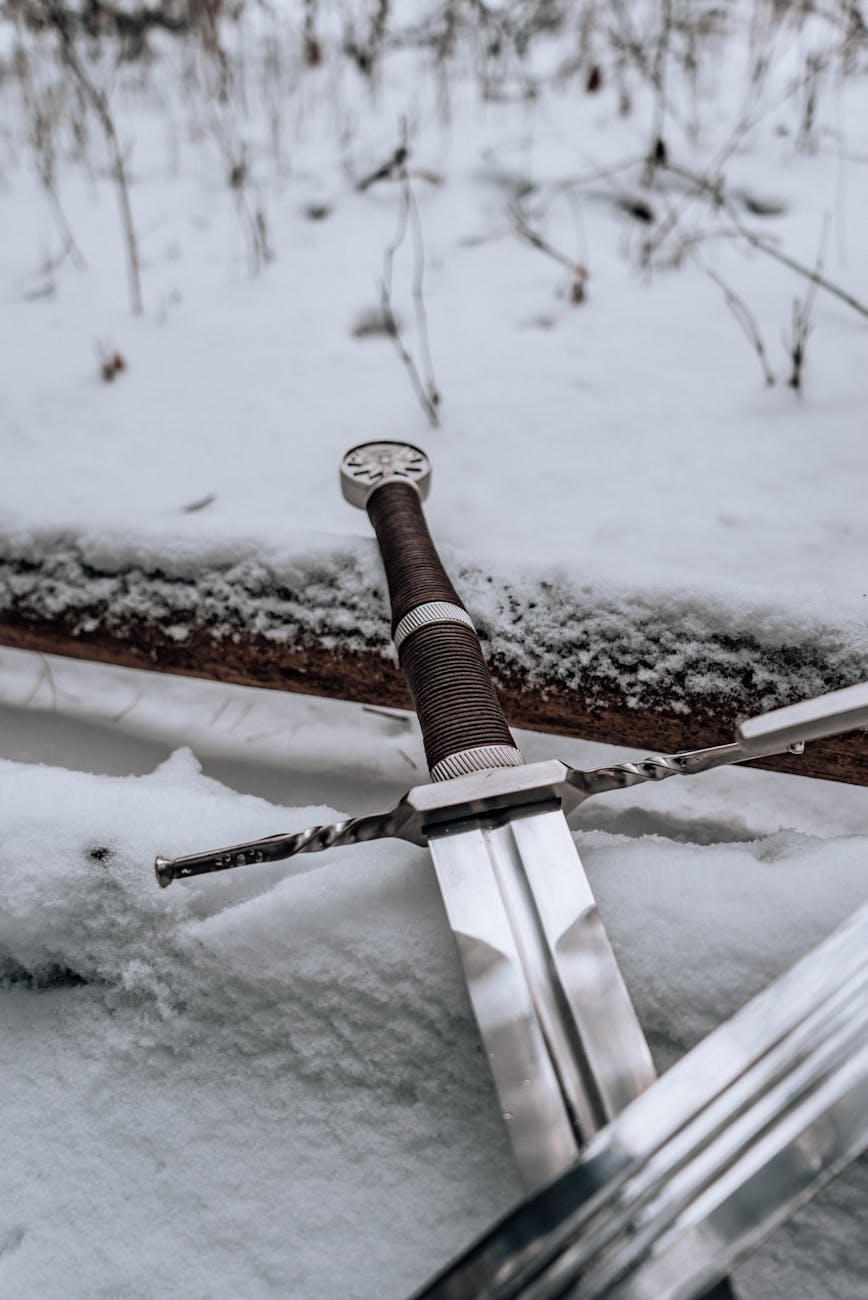
  • When the Sky Breaks: Arizona Hail and Louisiana Floods, or How I May Have Cheated Death Twice More on a Greyhound Bus

    When the Sky Breaks: Arizona Hail and Louisiana Floods, or How I May Have Cheated Death Twice More on a Greyhound Bus

    I realize now, looking back at my original plot armor post, that I made a promise I somehow failed to keep. I told you there were more tornado encounters to share, specifically mentioning a third one, and then I just left you hanging like a cliffhanger in a television show that gets canceled before the next season. So here I am, making good on that promise, though I have to warn you upfront that these next two encounters exist in a strange gray area between definite tornado stories and maybe just really aggressive weather that wanted to kill me but didn’t quite commit to the tornado aesthetic. The purists might argue with me, the meteorologists might shake their heads, but I’m counting them anyway because when you’re sitting in a Greyhound bus depot watching the sky try to murder everything outside, the technical classifications feel less important than the fact that you’re alive and the windows are still intact.

    The year was 2015, and my family decided that what we really needed was a trip to Arizona. Now, I don’t know if you’ve ever taken a Greyhound bus across multiple states, but it’s an experience that teaches you things about yourself, about humanity, and about exactly how long you can sit in one position before your legs forget they’re supposed to work. The trip out there was actually pretty smooth, all things considered. We watched the landscape change from whatever we started with to the kind of terrain that makes you wonder if Mars is really all that different from certain parts of the American Southwest. There’s something almost meditative about long bus rides when they’re going well, a kind of enforced stillness that lets your mind wander while your body is trapped in a seat that’s somehow both too soft and too hard at the same time.

    But then we got to Flagstaff, and the sky decided it had other plans for us. It started getting dark, and I don’t mean the natural darkness that comes with evening settling in like a comfortable blanket. This was the kind of darkness that arrives too early and too fast, the kind that makes you glance at your watch and think there’s been some kind of mistake, some cosmic error in the timing of sunset. The sky turned this sick yellowish gray color, the kind of color that shouldn’t exist in nature but somehow does right before everything goes sideways. I remember looking out the bus window and feeling that same familiar twist in my stomach that I’d felt during my previous tornado encounters, that little voice in the back of my mind whispering that maybe we should find somewhere solid to be very soon.

    Then the hail started. Not the cute little pellets that bounce off your windshield and make interesting sounds, but the kind of hail that arrives with serious intent to cause property damage. These weren’t ice cubes, they were ice rocks, ice weapons, frozen projectiles that the sky was hurling at the earth with what seemed like personal vendetta. The sound on the bus roof was incredible, this constant drumming that got louder and louder until conversation became impossible and we all just sat there listening to the sky’s percussion solo. I could see other passengers getting nervous, that particular kind of nervous where people start looking around for exits and authority figures, trying to figure out if this is the kind of situation where you’re supposed to do something or just trust that someone else knows what’s happening.

    Thankfully, and I mean this with every fiber of my being, we pulled into a bus depot right as things were getting truly apocalyptic outside. The timing was so perfect it almost felt scripted, like someone was watching over us and decided that this particular chapter of my life shouldn’t end with me as a hail casualty in Flagstaff, Arizona. We evacuated the bus and huddled inside the depot, which was one of those buildings that feels like it was constructed during an era when people built things to last, with solid walls and real substance. Through the windows, we watched the storm rage. The hail was coming down so thick you could barely see across the parking lot. It was piling up on the ground like snow, these little mountains of ice building up wherever the wind pushed them into drifts.

    Now here’s where I get into the tricky territory of classification. Was this a tornado? I honestly don’t know. There was no visible funnel cloud, no rotating wall of death that I could point to and say yes, definitively, that is the thing trying to kill me. The wind wasn’t doing that characteristic tornado howl, that freight train sound that everyone who’s experienced a real tornado talks about in the same hushed, traumatized tones. But the hail was severe, and severe hail often comes from the same supercell thunderstorms that produce tornadoes. The sky had that look, that feeling, that sense of something massive and angry churning above us. In my mind, even though I can’t prove it, even though I have no meteorological data to back me up, I count this as tornado encounter number three because it felt like I was in the presence of the same kind of atmospheric violence, just manifesting in a slightly different form.

    We waited out the storm in that depot, and I remember the strange camaraderie that develops among strangers when weather gets serious. People were sharing snacks, checking on each other’s kids, trading stories about other times they’d been stuck somewhere waiting for nature to calm down. There’s something about shared danger, even potential danger, that breaks down the normal walls people keep up. The woman sitting next to my mom started talking about a hurricane she’d lived through in Florida, and before long half the depot was swapping disaster stories like they were trading baseball cards. I contributed my previous tornado encounters, and people nodded with that look that says they get it, they understand what it’s like to feel small and fragile in the face of weather that doesn’t care about your plans or your existence.

    Eventually the hail stopped, the sky lightened from angry bruise colors back to something approaching normal, and we all filed back onto the bus to continue our journey. The parking lot looked like a war zone, car windows shattered, dents everywhere, ice still scattered across the asphalt in defiance of the Arizona heat that was already starting to reassert itself. We drove away from Flagstaff feeling like we’d dodged something, even if we couldn’t quite name what it was.

    The rest of the Arizona trip was actually lovely. We saw the Grand Canyon, we explored desert landscapes, we ate food and took pictures and did all the normal things people do on vacations. But in the back of my mind, I kept thinking about that storm, about how close we’d come to being caught in it without shelter, about the timing that had put us at that depot at exactly the right moment. Plot armor, I thought. Still holding up.

    Then came the journey home, and apparently the universe wasn’t done testing my protective shield. We were somewhere in Louisiana, exact location hazy in my memory because Greyhound bus routes all start to blur together after a certain number of hours, when the rain started. This wasn’t Arizona hail, this was pure liquid falling from the sky in quantities that made you question whether the whole concept of air was just going to be replaced with water. The rain was so heavy that the windshield wipers were essentially decorative, doing nothing to improve visibility because there was simply too much water for them to handle. It was like someone had turned a fire hose on the bus and decided to just leave it running.

    Then the flash flood warnings started. I don’t know if you’ve ever experienced a flash flood, but the thing about them is that they live up to the flash part of their name. Water goes from not there to very aggressively there in a timespan that doesn’t give you a lot of options for graceful evacuation. I could see water rising on the sides of the road, could see it rushing across the pavement in sheets that turned highways into rivers. Other vehicles were pulling over, hazard lights blinking like frightened eyes in the deluge. The bus driver, bless his professional soul, made the decision to get us to the nearest depot rather than try to tough it out on increasingly questionable roads.

    We made it to another bus station, different state but same energy as the Flagstaff depot, and once again found ourselves as refugees from weather, watching through windows as Louisiana tried to wash itself into the Gulf of Mexico. The rain was relentless, coming down in gray sheets that reduced the world to vague shapes and running water. I could hear thunder, that deep rolling kind that you feel in your chest as much as hear with your ears, but again, no obvious tornado. No funnel cloud, no rotating winds, no debris flying through the air in organized destructive patterns. Just rain, vast quantities of rain, the kind of rain that makes you wonder if maybe Noah had the right idea with that ark thing.

    So was this tornado encounter number four? Again, I’m in that uncertain territory. Flash floods and tornadoes often come from similar weather systems, the same kind of severe thunderstorms that meteorologists get excited about in ways that normal people find slightly disturbing. The sky had that same ominous quality, that sense of something powerful and indifferent operating above us. But without the wind, without the visible funnel, without those telltale signs that specifically scream tornado, I can’t say for certain. What I can say is that it felt dangerous, it felt like we were once again in a situation where the wrong timing or the wrong decision could have led to very bad outcomes.

    The thing about these two encounters that makes me still count them as part of my tornado story collection, even with the asterisks and qualifications, is that they taught me the same lesson as the definite tornado encounters. Weather doesn’t care about you. Nature isn’t malicious, but it’s not benevolent either. It’s indifferent, operating on scales and according to rules that have nothing to do with human convenience or human survival. Whether it’s a tornado specifically or just the kind of severe weather that often accompanies tornadoes, the result is the same: you’re reminded of how little control you actually have, how much of your continued existence depends on factors entirely outside your influence.

    I think about those bus depots sometimes, those random buildings in Flagstaff and Louisiana that became temporary shelters from atmospheric violence. I think about the timing that put us at those locations at exactly the right moments, the decisions made by bus drivers who probably just saw it as doing their jobs but who might have actually saved lives. I think about all the small factors that have to align for you to walk away from dangerous weather unscathed, all the little pieces of luck or fate or whatever you want to call it that add up to survival.

    The debate over whether these were real tornado encounters or just really bad storms feels almost beside the point now. What matters is that I’ve had four experiences, two definite and two possible, where I’ve been in the presence of weather that had the power to end me and chose not to, or where circumstances aligned to keep me safe despite the danger. Four times I’ve felt that particular combination of awe and terror that comes from watching nature flex its muscles. Four times I’ve walked away thinking about plot armor and probability and the strange fact of my continued existence.

    Maybe I’m being generous with my classifications, maybe a strict meteorologist would laugh at me for counting hail and floods as tornado stories. But when you’re sitting in a bus depot listening to ice destroy everything outside, or watching floodwaters rise while rain falls like the sky is actively trying to drown the world, the technical distinctions feel less important than the visceral experience of danger. These storms may not have been tornadoes in the technical sense, but they came from the same family, the same atmospheric conditions, the same kind of severe weather systems that spawn the rotating columns of destruction I’d encountered before.

    So there you have it, the continuation of my tornado story that I promised and then somehow forgot to include. Two more encounters with severe weather, two more times when timing and luck and whatever else you want to attribute it to kept me safe. My plot armor remains intact, though I’m increasingly aware that armor can always fail, that luck eventually runs out, that the universe doesn’t actually owe me continued protection from atmospheric violence. But for now, I’m still here, still able to tell these stories, still marveling at the strange fact that I’ve had four brushes with the kind of weather that makes headlines when it kills people, and I’ve walked away from all of them with nothing more than memories and a healthy respect for the power of the sky.

    The next time someone tells me they’re taking a Greyhound bus trip across multiple states, I’ll probably share these stories, probably watch their faces as they realize that long-distance bus travel comes with risks beyond uncomfortable seats and questionable rest stops. But I’ll also tell them about the depots that sheltered us, about the drivers who made good decisions, about the strange kindness of strangers sharing snacks during storms. Because that’s part of these stories too, the human element that exists alongside the atmospheric violence, the way people come together when weather reminds us all how fragile we really are. Whether these were tornadoes or not, they were experiences that shaped how I see the world, how I understand my place in it, and how grateful I am for every day when the sky stays calm and the air stays still.

  • Stop Watering It Down: Why Diluting Mouthwash Is False Frugality and Self-Sabotage

    Stop Watering It Down: Why Diluting Mouthwash Is False Frugality and Self-Sabotage

    There are few habits that feel so strangely symbolic of modern life as the act of stretching products past their intended use. We dilute soap. We water down juice. We scrape the last microscopic remains from bottles as if victory itself lives at the bottom. And among these rituals sits one that, for reasons both practical and psychological, just gets under my skin: people adding water to mouthwash to “make it last longer.” On the surface, it seems harmless. Even clever. A hack. A life tip. A frugal move in an age where everything feels expensive. But when you actually think about what mouthwash is, what it does, and why it works, that little splash of water stops looking smart and starts looking self-defeating. Because yes, technically you’re stretching it. But you’re also diluting the very thing that makes it effective in the first place.

    Mouthwash is not juice. It’s not coffee. It’s not something whose primary value lies in flavor or hydration. It’s a carefully formulated antiseptic or therapeutic solution designed to do a specific job inside your mouth. Whether you’re using a cosmetic rinse like Listerine, a fluoride-based rinse like ACT, or a prescription-strength antimicrobial rinse such as Peridex, the formula has been balanced at a particular concentration. That concentration matters. The essential oils, the alcohol content (if present), the fluoride ions, or the chlorhexidine are included in amounts that are scientifically determined to achieve specific outcomes. Kill bacteria. Reduce plaque. Strengthen enamel. Prevent gingivitis. Freshen breath. When you add water to it, you are not just increasing volume. You are decreasing concentration. And with that, you are weakening the intended effect.

    It’s strange how people intellectually understand dilution in other contexts. If you water down paint, you change its coverage. If you water down cleaning solution, it loses strength. If you water down coffee, you don’t get “more coffee.” You get weaker coffee. But with mouthwash, something in our brains flips. We think, “Well, it’s still mouthwash. There’s still active stuff in there.” Sure. There is. But less per swish. Less per rinse. Less per exposure. And when the job is killing bacteria or delivering fluoride to enamel, that “less” matters.

    The entire point of mouthwash is contact time at an effective concentration. You swish it around for 30 seconds, sometimes a minute. During that time, the active ingredients interact with bacteria, plaque biofilm, and the surfaces of your teeth and gums. That interaction is not magical. It’s chemical. And chemistry cares about concentration. Lower the concentration, and you reduce efficacy. That’s not opinion. That’s basic science. If something is designed to be 100% strength and you turn it into 75% or 50%, you are changing the dosage. You are modifying the treatment without expertise. You are essentially self-prescribing a weaker version of something that was already calibrated.

    Now, some people might argue that dentists sometimes recommend diluted rinses in specific cases. And yes, in controlled situations, a professional might advise dilution to reduce irritation or adjust sensitivity. But that’s a medical instruction based on context, not a blanket strategy for making a bottle last an extra week. There’s a massive difference between a clinician recommending a modified use and someone eyeballing tap water into a capful because they want to save a few bucks.

    And let’s talk about the “saving money” argument. Mouthwash, relative to so many other expenses, is not some astronomical luxury. A standard bottle can last weeks if used correctly. The cost per use is usually cents. If your goal is frugality, there are far more impactful areas to cut spending. You could buy store brands instead of premium labels. You could use it once daily instead of twice if appropriate. You could even question whether you need cosmetic mouthwash at all if brushing and flossing are sufficient. But adding water? That’s not strategic budgeting. That’s placebo economics. It feels like savings without actually delivering meaningful value.

    There’s also something psychologically revealing about the act. Diluting mouthwash to stretch it is a tiny act of scarcity thinking. It reflects a mindset that says, “I must extract every possible drop, even if it compromises the function.” And that’s understandable in certain circumstances. People stretch things when money is tight. When resources feel limited. When uncertainty looms. But in the context of oral hygiene—a basic, preventative health practice—it becomes counterproductive. Because the cost of inadequate oral care down the line far exceeds the few cents saved by watering down a rinse.

    Dental problems are not minor inconveniences. Cavities turn into fillings. Fillings turn into crowns. Gingivitis turns into periodontitis. Periodontal disease can lead to tooth loss. And beyond aesthetics, oral health is tied to systemic health—cardiovascular issues, inflammation, and more. The mouth is not isolated from the body. It’s an entry point. So if you’re using mouthwash for therapeutic reasons, intentionally weakening it is a strange gamble.

    Then there’s the consistency issue. Mouthwash formulas are stable as packaged. When you add water, especially tap water, you introduce variables. Water quality differs. Mineral content differs. Microbial presence differs. While modern tap water is generally safe, once you alter a product’s composition and then let it sit, you’re no longer using it as intended. You’ve changed the solution. You’ve shifted its chemical balance. You’ve potentially altered its shelf stability. It’s no longer what the manufacturer tested and approved.

    And let’s be honest about something else: the sensory experience changes too. Mouthwash is supposed to feel strong. That burn, that tingle, that intensity—those sensations are part of the perception of cleanliness. When you dilute it, you reduce that sensation. Some people prefer that because they find full-strength mouthwash too harsh. And that’s fair. If the strength is uncomfortable, switching to an alcohol-free version or a milder formula makes sense. But watering it down instead of choosing a product designed for your tolerance is like modifying a medication instead of choosing a different prescription.

    There’s also an irony here. Many people who dilute mouthwash are doing it in the name of maximizing value. But value is not just volume. Value is effectiveness. If you double the volume but halve the efficacy, you haven’t gained anything meaningful. You’ve just prolonged a weaker routine. You’re swishing something that feels like mouthwash but doesn’t perform like it was designed to.

    I think part of what makes this irritating is that it represents a broader cultural trend of hacks over fundamentals. We love hacks. We love clever shortcuts. We love feeling like we’ve outsmarted the system. But sometimes the simplest answer is the correct one: use products as intended. If you can’t afford a particular brand, choose a cheaper one. If you don’t like the intensity, choose a milder formula. If you don’t think you need it, skip it and focus on brushing and flossing properly. But don’t pretend dilution is some genius optimization.

    There’s also something quietly symbolic about watering things down in general. It’s like we’re afraid of strength. Afraid of intensity. We soften everything. Tone down flavors. Tone down opinions. Tone down concentration. And maybe that’s reaching too far into metaphor, but it’s hard not to see the parallel. Mouthwash is designed to be potent. It’s meant to confront bacteria aggressively. When you dilute it, you’re literally reducing its punch.

    And sure, maybe for someone with healthy gums, low cavity risk, and excellent brushing habits, the difference won’t be catastrophic. Maybe diluted mouthwash is still better than none. That’s possible. But that’s not the point. The point is intentionality. If you choose to use a product, use it properly. Respect the formulation. Respect the chemistry. Respect the purpose.

    If the real issue is cost of living—because let’s be real, that’s often lurking beneath these habits—then the conversation should be about affordability, wages, healthcare access, and preventative care. It shouldn’t be about quietly weakening hygiene products and calling it a win. The frustration isn’t really about mouthwash. It’s about the normalization of half-measures that masquerade as clever solutions.

    And maybe there’s an emotional layer too. There’s something about seeing someone dilute mouthwash that feels like watching someone sabotage their own effort. They’re trying. They care enough to rinse. But then they undercut the very thing they’re doing. It’s like studying for an exam but only reading every other page. Or going to the gym and lifting weights at half resistance because you want the workout to last longer. Duration doesn’t equal effectiveness. Concentration matters.

    At the end of the day, this isn’t about shaming people. It’s about clarity. If you want to save money, do it strategically. If you want gentler mouthwash, buy gentler mouthwash. If you want to skip it entirely and rely on brushing and flossing, that’s a legitimate debate to have. But adding water and pretending nothing changes? That’s just basic dilution. Physics and chemistry don’t bend to thriftiness.

    You are not creating more antiseptic power. You are dispersing it. You are not increasing strength. You are lowering it. And maybe that’s fine if you accept it knowingly. But let’s at least be honest about what’s happening. When you pour water into that bottle, you are not stretching effectiveness. You are stretching liquid. There is a difference.

    Sometimes the simplest truth is the most annoying one: things work at the strength they were designed to work at. Watering them down doesn’t make you clever. It just makes them weaker.

  • One Year as a Published Author: Reflecting on an Unexpected Journey

    One Year as a Published Author: Reflecting on an Unexpected Journey

    February 15, 2026 marks a milestone I never quite imagined I would reach, at least not in the way it has unfolded. One year ago today, I officially became a published author when my debut novel “Wonderment Within Weirdness” was released into the world. As I sit here reflecting on the past twelve months, I find myself almost disbelieving that not only did I publish that first book, but I somehow managed to release two additional books during the summer of 2025, my poetry compilation “My Powerful Poems” and my short story collection “Some Small Short Stories.” Three books in one year. The thought still catches me off guard, fills me with a strange mixture of pride and bewilderment, as if I’m looking at someone else’s accomplishments rather than my own.

    There’s something profoundly transformative about becoming a published author. The moment “Wonderment Within Weirdness” went live, something shifted in how I saw myself and my relationship with writing. For years before that, writing had been something I did, a passion I pursued in the margins of my life, but it wasn’t necessarily who I was in any official capacity. I was someone who wrote, sure, but calling myself a writer felt presumptuous, like claiming a title I hadn’t quite earned. Publishing that debut novel changed everything. Suddenly, the identity wasn’t aspirational anymore, it was actual. I had created something tangible that existed beyond my own computer files and notebooks, something that other people could hold, read, and experience. That transition from private creator to public author felt both terrifying and exhilarating, like stepping off a cliff and discovering I could fly.

    “Wonderment Within Weirdness” was a labor of love that took far longer to complete than I ever anticipated. Like many debut novels, it went through countless revisions, moments of self-doubt, periods where I was convinced it was brilliant followed immediately by periods where I was certain it was irredeemable garbage. The writing process taught me patience with myself, taught me that creation is rarely linear, that sometimes you have to write yourself into corners just to discover new doors. When I finally decided it was ready, when I finally took that leap and actually published it, I remember feeling this overwhelming sense of vulnerability. Putting your work out there for public consumption is an act of courage that non-writers sometimes don’t fully appreciate. You’re not just sharing words on a page, you’re sharing pieces of your imagination, your perspective, your soul in some fundamental way.

    What I didn’t anticipate on that February day in 2025 was how publishing that first book would unleash something within me. It was as if releasing “Wonderment Within Weirdness” into the world opened a creative floodgate I didn’t even know existed. Throughout the spring of 2025, I found myself writing with a fervor and consistency that surprised me. The poetry that had been accumulating in various notebooks and digital files for years suddenly felt like it deserved to be compiled, organized, given its own home. The short stories I had written sporadically, often as experiments or exercises or just bursts of inspiration, began to look like they could form a cohesive collection. Where publishing my debut novel had once seemed like the culmination of years of work, it now felt more like a beginning, a doorway opening onto a path I hadn’t fully considered walking.

    By summer 2025, I had made the decision to publish not one but two additional books. “My Powerful Poems” became my second published work, a collection that felt intensely personal in a different way than the novel had. Poetry strips away so much of the protective narrative distance that fiction provides. Each poem was a distilled moment of emotion, observation, or insight, laid bare without the comfortable camouflage of characters and plot. Compiling that collection meant revisiting different versions of myself, the person I was when I wrote each piece, the moments of joy or pain or wonder that had inspired the words. It meant curating an emotional landscape and inviting readers to walk through it with me. The vulnerability of publishing poetry felt even more acute than publishing fiction, yet there was also something deeply satisfying about it, about saying these are my truths, these are my observations of the world, take them or leave them.

    Following closely on the heels of the poetry collection came “Some Small Short Stories,” which gathered together the narrative fragments and complete miniature worlds I had created over time. Short stories are a unique form, requiring precision and economy in a way that novels don’t. Each story in that collection represented a different experiment in voice, perspective, genre, or style. Some were realistic, some ventured into the strange and surreal, some were humorous, others melancholic. Putting them together into one collection felt like creating a gallery of different moments and moods, a showcase of range rather than a single sustained vision. I loved the freedom that collection represented, the way it didn’t have to be any one thing but could contain multitudes.

    Looking back at the publishing journey of those three books across 2025, I’m struck by how much I learned in such a compressed timeframe. Each book taught me different lessons about the craft of writing, the business of publishing, and the experience of being an author. “Wonderment Within Weirdness” taught me about sustained narrative, about character development, about weaving together plot threads and themes across hundreds of pages. It taught me about the marathon of novel writing, the endurance required to stay committed to a single project through all its ups and downs. “My Powerful Poems” taught me about distillation, about finding the exact right word, about the music of language and the power of white space on a page. It taught me to trust emotion, to not overexplain, to let readers bring their own experiences to the work. “Some Small Short Stories” taught me about versatility, about the sprint of short fiction versus the marathon of novel writing, about beginnings and endings and making every word count.

    Beyond the craft lessons, publishing three books in one year taught me practical things about the publishing process itself, especially as someone navigating the world of independent publishing. I learned about formatting and cover design, about metadata and keywords, about the strange alchemy of trying to find readers in an oversaturated marketplace. I learned about the importance of patience, about how building an audience is a slow process that can’t be rushed. I learned that publishing a book is just the beginning of its journey, not the end, and that the work of being an author extends far beyond the writing itself into promotion, engagement, and community building. These weren’t lessons I necessarily wanted to learn, they felt less romantic than the pure act of creation, but they were necessary ones, grounding my artistic aspirations in practical reality.

    What strikes me most profoundly as I mark this one-year anniversary is the sheer unexpectedness of it all. A year ago, if someone had told me I would publish three books in twelve months, I would have laughed at the impossibility of it. My aspirations were much more modest, I just wanted to get that debut novel out there and see what happened. I didn’t have a master plan for multiple releases, I wasn’t following some strategic publishing roadmap. Instead, each book emerged organically from the momentum created by the one before it. Publishing “Wonderment Within Weirdness” didn’t exhaust my creative energy, it multiplied it. It gave me confidence I hadn’t possessed before, a belief that my work was worth sharing, that I had more to say and people might want to listen.

    This anniversary also prompts reflection on what it means to call something an accomplishment. We live in a culture that often measures success in quantifiable external metrics, sales numbers, bestseller lists, awards, recognition. By those standards, I can’t claim massive success. My books haven’t topped any charts, I haven’t quit my day job to write full-time, I’m not fielding offers from major publishers or Hollywood producers. But accomplishment, I’ve learned, can be measured in different ways. The fact that I wrote three books, that I brought them from conception to completion to publication, that I overcame all the internal resistance and self-doubt and fear that plagues every writer, that alone feels monumental. The fact that even one person I don’t personally know has read my work and connected with it, that’s meaningful in a way that transcends commercial metrics.

    There’s also something to be said for the accomplishment of consistency, of showing up to the work again and again across a full year. Writing requires discipline, especially when inspiration wanes, when life gets busy, when the initial excitement of a new project fades into the hard middle where you’re not sure if what you’re creating has any value. Publishing three books meant showing up consistently to the page, trusting the process even when I couldn’t see the endpoint, pushing through the resistance that tried to convince me I had nothing worthwhile to say. It meant honoring the commitment I made to myself to be a writer not just in identity but in practice, day after day, word after word, until those words accumulated into complete works.

    As I think about the year ahead, I find myself in an interesting position. The urgency that drove me through 2025, that led to three publications in rapid succession, has settled into something different. I don’t feel the same pressure to prove anything, either to myself or to others. I’ve done the thing, I’ve published books, I’ve earned the title of author in a concrete way. Now the question becomes what kind of author I want to be moving forward, what stories and ideas deserve my attention and energy, how I want to balance the creation of new work with the cultivation of what I’ve already released. There’s a freedom in having accomplished something you once thought impossible, it gives you permission to be more intentional, more selective, more patient with yourself and the creative process.

    Part of me wonders if I’ll publish anything in 2026, or if this will be a year of rest and renewal, of filling the creative well rather than drawing from it. I’ve learned that sustainable creativity requires cycles of output and input, of speaking and listening, of sharing your vision and absorbing the visions of others. After the intense productivity of 2025, perhaps what I need most is spaciousness, room to experiment without the pressure of publication, permission to write things that might never see the light of day simply because they help me grow and explore. Or perhaps I’ll surprise myself again, perhaps there’s another book waiting to emerge that I haven’t yet recognized. The beauty of having made it through this first year is that I now trust the process more, trust that the work will make itself known when it’s ready.

    What I do know is that I’m grateful for this year, for everything it taught me, for the ways it challenged and changed me. February 15, 2026 isn’t just an anniversary of publication, it’s an anniversary of transformation, of becoming something I always hoped I could be but wasn’t sure I actually would. It’s a marker of courage, of the decision to stop waiting for permission or perfect circumstances and to simply begin, to put my work into the world despite all the reasons not to. Every writer I admire had to start somewhere, had to publish that first book, had to push through the fear and uncertainty and just do the thing. I did that. I’m doing that. And that’s worth celebrating.

    Looking at those three books, “Wonderment Within Weirdness,” “My Powerful Poems,” and “Some Small Short Stories,” I see a year of my life crystallized into words. I see the person I was when I wrote each piece, the hopes and fears and observations that shaped the work. I see evidence of growth, of experimentation, of a willingness to try different forms and voices. They’re imperfect, of course, all creative work is imperfect because we ourselves are imperfect. There are things I would change if I could go back, passages I would rewrite, choices I would reconsider. But they also represent something complete, something finished, something that exists independently in the world now. They’re no longer just mine, they belong to whoever reads them, interpreted through the lens of each reader’s unique experience and perspective.

    This anniversary makes me think about all the aspiring writers out there who are where I was two years ago, sitting on completed manuscripts or half-finished projects, wanting to publish but not quite ready to take the leap. If I could offer any wisdom from my year as a published author, it would be this: just start. Don’t wait for everything to be perfect, because it never will be. Don’t wait until you feel completely ready, because that feeling might never come. Don’t wait for someone to give you permission or validate your work, because you are the only permission you need. The difference between an unpublished writer and a published author is simply the decision to share your work, to take that terrifying step from private creation to public offering. Everything else is just details.

    As I close out these reflections on my first year as a published author, I’m filled with a quiet sense of pride that feels hard-earned and genuine. Three books. One year. It’s an accomplishment not because of any external validation, but because I set out to do something difficult and I did it. I faced every obstacle, internal and external, that tried to stop me, and I persisted. I honored my creative voice enough to believe it deserved to be heard. I trusted myself enough to put imperfect work into the world rather than keeping it hidden in pursuit of an impossible perfection. That’s what I’m celebrating on this February 15, 2026, not just the books themselves, but the growth they represent, the courage they required, the transformation they catalyzed.

    Here’s to one year as a published author, to “Wonderment Within Weirdness” and “My Powerful Poems” and “Some Small Short Stories,” to unexpected journeys and surprising productivity, to creative risks and vulnerable sharing, to the terror and joy of putting your work into the world. Here’s to whatever comes next, whether it’s more books or fallow periods, new experiments or deeper dives into familiar territory. Here’s to the ongoing adventure of being a writer, with all its challenges and rewards, its frustrations and fulfillments. And here’s to anyone reading this who has their own creative dreams waiting to be realized: may you find the courage to begin, the persistence to continue, and the satisfaction of looking back one day and marveling at how far you’ve come.

    Fediverse Reactions