
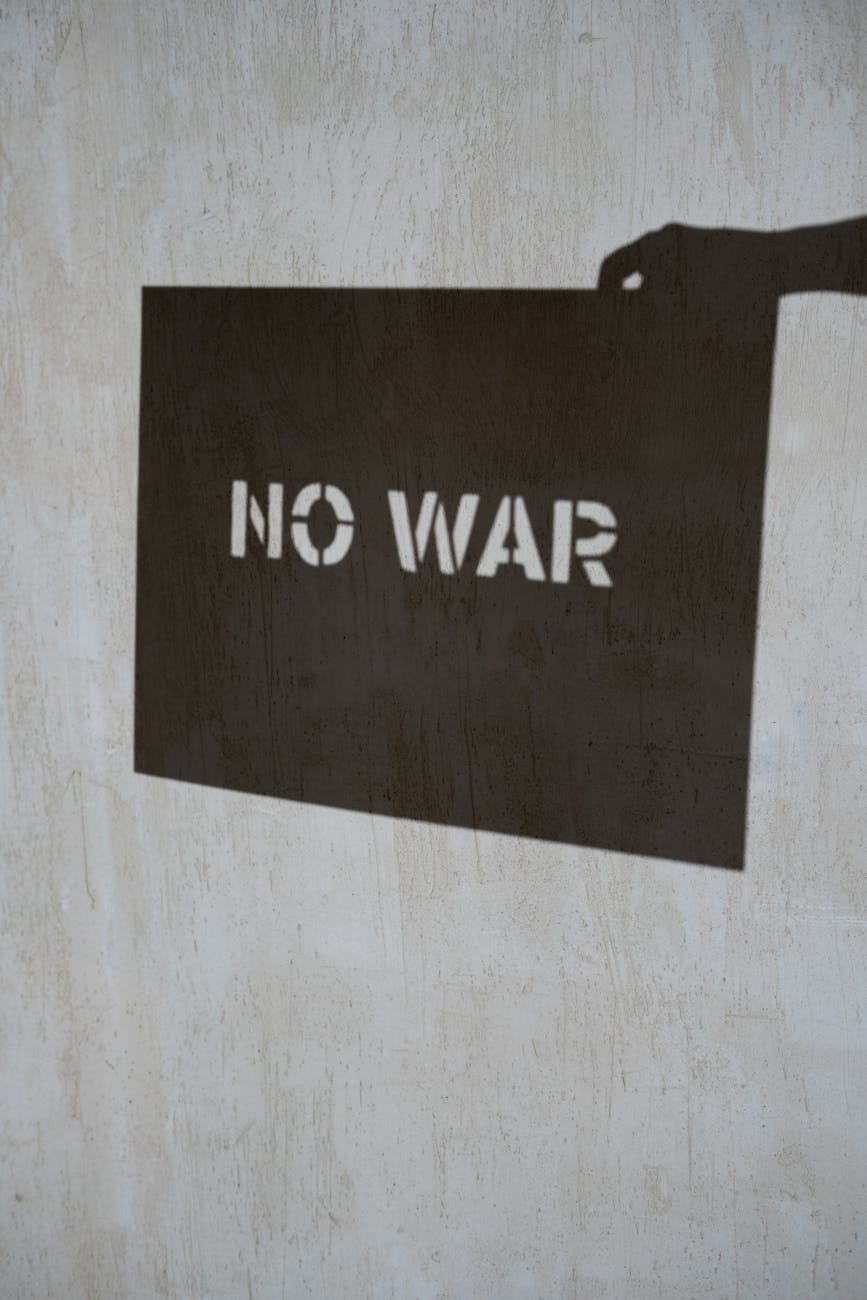
There are moments when the news cycle becomes so overwhelming that it pushes everything else out of your mind. This is one of those moments. The war with Iran is dominating the headlines, dominating conversations, dominating social media feeds, and frankly dominating my thoughts. When something like this happens — when the world suddenly feels like it has tilted toward chaos — it becomes hard to focus on anything else. And since these are my blogs, my spaces to think out loud, to process what is happening in the world, it only makes sense that I write about what is weighing on my mind right now: the growing war with Iran and why it should never have happened.
On February 28, 2026, the United States and Israel launched major coordinated strikes on Iran, triggering a regional conflict that has already spread across multiple countries. The opening attacks targeted Iranian military and leadership sites, and the situation escalated rapidly as Iran responded with missile and drone strikes across the region. In the days since, civilians have died, infrastructure has been damaged, and the conflict has expanded beyond the borders of Iran itself. Missiles have flown across the Middle East, and the ripple effects are being felt far beyond the battlefield.
This is exactly the kind of scenario many people feared for years. Iran is not some small isolated state that can be bombed without consequences. It is a major regional power with alliances, proxy networks, and the ability to retaliate asymmetrically. When a war begins under those conditions, the consequences rarely stay contained. They spill outward.
We are already seeing that happen.
Iran has launched retaliatory attacks across the region, targeting locations connected to the United States and its allies. Gulf states have experienced missile and drone strikes. Military installations have been threatened. Airspace has been disrupted. Entire cities are now living under the shadow of possible escalation.
War is often framed by politicians as something controlled and strategic. The language they use is always sanitized — “operations,” “objectives,” “deterrence,” “neutralizing threats.” But the reality on the ground is never that neat. War means people dying. It means families being displaced. It means economies destabilized. It means entire regions thrown into uncertainty.
One of the most disturbing elements of this conflict is how quickly leadership targeting became part of the strategy. Iranian Supreme Leader Ayatollah Ali Khamenei was reportedly killed during the opening strikes, an event that radically altered the political landscape inside Iran. Whether one agrees or disagrees with the Iranian government, eliminating the leader of a sovereign state is not a minor escalation. It fundamentally transforms the nature of the conflict.
History has shown again and again that decapitation strikes rarely bring stability. Instead, they often create power vacuums, internal struggles, and unpredictable political outcomes. Removing a leader does not remove a system. It does not erase grievances. It does not eliminate the networks of influence that already exist.
If anything, it often intensifies them.
Another troubling aspect of this conflict is how quickly the human cost has mounted. Reports from the region indicate that hundreds of people have already been killed and many more injured, including civilians caught in the crossfire. In one particularly horrifying case, an attack reportedly struck a school, killing scores of children. These are the realities that tend to get lost when war is discussed purely in strategic terms.
Behind every statistic is a human life.
Behind every casualty figure is a family that will never be the same.
It is also important to recognize that public opinion inside the United States does not appear to support this conflict as strongly as some leaders might hope. Polling conducted in the early days of the war indicates that a majority of Americans oppose military action against Iran and disapprove of how the conflict is being handled. That sentiment reflects a deep fatigue with endless wars that stretch on for years while delivering little in terms of security or stability.
Many people in this country remember the wars in Iraq and Afghanistan. They remember the promises that those conflicts would be quick, decisive, and necessary. They remember how those promises unraveled over time.
Those memories matter.
Because they remind us that war is rarely as simple as the people advocating for it claim.
There is also a broader geopolitical dimension to consider. Major world powers are watching this conflict closely. China has already warned that the war “should never have happened” and has urged diplomatic solutions rather than escalation. European leaders have raised serious concerns about the legality of the attacks under international law. These reactions highlight the fact that this is not just a regional crisis. It has global implications.
If the conflict expands further, it could draw in additional countries and destabilize international alliances in ways that are difficult to predict.
That possibility alone should make anyone pause.
At times like this, it is easy to feel powerless. War decisions are made by governments and military leaders, far removed from the daily lives of ordinary people. But public voices still matter. History shows that widespread opposition to war can influence political decisions, shape public discourse, and push leaders toward diplomacy rather than escalation.
That is why speaking out matters.
That is why writing about it matters.
And that is why this post exists.
This blog — The Musings of Jaime David — has always been a place where I try to process the world around me. Sometimes that means writing about literature or creativity. Sometimes it means reflecting on science or philosophy. And sometimes it means confronting the harsh realities of politics and global conflict.
Right now, the reality is simple: this war is dangerous.
It is dangerous for the Middle East.
It is dangerous for global stability.
And it is dangerous for the countless civilians who will ultimately pay the price for decisions made far above their heads.
War has a way of expanding beyond the intentions of the people who start it. Conflicts that begin with limited objectives can spiral into something far larger and more destructive. That possibility is exactly why so many people warned against attacking Iran in the first place.
Those warnings were not about defending any particular government.
They were about recognizing the risks of escalation.
They were about understanding that once the machinery of war begins moving, it becomes incredibly difficult to stop.
Right now, the world stands at a crossroads. The conflict could continue escalating, drawing in more countries and producing even greater destruction. Or leaders could step back, pursue negotiations, and attempt to prevent the situation from spiraling further out of control.
The path forward is not predetermined.
But the longer bombs continue to fall, the harder it becomes to turn back.
That is why the message remains simple, even if the situation itself is complex.
No war with Iran.
Not now.
Not ever.
Leave a Reply