The Musings of Jaime David
@jaimedavid.blog@jaimedavid.blog

The writings of some random dude on the internet

1,089 posts
1 follower

Tag: space

  • Musing Mondays #4: The Paradox of Nothingness

    Musing Mondays #4: The Paradox of Nothingness

    Have you ever wondered about the concept of nothing? I don’t mean the idea of a void or absence, but nothingness itself. It’s a funny thing to think about because, according to physics, there can never truly be “nothing.” Matter and energy, as we know, cannot be destroyed. This leads to a strange conclusion: nothing is not really “nothing” at all.

    At first, it seems paradoxical. If nothing is the absence of everything, how can it exist? If it doesn’t exist, then how can we even talk about it? But the moment we start defining it, nothing becomes something. Just the act of naming it, of calling it nothing, gives it a kind of existence in our minds, in our language, and in our concepts. The word “nothing” itself is something. It’s a label we’ve attached to a concept that doesn’t seem to have any tangible substance.

    Then, there’s the deeper wrinkle: the idea that even the “existence” of nothingness is something. It’s a strange but thought-provoking idea. We can observe the effects of nothing—we can measure the absence of matter or the vacuum of space, even though we can’t physically interact with or directly see nothing itself. We can detect the effects of “empty space” with instruments, like how we can see the bending of light around a black hole or detect the ripple of gravitational waves. So, while nothing itself cannot be seen or touched, the absence of something still has an impact, a kind of presence that can be quantified.

    In a way, nothing has become something because it is defined, observed, and compared to the something around it. It’s a bit of a mind-bender, but it’s a reminder of how even the absence of something still requires us to engage with it, to think about it, and to recognize its effects on everything else. It’s like a ghost that doesn’t exist in a traditional sense but leaves traces in the world around it.

    So, in a curious twist of logic, perhaps nothing is always tied to something—it’s the paradox of being unable to truly experience nothingness without also experiencing its relationship to everything else.
  • The World Is On Fire

    The World Is On Fire

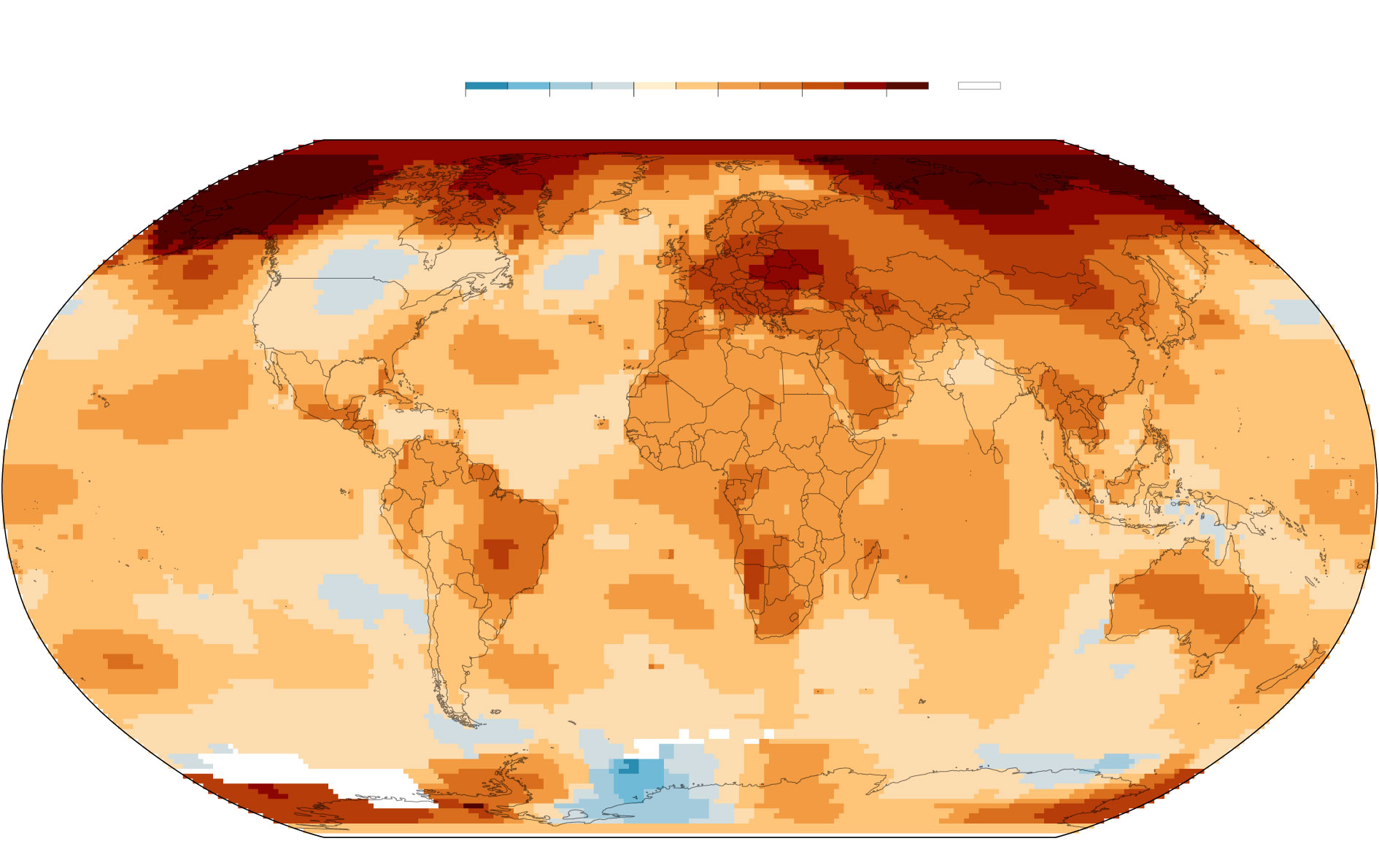
    The world is on fire. It is currently burning. The temperatures keep on rising. It’s becoming alarming. This changing climate is becoming a crisis, and it’s a crisis that’s very frightening. If we don’t solve this soon, the world could come to an end. Maybe not the planet, but everything that lives in it. There would be no more humans and no more amazing creations. Monumental monuments like The Statue of Liberty would eventually become nothing but dust and debris if humans were to go extinct. Eventually, the same would happen to buildings, and everything else in between. They’d all turn into dust, just like us. If we were not here, anything we created would not matter at all. Anything that was floating in space would come crashing down to the Earth, setting everything ablaze. Eventually, nuclear reactors would start to meltdown, and all of the radiation that’s in them would all get let out.

    All of the animals that are alive right now would be on their own, if they were not wiped out. There would probably be a few. Most of them would live underground. The ones that were above ground would most likely all die out if the climate were to get chaotic. They would thrive and populate underneath the Earth’s surface, and eventually they’ll reclaim the surface. Eventually, the radiation would decay, and the greenhouse gases would get replaced, and the planet will heal itself like it had a bad sickness. We won’t be here, and neither would a lot of other species, but there would be new species. They’d be survivors. They would survive us. They could potentially be the ones that reach our level of intellect. They could be reptilian. They could be arachnids. They could even be gigantic cockroaches. Whatever they are, they have the potential to take this planet to the stars if we ourselves don’t get to. They could learn from our mistakes. They could be better than us. They may develop intricate societies that have a diversity of species all living in harmony. It would definitely be an amazing sight to see.

    They’d eventually develop space travel, and take us to the Moon. They’d take us to Jupiter and Venus and even Mars, too. They’d even probably take us all the way to Pluto. Who knows? They could possibly take us to see the entire Milky Way! We may discover different species living on other planets, and these species may be as smart as us and them, and have a complex intellect. It would be so cool to see.

    The question is, would Earthlings be seen as threats, or will they be welcomed? Is it also possible that they’d be enslaved and treated like pets? There are so many questions that one has to ask when dealing with the possibility of becoming an intergalactic race.

    All I do know is, I hope they would learn from our mistakes. If our species dies out, and does not get to see the future, I hope that whatever species in the far distant future that reaches sapience learns from humanity’s own shortcomings and mistakes. That is what I hope if humanity loses all hope.

    However, we still have hope. We still have hope to achieve all of those great and amazing things. We could explore the vast reaches of the cosmos and explore all that there is to explore. We could travel to wherever we want to go to, and potentially find a new home. I don’t know. All I do know is that we need to become aware that our climate is changing. Our planet is in need, and we need to save it. There is a way to save it. We need to stop emitting greenhouse gases, and we also need to stop polluting our planet. We need to find an alternative fuel source and stop using oil. We need to make steps to go vegetarian or vegan and make our diets more plant-based. There is so much we need to do. The first thing we should do is educate ourselves. Once we do that, we share the information we learn to others.