Not every idea needs a five-year plan.
Sometimes you just start.
Write the first sentence.
Make the first song.
Create the first post.
Take the first step.
You can figure out the destination while you’re moving.

The writings of some random dude on the internet

Not every idea needs a five-year plan.
Sometimes you just start.
Write the first sentence.
Make the first song.
Create the first post.
Take the first step.
You can figure out the destination while you’re moving.

There is something strangely fascinating about Family Guy and the way it portrays ambition. Beneath all the absurdity, cutaway gags, offensive jokes, and chaotic humor, the show often presents characters who are deeply stagnant. They dream big, they talk big, they imagine themselves as important, talented, intelligent, or special, but they rarely change. In many ways, that is part of the joke. The characters are trapped in a comedic loop where development resets because the show itself depends on maintaining a status quo. And among all those characters, perhaps none embodies that contradiction more than Brian Griffin.
Brian Griffin is, supposedly, a writer.
Or at least, that is what he calls himself.
Throughout the series, Brian constantly presents himself as intellectual, artistic, cultured, and sophisticated. He drinks wine, quotes literature, criticizes others, talks about philosophy, politics, and culture, and positions himself as the most enlightened member of the Griffin family. But when you actually examine his actions throughout the duration of the show, a very different image emerges. Brian talks about writing far more than he actually writes. He talks about ambition more than he acts on ambition. He talks about becoming successful more than he genuinely works toward success. And while there are episodes where he technically becomes an author or experiences temporary recognition, those moments almost always disappear afterward, resetting him back to square one.
That matters more than people realize.
Because in a strange way, Brian represents a very real phenomenon within creative communities. He represents the person who loves the aesthetic of being a writer more than the actual process of writing itself.
And that is where I compare him to myself.
Now, on the surface, comparing a real person to a fictional cartoon dog might sound ridiculous. And honestly, it kind of is. But sometimes fictional characters become symbols larger than themselves. Sometimes they reflect archetypes that exist in reality. Brian Griffin is one of those characters. Whether people like it or not, he represents a certain type of writer. The writer who constantly speaks about their future greatness while rarely putting in the sustained work required to actually build something meaningful.
And when I look at my own life as a writer, I see the exact opposite trajectory.
I did not just sit around talking about writing.
I wrote.
I built.
I created.
I spent years constructing something from absolutely nothing.
My debut novel, Wonderment Within Weirdness, took seven years to write. Seven years. That is not a weekend hobby. That is not pretending to be a writer. That is not casually fantasizing about creativity while doing nothing. That is years of dedication, persistence, rewriting, self reflection, frustration, experimentation, growth, and discipline. A project does not survive for seven years unless someone genuinely believes in it enough to keep going through periods of doubt, exhaustion, and uncertainty.
And then in 2025, I published not one book, but three.
That alone separates fantasy from action.
Because the truth is, writing is easy to romanticize. Society romanticizes writers constantly. People love the image of the writer. The lonely intellectual sitting in cafés. The misunderstood artist. The deep thinker staring out rainy windows while typing profound sentences. Popular culture has turned “being a writer” into an identity aesthetic. But the actual reality of writing is much uglier and much harder than people imagine.
Real writing is repetition.
Real writing is discipline.
Real writing is continuing when nobody cares yet.
Real writing is building platforms from scratch while feeling invisible.
Real writing is editing the same paragraph twenty times.
Real writing is spending years on projects with no guarantee of success.
Brian Griffin rarely does any of that.
Instead, Brian often acts entitled to recognition before truly earning it. He wants validation immediately. He wants people to acknowledge his intelligence. He wants to be seen as talented. But he lacks consistency. And consistency is the single most important thing in creative work.
The uncomfortable truth is that many people who identify as writers never actually commit themselves to writing seriously. They love discussing ideas. They love announcing projects. They love imagining future success. But they do not endure the long, painful process of building something over time.
I did.
And that matters.
Especially in the modern era where attention spans are collapsing and creative burnout happens constantly.
What makes this comparison even more interesting is that Brian Griffin exists inside a world where excuses are easy. He lives comfortably enough. He has a support system. He has free time. He has opportunities. Yet despite all that, he rarely fully commits himself. He drifts. He procrastinates. He self sabotages. He intellectualizes instead of acting. And honestly, that is one of the most realistic aspects of his character. A lot of people fail not because they lack talent, but because they lack sustained application.
Talent without consistency becomes meaningless.
Ideas without execution become meaningless.
Dreams without action become meaningless.
And this is why I think Brian is such an important character to analyze, even beyond comedy. He unintentionally exposes a very real issue within artistic culture. There are people who become so attached to the identity of being creative that they never actually create enough.
Meanwhile, I approached writing differently.
I built blogs.
I built podcasts.
I expanded my online presence across multiple platforms.
I kept creating.
And I did it from the ground up.
Nobody handed me an audience.
Nobody magically gave me visibility.
Nobody dropped success into my lap.
I worked for it.
That distinction is important because independent creative work in the modern age is brutal. People underestimate how difficult it is to maintain motivation while building something independently. Especially online. The internet creates the illusion that success happens instantly, but behind almost every successful creator is years of invisible labor that nobody saw.
Seven years spent writing a debut novel is invisible labor.
Years of blogging is invisible labor.
Building podcasts is invisible labor.
Maintaining consistency is invisible labor.
And unlike Brian Griffin, I did not simply stop at the idea stage.
I followed through.
One of the biggest differences between Brian and myself is that I understand creativity as work, not just identity. Brian often treats writing as an extension of his ego. He wants writing to prove he is sophisticated. He wants recognition attached to the title of “writer.” But genuine creative work humbles you very quickly. The process itself destroys ego. Writing forces you to confront your weaknesses repeatedly. It forces you to revise, rethink, fail, and improve. If you genuinely dedicate yourself to writing long term, you eventually stop caring about looking like a writer and start caring about becoming better at writing.
That shift changes everything.
Because once creativity becomes practice rather than performance, progress begins happening.
And honestly, I think that is why Brian remains stagnant throughout most of the show. He rarely transforms because he rarely commits himself fully enough to transformation. He prefers the fantasy version of himself over the difficult process required to actually become the person he imagines he already is.
Again, I understand why the show does this. Seth MacFarlane and the writers designed Brian this way intentionally. Brian is meant to be hypocritical. He is meant to embody contradiction. The humor comes from the gap between how intelligent he thinks he is and how flawed he actually is. But despite being fictional satire, there is truth embedded in that characterization.
A lot of people become trapped inside self perception.
They think talking equals doing.
They think intentions equal accomplishments.
They think potential equals achievement.
It does not.
Potential means nothing without application.
That is something I learned firsthand through writing.
Especially with a project like Wonderment Within Weirdness. Spending seven years on a debut novel changes your perspective entirely. Most people abandon long projects. Many writers never finish their first book. Some spend decades talking about novels they never complete. So to not only finish a novel, but publish it, alongside multiple other books in the same year, represents sustained commitment over fantasy.
And honestly, I think there is something symbolic about comparing myself to Brian Griffin specifically because he is such a recognizable cultural figure. Millions of people know Brian. Millions of people recognize the archetype he represents. The pseudo intellectual creative who endlessly talks about greatness while rarely manifesting it into consistent output.
But I think there is another reason this comparison matters.
Brian reflects fear.
Underneath his arrogance and intellectualism, there is insecurity. He fears failure. He fears irrelevance. He fears inadequacy. And ironically, those fears contribute to his stagnation. Because the more someone fears failure, the easier it becomes to avoid fully trying. If you never genuinely commit, you never have to fully confront whether you could succeed or fail.
But when you spend seven years writing a novel, you confront that fear directly.
When you publish books publicly, you confront that fear directly.
When you build podcasts and blogs publicly, you confront that fear directly.
You expose yourself to criticism, rejection, indifference, misunderstanding, and uncertainty.
That vulnerability is real.
And it is something Brian often avoids.
This is why I fundamentally disagree with the version of creativity Brian represents. Writers should not merely identify as writers. They should write. They should create consistently. They should push themselves. They should build something tangible, even if the process is slow and difficult.
And yes, not everyone needs to publish books or build giant platforms. Success looks different for different people. But there is still a difference between someone who genuinely practices their craft and someone who endlessly talks about doing so without sustained effort.
The modern internet era makes this issue even more complicated because performance has become deeply intertwined with creativity. Social media encourages people to brand themselves instantly. People introduce themselves as writers, artists, philosophers, creators, entrepreneurs, influencers, visionaries, often before they have actually built much of anything. Identity becomes detached from output.
Brian Griffin predicted that dynamic before social media fully exploded.
He is essentially the prototype of performative intellectualism.
And honestly, that is part of why he remains such an effective character.
Because despite being a cartoon dog in an absurd comedy series, he reflects something deeply human.
People want recognition.
People want meaning.
People want validation.
But wanting those things is not enough.
You have to build.
You have to persist.
You have to continue even when progress feels invisible.
That is what separates fantasy from reality.
And I think my own journey reflects that distinction clearly. I did not wait for permission to become a writer. I became one through action. Through years of effort. Through long term commitment. Through creation itself.
There is also another irony here.
Brian Griffin desperately wants authenticity and depth, yet he often lacks both because he rarely commits himself fully enough to anything. Meanwhile, real authenticity emerges through process. Through persistence. Through long term engagement with your craft. You cannot fake seven years spent writing a novel. You cannot fake maintaining blogs and podcasts over time. You cannot fake sustained creative output forever. Eventually, real work reveals itself.
And honestly, that is something many aspiring writers need to hear.
Writing is not about appearing intellectual.
Writing is not about aesthetics.
Writing is not about fantasy identities.
Writing is about writing.
That sounds obvious, but many people forget it.
The actual work matters more than the performance surrounding the work.
Brian often reverses that equation.
He prioritizes appearance over sustained effort.
And to be fair, that flaw makes him compelling as a character. Perfect characters are boring. Brian’s contradictions are precisely what make him memorable. But outside fiction, those contradictions become dangerous if people emulate them too closely.
Because creative stagnation becomes easy.
Endless planning becomes easy.
Endless talking becomes easy.
Endless dreaming becomes easy.
Finishing things is hard.
Building platforms is hard.
Publishing books is hard.
Remaining consistent for years is hard.
And yet, that is exactly what I did.
I think there is also a broader lesson here about self belief. Brian often oscillates between arrogance and insecurity. He wants to believe he is exceptional, but deep down he often doubts himself. That contradiction traps him in cycles of inaction. Meanwhile, real creative growth requires a strange balance between humility and confidence. Enough confidence to continue creating despite uncertainty, but enough humility to recognize that improvement never ends.
That balance matters enormously.
Because if you become too arrogant, you stop improving.
If you become too insecure, you stop creating.
Writers have to navigate both.
And honestly, I think surviving seven years of writing a debut novel teaches that lesson naturally. Long projects force endurance. They force patience. They force adaptation. They force you to continue through periods where motivation disappears entirely.
That is something Brian rarely demonstrates.
He chases inspiration instead of discipline.
But discipline is what builds careers.
Discipline is what creates bodies of work.
Discipline is what transforms ideas into reality.
And perhaps that is ultimately the core difference between Brian Griffin and myself.
Brian wants the identity.
I embraced the process.
Brian talks.
I built.
Brian dreams about becoming recognized as a writer.
I spent years actually writing.
That distinction may sound harsh, but I think it is important. Especially in an era where creativity is increasingly commodified into branding and performance. There is value in reminding people that creation itself still matters. Persistence still matters. Long term dedication still matters.
And honestly, maybe that is why I felt compelled to make this comparison in the first place.
Because despite all the absurdity surrounding Family Guy, Brian Griffin accidentally became symbolic of something real. He symbolizes unrealized potential. He symbolizes creative stagnation. He symbolizes the danger of mistaking self image for actual progress.
Meanwhile, my own story represents something different.
Not perfection.
Not instant success.
Not effortless genius.
But persistence.
Commitment.
Application.
Years of work.
And ultimately, tangible results.
Three published books in 2025.
Years of blogging.
Podcasts.
Platforms.
Creative output built from the ground up.
That is not fantasy. That is not performance. That is real effort manifested over time.
And maybe that is the final irony in all this.
Brian Griffin, despite constantly calling himself a writer, rarely embodies what writing truly requires.
But through comparing myself to him, I think the contrast reveals an important truth about creativity itself.
Being a writer is not about saying you are one.
It is about continuing to write long after the excitement fades.
It is about finishing projects.
It is about enduring uncertainty.
It is about building something slowly, piece by piece, even when nobody notices yet.
And perhaps most importantly, it is about applying yourself fully instead of endlessly fantasizing about the person you could become.
Because eventually, there comes a point where dreams alone are no longer enough.
At some point, the work has to begin.



Life is full of opportunities, but the truth is, opportunities mean nothing if you are too afraid to take them. The fear of failure, the fear of judgment, and even the fear of the unknown can become paralyzing forces, stopping us from stepping into new experiences that could define us. Many people spend their lives imagining what might have been, reflecting on paths they never dared to take, and holding themselves back in ways that quietly erode their potential. The paradox is that the very things we fear are often the same things that could propel us forward, challenge us, and bring immense growth. If you never try, you never know what could happen, and living without trying is a slow surrender to the comfort of the predictable and the familiar. Trying, in its essence, is an act of courage. It is a rebellion against stagnation, against the limitations others place on you, and against the boundaries you may have unconsciously set for yourself.
To understand why trying is so important, one must first understand the nature of fear. Fear is a deeply human response designed to protect us, but in modern life, fear often overextends itself. It prevents us from applying for that job we dream about, from asking the person we care for how they truly feel, from moving to a city that excites us but terrifies us in equal measure. Fear convinces us that failure is catastrophic, that rejection is permanent, or that the unknown is inherently dangerous. But life is rarely so absolute. Most failures are temporary, most rejections teach lessons rather than define destiny, and the unknown is often where growth lives. When you allow fear to dictate your decisions, you are effectively giving away your power to circumstances beyond your control. Trying, even when afraid, is the antidote to that surrender. It is the act of reclaiming agency over your life, of stepping into a world of possibility rather than resigning yourself to what feels safe.
The truth is, trying does not guarantee success. Many people have faced repeated failures despite their best efforts, yet what distinguishes those who succeed from those who remain stuck is the willingness to try again. Trying is not a single act; it is a continuous commitment to engagement with life, to moving forward even when the outcome is uncertain. This principle applies universally: an artist who experiments with new forms of expression, a scientist testing unconventional hypotheses, a student tackling a subject they feel unprepared for, or an entrepreneur pursuing an idea that seems risky. Each act of trying carries with it the potential for failure, but also the possibility of discovery, achievement, and self-realization. To live without trying is to remain on the periphery of your own potential, observing life as it passes by rather than participating fully.
Consider the psychological impact of not trying. People who never attempt new experiences often fall into patterns of regret, self-doubt, and resentment. They may look back years later, wondering what could have been, or they may feel envy for those who dared to step forward. Regret is particularly painful because it is rooted in inaction rather than action. You can recover from a failure that came from trying, but you cannot recover time lost to fear and hesitation. Every decision to avoid trying creates a cumulative effect, slowly teaching the mind that comfort and security are more valuable than growth and exploration. This is a subtle but profound trap. The human brain is wired to protect itself, but it is also capable of learning, evolving, and embracing challenge. By choosing to try, you rewire your mindset, training yourself to associate effort and risk with reward, and ultimately, with self-respect and fulfillment.
There is also a deeper existential component to trying. Life, by its nature, is uncertain and temporary. There is no guarantee of time, health, or circumstances aligning perfectly in the future. Waiting for the “perfect moment” to take a chance is often a form of self-deception. The truth is, there is no perfect moment; there is only now. The act of trying becomes an existential affirmation—it is a way of asserting that your life matters, that your choices matter, and that you are willing to engage with the world fully. Each time you try, you honor your capacity to act, to create, to influence, and to grow. Even failure carries this affirmation because it demonstrates courage, intention, and the refusal to remain passive. Life rewards engagement more often than perfection, and those who try—even imperfectly—are the ones who ultimately shape their reality.
Trying also cultivates resilience. When you attempt something, you expose yourself to challenges, mistakes, and unexpected outcomes. Each of these experiences builds strength, adaptability, and wisdom. A person who has tried and failed repeatedly becomes attuned to the lessons embedded in each failure. They learn patience, humility, and persistence. They discover that failure is not a verdict on their worth but a stepping stone toward mastery and understanding. By contrast, avoiding attempts keeps individuals in a fragile state, vulnerable to self-doubt and untested limitations. Resilience is forged in action, and the willingness to try is the spark that ignites that forge. Without it, even minor setbacks can feel insurmountable because the mind has never practiced overcoming obstacles through experience.
Moreover, trying connects us to the world in meaningful ways. Many human connections, relationships, and collaborations are born from the courage to reach out, to share ideas, to express oneself. Without trying, these connections remain unrealized, and life can feel lonely or disconnected. Consider the friendships that never began because one person hesitated to introduce themselves, the creative collaborations that never happened because someone feared rejection, or the love that never blossomed because someone withheld their feelings. Trying is the bridge between potential and reality. It transforms ideas, intentions, and desires into tangible experiences that shape both your life and the lives of others. By refusing to try, you not only limit your own potential but also the impact you could have on the people and the world around you.
The process of trying also teaches self-knowledge. When you take risks and put yourself in unfamiliar situations, you learn about your preferences, your strengths, your values, and your boundaries. Life cannot be fully understood through observation alone; it requires participation. Trying exposes you to your reactions, your resilience, and your creativity. It forces you to confront discomfort, to make decisions, and to navigate uncertainty. Over time, these experiences accumulate into a deep understanding of self—a knowledge that cannot be gained through comfort or avoidance. By trying, you discover who you are and what you are capable of, and this self-knowledge becomes a compass for future choices, guiding you toward meaningful experiences rather than a life defined by fear.
Many people hesitate to try because they equate effort with outcome, believing that if the attempt does not lead to success, it is wasted. This is a fundamental misunderstanding. Trying is never wasted because the act itself is transformative. Every effort creates experience, growth, and understanding. Even failures carry value: they reveal what does not work, illuminate alternative paths, and strengthen your approach. By focusing solely on results, you miss the broader picture of development. Trying is a commitment to the process, to learning, and to engagement. The outcome is important, but it is secondary to the courage and effort it takes to act. Over time, those who embrace trying develop a mindset that sees opportunity, possibility, and lessons in every endeavor, rather than fear and limitation.
There is also a societal aspect to trying. Individuals who dare to act, experiment, and innovate drive progress. Every invention, every artistic movement, every social change, and every scientific breakthrough begins with someone willing to try. If no one tried, the world would remain stagnant. Fear of failure, ridicule, or judgment has historically held back countless potential advances, yet those who act despite fear often inspire others to do the same. Trying is contagious. By modeling courage, persistence, and curiosity, individuals influence their communities, creating ripple effects that extend far beyond themselves. In this sense, trying is not just a personal choice; it is a contribution to the collective growth and evolution of society.
The fear of trying is often amplified by comparisons. People look at others’ successes and believe they must reach the same heights without stumbling. This comparison creates paralysis, because the starting point, circumstances, and journey of others are always unique. Trying requires the humility to accept that your path is your own, and that failure along the way is part of learning and growth. You cannot measure your worth against someone else’s accomplishments; you can only measure your effort, your courage, and your commitment to living authentically. By focusing on your willingness to try, you reclaim your power from external expectations and cultivate a life that is meaningful on your terms.
It is also crucial to recognize that trying is not reckless or unthinking. Courageous action does not mean blind action. Trying involves discernment, planning, and preparation, but it always includes the willingness to step into uncertainty. There is wisdom in assessing risks and making informed choices, but no amount of planning can eliminate the inherent uncertainty of life. The key is to balance preparation with action, and to accept that risk is an unavoidable part of growth. The moment you let the fear of the unknown prevent you from taking even a calculated risk, you sacrifice opportunities that could have defined your life. Trying is about embracing both courage and wisdom, acting despite fear, and being willing to learn through experience.
Ultimately, trying is a declaration of self-belief. It communicates to yourself and to the world that you are willing to engage fully with life, that you trust your ability to navigate challenges, and that you value your own potential. Every attempt reinforces this belief. Even if the outcome is not what you hoped, the act of trying validates your existence, your intentions, and your capacity for growth. Life is a series of unknowns, and the only way to navigate it meaningfully is to act, to try, and to face uncertainty head-on. Those who live without trying surrender to chance, circumstance, and fear. Those who try, however, embrace possibility, agency, and the profound realization that life is defined not by what we avoid, but by what we dare to attempt.
The journey of trying is also deeply personal. It requires confronting insecurities, acknowledging limitations, and embracing vulnerability. To try is to expose oneself to potential judgment, to risk disappointment, and to challenge ingrained habits of comfort and avoidance. Yet within this vulnerability lies power. Vulnerability is the gateway to authenticity, connection, and transformation. By trying, you claim your voice, assert your presence, and participate actively in the world. Fear may always be present, but it no longer dictates your choices. Every act of trying becomes a testament to resilience, courage, and the human spirit’s capacity to evolve.
In conclusion, the refusal to try is the quietest, most insidious form of defeat. Life may not always reward our efforts in ways we expect, and failure is an inevitable companion on the path of growth. Yet the act of trying, regardless of outcome, transforms us, teaches us, and shapes our experience in profound ways. If you never try, you never know what might have been, what you are capable of, or what joy and fulfillment lie just beyond fear. To live fully, to embrace your potential, and to honor the gift of life itself, you must cultivate the courage to try. Trying is not a guarantee, but it is the only way to encounter possibility, to learn, to grow, and ultimately, to live without regret. Step forward, act despite fear, and discover the unknown, because the world does not yield to hesitation—it rewards the brave, the persistent, and those who dare to try.

Life has a way of testing us, over and over, often in ways that feel unbearable. Every failure, every misstep, every mistake can weigh heavily on our minds, convincing us that we are not enough, that we aren’t capable, that we’re destined to remain stuck in the same cycles. But the truth is simpler and more liberating than we often allow ourselves to believe: failing is not the end. Failing is not a mark of permanent defeat. Failing is proof that you are alive, that you are trying, that you are engaging with the world, and that you are taking steps forward, even if those steps sometimes feel small or backward. Fear of failure can paralyze, can keep you frozen in inaction, and can make life feel impossibly heavy. But embracing failure, leaning into it, and choosing to continue despite it is one of the most courageous and vital things a human being can do.
The fear of failure is a natural and understandable reaction. We are wired to avoid pain, disappointment, and rejection, and failure often brings all three in abundance. It can feel humiliating to fall short of our own expectations, to see our plans collapse, or to realize that despite our best efforts, things didn’t go the way we wanted. But what so many people forget is that failure itself is not the enemy; stagnation is. Choosing not to act because you are afraid of failing guarantees a life of limitation. On the other hand, choosing to act despite the possibility of failure opens doors to growth, learning, and unexpected opportunity. Every time you fail and keep moving, you are building resilience, insight, and character. You are proving to yourself that your worth is not contingent on success, but on persistence and authenticity.
History is full of examples of people who failed again and again, yet their persistence reshaped the world. Thomas Edison is famously quoted as saying, in response to his repeated failures inventing the light bulb, that he hadn’t failed 1,000 times but rather had discovered 1,000 ways that wouldn’t work. J.K. Rowling was rejected by multiple publishers before Harry Potter became a global phenomenon. Michael Jordan, widely regarded as the greatest basketball player of all time, was cut from his high school basketball team. In every case, the common denominator was not the absence of failure but the refusal to stop trying. They understood what too many people overlook: failure is not a reflection of your potential; it is a necessary part of the journey toward growth, achievement, and self-realization.
The fear of repeated failure can be especially daunting because it seems cumulative. The more times you fail, the heavier the burden appears, and the more convincing the internal voice becomes that you should give up. Yet life does not measure you by how many times you fall but by how many times you rise. One failure does not define you. Ten failures do not define you. A hundred failures do not define you. You are defined not by the sum of your missteps but by your capacity to persevere, adapt, and continue. Each failure can be a lesson, a stepping stone, or a mirror showing you something about yourself you might not otherwise notice. Embracing this mindset turns failure into a tool rather than a weapon, a companion rather than a curse.
Part of what makes enduring failure so challenging is our cultural obsession with achievement. We are constantly bombarded with examples of people who appear flawless, successful, and unbroken by struggle. Social media reinforces this illusion, presenting curated snapshots of success while hiding the countless failures, the doubts, the moments of despair that preceded them. This can make it seem as though everyone else is moving forward effortlessly while you remain stuck. But the reality is that every person who has accomplished something meaningful has faced setbacks, disappointments, and moments of despair. The difference lies in the choice to continue, day after day, despite those setbacks. Your journey is your own, and comparing it to the highlight reels of others is an exercise in futility and self-doubt.
When failure happens—and it will—you must allow yourself to feel it fully, without judgment or suppression. Denying disappointment or masking frustration only prolongs its effect. Accepting failure, naming it, and understanding it as a natural part of life gives you the clarity and energy to move forward. This is not about being passive; it is about being honest with yourself. Failure hurts because it matters. But that pain is also a sign that you are living, that you are engaged, that you care deeply about your life and your actions. If there were no failures, no challenges, and no obstacles, life would feel hollow. Failure reminds us that growth is real, that effort is meaningful, and that progress—though often slow—is possible.
Resilience is built not in moments of comfort but in moments of repeated challenge. Each time you fail and choose to continue, you reinforce a critical life skill: the ability to navigate uncertainty, discomfort, and disappointment with grace. This is not something that comes naturally to most people, but it can be developed, cultivated, and strengthened over time. Taking life one day at a time is the antidote to being overwhelmed by failure. When you focus on the immediate, on the step in front of you, rather than the mountain ahead, the weight of repeated setbacks becomes manageable. Progress is rarely linear, and the path to any meaningful goal is always marked by twists, turns, and missteps. Accepting this reality frees you from the paralyzing expectation of perfection.
Living with the courage to fail also requires cultivating compassion toward yourself. Self-criticism, harsh judgment, and shame only amplify the fear of failure, making it more difficult to act. Instead, self-compassion provides the inner safety net needed to continue despite mistakes. Being kind to yourself does not mean excusing errors; it means recognizing your humanity, embracing your imperfections, and offering yourself the same patience and understanding you would give to a loved one. Optimistic nihilism can play a helpful role here: life is inherently unpredictable and ultimately finite, but you can define your own meaning and value within it. If existence itself is not predetermined, then each failure is simply another step along a path you get to shape.
Another important aspect of persevering through repeated failure is community. Humans are inherently social creatures, and sharing your struggles with trusted friends, mentors, or allies can ease the burden and provide perspective. You don’t have to face failure alone. Sometimes the act of simply voicing your disappointment or asking for guidance can illuminate solutions, renew motivation, and remind you that setbacks are temporary. Even more importantly, seeing the failures of others—and how they overcame them—can be a source of inspiration. Shared experience normalizes the hardships of life and reinforces the principle that failing does not equate to being broken.
The beauty of life is that it is cumulative, not finite in the sense of effort. Every small choice to rise after falling, every day that you wake up and continue trying, compounds into resilience, wisdom, and self-understanding. You may fail at a career, at relationships, at projects, at art, or at goals that seem monumental, yet those failures do not erase the lessons learned, the growth achieved, or the person you are becoming. Life is not measured solely by victories or accolades but by the courage with which we face our own imperfection and uncertainty. To keep failing is to keep moving, and to keep moving is to truly live.
Even when it feels like failure is constant, it is crucial to remember that life is not a single event but a series of moments strung together. You don’t have to conquer everything at once. You don’t have to have all the answers today. You don’t even have to get it right tomorrow. You just have to take the next step, however small, and then the one after that. Persistence is built in increments, day by day, choice by choice. By embracing incremental progress and acknowledging that each day survived is a victory in itself, failure loses its grip as a source of fear. It becomes a teacher, a guide, and sometimes, even a friend.
Ultimately, the act of continuing despite failure is an act of defiance against the pressure to be perfect, against the illusion that mistakes are unacceptable, and against the cultural obsession with flawless achievement. It is a declaration that your life, your efforts, and your presence matter regardless of outcome. As long as you are alive, as long as you are still you, you have the opportunity to keep trying, to keep learning, and to keep growing. Failing repeatedly does not diminish your worth; it affirms your humanity. To live fully is to accept failure not as a catastrophe but as an inevitable and meaningful part of life.
So, keep failing. Fail loudly. Fail privately. Fail in ways that scare you and in ways that feel small. Fail today and tomorrow and the day after. Because each failure survived is proof of your resilience, a testament to your courage, and a building block of your character. Life is not about avoiding failure; it is about learning to dance with it, to take it in stride, and to move forward anyway. By taking things one day at a time, by showing up for yourself continuously, and by refusing to let fear dictate your actions, you reclaim control over your life. The road is not smooth, the path is not straight, and the journey is not perfect—but it is yours. And that is enough.
No failure is final. No setback is permanent. As long as you breathe, as long as your heart beats, as long as you remain willing to take one more step, there is hope. The act of continuing, of trying again, of rising after falling, is in itself a victory. And the accumulation of those victories, small as they may seem, forms the foundation of a life fully lived. Fear will try to whisper that it is too late, that you are too far behind, that you are not capable. Do not listen. Keep failing. Keep living. Keep taking one day at a time. In the end, the courage to persist is the only failure-proof choice you can make, and it is also the choice that allows life to unfold in all its unpredictable, imperfect, beautiful glory.

Life often presents us with challenges so overwhelming that it feels impossible to keep moving forward. It can feel like the weight of the world is crushing down on us, and the thought of continuing seems insurmountable. In these moments, it’s easy to entertain the idea of stopping, of giving in to the despair, and surrendering to the emotions that try to paralyze us. However, when faced with these feelings, we must remember that we are presented with two choices: either we keep going, or we don’t. It’s a simple yet profound decision that can make all the difference.
When we are at our lowest, when every step feels like it takes twice as much energy, we are confronted with the raw simplicity of life’s choices. It’s not about figuring out a complex solution or finding an elusive magic trick that will fix everything. No, the choice is far more basic: either you take another step forward, or you don’t. In these moments of uncertainty and pain, this stark dichotomy helps cut through the overwhelming noise of doubt and despair.
When you boil it down, the act of choosing to continue is the most vital decision you will ever make. It’s not a decision that necessarily promises success, or that it will be easy, or that things will work out the way you hope. But it is a decision that promises one thing: you’re still in the game. You are not giving up. You’re still standing in the ring, and that’s something that should never be underestimated.
In life, we are constantly faced with the temptation to quit. Whether it’s the overwhelming responsibilities of work, the heartbreak of a lost relationship, the unrelenting struggles of mental health, or the existential crises that make everything seem meaningless, quitting can seem like a valid option. It feels comforting, almost like a safe haven. But we have to remember that choosing to quit isn’t actually an option for most of us. If you stop, if you give in to the despair, what happens? You stay stuck. Stuck in a place that doesn’t allow for growth, learning, or change.
Even when we don’t feel like it, when everything inside of us is screaming to stop, there is a power in pushing forward. This doesn’t mean that you have to take giant leaps or have all the answers right away. Moving forward could simply mean surviving another day, getting out of bed, doing one small thing that helps move the needle forward, even just a little.
In the face of overwhelming odds, the courage to keep moving isn’t about being fearless. It’s about feeling the fear, the pain, the uncertainty, and still choosing to take that next step. Each small step you take in the direction of your goals, even if they feel insignificant, adds up over time.
When you move forward, you are rejecting the idea that life is a series of setbacks and failures. Moving forward is an act of defiance against the circumstances that seek to keep you down. It’s a demonstration of the incredible human resilience that, despite everything, refuses to give up.
The decision not to keep going can often lead to stagnation. If you don’t push forward, you risk remaining in the same place, unable to evolve, to grow, to learn. Stagnation is like a slow death—it may not be immediately noticeable, but over time, it robs you of your sense of purpose, your vitality, and your potential.
In contrast, even small steps toward progress can lead to profound change over time. Think about it this way: if you take just one step forward today, and then one step tomorrow, that’s two steps you didn’t take before. Each of those small victories compounds into something far larger than you might initially realize. You build momentum, and with that momentum, you build the ability to overcome obstacles, because you’ve proven to yourself that you can keep going even when you thought you couldn’t.
When you keep moving forward, you not only impact your own life but also the lives of those around you. Whether it’s through inspiration, support, or simply by leading by example, your decision to keep going can ripple out in ways you might not even recognize.
You may not think that the small things you do matter, but when you persist, when you show up, when you refuse to stop, you send a message to others that it’s okay to keep going, too. By persevering, you become a part of a larger network of people who are also struggling, yet choosing to continue. You show that it’s okay to fall, to stumble, to get knocked down, but that the most important thing is that we get back up and keep moving.
You have two options, and each carries its own weight. If you choose to not move forward, then you choose stagnation, defeat, and an inability to reach your true potential. But if you choose to keep going, even if it’s the hardest thing in the world, you are opening up to a world of possibilities. You are giving yourself the chance to grow, to change, and to learn from the struggle.
At the end of the day, I would rather move forward than stay still or go backward. Even when it feels impossible, even when it seems like everything is against me, the act of moving forward is what keeps me alive, keeps me engaged in the process of living. And that’s something worth choosing every single time.
The path forward is never easy, and the obstacles will continue to appear, but as long as you are moving forward, you are making progress. The decision to keep going is a choice that you can make every day. Even if it’s just a small step, you are moving closer to a better version of yourself. And that’s a choice that is always worth making.

Too often nowadays, we allow rain—sometimes snow, but mostly rain—to dictate our lives. A light drizzle, a steady shower, even moderate rainfall, and suddenly plans are canceled, errands postponed, or outdoor activities abandoned. We use weather as an excuse, telling ourselves, “It’s raining, so I’ll stay in today.” While safety should always come first—avoiding flooding, storms, or dangerous conditions—there’s a subtle but important distinction between genuine risk and mere inconvenience. For the most part, rain should not be a reason to halt our lives.
Think about it: rain is a natural part of life. It falls on everyone, everywhere, and has for centuries. Yet in modern culture, it is often treated as a pause button. But what if we flipped that perspective? What if we saw rain not as a hindrance, but as a condition to embrace, adapt to, and even leverage?
History provides some of the most compelling evidence for why we should not let rain stop us. Many significant events, moments that shaped nations and societies, occurred under rainy or overcast skies. Take D-Day, for instance. The Allied invasion of Normandy on June 6, 1944, was originally planned for earlier dates, but stormy conditions and rough seas forced a delay. On the day of the invasion, the weather was far from ideal—overcast skies, choppy waters, and intermittent rain challenged the troops and commanders alike. Yet, if they had waited for perfect conditions, the course of World War II might have been entirely different. The Allies pushed forward despite the rain, and that determination changed history.
It’s not just military history that demonstrates the power of embracing adverse weather. Across the world, countless protests, marches, and demonstrations have taken place in rain. Think of the civil rights movement: activists often marched and protested regardless of rainfall. Their commitment wasn’t diminished by the weather; in fact, their perseverance in challenging conditions added a layer of courage and determination to their cause. The rain, rather than stopping them, became a testament to their resilience.
Even beyond the grand scale of history, rain can have its advantages. In certain military or tactical situations, rain has served as cover, masking movement or muffling sound. On personal levels, rain can energize, refresh, and provide a change of pace. Running through a light shower, walking with an umbrella while the rain taps rhythmically on the fabric, or simply taking a moment to feel the cool drops on your skin—these experiences remind us that life doesn’t stop because the sky is gray.
Culturally, some societies have long embraced rain as a normal part of life. In Japan, for example, rainy days are woven into daily routines. Umbrellas and raincoats are not just practical tools—they’re symbols of adapting and moving forward regardless of the weather. Similarly, in parts of Europe where rain is frequent, life continues indoors and outdoors, with people adjusting and embracing the conditions rather than treating them as an obstacle.
The psychological benefits of not letting rain stop us are profound. Waiting for ideal conditions can foster procrastination, indecision, and unnecessary hesitation. By choosing to act despite the rain, we cultivate resilience and flexibility. We learn that not every challenge is a barrier—sometimes it’s merely a condition to work around. This mindset extends beyond weather; it prepares us for life’s unpredictabilities, teaching us to move forward even when circumstances are less than perfect.
There’s also a creative angle. Writers, artists, and thinkers throughout history have found inspiration in rainy weather. The atmosphere, the rhythm of raindrops, the muted light filtering through clouds—these elements have sparked imagination, reflection, and insight. By avoiding rain, we risk missing moments of beauty and inspiration that only occur under its influence.
Of course, this is not a call to recklessness. Safety is paramount, and there are times when rain is truly dangerous: storms, flooding, slippery conditions, or lightning. But when the weather is simply wet, inconvenient, or gray, it should not become a reason to halt our lives. By stepping out into the rain, we reclaim agency over our decisions and our time. We take control of how we respond to circumstances, rather than letting external conditions dictate our actions.
So, the next time it rains, consider stepping outside instead of staying in. Walk, run, ride, or simply observe the world through a window while feeling the rain’s presence. Recognize that throughout history, people have accomplished incredible feats in rainy conditions. They did not wait for ideal weather—they acted, adapted, and sometimes even leveraged the rain to their advantage. By embracing rain, we align ourselves with a tradition of perseverance and resilience that spans centuries.
Rain is not an enemy. It is a natural element, a condition of life, and sometimes even an ally. Light showers, steady rains, and moderate downpours should be met not with hesitation, but with action. Life is too short to let weather determine our choices. Whether it’s achieving personal goals, completing tasks, or simply enjoying the world around us, we can learn to move forward despite the rain—and maybe even because of it.
In short, do not let rain stop you. Step out, push forward, and embrace the wet and the gray. History shows that those who moved despite the rain made a difference. And in our own lives, we can do the same. Rain is not a pause button—it is an invitation to resilience, adventure, and growth.

How many times do we gotta go through this.
Every fucking week, it’s another fucking shooting.
I’m sick of it.
I’m sick of this shit.
I’m sick of the hatred and division that stems from this shit.
I’m sick of the hatred and division that causes this shit.
These shootings are treated like national fucking spectacles.
They’re in the news for one minute, and then they’re forgotten.
This shit reminds me of the Spongebob meme with that blue fish,
The one that says “How many times do we have to teach you this lesson.”
How many times do we have to go through these fucking shootings before the country takes this shit seriously?
The callousness, carelessness, apathy, and disregard for the victims involved.
And don’t get me started on the fucking conspiracy theories that surround these mass shootings,
Calling them false fucking flags and stupid shit like that
Or saying that the victims were just crisis actors.
Like what the fuck?
Who the fuck in their right mind would fake something like that?
And if these shootings happen every single week, it seems,
Does it mean all of them are fake?
If that’s the case,
Then that would be some real elaborate and convoluted shit.
The simpler explanation is that this country is full of hatred.
Hatred is perpetuated in media and TV.
Violence is glorified in both fiction and nonfiction.
Division is sowed throughout all aspects of our lives.
Fear is distilled by pundits and leaders.
That shit is perpetuated in the news and mainstream.
We are told to view others as the enemy.
We are told that others are the cause of our problems.
We are told to be scared of others instead of care for others.
All of this hate and negativity fuels this country and sends it onto a dark path.
As you can tell from this post, I’m angry.
I think the excessive amount of swear words in this post is a good indication of that.
I am angry.
I am angry that people keep dying.
I am angry that division and hatred in this country seems to only get worse.
I am angry that our leaders don’t do jack shit for us, which only allows things to fester and get worse.
I am angry about all the things that can be done for the people that haven’t
And I am angry about all the things that are being done to the people that shouldn’t.
But I am also sad.
I am sad that things just seem to get worse.
As some of you who follow this blog have noticed,
I haven’t posted for over a year.
I needed a lot of space and time to decompress.
It just became too much trying to figure out topics to come up with on my blog,
And paying too much attention to the news just got depressing,
So I stepped away for a bit.
But this recent mass shooting motivated me to get back into writing.
It motivated me to write this.
What is this?
I don’t know.
A poem?
A vent?
A mix of both?
A motivational post?
Maybe.
But how is this motivational if it’s only me venting most of the time?
Well, the motivational part comes in now.
No matter how bad things may be, don’t give up hope.
No matter how bad things get, things can get better.
Even if you don’t believe they will you have to remain positive.
Don’t let the hate and negativity get you down.
This world is hectic.
This world is chaotic.
But in the chaos, you can find a sense of order,
A sense of happiness,
A sense of peace.
How?
I don’t know.
That’s honestly up to you.
Whatever makes you happy,
Whatever brings you joy,
Focus on that.
And if there are people who make you happy,
Keep those people.
In short,
This life is short,
So don’t focus too much on the hatred and negativity.
Try not to let it get you down.
Do what makes you happy,
And most of all, don’t hurt others.
Don’t put down others.
People, for the most part, want to live their lives the best they can.
We all want happiness and success and to be something.
We all have goals and dreams and ambitions.
Some people may not be good people.
Some people may want to hurt others and only look out for themselves.
But most people are not like that,
At least I don’t think so, anyways.
Most people are just trying to get by the best they can in the only ways they themselves know how to.
We all have our own lives.
We all have our own paths.
Sometimes those paths intersect.
Sometimes they don’t.
Whatever the case, don’t let people put you down.
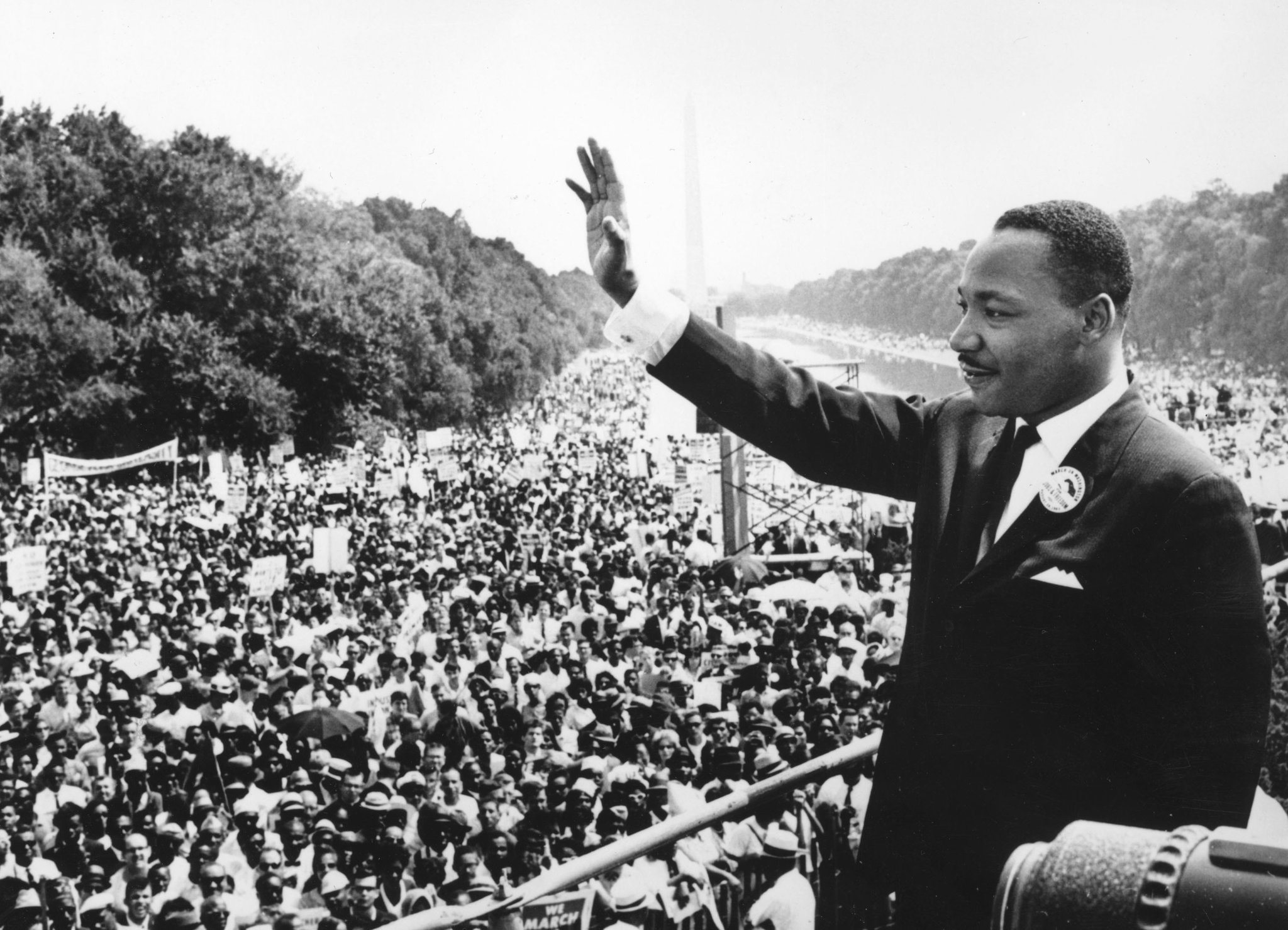
He had a dream,
And that dream had not been achieved.
Not fully, anyways.
The lives of people of color
Have been made marginally better,
Comparing his time to now,
But it’s not enough.
Racism and colorism and injustice still run rampant
Throughout institutions and society.
It’s a systemic issue that’s been around for a long time,
Long before any of us were born.
In order to change things for the better,
We need to change people’s minds.
We need to focus on empathy, compassion, and kindness,
And we can’t leave others behind.
Incrementalism has marginally helped marginalized groups,
But it’s not enough.
To have long lasting and impactful change, it needs to be systemic.
The systems and institutions and societies built on racism and prejudice
Need to be fundamentally changed from both the outside and from within.
It will be hard, but it’s not impossible.
Material and social conditions that result from societal structures and institutions
Can be fixed, because societal structures and institutions are social constructs.
They were made by people; groups of people.
Thus, we can change societies and institutions for the better.
How that would be done, I have no idea.
But what I do know is, change starts from the individual level.
You, who is reading this right now, can be impacted by this post,
At least to some degree.
Liking it, sharing it, commenting on it, engaging in discussion from it,
All of that can affect people to some degree.
The same is true for social media.
Whatever your platform is, you have the power to change minds
And affect people’s lives.
So when MLK said he had a dream,
We can achieve that dream.
We can make the world a better place.
It all starts with you.

Fly high
To the sky.
Don’t cry.
Don’t die.
Goodbye.
Live life.
Survive
And thrive.
Be light.
Stand and fight
For what’s right
And be kind.
Then you’ll find
A light that shines
Through evil’s might.

You have the power to change.
If you see injustice in this world, you have the power to change it.
You have the power to stand up for what’s right.
You have the power to stand up for human life.
Human life is irreplaceable.
All life is irreplaceable.
Injustice is everywhere.
Pain and suffering is everywhere.
If you want to make the world better, you have the power to change the world.
You have the power to make the world a better place.
No matter who you are,
Where you are,
Or how old you are,
You have the power to change the world.
From a tweet to post,
To a YouTube or Tik Tok vid;
Whether it’s writing or drawings,
Sketches or murals,
Posters or poems,
Photos or convos
Whatever it may be,
You have the power to change the world!
Whatever your skills or talents may be,
Use them to the best of your ability,
And while doing it, try to show some compassion and empathy,
For empathy can go a long way, you see.
Empathy allows us to understand one another and what we believe.
It allows us to understand things we may not have experienced.
It allows us to see how we can be better individuals.
It allows us to be a better society.
Change is hard.
Change is difficult.
Change won’t come easy.
But if you want to make a difference,
You have to be persistent.
If you want to end injustice,
You need to understand what caused it.
It is never too late to get involved and make a change.
It is never too late to take a stand against hate.
To quote a poem called “Change” that I wrote in December 2019,
“Things change.
Plans change.
People change.
We all change.
Everyone changes.
Everything changes.
Change is all around us.
It surrounds us.
It’s all about us.
It allows us
To be who we’re truly meant to be
And allows for us to see
The people we truly want to be!”
We have the power to be the change we want to see.
To quote my poem “Perception,”
“It takes just one word
To change the perception of someone’s world.”
That is all it takes
To make the world
A better place.
You, fellow reader, have the power to change.
