The Musings of Jaime David
@jaimedavid.blog@jaimedavid.blog

The writings of some random dude on the internet

1,117 posts
1 follower

Tag: fear

  • The Courage to Try: Why Fear Cannot Stop You

    The Courage to Try: Why Fear Cannot Stop You

    Life is full of opportunities, but the truth is, opportunities mean nothing if you are too afraid to take them. The fear of failure, the fear of judgment, and even the fear of the unknown can become paralyzing forces, stopping us from stepping into new experiences that could define us. Many people spend their lives imagining what might have been, reflecting on paths they never dared to take, and holding themselves back in ways that quietly erode their potential. The paradox is that the very things we fear are often the same things that could propel us forward, challenge us, and bring immense growth. If you never try, you never know what could happen, and living without trying is a slow surrender to the comfort of the predictable and the familiar. Trying, in its essence, is an act of courage. It is a rebellion against stagnation, against the limitations others place on you, and against the boundaries you may have unconsciously set for yourself.

    To understand why trying is so important, one must first understand the nature of fear. Fear is a deeply human response designed to protect us, but in modern life, fear often overextends itself. It prevents us from applying for that job we dream about, from asking the person we care for how they truly feel, from moving to a city that excites us but terrifies us in equal measure. Fear convinces us that failure is catastrophic, that rejection is permanent, or that the unknown is inherently dangerous. But life is rarely so absolute. Most failures are temporary, most rejections teach lessons rather than define destiny, and the unknown is often where growth lives. When you allow fear to dictate your decisions, you are effectively giving away your power to circumstances beyond your control. Trying, even when afraid, is the antidote to that surrender. It is the act of reclaiming agency over your life, of stepping into a world of possibility rather than resigning yourself to what feels safe.

    The truth is, trying does not guarantee success. Many people have faced repeated failures despite their best efforts, yet what distinguishes those who succeed from those who remain stuck is the willingness to try again. Trying is not a single act; it is a continuous commitment to engagement with life, to moving forward even when the outcome is uncertain. This principle applies universally: an artist who experiments with new forms of expression, a scientist testing unconventional hypotheses, a student tackling a subject they feel unprepared for, or an entrepreneur pursuing an idea that seems risky. Each act of trying carries with it the potential for failure, but also the possibility of discovery, achievement, and self-realization. To live without trying is to remain on the periphery of your own potential, observing life as it passes by rather than participating fully.

    Consider the psychological impact of not trying. People who never attempt new experiences often fall into patterns of regret, self-doubt, and resentment. They may look back years later, wondering what could have been, or they may feel envy for those who dared to step forward. Regret is particularly painful because it is rooted in inaction rather than action. You can recover from a failure that came from trying, but you cannot recover time lost to fear and hesitation. Every decision to avoid trying creates a cumulative effect, slowly teaching the mind that comfort and security are more valuable than growth and exploration. This is a subtle but profound trap. The human brain is wired to protect itself, but it is also capable of learning, evolving, and embracing challenge. By choosing to try, you rewire your mindset, training yourself to associate effort and risk with reward, and ultimately, with self-respect and fulfillment.

    There is also a deeper existential component to trying. Life, by its nature, is uncertain and temporary. There is no guarantee of time, health, or circumstances aligning perfectly in the future. Waiting for the “perfect moment” to take a chance is often a form of self-deception. The truth is, there is no perfect moment; there is only now. The act of trying becomes an existential affirmation—it is a way of asserting that your life matters, that your choices matter, and that you are willing to engage with the world fully. Each time you try, you honor your capacity to act, to create, to influence, and to grow. Even failure carries this affirmation because it demonstrates courage, intention, and the refusal to remain passive. Life rewards engagement more often than perfection, and those who try—even imperfectly—are the ones who ultimately shape their reality.

    Trying also cultivates resilience. When you attempt something, you expose yourself to challenges, mistakes, and unexpected outcomes. Each of these experiences builds strength, adaptability, and wisdom. A person who has tried and failed repeatedly becomes attuned to the lessons embedded in each failure. They learn patience, humility, and persistence. They discover that failure is not a verdict on their worth but a stepping stone toward mastery and understanding. By contrast, avoiding attempts keeps individuals in a fragile state, vulnerable to self-doubt and untested limitations. Resilience is forged in action, and the willingness to try is the spark that ignites that forge. Without it, even minor setbacks can feel insurmountable because the mind has never practiced overcoming obstacles through experience.

    Moreover, trying connects us to the world in meaningful ways. Many human connections, relationships, and collaborations are born from the courage to reach out, to share ideas, to express oneself. Without trying, these connections remain unrealized, and life can feel lonely or disconnected. Consider the friendships that never began because one person hesitated to introduce themselves, the creative collaborations that never happened because someone feared rejection, or the love that never blossomed because someone withheld their feelings. Trying is the bridge between potential and reality. It transforms ideas, intentions, and desires into tangible experiences that shape both your life and the lives of others. By refusing to try, you not only limit your own potential but also the impact you could have on the people and the world around you.

    The process of trying also teaches self-knowledge. When you take risks and put yourself in unfamiliar situations, you learn about your preferences, your strengths, your values, and your boundaries. Life cannot be fully understood through observation alone; it requires participation. Trying exposes you to your reactions, your resilience, and your creativity. It forces you to confront discomfort, to make decisions, and to navigate uncertainty. Over time, these experiences accumulate into a deep understanding of self—a knowledge that cannot be gained through comfort or avoidance. By trying, you discover who you are and what you are capable of, and this self-knowledge becomes a compass for future choices, guiding you toward meaningful experiences rather than a life defined by fear.

    Many people hesitate to try because they equate effort with outcome, believing that if the attempt does not lead to success, it is wasted. This is a fundamental misunderstanding. Trying is never wasted because the act itself is transformative. Every effort creates experience, growth, and understanding. Even failures carry value: they reveal what does not work, illuminate alternative paths, and strengthen your approach. By focusing solely on results, you miss the broader picture of development. Trying is a commitment to the process, to learning, and to engagement. The outcome is important, but it is secondary to the courage and effort it takes to act. Over time, those who embrace trying develop a mindset that sees opportunity, possibility, and lessons in every endeavor, rather than fear and limitation.

    There is also a societal aspect to trying. Individuals who dare to act, experiment, and innovate drive progress. Every invention, every artistic movement, every social change, and every scientific breakthrough begins with someone willing to try. If no one tried, the world would remain stagnant. Fear of failure, ridicule, or judgment has historically held back countless potential advances, yet those who act despite fear often inspire others to do the same. Trying is contagious. By modeling courage, persistence, and curiosity, individuals influence their communities, creating ripple effects that extend far beyond themselves. In this sense, trying is not just a personal choice; it is a contribution to the collective growth and evolution of society.

    The fear of trying is often amplified by comparisons. People look at others’ successes and believe they must reach the same heights without stumbling. This comparison creates paralysis, because the starting point, circumstances, and journey of others are always unique. Trying requires the humility to accept that your path is your own, and that failure along the way is part of learning and growth. You cannot measure your worth against someone else’s accomplishments; you can only measure your effort, your courage, and your commitment to living authentically. By focusing on your willingness to try, you reclaim your power from external expectations and cultivate a life that is meaningful on your terms.

    It is also crucial to recognize that trying is not reckless or unthinking. Courageous action does not mean blind action. Trying involves discernment, planning, and preparation, but it always includes the willingness to step into uncertainty. There is wisdom in assessing risks and making informed choices, but no amount of planning can eliminate the inherent uncertainty of life. The key is to balance preparation with action, and to accept that risk is an unavoidable part of growth. The moment you let the fear of the unknown prevent you from taking even a calculated risk, you sacrifice opportunities that could have defined your life. Trying is about embracing both courage and wisdom, acting despite fear, and being willing to learn through experience.

    Ultimately, trying is a declaration of self-belief. It communicates to yourself and to the world that you are willing to engage fully with life, that you trust your ability to navigate challenges, and that you value your own potential. Every attempt reinforces this belief. Even if the outcome is not what you hoped, the act of trying validates your existence, your intentions, and your capacity for growth. Life is a series of unknowns, and the only way to navigate it meaningfully is to act, to try, and to face uncertainty head-on. Those who live without trying surrender to chance, circumstance, and fear. Those who try, however, embrace possibility, agency, and the profound realization that life is defined not by what we avoid, but by what we dare to attempt.

    The journey of trying is also deeply personal. It requires confronting insecurities, acknowledging limitations, and embracing vulnerability. To try is to expose oneself to potential judgment, to risk disappointment, and to challenge ingrained habits of comfort and avoidance. Yet within this vulnerability lies power. Vulnerability is the gateway to authenticity, connection, and transformation. By trying, you claim your voice, assert your presence, and participate actively in the world. Fear may always be present, but it no longer dictates your choices. Every act of trying becomes a testament to resilience, courage, and the human spirit’s capacity to evolve.

    In conclusion, the refusal to try is the quietest, most insidious form of defeat. Life may not always reward our efforts in ways we expect, and failure is an inevitable companion on the path of growth. Yet the act of trying, regardless of outcome, transforms us, teaches us, and shapes our experience in profound ways. If you never try, you never know what might have been, what you are capable of, or what joy and fulfillment lie just beyond fear. To live fully, to embrace your potential, and to honor the gift of life itself, you must cultivate the courage to try. Trying is not a guarantee, but it is the only way to encounter possibility, to learn, to grow, and ultimately, to live without regret. Step forward, act despite fear, and discover the unknown, because the world does not yield to hesitation—it rewards the brave, the persistent, and those who dare to try.
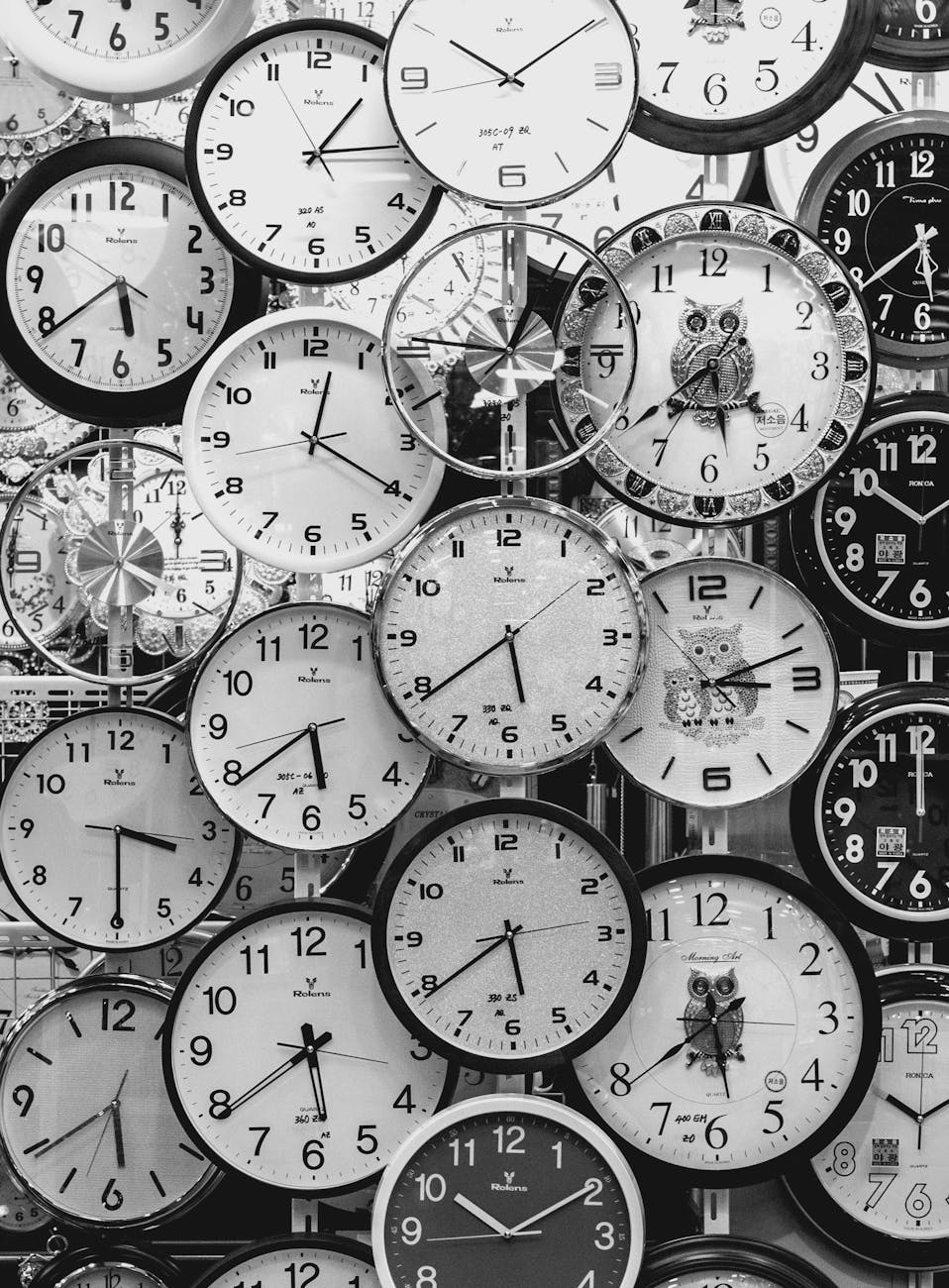

  • The Myth of the “Right Time”

    The Myth of the “Right Time”

    There is a phrase that floats through almost every human life, a soft and reasonable sounding excuse that disguises itself as wisdom. “When the time is right.” We tell ourselves we’ll start when the timing is better. We’ll speak when the moment feels safer. We’ll love when the conditions are clearer. We’ll leave when the ground beneath us is steadier. We’ll create when the chaos settles. We’ll change when we feel ready. And in all of that waiting, in all of that quiet bargaining with the future, we slowly trade our lives for a promise that may never arrive.

    The idea of the “right time” feels comforting. It implies order. It suggests that somewhere ahead of us, hidden in the calendar or in fate or in some cosmic alignment, there exists a perfect window where everything will finally make sense. A moment when fear disappears, uncertainty fades, responsibilities loosen their grip, and clarity arrives like a gift. It’s an appealing fantasy. It gives us permission to delay. It gives us an explanation for our hesitation that sounds thoughtful instead of afraid. It makes inaction feel responsible. But the longer you live, the more obvious it becomes that this “right time” is less a reality and more a story we tell ourselves so we don’t have to confront how terrifying choice actually is.

    Because life does not pause to become convenient.

    There is always something in the way. There is always a bill, a deadline, a crisis, a distraction, a fear, a doubt, a voice in your head telling you to wait just a little longer. There is always another reason to postpone what matters. There is always another condition that could be improved. Another variable that feels unresolved. Another emotional knot that doesn’t quite feel untangled enough yet. If you are waiting for a moment when nothing interferes, when nothing hurts, when nothing distracts, when nothing scares you, you are not waiting for a time that exists in reality. You are waiting for a time that belongs only to imagination.

    And yet, almost all of us fall into this trap at some point.

    I did.

    For a long time, I convinced myself that patience was wisdom. That restraint was maturity. That delaying big feelings and big risks and big decisions meant I was being careful. Responsible. Strategic. I told myself that once I had more stability, more clarity, more confidence, more certainty, then I would finally act. Then I would finally say what I meant. Then I would finally pursue what I wanted. Then I would finally allow myself to become who I felt I was supposed to be.

    But what I didn’t realize at the time was that every “not yet” was quietly shaping my life anyway.

    Time does not wait for permission.

    While you are preparing, the world keeps moving. While you are hesitating, relationships shift. While you are planning, people leave. While you are waiting for the right moment, moments are passing. You are aging. Others are aging. Circumstances are changing. Opportunities are appearing and disappearing in ways you often don’t even notice until they are already gone. The future you are waiting for is not standing still and patiently holding space for you. It is constantly being rewritten by forces you do not control.

    And eventually, if you live long enough, something happens that shatters the illusion.

    You lose someone.

    Or you almost lose someone.

    Or you get sick.

    Or you watch time run out for somebody else.

    And suddenly the phrase “there’s still time” no longer feels as solid as it once did.

    Loss has a way of clarifying things in the most brutal and honest way possible. When someone you love disappears from your life, whether through death, distance, estrangement, or circumstances you cannot undo, the fantasy of endless tomorrows collapses. You realize that there were conversations you assumed you’d have later. Feelings you assumed you’d express eventually. Apologies you thought you could offer someday. Gratitude you meant to show when things slowed down. And now, that later no longer exists.

    Regret does not usually come from the things we did wrong.

    It comes from the things we never did at all.

    It comes from the words we swallowed. The risks we refused. The love we never admitted. The truth we kept hiding from ourselves and others. The paths we didn’t explore. The art we didn’t make. The boundaries we didn’t set. The life we postponed.

    What hurts most about regret is not that we failed.

    It is that we never even tried.

    And this is the part no one likes to say out loud: waiting for the right time is often just fear wearing a polite disguise.

    Fear of rejection. Fear of failure. Fear of embarrassment. Fear of loss. Fear of change. Fear of being seen too clearly. Fear of wanting something too badly and not getting it. Fear of discovering that the life you imagined might not actually fit you. Fear of learning that the dream you held onto might dissolve once you finally touch it.

    So instead, we tell ourselves stories.

    We say we’re not ready.

    We say the timing is off.

    We say we need more information.

    We say we need more money.

    We say we need more healing.

    We say we need more certainty.

    And sometimes those things are true. Sometimes waiting is necessary. Sometimes patience is wise. Sometimes caution protects us. Not every impulse should be followed. Not every desire should be acted on immediately. There are real responsibilities. Real consequences. Real limits. I am not arguing for recklessness or impulsivity. I am not saying that every moment of hesitation is wrong.

    But there is a difference between wisdom and avoidance.

    And most of us know, deep down, which one we are practicing.

    Avoidance has a particular feeling to it. It feels heavy. It feels repetitive. It feels like the same internal conversation looping endlessly without resolution. It feels like constantly moving the goalpost for when you are allowed to begin. It feels like life happening around you while you remain suspended in preparation mode. It feels like safety slowly turning into stagnation.

    And stagnation is not neutral.

    It costs you time.

    It costs you experiences.

    It costs you growth.

    It costs you connection.

    It costs you yourself.

    The cruel irony is that the conditions we are waiting for rarely arrive because the very actions we are postponing are often what would create those conditions in the first place. We wait to feel confident before we act, when confidence is usually built by acting. We wait to feel worthy before we speak, when worthiness often comes from being honest. We wait to feel ready before we change, when readiness is usually the result of choosing to change. We wait for clarity before we move, when clarity is often born from movement.

    Life is not something you solve before you live it.

    It is something you understand by living it.

    And the longer you delay participation, the more disconnected you become from your own unfolding.

    There is also another uncomfortable truth hiding inside the myth of the right time.

    It assumes that you will always have another chance.

    It assumes that people will remain accessible.

    It assumes that health will remain stable.

    It assumes that circumstances will remain reversible.

    It assumes that doors, once closed, can always be reopened.

    But anyone who has lived long enough knows that some opportunities are not repeatable.

    Some people leave and never come back.

    Some relationships change in ways that cannot be undone.

    Some windows close quietly and permanently.

    Some versions of yourself only exist for a short season of your life.

    And when that season passes, you cannot simply return to it.

    This is not meant to be morbid.

    It is meant to be honest.

    The finiteness of time is not a threat. It is a teacher.

    It reminds you that your life is not a rehearsal.

    That this is not a draft.

    That you do not get infinite revisions.

    And that waiting too long does not protect you from pain.

    It often guarantees it.

    Because here is the part that no one prepares you for: the pain of regret is usually heavier than the pain of action.

    Failure hurts, yes.

    Rejection hurts.

    Embarrassment hurts.

    But those wounds tend to heal.

    You learn from them.

    You integrate them.

    They become part of your story.

    Regret, on the other hand, is quieter and more persistent.

    It shows up at night.

    It appears in memories.

    It whispers in alternate timelines.

    It asks you who you might have been.

    It lingers in unanswered questions.

    It stays long after the moment has passed.

    And unlike most pain, regret offers no resolution.

    There is no redo.

    No apology.

    No confession.

    No second chance.

    Only acceptance.

    So at some point, after enough loss, enough near misses, enough almosts, enough maybes, something shifts.

    You stop asking when the time will be right.

    And you start asking whether you are willing to live with the consequences of never trying.

    You realize that courage is not the absence of fear.

    It is the decision that regret is worse.

    You realize that readiness is not a feeling.

    It is a choice.

    You realize that the right time is rarely a moment of perfect alignment.

    It is simply the moment you decide to stop waiting.

    This does not mean life suddenly becomes easier.

    In fact, often the opposite.

    Choosing to act usually makes things more complicated, at least in the short term.

    You disrupt routines.

    You risk relationships.

    You expose vulnerabilities.

    You invite uncertainty.

    You step into territory where outcomes are unclear.

    But you also begin to live more honestly.

    More fully.

    More consciously.

    You stop deferring your life to a hypothetical future version of yourself who is braver, calmer, stronger, wiser.

    You become that version by acting now.

    And slowly, something remarkable happens.

    You begin to notice that the chaos you were waiting to disappear was never going to vanish.

    That life is always unfinished.

    Always imperfect.

    Always in flux.

    And that meaning does not come from perfect timing.

    It comes from presence.

    From choosing to engage while things are messy.

    From loving while things are uncertain.

    From creating while things are unstable.

    From speaking while things are risky.

    From becoming while things are incomplete.

    The people you admire most are rarely the ones who waited until everything was ideal.

    They are the ones who moved while afraid.

    Who spoke while unsure.

    Who loved while vulnerable.

    Who changed while unready.

    Who acted while conditions were still flawed.

    Not because they were reckless.

    But because they understood something essential.

    That waiting forever is its own kind of decision.

    And often, the most dangerous one.

    At some point in my life, after enough grief and enough reflection, I made myself a quiet promise.

    I would no longer let fear disguise itself as patience.

    I would no longer postpone the words that mattered.

    I would no longer assume that time was abundant.

    I would no longer trade honesty for comfort.

    I would no longer wait for permission to be myself.

    This does not mean I rush everything.

    It does not mean I ignore consequences.

    It does not mean I abandon discernment.

    It means that when something matters deeply enough, I refuse to bury it beneath the fantasy of a better tomorrow.

    If I care about someone, I try to let them know.

    If I need to apologize, I do it sooner rather than later.

    If I feel called to create, I create now, even imperfectly.

    If I sense a truth rising inside me, I speak it while I still can.

    Because I have seen what happens when people wait too long.

    I have seen conversations that never happened.

    I have seen love that was never confessed.

    I have seen forgiveness that arrived too late.

    I have seen lives narrowed by caution.

    I have seen dreams quietly abandoned.

    And I know, with painful clarity, that someday my own time will also run out.

    Not dramatically.

    Not with a warning.

    Just one ordinary day when there are no more tomorrows left to postpone things into.

    So no, I do not believe in the right time anymore.

    I believe in this time.

    This flawed, inconvenient, complicated, imperfect moment you are living in right now.

    Because it is the only one that actually exists.

    Everything else is imagination.

    If there is something you need to say, say it.

    If there is someone you need to love, love them.

    If there is a truth you need to face, face it.

    If there is a path you feel drawn toward, take a step.

    Not because it is safe.

    Not because it is guaranteed.

    Not because the conditions are perfect.

    But because your life is happening now.

    And someday, sooner than you think, now will be gone.

    And I, for one, refuse to look back on my life and realize that I spent most of it waiting to begin.

  • Courage in the Unknown: Doing Hard Things While Afraid

    Courage in the Unknown: Doing Hard Things While Afraid

    There is a strange power in choosing to act while fear is present. Fear, after all, is a natural and unavoidable part of life. It signals risk, potential pain, and uncertainty, but it does not have to be a stop sign. One of the most profound realizations I have had in life is that the moments that shape us most often come not from certainty or careful planning, but from stepping into situations we cannot fully control, into challenges that loom large and intimidating, and doing so with our hearts racing and our minds uncertain. The act of doing something hard, precisely because it is hard, is transformative—not because the fear disappears, but because we learn to move in spite of it.

    Fear has a way of exaggerating possibilities. When facing a difficult choice or a daunting task, the mind constructs worst-case scenarios that feel tangible, immediate, and paralyzing. We imagine failure in vivid detail: the embarrassment, the disappointment, the doors that might close forever. Yet stepping forward even when these thoughts are present is a statement of courage. It is the conscious decision to prioritize growth, experience, and self-trust over the mind’s dramatization of danger. In a sense, doing the hard thing while afraid is a rebellion against the tyranny of our own imagination. It acknowledges the fear, respects it, but refuses to let it dictate the boundaries of what is possible.

    Perhaps the most humbling aspect of this process is that there is no blueprint. Life does not hand us clear instructions for navigating every difficult choice or uncertain endeavor. Often, the path forward is a foggy one. We do not know how things will unfold, and planning, while useful, can only take us so far. This requires a certain faith—not necessarily religious faith, but a trust in the resilience of life itself, in our own adaptability, and in the possibility that even if outcomes are not ideal, they are rarely as catastrophic as we predict. We discover that our capacity to cope, to adjust, and to find unexpected solutions is greater than we imagined. Every step taken without certainty becomes a testament to our resourcefulness and determination.

    Uncertainty, surprisingly, can carry a subtle thrill. There is something undeniably exhilarating about stepping into the unknown, about feeling that mix of nervousness and anticipation that pulses through the body when the outcome is unclear. It awakens a sense of aliveness, a heightened awareness that is difficult to replicate in safe, predictable situations. The mind is sharper, the senses are more alert, and even the simplest actions feel charged with intensity. Fear and excitement often coexist in these moments, intertwining in a way that makes the experience deeply compelling. It is not just courage that emerges—it is the sensation of truly feeling alive, of engaging with life at its most raw and immediate level.

    The process of moving forward despite fear is not a linear one. Fear does not magically disappear once action begins; it often persists, and sometimes it intensifies. But each small act of courage, each decision to engage with the hard, the unfamiliar, or the intimidating, chips away at its power. Over time, a pattern emerges: the things that once seemed insurmountable gradually become manageable, the unknown becomes less terrifying, and our confidence in our ability to face uncertainty grows. This is the paradox of courage: it is not the absence of fear, but the choice to act in its presence, and with each choice, fear loses a little of its grip.

    Faith in uncertainty also transforms the way we perceive outcomes. When we accept that results may be unpredictable, we open ourselves to possibilities that rigid expectations would block. Success might look different than imagined, and failure might be less destructive than feared. There is freedom in this ambiguity. By acting despite not knowing, we engage with life in a fuller, more authentic way, unshackled from the constraints of imagined worst-case scenarios. Even if we fail, we gain insight, resilience, and often a sense that the consequences were survivable, manageable, and even instructive. Fear becomes a teacher rather than a jailer.

    It is also worth noting that doing hard things while afraid builds a profound sense of self-trust. We learn to rely not solely on preparation or external validation, but on our inner capacity to navigate uncertainty. This trust is empowering; it allows us to step into new challenges with the knowledge that, regardless of outcome, we are capable of handling what comes. It is a reminder that life rarely unfolds in neat, predictable lines, and that mastery of fear is less about controlling circumstances than about mastering ourselves. Each act of courage reinforces this truth, and gradually, a pattern of resilience takes shape that carries over into every facet of life.

    This approach to challenge also shifts our relationship with fear itself. Instead of seeing fear as a signal to retreat, we begin to see it as a companion on the journey. Fear indicates that we are on the edge of growth, that we are encountering something significant. By acknowledging fear and acting alongside it, we cultivate a richer, more nuanced understanding of ourselves. We learn that fear is not a marker of weakness but a guidepost pointing toward experiences that matter, toward challenges that are worth facing, and toward life fully lived rather than cautiously endured.

    Perhaps the most profound insight comes when we look back on the moments we feared most. The anticipation often outweighs the reality, the imagined disasters rarely occur, and the experience itself—filled with uncertainty, struggle, and vulnerability—becomes a source of pride, learning, and strength. There is a strange irony in this: the fear we carried so heavily before acting often diminishes in retrospect, leaving behind only the rewards of having acted despite it. The act itself, not the outcome, proves transformative, and we begin to understand that courage is not measured by success but by the willingness to confront what terrifies us.

    Living this way requires both patience and persistence. Fear does not vanish overnight, and the inclination to seek certainty is deeply human. Yet the more we practice moving forward despite not knowing, the more comfortable we become with the unknown. We learn to embrace the tension of uncertainty as a fertile space for growth, creativity, and yes, even exhilaration. The flutter of the unknown can energize us, sharpen our perception, and make the journey thrilling in ways safe and predictable paths rarely do. We learn that life’s richness is found not in ease or predictability, but in the willingness to engage with what is hard, what is uncomfortable, and what challenges us to stretch beyond our habitual limits.

    Ultimately, doing hard things while afraid is about trust: trust in ourselves, trust in the process, and trust in life’s capacity to unfold in ways we cannot fully predict. It is about stepping into the unknown with open eyes and a willing heart, acknowledging fear without letting it dictate our choices, and finding the courage to act even when the path ahead is unclear. It is about embracing the tension between vulnerability and strength, between uncertainty and determination, and discovering that the act of facing the hard itself carries its own rewards. The uncertainty that once felt paralyzing can now feel alive, exciting, and full of possibility.

    Courage, then, is less a heroic burst of invincibility than a quiet, persistent willingness to engage with life’s uncertainties. It is the accumulation of countless moments when we step forward, not because we are fearless, but because we trust that we can handle what comes, and because we believe that even if things do not go as planned, the outcome is rarely as dire as fear predicts. In this way, fear and uncertainty cease to be barriers and become guides, teachers, and companions on the journey toward a fuller, braver, more resilient, and unexpectedly exhilarating life.

  • This Post (Wont Delete Now or Ever)

    This Post (Wont Delete Now or Ever)

    There’s a trend going around on the internet these days, one that’s so painfully obvious and, honestly, kind of pathetic, that it’s almost laughable. You know what I’m talking about. Folks post something, maybe something serious, maybe something dumb, and then they tack on a little note at the end, something like “will delete soon” or “might delete later.” And it’s everywhere. Social media, blogs, forums, even meme pages. Everywhere you look, someone is trying to say something, but not really, and then they reassure you that this will disappear, that it won’t last, that they’re not really committing to it. And that’s the thing—it’s such a transparent move that it’s almost insulting to anyone who reads it.

    Here’s my take. If you’re going to post something, just post it. Stand by it. Don’t put a half-hearted disclaimer at the end like you’re protecting yourself from your own words or from the judgment of others. It’s cowardly. Plain and simple. This whole “will delete soon” thing? It’s not clever. It’s not edgy. It’s a flimsy attempt to shield yourself from consequences that, let’s be real, are inevitable anyway. The internet doesn’t forget. Nothing is ever truly deleted. Screenshots exist. Backups exist. Archives exist. Whatever you post, it lives on in one form or another. So when someone says “I’ll delete this soon,” they’re lying. They know it. And you know it. Everybody knows it. It’s a performance, not a statement.

    And here’s what it really says about people. It says that they’re scared. It says that they’re uncertain. It says that they don’t trust themselves or their own judgment enough to put something out into the world and stand by it. That’s the root of it. It’s not a fun, quirky trend—it’s fear wrapped in a digital post. Fear of being judged, fear of being wrong, fear of being hated, fear of simply being seen. And maybe that fear is understandable, in a general sense, because we all live in a world where every opinion can be critiqued endlessly online. But that doesn’t make it noble. It makes it weak. It makes it hesitant. It makes it dishonest. And I can’t help but roll my eyes when I see it.

    Because here’s the truth: if you don’t know what you want to say, don’t say it. There’s no shame in silence. There’s no shame in waiting until you’ve figured out your words. But if you do know, if you do have something to express, then own it. Post it. Make your statement. And then leave it there. Don’t hedge it with a promise to retract, don’t dilute it with a wink, don’t try to sneak it past the world under the guise of impermanence. It’s not a trick. It’s not clever. It’s not protection. It’s a lack of conviction.

    Think about it this way. The people who constantly add these disclaimers, the “will delete soon” crowd—they’re putting the focus on themselves rather than the content. The content doesn’t matter as much as the self-preservation. And isn’t that kind of sad? It’s as if they can’t let their words exist without simultaneously trying to control how others interact with them. They’re trying to cheat the system of social interaction online, trying to have the experience of posting without ever being vulnerable. But vulnerability, however scary, is where authenticity comes from. Without it, your posts are hollow. They’re not statements—they’re props.

    And let’s be honest: posting is a risk. Saying something, anything, puts you out there. It opens you up to agreement, disagreement, ridicule, praise, criticism. That’s unavoidable. You can’t opt out of it while still participating fully. So when people write “will delete soon,” they’re essentially trying to opt out after opting in. It’s a paradox. And the paradox is only funny if you step back far enough to laugh at the ridiculousness of it, but mostly it’s just irritating. It’s irritating because it clutters conversations with half-measures, weak opinions, and shallow performances. And it trains other people to do the same, which, in the end, erodes the quality of discourse anywhere it spreads.

    I’ve seen this happen over and over. Someone posts something important, meaningful even, but then they bury it under a digital shrug, a “don’t take this seriously, I might delete it.” And what happens? People don’t take it seriously. People ignore it. The post is undermined before it even has a chance to exist. And that’s the problem with this trend in general—it’s self-sabotage disguised as humility, disguised as cleverness. It’s the worst kind of attention-seeking because it’s attention-seeking while pretending not to be. It’s manipulation without courage, and it’s everywhere.

    So, if you ask me, the opposite approach is the one worth taking. Say what you mean. Mean what you say. Post it. Leave it. Let it exist. Let people engage with it, positively or negatively, but let it exist. Don’t hedge. Don’t promise deletion. Don’t protect yourself from imaginary consequences that are going to find you anyway. The internet doesn’t forget. Nothing truly goes away. So the real bravery is in saying something knowing it will stay, knowing it will be judged, knowing it will be seen, and still posting it anyway. That’s integrity. That’s authenticity. And yes, it’s scarier than tacking on a little “will delete soon” note, but it’s worth it.

    The “wont delete now or ever” approach, which is exactly what I’m doing here, is not just a joke about a trend—it’s a statement about how to exist online with your words intact. It’s about taking responsibility for what you put out. It’s about rejecting the cowardice of hedging, of preemptive retraction, of lying to yourself and others about your intentions. It’s about standing tall with your thoughts, your opinions, your statements, your jokes, your complaints, your praise, your art, whatever it is that you have to offer. Don’t dilute it. Don’t hide it. Don’t apologize for it before it even has a chance to breathe.

    I think a lot of people don’t realize that there’s a freedom in this. There’s a liberation that comes from knowing that your words, your posts, your thoughts, exist, and that they exist unafraid. There’s a satisfaction in speaking without the chains of pretense. And when you combine that with the inevitable permanence of the internet, it’s almost poetic. You’re acknowledging reality as it is: nothing truly disappears, nothing is ever entirely private, nothing is ever entirely under your control. And rather than fear that, you embrace it. You work with it. You live honestly within it.

    So, to those who feel compelled to write “will delete soon,” I have a simple suggestion: stop. Take a breath. Ask yourself why you feel the need to hedge. Ask yourself why you’re afraid of being fully seen. And then, if your message matters, post it without reservation. Let it live. And if it doesn’t matter, if you’re unsure, then maybe don’t post it at all. Silence is better than cowardice. Thoughtfulness is better than performative vulnerability. Authenticity is better than trend-following, every time.

    And finally, for anyone who reads this and thinks, “Well, maybe I will delete it later,” understand this: the true courage is in knowing that deletion is irrelevant. The courage is in posting, in saying, in committing. Not in hiding. Not in apologizing before it’s necessary. Not in pretending impermanence makes your words any safer or more acceptable. It doesn’t. Words exist once spoken or written, and the internet is the ultimate testament to that. Accept it, embrace it, and for once, post something without shame, without hedging, without disclaimers, and without thinking that deletion is your safety net.

    So yeah, this post won’t delete now or ever. That’s the point. I’m not hedging. I’m not scared. I’m not pretending. And that’s how it should be for everyone. Say what you mean, mean what you say, and let the world deal with it.

  • Shades

    Shades

    I used to wear them all the time.

    I’d wear them so I could cover my eyes.

    At least, that’s what I thought for the longest time.

    As years have gone by, I have realized,

    Deep down, I was insecure on the inside.

    I felt that I needed to wear sunglasses

    Because I thought it would somehow boost my confidence.

    In reality, that was not the case.

    I was not being honest.

    The reality was, I was too scared to let people get to know the real me.

    When I put on the shades, I felt like I was a more confident me.

    I felt I could do anything.

    Without my shades, I felt afraid.

    I felt as though people would judge me for being me.

    But now, I don’t need them.

    I don’t need a piece of apparel

    Or some sort of fashionable eyewear,

    To make be a confident individual.

    That has to come from within.

    I still like wearing shades from time to time,

    But now, I am happy with who I am on the inside.

  • The Storm

    The Storm

    There was a storm; a storm that had ripped us from house and home. It was big, it was bad, and it was horrible. I remember it clearly to this very day. The pounding of rain on our roof and awning was something, to me, that was very unnerving. The lightning that lit up the darkness in the sky was loud, powerful, and so very frightening. I was crying. The winds were so strong that I thought a tree would crash into my room. That’s how scared I was feeling, but when I woke up, it turned out that I was dreaming. I hate thunderstorms; I’ve hated them since I was a young one. I hate the sound of the thunder as it impacts the ground. I hate the downpours of rain because they could flood the drains. I hate the strong winds because they could knock down trees. There is so much more I could say, though, about why I hate thunderstorms. One of the main reasons is because they could form tornadoes. Tornadoes always scared me because they can’t be predicted. They have very strong winds and are very chaotic forces of nature. That is one reason I dislike the Midwest, and any other place that has frequent tornadoes. I hope to never find myself in the middle of a twister. That would be a very unfortunate situation.