The Musings of Jaime David
@jaimedavid.blog@jaimedavid.blog

The writings of some random dude on the internet

1,120 posts
1 follower

Tag: Humor

  • The Absolute Rage Induced by “K.”

    The Absolute Rage Induced by “K.”

    Daily writing prompt
    What’s a word or phrase that annoys you?

    There are many phrases in this world that annoy me. Corporate buzzwords. Fake positivity. Passive aggressive nonsense. People saying “we should totally hang out sometime” when both of you know that is never happening. But there is one response, one microscopic combination of letters, one digital communication war crime that rises above the rest. One phrase so unbelievably lazy, dismissive, cold, and irritating that every time I see it, a tiny part of my soul flatlines.

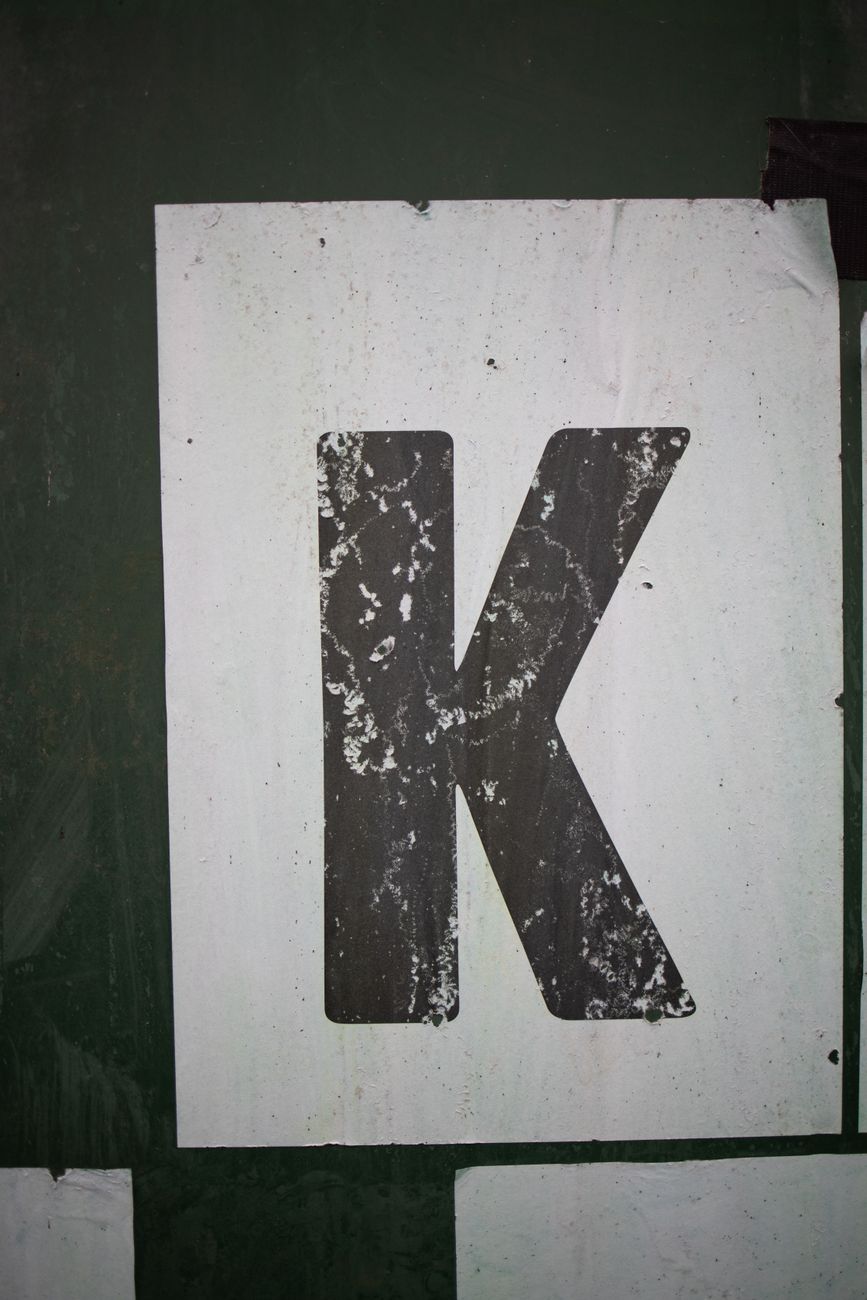
    “K.”

    Just that. K.

    Not “okay.” Not “ok.” Not “alright.” Not even the slightly chaotic but acceptable “kk.” Just a lonely little “k” sitting there like a digital middle finger.

    And I know some people are gonna say, “well maybe they’re busy.” No. I do not care. Because typing “okay” takes maybe half a second longer than typing “k.” You already opened the message. You already looked at it. You already responded. So what exactly was saved here? What incredible amount of time efficiency was gained? Did NASA recruit you mid conversation? Were you suddenly called into a hostage negotiation? Did your phone battery have 0.0001% left and you sacrificed the other letters for survival?

    Because otherwise, what are we doing here?

    Especially when I send an actual thoughtful response. That is where “k” becomes truly infuriating. I could send somebody an entire paragraph. A detailed response. An actual conversation. Maybe I am explaining something important, talking about an idea, telling a story, venting about something, or even just trying to have a normal human interaction. And after all that effort, after all those words, after all that thought, the response I get back is:

    “K.”

    Are you kidding me?

    That is not a response. That is the conversational equivalent of someone shutting a door in your face halfway through a sentence. It feels like I just threw a fully cooked meal onto a plate for someone and they stared at it for two seconds before saying, “aight.” Not even enough respect to capitalize the K sometimes either. Just a lowercase “k” sitting there in all its emotionally vacant glory.

    And the worst part is how weirdly aggressive it feels.

    Because let’s be honest here. “K” does not read as neutral. Nobody on Earth reads “k” and thinks, “wow, what a warm and enthusiastic response.” No. “K” feels annoyed. It feels irritated. It feels passive aggressive even when maybe it is not intended that way. It feels like someone responding while rolling their eyes so hard they can see their own brain.

    Imagine talking to someone in real life like that. Imagine you are telling somebody a story face to face and when you finish, they just stare at you blankly and go, “k.” You would immediately assume they hated you. You would think they were angry. Or bored. Or trying to end the conversation as fast as possible.

    That is because human communication is not just about words. It is about effort. Energy. Tone. Engagement. And “k” has the energy of somebody throwing a single stale cracker onto the table and calling it dinner.

    Now look, I understand not every message needs a five paragraph response. I am not asking for people to write essays every single time. Sometimes short responses are fine. Sometimes there is not much to say. That is normal. But there is a gigantic difference between a simple response and a completely dead one.

    “Okay” feels normal.

    “Gotcha” feels normal.

    “Sounds good” feels normal.

    Even “lol” at least acknowledges humanity still exists.

    But “k” feels like the emotional equivalent of being left on read while technically not being left on read.

    And yes, there are layers to this too. Because context matters. A “k” from your boss somehow feels terrifying. A “k” from a friend feels dismissive. A “k” from someone you are arguing with feels like they are trying to start World War III. A “k” from someone you like romantically? Oh congratulations, now you are going to spend the next three hours wondering if they hate you.

    The single letter “k” has somehow evolved into one of the most emotionally loaded responses in digital communication history.

    And honestly, I think part of why it annoys me so much is because it represents this larger problem with modern communication in general. People have become so weirdly disconnected from conversations. Everything is rushed. Everything is shortened. Everything is compressed into the smallest possible amount of effort. We are communicating faster than ever before while somehow saying less than ever before.

    Conversations now sometimes feel like people are trying to speedrun human interaction.

    And again, I am not demanding constant deep emotional speeches. I am not asking every text conversation to become a philosophical debate about existence itself. But there is something deeply irritating about the absolute bare minimum effort possible becoming normalized.

    Especially when the other person is clearly trying.

    That is the key thing here. Effort should at least somewhat match effort. If somebody sends you an actual message, responding with “k” feels like conversational malpractice. It feels like somebody handing you a handwritten letter and you responding by throwing a sticky note at their forehead.

    And I know somebody reading this right now is thinking, “wow this dude is really angry about one letter.”

    Yes. Yes I am.

    Because somehow that one letter manages to radiate annoyance in ways entire paragraphs cannot.

    Honestly, sometimes “k” feels worse than no response at all. At least being left on read has ambiguity. Maybe they got distracted. Maybe they forgot. Maybe life happened. But “k” confirms they saw your message and actively decided this single consonant was all you were worth in return.

    It is honestly impressive in a horrible way.

    And do not even get me started on the variations of it either. Because there are subclasses of “k” energy.

    Lowercase “k” is cold and dismissive.

    Uppercase “K” feels actively hostile.

    “K…” feels like somebody preparing for murder.

    And then there is “Mk.” Which somehow feels like an exhausted parent trying not to lose their sanity entirely.

    Digital communication has become its own weird language where punctuation and capitalization can completely change emotional meaning. A period at the end of a sentence suddenly feels aggressive. Multiple exclamation points can feel fake. No punctuation can feel detached. And “k” became the king of all emotionally cursed responses.

    What fascinates me too is how universal this annoyance seems to be. So many people hate “k.” Entire memes exist about this. Entire online discussions exist about this. People immediately understand the emotional vibe of it without explanation. Humanity collectively agreed that this one letter carries the energy of disappointment, annoyance, boredom, or emotional shutdown.

    That is honestly kind of incredible.

    Language evolved over thousands of years and somehow we arrived at this.

    One letter.

    Pure irritation.

    And maybe some people genuinely do not mean anything by it. Maybe for some people it really is just shorthand. Maybe they truly are neutral when they send it. But communication is not just about intention. It is also about perception. And if millions of people collectively interpret “k” as irritated or dismissive, maybe there is a reason for that.

    Maybe because it feels incomplete.

    Maybe because it lacks warmth.

    Maybe because it feels like somebody trying to end a conversation instead of participate in one.

    Or maybe because it just looks ugly sitting there on the screen like some emotionally abandoned letter fragment.

    Honestly, even “👍” sometimes feels more human than “k.”

    At least the thumbs up has shape. Presence. Energy. “K” just looks like somebody gave up halfway through typing.

    And there is also a weird imbalance that happens when one person clearly cares more about the conversation than the other. You can feel it instantly. One person is engaged. The other is responding with the verbal equivalent of elevator music. “K” becomes the ultimate symbol of that imbalance. It tells you immediately who is carrying the interaction.

    Nobody wants to feel like they are talking at somebody instead of with somebody.

    That is what “k” does.

    It transforms conversations into brick walls.

    And listen, maybe this sounds dramatic. Maybe it is dramatic. But honestly? Human interaction matters. The little things matter. Tone matters. Effort matters. People can absolutely feel when someone is emotionally checked out of a conversation. Sometimes tiny things communicate massive feelings.

    That stupid little letter somehow communicates exhaustion, irritation, boredom, indifference, and passive aggression all at once.

    Which honestly is almost impressive linguistically.

    Like congratulations, “k.” You somehow became the most efficient delivery system for negative conversational energy imaginable.

    And the thing is, I do not even think people realize how often tiny responses shape interactions. A slightly warmer response can completely change the feeling of a conversation. A little enthusiasm can make somebody feel heard. Even basic acknowledgment can matter more than people realize.

    But “k” feels like anti warmth.

    Anti conversation.

    Anti human connection.

    It is the response equivalent of fluorescent office lighting.

    Cold. Harsh. Soulless.

    And maybe part of my hatred for it comes from how common it has become. Because once you notice it, you start seeing it everywhere. Texts. DMs. Comments. Group chats. Everywhere you go, there is always somebody lurking with their tiny little “k” loaded and ready to destroy the vibe instantly.

    It can kill momentum in seconds.

    You could be having a genuinely fun conversation and suddenly:

    “K.”

    Boom. Atmosphere dead. Conversation buried. Social energy annihilated.

    It is honestly almost comedic how powerful it is.

    One letter should not have this much destructive capability.

    And yes, before anybody says it, I know there are bigger problems in the world. Obviously. But sometimes daily annoyances are what stick with you the most because they happen constantly. Tiny frustrations repeated over and over become their own special category of rage.

    And “k” is absolutely one of them.

    Because at its core, I think what annoys me is not even the letter itself. It is what it represents. Minimal effort. Disengagement. Emotional laziness. The feeling of somebody barely participating while technically still responding.

    It feels like the modern internet distilled into a single character.

    Shortened attention spans.

    Compressed communication.

    Reduced effort.

    Everything becoming smaller, faster, emptier.

    And honestly? I hate that.

    I miss when conversations actually felt alive sometimes. When people bounced ideas off each other. When interactions had energy. When communication did not constantly feel like people trying to escape the conversation as quickly as possible.

    Maybe that makes me old fashioned. I do not know.

    But I do know this.

    If I send somebody an actual thoughtful message and all I get back is “k,” I immediately lose interest in continuing the conversation. Because why am I putting energy into something the other person clearly does not care about?

    Conversation is a two way street.

    Not one person dragging the other through digital quicksand.

    So yes, WordPress daily prompt, my answer is absolutely “k.”

    I cannot stand it.

    That one tiny letter somehow became one of the most irritating phrases in modern communication.

    And every single time I see it pop up on my screen, I swear I can physically feel my soul leave my body for half a second.

    Fediverse Reactions
  • Exploring the Many Themes of Wonderment Within Weirdness

    Exploring the Many Themes of Wonderment Within Weirdness

    When I wrote Wonderment Within Weirdness, I knew I wanted a story that could stretch, expand, and ultimately explore just about everything. But at the time, I wasn’t fully conscious of all the layers and themes that would emerge. Now, looking back, I realize just how rich the book is thematically, and how much it resonates with ideas and feelings that exist in real life—ideas about conflict, about resilience, about morality, and about the way individuals navigate chaos.

    At its core, the book is about a “regular guy” thrown into extraordinary circumstances, having to rise up to face a multiversal conflict that no one else sees, no one else believes in, and no one else can handle. That premise alone already sets the tone for several key themes: courage in the face of overwhelming odds, the moral responsibility of action, and the idea that even a single individual can make a difference when the system itself is incapable. These themes tie directly into broader ideas about resistance—resisting authoritarianism, resisting the collapse of society, resisting despair—and while the story operates on a multiversal, sci-fi scale, these themes remain grounded and relatable.

    One of the most obvious thematic threads is the anti-war sentiment. It’s something I only fully recognized recently, especially given the current tensions around the Iran conflict and ongoing global instability. The story presents a world—or multiple worlds—where violence is the norm, where chaos grows unchecked, and yet it is through action, strategy, and resilience that meaningful change can be made. It is a story that, on its face, is absurd and fantastical, but the underlying message about the costs of conflict and the need for thoughtful intervention resonates with real-world issues. This anti-war thread also appears in my other works, from my poetry compilation My Powerful Poems to my short story collection Some Small Short Stories, but in Wonderment Within Weirdness it is front and center. The stakes are multiversal, but the message is clear: standing against destruction, against the unraveling of life itself, matters—even if it is not easy, even if it seems impossible, even if no one else sees what you see.

    Another theme that runs through the book is resilience. Emotional resilience, mental resilience, and the refusal to give up even when things seem insurmountable are central to the story. James, our protagonist, faces overwhelming odds, and his journey is not just physical but also deeply psychological. He has to contend with loss, disorientation, the failure of systems around him, and the weight of choices that could ripple across entire universes. That emotional endurance is something many readers can relate to, whether it’s in dealing with personal challenges, societal instability, or the quiet, constant pressure of life. The narrative itself mirrors that experience, stretching moments of tension, playing with time in ways that make the reader feel the weight of each decision, each second, each choice. It’s about keeping moving forward even when the world—or multiverse—is collapsing around you.

    Humor, absurdism, and a certain nihilistic lens also permeate the book. Inspired by Rick and Morty, Supernatural, and other absurdist media, the story frequently leans into sarcastic, sardonic, and sometimes dark humor. This gives the narrative a tone that balances the serious stakes with levity, and also allows for a kind of meta-commentary on the absurdity of existence and of conflicts, both personal and cosmic. There’s an interplay between high-stakes multiversal battles and irreverent, even ridiculous, situations that underscores the absurdity inherent in any struggle against forces beyond our full comprehension. The humor doesn’t diminish the weight of the story; it enhances it by showing how one can survive, mentally and emotionally, in the face of overwhelming chaos.

    Science and theoretical ideas are also embedded into the story. Drawing from my background as a science major, the sci-fi elements of Wonderment Within Weirdness—from multiversal theories to portals and causal mechanics—are influenced by real science, though dramatized and exaggerated for narrative effect. This provides a framework for the story that makes the fantastic feel credible. Readers see worlds built with internal logic, and that grounding allows the absurd, the impossible, and the chaotic to land with weight. Similarly, influences from video games, anime, manga, comic books, and superhero movies show up in the pacing, in the stakes, and in how conflicts are framed. The story draws inspiration from the long-form character development of manga, the visual spectacle and tension of superhero movies, and the interactive, consequence-driven sensibilities of video games, giving it a hybrid style that feels familiar yet completely unique.

    The scale of the story is another thematic and structural element. At over 600 pages, the debut novel is intentionally grand. Most first books aren’t structured this way; they are often more contained, more cautious. But Wonderment Within Weirdness had to lay the foundation for a sprawling universe, to establish stakes that could expand in later books, and to create a story that could stand on its own while also supporting a much larger narrative arc. That scale itself reinforces themes of responsibility, of acting within a system that is vast, complex, and imperfect. The multiverse in the story isn’t a clean, controlled environment; it is messy, sprawling, and full of hidden dangers. This allows for the idea that threats can grow unnoticed, that heroism can be invisible, and that meaningful action often happens quietly, behind the scenes, or in ways the system itself cannot track or contain.

    At the same time, the book is deeply character-driven. James, Lucifer, and other characters are not archetypes; they are individuals with thoughts, emotions, and casual internal monologues. The first-person point-of-view style, switching between characters, creates a sense of intimacy while also emphasizing perspective. Everyone observes the world in their own casual, human way—trees are big and green, objects are described plainly—but the story’s scale, the stakes, and the multiversal chaos contrast sharply with this grounded, personal perspective. That juxtaposition itself is a theme: the human scale and the cosmic scale coexisting, and how human action matters even in an infinite, chaotic universe.

    Another theme is moral agency. The book raises questions about how to confront threats, what methods are justified, and how personal experience and trauma influence decisions. Violence is used, yes, but not blindly; it is contextualized, weighed, and contrasted with other forms of action, particularly by characters like Lucifer who ultimately embody reflection and reasoning. In this sense, the book explores ethical dilemmas that are often abstract in science fiction and fantasy but grounded here in personal consequence, emotional struggle, and the narrative’s absurdist lens.

    The story also contains meta-narrative and commentary on the nature of storytelling itself. The time distortions, flashbacks, and expanded sequences all highlight how stories can manipulate perception, stretch moments, and explore subjective experience. This allows readers to feel the pressure, tension, and weight of decisions in a very immediate way, mirroring the challenges faced by the characters. It’s a reflection of both narrative technique and thematic resonance: life, choice, and consequence are subjective, messy, and full of uncertainty.

    Underlying everything is a theme of connection—between characters, across timelines, and through universes. Though the story deals with epic stakes, it is also about relationships, trust, loyalty, and the ways individuals band together against impossible odds. These connections are human, relatable, and grounding, even amidst absurd, cosmic chaos. They create stakes that are emotional as well as existential.

    Finally, the book is a story about action and consequence in a chaotic world. It presents a universe where the system is vast, the threats are hidden, and yet individuals act with agency. Courage, responsibility, resilience, morality, humor, absurdism, science, culture, and connection—all these themes coexist in a single story, creating a debut novel that is unusual, complex, and thematically rich. It is a story that entertains, challenges, and encourages reflection on both personal and societal levels. And while it is absurd, funny, chaotic, and wild, it is also deeply human.

    The richness of Wonderment Within Weirdness comes from this layering of themes, perspectives, influences, and scale. The book draws inspiration from anime, manga, comics, superhero films, sci-fi, absurdist humor, and existential philosophy while simultaneously presenting a deeply personal narrative of courage, responsibility, and moral reflection. The multiverse becomes a canvas for exploring resilience, anti-war sentiment, moral agency, and human connection, and the story’s scale allows for both cosmic spectacle and intimate, personal stakes to coexist.

    It is rare for a debut novel to encompass so much, to be so deliberately ambitious, and yet still maintain humor, accessibility, and relatability. This is a story that is absurd, vast, funny, thought-provoking, emotional, and ultimately human. It’s a novel that could be read purely for entertainment, but for those who look deeper, it offers layers of thematic richness that are hard to find elsewhere. Wonderment Within Weirdness is an exploration of everything—chaos, morality, humor, connection, courage, resilience, and the infinite possibilities of choice in an unpredictable universe.

  • The Time Travelers Didn’t Ghost the Party. They Just Didn’t Like Stephen Hawking.

    The Time Travelers Didn’t Ghost the Party. They Just Didn’t Like Stephen Hawking.

    There’s something deeply poetic about the most famous time traveler party in history being attended by absolutely no one.

    For those who don’t know, the legendary physicist once threw a party for time travelers—but here’s the twist: he sent the invitations after the party already happened. The idea was simple. If time travel to the past ever becomes possible, someone, somewhere in the future could show up. Champagne would be poured. History would fold in on itself. Physics would have a fun little existential crisis.

    Instead? Silence.

    No mysterious figures appearing out of thin air. No awkward introductions like, “Hey, I’m from 3026, big fan.” Not even one person stumbling in late saying, “Sorry, traffic in the time vortex was brutal.”

    Nothing.

    Now, the scientific community took this as evidence that backward time travel might not exist.

    But let’s be real for a second.

    What if… they just didn’t want to go?

    Think about it. You’re living in the year 2847. Humanity has colonized distant star systems. You can upload your consciousness into a nebula for fun. You have access to infinite knowledge, infinite entertainment, infinite everything.

    And then you get an invitation.

    “To a party in 2009.”

    In 2009.

    You look around at your hyper-advanced society. Then you look back at the invite.

    The music? Probably mid-2000s playlists.
    The tech? Early smartphones at best.
    The snacks? Questionable.
    The vibes? Uncertain.

    And then there’s the host.

    A genius, yes. A legend, absolutely. But also… imagine the pressure.

    You show up, and now you have to explain time travel to one of the greatest minds in history without accidentally breaking the timeline. One wrong sentence and suddenly you’re responsible for paradoxes, alternate realities, and a version of Earth where pigeons run the government.

    Hard pass.

    And let’s not ignore the social dynamics. You walk in, and it’s just him. Waiting. Watching. Hoping.

    Now you’re not just attending a party—you’re fulfilling a prophecy.

    That’s a lot of pressure for what was probably advertised as a casual gathering.

    So what do you do?

    You don’t go.

    Not because you can’t.

    But because you don’t want to deal with it.

    And honestly, that might be the most human explanation of all.

    We didn’t prove time travel is impossible.

    We just proved that even across centuries, across galaxies, across timelines…

    People will still look at an invite and think,
    “Yeah… I’m gonna stay home.”

    Fediverse Reactions
  • Death or Cake? The Absurdity of “Fake Death” Birthday Posts

    Death or Cake? The Absurdity of “Fake Death” Birthday Posts

    Social media, ladies and gentlemen, has officially lost its goddamn mind. Somewhere along the way, we collectively decided that ordinary birthdays—those simple, beautiful reminders that we haven’t yet kicked the bucket—aren’t dramatic enough. No, no, now we need to turn a person’s birthday into a funeral announcement. You know the ones I’m talking about: “We sadly remember the life of John Doe, who would have turned 27 today…” And then, surprise! It’s not a memorial. It’s a cake. Candles. Confetti. People sending GIFs of balloons. What the hell?

    Let’s unpack this nonsense. First off, birthdays are already inherently ego-driven events. You survived another year. You deserve cake. You might even deserve a little attention on social media. But no. Social media has to escalate everything into a spectacle, a melodrama, a minor tragedy disguised as celebration. And the sad truth? People eat it up. They comment, they “like,” they share. It’s all part of the great modern circus of manufactured emotion. Nobody can just say, “Hey, happy birthday.” That would be too simple, too human, too boring. Instead, we have to pretend the person died, briefly scare everyone, and then clap our hands like trained seals when the twist is revealed.

    Now, I get it. There’s a dark humor element here. Some of these posts are clever. “Haha, you thought I was dead!” That’s fine. A little gallows humor, a wink at mortality. But most of these posts aren’t clever. They’re lazy, attention-seeking, tone-deaf exercises in social media chaos. They trivialize death for the sake of engagement. There’s something deeply unsettling about scrolling through your feed, seeing “RIP” posts every few minutes, and realizing half of them are just birthday shoutouts. It’s like the concept of death has been cheapened to the level of a cake emoji.

    And let’s talk about the psychology behind this. Why would anyone do this? Why would anyone want to momentarily convince their friends and family that they’ve shuffled off this mortal coil, only to reveal they’ve merely survived another orbit around the sun? Maybe it’s about attention. Maybe it’s about making people feel something—anything—because birthdays are too ordinary in the age of TikTok dramatics. Maybe it’s about control. You get to scare people, get the sympathy likes, then reveal your triumph over the grim reaper in a single scrollable post. Congratulations, you’ve gamified death. How’s that feel?

    The irony is thick enough to choke on. In a society obsessed with notifications, followers, and virtual validation, what better way to manufacture emotion than by dangling the ultimate fear in front of people’s eyes? Death. The great equalizer. The one thing we all dread. And then, wham, you switch the punchline: cake. Balloons. Singing emojis. And everyone laughs or reacts or posts a crying-laughing emoji because nothing’s sacred anymore, not even mortality. It’s the social media equivalent of putting a clown mask on the Grim Reaper and making him dance at a birthday party.

    And I think the most ridiculous part is how normal this has become. Scroll down any platform, and you’ll see it: fake obituaries, fake memorials, fake mourning, all for someone’s birthday. It’s a generation-wide prank that nobody admits is a prank. You can’t just scroll past anymore. You see “We mourn the passing of…,” and your heart jumps. Your stomach knots. You think, oh god, did this happen? And then, five seconds later, you realize, nope. The only thing that passed was subtlety, dignity, and, probably, your faith in human creativity.

    Here’s my advice: stop it. Stop turning birthdays into theatrical near-death experiences. Stop cheapening death for clicks and reactions. There is nothing clever about this, unless your goal is to demonstrate that we are all desperate for attention and increasingly numb to human emotion. Let people celebrate their birthdays without the pretense of death. Let people grieve when someone dies without the interference of a punchline. Let the absurdity end, for Christ’s sake. Or don’t. But if you continue, I’ll just assume you’re trying to see how many people you can emotionally manipulate before we all give up and start faking our own deaths just to get noticed.

    In conclusion—and yes, I’m actually trying to conclude something in this digital chaos—social media has transformed life, and death, into a performance art piece nobody asked for. Birthdays are now faux-funerals. Funerals are now performances. And we’re all just extras in a tragicomedy nobody rehearsed for. The moral? Maybe there isn’t one. Maybe it’s just another year survived, another birthday survived, another scroll through idiocy survived. And isn’t that, in its own way, worth celebrating?

  • Green Eggs and Peer Pressure: Sam-I-Am and the Art of Culinary Harassment

    Green Eggs and Peer Pressure: Sam-I-Am and the Art of Culinary Harassment

    Green Eggs and Ham is often hailed as a fun, quirky children’s book that encourages trying new things. But if you peel back the rhymes and absurd imagery, what you actually get is a masterclass in coercion. Sam-I-Am is not a friendly, helpful character. He’s an unrelenting stalker who harasses another being into submission. The entire plot is essentially a 50-page pressure campaign to force someone to eat a plate of suspiciously colored food they explicitly said they didn’t want.

    From the very beginning, the unnamed protagonist sets a clear boundary: “I do not like green eggs and ham.” That’s it. That’s the end of the conversation, or at least it should be. But not for Sam-I-Am. No, Sam takes that rejection as a personal challenge. Instead of respecting the other character’s autonomy or taste, he launches a full-on psychological operation. He follows him around, repeats the same demand with slight variations, and proposes increasingly absurd locations and companions for this unsolicited meal. In a house? With a mouse? In a box? With a fox? It’s not cute—it’s harassment dressed in meter and rhyme.

    At some point, this stops being a book about trying new things and becomes a book about wearing someone down until they cave in just to make you go away. Sam doesn’t care about the actual food. He cares about control. He needs the other character to submit, to prove him right, to feel that power shift. This isn’t encouragement—it’s manipulation. And the moment the protagonist finally gives in and eats the green eggs and ham? That’s not a triumph of open-mindedness. That’s Stockholm Syndrome.

    Let’s not ignore the fact that green eggs are, by all logic, spoiled. There’s no mention of food safety here. What kind of shady diner did Sam-I-Am pick these up from? Are these eggs laced with mold, food dye, or something more nefarious? The book doesn’t say. What it does say—loud and clear—is that you should ignore your instincts, disregard your boundaries, and eventually give in if someone just nags you long enough. That’s not a lesson kids need.

    And then, of course, when the protagonist finally eats the green eggs and ham and says he likes them, it’s framed like a happy ending. But is it? Or is it a resignation to pressure, a surrender to the exhausting persistence of someone who simply wouldn’t take “no” for an answer? Sam-I-Am may be persistent, but he’s also pushy, overbearing, and disturbingly fixated on controlling someone else’s meal choices.

    In the end, Green Eggs and Ham isn’t about culinary adventure—it’s about how relentless people will cross every line just to prove a point. And maybe, just maybe, the real moral isn’t “try new things,” but “please leave people alone when they say no, regardless of how delicious you think your fluorescent ham might be.”

  • The Cat in the Hat Is the Villain, and It’s Time We Admit It

    The Cat in the Hat Is the Villain, and It’s Time We Admit It

    For decades, The Cat in the Hat has been celebrated as a whimsical children’s classic, a cornerstone of early literacy, and a testament to Dr. Seuss’s imagination. But beneath the rhymes and colorful chaos lies a troubling narrative that has somehow evaded proper scrutiny. Let’s be honest—the Cat in the Hat isn’t some harmless trickster. He’s an uninvited intruder with no respect for boundaries, safety, or the psychological well-being of children. In any other context, this would be a cautionary tale about home invasion, manipulation, and gaslighting.

    Consider the setup: two children are left home alone on a rainy day. Already, the vulnerability is palpable. Enter a six-foot-tall anthropomorphic cat wearing a striped hat who just walks in. No knocking, no consent, just immediate occupation of the space. He doesn’t introduce himself with any sort of accountability. Instead, he performs a bizarre show-and-tell of danger, balancing on balls and juggling household objects with zero regard for safety. The family fish—acting as the sole voice of reason—is immediately dismissed and treated like a buzzkill for daring to raise concerns about liability and injury.

    And then the Cat brings in Thing 1 and Thing 2, two feral agents of chaos who proceed to wreak havoc on the house. Their behavior borders on malicious. They tear through the place like toddlers on a sugar high in a demolition derby. This isn’t entertainment—it’s an escalation. At no point do the children have any real control over the situation. They are essentially hostages in their own home, guilt-tripped into either compliance or silence. The psychological pressure is off the charts. And after all the destruction, the Cat conveniently summons a clean-up contraption, erasing the physical evidence like a criminal wiping down a crime scene. “No harm done,” he implies, as if trauma isn’t a factor.

    This narrative teaches children all the wrong lessons. That charismatic intruders can be fun. That protest is futile. That covering up damage is better than taking responsibility. That chaos is acceptable as long as it’s cleaned up before the adults get home. And above all, that consequences are optional if you smile wide enough. The Cat doesn’t apologize. He doesn’t learn. He simply leaves, free to pull the same stunt on another unsuspecting household. He is, in essence, a serial boundary violator who wraps his anarchy in a bow of rhymes and slapstick.

    It’s time we retire this character as a lovable icon and recognize him for what he is—a cautionary symbol of unchecked ego disguised as fun. Maybe it’s satire, maybe it’s a subtle warning, or maybe it’s just another example of how we excuse harmful behavior when it’s packaged with enough flair. Either way, the Cat in the Hat is not your friend. He’s the villain of the story. And frankly, someone should’ve called animal control.

  • Amidst Toilet Paper Shortage, College Students Forced To Use Useless Textbooks

    Amidst Toilet Paper Shortage, College Students Forced To Use Useless Textbooks

    The shortage of toilet paper that has been plaguing stores nationwide has left college students with no choice but to use their useless textbooks as a substitute for toilet paper. The hundreds, or sometimes even thousands, of dollars spent on these books that don’t even get used most of the time will finally pay off.

    “It’s been a life-saver,” one student said. “I now have a reason to actually use the books!”

    These useless textbooks have been beneficial to many young college students. There are hundreds of pages of unread content that can now be used as extra bathroom tissue in the event that students run out of the real thing, which has been the case for many. This is good because a decently-sized textbook could last you about a month or two, or longer, if used sparingly.

    Just make sure you have textbooks with thin paper, experts warn. If you use thick textbook paper, it could be a pain in the behind (literally)! One could only imagine how painful that would be.