The Musings of Jaime David
@jaimedavid.blog@jaimedavid.blog

The writings of some random dude on the internet

1,089 posts
1 follower

Category: repost

  • When Clippy Becomes a Symbol for the Internet We’ve Lost

    When Clippy Becomes a Symbol for the Internet We’ve Lost

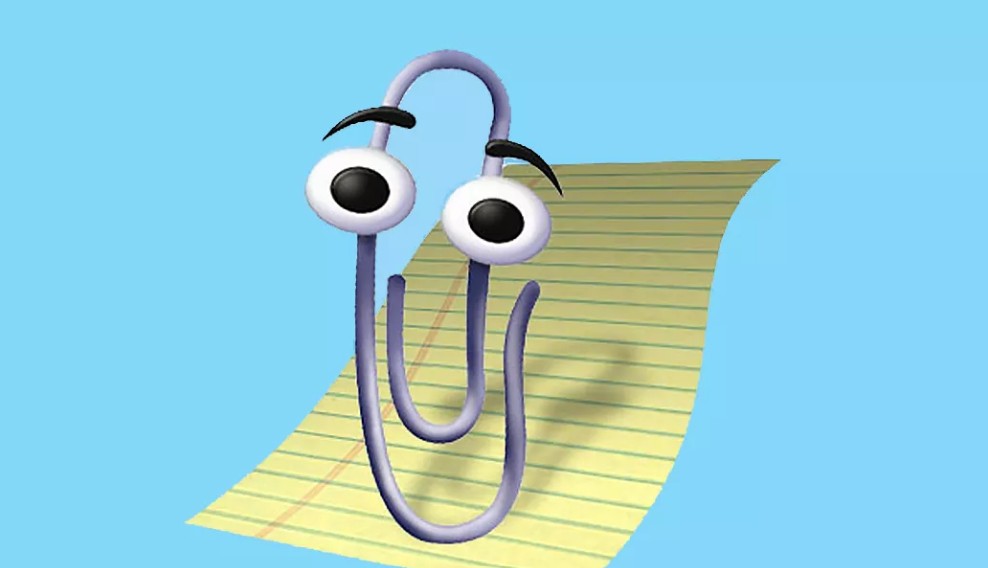
    In the late 1990s and early 2000s, Clippy was a punchline. The animated paperclip, officially known as Clippit, would pop up in Microsoft Office to offer tips that were often irrelevant, unnecessary, or unintentionally hilarious. He became a symbol of intrusive, overenthusiastic technology—technology that meant well but didn’t always deliver. We rolled our eyes, we groaned, and we laughed about him. But now, decades later, Clippy has taken on an entirely different role. In 2025, Louis Rossmann, a well-known electronics repair technician and right-to-repair activist, launched a campaign urging people to change their profile pictures to Clippy. At first glance, it might seem like a quirky, internet-savvy joke. In truth, it’s a form of protest.

    Rossmann’s point is clear: technology, once designed to help users, is increasingly being built to control them. Clippy, for all his faults, had no ulterior motive. He didn’t mine your personal data, track your every move, or push you into buying a newer version of Office you didn’t need. His purpose was singular—help you write your letter, format your resume, or understand the software you were using. Today’s digital landscape is far from that innocence. The modern internet is full of systems designed not to help, but to manipulate, monetize, and surveil.

    The shift from help-first technology to profit-first technology is what Rossmann calls “enshittification,” a process where services degrade over time in the pursuit of revenue, control, and exploitation. The earliest versions of many platforms are user-focused—simple, intuitive, even joyful. Then monetization strategies kick in, algorithms begin to dictate user behavior, and features are locked behind paywalls or removed entirely. What was once a tool becomes a trap.

    And this isn’t just about the private sector. Governments around the world are increasingly stepping in with laws and regulations that, while often presented as protective measures, have the side effect—or perhaps the intended effect—of restricting freedoms online. The Kids Online Safety Act (KOSA) is one example. Framed as a way to shield children from harmful content, it requires platforms to exercise a “duty of care” to prevent a wide array of harms, from depression to bullying. On paper, it sounds noble. In practice, it’s dangerously vague. Who defines what “harmful” means? Civil liberties groups warn that KOSA could easily be used to censor important, even life-saving content, especially for marginalized groups like LGBTQ+ youth who rely on online spaces for support.

    The SCREEN Act, another U.S. proposal, takes it a step further by requiring mandatory age verification for websites deemed harmful to minors. That means handing over government IDs or other sensitive data to access vast portions of the internet. Privacy advocates are rightfully concerned—this isn’t just about protecting kids, it’s about reshaping the internet into a monitored, identity-verified space. It’s a short leap from there to an internet where anonymity is impossible.

    Across the Atlantic, the UK’s Online Safety Act has already gone into effect, bringing with it sweeping requirements for platforms to verify user ages and filter “harmful” content. Predictably, it has led to over-censorship, with platforms erring on the side of removing anything remotely controversial. News footage, political commentary, even educational resources have been swept up in the purge. Wikipedia fought the act in court, citing its privacy-focused, volunteer-driven model, but lost. The law is being phased in, and its full impact will be felt in the coming years.

    Even YouTube, the world’s largest video platform, is rolling out AI-powered age verification, set to expand beyond test users starting August 13, 2025. The system uses machine learning to guess your age based on viewing habits, search history, and account longevity. If it thinks you’re underage, it restricts your access to content and disables personalized ads. Get misidentified? You can appeal—but only by handing over a government ID, a credit card, or a facial image. Once again, we are forced to trade privacy for participation.

    And then there’s the Tea app controversy, a recent and sobering reminder of how fragile privacy really is. Marketed as a women-only dating advice platform, Tea promised safety and discretion. In July 2025, it suffered two massive leaks: first, 72,000 images—including selfies and government IDs—were exposed; then, just days later, over a million private messages were leaked. What was meant to be a sanctuary for vulnerable users became a goldmine for bad actors. Multiple lawsuits are underway, but for the people whose personal information is now out in the wild, no court victory can undo the damage.

    When you step back and look at the big picture, the Clippy campaign isn’t just a nostalgic joke—it’s a pointed commentary on what we’ve lost. Clippy may have been clumsy, but he embodied a philosophy of technology that was transparent and singular in purpose: to assist the user. There was no hidden monetization scheme, no mass data harvesting, no psychological profiling. Compare that to today’s tech landscape, where help is often the bait and exploitation is the hook.

    Rossmann’s protest asks us to consider: what kind of internet do we want? Do we want one where services are designed to empower, or one where every click is monetized and monitored? Do we want tools that are honest about their purpose, or tools that pretend to help while quietly extracting value from us?

    The legislation and policies being rolled out right now are not isolated events—they are part of a trend toward a more restrictive, less private, and less user-centered internet. And unlike Clippy, these changes aren’t something we can simply click away from. They’re structural shifts that, once in place, will be incredibly difficult to reverse.

    For creatives like me, this hits especially hard. The internet has been a place to share ideas, stories, and art without gatekeepers. It’s been a tool for connecting with audiences and communities across the world. But the more laws that demand age verification, the more platforms that demand personal data, and the more algorithms that decide what can be seen, the smaller that creative space becomes. It’s a slow suffocation of the freedom that made the internet exciting in the first place.

    Changing a profile picture to Clippy might seem like a small act, maybe even a silly one. But symbols matter. They can rally people around a shared concern, spark conversations, and make abstract issues feel tangible. Clippy’s big, googly eyes and awkward smile remind us of a time when technology was still, in many ways, on our side. By putting him in our profiles, we’re not just being ironic—we’re making a statement.

    We’re saying we miss when tech was built for us, not against us. We’re saying we refuse to quietly accept policies and practices that strip away our privacy and autonomy. And we’re saying that, even if the fight seems unwinnable, we won’t stop pushing back.

    The internet doesn’t have to be perfect to be worth defending. It just has to be ours.

    To check out Louis Rossmann’s video, you can find it down below.
  • Loneliness: The Path to Inner Contentment and Emotional Resilience

    Loneliness: The Path to Inner Contentment and Emotional Resilience

    I recently watched a video by Michael Mikey titled “A Loneliness Epidemic?” in which he addresses the growing narrative around male loneliness. He challenges the idea that loneliness is something exclusive to men, and instead, he highlights how this issue affects people across all demographics. Mikey argues that while loneliness is real, the media often exaggerates or oversimplifies the problem for the sake of sensationalism. He encourages us to think critically about the structural and cultural forces, like capitalism and digital alienation, that contribute to isolation. Mikey’s approach struck a chord with me, especially when he pointed out that loneliness isn’t something that needs to be “fixed” in the typical sense. Instead of focusing on finding more people to fill emotional gaps, he emphasizes the importance of understanding loneliness and learning to coexist with it, which led me to think more deeply about how we can learn to be content with ourselves and our lives as they are.

    Loneliness isn’t something new. We’ve all felt it at one point or another. But recently, there’s been a surge in discussions around loneliness, especially in the context of gender—particularly male loneliness. The media narrative often makes it seem as though loneliness is a condition to be fixed, something that must be overcome with relationships, friendship, and an emotional lifeline. But what if loneliness isn’t necessarily something that needs to be fixed in the conventional sense? What if the key to overcoming loneliness isn’t about finding more people to fill the emotional gaps, but learning to be content with yourself?

    I’m not talking about some idealized version of contentment where you simply “accept your situation” as it is, or make peace with the fact that you’re lonely. What I mean is deeper. I’m talking about finding peace within your own life, your own mind, and your own choices. This isn’t about forcing happiness or pretending everything is fine—it’s about developing a level of emotional resilience that allows you to feel at peace even when loneliness knocks at your door.

    Here’s the paradox: loneliness is painful, but that doesn’t mean the solution is always found in chasing others to fill that void. Sometimes, the best way to deal with loneliness is through emotional detachment—not in the extreme sense where you shut down or withdraw from the world, but in a healthy way where you stop allowing your emotions to be dictated by the presence or absence of others.

    Detachment doesn’t mean you stop caring. It doesn’t mean you stop wanting relationships, friendships, or emotional connections. It means learning how to not let your emotional well-being hinge entirely on those external sources. It’s about finding a level of internal peace where loneliness becomes something you can experience without it completely overwhelming you.

    This might sound counterintuitive—how could apathy or detachment lead to contentment? Isn’t detachment the opposite of connection? The trick is finding balance. You don’t want to detach so much that you lose your ability to connect with others. You don’t want to shut yourself off from love or companionship. But by detaching from the need for external validation or constant interaction, you can start to build a foundation of self-contentment. In this space, you can thrive even in solitude. This form of self-sufficiency isn’t about rejection; it’s about acceptance of the present and a deeper understanding of your emotional needs.

    This is where optimistic nihilism can play a role. Yes, the world can feel meaningless at times. There’s a lot of suffering, a lot of emptiness, and a lot of things that seem out of our control. But that’s exactly why embracing an optimistic nihilist outlook can help in times of loneliness. It’s the realization that nothing has inherent meaning, but you get to create meaning. In a world that often feels chaotic, your ability to focus on what matters to you—not to society’s expectations or what others think—is an act of liberation.

    Optimistic nihilism teaches that while the universe might not care about your loneliness, you do. And that’s enough. You are the creator of your own narrative. You get to define what gives you joy, what sustains you, and what makes your life worthwhile. And when you come from that perspective, loneliness doesn’t feel like the end of the world. It just becomes a temporary phase—a passing moment that doesn’t need to define you.

    I get it. This is hard work. It’s easy to say, “Find peace within yourself,” but the reality is that it takes time. It’s a journey, not a destination. It’s okay to not have it all figured out. It’s okay to feel lonely some days. The goal isn’t to push away those feelings or to force yourself into constant self-sufficiency. The goal is to allow those feelings, acknowledge them, and then move through them with grace.

    If you’re in your 20s, like I am, or at any other stage in life, and you’re just starting to come to terms with your own emotional needs, you’ll likely find that this process isn’t quick. It’s not something that happens overnight. But with patience, introspection, and some level of emotional detachment, you can eventually reach a place where you’re not at war with your loneliness. Instead, you’ll find ways to coexist with it, live with it, and even use it as a tool for growth.

    Ultimately, contentment with oneself is a deeply personal journey. It’s not about becoming numb to the world or losing the ability to care about others. It’s about discovering how to find meaning, purpose, and peace without constantly looking outward. You don’t need to fix loneliness. You just need to understand it. And with time, you’ll see that being okay with yourself, as you are—lonely or not—is the truest form of freedom.

  • lol. “good friends”

    lol. “good friends”

    right. ok, nintendo. they’re “good friends.” sorta like just how ross and rachel, or robin and ted, or fry and leela, or insert any fictional couple, are “good friends.”

    gimme a break

  • History Repeats

    History Repeats

    It’s been five years since I wrote these posts about possible war with Iran. Back then, in 2020, it was end of Trump’s first term.

    Now, 5 years later, it is the beginning of Trump’s second term.

    And five years later, we find ourselves yet again on the precipice of war with Iran.

    Like I said in the 3 posts I wrote 5 years ago, no war with Iran.

    I will end with a small poem.

    I will call this: History Repeats

    History Repeats

    History repeats.

    It’s been five years

    And we are on the precipice of war again.

    War with Iran.

    Like I said back then,

    No war with Iran.

    I meant it back then,

    And I mean it now.

    No war with Iran.

    War would be awful.

    Folks will get hurt.

    Folks would die.

    It won’t be good at all.

    I hope there won’t be war.

    I hope this doesn’t escalate.

  • 🎶 Shawn Mendes and the Life Is Strange TV Series: Could He Refresh an Iconic Soundtrack?

    🎶 Shawn Mendes and the Life Is Strange TV Series: Could He Refresh an Iconic Soundtrack?

    Hey folks! So, I recently came across some interesting news about the upcoming Life Is Strange live-action show — Shawn Mendes is apparently heading up the music. Now, I know this isn’t exactly fresh off the press. The news has been floating around for a little while, but I only just found out about it from a YouTube video by Noer called “The Life is Strange Show Has Me Concerned…” that dropped just three days ago, on May 25, 2025. (Here’s the link if you want to check it out: https://youtu.be/hmjUR4zCXc4?si=FvhYs-HTacQt3c8l).


    What We Know About Shawn Mendes’ Involvement

    So far, it looks like Shawn Mendes is not only executive producing but also taking charge of the show’s music through his company Permanent Content. Reports from outlets like Teen Vogue mention Mendes’ focus on emotional storytelling, which seems like a good fit given the heartfelt nature of Life Is Strange (Teen Vogue).


    The Original Soundtrack — Loved, But a Bit Dated

    Let’s be real: the Life Is Strange game soundtrack is amazing. Songs by Syd Matters, Angus & Julia Stone, José González, and others perfectly captured that indie, melancholic, and nostalgic mood that the game thrives on. Tracks like “Obstacles” and “Spanish Sahara” aren’t just background music — they’re emotional anchors for players. They are the game’s soul.

    But here’s the thing — the game came out back in 2015, and the soundtrack, while still beautiful, does feel a bit… stuck in the past. Indie folk and atmospheric alternative music from a decade ago doesn’t always hit the same way with today’s younger audiences or those who might be new to the franchise. The style is a bit dated, and some of the production feels tied to that era.


    Why Shawn Mendes Could Be a Great Fit

    This is where Shawn Mendes’ involvement could be a game-changer. Shawn is known for his emotional vocal style and has shown he can pull off stripped-down, intimate performances (think of acoustic versions of his songs). His ability to blend pop with alternative elements means he could take the original Life Is Strange songs and give them a fresh, modern polish — without losing the heart and soul of the originals.

    Imagine Shawn Mendes covering “Obstacles” or “Spanish Sahara” with a modern twist that appeals to today’s audience but still respects the emotional core of the game. That kind of approach could introduce these songs to a whole new generation, making them more relatable and impactful.

    Plus, Shawn’s history of collaborating with other artists — Justin Bieber, Charlie Puth, and more — means there’s potential for exciting musical partnerships to bring diversity and depth to the soundtrack.


    What Fans Are Worried About — And What I Think Needs to Happen

    A lot of fans are understandably nervous about Shawn Mendes taking over the music because they fear the show might ditch the iconic songs for Mendes’ own pop hits or a totally different style. That would be a big misstep and could disappoint longtime fans who hold the original soundtrack close to their hearts.

    My hope is that Mendes doesn’t just drop his own music in the show. Instead, he should cover every major song from the game — preserving their emotional weight but modernizing the arrangements and production. This could be the best compromise: honoring the original music and giving it new life.


    Final Thoughts: A Fresh Soundtrack for a New Generation

    So yeah, the news about Shawn Mendes leading the music isn’t brand new, but discovering it recently made me think a lot about how this could work if done right.

    The Life Is Strange soundtrack is undeniably powerful, but it is tied to a specific era and sound that might not resonate as well with today’s viewers. If Shawn Mendes brings a fresh, modern perspective — covering the beloved songs and collaborating with other artists to enhance the sound — it could give the show’s music a new heartbeat that hits just as hard, if not harder.

    I’m cautiously optimistic. What do you think? Would you want Shawn Mendes to cover the original Life Is Strange songs, or would you prefer something different? Drop your thoughts below!