The Musings of Jaime David
@jaimedavid.blog@jaimedavid.blog

The writings of some random dude on the internet

1,089 posts
1 follower

Tag: AI

  • Musing Mondays #23: Why AI’s “Creativity” Is a Mirror, Not a Muse

    Musing Mondays #23: Why AI’s “Creativity” Is a Mirror, Not a Muse

    There’s a lot of buzz about AI “creating” art, music, writing — but here’s the thing: AI doesn’t create from inspiration or emotion. It’s more like a mirror reflecting what humans have already made.

    AI learns patterns, styles, and data from human input and then recombines those pieces. It’s impressive, sometimes eerily good, but fundamentally derivative. It can’t dream, suffer, or feel joy — all crucial ingredients for true creativity.

    That raises a question: does AI creativity threaten human artists? Or does it push us to think differently about what creativity means?

    Maybe AI will become a powerful tool — like a paintbrush or a musical instrument — helping humans push boundaries. But the spark, the soul, the why behind creativity? That’s still ours alone.

    Fediverse Reactions
  • The Frustration of AI in Customer Service: A Digital Maze of Disconnection

    The Frustration of AI in Customer Service: A Digital Maze of Disconnection


    We’ve all been there—calling a customer service number, expecting a quick resolution to an issue, only to be greeted by the cold, mechanical voice of an automated system. It promises assistance but offers none. The artificial intelligence (AI) behind the system isn’t there to help; it’s there to frustrate you. And, perhaps more maddeningly, to make you waste your precious time before you can even get close to speaking with a human being.

    I recently found myself in this exact situation, and it left me questioning just how much more “convenient” these systems really are. I called a vendor, expecting to get a straightforward answer or at least some direction. What I got instead was an endless loop of robotic prompts that failed to understand the most basic of requests: “Representative.” That’s all I wanted. Just a human who could assist me. But no. The system, in its infinite wisdom, kept insisting it could help, even though I knew, from experience, that it couldn’t.

    When I repeated my request, the AI responded with a bland, “I know you want to speak with a representative, but I can help.” It’s the kind of answer you’d expect from a robot that doesn’t really get what you need but thinks it’s helping by offering something it’s not equipped to provide. I was patient, giving the system a chance to resolve the issue on its own. But as I asked again, and again, I was greeted with more promises and less action. Finally, after what felt like an eternity, I was cut off. The call was dropped.

    Frustration turned to fury as I realized I would have to call back and start the process over. This time, the system demanded that I select an option from the menu to proceed. It wouldn’t even allow me to bypass the digital labyrinth. Forcing me to listen to irrelevant prompts, while I knew all I wanted was a human. But it’s not just that—it’s the underlying problem with AI in customer service: it’s designed to delay, not solve.

    These systems are supposed to make our lives easier. They’re meant to be time-savers, offering fast, automated responses to common problems. But in reality, they create barriers, taking us further away from the help we need. If I could talk to a human directly, the issue could have been resolved in minutes. Instead, I spent far too much time navigating a maze designed by a machine that doesn’t understand my needs. It’s as though the company that set this up doesn’t trust its customers enough to be able to communicate directly with a representative, forcing us into a frustrating game of digital cat-and-mouse.

    The problem isn’t necessarily with the technology itself—AI has the potential to provide tremendous efficiency and convenience. The issue lies in how it’s being implemented in customer service. Instead of working for the customer, it often works against them. These systems need to be more intuitive, more responsive to the needs of the caller, and above all, less about making the company’s process “efficient” and more about making the experience customer-centered.

    So why are we still stuck in this digital maze? Perhaps it’s about cost-cutting, minimizing the need for actual employees. But in the process, companies are sacrificing quality service and pushing customers into corners. AI should be a tool to enhance customer experience, not a barrier. If businesses are going to rely on AI for customer service, they need to ensure that it doesn’t come at the cost of customer satisfaction.

    Next time you call a customer service number and end up battling with an AI that just won’t let you speak to a human, remember—you’re not alone. And maybe, just maybe, it’s time for a change.

  • Is YouTube’s New AI Age Restriction Update the Beginning of the End?

    Is YouTube’s New AI Age Restriction Update the Beginning of the End?

    YouTube has always walked a tightrope between protecting its audience and supporting its creators. Every few years, the platform introduces changes that spark debates, backlash, and speculation about what the future holds. The latest controversy? YouTube’s new AI-driven age restriction update.

    In his video, “Creators Worry The AI Age Restriction Update Could End YouTube,” Xanderhal explores why this system is raising alarms across the creator community. The update uses artificial intelligence—specifically, facial analysis and other biometric cues—to estimate whether a viewer is old enough to watch certain content. On the surface, this seems like a reasonable move. After all, YouTube has a responsibility to keep age-inappropriate videos out of children’s hands. But the more you dig into it, the more unsettling the implications become.

    The biggest concern is accuracy. If an AI incorrectly flags a video as “age-restricted,” the consequences for a creator are immediate and severe. Restricted videos often disappear from recommendations, get buried in search results, and lose monetization opportunities. For creators who depend on YouTube revenue, one bad flag can mean the difference between paying rent and struggling to make ends meet. Imagine putting hours of work into a project, only to have an algorithm decide that your content is too “mature” for audiences—even when it clearly isn’t.

    Then there’s the issue of privacy. To verify age, the system relies on biometric data. That means analyzing people’s faces and other personal cues. Not only does this raise ethical questions about consent, but it also pushes YouTube into murky legal territory, especially in countries with strict data protection laws. If users start to feel that simply watching a video comes with invasive surveillance, will they stick around?

    Beyond privacy and accuracy lies the broader impact on YouTube as a whole. If creators continue to see their content unfairly flagged and their income shrink, many might feel forced to abandon the platform. The diversity of voices that made YouTube what it is today could start to vanish. What’s left would be a sanitized, risk-averse video library—safe for advertisers and regulators, but stripped of the creativity and boldness that once defined the site.

    The irony is that YouTube’s update, meant to protect the platform, could end up accelerating its decline. Creators are the foundation of YouTube. Without them, there’s no community, no innovation, no reason for viewers to keep coming back. If AI-driven restrictions continue unchecked, it’s not far-fetched to imagine creators migrating to other platforms, taking their audiences with them.

    My Take as a Creator

    I may not be a big YouTuber, but I do run a couple of small channels—one for memes and another tied to my author persona. Neither are monetized, and honestly, I doubt they ever will be. I post on YouTube for the sake of creativity, not income. But even as a smaller creator, I can’t ignore how policies like this could shape the platform’s future.

    What worries me is how these systems don’t just affect “big creators” with millions of subscribers. They affect everyone. If my videos—or anyone’s—got unfairly restricted, it wouldn’t be about losing money, but about losing visibility, connection, and motivation. For smaller creators like me, who already face an uphill climb just to be noticed, one wrong algorithmic flag could make that climb impossible.

    And this concern isn’t limited to YouTube. I’m also a blogger, and blogging is one of the most accessible forms of content creation out there. In some ways, it’s even easier to monetize a blog than a YouTube channel, and it’s definitely easier for people to start one. That accessibility is what makes blogging so special—but it’s also what makes me nervous. If YouTube, the largest video platform, is willing to introduce these kinds of sweeping AI-driven restrictions, how long until other video sites do the same? And how long after that until blogging platforms follow?

    If blogs ever became subject to the same kind of algorithmic scrutiny, the internet as we know it could change dramatically. It would no longer matter how creative or authentic your writing is—what would matter is whether an algorithm “approved” of it. That possibility scares me, because it suggests a future where the barrier to creation isn’t talent or effort, but compliance with a machine’s standards.

    At the end of the day, creators—big and small, video makers and bloggers alike—want the same thing: a fair shot to share their work without an algorithm standing in the way. YouTube’s new system might not affect me financially, but it still makes me wonder: if policies like this spread, what kind of internet will we be left with?

  • We Were Wrong About Holden Caulfield — He Cares More Than We Thought

    We Were Wrong About Holden Caulfield — He Cares More Than We Thought

    If Holden Caulfield were somehow transported into the year 2025, immersed in the dizzying swirl of our modern digital age, it would be a mistake to imagine him as merely angry or rebellious in the shallow, stereotypical teenage sense. No, Holden’s emotional landscape is far more complex, far more aching, and far more layered with contradictions than a simple outburst of adolescent defiance. At his core, the man who famously wielded the word phony as a kind of battle cry against insincerity would actually be struggling under the weight of something far heavier: a profound and wrenching mix of frustration and hope, tangled together so tightly it’s nearly impossible to separate one from the other.

    That word phony — often reduced by casual readers to a throwaway insult or a juvenile declaration — is in truth a deeply raw, visceral cry from someone who desperately yearns for the world to be better, more honest, and ultimately more real. Holden is not just railing against the surface-level fake or the trivial hypocrisy; he’s mourning the loss of genuine human connection and authenticity in a society increasingly overwhelmed by masks, performances, and illusions. In today’s chaotic 2025, where social media filters blur faces and expressions, AI bots masquerade as real people with eerie precision, scams and catfishers weave complex webs of deception, and cryptographic technologies like NFTs and cryptocurrencies spin dizzying new illusions of value and trust, Holden’s distress about phoniness feels not only relevant but more urgent and poignant than ever before.

    His frustration isn’t born of apathy or cynical detachment. Instead, it emerges from an almost unbearable depth of care — care for a world that no longer seems to value sincerity, care for people who are all too often invisible behind their masks, care for connection in an age of alienation. Holden wants a world where sincerity is not a precious rarity but a widespread currency. The more superficial the world becomes, the more he feels like a lone voice crying out in an increasingly deafening storm of façades. Importantly, he is not condemning the world simply to reject it outright; rather, he mourns what has been lost and painfully longs for what might still be recovered. This longing is not a small part of who Holden is; it is his essence — a deeply sensitive soul gasping for air in an environment suffocated by noise and superficiality.

    Holden’s pain is not simply a private or individual anguish; it carries a cultural and existential weight. Every time he calls someone “phony,” he is identifying a symptom of a broader social sickness — a society that increasingly rewards performance over presence, spectacle over substance, style over authenticity. The very concept of being “real” in this context becomes, almost paradoxically, a revolutionary act. His frustration is not mere teenage angst, but a profound cry for genuine authenticity in a world that seems more and more constructed from illusion and pretense.

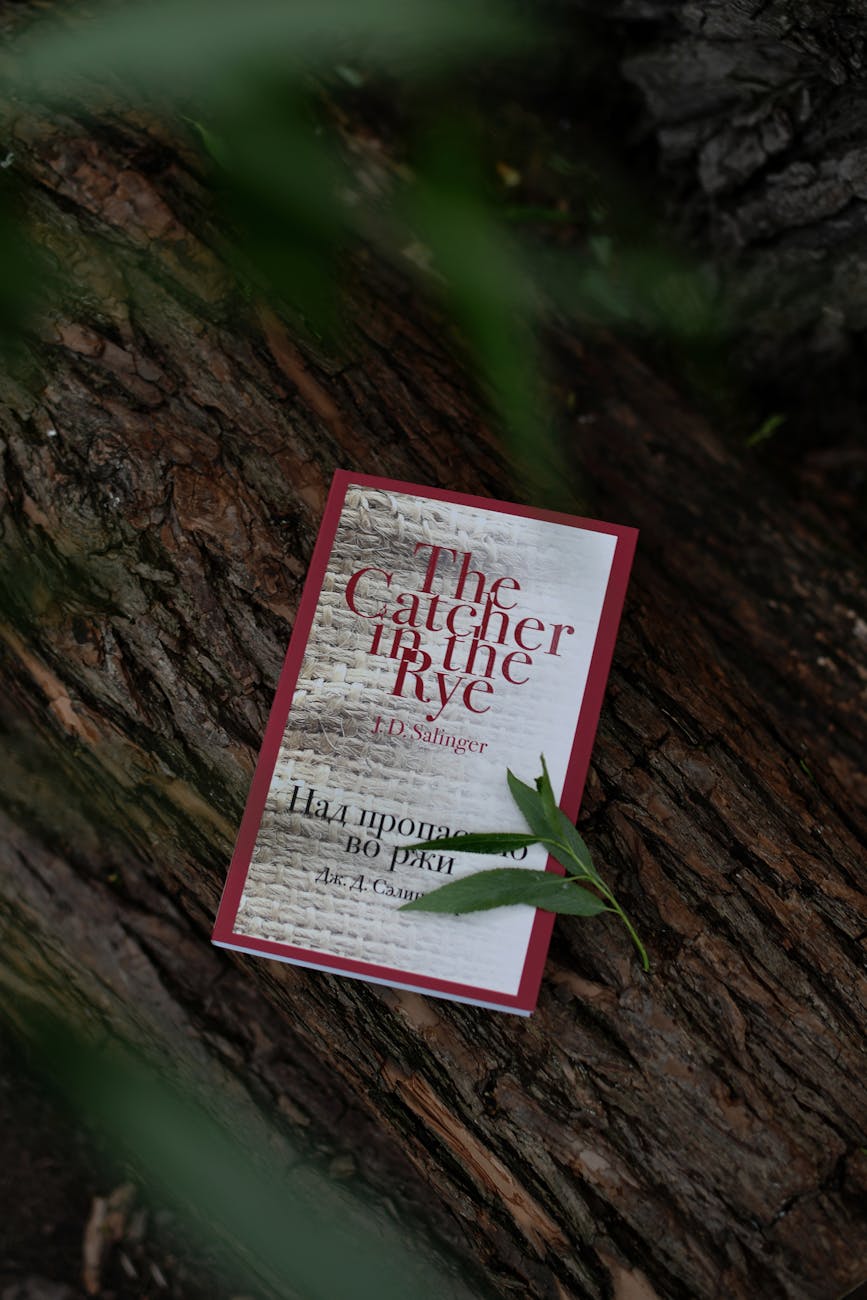
    When Holden flings around the term phony in The Catcher in the Rye, he is not merely venting bitterness or staging an act of rebellion against the world. Instead, he is overwhelmed by emotions that are so immense and complex, they evade simple verbal expression: sadness that runs deep, crushing loneliness, and a sense of betrayal by the very people and institutions he hoped to trust. As a highly sensitive person, one whose emotional antennae pick up the faintest signals of pain and insincerity, Holden wrestles with these floods of feelings. “Phony” becomes his singular, catch-all term for capturing the hollowness he perceives in the world — the emotional exhaustion of constant performances and fakeness that threaten to drown out any possibility of true connection.

    His bluntness and sometimes abrasive tone are more than just defensive armor; they are a coping mechanism and a desperate plea for something genuine and meaningful. Beneath his dismissive, sarcastic exterior lies a heart that is aching, vulnerable, and painfully raw. To Holden, the insincerity of the world is not a mere annoyance or inconvenience — it is a wound, one that cuts to the very core of his fragile hope for human connection.

    Importantly, Holden’s anger at phoniness is not rooted in hatred. It is a form of hope — a hope so raw and unpolished it wears the rough disguise of anger and tough love. It is a hope that the people around him might somehow be kinder, more authentic, and more genuinely connected to one another. This makes him profoundly relatable today, even if many don’t immediately recognize it. The modern world is flooded with its own versions of phoniness: “grifters” — from social media influencers peddling carefully curated but ultimately fake lifestyles, to multi-level marketing bosses who exploit emotional trust, to hollow gurus hawking quick fixes and empty promises. These are the phonies of Holden’s time, the ones he would have feared and condemned.

    But his reaction to them would be more nuanced than simple disdain. He would be frightened by what their deception reveals about human nature and society: that people are so hungry for genuine connection and meaning that they are willing to believe illusions and lies, that the social fabric is so frayed that trust has become a scarce commodity. The success of these grifters signals not only their cunning but also the profound fractures in our cultural landscape and the scarcity of true realness. Holden’s warnings about phoniness go beyond calling out individual bad actors; they are indictments of a society that increasingly elevates surface-level performance and pretense over truth, where meaning is drowned out by noise.

    Yet Holden is not without his own flaws and contradictions. He lies, he performs, he lashes out — not because he is callous or uncaring, but because he is terrified to confront his own vulnerability. Deep inside, he suspects that he might be just as phony as the people he harshly judges. This painful paradox — being both the accuser and the accused — is what makes him so raw, so real, and so profoundly human.

    This internal battle is at the heart of Holden’s tragedy, but also his resilience. His self-awareness of his own flaws does not weaken him; rather, it sharpens his judgments and preserves his genuineness. It is this self-reflection and humility that prevents him from sliding into complete cynicism or nihilism. Instead, Holden is a broken idealist who continues to try, to fail, and to try again to find authenticity in a world that often seems to reject it. This vulnerability is exactly what makes him eternally relatable to readers across generations.

    From a psychological perspective, Holden fits the personality profile of an ENFJ — the empathetic, emotionally intense “compassionate truth-teller” who suffers deeply when those around him fall short of his high ideals. Combined with traits typical of a highly sensitive person, Holden’s capacity to care deeply is both his strength and his source of profound pain. In a world overwhelmed by noise, pretense, and relentless surface-level interaction, he feels utterly isolated in his search for sincerity. His fierce criticisms are often a mask for his yearning to connect and to protect those he cares about.

    Imagine Holden navigating the digital landscape of today. He would see bots pretending to be humans, scammers hiding behind fabricated identities, catfishers weaving elaborate lies to manipulate and gain attention, and parasocial relationships built on one-sided obsession. He would watch people fall in love with influencers who don’t even know they exist, and witness AI-generated content that blurs the lines between authentic and artificial reality. These phenomena would deepen his sense of alienation and loss.

    And then there is the physical world: knockoff perfumes, counterfeit sneakers, cheap imitations flooding both brick-and-mortar stores and online marketplaces. To Holden, these objects would not be merely cheap products but potent symbols of a culture that values image and hype over substance and honesty. As he walked through bustling city streets or scrolled endlessly through advertising feeds, he might mutter under his breath, “Goddamn phonies.” This would be no mere expression of irritation, but a mournful lament for a world where what is real becomes harder and harder to find.

    Even the economy would not escape Holden’s sharp critique. The rise of NFTs and cryptocurrencies — often dismissed by critics as speculative bubbles or empty hype — would appear to him as mass delusions, where millions are spent on digital images or tokens lacking intrinsic value. It would matter little how sophisticated the technology is or how much promise it holds for decentralization. To Holden, these trends would be perfect metaphors for a culture entranced by surface over substance, the latest signs of how easily we are seduced by illusions and empty hype.

    Philosophically, Holden’s deep suspicion of the world would find resonance in simulation theory — the provocative idea that reality itself might be a computer-generated illusion. While this remains unproven, the concept would echo Holden’s darkest fears about universal phoniness and deception. If the world around us is merely a simulation, then where does that leave hope for truth, for connection, for genuine human experience? This cosmic dread would only deepen his internal struggle and his profound sense of alienation, feeding the loneliness at the very core of his being.

    But Holden’s skepticism is far from isolated. His distrust of the status quo aligns, though uneasily, with many voices across today’s fractured ideological landscape: from MAGA loyalists convinced the system is rigged, to anarchists calling for radical upheaval, libertarians rejecting centralized authority, “truthers” questioning official narratives, sociologists who deconstruct social realities, and nihilists who deny inherent meaning in life. These groups vary widely in their beliefs and approaches, but they share with Holden a fundamental sense that the world’s script is broken — that something essential is amiss.

    This widespread skepticism is less about shared ideology and more about a collective feeling of distrust, alienation, and disillusionment. It reflects a society grappling with complexity, contradiction, and suspicion. Holden’s feelings connect across this broad spectrum not as a political statement or endorsement but as an expression of the universal human struggle to find meaning and authenticity amid confusion.

    Ironically, Holden would likely view many of his own fans as phonies — those who don Catcher in the Rye merchandise or idolize his rebellious image. To him, this commodification of his pain and confusion would feel like yet another mask obscuring the very vulnerability he struggles to express. He never aspired to be anyone’s hero; he simply wanted to survive his own confusing, painful world. Watching his story become a cultural icon might deepen his sense of being misunderstood, amplifying his feeling of isolation.

    At the very center of it all, Holden knows he is a phony too. The finger he points outward always reflects back upon himself. He judges performance, but he performs as well. He fears fakery but wonders if he has already been consumed by it. His fierce desire to protect innocence stands in contrast to his own deeply wounded soul. This painful self-awareness, far from weakening him, is what grounds him in reality and makes him endlessly relatable.

    Ultimately, Holden endures not because he is perfect or certain but because he feels deeply and hopes fiercely. He is flawed, lost, angry, scared — yet still yearning for something genuine in a world that often feels like a carefully staged play. In an age dominated by masks, bots, and simulations, Holden’s stubborn hope for authenticity is itself a radical act of resistance: a quiet, fierce defiance that reminds us all of the profound meaning of truly caring.

  • Age by Algorithm: Why YouTube’s New AI Age Checks Raise Big Questions for Creators and Viewers Alike

    Age by Algorithm: Why YouTube’s New AI Age Checks Raise Big Questions for Creators and Viewers Alike

    As creators, we know that the digital landscape is constantly evolving — new tools, new guidelines, and yes, new rules about who can see what and when. YouTube’s latest move? Using artificial intelligence to guess a viewer’s age, not based on their birthday, but on their behavior.

    That’s right. YouTube recently announced that it’s rolling out an AI-powered age detection system in the U.S. This system will estimate whether a user is over or under 18 by looking at what they watch, what they search for, and how long they’ve had their account — regardless of the birthdate they entered.

    For creators, this raises a lot of questions.

    1. Will our videos reach the intended audience?
    If someone is misclassified as a minor, they might be automatically excluded from seeing our content — even if it’s not inappropriate. That means creators could lose out on engagement, visibility, and potential revenue due to something as abstract as an algorithmic guess.

    2. What happens if the system gets it wrong?
    The burden falls on users to prove their age with a credit card, government ID, or selfie. This isn’t just a hassle — it’s a potential privacy concern, especially for users who don’t feel comfortable sharing such personal data online.

    3. What about nuance?
    Not all content is clearly “for kids” or “for adults.” Sometimes, it’s educational. Sometimes, it’s artistic. Will AI understand the difference? Or will creators start censoring themselves to avoid being caught in the system’s net?

    This rollout comes on the heels of broader regulatory trends — like the Kids Online Safety Act (KOSA) and the UK’s Online Safety Act — which aim to protect minors online. And while those goals are important, creators and digital users alike are increasingly worried that the methods used to “protect” may lead to overreach, mistrust, or unintended harm.

    YouTube says this approach has worked well in other countries and will be tested with a small group of U.S. users first. But even so, it’s important for us — as creators, viewers, and digital citizens — to pay attention. AI isn’t perfect. And when it’s used to gatekeep access, influence algorithms, or reshape who sees our work, the stakes are higher than ever.

    Let’s keep the conversation going. Let’s stay informed. And most of all, let’s advocate for smart solutions that protect young users without punishing creativity, curiosity, or community.

  • Musing Mondays #5: The Cost of Convenience: How AI Voice Assistants Are Changing Customer Experience

    Musing Mondays #5: The Cost of Convenience: How AI Voice Assistants Are Changing Customer Experience

    Technology is evolving at a rapid pace, and with it comes a slew of innovations that promise to make our lives easier. One area where this is particularly visible is in the realm of customer service, where automated voice assistants are increasingly replacing human operators. While these systems are designed to streamline processes and improve efficiency, they can also introduce a host of new challenges — particularly for users who rely on certain accommodations or prefer more personalized interactions.

    Take Capital One’s recent change to its phone-based voice assistant system, for example. The company has transitioned from a human-like, slow-paced AI to a more robotic-sounding one that speeds through instructions. While the change is likely designed to improve speed and efficiency, it has left many users, especially those with specific needs, frustrated and dissatisfied.

    This shift is more than just a matter of convenience; it brings to light critical questions about how technology serves its users. As AI becomes more integrated into our daily lives, we must consider the ways it impacts accessibility, inclusivity, and user experience. What happens when the “smart” systems we rely on start to overlook the diverse ways in which people interact with technology?


    Accessibility and the Hidden Costs of “Efficiency”

    When a company like Capital One rolls out a new AI voice assistant, the goal is often to create a system that can handle more users faster. And, on the surface, this seems like a win for efficiency. However, for those who are neurodivergent, have sensory sensitivities, or simply need a little extra time to process spoken information, the faster, more robotic assistant is anything but a win.

    For many, using keypad inputs or interacting with slower, more human-like assistants was a much more comfortable and effective way to manage tasks like paying bills or checking balances. But the shift to a voice-only system with no alternative can feel alienating. Users are forced into a style of interaction that may not suit their needs, and without proper accommodations, they’re left to adapt — or struggle.

    This isn’t an isolated issue. Across the tech industry, from customer service lines to smartphone apps, companies are increasingly opting for voice-first or AI-driven solutions. Yet, in this push for automation, the subtle human element of customer service is often lost — along with the empathy that comes with it.


    The Pushback: How Users Are Reacting

    As the AI assistant landscape shifts, many users are vocal about their dissatisfaction with these changes. Some argue that AI can never truly replace human interaction, especially when it comes to understanding the needs of a diverse user base.

    From Reddit:
    One user said:

    “The older system let me use the keypad for everything, and I didn’t have to speak at all. Now it forces me to talk even when I don’t want to.”
    This user’s frustration reveals the key problem with forcing voice-based interactions: it ignores the reality that some users are not comfortable speaking or may find it difficult to process information quickly.

    From X (formerly Twitter):
    Another user tweeted:

    “I miss the old voice — it felt like it understood I needed time. This new one just speeds through everything.”
    Here, the user is expressing a need for more time and a slower pace, something that a robotic-sounding assistant is unable to provide.

    From Trustpilot:
    A user posted:

    “It talks too fast and I can’t even understand the menu options half the time.”
    This user points out the speed of the new voice and how it affects comprehension — something especially concerning for those with auditory processing challenges.

    From Reddit (again):
    One more comment shared:

    “This new robot voice is annoying AF. Bring back the old assistant!”
    For this user, the problem isn’t just about speed — it’s about how the assistant’s robotic tone makes the experience feel less human and more disconnected.

    These reactions aren’t simply complaints; they are signals that AI systems need to evolve alongside the diverse ways people interact with technology. It’s not just about functionality; it’s about understanding the needs of users in a nuanced, empathetic way.


    How Tech Companies Can Do Better

    While it’s clear that AI and voice assistants are here to stay, it’s essential that companies make their services more inclusive and accessible. The rapid adoption of AI shouldn’t come at the expense of those who rely on alternative methods of interaction.

    Here are a few suggestions for how companies like Capital One (and others in the banking and tech sectors) can better serve their customers:

    • Offer a Choice of Interaction Methods: Companies should allow users to choose between keypad inputs, voice prompts, and other modes of interaction, ensuring that users can find the method that works best for them.
    • Slow Down AI Speech: For users who need extra time to process information, slowing down the speech rate could improve the experience for many people.
    • Involve Diverse User Groups in Testing: When developing AI systems, companies should include a range of neurodivergent users and others with accessibility needs in the testing phase, ensuring that the system works for everyone.
    • Avoid Over-Promising on Speed: The assumption that faster equals better doesn’t work for everyone. Companies need to be mindful that in the pursuit of speed, they don’t alienate the people who rely on more thoughtful, human-paced interactions.

    Tech for All: Striving for Inclusivity

    As AI technology continues to evolve, we must ask ourselves: Who is it really benefiting? A new, faster system may improve efficiency, but if it alienates users who need slower, more customizable options, is it really an improvement?

    In a world where we are increasingly dependent on technology for day-to-day tasks, it’s essential that we strive for solutions that are inclusive and accessible for everyone. After all, the most efficient technology is the one that works for everyone, not just those who fit a particular mold.


    Have you encountered similar frustrations with voice assistants? Share your experience in the comments below — let’s keep the conversation going about accessibility in AI.