The Musings of Jaime David
@jaimedavid.blog@jaimedavid.blog

The writings of some random dude on the internet

1,120 posts
1 follower

Tag: fandom culture

  • The Ultimate Paranormal TV Crossover We Deserve: Grimm, Supernatural, Fringe, and The X-Files

    The Ultimate Paranormal TV Crossover We Deserve: Grimm, Supernatural, Fringe, and The X-Files

    There are some ideas that feel so obvious, so perfectly aligned with pop culture history, that it’s almost insane they haven’t happened yet.

    And this is one of them.

    We need a crossover between Grimm, Supernatural, Fringe, and The X-Files.

    Not a reboot. Not a remake. Not a “shared universe reboot attempt.”

    A true, full-on, multiverse-level paranormal crossover event while the actors are still alive, still capable, and still recognizable as the characters we grew up with.

    Because if there was ever a time to do it, it’s now.


    These Shows Were Already Basically the Same Universe

    Let’s be real for a second.

    All four of these shows were already orbiting the same core idea:

    • Something hidden is going on in the world
    • Governments either know too much or too little
    • Monsters, anomalies, or entities exist just beyond normal perception
    • A small group of people is constantly holding reality together

    The X-Files basically laid the foundation. Mulder and Scully set the tone for “investigate the unexplainable, get gaslit by institutions, repeat.”

    Then Fringe escalated it into multiverse horror sci-fi with alternate realities, mad science, and collapsing timelines.

    Then Supernatural said “what if we just made folklore, demons, angels, gods, and cosmic apocalypse part of a road trip buddy show for 15 seasons.”

    And then Grimm came in like “what if fairy tales were real, but hidden among humans, and the cops were secretly monster hunters?”

    These shows are not different genres.

    They are different dialects of the same language.


    The Crossover Concept Writes Itself

    You don’t even need to overthink it.

    Something goes wrong.

    Not just “monster of the week” wrong.

    Reality is destabilizing.

    Fractures from the Fringe universes begin bleeding into our own timeline. The boundaries between myth, alien phenomena, and supernatural law enforcement collapse.

    Suddenly:

    • FBI agents are getting X-Files cases that don’t behave like X-Files cases
    • Hunters from Supernatural are seeing creatures that don’t follow known lore
    • Grimm “wesen” rules start breaking down
    • And something from the deepest Fringe-style alternate universe is rewriting physics itself

    This isn’t “team-up to fight a villain of the week.”

    This is:

    “All of your shows were documenting different symptoms of the same apocalypse.”


    The Characters Already Feel Like They Could Meet

    This is the part people underestimate.

    The tone compatibility is already there.

    The X-Files

    The X-Files gives us:

    • Fox Mulder’s obsession with truth
    • Dana Scully’s scientific skepticism slowly eroded by reality

    And honestly, Mulder meeting literally anyone from these other shows just feels natural. He would immediately believe all of it. Scully would try to document it. Fail. Then still publish a paper about it.


    Supernatural

    Supernatural gives us:

    • Dean and Sam Winchester, who have literally fought everything from demons to gods to cosmic destiny itself

    At a certain point, they stop being surprised. They would meet Fringe scientists and go:

    “Yeah, okay, alternate universe again. Cool. Can we kill it?”

    Played by Jensen Ackles and Jared Padalecki, they are basically the emotional backbone of supernatural chaos.


    Fringe

    Fringe brings:

    • Olivia Dunham
    • Walter Bishop
    • Peter Bishop

    This trio would be the “explain what is actually happening” engine of the crossover.

    Especially Walter.

    Walter would look at everything happening and say something like:

    “Oh yes, I saw this once when I accidentally opened a door to a dimension where gravity is emotional.”

    Played by Joshua Jackson, Peter is the bridge between madness and logic.


    Grimm

    Grimm adds:

    • Hidden monster society
    • Police procedural grounding
    • Mythological creatures disguised as humans

    Nick Burkhardt walking into this crossover would basically be:

    “So you’re telling me this is NOT the weirdest case I’ve ever had?”

    And then immediately be proven wrong.


    The Villain: It’s Not a Monster, It’s Reality Itself

    Here’s where the crossover gets interesting.

    Because if you combine:

    • X-Files government conspiracies
    • Fringe multiverse instability
    • Supernatural cosmic hierarchy
    • Grimm mythological hidden society

    You don’t get a monster.

    You get a breakdown of structure.

    The antagonist shouldn’t be a demon or alien or Wesen.

    It should be:

    A collapsing “truth layer” where all explanations exist at once, and none of them are stable anymore.

    Meaning:

    • Science stops agreeing with itself
    • Magic stops obeying rules
    • Mythology becomes statistically real
    • Alternate realities overwrite memory

    This is the kind of threat where even Winchester logic fails.

    Even Walter Bishop gets scared.


    The Emotional Core Would Be Insane

    What makes this crossover actually work isn’t just spectacle.

    It’s grief.

    All four shows, in their own way, are about people who sacrifice normal life to hold back the unknown.

    • Mulder loses normalcy for truth
    • Scully loses certainty for reality
    • Dean and Sam lose everything for survival
    • Nick loses ignorance for responsibility
    • Olivia loses identity across timelines
    • Walter loses his mind to understand what’s coming

    Put them together and you don’t get a team.

    You get survivors of different wars realizing they were all fighting the same war.


    Imagine the First Meeting Scene

    Picture it:

    A government facility collapses due to a dimensional bleed.

    Mulder and Scully arrive.

    Then Dean and Sam kick in the door, weapons drawn.

    Nick Burkhardt is already there, trying to contain a Wesen outbreak that is behaving… wrong.

    Walter Bishop is calmly eating a sandwich while saying:

    “This is actually very exciting.”

    Olivia Dunham arrives last and immediately says:

    “This is not our universe.”

    And Dean responds:

    “Yeah, no kidding.”

    That’s it. That’s the show.


    Why This Needs to Happen Now

    This is the important part.

    All of these shows have aging fandoms. Many of the actors are still active. The nostalgia window is open, but it won’t stay open forever.

    • David Duchovny and Gillian Anderson still have cultural weight as Mulder and Scully
    • Jensen Ackles and Jared Padalecki are still deeply associated with supernatural storytelling
    • Joshua Jackson still carries Fringe’s legacy

    If there was ever a moment where studios could realistically coordinate something like this, it’s in this era of multiverse storytelling where audiences already accept impossible crossovers.

    We’ve literally been trained by modern cinema to say:

    “Sure, why not, throw them all together.”

    So why not do it with the best paranormal TV shows ever made?


    The Real Reason This Works

    It’s not just fan service.

    It’s thematic completion.

    These shows never got closure in relation to each other because they were never connected.

    But emotionally?

    They already were.

    They were all asking the same question in different ways:

    “What happens when reality stops being reliable?”

    A crossover doesn’t dilute that question.

    It amplifies it.


    Final Thought

    If you brought these universes together, you wouldn’t just get a crossover episode.

    You would get a cultural event.

    A “where were you when the paranormal multiverse collapsed” moment.

    And honestly?

    If the actors are still around, if the fandoms are still alive, and if Hollywood is still obsessed with multiverses…

    Then not doing this feels like a missed opportunity of almost mythic proportions.

    Because some ideas aren’t just good.

    They’re inevitable.
  • The Wildly Absurd (and Hilariously Toxic) Zoro vs. Sanji Rivalry

    The Wildly Absurd (and Hilariously Toxic) Zoro vs. Sanji Rivalry

    One Piece is a story about friendship, dreams, and sailing across the seas to find the world’s greatest treasure. But if you spend any amount of time in the fandom, you’ll discover that the real One Piece isn’t the treasure at Laugh Tale—it’s the endless war between Zoro fans and Sanji fans. Forget the World Government, forget the Yonko, forget the void century. The most heated, emotionally charged battle in the community is over which fictional pirate sidekick is “better.”

    And honestly? It’s both ridiculous and hilarious.


    More Than Just Characters, They’re Personality Tests

    On the surface, Zoro and Sanji are foils. Zoro is the stoic swordsman with iron discipline, while Sanji is the passionate chef who wears his heart (and his cigarette) on his sleeve. But somewhere along the way, fans stopped seeing them as just characters—they became avatars of identity.

    • Zoro fans see themselves in his no-nonsense grind, his dedication, and his lone-wolf masculinity.
    • Sanji fans latch onto his flair, his emotional intelligence, and his willingness to break rules for love or compassion.

    The result? Choosing a side feels like defending your own worldview. Suddenly it’s not just “Zoro vs. Sanji”—it’s “my values vs. your values.”


    A Rivalry Fueled by Projection

    This is where things get absurd. Fans project so much onto these two that every narrative moment turns into ammo for online warfare. Did Sanji land a flashy kick? Proof he’s more versatile. Did Zoro cut down a mountain? Proof he’s the ultimate powerhouse.

    Meanwhile, Oda sprinkles in comedic clashes between them—Zoro and Sanji insulting each other, trading blows, but always coming together when it matters. The irony is that in the story, their rivalry is both lighthearted and respectful. But in the fandom? Respect goes out the window faster than Sanji chasing after Nami.


    Masculinity, Loyalty, and Overthinking Fictional Men

    One of the funniest (and wildest) parts of this rivalry is how deeply fans dissect what these two mean. Zoro is painted as the “real man”—unflinching, loyal, and disciplined. Sanji, on the other hand, is framed as the “complex man”—emotional, chivalrous, conflicted.

    Instead of just enjoying the contrast, debates spiral into shouting matches over which model of masculinity is “superior.” It’s like people are fighting an academic battle over the philosophy of being a man, except with reaction memes and badly cropped manga panels.


    The Internet Turns Banter Into Tribal Warfare

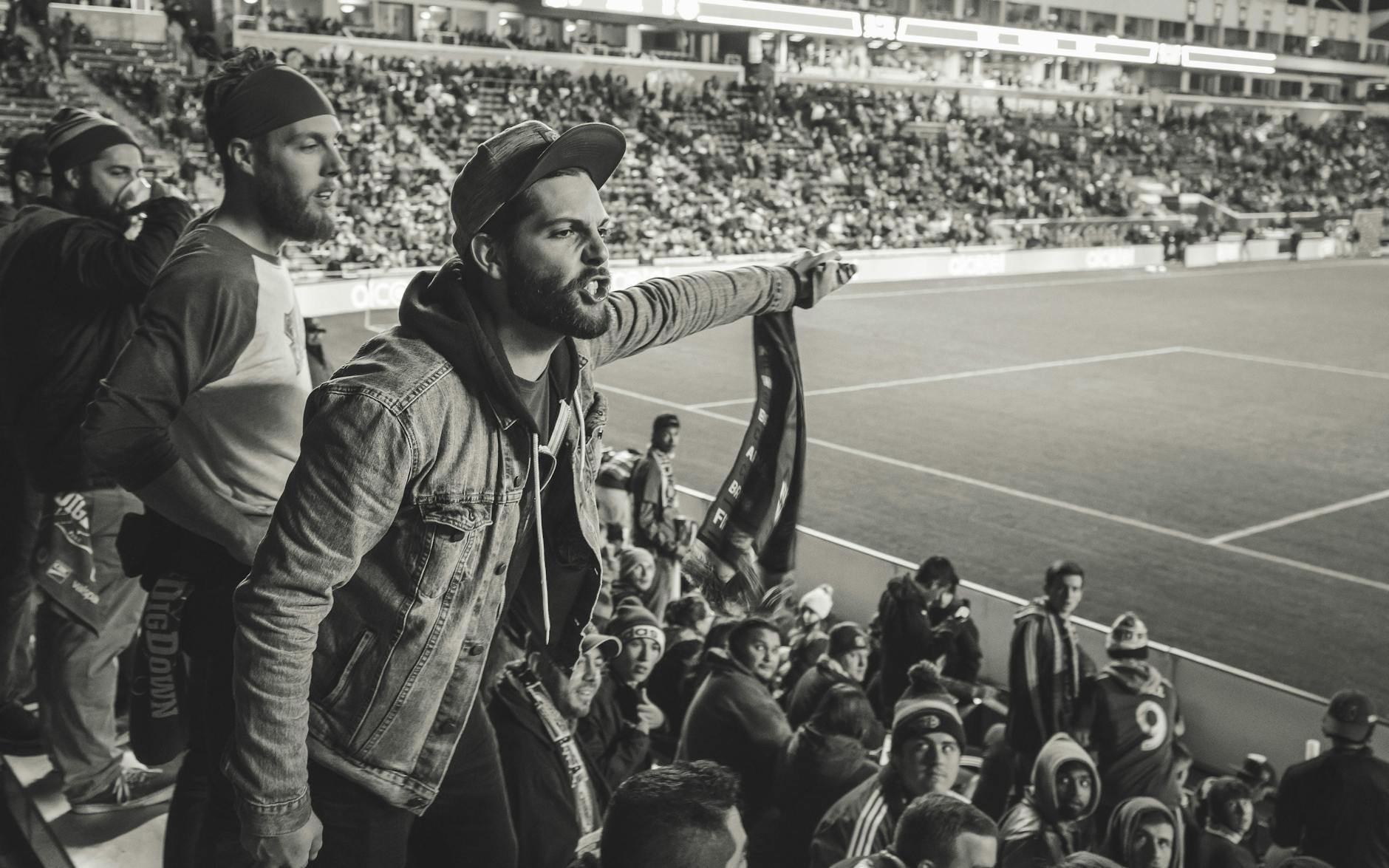
    Let’s be honest: this rivalry would not be nearly as explosive if not for social media. On Twitter, Reddit, and YouTube comment sections, every disagreement mutates into tribal warfare. Fans plant their flags: “Team Zoro” or “Team Sanji.” Nuance dies, memes are weaponized, and people act like they’re defending their homeland in a fictional pirate war.

    It’s absurd. It’s chaotic. And it’s also… kind of beautiful? Because only in One Piece fandom can something so silly feel so serious.


    The Actual Takeaway (That Nobody Wants to Hear)

    Here’s the kicker: the rivalry is actually one of the best parts of One Piece. Zoro and Sanji are written to balance each other, to push each other, and to give the crew a spark of humor and drama. Their differences enrich the story. Their mutual respect, though often hidden under insults, makes their bond more meaningful.

    The toxicity? That’s not on them. That’s on us. Fans turn admiration into tribalism, and suddenly we forget that Zoro and Sanji are on the same crew. They’d fight side by side against any enemy—yet fans fight each other harder than Kaido and Big Mom ever did.


    Laughing at the Madness

    At the end of the day, the Zoro vs. Sanji rivalry is absurd, hilarious, and a little bit insane. But maybe that’s what makes fandom fun—the fact that people can get so worked up over two fictional men with radically different hairstyles.

    So the next time you see a comment section meltdown about who’s stronger, take a step back. Laugh at the madness. Remember that both characters bring something essential to One Piece. And maybe, just maybe, stop treating this rivalry like it’s the Final War.

    Because let’s be real—Luffy wouldn’t care who’s stronger. He just wants everyone to get along and eat meat.

  • 🎬 Matinee Mondays: Post #6 — “Avatar’s Pandora Returns, True Detective’s Dark New Chapter, and Fandom Frenzy”

    🎬 Matinee Mondays: Post #6 — “Avatar’s Pandora Returns, True Detective’s Dark New Chapter, and Fandom Frenzy”

    📅 Date: June 16, 2025

    Blockbuster Spotlight:

    • Avatar: The Seed Bearer is set for release in late 2025, continuing James Cameron’s groundbreaking saga. Early footage reveals breathtaking visuals that push current cinematic technology, promising a deeply immersive experience. Fans are buzzing about new story arcs focusing on environmental themes and complex character dynamics.
    • True Detective Season 5 premieres on HBO with Jeremy Allen White in a lead role, returning the series to its gritty, atmospheric roots. The new season explores systemic corruption and personal redemption in a Southern Gothic setting. Early reviews praise White’s nuanced performance and the show’s compelling storytelling.

    Actor Focus:

    • Anya Taylor-Joy remains in the spotlight, having just wrapped filming for a high-concept sci-fi film due in 2026. Her ability to navigate diverse genres—from horror to period drama—is solidifying her reputation as a versatile leading lady.
    • Jeremy Allen White gains attention for his work both on TV and in indie films, known for his intensity and emotional depth.

    Pop Culture:

    • Fandom engagement has evolved with interactive watch parties and augmented reality experiences, especially for blockbuster franchises like Avatar. Studios are leveraging technology to deepen audience connection, creating a new frontier for storytelling immersion.
    • Discussions around “main character syndrome” in celebrity culture persist, examining the blurred lines between performer personas and personal lives, especially on social media platforms.