
Yesterday was my birthday. March 27, 2026. I turned thirty.
And I didn’t write about this yesterday.
Not because it didn’t matter, and not because it didn’t hit me, but honestly because I was too sad to process it in real time. I also didn’t want to make my birthday entirely about grief again. I’ve had enough birthdays like that already. And on top of that, I needed space. Time to sit with what I heard, to let it settle, to understand why it affected me the way it did.
So I’m writing this today instead.
Because yesterday, on my birthday, I found out that Henry C. Lee—one of the most well-known forensic scientists, someone whose name carries weight in the field, someone who was a genuine inspiration for me—passed away.
And that hit me harder than I expected.
I want to be clear about something up front. I didn’t know him personally. Not in the sense of having conversations with him, not in the sense of having a direct relationship. But I knew of him. I learned about him. His work, his presence in the forensic science world, the impact he had on education and on the field itself—it reached me.
It influenced me.
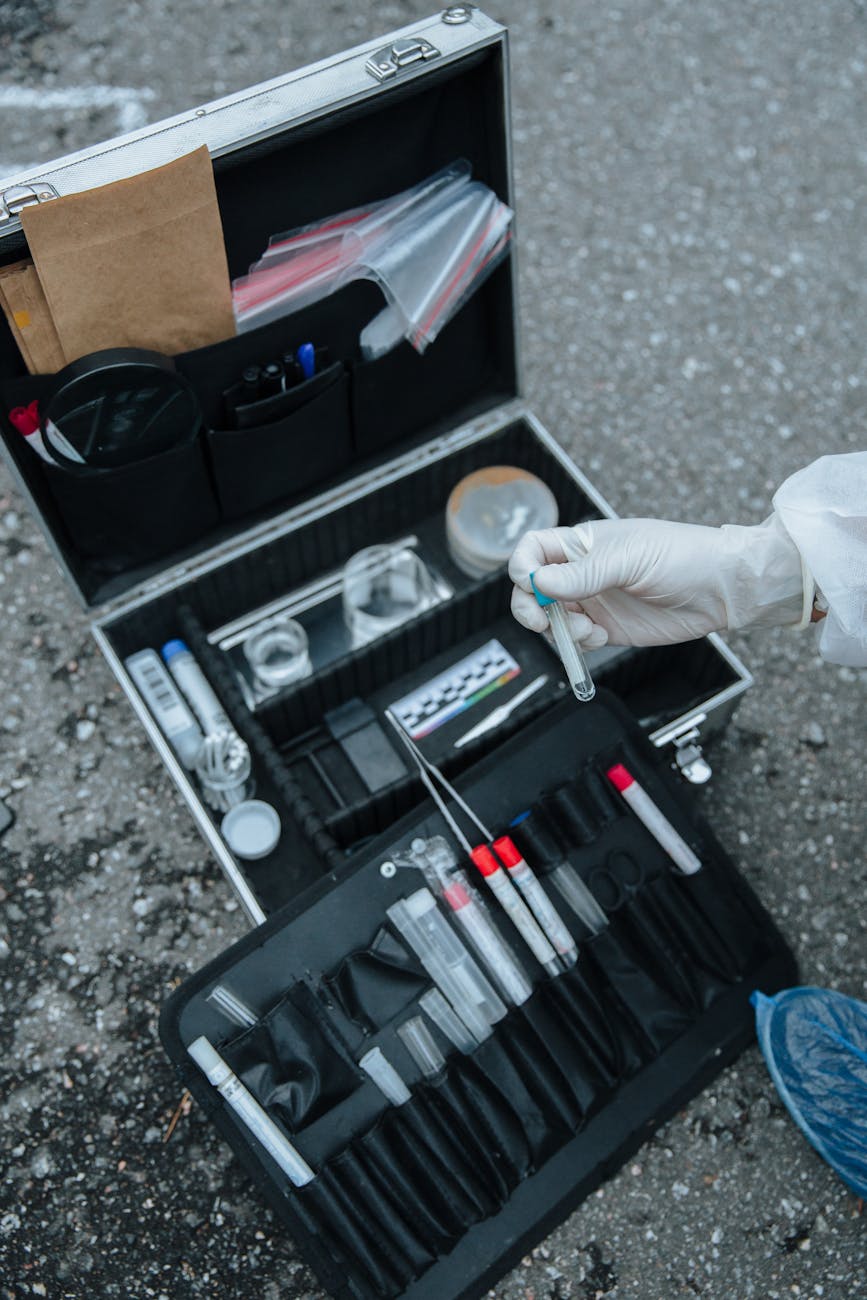
It played a role in why I studied forensics and biology.
And that kind of influence matters more than we sometimes give it credit for.
Because when you’re younger, when you’re trying to figure out what direction your life might take, you look for examples. You look for people who represent something bigger than where you currently are. People who show you that a path exists, that a certain kind of life is possible, that a certain field is worth exploring.
For me, Henry C. Lee was one of those people.
Not the only one. Not the sole reason. But part of that foundation.
Part of that spark.
And so when I heard that he died, on my birthday of all days, it created this strange emotional collision in my head.
On one hand, it was supposed to be a day about stepping into a new decade. Reflecting on my twenties. Thinking about the future. Trying, in whatever way I could, to find some sense of hope or renewal as I turned thirty.
And on the other hand, it became a day marked by the loss of someone who helped shape part of who I became.
That’s a weird feeling to sit with.
Because it’s not the same as losing someone you knew personally. The grief is different. It’s quieter, more abstract, less rooted in shared memories and more rooted in impact. But it’s still real.
It’s the kind of sadness that makes you pause and think, “wow, that person was part of my story in a way I didn’t fully realize until now.”
And when that loss happens on a significant day—your birthday, no less—it adds another layer to it.
It ties the moment to you.
Not in a literal way, not in a way that suggests the two things are connected beyond coincidence, but emotionally, it links them. It makes the day feel different. It changes how you remember it.
From now on, March 27, 2026 won’t just be the day I turned thirty.
It’ll also be the day I learned that someone who inspired me, someone who played a role in shaping my academic and intellectual path, was gone.
And I think that’s part of why it felt so heavy yesterday.
Because birthdays are already reflective. They already make you think about time, about where you’ve been, about where you’re going. And adding loss into that mix amplifies everything.
It makes you more aware of how temporary things are.
It makes you think about legacy.
It makes you think about the people who influenced you, directly or indirectly, and what happens when they’re no longer here.
And there’s also this strange, almost disorienting feeling that comes with losing someone you looked up to.
It’s like a small piece of your internal map shifts.
Even though, logically, nothing about your identity has changed. You’re still you. Your experiences are still yours. The influence they had on you doesn’t disappear just because they’re gone.
But emotionally, it can feel like something moved.
Like a reference point is no longer there in the same way.
And that can be hard to articulate.
It’s not grief in the traditional sense. It’s not the kind of loss that upends your daily life. But it’s also not nothing. It sits somewhere in between.
A quiet kind of impact.
And I think a lot of people experience this when public figures, mentors, or inspirations pass away.
We don’t always talk about it, because it can feel like we’re not “allowed” to grieve someone we didn’t personally know. Like that grief somehow doesn’t count.
But it does.
Because influence is real.
Inspiration is real.
The people who shape our interests, our paths, our ways of thinking, they matter, even if they never knew us individually.
And when they’re gone, it’s okay to feel something about that.
It’s okay to acknowledge that they were part of your journey.
It’s okay to sit with that sadness.
I also found myself thinking about how unlikely it is, statistically, for something like this to happen.
Out of all the days in a year, out of all the possible moments, the day someone who influenced you passes away happens to line up exactly with your birthday.
I don’t know the exact probability of that. I’m sure it’s low. Not impossible, obviously, because it happened, but not common either.
And maybe that rarity is part of what makes it feel so significant.
It makes the moment stand out.
It makes it feel almost surreal.
Like, of all days, it had to be this one?
And there’s no real answer to that question.
It’s just how things lined up.
Life doesn’t coordinate events based on emotional convenience. It doesn’t space things out in a way that makes them easier to process. Sometimes moments overlap in ways that feel almost unfair, even if they’re just random.
And that’s what this felt like.
A collision of two very different emotional experiences.
A milestone birthday.
And the loss of someone who helped shape a part of me.
So I took yesterday to just sit with it.
To not force myself to write.
To not force myself to package it into something neat and reflective right away.
Because sometimes you need that space.
Sometimes the most honest thing you can do is just feel what you’re feeling without immediately trying to turn it into something productive.
And today, writing this, I feel a little more grounded.
Still sad.
Still thinking about it.
But also able to put it into words in a way that feels more complete.
If anything, I think this moment reinforced something I’ve been realizing more and more as I get older.
The people who inspire us leave a kind of imprint.
Not just through direct interaction, but through the ideas they share, the work they do, the example they set.
And that imprint doesn’t disappear when they’re gone.
If anything, it becomes more noticeable.
More defined.
Because you start to recognize how much of what you care about, how much of what you chose to study or pursue or think about, was influenced by them.
And in that sense, they’re still part of your story.
Still present, just in a different way.
So yeah.
Yesterday was my 30th birthday.
And it was also the day I learned that someone who helped inspire my path into forensics and biology passed away.
That’s a strange sentence to write.
But it’s true.
And I think the best way I can process it is not by trying to separate those two things, but by acknowledging both.
It was a day of reflection, of stepping into a new decade, of thinking about my own life.
And it was also a day of recognizing the impact someone else had on that life, even from a distance.
Both things can exist at the same time.
And maybe that’s just part of what getting older is.
Learning how to hold multiple emotions at once.
Learning how to let moments be complicated.
Learning how to move forward while still honoring the people and influences that helped get you here.
Rest in peace to someone who helped shape a part of my journey.
And as for me, stepping into thirty, I carry that influence with me.
Even now.
Especially now.
