The Musings of Jaime David
@jaimedavid.blog@jaimedavid.blog

The writings of some random dude on the internet

1,117 posts
1 follower

Tag: Revolutionary Army

  • Sabo’s Survival Isn’t a Plot Hole — It Actually Makes Narrative Sense

    Sabo’s Survival Isn’t a Plot Hole — It Actually Makes Narrative Sense

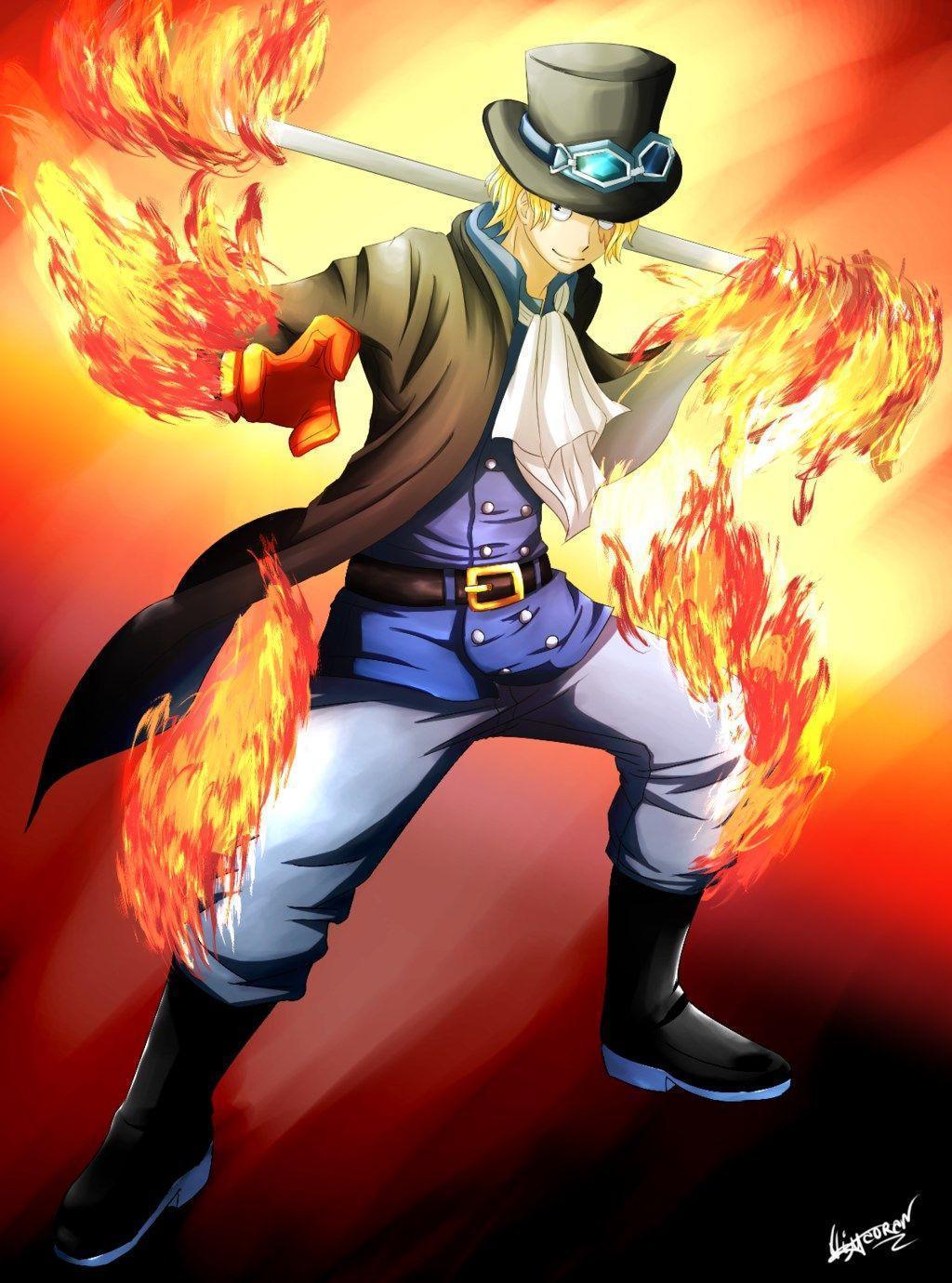
    In One Piece, the return of Sabo in Dressrosa took many fans by surprise. After being presumed dead since the childhood flashback arc, some were quick to label his reappearance as a plot hole. However, when you look closely at the structure of One Piece’s storytelling, world-building, and character motivations, Sabo’s survival—and the secrecy surrounding it—actually makes a great deal of sense. The choices surrounding who knew about Sabo’s survival, when they learned it, and why they didn’t tell Luffy are narratively consistent, emotionally powerful, and aligned with the series’ core themes of family, freedom, and sacrifice.

    The idea of Sabo losing his memories isn’t just a convenient excuse to delay his reintroduction—it’s a carefully placed storytelling mechanism that aligns with One Piece’s long history of delayed payoffs and emotional reveals. After Sabo is shot down by a Celestial Dragon, he suffers massive trauma and is rescued by Dragon and the Revolutionary Army. His amnesia is believable not just because of the physical trauma, but also because of the mental shock. It’s important to note that this is not unprecedented in the world of One Piece. Characters like Law and Robin have deep-seated traumas that shape their identities and their silence. Emotional extremes are often used by Oda as catalysts for transformation or clarity—Zoro after Mihawk, Nami after Arlong, Sanji after Zeff—and Sabo is no exception. The loss of Ace at Marineford is what finally unlocks the dam inside Sabo’s mind. His brother’s death triggers a flood of memories and guilt, pushing him back into the spotlight as a man with purpose, rather than a shadow of a past life.

    The theory that Ace might have found out Sabo was alive—and chose to say nothing—isn’t just plausible, it’s in character. Ace is introduced as hot-headed, but as his arc progresses, we see more and more of his emotional intelligence. He was fiercely loyal, thoughtful, and protective of those he loved. He would’ve understood that revealing Sabo’s existence—if he discovered it—might put both Sabo and Luffy in danger. Perhaps Ace spotted Sabo in a newspaper or heard rumors whispered by those who kept tabs on the Revolutionary Army. Maybe he didn’t get confirmation, but had enough reason to believe Sabo survived. And if so, Ace—knowing Luffy’s impulsiveness and emotional core—would have made the difficult decision to keep quiet.

    This restraint is supported by something visual: Ace’s hat and goggles. While Oda never explains their origin, the goggles—one side a smiling face, the other a sad one—carry powerful visual symbolism. They could represent the duality of emotions Ace felt upon learning Sabo was alive: joy for his survival, sorrow for the silence it demanded. It fits with Ace’s growing maturity, and more importantly, his poetic heart. He was someone who burned fiercely, but also someone who carried the weight of his emotions deeply. Choosing to remain silent wouldn’t be out of character—it would be the ultimate act of quiet love and self-control.

    That same logic applies to others who might have known before Luffy. Garp is a Vice Admiral with close ties to Dragon and the Marines. If Dragon knew Sabo was alive and training with the Revolutionaries, it’s hard to imagine Garp didn’t know as well. Garp’s reaction to Ace’s death was one of emotional devastation, but he still put on a mask of control. Garp has always kept secrets from Luffy “for his own good”—whether it’s his parentage or his Marine responsibilities. Keeping Sabo’s survival quiet, especially if it meant protecting him from Government attention or keeping Luffy focused on his own journey, is entirely consistent with Garp’s complicated morality. He loves his grandsons but he’s a man of discipline and secrets. He understands that timing is everything.

    Dadan, too, could have learned the truth. Whether through Garp or rumors from Foosha or Grey Terminal, Dadan is part of a community that watches closely and gossips widely. She raised Luffy, Ace, and Sabo. If she knew Sabo was alive, she would’ve carried that knowledge with the same fierce protectiveness we see in her reaction to Ace’s death and Luffy’s journey. She is emotional, rough around the edges, but ultimately maternal. She may have broken down in tears knowing Sabo lived, but she would’ve stayed quiet—because telling Luffy too soon could’ve been dangerous. She would have trusted Garp’s judgment or even Ace’s instincts. The same goes for the residents of Foosha Village, who already knew to keep secrets about Luffy’s past. They knew about Dragon. They didn’t talk. A precedent for collective silence exists in One Piece, and it fits here too.

    Then there’s Robin. If anyone is accustomed to holding life-altering information in silence, it’s her. Robin met the Revolutionary Army during the two-year time skip and was most likely introduced to Sabo during that time. By then, Sabo had regained his memories, and if he asked Robin to keep his existence secret from Luffy, she would comply. Not out of coldness, but out of understanding. Robin has always carried the burden of knowledge. Her role on the crew is not just as an archaeologist, but as a protector of dangerous truths. She understands the weight of history and the danger of premature revelation. Her silence would not only be a strategic choice but a kind one. By keeping quiet, she gave Sabo time to prepare, and she gave Luffy the space to grow without distraction. Even if it pained her, she would honor that request.

    In fact, this paints Robin’s eventual reaction to Sabo’s reveal in Dressrosa in a new light. She’s composed, not shocked. Because maybe she already knew. And perhaps, in her own way, she had silently hoped for this reunion to finally happen—on Sabo’s terms, and at a time when Luffy was strong enough to face it.

    All of this leads to the central point: Luffy learning the truth in Dressrosa wasn’t late. It was right on time. At that point, Luffy had just survived the Marineford War, lost Ace, matured emotionally, and gained new strength. Sabo’s return wasn’t just an emotional surprise—it was a thematic reward. It came when both characters were ready to reconnect. Sabo had regained himself. Luffy had become more resilient. They were no longer children. They were men, standing on their own paths, meeting again not in tragedy, but in battle, as equals.

    The choice to keep Sabo’s survival a secret—by Ace, by Garp, by Dadan, by Robin, and maybe even by the entire Revolutionary Army—was not plot inconsistency. It was a conscious, layered narrative decision grounded in character behavior and world logic. It reflects the very real idea that secrets are sometimes acts of love. And in a world like One Piece, where timing, loyalty, and sacrifice are everything, it’s not only believable—it’s beautiful.

    If Oda ever chooses to show this thread from the perspectives of those who knew Sabo was alive before Luffy, the emotional payoff could be monumental. Imagine a flashback that weaves through the eyes of Garp silently reading a classified Marine report, Dadan crying alone by a campfire with a wanted poster of Sabo in her hands, Ace spotting a photo in a newspaper and quietly buying goggles as a symbolic gesture. Each reaction would carry its own weight—grief, relief, restraint—and together they would form a mosaic of love held in painful silence.

    We might see Robin meeting Sabo during the time skip, her quiet nod as she agrees to keep the secret, perhaps watching from afar as he trains. Her calm exterior masking the knowledge that Luffy’s final brother is alive. Even Foosha Village could play a role—Makino holding a newspaper behind the counter, her eyes widening, then quickly folding the page before Luffy ever returns.

    This kind of flashback wouldn’t just serve to clarify timelines—it would deepen our understanding of the emotional burden these characters carried. It would retroactively add depth to Ace’s final moments, Garp’s conflicted pride, Robin’s stoicism, and even Sabo’s guilt. It could become one of One Piece’s most quietly powerful moments—a sequence about people choosing silence not out of apathy, but out of deep, selfless love.

    But it doesn’t have to be purely sorrowful. There is also something inherently hopeful in such a flashback. These characters—especially Ace, Dadan, Robin, and Garp—may have held onto the secret not only to protect Luffy, but to preserve hope. Hope that one day, Sabo and Luffy would meet again. Hope that their reunion would be joyful, not tragic. That’s the real emotional core: not just mourning what was lost, but preserving what could still be regained. Even in silence, they were planting seeds for healing. In that way, the flashback wouldn’t just be a tearjerker—it would be a quiet, radiant tribute to love, loyalty, and the long arc of reunion.

    If Oda ever plans to show this flashback, the perfect narrative moment may already be looming: Marineford 2.0.

    One Piece loves mirroring and arc inversions—Skypiea inverts Alabasta, Dressrosa echoes Enies Lobby, Wano reflects both Thriller Bark and Marineford in tone and stakes. So it’s not far-fetched to imagine another major war, another last-ditch rescue, another desperate race against time. And this time, the one who needs saving might not be Ace—it might be Sabo.

    Imagine Marineford 2.0 as the Revolutionary Army’s fall, or the World Government tightening its grip. Sabo is captured, beaten, and close to death—just as Ace was. But unlike Ace, this time the Straw Hats arrive. This time, they are the ones charging into battle to save a brother. And maybe just before that final confrontation—before Luffy reaches Sabo—a flashback hits.

    We could see the world reacting to Sabo’s survival years ago: Robin meeting him, Garp quietly holding back, Dadan weeping in secret. We might relive Luffy and Sabo’s Dressrosa reunion from Sabo’s point of view, watching how much it meant to finally see his little brother again, alive and strong.

    And then—back in the present—Luffy grabs Sabo’s hand and pulls him from the gallows, a perfect inversion of Marineford’s tragedy. What was once a death becomes a rescue. What was once loss becomes redemption. And the flashback, now full-circle, becomes not just a memory—but a promise fulfilled.
  • The Secret Mission Theory: Dragon as a Hidden Marine Within the Revolutionary Army

    The Secret Mission Theory: Dragon as a Hidden Marine Within the Revolutionary Army

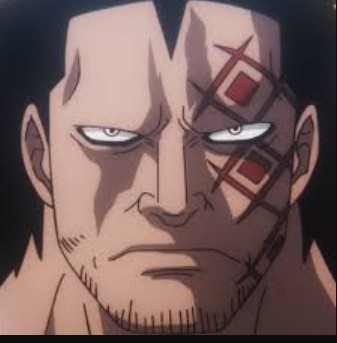
    One of the most intriguing and complex aspects of One Piece is the nature of the Revolutionary Army and its leader, Monkey D. Dragon. Publicly, Dragon is known as the world’s most wanted man, leading a group bent on overthrowing the World Government. But what if Dragon’s role in the revolution isn’t as straightforward as it seems? What if, beneath the surface, Dragon is still operating within the very system he claims to oppose? What if the Revolutionary Army is, in fact, Dragon’s most public-facing operation, but his true, hidden agenda involves remaining closely connected to the Marines and the World Government in a highly covert and strategic way?

    This theory builds off two existing fan theories: the first, the notion that Kuzan (Aokiji) is still secretly working for the Marines, infiltrating the Blackbeard Pirates under an undercover mission orchestrated by Akainu, Garp, and other influential members of the Marines, including those aligned with SWORD; and the second, the theory that Dragon was once a Marine or had some prior relationship with the World Government. When these theories are combined, they paint a picture of Dragon’s true role as a long-term, undercover operator with the Marines, using the Revolutionary Army as a cover for his more secretive operations.

    First, let’s look at the theory surrounding Kuzan. Aokiji’s departure from the Marines, following his battle with Akainu, initially seemed like a definitive break. However, there has been considerable speculation that Kuzan’s exit was merely a strategic maneuver, orchestrated by him and other members of the Marines, particularly SWORD, to further infiltrate and destabilize the growing threat of the Blackbeard Pirates. The fact that Kuzan has joined the Blackbeard Pirates is seen by many as a clear indication that his loyalty is now with them. However, this could all be part of a larger, long-term plan to remain in the shadows and play a double game. Akainu, Garp, and key members of the Marines (especially those with connections to SWORD) may be aware of Kuzan’s true mission, working alongside him to undermine Blackbeard from within.

    Now, applying this theory to Dragon offers even more intriguing possibilities. Dragon has always been presented as the world’s most wanted criminal and the leader of the Revolutionary Army. His purpose, as we know, is to dismantle the World Government, yet his exact role and motives remain mysterious. If we take the idea that Dragon was once a Marine, or at the very least had strong ties to the World Government, it opens up a new layer of complexity to his character. The idea that Dragon may have once served in the Marines or had a high position within the World Government makes his break from that system even more fascinating.

    What if Dragon never actually left the Marines? What if, instead of fully abandoning the system he once served, he took on the role of an undercover agent, working in tandem with the Revolutionary Army to covertly manipulate events from the inside out? His break from the Marines could have been part of a carefully calculated plan, one that allowed him to work behind enemy lines for years, setting the stage for the eventual collapse of the World Government. The Revolutionary Army could be, at its core, a public front for Dragon’s true mission—one that involves working closely with key figures within the Marines to strategically bring down the oppressive power structures that hold the world in place.

    The involvement of other D. Marines in this scheme could help reinforce this theory. There are numerous D. Marines who are aligned with Dragon’s cause, yet outwardly appear to be working against him. These individuals, such as Aokiji, Sengoku, Garp, and Tsuru, could all be playing double roles, working within the Marines to manipulate events from behind the scenes while also supporting Dragon’s greater mission. They could be part of a secret faction within the Marines—one that operates under the radar, communicating with Dragon’s faction in coded messages, hidden alliances, and covert operations. Dragon could very well still be in active communication with these figures, playing the ultimate long game to infiltrate and destroy the World Government from the inside.

    This theory not only explains Dragon’s ambiguous relationship with the World Government but also ties into the larger narrative of Luffy’s journey. As Luffy continues to grow and rise as a figurehead of change, he could unknowingly be working in alignment with Dragon’s more secretive efforts. The Revolutionary Army might be a key part of Luffy’s future, but Dragon’s role could be far more complex than simply leading an army of rebels. His deep ties to the Marines, if true, could mean that the very institution Luffy seeks to destroy has been infiltrated and redefined from within. Dragon’s ultimate goal might not be a direct confrontation with the Marines but a systemic dismantling of the entire oppressive structure, making it an even more profound, long-term plan than anyone realizes.

    The narrative implications of this theory are significant. If Dragon has been secretly working with the Marines all along, it would change the entire framework of the story. Instead of a black-and-white conflict between the World Government and the Revolutionary Army, we would see the struggle as a battle of ideologies—one that is waged in the shadows, with figures like Dragon, Aokiji, and others playing a subtle, strategic game of infiltration, sabotage, and reformation. The Revolutionary Army might not be the only force working to overthrow the World Government, but rather, Dragon’s ultimate masterstroke involves shifting the balance of power within the Marines themselves, causing the system to collapse under its own weight.

    Ultimately, this theory challenges our traditional understanding of Dragon as the leader of a rebellion and suggests that his true intentions go far beyond mere overthrow. If Dragon has always been a double agent, working with select D. Marines and using the Revolutionary Army as a public cover, then the story of One Piece takes on a new, deeper level of intrigue and complexity, blurring the lines between ally and enemy, revolution and reform, and freedom and control. The revolution may be much more complicated than anyone expects—so much so that Dragon’s grand plan could only be revealed at the very end of the series, when the final pieces of this secret war are put into place.

  • The 3D2Y Theory: Three D’s, Two Yins, and Two Yangs Converging in the Endgame

    The 3D2Y Theory: Three D’s, Two Yins, and Two Yangs Converging in the Endgame

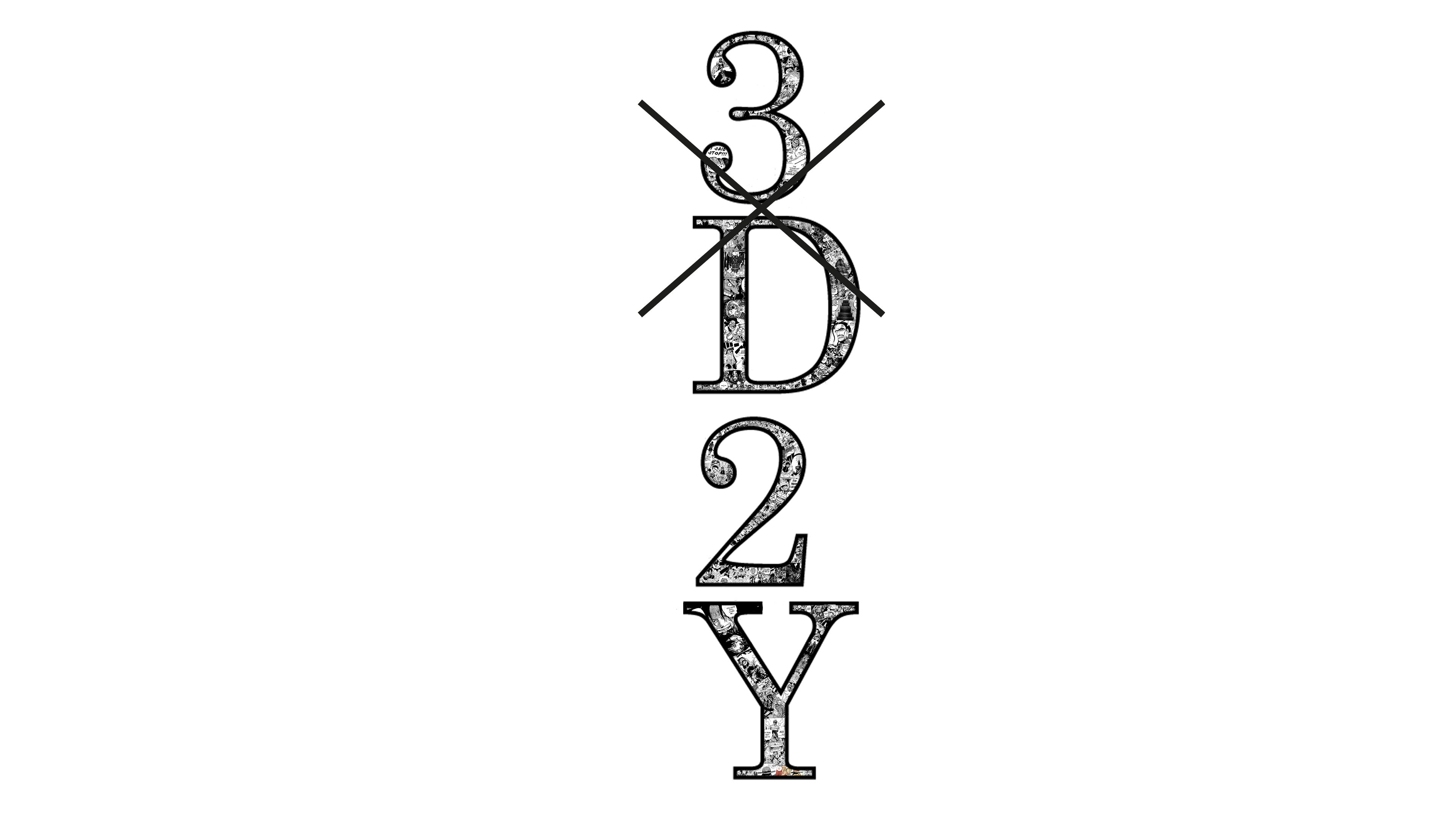
    In the world of One Piece, the iconic phrase “3D2Y” holds significant meaning for Luffy and his crew, symbolizing the two-year time skip during which they grow and prepare for the challenges ahead. However, what if the phrase carries a deeper, more layered significance that extends beyond just Luffy and his crew? What if “3D2Y” is a cryptic foreshadowing of three figures carrying the Will of D and two opposing, complementary forces—Yins and Yangs—set to converge in the final battle for the future of the world? The D’s represent chaos, freedom, and rebellion, while the Yins and Yangs embody order and control, each playing a different role in the world’s balance. The idea of Yins and Yangs introduces a dichotomy between light and dark, between order and control, but with different intensities, creating a dynamic struggle where two opposite sides are not just fighting for control but for a balance that could reshape the world entirely.

    The D’s are the central protagonists of One Piece, each carrying a unique aspect of the Will of D., the legacy of a long-dead ancestor that continues to shape the world. Luffy, the most prominent figure of the D. lineage, embodies the chaotic freedom that the D. bloodline stands for. His battle is not just for personal gain but for the destruction of oppressive systems and the freedom of those who are enslaved. Luffy’s journey is about dismantling the established order and creating a new, freer world—one that allows individuals to choose their paths without fear of suppression. Blackbeard, or Marshall D. Teach, represents the darker, opportunistic side of the D. lineage. His pursuit of power, achieved through manipulation and deceit, shows how the D. bloodline can also embody a more dangerous aspect of freedom. Blackbeard’s character stands as the antithesis to Luffy’s ideals, showcasing how chaotic freedom can devolve into anarchy and chaos when used for selfish purposes.

    Then, there’s Monkey D. Dragon, the enigmatic leader of the Revolutionary Army, who stands as a more measured figure in this rebellion. Dragon’s goal is not to bring about chaos for chaos’s sake, but rather to overthrow the World Government and establish a new world order, one that does not rely on the suffering and subjugation of others. His movement represents a more calculated form of rebellion—one that seeks a revolution that can lead to lasting change, not just destruction. Other characters such as Sabo, Shanks, and even Buggy may also belong to the D. lineage, each representing different variations of freedom and rebellion. Their inclusion could further complicate the story’s core themes, showing the diversity of ideals within the Will of D.

    In contrast to the D’s, we have the Yins—figures who represent order and balance. The Yins are not purely antagonistic forces, but they stand for a more controlled and structured approach to life and the world, maintaining stability while ensuring that chaos is kept in check. Shanks, the leader of the Red-Haired Pirates, is a prime example of the Yin side of the spectrum. Shanks is often seen as a balancer, stepping in at crucial moments to prevent conflicts from escalating into chaos. He understands the delicate equilibrium between freedom and order, and while he has power, he uses it not to impose control but to preserve the world’s natural balance. Shanks intervened in the Marineford War, helping to stop a full-scale battle between Whitebeard’s forces and the Marines, showcasing his role as a stabilizer in a world filled with chaos. He is not a villain, but a figure who strives to keep the peace in a world constantly on the verge of collapse.

    Koby is another potential Yin candidate, representing the future of the Marines. From his humble beginnings as a timid cabin boy to a respected Marine officer, Koby embodies a more compassionate form of justice—one that seeks to preserve order without descending into the extremes seen with figures like Akainu. Koby is idealistic, believing in the power of a just system that upholds peace without resorting to brutality. He also stands as a symbol of hope for the future, where a more empathetic and just version of order could prevail.

    On the other hand, the Yangs represent absolute control, a more authoritarian and rigid approach to maintaining order. They seek to impose a harsh, unyielding structure on the world, where freedom is sacrificed for the sake of security and stability. Akainu, the Marine Fleet Admiral, is perhaps the most obvious Yang candidate. His concept of Absolute Justice represents order at the cost of individual rights and freedom. Akainu’s ruthless actions and his willingness to sacrifice anyone—including his own subordinates—for the sake of his vision of a just world make him a quintessential Yang figure. His approach to justice is harsh and uncompromising, standing in stark contrast to the freedom-loving D’s.

    Similarly, Imu, the mysterious ruler behind the World Government, embodies the Yang side in its most corrupt form. Imu’s ability to manipulate the entire world from the shadows, pulling the strings of the Celestial Dragons and the World Government, makes them a dark figure of absolute control. If Imu is indeed a D., it would add a layer of complexity, showing how the Will of D. can be corrupted into a force of totalitarian control rather than the freedom and rebellion Luffy represents. Imu’s manipulation of the world’s power structures suggests a desire for control that goes far beyond just maintaining order—it’s about dominating and subjugating others to maintain power.

    The ultimate convergence of these forces—the D’s fighting for freedom and revolution, and the Yins and Yangs representing varying degrees of control—will inevitably define the final battle in One Piece. The 3D’s and the 2Y will collide in an ideological showdown between chaos vs. order, freedom vs. control, and revolution vs. stability. Whether it’s the more benevolent Yins like Shanks and Koby, or the harsh Yangs like Akainu and Imu, the ultimate clash will determine the future of the world. Will the forces of freedom and rebellion succeed in reshaping the world according to their ideals, or will the forces of order and control maintain the existing world structure? The answers to these questions will reveal how the world of One Piece is forever changed, and whether the balance between freedom and control can ever be achieved.

  • The 3D2Y Theory: Three D’s and Two Yangs Converging in the Endgame

    The 3D2Y Theory: Three D’s and Two Yangs Converging in the Endgame

    In the world of One Piece, the phrase “3D2Y” holds significant meaning for Luffy and his crew, as it represents the two-year time skip and the promise to reunite after intense personal growth. However, this iconic phrase may have a deeper, more layered interpretation. What if “3D2Y” is not just about Luffy and his crew but also hints at the convergence of three bearers of the “Will of D” (the D’s) and two figures representing the opposite force, the Yangs? The D’s represent freedom, chaos, and rebellion, while the Yangs embody order, balance, and control. In this theory, the convergence of these opposing forces will set the stage for the ultimate battle that will determine the future of the world.

    The three D’s in this theory are relatively easy to identify. The first is Luffy, who embodies the Will of D. and serves as the central protagonist, fighting for freedom and the dismantling of oppressive systems. The second is Marshall D. Teach, also known as Blackbeard, who represents the darker side of the D. lineage, pursuing power through deceit and violence. The third, however, is more elusive. Many speculate that this third D could be Dragon, the leader of the Revolutionary Army, who is actively working to overthrow the World Government, or Sabo, Dragon’s adoptive son, who is a major force in the Revolution. There are also theories that other characters like Shanks, Buggy, or even Imu, the shadowy leader of the World Government, could carry the Will of D. Despite the uncertainty, it’s clear that these three D’s represent different factions and ideologies that will eventually converge, bringing with them the forces that will shape the world.

    However, just as the D’s represent forces of freedom and rebellion, there is another force at play in the One Piece world: the Yangs. The Yangs are figures who represent order, structure, and control. They are not necessarily antagonistic in the traditional sense, but their existence directly counters the chaos and freedom that the D’s strive to bring about. In this theory, the two Yangs will play a crucial role in the eventual confrontation between the D’s.

    The first Yang candidate is Akainu. Akainu, also known as Sakazuki, is a key figure in the Marines who upholds the principle of “Absolute Justice.” His unwavering commitment to order and control makes him a perfect embodiment of Yang. While his methods are brutal and oppressive, his ultimate goal is the preservation of the world order, even if it means sacrificing freedom and individual rights. Akainu’s willingness to sacrifice others for the sake of this order positions him as a stark contrast to the freedom and rebellion championed by the D’s. His role in the Marines and his position as Fleet Admiral give him significant power to influence the course of events, making him a pivotal Yang force in this theory.

    The second Yang candidate is Imu, the mysterious figure who appears to hold ultimate authority over the World Government. Imu’s position as the secret ruler of the world places them squarely at the top of the power hierarchy, manipulating events from behind the scenes. Imu represents control and domination, as they are the one who ultimately decides the fate of the world. If Imu is indeed a D, they would represent a perversion of the Will of D., someone who uses the power of the D. lineage to enforce an even greater level of control over the world. Their ability to remain in the shadows, pulling the strings of the World Government and the Celestial Dragons, makes them a key player in the battle for the world’s future.

    Another Yang candidate is Shanks, the leader of the Red-Haired Pirates. While Shanks is not an enemy to Luffy or the Straw Hats, he is still a significant figure in the world. Shanks is a balance between order and chaos, often stepping in at crucial moments to prevent conflict from escalating. He has shown a willingness to confront the World Government and even Whitebeard, but he does so in a way that maintains a sense of equilibrium. Shanks’ role as a stabilizer, someone who understands the delicate balance between freedom and order, positions him as a Yang figure. Shanks may not be an outright antagonist, but he is someone who seeks to maintain the status quo and avoid excessive chaos, making him a strong Yang candidate.

    Buggy, the self-proclaimed “pirate king” of incompetence, is another surprising Yang candidate. While Buggy may appear to be a joke in many ways, his growing influence and leadership within the pirate world cannot be ignored. Buggy has a unique ability to maintain a semblance of order and control, even if it’s unintentional. His rise to power, despite his comical nature, shows that there is a level of stability to his character. Buggy’s leadership, although chaotic, still represents an alternative to the extreme chaos of Blackbeard or the uncontrollable nature of Luffy’s adventures. His uncanny ability to maintain alliances and form networks in the pirate world could make him an unorthodox Yang force in the coming battle.

    Koby is another strong candidate for the second Yang. As a Marine who has grown from a timid cabin boy to a respected officer, Koby represents the future of the Marines, someone who embodies justice without the extreme brutality of Akainu. Koby’s dedication to preserving order and justice, while balancing compassion and empathy, positions him as a Yang. Koby’s potential future leadership of the Marines could usher in a new era of more balanced and fair justice, one that contrasts with the totalitarian approach of Akainu and the chaotic freedom of the D’s. As Koby ascends within the ranks of the Marines, his role as a stabilizing force becomes even more crucial to the eventual showdown between the D’s and the Yangs.

    Finally, Sabo, the adoptive brother of Luffy, represents another potential Yang force. As a leader in the Revolutionary Army, Sabo fights for the same ideals as Dragon, his father figure. However, Sabo’s more measured and calculated approach to revolution could place him in the Yang camp. While Dragon seeks to destroy the World Government, Sabo seems to aim for a more controlled dismantling of the system, one that would eventually lead to a new order. Sabo’s ability to balance revolution with strategy positions him as a potential Yang who will ultimately face off against the more chaotic elements of the D’s.

    Shifting gears back to the D’s, Akainu, Imu, Shanks, Buggy, and Sabo are not only candidates for Yangs, but also potential members of the Will of D. The fact that their roles intersect with the D. lineage in various ways makes their involvement in the ultimate battle increasingly plausible.

    Akainu, as the Marine who enforces absolute justice, could indeed carry the Will of D. His unwavering belief in justice could stem from a deeply personal understanding of what the D. represents. His vision of the world—one that is built on a rigid, hierarchical system—may stem from a shared legacy with the other D. bearers, albeit a distorted one. Similarly, Imu, as the ultimate power behind the World Government, may wield the D. lineage for their own ends, twisting it to enforce absolute control. The idea of Imu being a D. would add another layer to their manipulative persona, turning the concept of the Will of D. on its head.

    Shanks is often viewed as a potential D. due to his mysterious background and his tendency to balance both sides of the conflict. His personal history with the Pirate King, Roger, and his pivotal role in both keeping the balance and confronting the World Government makes him a compelling candidate for a D. If Shanks is indeed a D., it would further highlight the tension between the ideals of freedom and control.

    Buggy, though largely comic relief, is gradually becoming a major figure within the pirate world. His rise to power, combined with his connection to key figures such as Shanks and Luffy, suggests that Buggy may play an important role in the final showdown. He may not fit the traditional mold of a D., but his growing influence makes it increasingly likely that he will be revealed as part of this hidden lineage.

    Sabo, as Dragon’s adoptive son and a prominent revolutionary leader, could very well carry the Will of D. in his pursuit of dismantling the World Government. His calculated and measured approach to revolution stands in stark contrast to the chaos brought on by Luffy or Blackbeard, yet his commitment to the cause makes him a key figure in the fight for the future.

    Now, turning the lens towards Yin and Yang, a philosophical concept that perfectly aligns with the One Piece world, we can see how the story subtly incorporates these principles. Yin and Yang represent a dualistic balance of opposites, where one cannot exist without the other. In the context of One Piece, the forces of chaos (D’s) and order (Yangs) are not defined by a clear-cut dichotomy of good versus evil. Instead, both sides strive for a greater balance, albeit through differing methods. The Yangs, though representing order, can embody a more authoritarian or controlled vision of the world, as seen with Akainu’s unyielding justice, Imu’s secrecy, and Shanks’ stabilizing influence. They aren’t inherently “evil,” but their drive for control and balance sometimes clashes with the anarchic freedom that the D’s stand for.

    The world of One Piece doesn’t just pit the D’s (chaos and freedom) against the Yangs (order and structure), but explores the intricacies of how both are necessary for the story’s ultimate resolution. The story reflects these opposing forces in the journey of the characters, each of whom carries their philosophy forward: Luffy’s pursuit of freedom, Blackbeard’s quest for absolute power, Dragon’s fight for revolutionary change, and Akainu’s brutal defense of order.

    As the story progresses, the theory that 3 D’s and 2 Yangs will converge seems increasingly plausible. Luffy, Blackbeard, and Dragon/Sabo represent the chaotic, rebellious nature of the D’s, while Akainu, Imu, Shanks, Buggy, Koby, and Sabo all represent the stabilizing, controlling forces that will either seek to maintain the current world order or bring about a new one through reform.

    These forces—freedom and rebellion versus control and order—will inevitably collide in the final battle, determining the fate of the world. The 3 D’s and the 2 Yangs are not just two opposing sides, but two philosophies vying for supremacy. The convergence of these forces will likely be the climactic moment of One Piece, where the legacy of the D’s is challenged by the forces of control, stability, and order.

  • The 3D2Y Theory: A Secret Foreshadowing of Three D’s Converging Two Years Later

    The 3D2Y Theory: A Secret Foreshadowing of Three D’s Converging Two Years Later

    The phrase “3D2Y” is famously recognized among One Piece fans as the message Luffy tattooed on his chest, signaling to his crew to reunite two years later following the harrowing events at Sabaody Archipelago. At face value, this has always been interpreted as a simple marker for a timeskip — a narrative device to show growth, development, and readiness for the challenges ahead. Yet, a closer, more layered reading suggests that “3D2Y” might also function as a cryptic foreshadowing: the convergence of three distinct bearers of the “Will of D” after two years, each representing a powerful faction engaged in the larger struggle shaping the world’s fate.

    Luffy, naturally, is the central “D” figure — the protagonist who carries the Will of D. Beyond him, the field expands considerably. Marshall D. Teach, better known as Blackbeard, is an obvious candidate due to his prominence as a D. and his antagonistic role. However, the third “D” is less clear, with several intriguing possibilities. The revolutionary faction, spearheaded by Monkey D. Dragon and supported by his son Sabo, stands as a formidable force carrying the Will of D. Dragon’s leadership of the Revolutionary Army places him in direct opposition to the World Government, though his approach differs fundamentally from the pirates. Meanwhile, enigmatic figures such as Shanks or Buggy, whose connections to the D. lineage are shrouded in mystery, remain tantalizing candidates. The greatest mystery is Imu, the shadowy sovereign presiding over the World Government, whose origins hint at a potential link to the D. lineage, raising questions about whether the Will of D. can be twisted into something dark and controlling.

    Even more compelling is the possibility that the Marines harbor their own bearer of the Will of D., challenging the assumption that the Marines stand wholly against the D. legacy. Among them, Admiral Sakazuki—Akainu—emerges as a particularly potent candidate. The theory that Akainu secretly carries the Will of D. sheds new light on his rigid “Absolute Justice.” Rather than a mere zealot enforcing the World Government’s oppressive dictates, Akainu’s harshness might stem from a deep, personal history tied to the D.’s legacy, a conviction born of trauma and survival. He may perceive the chaotic freedom wielded by D. pirates as a threat not just to order, but to the survival of the D. bloodline itself. This perspective could motivate his climb through Marine ranks—to change the world from within and contain the chaos he fears.

    Supporting this theory is Akainu’s willingness to challenge even the Celestial Dragons, his rare moments of empathy such as consoling Kizaru, and his visible tensions with the Gorosei and Marine leadership. His frequent confrontations and disdain for corruption suggest a more nuanced allegiance than blind loyalty to the World Government. Akainu’s stoic, unsmiling demeanor also mirrors that of other D. bearers like Dragon, implying that the Will of D. is defined by inner conviction rather than outward expression.

    This interpretation aligns seamlessly with One Piece’s recurring theme of the Will of D. manifesting through diverse reactions to oppression and injustice. Luffy’s chaotic freedom, Blackbeard’s ruthless opportunism, Dragon’s revolutionary upheaval, and Akainu’s uncompromising reform all represent facets of this multifaceted legacy. Their convergence two years after Sabaody symbolizes not just a physical meeting, but an ideological showdown that will determine the world’s future.

    Adding further complexity is the role of figures like Koby, whose steady rise in the Marines brings a younger generation potentially sympathetic to the Will of D. The existence of SWORD, a covert Marine intelligence faction led by Garp and Sengoku—and possibly guided behind the scenes by Akainu—introduces an additional secret layer of intrigue. Akainu’s possible connection to SWORD, and the fact that his daughter Hibari is a key SWORD operative, implies that Akainu might not simply be enforcing brutal justice, but nurturing a clandestine faction dedicated to subversion and eventual systemic reform. This shadow network operates independently of the World Government’s public face, possibly aiming for long-term change from within.

    Further deepening the intrigue is the theory that Kuzan (Aokiji), who defected and aligned with Blackbeard, may be a double agent working for SWORD. If so, the high-profile battle between Akainu and Kuzan could have been a staged spectacle to maintain appearances while enabling secret missions. This paints the Marines not as a monolith but as a battleground of competing factions, each with distinct visions and methods.

    Imu’s role remains the most enigmatic. Their control over the World Government and the mysterious, possibly ancient origins hint at a corrupted or alternate Will of D. lineage—one that represents domination and control rather than freedom and justice. Whether Imu is truly a D. or a perversion thereof, they stand as the ultimate obstacle the three converging D.’s will face.

    The events at Marineford and the immediate aftermath act as crucial narrative foreshadowing for this theory. The brutal war showcased key D. figures—Luffy, Ace, Blackbeard—locked in a world-shaking conflict. Akainu’s killing of Ace, when viewed through this lens, could be interpreted as a calculated suppression of reckless rebellion threatening a fragile balance that Akainu wishes to maintain or reform. The post-war power shifts—Blackbeard’s meteoric rise, Luffy’s intensive two-year training, Dragon’s ongoing revolutionary campaigns—all signal an inevitable collision of these forces. Concurrently, Akainu’s promotion to Fleet Admiral and possible maneuvers by SWORD imply the Marines are positioning themselves for a pivotal role in the coming upheaval.

    Thus, “3D2Y” may serve not just as a crew reunion code but as a harbinger of the inevitable convergence of three ideologically distinct D.’s and their factions: pirates who embody freedom and adventure, revolutionaries who seek to overturn corrupt systems, and marines who pursue reform or order through relentless justice. This triad’s eventual clash will determine the world’s fate and bring the Will of D. to its ultimate reckoning.

    Expanding this further, the Revolutionaries are an essential part of the larger battle for the future of the world. Monkey D. Dragon, as the leader of the Revolutionary Army, represents a radically different approach to challenging the World Government, working to dismantle the oppressive power structure. His deep connection to the Will of D. is undeniable, and the possibility that Dragon could die — potentially at the hands of the World Government or in the final battles — raises serious implications for the future of the Revolutionaries. If Dragon were to perish, Sabo, who has already shown immense leadership and dedication to the cause, could take over. Sabo’s own ties to the Will of D. through his adoption of the name “Monkey D.,” and his transformation after Ace’s death, place him at the center of the Revolutionary movement’s next phase. His leadership would bring new strength and direction to the Revolutionaries, particularly in the event of Dragon’s death, allowing them to continue the fight against the World Government.

    The Revolutionaries, with their distinct vision for a free world, provide an ideological counterpoint to the Marines’ “Absolute Justice” and the pirates’ chaotic freedom. While the Marines work within the system to create change, and pirates like Luffy disrupt the system through personal journeys of liberation, the Revolutionaries are focused on radical overthrow. This ideological clash among the three factions — pirates, revolutionaries, and marines — will undoubtedly come to a head as the final saga of One Piece unfolds.

    On the other hand, figures like Buggy and Shanks, who have long been associated with the D. lineage, add further layers of complexity to this theory. While Shanks’ status as a D. has been a subject of much speculation, his mysterious role as one of the Four Emperors and his close ties to Luffy suggest that his connection to the Will of D. is more than coincidental. Shanks, while often seen as a charismatic and lighthearted character, has the potential to play a crucial role in the ideological showdown, balancing between his personal ties to the pirates and his possible understanding of the broader implications of the Will of D.

    Buggy, once a mere comic relief character, has evolved in both role and influence. His connection to the D. lineage is largely speculative, but his survival and unexpected rise in prominence could be indicative of his deeper connection to the Will of D. If Buggy were to emerge as one of the D.’s in the final moments, his chaotic yet unexpected rise could offer a stark contrast to Luffy’s more earnest pursuit of freedom. Whether Buggy’s eventual role will lean into his comedic nature or evolve into something more serious remains to be seen.

    The 3D2Y tattoo may serve not just as a reunion code for Luffy and his crew but as a marker of a broader convergence of the Will of D., bringing together three vastly different approaches to revolution, freedom, and justice. As Luffy, Blackbeard, Akainu, Dragon (or Sabo), Shanks, Buggy, and even Imu all come into play, the world of One Piece will be irrevocably changed. Whether through alliances or conflict, the Will of D. will define the course of the final battle, and the “D’s” will converge, not just for a personal reunion, but for the fate of the world itself.

  • The Lost Legacy of Rocks D. Xebec and the Time-Scattered Sons: An Analytical Theory

    The Lost Legacy of Rocks D. Xebec and the Time-Scattered Sons: An Analytical Theory

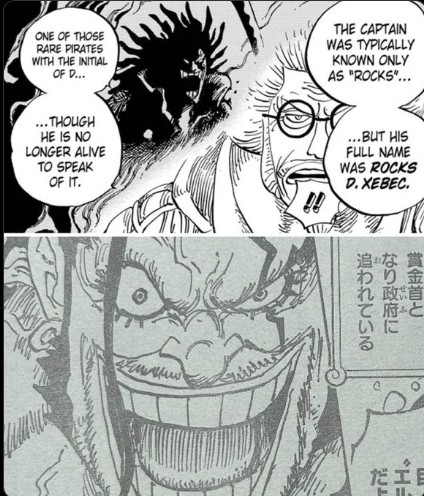
    One Piece Chapter 1154’s reveal of Rocks D. Xebec’s design has reignited intense speculation about the origins of key characters and the deeper family connections in the series. The striking resemblance between Rocks and Blackbeard, combined with fan theories suggesting connections to Buggy and Garp, provides fertile ground for an expansive theory that ties together lineage, time manipulation, and the very foundation of the current world order. This essay proposes a comprehensive theory: Rocks D. Xebec is the biological father of Monkey D. Luffy, Marshall D. Teach (Blackbeard), and Buggy, with Kozuki Toki as their mother. Following the God Valley incident, Toki uses her time manipulation abilities to send her sons to different points in time to protect them. This theory explains age discrepancies, the mysteries surrounding the parentage of these central characters, and connects major arcs such as Wano, God Valley, and the Revolutionary movement.

    Rocks D. Xebec and the Fatherhood of Luffy, Blackbeard, and Buggy

    The core of this theory lies in the proposition that Rocks D. Xebec fathered three sons who would become some of the most influential pirates in history: Luffy, Blackbeard, and Buggy. The revealed likeness of Rocks to Blackbeard, and the longstanding fan observations about Buggy’s visual similarities to Rocks and Blackbeard, support the idea of a shared paternal lineage. Garp’s role as Rocks’ father, while speculative, fits with his established conflicted relationship between his Marine duties and family loyalty.

    The notion that Kozuki Toki is the mother of these three adds a critical link to Wano’s royal bloodline, tying the history of Rocks’ pirate legacy to Wano’s political intrigue. Toki’s character is already deeply intertwined with the themes of sacrifice and protection through her time fruit abilities, making her a logical candidate to shield her offspring from the dangers following God Valley.

    The God Valley Incident and the Scattering of the Sons Across Time

    The God Valley Incident, occurring approximately 38 years ago, was a pivotal event where Rocks was defeated or disappeared. This timeline clashes with Luffy’s age, as Luffy is currently 19, which initially challenges the idea that Rocks could be his father. However, the inclusion of Toki’s time-time fruit (Toki Toki no Mi) introduces a crucial loophole: the ability to send people forward in time.

    This theory posits that Toki used her power to send her sons to different eras for their protection. Buggy and Blackbeard were sent closer to the God Valley era, accounting for their approximate ages and roles in the narrative. Luffy, however, was sent the furthest forward, approximately 19 years ago, explaining his younger age relative to his brothers and his “out of time” feeling. This scattering not only protects the children from immediate threats but also provides a narrative device for the age disparities.

    Toki’s Kidnapping and Its Political Implications

    After the pivotal moment when Toki sent the Scabbards and her sons into the future for their protection, this theory proposes that Toki gave birth to Luffy, Blackbeard, Buggy, and Shanks sometime after the Scabbards’ departure, likely during or shortly before the God Valley Incident. This would place Toki in a critical position during the final days of Rocks D. Xebec’s reign.

    However, after these events, Toki’s time manipulation abilities would have been known by powerful figures like Kaido and Orochi, who were already aligned with the World Government. Fearing the potential threat she posed — given the fact that her children were the biological heirs to Rocks’ legacyKaido and Orochi likely made a dark political bargain with the World Government.

    In exchange for Wano’s protection under Kaido’s rule, they handed over Toki to the World Government, likely at God Valley or during the aftermath. This would explain her sudden disappearance from the timeline and the mysterious absence that has left the fate of Toki shrouded in darkness. The World Government, already eager to wipe out the remnants of the Rocks Pirates and eliminate any potential threats, would have taken Toki captive, seeing her not only as a mother of key figures like Luffy and Blackbeard but also as someone who had the power to alter history itself with her time abilities.

    This betrayal adds a chilling layer to Wano’s political isolation. Kaido and Orochi’s cooperation with the World Government becomes more than just about securing their own power—it’s about suppressing the truth of Toki’s bloodline and preventing the future threat posed by her sons. The World Government’s role here reflects their longstanding efforts to control the Will of D and suppress the lineage tied to Rocks D. Xebec.

    This theory also introduces a potential future arc revolving around the rescue or legacy of Toki, who could play a pivotal role in the final battle against the World Government. As the mother of the time-scattered sons, she could hold the key to understanding the true power of Rocks’ legacy and the Will of D.

    The Role of Monkey D. Garp and the Concealment of Truth

    Monkey D. Garp’s role in this theory is that of a conflicted patriarch caught between his duties as a Marine and his family ties. His decision to raise or entrust Luffy to the Dadan family while hiding the truth about Luffy’s heritage reflects a protective instinct but also a desire to shield the world from the full ramifications of Rocks’ lineage.

    Dragon’s role is more ambiguous but could be interpreted as a guardian figure or a cover for Luffy’s true parentage. Garp’s preference for Luffy to become a Marine rather than follow his father’s path underscores the tension between inherited legacy and personal choice.

    Narrative and Thematic Implications

    This theory interweaves several major One Piece themes: legacy, family, sacrifice, and the struggle between fate and free will. By positioning Luffy, Blackbeard, and Buggy as brothers scattered through time, it explains many mysteries — including parentage, age gaps, and character motivations.

    The scattering through time adds a layer of mythic grandeur to their destinies, framing their eventual convergence as a climactic unification of a fractured lineage. Each brother embodies a facet of Rocks’ legacy: Buggy’s chaos and survival instincts, Blackbeard’s ambition and darkness, and Luffy’s freedom and hope.

    If Kozuki Toki is the mother of Luffy, Blackbeard, and Buggy, then this also means Momonosuke — Toki’s son with Oden — is the half-brother of these three pirate legends. This revelation adds enormous emotional and narrative weight to the Wano arc. Luffy and Momo’s brotherly bond and shared will to protect Wano take on a biological dimension, transforming their relationship from a chosen family to one of blood and legacy. This reframes much of the Wano saga as a long-overdue family reunion unfolding amid the battle for Wano’s freedom.

    The Shanks Connection

    The theory now becomes even more intricate. If Shanks is indeed Toki’s first son, born before she met Rocks, then it adds more emotional weight to Shanks’ eventual mentorship of Luffy. Shanks, having been raised as a World Noble, would understand the corruption of the world and might have been shielded from the worst of it by Toki, while his brothers (Blackbeard, Buggy, and Luffy) lived very different lives.

    This also explains why Shanks, despite his noble bloodline, is neutral in the grand scheme of things. He has a deep sense of family and a desire for freedom, which might stem from his personal struggle with his origins and his role in the larger conflict. He sees Luffy as a brother, passing down the straw hat as a symbol of their shared destiny.

    The Robin Connection: Rocks D. Xebec as Her Father

    Building on the theory’s expansion, Robin’s father is also speculated to be Rocks D. Xebec. Robin’s backstory reveals that her father was a pirate, and this could tie him into the Rocks Pirates, further reinforcing the theory of a complex web of familial connections. If Rocks D. Xebec is indeed Robin’s father, then Robin would be Luffy, Blackbeard, Buggy, and Shanks’ half-sister.

    The potential link between Robin’s father and Rocks adds another layer to this theory, further connecting the “Will of D.” and the fragments of Rocks’ legacy that are scattered across the world. It also explains Robin’s pivotal role in the story, as she carries the weight of ancient knowledge, which was actively suppressed by the World Government due to her father’s affiliations.

    Full Circle: God Valley and Wano’s Connection

    If we tie all of this together, God Valley and Wano aren’t just historical markers; they are destiny-shaping events. The fall of Rocks D. Xebec at God Valley created the foundation for all these characters to be linked in one way or another. Toki’s time fruit becomes the central force that connects them across time, and Wano’s isolation serves as the backdrop for their fragmented family to come together. Wano is the key to unlocking the full legacy of Rocks and understanding how the World Government has manipulated history. If this theory holds true, Luffy would not only be the heir to Rocks’ power but would also be the one to unite the fractured legacy of his half-siblings, confronting the past of God Valley and the future of the World Government.

    Luffy’s Role in Uniting the Family: The Davy Back Fight and Family Reunion

    Building on the previous points, Luffy’s journey could lead to an incredible family reunion—one that spans generations. The Davy Back Fight, where a crew can win members of another crew, serves as a perfect narrative tool for Luffy to reunite his fractured family.

    Imagine a scenario where Luffy unknowingly faces off against his half-brothers: Blackbeard, Shanks, and Buggy. Through a series of challenges, Luffy defeats them in the Davy Back Fight, bringing his brothers under the same flag without them even realizing it at first. This would be a perfect way to bring Luffy’s fractured family together, unknowingly reuniting the sons of Rocks under one banner.

    • Blackbeard, the dark, ambitious brother, would bring his chaos to the crew, but would ultimately become a reluctant member of Luffy’s family.
    • Shanks, the noble son of Toki, would serve as a guide and mentor, helping Luffy navigate the heavy burden of family and destiny.
    • Buggy, the comedic yet cunning half-brother, would be the wild card, bringing a touch of chaos but also a deeper connection to the legacy of their father.

    This unification of Luffy’s family not only rewrites the dynamics of the Straw Hat crew but also reshapes the understanding of the Will of D and the future of the World Government. Luffy, unknowingly, would be the one to rebuild his fractured family and lead them into the final battle against the World Government.

    Conclusion: The Circle of Time

    In conclusion, the theory of Toki being the mother of Luffy, Buggy, Blackbeard, Shanks, and the time-scattered sons, with their scattering through time after the fall of God Valley, creates a truly interconnected family legacy. It ties Wano’s isolation to the mysterious events of God Valley, and places Toki at the center of it all, making her both the protector and the sacrifice for the greater future of her children. This theory reshapes our understanding of the family dynamics in One Piece and offers new insight into the central conflicts of the World Government and the Will of D.