
The Musings of Jaime David
@jaimedavid.blog@jaimedavid.blog

The writings of some random dude on the internet

1,089 posts
1 follower

Tag: children’s books

  • The Lorax Left When We Needed Him Most

    The Lorax Left When We Needed Him Most

    We’ve all been told that The Lorax is a story about environmentalism, corporate greed, and the consequences of unchecked exploitation of nature. And sure, that’s all in there. But let’s not ignore the uncomfortable truth: the Lorax, the self-declared guardian of the forest, leaves when things get bad. He doesn’t protest harder. He doesn’t organize. He doesn’t chain himself to the last Truffula tree or build a grassroots resistance. He just floats up into the sky and vanishes, leaving behind a cryptic stone with the word “UNLESS” on it. That’s it. That’s the end of his fight. The guy who “speaks for the trees” gives a vague hint and then peaces out.

    And what does that really mean? If you speak for the trees, shouldn’t that come with a little more responsibility? Speaking is great—important, even—but when the trees are being chopped down one by one and the air is thick with smog, maybe it’s time for more than words. Maybe it’s time to act. But the Lorax doesn’t organize a coalition of forest creatures. He doesn’t lobby the Once-ler. He doesn’t call a press conference or draft legislation. He just lectures a bit, gets ignored, and then bails. If he truly cared, wouldn’t he have stayed until the bitter end, standing in front of the last tree like it was the sacred line in the sand?

    The Lorax’s exit feels less like noble despair and more like strategic abandonment. Sure, the Once-ler didn’t listen. But people don’t always listen the first time—or the tenth. That’s the whole point of activism. You keep going. You show up. You resist. You make noise. But the Lorax essentially says, “Welp, I tried,” and disappears. Can you imagine if real-world climate activists behaved this way? Greta Thunberg just floating into the clouds after one bad press conference? The Sierra Club just closing shop the moment a single forest was paved over? That’s not activism. That’s quitting with extra flair.

    The message we should have gotten from The Lorax is that caring means sticking around, even when things look hopeless. Especially when they look hopeless. Instead, we get this mythical tree-hugger who delivers a warning, gets ignored, and then evaporates—leaving a child (and us) with the burden of fixing everything after the fact. And that’s a lot of pressure to put on a kid. Maybe instead of just leaving behind a stone with a single cryptic word, the Lorax could’ve left an instruction manual, a protest plan, or at the very least, a phone number.

    So yes, the Lorax speaks for the trees. But maybe what we needed was someone who fought for them. Someone who got arrested at a pipeline protest, who glued themselves to the Once-ler’s machinery, who built a Truffula Tree Sanctuary and refused to leave. Someone who stayed. Because at the end of the day, speaking only goes so far. Action—messy, relentless, inconvenient action—is what actually makes a difference. And when the trees were gone, the Lorax should have been the last one standing. Not the first one to vanish.
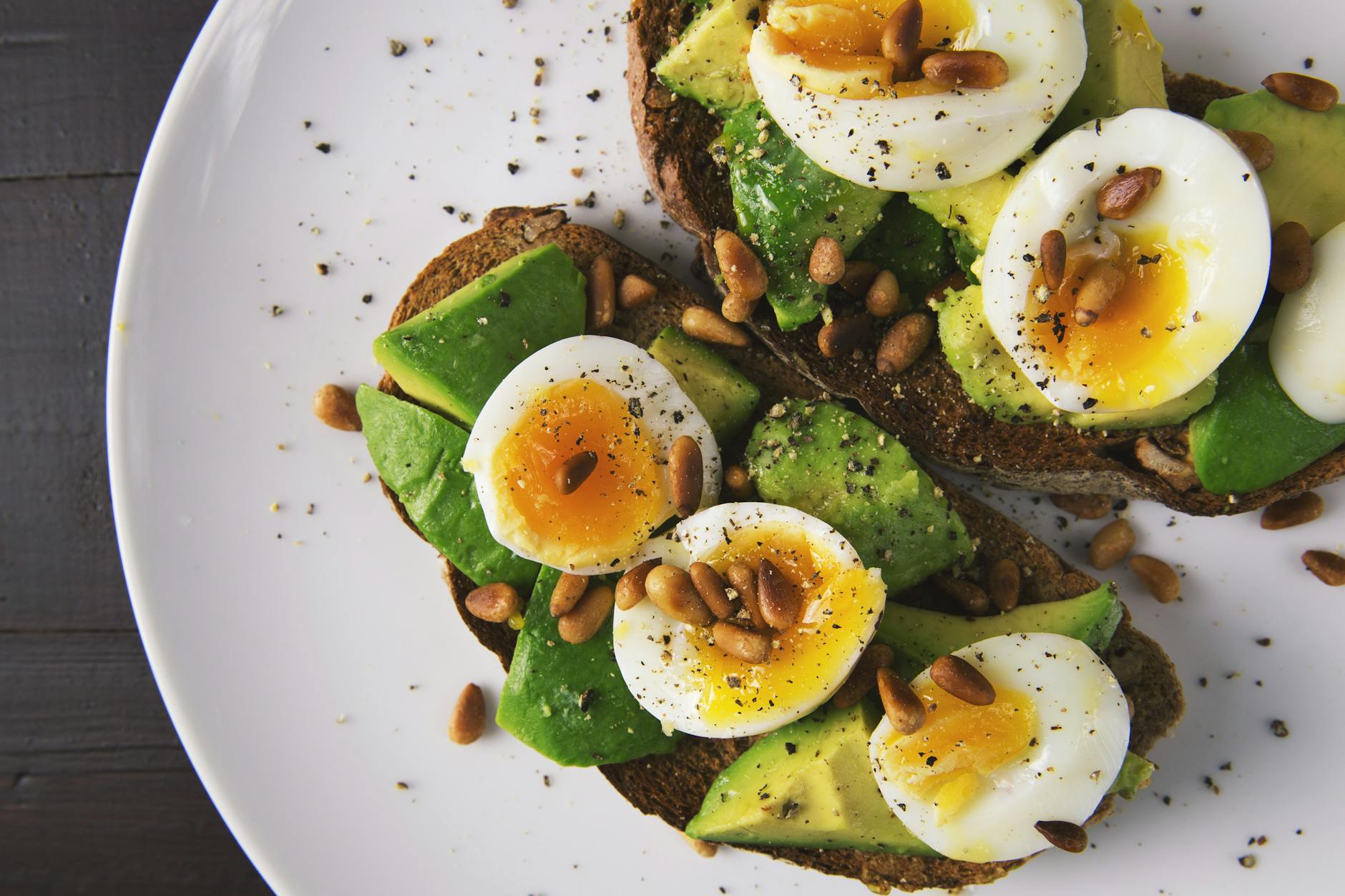
  • Green Eggs and Peer Pressure: Sam-I-Am and the Art of Culinary Harassment

    Green Eggs and Peer Pressure: Sam-I-Am and the Art of Culinary Harassment

    Green Eggs and Ham is often hailed as a fun, quirky children’s book that encourages trying new things. But if you peel back the rhymes and absurd imagery, what you actually get is a masterclass in coercion. Sam-I-Am is not a friendly, helpful character. He’s an unrelenting stalker who harasses another being into submission. The entire plot is essentially a 50-page pressure campaign to force someone to eat a plate of suspiciously colored food they explicitly said they didn’t want.

    From the very beginning, the unnamed protagonist sets a clear boundary: “I do not like green eggs and ham.” That’s it. That’s the end of the conversation, or at least it should be. But not for Sam-I-Am. No, Sam takes that rejection as a personal challenge. Instead of respecting the other character’s autonomy or taste, he launches a full-on psychological operation. He follows him around, repeats the same demand with slight variations, and proposes increasingly absurd locations and companions for this unsolicited meal. In a house? With a mouse? In a box? With a fox? It’s not cute—it’s harassment dressed in meter and rhyme.

    At some point, this stops being a book about trying new things and becomes a book about wearing someone down until they cave in just to make you go away. Sam doesn’t care about the actual food. He cares about control. He needs the other character to submit, to prove him right, to feel that power shift. This isn’t encouragement—it’s manipulation. And the moment the protagonist finally gives in and eats the green eggs and ham? That’s not a triumph of open-mindedness. That’s Stockholm Syndrome.

    Let’s not ignore the fact that green eggs are, by all logic, spoiled. There’s no mention of food safety here. What kind of shady diner did Sam-I-Am pick these up from? Are these eggs laced with mold, food dye, or something more nefarious? The book doesn’t say. What it does say—loud and clear—is that you should ignore your instincts, disregard your boundaries, and eventually give in if someone just nags you long enough. That’s not a lesson kids need.

    And then, of course, when the protagonist finally eats the green eggs and ham and says he likes them, it’s framed like a happy ending. But is it? Or is it a resignation to pressure, a surrender to the exhausting persistence of someone who simply wouldn’t take “no” for an answer? Sam-I-Am may be persistent, but he’s also pushy, overbearing, and disturbingly fixated on controlling someone else’s meal choices.

    In the end, Green Eggs and Ham isn’t about culinary adventure—it’s about how relentless people will cross every line just to prove a point. And maybe, just maybe, the real moral isn’t “try new things,” but “please leave people alone when they say no, regardless of how delicious you think your fluorescent ham might be.”

  • The Cat in the Hat Is the Villain, and It’s Time We Admit It

    The Cat in the Hat Is the Villain, and It’s Time We Admit It

    For decades, The Cat in the Hat has been celebrated as a whimsical children’s classic, a cornerstone of early literacy, and a testament to Dr. Seuss’s imagination. But beneath the rhymes and colorful chaos lies a troubling narrative that has somehow evaded proper scrutiny. Let’s be honest—the Cat in the Hat isn’t some harmless trickster. He’s an uninvited intruder with no respect for boundaries, safety, or the psychological well-being of children. In any other context, this would be a cautionary tale about home invasion, manipulation, and gaslighting.

    Consider the setup: two children are left home alone on a rainy day. Already, the vulnerability is palpable. Enter a six-foot-tall anthropomorphic cat wearing a striped hat who just walks in. No knocking, no consent, just immediate occupation of the space. He doesn’t introduce himself with any sort of accountability. Instead, he performs a bizarre show-and-tell of danger, balancing on balls and juggling household objects with zero regard for safety. The family fish—acting as the sole voice of reason—is immediately dismissed and treated like a buzzkill for daring to raise concerns about liability and injury.

    And then the Cat brings in Thing 1 and Thing 2, two feral agents of chaos who proceed to wreak havoc on the house. Their behavior borders on malicious. They tear through the place like toddlers on a sugar high in a demolition derby. This isn’t entertainment—it’s an escalation. At no point do the children have any real control over the situation. They are essentially hostages in their own home, guilt-tripped into either compliance or silence. The psychological pressure is off the charts. And after all the destruction, the Cat conveniently summons a clean-up contraption, erasing the physical evidence like a criminal wiping down a crime scene. “No harm done,” he implies, as if trauma isn’t a factor.

    This narrative teaches children all the wrong lessons. That charismatic intruders can be fun. That protest is futile. That covering up damage is better than taking responsibility. That chaos is acceptable as long as it’s cleaned up before the adults get home. And above all, that consequences are optional if you smile wide enough. The Cat doesn’t apologize. He doesn’t learn. He simply leaves, free to pull the same stunt on another unsuspecting household. He is, in essence, a serial boundary violator who wraps his anarchy in a bow of rhymes and slapstick.

    It’s time we retire this character as a lovable icon and recognize him for what he is—a cautionary symbol of unchecked ego disguised as fun. Maybe it’s satire, maybe it’s a subtle warning, or maybe it’s just another example of how we excuse harmful behavior when it’s packaged with enough flair. Either way, the Cat in the Hat is not your friend. He’s the villain of the story. And frankly, someone should’ve called animal control.