
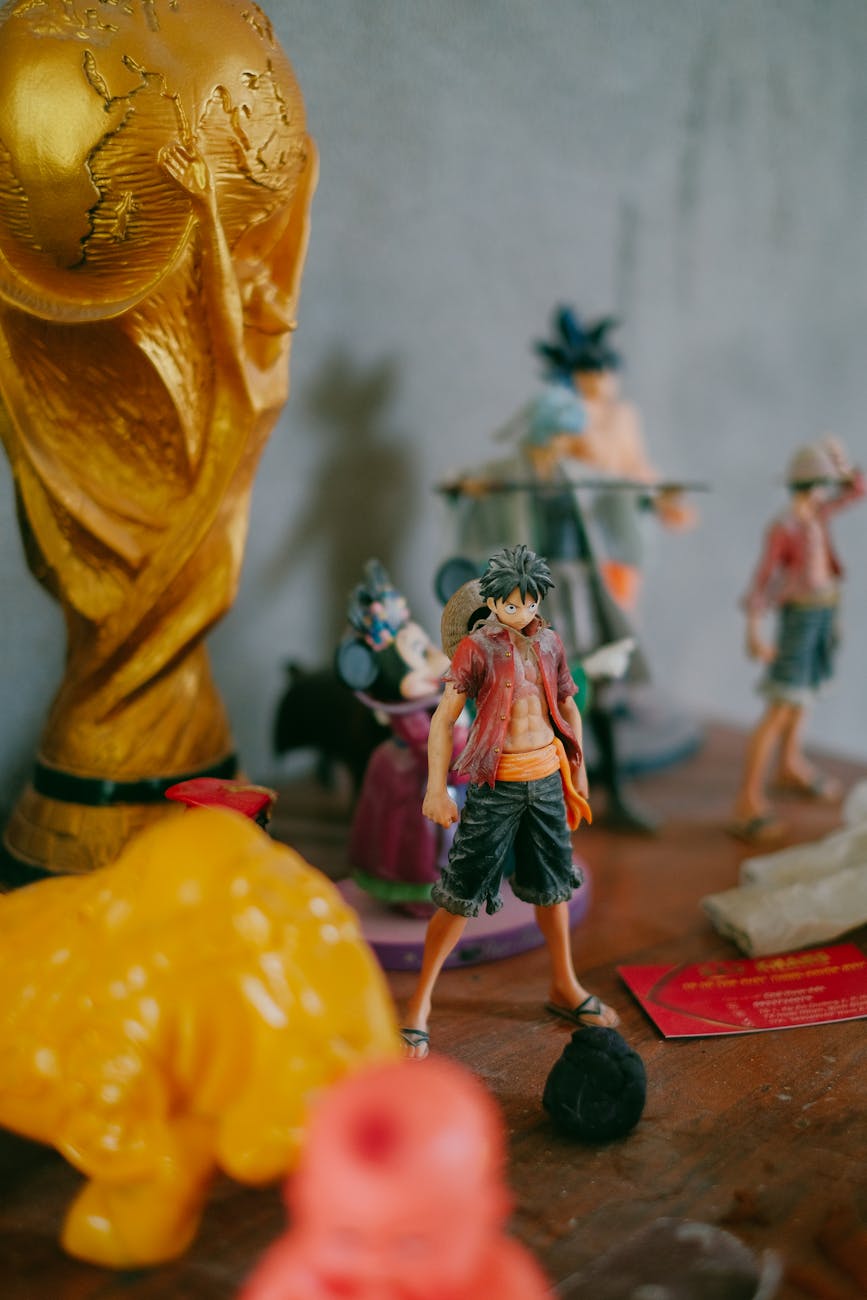
If Blackbeard represents the ultimate personal and psychological threat to Luffy — sowing deception, betrayal, and confusion among the Straw Hats — then Imu, the shadowy ruler of the World Government, must operate on a far higher, almost unfathomable plane. Blackbeard exploits trust and bonds, turning Luffy’s crew against him temporarily and forcing him into a chess-like survival scenario. Imu, in contrast, should test everything Luffy is at his core, stripping him of the people, memories, and connections that define him.
By the time Luffy reaches Imu, he will have endured numerous trials, both physical and psychological. Every major antagonist before has challenged one facet of Luffy: Crocodile tested his endurance and resilience; Enel challenged his adaptability and willpower; Doflamingo tested leadership and decision-making; Kaido tested strength and perseverance. Blackbeard would challenge trust and perception, weaponizing impersonation to make Luffy doubt the very bonds that have sustained him. Imu must do something even more extreme — something that redefines the stakes entirely. Erasing Luffy’s memories achieves exactly that.
The first reason memory erasure works narratively is that it forces Luffy to stand completely alone. One Piece has rarely, if ever, shown Luffy entirely without support from his crew. Even in situations like Marineford, where he was effectively alone against a near-impossible force, the Straw Hats’ presence and influence loomed in his mind. Removing his memories of the crew places him in a truly unprecedented position: he must fight for a world that is unfamiliar to him, guided only by instinct, intuition, and the ideals that have shaped him outside the immediate influence of his friends. This is not just a physical test but an existential one.
Importantly, erasing Luffy’s memories would not erase all of Luffy’s moral compass or his dreams. Oda has repeatedly emphasized that Luffy’s motivations extend beyond personal ambition. From his confrontation with Kaido at the end of Wano, we know that Luffy’s dream is not selfish; he fights for a world where people do not starve and where freedom is accessible to all. Even without memories of the Straw Hats, Luffy’s innate sense of justice and his desire to improve the world would persist, giving him a reason to fight. In essence, Imu would be stripping him of his emotional anchors, but not of his true self. This makes the challenge all the more compelling: Luffy must rediscover what and who he is while still confronting an opponent whose power seems nearly limitless.
The next reason this works is tied to the theme of bonds transcending memory. Kingdom Hearts has long toyed with the idea that memories and connections can exist independently, that bonds between friends can guide and sustain someone even when everything else is erased. In the series, Sora never forgets Donald and Goofy, but the idea of completely wiping a hero’s memories while leaving the bonds intact has only ever been hinted at as a theoretical possibility. One Piece could take this concept further: Luffy could be memory-less regarding his crew but still possess an unspoken recognition of their importance. This would heighten the emotional impact for readers and viewers, as we watch Luffy struggle through confusion, frustration, and isolation, yet gradually sense the presence of his friends in subtle, instinctual ways.
Imagine the climactic scene: Luffy, stripped of memories, battles Imu in a world that feels alien and unmoored. Imu might taunt him, questioning what he fights for, challenging every instinct. Luffy would initially feel lost, frustrated by the absence of the very people who have always grounded him. Slowly, glimpses of memory flash: a laugh shared with Zoro, a reassuring smile from Nami, the camaraderie of a long voyage. Each memory would appear as Luffy grapples with the void, a gradual return of both clarity and purpose. By the time he reaches the apex of the battle, he would recall his friends in full, shouting their names and charging forward with renewed vigor. The tension and emotional resonance here are unmatched; Luffy’s victory is not merely physical, but deeply personal and psychological.
Memory erasure also dramatically raises the stakes for the entire world. One Piece has always intertwined personal stakes with global consequences. Imu is theorized to possess powers capable of manipulating reality, potentially even erasing existence or rewriting history. Erasing Luffy’s memories would not just be a personal affront; it would threaten the crew’s influence on the wider world. Luffy, who has consistently been a catalyst for liberation and justice, would be removed from the battlefield mentally even if physically present. The world itself would hang in suspense, dependent on the hero’s gradual reclamation of identity and bonds.
Furthermore, this scenario would allow Oda to explore Luffy’s innate heroism in a way never before possible. Without the immediate reinforcement of the Straw Hats, Luffy’s decisions, strategies, and morality must come from his core self. His instincts, intuition, and innate sense of right and wrong — the purest elements of Luffy’s character — would drive the narrative. This emphasizes a central theme of One Piece: that strength is not merely physical or even relational, but rooted in ideals and unshakable conviction.
The psychological impact of memory erasure also mirrors the ticking-clock disaster archetype seen throughout One Piece. Battles often hinge on critical moments when the protagonist is hindered: the bomb in Alabasta, Luffy sent overboard in Skypeia, the Birdcage in Dressrosa, or the Buster Call in Enies Lobby. Blackbeard’s impersonation of Luffy serves as a penultimate test of trust, paranoia, and identity — a high-stakes ticking clock for the crew. Imu’s memory erasure elevates the ticking-clock scenario to the ultimate extreme: the hero’s mind itself becomes the battlefield, and every second spent disoriented is a second the world remains in jeopardy.
In this scenario, Luffy’s journey is not just about physical confrontation but about reclaiming himself and his bonds under extraordinary pressure. He cannot rely on his crew’s guidance; he cannot trust even his own certainty. The fight against Imu becomes as much about internal resilience as external skill, making for a narrative climax that is emotionally devastating and profoundly heroic.
Finally, memory erasure works because it solidifies the stakes of the final battle in a way that surpasses every prior challenge. Blackbeard’s deception is intimate, personal, and terrifying, but still operates within the familiar parameters of betrayal and impersonation. Imu’s manipulation would function on a cosmic scale, challenging Luffy not just to overcome a villain but to reclaim his very self. It turns the finale into a story about the endurance of bonds, the nature of identity, and the persistence of ideals even under total erasure.
In conclusion, Imu erasing Luffy’s memories is not just a plausible narrative choice — it is a perfectly orchestrated escalation. It honors the themes of trust, friendship, and resilience while amplifying the stakes to their maximum potential. Luffy would be forced to fight alone, to rediscover his bonds and his purpose, and to triumph against a world-altering threat with nothing but instinct, intuition, and the glimpses of memory that guide him. This scenario would provide One Piece with an emotional and thematic crescendo worthy of its decades-long journey, demonstrating that the strength of a hero lies not merely in power or allies but in unbreakable bonds and enduring ideals.