When I first heard that The Odyssey would feature Matt Damon as Odysseus, my immediate reaction was confusion. Not outrage. Not excitement. Just genuine confusion. Out of all the actors working today, Matt Damon was not the face I imagined when thinking about the most famous wanderer in literature. Odysseus, at least in my mind, always existed somewhere between myth and impossibility. He was too legendary to feel modern. Too ancient to feel reachable. Too poetic to be embodied by somebody I associate with contemporary realism and grounded performances. If someone had asked me years ago who would play Odysseus in a giant modern adaptation, I probably would have guessed somebody more theatrical, more physically imposing, or someone with a colder and more aristocratic presence. Matt Damon would not have even crossed my mind.
But the more I sat with the casting, the more it started making perfect sense.
Not just acceptable sense. Not “I can see it now” sense. The kind of sense where suddenly you realize the answer had been obvious the entire time and you simply failed to notice the pattern. Because when you really think about Matt Damon’s career, one of the defining themes across decades of his filmography is survival through dislocation. Again and again, Damon plays men who are separated from home, isolated from stability, trapped inside unfamiliar systems, or stranded in places where intelligence becomes more important than strength. His characters survive because they adapt. They improvise. They calculate. They endure. That is essentially the core of Odysseus.
Odysseus is not Achilles. He is not remembered primarily because he is unstoppable in combat or because he represents physical dominance. He is remembered because he survives the impossible through wit, patience, manipulation, resilience, and persistence. He survives storms, monsters, temptations, divine punishment, war, loneliness, and time itself. He is exhausted for most of his legend. He is delayed constantly. He is denied rest over and over again. His story is not really about conquering the world. It is about trying to get back home while the world keeps refusing to let him.
And suddenly that sounds exactly like the kind of role Matt Damon has been unconsciously preparing to play for most of his career.
It is honestly funny how often Matt Damon ends up lost somewhere.
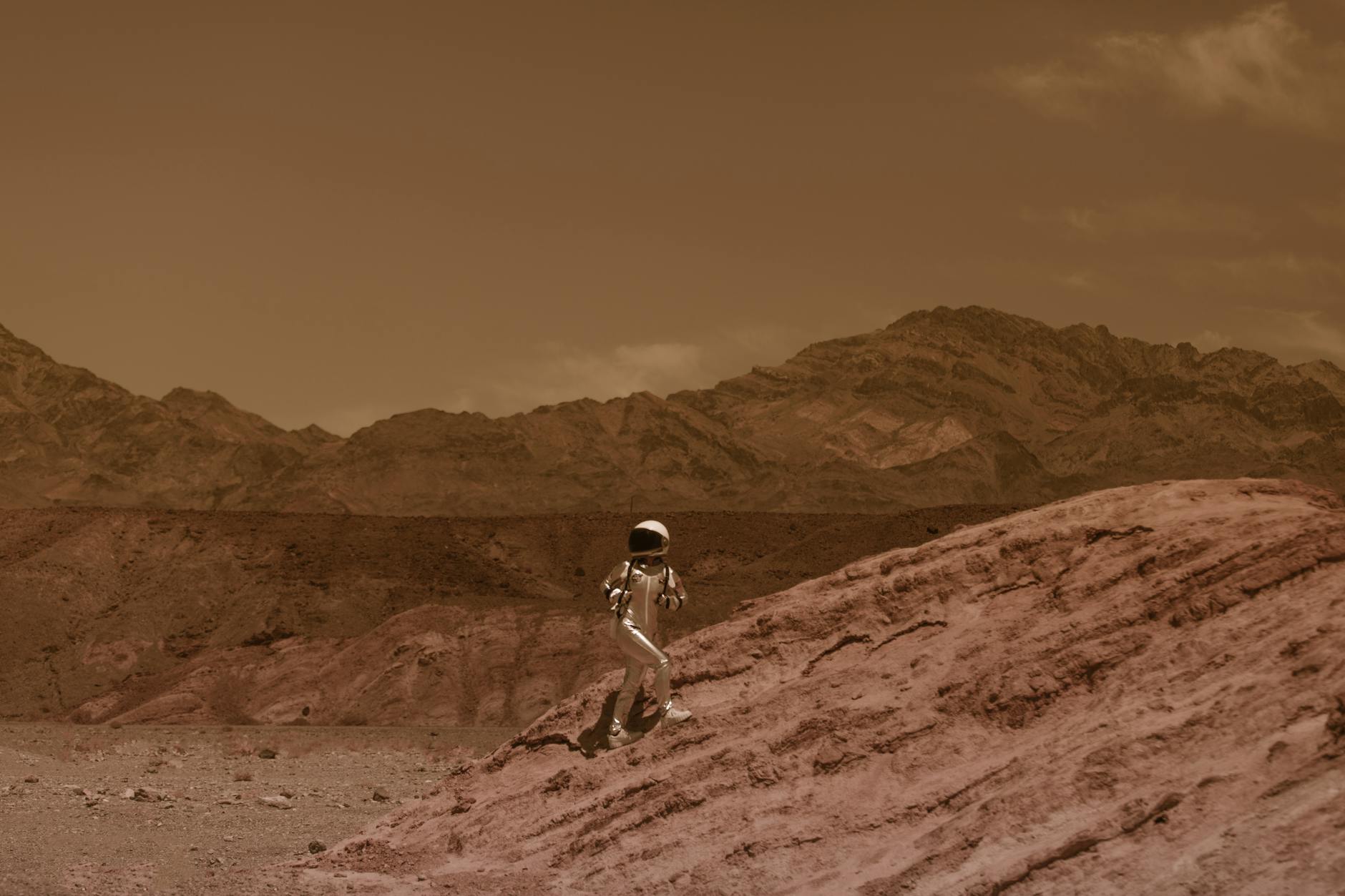
People joke about it, but the pattern is real. In The Martian, he is literally stranded alone on another planet, surviving through intelligence, humor, problem solving, and sheer refusal to die. In Interstellar, he once again becomes a man isolated far away from civilization, psychologically deteriorating after abandonment and distance from home. In Saving Private Ryan, the entire narrative revolves around the desperate search for him across the chaos of war. In The Bourne Identity and the rest of the Bourne films, he plays a man with no stable identity, constantly moving across countries, hunted endlessly, surviving through intelligence and instinct. Even in movies that are not literally about being stranded, Damon repeatedly embodies men disconnected from certainty. Men trying to navigate systems larger than themselves. Men improvising their way through danger.
That is Odysseus.
Not the marble-statue version people sometimes imagine. Not just the warrior king. The exhausted traveler. The man who keeps waking up in places he never intended to be. The man forced to think faster than the dangers surrounding him. The man who survives not because fate protects him, but because he refuses to stop adapting.
I think that is why the casting started growing on me so quickly. Matt Damon has spent years mastering a very specific cinematic energy: intelligent desperation. That sounds like an insult at first, but I mean it as praise. Very few actors can portray competence and exhaustion simultaneously the way Damon can. He often feels like a man barely holding chaos together through determination and quick thinking. There is usually a layer of stress underneath his performances, even when the character is calm. You believe his mind is constantly working. That quality matters for Odysseus because Odysseus is one of literature’s great thinkers under pressure.
Too many interpretations of mythological heroes focus only on grandeur. They become stiff. Overly majestic. Emotionally distant. But the reason ancient epics survive for thousands of years is because underneath the gods and monsters are deeply human fears. Fear of never returning home. Fear of being forgotten. Fear that time moves on without you. Fear that your family changes while you are absent. Fear that survival itself might cost you your identity.
Odysseus carries all of that.
And Matt Damon, strangely enough, has always been very good at portraying men carrying invisible emotional weight.
Even his physical presence works better for the role than I initially assumed. Odysseus should not necessarily feel superhuman. He should feel durable. Weathered. Resourceful. A man who has been surviving for years. Matt Damon has never depended on overwhelming physical intimidation as an actor. His performances are usually rooted in credibility rather than spectacle. When he wins, it often feels earned through effort instead of destiny. That makes him an interesting fit for a mythological figure because it grounds the legend in something emotionally believable.
There is also something fitting about casting an actor whose persona has aged into weariness. Younger Matt Damon may not have worked as Odysseus. But older Matt Damon absolutely does. Age changes how audiences read an actor’s face. Damon now carries a sense of accumulated history onscreen. He looks like someone who has seen things. Someone who has spent decades enduring disappointment, violence, sacrifice, and responsibility. Odysseus should feel tired in a profound way. Not weak, but burdened. The journey home in The Odyssey is not a fun adventure. It is a prolonged spiritual and emotional punishment. Every delay reshapes him.
That exhaustion matters because The Odyssey is fundamentally about distance. Distance from home. Distance from certainty. Distance from identity. Distance from peace. Odysseus spends years being transformed by the act of wandering itself. By the time he returns home, he is not the same man who left.
Matt Damon has played variations of that transformation many times before.
Another reason the casting works is because Damon has always balanced intelligence with accessibility. Odysseus is famously cunning, but if an actor leans too heavily into intellectual superiority, the character can become smug or emotionally disconnected. Damon usually avoids that problem. Even when he plays highly intelligent characters, there is still vulnerability underneath. In Good Will Hunting, his genius is inseparable from emotional damage. In The Martian, his scientific brilliance is tied directly to loneliness and fear. Damon often portrays intelligence as survival rather than ego. That distinction is incredibly important for Odysseus.
Odysseus lies constantly. He manipulates people. He adapts his identity depending on the situation. He survives because he understands human nature. But beneath all of that is longing. He wants home. He wants reunion. He wants rest. If an adaptation forgets that emotional core, Odysseus risks becoming merely clever instead of tragic.
And tragedy is essential to him.
People sometimes simplify The Odyssey into a fantasy adventure story, but there is melancholy woven throughout the entire narrative. Odysseus survives everything, yet survival itself becomes painful. He loses companions. He misses years of life with his family. He becomes isolated by experience. He watches time disappear. Even victory feels haunted because it arrives after so much irreversible loss.
Matt Damon has always had a natural melancholy to his screen presence that could fit that perfectly. Even when he plays confident characters, there is often restraint in his performances. He rarely feels theatrical in an artificial way. That grounded emotional realism could make Odysseus feel less like an untouchable legend and more like a man carrying the psychological cost of endless survival.
What fascinates me most is how retrospectively obvious this casting becomes once you connect Damon’s career themes together. He has almost accidentally built one of the greatest “lost man” filmographies in modern Hollywood. He gets stranded physically, emotionally, psychologically, politically, or existentially in movie after movie. Sometimes he is trying to return home. Sometimes he is trying to rediscover himself. Sometimes he is simply trying to stay alive long enough to escape.
Odysseus contains all of those ideas at once.
There is also an interesting meta layer to this casting because Matt Damon represents a certain era of Hollywood masculinity that feels increasingly rare now. He is not built like a comic book demigod. He does not rely on exaggerated charisma or ironic detachment. He became famous playing intelligent but emotionally conflicted men. That older style of grounded movie star actually fits Greek epic storytelling better than hyper-stylized modern action archetypes.
Odysseus should feel human enough that his suffering matters.
If he feels too invincible, the emotional stakes disappear.
And honestly, that may be the biggest reason why Damon works. He has never felt invincible as an actor. Even at his most capable, there is vulnerability attached to him. Audiences believe he can fail. They believe he can suffer. They believe he can get trapped somewhere impossible. That tension is necessary for The Odyssey because the entire story depends on uncertainty. The audience must feel the possibility that Odysseus may never return home at all.
I also think people underestimate how difficult it is to modernize mythological figures without making them emotionally hollow. Ancient characters can easily become symbols instead of people. The challenge is preserving the myth while restoring the humanity underneath it. Matt Damon’s acting style leans heavily toward humanization. He tends to make characters feel psychologically understandable even in extreme circumstances. That ability could be essential for bringing Odysseus to contemporary audiences without losing the epic scale.
And honestly, the older I get, the more I appreciate Odysseus as a character.
When people are younger, they often gravitate toward straightforward heroic archetypes. Strength. Glory. Fearlessness. But Odysseus becomes more compelling with age because he represents endurance instead of purity. He is flawed. Sometimes selfish. Sometimes manipulative. Sometimes prideful to the point of catastrophe. Yet he continues forward anyway. He survives through imperfection. He survives through adaptation. He survives because he understands that intelligence is often more valuable than brute force.
That feels deeply modern.
Maybe that is another reason Matt Damon works so well for the role. He has never been a mythic-looking actor in the traditional sense. He feels contemporary. Relatable. Practical. But perhaps that practicality is exactly what makes him believable as Odysseus. The original Greek audiences probably did not see Odysseus as a distant fantasy icon the way modern culture sometimes does. They likely saw him as a recognizable human figure navigating impossible circumstances through cunning and resilience.
Damon can embody that.
There is something poetic about the fact that an actor associated with survival stories eventually arrives at the most famous survival journey in Western literature. Almost like his entire career unintentionally circled toward this role. Years of portraying stranded astronauts, hunted operatives, isolated soldiers, and displaced men all leading toward the archetype underlying them all.
Because Odysseus is arguably one of the original “lost men” in storytelling.
Long before modern science fiction. Long before survival thrillers. Long before psychological action films. There was Odysseus trying to make it home across a hostile world that kept pushing him further away from peace.
And now Matt Damon gets to inhabit that role.
The more I think about it, the more I realize my initial skepticism came from imagining Odysseus too narrowly. I was imagining the icon instead of the man. The legend instead of the survivor. But Matt Damon excels at portraying survivors. Not superheroes. Survivors. There is a difference. Survivors carry fatigue. Survivors make compromises. Survivors improvise. Survivors adapt because they have no other choice.
That is Odysseus in essence.
Even the emotional rhythms of Damon’s performances align with the character. He often portrays men who suppress emotion because they are too busy solving immediate problems. The emotion arrives later in quieter moments, usually underneath restraint. Odysseus is very much like that. He spends much of his story enduring. Strategizing. Calculating. The emotional devastation exists underneath the surface until moments where it finally breaks through.
A more theatrical actor might overplay the grandeur. Damon could potentially make the pain feel intimate instead.
And intimacy is important because despite its scale, The Odyssey is ultimately a deeply personal story. It is about one person trying to get home. Everything else, the monsters, gods, wars, and fantastical islands, revolves around that central emotional need. Home becomes almost mythical itself by the end of the journey. A symbol of peace that feels increasingly unreachable.
Matt Damon has always been good at portraying longing. That quiet sense that a character wants something emotionally essential but cannot quite reach it yet. That emotional undercurrent could give Odysseus real depth beyond spectacle.
I also think modern audiences underestimate how emotionally strange The Odyssey actually is. It is not a clean heroic narrative. It is episodic, dreamlike, lonely, violent, seductive, and psychologically exhausting. Odysseus constantly enters temporary worlds that threaten to consume his identity. Places where he could forget home entirely. Places where time becomes distorted. Places where comfort itself becomes dangerous.
That atmosphere aligns surprisingly well with the existential isolation present in several Matt Damon films. Especially the feeling of men psychologically drifting while trying to maintain purpose. He understands how to portray characters trapped between determination and despair.
Which again makes the casting feel increasingly inspired.
And maybe that is the best kind of casting decision. The ones that confuse people at first before gradually revealing their logic. The choices that force audiences to rethink the character rather than simply confirming existing expectations.
Now when I imagine Matt Damon as Odysseus, I no longer see a strange mismatch. I see a culmination. A modern actor whose career has repeatedly explored displacement, survival, intelligence, and endurance stepping into one of humanity’s oldest stories about exactly those themes.
An actor famous for getting lost finally playing history’s most legendary lost traveler.
And somehow that feels completely right.