The Musings of Jaime David
@jaimedavid.blog@jaimedavid.blog

The writings of some random dude on the internet

1,120 posts
1 follower

Tag: Death

  • Seven Years Later, Still That Same Moment

    Seven Years Later, Still That Same Moment

    Seven years is supposed to feel like distance. That’s what people tell you, what you tell yourself, what the world quietly expects you to accept. Time moves forward, relentlessly, stacking days into months into years until something that once felt immediate is supposed to settle into memory. But grief doesn’t follow that rule. It doesn’t respect calendars or anniversaries. It doesn’t care how many years have passed. Sometimes seven years feels like a lifetime ago, like you’ve lived entire versions of yourself since then. And sometimes it feels like nothing has moved at all, like you’re still standing in that exact moment when everything changed. Both of those realities exist at once, overlapping, impossible to separate, and somehow that contradiction becomes its own kind of truth.

    Today is April 18, 2026, and it has been seven years since my uncle died. Even writing that feels strange, like I’m describing something distant when it doesn’t feel distant at all. It feels close. Too close. There are moments where I stop and think about it, and it genuinely doesn’t feel like seven years have passed. It feels like a few months, maybe a year at most, like something recent enough that I should still be able to reach out, still be able to hear his voice, still be able to exist in a world where he’s here. And then there are other moments where the weight of those seven years hits all at once, where I realize how much time has actually gone by without him, how many things have happened, how many moments he’s missed, how much life has continued in a way that feels both natural and deeply wrong at the same time.

    What makes it even harder to process is how I found out. There was no call. No moment of someone sitting me down, no gradual realization, no buffer between normal life and the shock of loss. It was a social media post. Just words on a screen from a family member who knew him. That’s how I learned that someone who meant that much to me was gone. And at first, it didn’t even feel real. It couldn’t be real. It felt like a mistake, like some kind of misunderstanding, like maybe it was about someone else with the same name. There was that immediate instinct to reject it, to push it away, to think, “What is this? This has to be a joke.” Because the alternative was too heavy, too sudden, too final to accept in that moment.

    But it wasn’t a mistake. It wasn’t a joke. It was real. And that realization didn’t come gently. It hit hard, all at once, like the ground giving out underneath you before you even realize you’ve lost your footing. That moment sticks in a way that doesn’t fade. It replays itself, not always vividly, but always there, like a fixed point in time that everything else moves around. The way something like that enters your life matters. The way you learn about a loss becomes part of the loss itself, stitched into the memory in a way you can’t separate. And finding out like that, through a screen, alone with the information before anyone could even explain it, made it feel even more unreal and more devastating at the same time.

    And then there’s how it happened. Not just that he died, but the way it unfolded. A few days before, he bumped his head. Something that sounds small, something that on its own wouldn’t raise alarms. The kind of thing people brush off, maybe joke about, maybe forget entirely. And then a few days later, everything changed. He collapsed. He fell into a coma. And he never woke up. That sequence of events doesn’t sit right, even years later. It feels abrupt, unfair, like something that shouldn’t have been able to escalate like that. It leaves behind questions that don’t have satisfying answers, a sense that something so massive came from something that seemed so minor, and that disconnect makes it even harder to fully accept.

    It was awful. There’s no softer way to put it, no way to wrap it in language that makes it easier to hold. It was traumatic. It reshaped something fundamental in how I understand how quickly life can change, how fragile everything actually is. One moment someone is there, part of your everyday world, someone you assume will continue to be there in all the ways that matter. And then, in what feels like no time at all, they’re gone. Not gradually, not in a way that gives you time to prepare, but suddenly, in a way that leaves you trying to catch up to something that’s already happened.

    And what makes this loss even heavier is who he was to me. He wasn’t just an uncle in the distant, occasional sense of the word. He was like a dad to me. Truly. That kind of relationship doesn’t fit neatly into labels. It goes beyond titles and definitions. It’s built on presence, on the role someone plays in your life, on the way they show up for you, guide you, support you, exist as a steady figure in your world. Losing him wasn’t just losing a relative. It was losing someone who filled a space that can’t really be replaced, someone whose absence is felt in ways that extend into so many parts of life.

    That’s part of why time doesn’t “fix” it in the way people sometimes suggest it will. You don’t move on from something like that. You move with it. It becomes part of how you experience the world, part of how you think, part of how you measure time itself. Anniversaries like this one don’t just mark the passing of years. They bring everything back to the surface, not necessarily in a way that overwhelms you completely, but in a way that reminds you that the loss is still there, still real, still significant. It doesn’t disappear just because more time has passed.

    There’s also something surreal about the way memories work after this kind of loss. They don’t line up neatly in the past. They feel present, like they exist alongside your current life rather than behind it. You can think about a moment, a conversation, a feeling, and it doesn’t feel like something that happened “back then.” It feels immediate, like something you can almost step back into. And then you’re hit with the reality that you can’t. That contrast between how close it feels and how final it actually is creates a kind of emotional dissonance that’s hard to fully put into words.

    Every fucking April since 2019 has felt like it comes with its own kind of weight, like the month itself is cursed or stacked against me in ways that don’t even feel rational anymore. It’s not just one thing. It’s not just one bad memory or one hard moment that defines it. It’s the accumulation of everything that keeps happening in or around this month, year after year, like April refuses to let anything be normal. It’s gotten to the point where I don’t even approach April with neutrality anymore. There’s always this low-level expectation that something is going to go wrong, or something is going to resurface, or something is going to remind me why this stretch of time has felt so consistently heavy since 2019.

    April 2019 was already close to something foundational breaking. My uncle on my dad’s side died, and that alone changed the emotional baseline of everything that came after. That loss never really “settled” in the way people expect grief to settle. It just became part of everything else. And even now, years later, it still feels close in a way that doesn’t make sense on paper. Time has passed, but the emotional distance never matched it. That’s part of why April itself started to feel different after that point. It wasn’t just a month anymore. It was a reminder.

    Then came April 2020, and it felt like the world itself was collapsing in layers. It was only a month after my grandpa died, so I was already in that raw, disoriented state where everything feels slightly unreal. And then COVID started spreading everywhere, and the entire atmosphere of life changed overnight. Fear, uncertainty, isolation, all of it just layered on top of grief that hadn’t even had time to breathe yet. And then, on top of that, my high school history teacher died from COVID. What makes that even more surreal is that he died on the exact same day, one year after my uncle died. That kind of timing feels almost impossible when you look at it from the outside, like some kind of cruel coincidence that repeats the same emotional wound on a calendar you didn’t ask to be part of.

    That teacher wasn’t just a name on a roster either. He was someone who actually made learning feel alive in a way that stuck with me. And then suddenly he was gone too, in the middle of a global crisis that already felt like it was stripping everything familiar away. And that year, politically and socially, everything felt unstable in a different way as well. Trump’s first term response to COVID was chaotic and inconsistent, and the broader environment in the country felt like it was constantly spiraling between denial, panic, and confusion. It wasn’t just personal grief anymore. It felt like the entire structure of reality was shaky.

    April 2021 didn’t give any real relief either. It was only a few months after the Capitol riots, and the political tension in the country still felt thick in a way that was hard to ignore. Everything felt polarized, loud, and unstable. Even day-to-day life carried this underlying sense of friction, like everyone was still reacting to something unresolved. Around that same time, I also got canned from what I considered my dream job back then. That wasn’t just a professional setback. It hit in a way that made everything feel more uncertain, like stability itself was something I couldn’t rely on, even when I thought I had it.

    April 2022 brought its own different kind of heaviness. The Ukraine war had just started a couple months earlier, and the global atmosphere felt tense and uncertain in a way that was hard to fully process in the background of everyday life. But there was also something more personal underneath that I didn’t fully understand at the time. I had a friend I had fallen out with, and I didn’t know it then, but he died in 2022. I only found out much later, over two years after the fact, in May 2024. That delay adds its own kind of distortion to the memory, because it means the grief doesn’t happen where it “should” in time. It arrives late, retroactively, and rewrites what you thought you already understood about the past.

    April 2023 felt like another shift into something more chaotic in a different way. The indictment of Donald Trump made New York feel tense in a very immediate, physical sense. The city itself felt like it was on edge, like every conversation carried an undertone of political friction and uncertainty. It wasn’t just headlines anymore. It was something that felt embedded in the environment, like walking through the city itself came with a sense of instability that you could feel in the air.

    Then April 2024 came, and the Trump trial made everything feel even more intense. New York felt even more chaotic, even more charged, like there was a constant pressure in the background of daily life. That month was also still emotionally shaped by loss on a personal level, because a few months earlier, my dog of 13 years had died in the summer of 2023. That kind of loss doesn’t just disappear by the time a new calendar year rolls around. It stays embedded in routines, in spaces, in quiet moments that don’t have anything to do with politics or headlines but still carry that absence with them.

    April 2025 didn’t reset anything either. It came only a few months after my other dog, who I had for almost 10 years, got sick with cancer in late 2024, then died just a few weeks later in January 2025, right before her 10th birthday in February. That loss felt especially cruel in its timing, like there wasn’t even enough space between sickness and goodbye for it to fully register. And by the time April came around again, I was still sitting in that aftermath. On top of that, it was a few months into Trump’s second term, and after the 2024 election, everything politically felt heightened again. His campaign and return to office felt even more intense and divisive than before, and the sense of national instability didn’t really feel like it had eased at all. It felt like everything was still accelerating instead of calming down.

    Now April 2026 is here, and it somehow feels like it’s carrying all of that history with it at once. It doesn’t feel separate from the previous Aprils. It feels like an extension of them. A continuation. The political situation has escalated in ways that feel almost unreal when you say them out loud. The United States has been involved in escalating military action abroad, including direct conflict with Iran that has stretched into a prolonged war environment. There have been naval blockades, global economic instability, and rising tensions that feel like they are constantly shifting. At the same time, there has been renewed military intervention and pressure in places like Venezuela, along with ongoing rhetoric about expanding conflict or influence into other regions, including Greenland and even Cuba. It feels like the geopolitical atmosphere is constantly moving between escalation and instability, with no clear sense of de-escalation in sight.

    Reading or hearing things like that on the news doesn’t feel distant anymore. It feels immediate, like the world itself is stuck in a constant state of volatility. Oil markets shifting, military movements, diplomatic breakdowns, threats of expansion, ceasefires collapsing or being questioned almost immediately afterward. Everything feels like it’s happening all at once, without enough time for anything to stabilize before the next development hits. And it all layers on top of the personal history of these Aprils, making the present feel even heavier because it’s not just about what’s happening now. It’s about everything that has already happened before.

    That’s what makes this stretch of time feel so strange to live through. It’s not that every single April is objectively the worst thing imaginable. It’s that each one stacks on top of the last, so the emotional weight compounds instead of resets. Grief, political tension, personal loss, instability, change, all of it keeps returning in different forms, but always around the same time of year. And eventually, you start to associate the month itself with that accumulation, even when you logically know it’s just a marker on a calendar.

    It’s hard to explain to someone who hasn’t lived through that kind of repeating pattern how much it changes your relationship with time. April stops feeling like just another month. It becomes a reminder of everything that has already happened and everything that could still happen again. And even when nothing specific is going wrong in the moment, there’s still that background awareness that history has not exactly been kind to this stretch of time.

    So every April since 2019 doesn’t feel like a series of isolated events. It feels like one long continuation of everything that started back then. A chain of loss, instability, change, and global uncertainty that never fully resets before the next link is added. And at some point, you stop thinking of it as coincidence and start thinking of it as a pattern you just have to live through.

    Seven years later, that surreal feeling hasn’t gone away. If anything, it’s become part of the way I understand the loss. Time has moved forward, undeniably. Life has continued, as it always does. But there’s a part of me that is still in that moment of discovery, still processing the shock, still trying to reconcile how something so significant could happen so suddenly and so quietly from my perspective. That moment didn’t stay in the past. It stretched forward, threading itself through the years that followed.

    And maybe that’s what grief really is in situations like this. Not something that fades into nothing, but something that changes shape over time. It becomes less about the immediate shock and more about the ongoing absence. Less about the moment you found out and more about all the moments since then where you feel that absence in different ways. The big moments, the small ones, the ordinary days where something reminds you of them out of nowhere. It’s not constant in the same way, but it’s persistent. It stays.

    Seven years later, it still feels surreal. It still feels unfair. It still feels like something that shouldn’t have happened the way it did. And it still feels like I lost someone who meant more to me than words can fully capture. Time has passed, but that doesn’t erase the reality of what was lost or the impact it continues to have. It just adds layers to it, layers of memory, reflection, and the ongoing process of carrying something that never really goes away.

    And maybe that’s the closest thing to understanding it. Not trying to force it into something neat or resolved, but recognizing that it exists in that in-between space where time moves forward and stands still at the same time. Where the past feels present, and the present is shaped by something that happened years ago. Where seven years can feel like everything and nothing all at once.


    Fediverse Reactions
  • Death or Cake? The Absurdity of “Fake Death” Birthday Posts

    Death or Cake? The Absurdity of “Fake Death” Birthday Posts

    Social media, ladies and gentlemen, has officially lost its goddamn mind. Somewhere along the way, we collectively decided that ordinary birthdays—those simple, beautiful reminders that we haven’t yet kicked the bucket—aren’t dramatic enough. No, no, now we need to turn a person’s birthday into a funeral announcement. You know the ones I’m talking about: “We sadly remember the life of John Doe, who would have turned 27 today…” And then, surprise! It’s not a memorial. It’s a cake. Candles. Confetti. People sending GIFs of balloons. What the hell?

    Let’s unpack this nonsense. First off, birthdays are already inherently ego-driven events. You survived another year. You deserve cake. You might even deserve a little attention on social media. But no. Social media has to escalate everything into a spectacle, a melodrama, a minor tragedy disguised as celebration. And the sad truth? People eat it up. They comment, they “like,” they share. It’s all part of the great modern circus of manufactured emotion. Nobody can just say, “Hey, happy birthday.” That would be too simple, too human, too boring. Instead, we have to pretend the person died, briefly scare everyone, and then clap our hands like trained seals when the twist is revealed.

    Now, I get it. There’s a dark humor element here. Some of these posts are clever. “Haha, you thought I was dead!” That’s fine. A little gallows humor, a wink at mortality. But most of these posts aren’t clever. They’re lazy, attention-seeking, tone-deaf exercises in social media chaos. They trivialize death for the sake of engagement. There’s something deeply unsettling about scrolling through your feed, seeing “RIP” posts every few minutes, and realizing half of them are just birthday shoutouts. It’s like the concept of death has been cheapened to the level of a cake emoji.

    And let’s talk about the psychology behind this. Why would anyone do this? Why would anyone want to momentarily convince their friends and family that they’ve shuffled off this mortal coil, only to reveal they’ve merely survived another orbit around the sun? Maybe it’s about attention. Maybe it’s about making people feel something—anything—because birthdays are too ordinary in the age of TikTok dramatics. Maybe it’s about control. You get to scare people, get the sympathy likes, then reveal your triumph over the grim reaper in a single scrollable post. Congratulations, you’ve gamified death. How’s that feel?

    The irony is thick enough to choke on. In a society obsessed with notifications, followers, and virtual validation, what better way to manufacture emotion than by dangling the ultimate fear in front of people’s eyes? Death. The great equalizer. The one thing we all dread. And then, wham, you switch the punchline: cake. Balloons. Singing emojis. And everyone laughs or reacts or posts a crying-laughing emoji because nothing’s sacred anymore, not even mortality. It’s the social media equivalent of putting a clown mask on the Grim Reaper and making him dance at a birthday party.

    And I think the most ridiculous part is how normal this has become. Scroll down any platform, and you’ll see it: fake obituaries, fake memorials, fake mourning, all for someone’s birthday. It’s a generation-wide prank that nobody admits is a prank. You can’t just scroll past anymore. You see “We mourn the passing of…,” and your heart jumps. Your stomach knots. You think, oh god, did this happen? And then, five seconds later, you realize, nope. The only thing that passed was subtlety, dignity, and, probably, your faith in human creativity.

    Here’s my advice: stop it. Stop turning birthdays into theatrical near-death experiences. Stop cheapening death for clicks and reactions. There is nothing clever about this, unless your goal is to demonstrate that we are all desperate for attention and increasingly numb to human emotion. Let people celebrate their birthdays without the pretense of death. Let people grieve when someone dies without the interference of a punchline. Let the absurdity end, for Christ’s sake. Or don’t. But if you continue, I’ll just assume you’re trying to see how many people you can emotionally manipulate before we all give up and start faking our own deaths just to get noticed.

    In conclusion—and yes, I’m actually trying to conclude something in this digital chaos—social media has transformed life, and death, into a performance art piece nobody asked for. Birthdays are now faux-funerals. Funerals are now performances. And we’re all just extras in a tragicomedy nobody rehearsed for. The moral? Maybe there isn’t one. Maybe it’s just another year survived, another birthday survived, another scroll through idiocy survived. And isn’t that, in its own way, worth celebrating?

  • Embracing Failure

    Embracing Failure

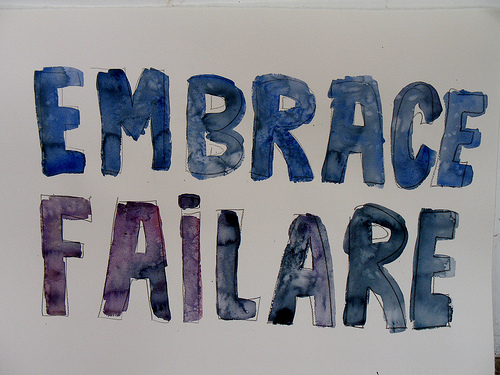
    Embrace failure. Missteps and roadblocks are inevitable but are ultimately an opportunity to learn, pivot, and go after your goals with new perspective. – Jenny Fleiss

    You may sometimes hear, usually after you fail at something, that you have to accept it and move on. It’s possible for one to accept it, but accepting failure does not necessarily mean that you have completely moved on from it. No. To move on from failure, I believe there is something more that is needed. What is that, you may ask? That is to embrace failure. Yes, you heard me right; embrace failure. Now, at first glance, that may sound masochistic as heck, but hear me out. People aren’t perfect. We have flaws, imperfections, weaknesses, things that we may not be good at, and things that we may not like, and that’s ok. They all are part of what make us unique. Life also isn’t perfect. There’s almost always going to difficulties, challenges, and hardships we need to overcome. The universe and nature are also not perfect. Things break down, things become unstable, things become chaotic. Nothing is perfect. Because nothing is perfect, and because no single individual is perfect, that means, at some point, we are all going to experience failure at some point or another. In fact, failure is biologically guaranteed, because once we die, that’s it! Game over. No more do-overs. Death is inevitable. Even if one were to live a life with little to no challenges and hardships, death is the ultimate failure, because once you stop living, you stop being you. You stop being able to actively do things in this world. You are no longer able to be a part of the world in living form, and because of that, that’s a failure, and it’s a guaranteed one, as well. Thus, in a way, we are all born to fail the moment that we are born. Now, i know what you may be thinking to yourself. You are probably thinking that it sounds depressing as heck, and it definitely may sound that way, if you look at it from a certain perspective. Now, i don’t know what your perspective or outlook on life, death, and failure is, but let me tell you mine. Because we are guaranteed to fail when we die, what can be worse than that? The answer is nothing. And when you take that into account, it really puts one’s problems and troubles into perspective. It sorta makes one’s problems seem small and temporary. Nothing can be more permanent and long-lasting than death. Thus, every failure, every challenge, every shortcoming, every hardship asides death itself can be overcome. Sure, everyone handles failures, challenges, and hardships differently than others, and we may not know how much hardship, failure, and challenges we may face in life, but by remembering that nothing can get worse than death, I believe it is possible to make it through anything that comes your way. Thus, that is why i believe embracing failure will allow one to be able to overcome it. By embracing the ultimate failure that we will all one day die, it has so much potential to minimize the severity of other hardships and challenges we may face in life. Not only that, but by embracing failure, we are also embracing change, because change can come in the form of failure. By embracing failure, one can start seeing failure differently. It could allow one to start seeing the positives that can come about from failure, and it can do so by minimizing the negative aspects of failure. Embracing failure is not an easy thing to do. It takes a lot of time, patience, resilience, and strength to be able to just accept failure, let alone embrace it. However, i believe that one of the keys to happiness is embracing failure, because if you are not worried about the ultimate failure in life, then it is possible to make it through other hardships, challenges, and failures that come your way. Lastly, by embracing failure, it helps one learn to fail gracefully. When one is able to fail gracefully, they are able to pick themselves up, and use their failure as a learning experience or a blessing in disguise.

    I will end things with an excerpt from an article that discusses about embracing failure. I will link the full article below.

    Here are five ways embracing failure can work for you:

    1. We learn some of our best lessons through failure.

    2. Failure inspires us. If we look at it properly and don’t allow it to define us, failure can be a great source of motivation.

    3. Failure teaches us humility. We feel humble after losing and recognize that we are indeed human.

    4. Embracing failure allows us to take more risks. Once we come to terms with having failed and survived, we can take greater risks.

    5. Failure makes success taste even better. We have a better appreciation of success having failed a few times on the way up the ladder.

    https://www.entrepreneur.com/article/244307

  • One Year Later

    One Year Later

    It’s been a year since you’ve been gone.

    You’re gone from our lives, but not our hearts.

    I’ve known you all my life, and I still can’t believe you’re gone.

    I miss you a lot. I wish you were here.

    I’ve got so much to tell you. I’ve got so much to say.

    All I can really do is live life day by day

    And take chances in life to see where things will congregate.

    I don’t know where I’ll be in a couple of years from now,

    But one thing I do know is that I won’t ever back down.

    I won’t let fear and insecurity

    Prevent me from being me,

    Seeing all I can see,

    And being the best person that I can be!

    You always taught me to not give up,

    To not give in,

    And to never quit.

    You taught me to pursue my goals and dreams no matter how hard they may be.

    You taught me to overcome obstacles and challenges no matter how difficult they may seem.

    You had so much potential and so much life left to live.

    I wanted to see you be happy and succeed.

    You were taken from this world too soon.

    I wish you could see the person that I’ve become!

  • Death

    Death

    Death is a part of life.

    It causes us great strife.

    It takes away our loved ones

    And leaves us all alone.

    It affects us all differently,

    For we have different ways that we grieve,

    But I know that I personally believe

    That death is the end; the end of everything.

    Once someone’s gone, they’re gone for good.

    Maybe there’s a God and an afterlife. Who knows?

    All I do know is that I will always try

    To bring happiness and joy to the people in my life.

    I will try to make the world great in the best way that I can

    By using the gifts and talents that make me who I am.

    I may not be perfect; not in the slightest

    But I strive to be a light; a light that shines brightest

    When I’m surrounded by those who are caring and supportive.

    I don’t like to see people in pain,

    Either physically or emotionally.

    Their pain is something that I want to take away,

    But I know I can’t do that,

    For I’m not superhuman.

    I’m only a man; a man with a plan;

    A plan to see this world be the best world that it can.

    How it will be done, I honestly don’t know.

    What I do know is that I’ll be a light that glows.

    I care about people; always have and always will.

    That’ll never change; at least, I don’t think it will.

    I strive to be better; to be different.

    I want to learn from my own failures, shortcomings, and mistakes.

    I want to be someone that people would want to meet.

    I want to be someone that people could appreciate.

    Even though I don’t expect anything in return,

    I will do anything I can to bring joy to this world,

    So that if I die tomorrow, I’ll be proud of all I’ve done.

    I don’t know what will happen to me when I die.

    All I know is, I’m going to appreciate life and just take things one day at a time.

  • Thoughts on the Coronavirus

    Thoughts on the Coronavirus

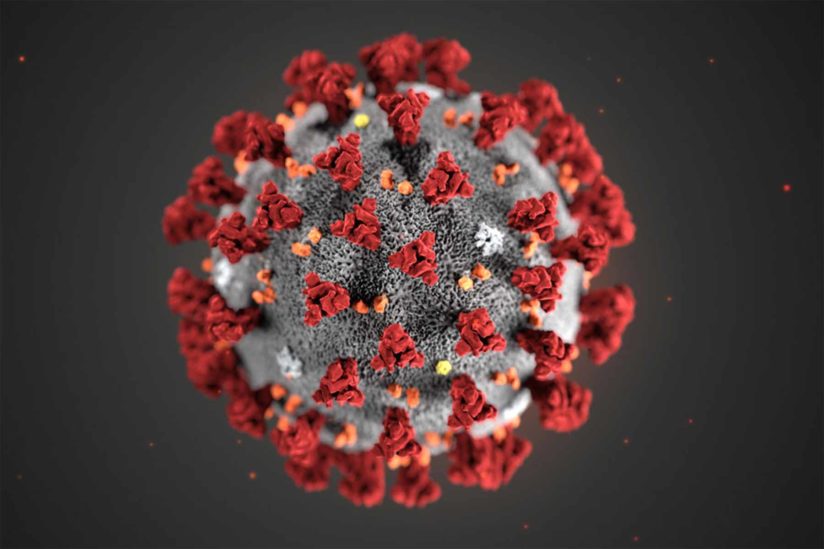
    I’d like to share some quick thoughts on the coronavirus; mainly the racist rhetoric surrounding the virus. I’ve heard quite a few people, both online and in real life, say that people should “stay away from Asians” and whatnot. I would like to debunk this BS right now and say this: “staying away” from Asians won’t do anything. Not now. The disease has spread outside of China, so now, it is affecting more than just Asians. If people were to apply the “staying away from Asians” logic to other groups, they’d essentially be advocating to stay away from everyone! They’d be advocating for people to just stay indoors all day and not go outside at all. There would be no going to work, no going to school, no going to the store. None of that! Just lock your doors and stay home indefinitely. That sounds ridiculous as heck! Just because the coronavirus is something to be feared does not mean people should put their lives on hold simply because it is a threat. There will always be threats and dangers that this world will face regardless of what we do. If we want to truly experience life and live life to the fullest, we have to take risks and chances, even if that may mean it could be our time to go at any moment. We cannot control when or how we will die. If it’s our time to go, it’s our time to go. We cannot control that. All we can do is hope for the best, and try to live life to the fullest, and live it without regrets!

  • What A Weird Start To 2020

    What A Weird Start To 2020

    So, this year has been quite the interesting year so far, and we’re only 8 days into it! Recently, there were some tensions between the US and Iran (which could still possibly continue well into the future) that had the potential to cause World War III! Admittedly, I was scared; really scared. I was so scared that I thought I was going to die. I thought that my friends and family were going to die. I thought that innocent people who had nothing to do with the tensions between the two nations were going to die. I was scared for a lot of people. It felt as though the weight of the world was on my shoulders! Usually, I am an optimistic individual, but when it comes to the possibility of imminent death, the possibility of losing everyone I know and love, I begin to break down. I was so scared these past few days for the people of the world that I had insomnia, stomach cramps, increased heart rate, and increased breathing rate! It was bad! I thought I was going to have a panic attack due to how much stress I was feeling!

    I had originally made plans to not use social media for the entirety of January, but after hearing about the possibility of an all-out war, I felt I needed to say something! I felt as though my life, the lives of people I care about, and the lives of countless individuals, were on the line! I felt as though it was my duty, my obligation, to speak out against the prospect of going to war with Iran. The last things I had wanted were for me to get drafted and for my loved ones, along with innocent people, to perish in a conflict between two (or possibly more) nations! I was not going to let that shit happen! I was going to use my writing skills to call out the injustices of war! Even if only a few people had read what I wrote, it did not matter to me, because I had felt I was contributing to a greater cause, even if it was to a minute degree! I felt I was a part of a collective, and that I was fighting for something grand; something that was bigger than any one of us by ourselves, and that required our collective effort to combat! In some ways, I felt somewhat heroic. Even though all I did was make comments and share posts on social media, I felt that my actions were having an impact! In some ways, it felt exhilarating! At the same time, though, it was also scary. It was scary because I feared losing the people who I care about most in my life.

    For a lot of people (at least in America, anyways), when they lose someone, they usually have a comfort. They have religion. They have an afterlife to look forward to, and they have their deity/deities and loved ones looking down on them; at least, that’s what they believe! For me, though, not so much. For me, as an atheist, I don’t have the luxury to believe any of that! I don’t have an afterlife to look forward to. I don’t have deities and loved ones looking down on me. All I have to ultimately look forward to is my death, and the death of my loved ones! Once we’re gone, that’s it! We’re done! No more! The end! Lights out! Finito! From my perspective as an atheist, once a person is gone, they’re gone! There’s no coming back. Their consciousness ceases. Their body stops working. They stop existing! To a lot of people, that’s depressing, but to me, that’s just reality. Our world is full of unfairness and cruelty, and that’s just a part of life. It is depressing, but that is just the way things are. In this universe, we are nothing. We are just a blip on a spec on a dot within a sea of chaos and uncertainty! The universe is a chaotic place, and it does not care what happens to any of us. At any moment of any day, it could conceive life just as easily as it can take life away. Nothing lasts forever in this universe. No person lasts forever. One moment we’re here, and the next moment we’re gone! We don’t know when our time is going to be, but when it’s our time, it’s our time, and there is no going back! For some people, such a concept may be hard to accept, but for me, I, for the most part, have accepted it. I have accepted that once I’m gone, I’m never coming back. Sure, I may not know 100% whether there is or isn’t an afterlife, but to me, I’ve seen no evidence. All I see is what we have now. All I see is the world around us, and the people living in this world. Beyond that, I’m clueless, but I am not going to worry about what is or isn’t out there after we die, because to me, we won’t know the answer until after that happens, so why worry about it? Why worry about the possibility of an afterlife existing when you don’t know for sure, and can’t prove it either way? To me, there’s a lot more pertinent things to worry about, like trying to make the world a better place for people to live in! Even though I may not believe in a God, I do believe that it is our responsibility to make the world a better place. We’re here on this Earth, and we’re the ones who make the decisions in this world, so we decide whether or not we want this world to be a world worth living for!

    I may not ever go back to being religious, because to me, I’ve become too skeptical of it. I’ve become skeptical of a lot of things, for that matter! To me, in a world full of liars, cheaters, and manipulators, it is hard to believe anything, or anyone, in this world! It is hard to find people who are honest, people who are caring, people who are kind, people who are loyal, people who are trustworthy, people who are compassionate, people who are loving, people who are empathetic, and people who are selfless, but when I do, I hold onto them. I hold onto them, and cherish every waking moment that I have with them, because one day, they will be gone! Thus, I try to appreciate the people who are in my life, and I try to live my life to the fullest, and live it as though each day were my last!

  • Life and Death

    Life and Death

    This whole thing with the US and Iran

    Has really got me thinking, man!

    It’s got me thinking all about death,

    And how it will one day be the inevitable end!

    We may not know how we’ll die.

    We won’t know when, where, by what, by who, nor why!

    All we do know is that one day, it will be our time!

    I know that I don’t want to die,

    For I still want to experience life!

    There’s still places I want to see,

    And people that I want to meet.

    I want to try new foods to eat,

    And fall in love with the right one for me!

    I want to try interesting things,

    And expand the knowledge in my brain.

    I don’t know what’s beyond the grave,

    Nor do I know how long I’ll stay!

    One thing I do know, I can certainly say,

    Is I’ll live each day like it was my last day,

    And I will do so with a smile on my face!