The Musings of Jaime David
@jaimedavid.blog@jaimedavid.blog

The writings of some random dude on the internet

1,089 posts
1 follower

Tag: NYC

  • The Many Faces of Jaime David: Politics, Medicine, and Creativity

    The Many Faces of Jaime David: Politics, Medicine, and Creativity

    In a world increasingly connected by information, names often serve as gateways to stories, accomplishments, and legacies. One such name, Jaime David, spans continents, industries, and spheres of influence, linking individuals who have contributed to politics, medicine, culinary arts, fashion, and education. While it might seem unusual to examine people connected only by a shared name, the diverse achievements of individuals named Jaime David provide a fascinating lens into human potential and the many ways one can impact the world. From political leadership to medical innovation, and from creative culinary expression to lifestyle consultancy, the story of Jaime David is not a single narrative but a rich tapestry of human endeavor.

    In the realm of politics and public service, one of the most prominent figures bearing this name is Jaime David Fernández Mirabal. A distinguished psychiatrist and politician from the Dominican Republic, Fernández Mirabal served as Vice President from 1996 to 2000, playing a critical role in shaping national policy during a transformative period in his country’s history. Beyond his vice-presidential tenure, he held important ministerial roles, including Minister of Environment and Minister of Sports, demonstrating a versatile engagement with governance that extended from social welfare to ecological stewardship. What adds profound depth to his public life is his familial connection to the Mirabal sisters, revered figures in the Dominican resistance against the brutal Trujillo dictatorship. The Mirabal sisters’ legacy of courage and activism resonates in Fernández Mirabal’s own dedication to public service, and his career can be viewed as a continuation of their commitment to societal betterment. His work reflects a blending of medical expertise, political acumen, and social consciousness, exemplifying how personal history can shape a public career.

    Another figure in politics sharing this name, though tragically marked by loss, is Jaime David Nieto Rojas, a Peruvian naval officer and security detail member for the Minister of Defense. Rojas’ life was cut short in a tragic accident in March 2026, an event that not only shocked the Peruvian defense community but also highlighted the inherent risks undertaken by those who serve in national security roles. While his life may have been brief, the dedication reflected in his career is a poignant reminder of the often-unseen sacrifices that individuals make to ensure the safety and stability of their nations. His story adds a somber, human dimension to the discussion of Jaime Davids in public service—a narrative of duty, courage, and the unpredictable fragility of life in high-stakes roles.

    Transitioning from politics to medicine and health, the name Jaime David again emerges, but in a very different context. Dr. Jaime David Martinez Martinez is an ophthalmologist and Associate Professor of Clinical Ophthalmology at the Bascom Palmer Eye Institute in Miami, Florida. Specializing in dry eye disease and corneal transplantation, Dr. Martinez Martinez combines clinical excellence with a commitment to research and education. His work has a tangible, direct impact on patients’ quality of life, restoring and preserving vision in ways that fundamentally transform human experience. Ophthalmology, often considered one of the most delicate and technically demanding medical fields, requires both precision and empathy—qualities that Dr. Martinez Martinez exemplifies. His presence in the medical community demonstrates the value of specialized expertise and the importance of advancing scientific knowledge to meet the evolving needs of patients worldwide.

    Similarly, Jaime David Luna, a Physician Assistant specializing in cardiology in Murray, Utah, represents another facet of medical service linked to this name. While his role differs from that of a physician or surgeon, Luna’s work in cardiology emphasizes the crucial, hands-on care that supports both patient recovery and ongoing wellness. The PA role, particularly in specialized fields like cardiology, reflects the interdisciplinary nature of modern medicine, where collaboration, patient education, and procedural support are as vital as surgical or diagnostic interventions. Both Dr. Martinez Martinez and Jaime David Luna showcase the impact that medical professionals can have at different levels of responsibility, highlighting how the dedication of one individual can ripple across patients’ lives and broader medical communities.

    Beyond the spheres of politics and medicine, Jaime David is also a name associated with creativity, lifestyle, and innovation. Jaime David Rodríguez Camacho, a celebrated Colombian chef and owner of Celele Restaurante in Cartagena, exemplifies how culinary arts can intersect with cultural heritage and scientific research. Rodríguez Camacho is recognized for his work in exploring Caribbean Colombian biodiversity and incorporating contemporary culinary techniques into traditional flavors. His approach reflects a sophisticated understanding of both science and artistry, as he blends local ingredients with innovative preparation methods. Chefs like Rodríguez Camacho contribute not only to gastronomy but also to cultural preservation and sustainability, elevating food from a daily necessity to a medium for storytelling and environmental awareness. His work invites audiences to consider how culinary practice can honor the past while experimenting with the future, connecting people to place, history, and ecology through taste and presentation.

    In the realm of fashion and lifestyle, Jaime M. David, an NYC-based communications consultant, demonstrates the influence of strategic guidance and branding in shaping modern consumer culture. Working with brands such as Aviator Nation and Dagne Dover, Jaime M. David combines knowledge of market trends, visual storytelling, and lifestyle positioning to help brands cultivate meaningful connections with their audiences. While less publicly celebrated than political leaders or medical innovators, professionals in lifestyle communications play a critical role in shaping how people experience and interpret culture. They bridge the gap between creative expression and practical engagement, ensuring that aesthetic and conceptual work reaches and resonates with a broader audience. Jaime M. David’s career highlights the often-invisible expertise that supports creative industries, illustrating the multifaceted ways in which individuals can influence society beyond traditional forms of public recognition.

    Further expanding the creative and educational scope of Jaime Davids, we find Jaime David as a BERNINA Educator, an Education Project Manager and overlocker specialist at BERNINA of America. His work focuses on sewing and textile education, empowering individuals to develop technical skills and explore their creative potential. Education, particularly in applied arts like sewing, often combines technical mastery with personal expression, and Jaime David’s contributions demonstrate the transformative power of knowledge-sharing. By teaching specialized skills, he not only preserves important craft techniques but also inspires innovation, encouraging students to experiment and integrate personal creativity into traditional practices. In a broader context, educators like Jaime David help cultivate resilience, patience, and problem-solving—skills that extend beyond their immediate domain, shaping students’ confidence and capacity for lifelong learning.

    Considering all these individuals collectively, it is remarkable how the name Jaime David spans such diverse arenas—politics, public service, medicine, culinary arts, fashion, and education. While there is no single narrative that unites them beyond the shared name, the thematic connections are striking. Across contexts, these individuals demonstrate dedication to their craft, the ability to influence others, and a commitment to improving the lives of those around them. In politics, Jaime David Fernández Mirabal and Jaime David Nieto Rojas exemplify service and sacrifice, navigating the complexities of governance and national security. In medicine, Dr. Jaime David Martinez Martinez and Jaime David Luna provide critical care and expertise, enhancing human well-being through science and compassion. In creative fields, Jaime David Rodríguez Camacho, Jaime M. David, and the BERNINA Educator Jaime David embody innovation, expression, and education, shaping experiences, skills, and culture in profound ways.

    The stories of these individuals also emphasize the intersection of personal passion and professional accomplishment. Fernández Mirabal’s background in psychiatry informs his political approach; Martínez Martinez’s research enhances patient care; Rodríguez Camacho’s culinary artistry integrates environmental and cultural awareness. Even in fields that might seem purely technical or administrative, like security or lifestyle consulting, Jaime Davids demonstrate a human-centered approach, showing that expertise alone is insufficient without empathy, ethical engagement, and creative insight. This shared quality—commitment to improvement, whether of society, health, or culture—can be viewed as a philosophical throughline connecting otherwise disparate lives.

    Moreover, examining the accomplishments of Jaime Davids highlights the global nature of influence and expertise. These individuals hail from the Dominican Republic, Peru, Colombia, and the United States, reflecting not only geographical diversity but also the ways in which talent and dedication manifest across cultures and contexts. In an era of globalization and cross-disciplinary collaboration, such stories are increasingly valuable, demonstrating that impact is not confined to one region or profession. The varied paths of Jaime Davids suggest a broader lesson about human potential: while circumstances and opportunities differ, commitment, skill, and creativity can resonate far beyond immediate boundaries, leaving legacies that inspire and inform others.

    It is also worth considering the role of legacy in these narratives. Fernández Mirabal’s connection to the Mirabal sisters situates him within a historical continuum of resistance and civic engagement, showing how familial history can inform contemporary leadership. Similarly, chefs, educators, and medical professionals contribute to legacies of skill, knowledge, and culture, shaping the experiences of future generations. Even those whose lives were tragically shortened, like Jaime David Nieto Rojas, leave legacies of courage and dedication that are remembered and honored. In all cases, the achievements of these individuals illustrate the multifaceted ways in which people can leave an enduring impact, whether through governance, healing, creation, or education.

    The diversity of careers and achievements associated with the name Jaime David also underscores a broader societal truth: excellence is not limited to fame or conventional metrics of success. While politicians and chefs may enjoy public recognition, medical professionals and educators often work with less visibility, yet their contributions are equally essential to societal well-being. Jaime David as a name becomes a symbol, in a sense, of the variety of ways human beings can contribute meaningfully to their communities, whether through policy, science, creativity, or mentorship. Recognizing this diversity fosters a more holistic appreciation of achievement, one that values both visible and unseen forms of labor and inspiration.

    Furthermore, reflecting on these figures collectively encourages an understanding of human interconnectedness. Political decisions, medical advances, culinary innovation, lifestyle consultancy, and education all influence one another in subtle but profound ways. A well-informed public benefits from political stewardship and health expertise; communities are enriched by cultural and culinary innovation; creative and technical education nurtures the skills necessary for both personal fulfillment and societal advancement. In this sense, the achievements of individuals named Jaime David serve as microcosms of broader societal dynamics, illustrating how dedication in one sphere can ripple across others, contributing to the complex tapestry of human progress.

    In addition to their professional accomplishments, the stories of Jaime Davids highlight qualities that are universally admired: resilience, dedication, innovation, and empathy. Fernández Mirabal’s political acumen is matched by a deep concern for environmental and social issues. Martínez Martinez’s meticulous medical practice combines technical skill with compassionate patient care. Rodríguez Camacho’s culinary exploration reflects both creative vision and ecological awareness. The BERNINA Educator’s focus on empowering learners demonstrates the enduring value of mentorship and skill development. Even in lives marked by tragedy, such as that of Nieto Rojas, courage and selflessness shine as defining characteristics. These qualities transcend industry or geography, forming a connective thread that binds these diverse individuals together conceptually, if not directly.

    The multiplicity of Jaime Davids also invites reflection on the nature of identity and achievement. A name, while merely a label, becomes a vessel for stories, accomplishments, and values. By exploring the lives of people who share a name, we can better appreciate the richness and variety of human endeavor, recognizing patterns of excellence, creativity, and compassion across contexts. It challenges us to look beyond the surface of familiarity and to consider the ways in which individuals shape and are shaped by their circumstances, opportunities, and passions. In this light, Jaime David becomes not just a name but a prism through which to examine human potential in its many forms.

    In conclusion, the individuals named Jaime David exemplify the vast range of human capability and influence. From the high-stakes arenas of politics and national security to the precision and care of medicine, and from the innovation of culinary arts to the subtle guidance of lifestyle consultancy and textile education, these figures demonstrate that impact can take many forms. Each has contributed to the betterment of society, whether through leadership, healing, creation, or teaching. Together, they remind us that names may link individuals by chance, but it is the dedication, skill, and empathy of each person that create lasting meaning. By reflecting on their lives collectively, we not only celebrate their accomplishments but also gain insight into the broader human story—one of interconnectedness, potential, and the enduring power of commitment to craft and community.

  • The Subway Mind Game: Reading the Signs Before They Stand

    The Subway Mind Game: Reading the Signs Before They Stand

    Riding the subway is often compared to a crowded, moving sardine can, but there’s a subtler, almost invisible game happening when you’re standing on the train holding the rail, particularly when you’re positioned directly in front of someone sitting down. It’s a dance of anticipation, a mental puzzle that requires observation, intuition, and an almost absurd level of focus. The game is simple in theory but devilishly complex in practice: you have to predict, based on subtle cues, when the person sitting in front of you is going to stand and make their exit. It’s like a combination of Simon Says, a trivia game, and the telephone game, all rolled into a few minutes of moving chaos. If you fail, you risk being caught off guard, shoved, or scrambling to adjust at the last second. If you succeed, you glide smoothly with the flow of passengers, almost invisibly part of the moving crowd.

    The first step is paying attention to body language. This is harder than it sounds because New Yorkers are notoriously still, stoic, and often buried in phones or headphones. But there are always signals if you look carefully: a foot shifting forward, fingers tightening on the seat edge, a slight lean toward the aisle, or even a casual glance toward the door. Each of these small actions is a clue, a breadcrumb in the invisible trail of commuter intention. Experienced riders develop a sixth sense for these movements, learning to read micro-signals like a poker player reading an opponent’s tells. It’s subtle, often fleeting, and requires constant attention. Miss one cue, and you might find yourself frozen at the wrong time, blocking the flow of others, or worse, getting bumped by the person behind you who was following the same signals.

    Timing is everything. Predicting someone’s movement isn’t just about noticing when they adjust their body; it’s about calculating the right moment to shift yourself, step aside, or brace for movement. The window is often just a few seconds, and you need to account for the person’s speed, the crowd’s pressure, and the unpredictability of train stops. The trick is to anticipate without overreacting. Move too early, and you might find yourself awkwardly hovering with no one actually standing. Move too late, and you’re caught in a minor collision or a last-second shuffle that throws off your balance. It’s a mental game, a test of attention and patience, where success feels almost imperceptible but is deeply satisfying when executed correctly.

    The game becomes even more complicated in crowded conditions. During rush hour, when standing space is tight and people are packed shoulder to shoulder, micro-signals are harder to notice and movements are more constrained. You have to read not only the person in front of you but the flow of the crowd as a whole, predicting who will step aside, who will move forward, and who will hesitate. It’s a living, breathing puzzle that changes with every station, every stop, and every person on the car. One misread cue, and the delicate chain of timing breaks, causing a ripple of awkward adjustments that everyone feels. But when you get it right, it’s a beautiful, unspoken harmony of human movement, a tiny victory in the daily chaos of commuting.

    There’s also a psychological dimension. Part of the thrill comes from knowing that you are literally predicting human behavior in real time, based on tiny, almost imperceptible movements. It’s a test of patience, focus, and observation. There’s a strange satisfaction in seeing someone stand and knowing you anticipated it, shifting just as they do, moving in concert with the flow. It’s a subtle power, a quiet mastery over the tiny uncertainties of urban transit. Some might see it as overthinking, but regular commuters know it’s survival—an essential skill for navigating crowded trains without chaos or frustration.

    Ultimately, this isn’t just about etiquette or convenience. It’s about engaging fully with the environment around you, noticing the small signals that everyone else mostly ignores, and moving with intention rather than reacting blindly. The subway becomes less of a random, chaotic ride and more of a living, interactive game where your attention and intuition are your tools. Every stop is a round, every signal a clue, every successful pre-stand a small but meaningful win. Over time, you start to feel like a participant in a strange, high-stakes mental exercise that is equal parts observation, prediction, and patience.

    In conclusion, standing in front of someone on the train isn’t just about holding onto the rail and keeping your balance. It’s a game of anticipation, a mental exercise in predicting movement based on subtle, fleeting body language. It’s a test of timing, focus, and human observation, requiring patience, awareness, and a willingness to engage with the minute details of your surroundings. It’s a skill that improves with practice, rewarding the careful observer with smoother rides, fewer collisions, and a sense of quiet mastery over the small chaos of urban life. The next time you find yourself holding the rail, directly in front of a seated passenger, pay attention, read the signals, and embrace the strange, satisfying game of predicting the subway’s human flow. Success is small, silent, but absolutely satisfying.

  • The MTA Exit Shuffle: Why You’ve Gotta Pre-Exit Before Exiting

    The MTA Exit Shuffle: Why You’ve Gotta Pre-Exit Before Exiting

    Riding the MTA might seem like a straightforward experience: swipe your card, hop on the train, find a seat, and ride to your destination. But if you’ve ever noticed the chaos that unfolds when the train reaches a busy station, you know it’s not that simple. One of the most frustrating, least intuitive parts of navigating New York City’s subway system is the art of the pre-exit, a maneuver that requires awareness, timing, and sometimes patience that borders on meditation. Pre-exiting is the act of positioning yourself strategically near the doors well before your stop arrives, ensuring you can exit smoothly without being crushed, jostled, or delayed by the sudden surge of passengers moving to the doors at the last second. The MTA may never explicitly tell you this, and if they did, most people probably wouldn’t pay attention anyway, but understanding the concept can save you from countless headaches, awkward encounters, and moments of sheer subway panic.

    To start, the need for pre-exiting arises from the MTA’s unique combination of overcrowding and door placement. Subway cars are long, often with narrow corridors, and while there are multiple doors along the length of each car, passengers tend to cluster near the middle or near the ends depending on habit or laziness. When a stop approaches, everyone who wants to get off must converge toward these doorways. If you’re not already there, you are forced into a human river of movement, pushing, shoving, and sometimes accidental elbowing, just to make it to the doors before they close. The difference between pre-exiting and reacting at the last minute is the difference between a calm departure and a stressful struggle against the flow of humanity. It’s a skill that sounds simple but requires situational awareness, observation, and the ability to read crowds, almost like a dance with the rhythm of the train and its passengers.

    The process of pre-exiting begins with knowing your station and the car layout. Not every exit is equal: some stations have multiple staircases, escalators, or elevator options, and the location of the door you use can make a dramatic difference in how quickly you leave the station. If you are at the wrong end of the car, you might be forced to weave through a crush of people or sprint through a crowded platform. Observing patterns from previous trips is key; for example, if you know a certain train consistently empties faster near the front, it makes sense to position yourself accordingly. This isn’t just strategy—it’s survival. New Yorkers might joke about being packed like sardines, but for someone unfamiliar with the system, missing your pre-exit window can result in standing for ten more minutes while the next train crawls into the station and doors open to reveal another wall of humanity.

    Timing is everything when it comes to pre-exiting. You can’t just stand near the doors from the beginning of the ride; that will annoy other passengers, and in crowded trains, it can actually be counterproductive. Instead, it’s about sensing when your stop is approaching and gradually moving toward the doors. This requires constant awareness of the train’s progress, listening for station announcements, and sometimes relying on the display panels inside the cars. Experienced commuters develop an almost instinctive sense for this, like a sixth sense that whispers, “Move now or be trapped.” But the uninitiated may hesitate, distracted by a phone or conversation, only to realize too late that everyone around them has already shifted, leaving them stuck in the middle, panicked and scrambling for an opening.

    Once you’ve positioned yourself near the doors, the next step is controlling your pre-exit behavior. This isn’t just about being there—it’s about holding your space without antagonizing fellow passengers. In crowded cars, people will bump and press against you, and there’s an art to maintaining balance and asserting subtle personal space while avoiding confrontations. Some commuters practice gentle leaning, strategic angling, and careful awareness of body placement to create a buffer zone that allows them to exit without pushing or being pushed. Pre-exiting is as much psychological as it is physical; understanding that everyone else is also trying to navigate the chaos can help temper frustration and prevent unnecessary conflict.

    The platform itself is another battlefield. Even after you’ve made it off the train, the pre-exit mindset is still critical. Stations can be crowded, escalators can be slow or broken, and staircases can be congested. Knowing where to stand and how to move efficiently is a continuation of the pre-exit strategy. Experienced riders often anticipate these bottlenecks and choose doors or cars based on where they will lead on the platform, not just on the train. For example, exiting from the middle of a car might deposit you directly in front of a staircase, while the ends might leave you wading through a sea of people. This is why the concept of pre-exiting extends beyond the train itself: it’s about controlling your path through the entire transit environment, from arrival to exit.

    There’s also a social dimension to pre-exiting. Observing and understanding human behavior in the subway ecosystem is essential. People have different walking speeds, varying levels of awareness, and diverse reactions to crowding. Pre-exiting requires reading these behaviors and anticipating movements to avoid collisions or delays. It’s almost like becoming a participant in a choreographed crowd dance, where awareness, timing, and positioning dictate success. You learn to predict which doors will have the most congestion, who will rush ahead, who will hesitate, and who might block your path. Ignoring these cues is not only inefficient—it’s a guarantee of frustration.

    Technology has helped somewhat but hasn’t eliminated the need for pre-exiting. Real-time apps, station maps, and digital alerts can inform you of train arrivals, delays, and platform conditions, but they don’t solve the problem of human congestion. You can know exactly when your train will arrive and which platform to stand on, but if you misjudge your positioning inside the car, you’re still caught in a wave of last-minute commuters. The subtleties of personal space, timing, and crowd flow remain entirely human factors, and pre-exiting is the skill that bridges the gap between information and action.

    At its core, pre-exiting is about efficiency and survival, a recognition that the MTA is not just a transportation system but a complex social environment where timing, space, and awareness dictate your experience. For those new to the city or unaccustomed to public transit, it may seem like overthinking, but anyone who has been trapped in a packed car at rush hour knows the difference between a calm, controlled exit and a desperate scramble. It’s a subtle, unspoken skill, passed from commuter to commuter, observed in body language and car positioning, and practiced daily by millions who rely on the subway to navigate their lives.

    In conclusion, pre-exiting before your MTA train stop is not just a minor tip; it is an essential survival tactic. It combines timing, observation, physical positioning, social awareness, and psychological control, ensuring that you can exit the train efficiently, safely, and with minimal stress. Understanding your station, observing the crowd, anticipating movement, and positioning yourself strategically are all components of this practice. While it may seem like a small detail in the grand scheme of urban life, mastering pre-exiting transforms the subway experience from a chaotic struggle into a manageable, even predictable, journey. So next time you board an MTA train, remember: your exit begins the moment you step on the platform. Anticipate, position, and pre-exit, and you might just emerge from the subway with a small victory in the daily battle of New York City commuting.

  • Learning to Survive the Crush: Getting Used to the Madness of the MTA

    Learning to Survive the Crush: Getting Used to the Madness of the MTA

    The Metropolitan Transportation Authority, or MTA, is a world unto itself. For anyone who has ever stepped onto a New York City subway car during rush hour, the experience is both terrifying and inevitable. Crowds that seem impossible, elbows in your ribs, strangers breathing down your neck, the smell of the city mixing with the smell of sweat, and the constant pressure to keep moving no matter what—it’s an assault on the senses. Yet, for millions of commuters, this is just life. Learning to navigate the chaos is not just a skill, it’s a rite of passage. You have to accept that personal space is a luxury here, and patience is not just a virtue, it’s a survival mechanism.

    From the moment you step into the station, the MTA makes its presence known. The stairs are crowded with people pushing, shoving, and trying to get to the platform before the next train arrives. Even when you think you’ve timed it right, there is always another wave of commuters, another rush that will force you to adjust your expectations. There’s a rhythm to it, if you can find it—a kind of chaotic ballet that never stops. The first time it hits you, it feels overwhelming, almost impossible to manage, but over time, you learn to anticipate the crush. You learn to move with the crowd, to step aside when necessary, to angle yourself strategically to get on and off the train without losing your mind.

    Once you reach the platform, the waiting begins, and waiting on an MTA platform is an art form in itself. You have to learn to claim your territory, even if it’s just a square foot of space, without offending anyone else. People crowd the edges, people push toward the middle, and everyone acts as if they are entitled to that next train. You learn the unspoken rules of subway etiquette—how to queue without being queued out, when to step back and when to push forward, how to maneuver around people who are glued to their phones, oblivious to the fact that the train is coming and their inattention will cost someone their spot. There’s a brutal fairness to it, a lesson in human behavior that you can only absorb by participating in the grind every single day.

    When the train finally arrives, the real test begins. Sliding doors open and it’s a flood of humanity—bodies pressed together in ways you didn’t think were physically possible. You learn to contort your body, to tuck arms and backpacks, to balance yourself without relying on a seat or even a handrail. It’s an endurance test, a microcosm of urban life condensed into a few minutes. You discover things about strangers you’d never imagine: the quiet reader in the corner, the loud texter who seems oblivious to the crush, the person who insists on spreading their coat like a barrier, and the commuter who somehow balances a full coffee, a phone, and a bag without spilling a drop. The subway becomes an arena of survival and observation, teaching patience, tolerance, and adaptability in one relentless ride.

    Over time, you also learn to manage the mental load. Crowding isn’t just physical—it’s psychological. Your personal bubble is gone, your senses are constantly assaulted, and every stop brings new pressures: someone getting on in a hurry, someone elbowing past, the conductor shouting over the intercom, the screech of the wheels on the tracks. You develop coping strategies, mental exercises to remain calm, to avoid panic, to focus on your destination rather than the discomfort surrounding you. Music becomes a shield, podcasts a distraction, staring at the wall a meditation. You find small victories—standing in the right spot on the platform, squeezing into a corner where your elbow isn’t jabbed every two seconds, exiting the train before the crush becomes too unbearable.

    Even with all this adaptation, the MTA never stops teaching humility. Every day is unpredictable. A train can be delayed, a platform overcrowded, a passenger belligerent, and suddenly, all your hard-earned strategies are thrown into chaos. You learn resilience, how to recover from discomfort, and how to find humor in situations that seem impossible. You learn to acknowledge your own limits, to take a step back when you’ve had enough, and to remind yourself that millions of others are facing the same struggle. There’s a solidarity in shared misery, a community formed not by choice but by circumstance, and in that shared struggle, you find the odd comfort that you are not alone.

    In the end, learning to survive the MTA isn’t about conquering it—it’s about coexisting with it. It’s about accepting that some things are beyond your control and finding ways to navigate them without losing your sanity. It’s about developing patience, strategy, and empathy, recognizing that every person packed into a subway car is just trying to get to their own destination, in their own way. The crush, the chaos, the constant movement—it’s a part of life in New York City, and the sooner you accept it, the sooner you can learn to ride with the rhythm, to move with the tide, to survive and even find the odd joy in the madness of it all.

    The MTA teaches toughness, adaptability, and a certain kind of street wisdom that no classroom or textbook can provide. It is crowded, it is stressful, it is chaotic, and it is unavoidable. But it is also a place where lessons in human behavior, resilience, and patience are learned daily, by every commuter who dares to step onto the platform, into the crush, and into the relentless heartbeat of the city. To survive the MTA, you don’t just ride the train—you learn to live in the crowd, to respect the chaos, and to embrace the city’s unique, unrelenting energy with open eyes, steady nerves, and a sense of humor that refuses to break under the pressure.

  • Why NYC Doesn’t Need Trams—Buses Are the Smarter Choice

    Why NYC Doesn’t Need Trams—Buses Are the Smarter Choice

    I recently came across a video arguing that New York City needs trams and that buses are inherently inadequate for the city’s transit needs. The premise of the video is familiar: trams, the argument goes, are faster, cleaner, and more efficient, and buses supposedly contribute to congestion while offering an inferior commuting experience. While this might sound compelling at first, a closer look at the realities of NYC streets and transit patterns suggests the opposite is true: buses, not trams, are far better suited to the city’s needs.

    First, trams are large, inflexible vehicles that require dedicated tracks. In a city like New York, where streets are already packed and every inch of road space is precious, adding trams would reduce lanes for cars, delivery trucks, and even emergency vehicles. The intended benefit of moving more people per vehicle could easily be outweighed by the increased congestion on the streets that remain. Unlike buses, which can weave around obstacles or adjust their routes in real time, trams are stuck on fixed tracks. A single blockage—from construction, an accident, or even a temporary street closure—could bring an entire line to a halt, leaving commuters stranded.

    Second, buses provide unmatched flexibility. They can cover neighborhoods that don’t have subway access, feed into existing subway stations, and be rerouted or scaled up depending on demand. Implementing a tram system would be costly, disruptive, and slow to adapt to the city’s ever-changing traffic conditions. NYC streets are not like the wide avenues of medium-density cities where trams can operate without major trade-offs; they are narrow, crowded, and already home to a complex mix of buses, trucks, taxis, and pedestrians. Introducing trams would likely create more problems than it solves.

    Finally, buses can serve a larger portion of the population more efficiently. They can be added or rerouted to match demand, they don’t require expensive construction, and they can complement the city’s extensive subway system without duplicating routes unnecessarily. In contrast, trams are a rigid investment in a limited path. The idea that trams are a superior alternative ignores the realities of urban planning in a dense, chaotic, and ever-evolving city like New York.

    Some might argue that a tram system could work if it were built on abandoned or isolated tracks, separate from busy streets. While this avoids some of the congestion problems, it introduces another set of limitations that make trams impractical for New York City. A tram running only on existing tracks is inherently restricted: it can only serve the areas along that track. Once the track ends, the tram ends—there’s no flexibility to extend service to other neighborhoods without laying entirely new tracks, which is costly, disruptive, and slow.

    Unlike buses, which can reach virtually any street in the city, a tram confined to old tracks leaves large swaths of the population unserved. Residents outside the tram’s path would see no benefit at all, and the tram would do little to address broader commuting needs. Even with isolated tracks, the fixed route problem remains: you cannot reroute around construction, detours, or sudden spikes in demand. The flexibility that makes buses so effective—being able to go anywhere, anytime, and adjust routes on the fly—is completely lost.

    In other words, a tramway, even if separate from roads, does not solve the fundamental challenges of NYC transit. It may provide a limited service along a narrow corridor, but it cannot replace the wide-reaching, adaptable network that buses already provide.

    Even if a tramway were built on isolated tracks and avoided the streets entirely, another major problem remains: accessibility. For residents who live far from the tram line, reaching it would require a separate commute. If you have to travel a significant distance just to get to the tram, the convenience of the tram itself becomes almost irrelevant. Commuters naturally prioritize proximity—people are far more likely to use whatever transit option is closest, whether that’s a bus or a subway, rather than making an extra trip just to reach a tram.

    In practice, this means that a tram would serve only a very limited slice of the city’s population. Even if it could theoretically get someone closer to their destination faster, the total journey time could actually increase when you factor in the extra distance to reach the tram in the first place. Buses, by contrast, can reach nearly every street and neighborhood, providing convenient and direct access without forcing commuters to go out of their way. A tram that’s difficult to access loses much of its intended value, reinforcing the argument that buses remain the more practical and versatile choice for New York City.

    Now, don’t get me wrong: I don’t think buses in NYC are perfect. There are certainly issues with traffic, road conditions, and congestion that affect their efficiency. But compared to subways, trains, or even a proposed tramway, buses remain far superior. Their flexibility, reach, and ability to adapt to the city’s constantly changing streets make them the most practical mode of surface transit available.

    That said, there is an even more promising option that could revolutionize urban transit: taxis, specifically services like Uber and Lyft. These vehicles can go almost anywhere in the city, offering direct routes without the need for fixed tracks or rigid schedules. Imagine if the MTA had its own line of taxis, operating at the cost of a local bus fare. This would be game-changing. Cars are smaller and easier to operate than buses or trains, meaning drivers wouldn’t need specialized licenses beyond a standard driver’s license. While each vehicle carries fewer passengers than a bus or train, the trade-off is more vehicles can be deployed simultaneously, increasing overall capacity and coverage.

    MTA cabs could operate along designated routes, similar to how buses and trains function now, ensuring efficiency and predictability. Riders could pay with their existing MetroCard or OMNY card, and the system could seamlessly integrate with the existing transit network. This approach combines the flexibility of on-demand transport with the accessibility and affordability of public transit, addressing many of the limitations buses, trams, and even subways currently face. It’s a forward-thinking solution that could transform commuting in NYC far more effectively than building new trams ever could.

    And why stop there? If the MTA truly wanted to modernize transportation, it could go beyond cars entirely. Imagine if there were MTA-operated motorcycles, bicycles, or electric scooters — all available to rent or summon through the same system. These smaller vehicles could navigate traffic more easily, reach tighter spaces, and provide commuters with faster, more personalized short-distance travel options.

    Just like the MTA’s hypothetical cab system, these vehicles could be integrated with OMNY or MetroCard payments, making them a natural extension of the city’s existing transit network. Instead of relying solely on large, lumbering vehicles that require massive infrastructure, the MTA could create a fleet of smaller, faster, and more agile options that fit the real flow of the city. A system like this would empower commuters with true choice — letting people decide whether they want to take a bus, a cab, or even a scooter, depending on what suits their trip best.

    Not only would this kind of system reduce the need for expensive projects like trams, but it would also help cut congestion by diversifying how people get around. Smaller vehicles take up less space, can move more freely, and are ideal for short-distance travel that doesn’t justify an entire bus or train trip. In the end, expanding the MTA’s vision to include all these transport modes would make public transit more flexible, accessible, and responsive to the way New Yorkers actually move through their city.

    And even crazier—what if the MTA didn’t just focus on transportation at all? What if it expanded into delivery and commerce? The MTA already moves millions of people daily across an immense network of buses, subways, and rail lines. That same infrastructure could be used to transport more than just people—it could move goods, packages, groceries, and even meals. Imagine MTA delivery services operating alongside existing routes, delivering items throughout the city at a low cost, using the very vehicles already in motion.

    It could go even further. Picture buses and trains with small onboard stores or kiosks, selling essentials—snacks, drinks, everyday items—so commuters could shop while they ride. Trains could even have designated delivery cars or compartments for local logistics, allowing small businesses and vendors to reach customers faster and more efficiently. In a city as dense and fast-paced as New York, where delivery demand is constant and space is limited, combining transportation and delivery into one integrated system could be revolutionary.

    This wouldn’t just modernize the MTA—it would redefine it. Instead of being just a transportation authority, it would become a full urban mobility and logistics network. People and goods could move together through the same channels, maximizing the use of every mile traveled. It’s an ambitious idea, but it fits perfectly with how New York operates: always moving, always adapting, always finding ways to make the impossible work.

    At the end of the day, trams just don’t make sense for New York City. The streets are already too crowded, the infrastructure too complex, and the flow of the city too dynamic for something as rigid as a tram system to fit in smoothly. Trams might work in cities with more open space or less traffic, but New York thrives on constant movement, change, and flexibility. The city’s transportation system needs to reflect that.

    Buses, taxis, bikes, scooters, and even futuristic ideas like MTA-operated deliveries all share one key strength: adaptability. They can change routes, adjust to demand, and fit into the ever-evolving pulse of the city. Trams can’t do that. They’re fixed in place, literally bound to the ground they run on. In a city that never stops changing, something so static is bound to fall behind.

    New York doesn’t need to look backward to old ideas like trams. It needs to look forward—to smarter, faster, more flexible ways of getting around and connecting everything that makes this city alive.

    In short, while trams might work well in other cities, New York City’s unique congestion, street layout, and reliance on a flexible transit network make buses the far smarter choice. Investing in more buses, better bus lanes, and improved service would deliver real benefits for commuters without the massive disruption and risk that introducing trams would entail.

  • Subway Sunsets

    Subway Sunsets

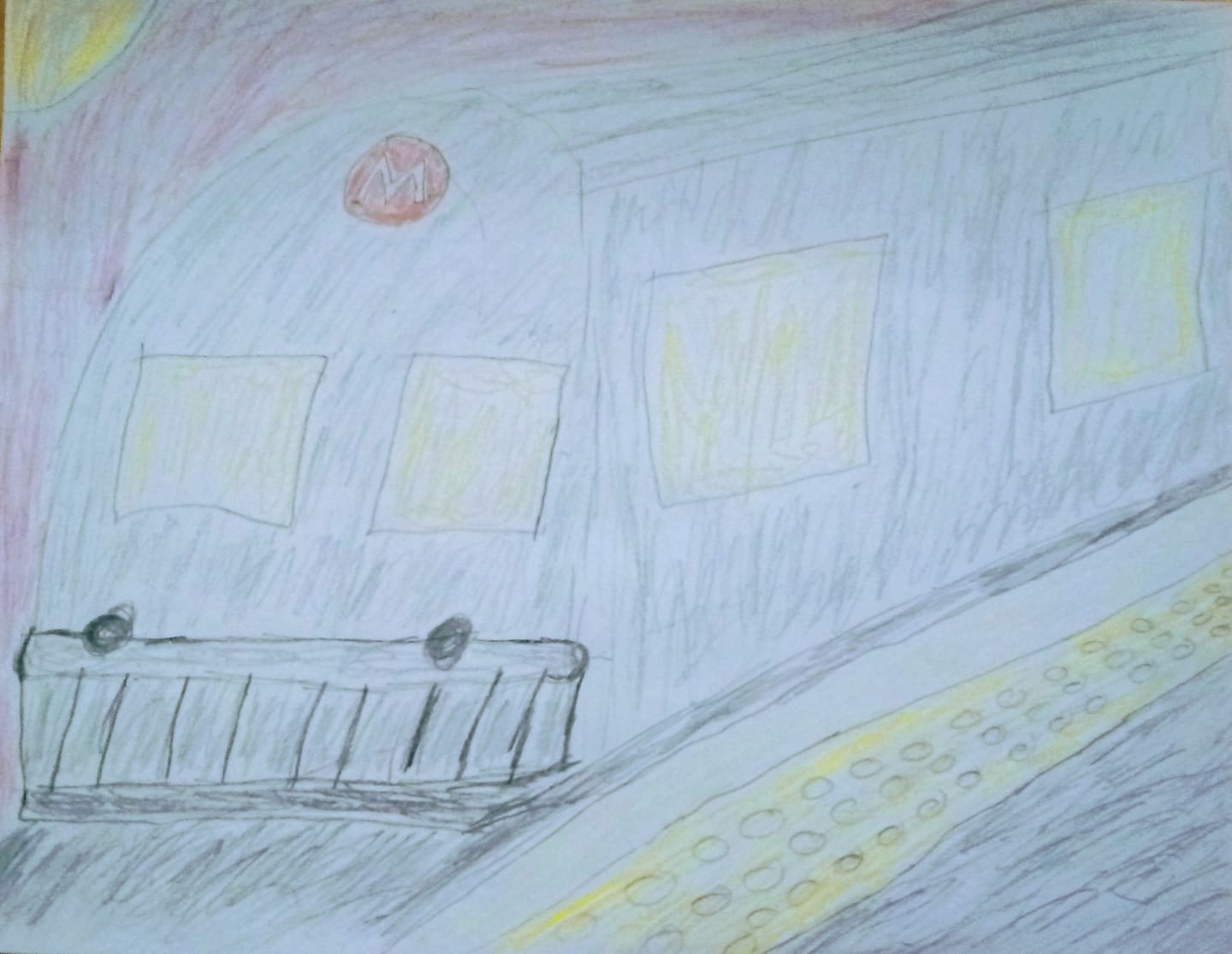
    Featured image art by me.

    It’s the end of the day.

    You’re on the subway.

    It’s still twilight.

    It’s not yet night.

    Through the clear glass pane,

    The setting sun is shining on your face.