The Musings of Jaime David
@jaimedavid.blog@jaimedavid.blog

The writings of some random dude on the internet

1,168 posts
1 follower

Tag: acceptance

  • Sometimes, Even When You Give It Your All, Friendships Can Still Fade

    Sometimes, Even When You Give It Your All, Friendships Can Still Fade

    One of the hardest lessons I have learned about friendship is that effort is not always enough. We grow up hearing that relationships require work, communication, understanding, patience, and commitment. We are told that if we care about someone, we should fight for the connection. We should reach out. We should check in. We should be willing to have difficult conversations. We should make time. We should show up.

    And while there is truth in all of that, there is another truth that often goes unspoken.

    Sometimes, even when you do all of those things, friendships can still fade.

    That realization can be painful because it challenges the idea that every relationship can be saved if only we try hard enough. It forces us to confront something many of us do not want to admit. Relationships are not built by one person. They are built by multiple people. No matter how much effort one person invests, they cannot single-handedly carry a friendship forever.

    There is a tendency to look at a fading friendship and immediately search for a villain. Someone must have done something wrong. Someone must have failed. Someone must be responsible for the distance. Sometimes that is true. Sometimes there are betrayals, lies, manipulation, or cruelty. But often, friendships fade in far less dramatic ways.

    Sometimes people simply grow apart.

    Sometimes people change.

    Sometimes life takes people in different directions.

    Sometimes the friendship that once felt effortless begins to feel like work.

    And sometimes nobody notices it happening until years have already passed.

    One of the most difficult aspects of friendship is that it rarely comes with a clear beginning and end. Romantic relationships often have labels. There is a moment when people start dating. There is often a moment when they break up. Friendships are usually much messier. They evolve slowly. They drift. They transform. They become something different from what they once were.

    This can make it difficult to recognize when a friendship is no longer serving the people involved.

    Many people continue trying long after the friendship has changed. They keep reaching out. They keep initiating conversations. They keep making plans. They keep hoping things will return to the way they used to be.

    Sometimes they do.

    Sometimes they do not.

    And when they do not, it can create a unique kind of grief.

    The grief is not only about losing the friendship itself. It is about losing the version of the friendship that once existed. It is about remembering what the relationship used to feel like and realizing that those days may never return.

    That realization can be difficult because memories have a way of staying alive even when circumstances change.

    We remember the conversations.

    We remember the inside jokes.

    We remember the support.

    We remember the moments when everything felt easy.

    Those memories remain, even when the relationship itself has become something entirely different.

    What makes it even harder is that many people blame themselves when friendships fade.

    They wonder if they should have tried harder.

    They wonder if they should have been more patient.

    They wonder if they should have reached out more often.

    They replay conversations in their minds.

    They search for mistakes.

    They search for answers.

    And sometimes there are lessons to be learned. Self-reflection can be healthy. Growth can come from examining our own actions. But there comes a point where self-reflection turns into self-punishment.

    Not every fading friendship is the result of personal failure.

    Sometimes people genuinely gave their best.

    Sometimes they communicated.

    Sometimes they showed up.

    Sometimes they tried.

    And despite all of that, the friendship still faded.

    That can be difficult to accept because it means there was no simple solution. It means there was no magical conversation that could have fixed everything. It means that effort alone was not enough to bridge the growing distance.

    One of the most misunderstood aspects of friendship is compatibility.

    People often think compatibility is based solely on shared interests. If two people enjoy the same hobbies, believe similar things, or have similar values, they assume the friendship will naturally last forever.

    Reality is more complicated.

    Friendships are not only built on common interests. They are also built on communication styles, emotional needs, social preferences, availability, priorities, and expectations.

    Two people can have nearly identical interests and still struggle to maintain a friendship.

    Two people can agree on important values and still find themselves drifting apart.

    Two people can care deeply about each other and still discover that they need very different things from their relationships.

    This does not mean either person is wrong.

    It simply means compatibility is more complex than many of us realize.

    As people grow older, these differences often become more noticeable.

    Life becomes busier.

    Responsibilities increase.

    Priorities shift.

    People change careers.

    People move.

    People enter relationships.

    People start families.

    People discover new passions.

    People learn new things about themselves.

    The person someone was at sixteen may be very different from the person they become at thirty.

    That is not necessarily a bad thing.

    Growth is a natural part of life.

    The challenge is that growth does not always happen in the same direction for everyone.

    Sometimes one person becomes more social while another becomes more reserved.

    Sometimes one person wants deeper emotional connection while another becomes more independent.

    Sometimes one person prioritizes maintaining friendships while another focuses their energy elsewhere.

    None of these choices are inherently right or wrong.

    They are simply different.

    Yet differences can create distance.

    The painful reality is that caring about someone does not automatically guarantee compatibility.

    Many people have experienced the heartbreak of realizing that they still care deeply about a friend while simultaneously recognizing that the friendship no longer works.

    Those two truths can exist at the same time.

    You can appreciate someone.

    You can respect someone.

    You can wish them well.

    And still conclude that the relationship is no longer healthy for you.

    That realization often comes with a sense of guilt.

    People worry that walking away means they are abandoning the friendship.

    They worry that accepting the reality of the situation means they never cared.

    But there is a difference between giving up too soon and recognizing that a relationship has reached its natural conclusion.

    Giving up happens when someone stops trying before they have truly invested in the relationship.

    Acceptance happens when someone recognizes that they have already invested significant effort and that continuing to push is no longer creating meaningful change.

    Acceptance is not the same thing as apathy.

    In fact, acceptance often comes from caring deeply.

    Sometimes people let go precisely because they care.

    They care enough to stop forcing something that no longer feels natural.

    They care enough to acknowledge reality instead of pretending everything is fine.

    They care enough to recognize that both people deserve relationships that meet their needs.

    One of the most difficult truths about friendship is that intentions and actions are not always the same thing.

    Many people genuinely intend to maintain friendships.

    They intend to reach out.

    They intend to make plans.

    They intend to stay connected.

    But intentions alone do not sustain relationships.

    Relationships are built through action.

    They are built through communication.

    They are built through showing up.

    They are built through consistency.

    Good intentions matter, but relationships ultimately live or die based on what actually happens.

    This can create painful situations where nobody involved has bad intentions, yet the friendship still suffers.

    One person may genuinely care while consistently failing to make time.

    Another person may continue reaching out while feeling increasingly exhausted.

    Neither person is necessarily malicious.

    Yet the friendship becomes strained anyway.

    These situations can be particularly heartbreaking because there is no obvious villain.

    There is no betrayal.

    There is no dramatic conflict.

    There is simply a growing gap between what people want and what they are able or willing to give.

    When friendships fade this way, closure can become complicated.

    Many people search for a definitive answer.

    They want a clear explanation.

    They want a final reason.

    They want certainty.

    Unfortunately, life does not always provide neat endings.

    Sometimes there is no single moment when a friendship ends.

    Sometimes the ending is spread across years.

    Sometimes it happens through missed opportunities.

    Sometimes it happens through distance.

    Sometimes it happens through silence.

    Sometimes it happens through a gradual realization that the relationship no longer feels the same.

    And while that lack of clarity can be frustrating, it can also teach an important lesson.

    Not every ending requires complete understanding.

    Sometimes it is enough to acknowledge reality.

    Sometimes it is enough to recognize that something meaningful existed and that it has changed.

    Sometimes it is enough to appreciate the role someone played in your life without needing to hold onto them forever.

    This is perhaps one of the most difficult forms of maturity.

    Many people view relationships in extremes. Either they last forever or they fail. Either they remain exactly the same or they were never meaningful to begin with.

    But life rarely works that way.

    Some friendships last for decades.

    Some friendships last for seasons.

    Some friendships shape us profoundly despite not lasting forever.

    The value of a relationship is not determined solely by its duration.

    A friendship can be meaningful even if it eventually fades.

    A friendship can be important even if it ultimately ends.

    A friendship can leave a lasting impact while no longer existing in the present.

    Accepting this reality can help reduce the pressure we place on ourselves.

    Not every relationship is meant to last forever.

    That does not make it a failure.

    It makes it part of being human.

    The people we meet influence us in countless ways.

    They teach us lessons.

    They provide support.

    They help us grow.

    They challenge us.

    They shape our perspectives.

    Sometimes their role in our lives lasts a lifetime.

    Sometimes it does not.

    Neither outcome erases what came before.

    If there is one lesson I believe more people need to hear, it is this: your worth is not determined by your ability to save every friendship.

    You can be caring.

    You can be patient.

    You can be understanding.

    You can communicate honestly.

    You can give it your all.

    And a friendship may still fade.

    That reality is painful, but it is not a reflection of your value as a person.

    Sometimes relationships end because people change.

    Sometimes they end because circumstances change.

    Sometimes they end because needs change.

    Sometimes they end because effort becomes unbalanced.

    Sometimes they end for reasons that nobody fully understands.

    And sometimes they end despite the fact that both people once genuinely cared about each other.

    That is one of the saddest truths about friendship.

    But it is also one of the most freeing.

    Because once we accept that effort alone cannot control every outcome, we can stop carrying the impossible burden of believing every fading friendship is our fault.

    We can appreciate what was.

    We can learn from what happened.

    We can grieve what was lost.

    And then, when we are ready, we can continue moving forward.

    Not because the friendship never mattered.

    But because it did.

  • Embracing the End Without Surrendering the Now

    Embracing the End Without Surrendering the Now

    There is a strange tension that defines modern life, a constant background hum of dread mixed with longing, exhaustion paired with hope. We are told repeatedly that time is limited, that things are getting worse, that collapse is looming in one form or another. Climate change accelerates, political systems fracture, social trust erodes, economies strain, and the future feels less like a promise and more like a threat. For many people, this awareness produces anger, panic, bitterness, or numbness. We rage at the unfairness of it all, despair at our apparent powerlessness, or retreat into distractions to avoid the weight of it. But there is another response, one that feels counterintuitive and even dangerous at first glance. Instead of getting stuck in frustration and fear, you can choose to embrace the full reality of what is happening, the good, the bad, and the truly terrifying, without pretending it is acceptable or desirable. Not acceptance in the sense of surrender, but embrace in the sense of honest acknowledgment. This posture can be oddly liberating, and it can open the door to living more fully rather than less.

    To embrace the possibility that things may get very bad is not to wish for it. It is not to give up on resistance, care, or effort. It is simply to stop lying to yourself about uncertainty. Much of our suffering comes not from pain itself, but from the desperate attempt to control outcomes that are fundamentally uncontrollable. We want guarantees that things will work out, that justice will prevail, that our loved ones will be safe, that our efforts will matter. When those guarantees are absent, we experience constant psychic friction, a grinding anxiety that never resolves. By openly acknowledging that the worst can happen, even if we desperately hope it will not, we release ourselves from the illusion that certainty is required in order to live meaningfully.

    There is a quiet honesty in saying, “Yes, this could all go wrong.” That honesty cuts through denial, magical thinking, and shallow optimism. It allows us to see reality as it is, not as we wish it to be. And paradoxically, once we stop demanding that the future behave itself, the present becomes more vivid. Life sharpens. Moments gain texture. The small joys do not disappear under the weight of fear, but instead stand out more clearly against the darkness. When you know nothing is guaranteed, everything that exists right now feels more real.

    Many people confuse embracing uncertainty with resignation. They think that acknowledging the possibility of disaster means you have stopped caring. In truth, the opposite is often the case. When you let go of the demand that things must turn out well, your care becomes cleaner and less desperate. You can act not because you believe you will win, but because acting itself matters. You can love without needing permanence as proof of value. You can resist injustice without requiring assurance of victory. This kind of engagement is quieter, steadier, and often more sustainable than rage-fueled hope or brittle optimism.

    Anger has its place, and frustration can be an honest response to suffering and injustice. But when anger becomes our default emotional posture, it slowly eats us from the inside. Constant outrage keeps the nervous system in a state of alarm. It narrows perception and reduces the complexity of reality into enemies and obstacles. Over time, it becomes exhausting. Embracing the full spectrum of possible outcomes, including the worst, can soften that constant edge. It allows anger to arise when it is useful, and to pass when it is not. You are no longer fighting reality itself, only responding to it.

    There is also a deep humility in this approach. It acknowledges that you are not the center of the universe, that history does not owe you a happy ending, that meaning is not guaranteed by progress or moral arcs. This humility can feel frightening, especially in cultures that promise endless growth and personal fulfillment. But humility can also be grounding. It places you back into the flow of existence rather than above it. You are one human among many, living in a brief window of time, doing what you can with what you have. That is not nothing. That is everything.

    When time feels limited, people often react in one of two ways. They either rush, trying to extract as much pleasure or achievement as possible, or they freeze, overwhelmed by the impossibility of doing enough. Both responses are rooted in the same fear, the fear of not mattering before it is too late. Embracing uncertainty offers a third way. Instead of rushing or freezing, you can slow down and choose deliberately. You can ask not “How do I win?” but “How do I want to show up while I am here?” This shifts the focus from outcomes to presence, from accumulation to alignment.

    There is something deeply human about embracing both joy and sorrow without insisting that one cancel out the other. Life has always been fragile, unfair, and unpredictable. What changes across eras is not the presence of suffering, but our stories about it. In times of perceived stability, people can pretend that catastrophe is an exception. In times of visible decline, that pretense becomes harder to maintain. Embracing the possibility of loss does not mean abandoning hope, but redefining it. Hope no longer means believing that everything will be okay. It means believing that meaning is possible even when things are not okay.

    This reframing can change how you relate to your own life choices. You may stop postponing what matters, waiting for the “right” conditions that never arrive. You may become more honest in your relationships, less willing to hide behind politeness or fear. You may take creative risks not because success is assured, but because expression feels necessary. When the future is uncertain, authenticity becomes more valuable than safety. You begin to measure your life not by how well it is protected, but by how fully it is lived.

    There is also a strange relief in admitting that you cannot fix everything. Many people carry an unspoken burden of responsibility for the world’s suffering, a belief that if they do not stay angry, vigilant, and exhausted, they are complicit. Embracing uncertainty allows you to set down that impossible weight. You can care deeply without destroying yourself. You can grieve without turning grief into a permanent identity. You can contribute where you can and rest where you must. This is not apathy. It is sustainability.

    Embracing the worst as a possibility also deepens compassion. When you accept that disaster can strike anyone, including yourself, it becomes harder to judge others harshly for how they cope. People’s contradictions, fears, and failures begin to make more sense. You see how much of human behavior is driven by terror of loss, of insignificance, of abandonment. This awareness does not excuse harm, but it contextualizes it. It opens space for nuance in a world addicted to certainty and condemnation.

    At a personal level, this mindset can transform anxiety. Anxiety thrives on the belief that you must prevent every bad outcome in order to be okay. When you openly acknowledge that some bad outcomes are unavoidable, anxiety loses some of its power. You may still feel fear, but it becomes more proportional, more grounded. Fear becomes a signal rather than a tyrant. You can listen to it without obeying it blindly. You can say, “Yes, this scares me, and I am still here.”

    There is also an existential honesty in this approach that aligns with older philosophical traditions. Stoicism, Buddhism, and existentialism all, in their own ways, grapple with impermanence and uncertainty. They do not promise comfort through illusion, but clarity through confrontation. Embracing the possibility of the worst is not a modern invention, it is a rediscovery of something humans have always known and periodically forgotten. Life is fragile. Nothing is promised. Meaning is something we create through how we respond, not what we control.

    When the world feels like it is getting worse, there is a temptation to withdraw emotionally, to numb yourself in order to survive. Embracing reality fully is the opposite of numbing. It is a willingness to feel, even when feeling hurts. It is a choice to remain open in a time that rewards closure. This openness is not naive. It is courageous. It says, “I know this may end badly, and I choose to care anyway.” That choice itself is a form of resistance.

    Living this way does not mean you are constantly thinking about catastrophe. In fact, it often frees you to think about it less. When you stop trying to suppress or outrun the possibility of loss, it stops chasing you. It becomes part of the background rather than the foreground. You can enjoy a conversation, a meal, a piece of art, not because you believe it will last forever, but because it exists now. Impermanence becomes what gives moments their intensity rather than what robs them of value.

    This perspective also challenges the idea that happiness is the ultimate goal of life. Happiness is fleeting, contextual, and often shallow when pursued directly. Embracing the full range of experience allows for something richer, a sense of aliveness that includes sorrow, anger, tenderness, awe, and love. You are not chasing a permanent emotional state, but inhabiting a dynamic process. In that process, even pain can have texture and meaning, without being romanticized or justified.

    Importantly, embracing the possibility of the worst does not mean abandoning efforts to prevent it. You can still organize, protest, vote, create, educate, and care. The difference is that you are no longer hinging your self-worth or sanity on success. You act because acting aligns with who you are, not because it guarantees salvation. This makes your actions more resilient. Failure does not destroy you, because you were never promised victory in the first place.

    There is a quiet dignity in living this way. It strips life down to its essentials. Who do you love. What do you stand for. How do you treat others. How do you spend your limited attention. When time feels infinite, these questions can be postponed. When time feels limited, they become urgent. Embracing uncertainty sharpens that urgency without turning it into panic.

    In the end, embracing the possibility that the worst can happen is not about pessimism. It is about honesty. It is about refusing to let fear dictate the terms of your existence. By opening yourself fully to reality, you paradoxically gain more freedom within it. You stop negotiating with the universe for safety and start engaging with life as it actually is, messy, beautiful, brutal, and fleeting.

    If time is truly limited and the world keeps getting worse, then the most radical thing you can do is not to harden yourself, but to soften without collapsing. To stay awake. To love without guarantees. To create without certainty. To hope without illusions. In doing so, you do not escape the darkness, but you refuse to let it define the entirety of your experience. You embrace life not because it is safe, but because it is real. And that, strangely enough, can be enough.

  • Wisdom Wednesdays #5: Embrace the Art of Impermanence

    Wisdom Wednesdays #5: Embrace the Art of Impermanence

    Change is the only constant in life. Everything you see, feel, and know is in a state of flux—moments passing, seasons shifting, relationships evolving.

    Yet, so often, we resist this truth. We cling to comfort zones, to familiar routines, to what feels safe. We fear loss, endings, and the unknown future.

    But the art of wisdom lies in embracing impermanence—not as a loss, but as the essence of life itself.

    Impermanence teaches us to cherish the present moment, to love fully without attachment to outcome, and to release what no longer serves us.

    When you accept that everything is temporary, you free yourself from fear and anxiety rooted in wanting control.

    Instead of fighting change, practice flowing with it. Notice how moments of loss create space for new growth. Watch how endings make room for new beginnings.

    Impermanence is not a threat—it’s an invitation to live more deeply, more presently, and more freely.

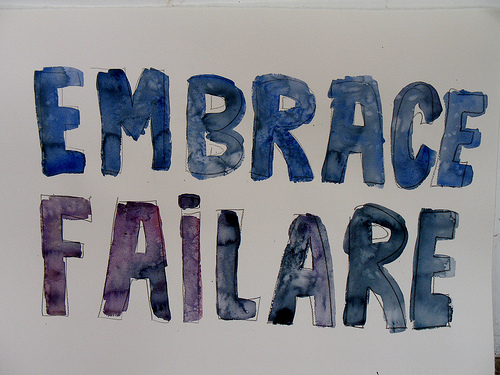
  • Embracing Failure

    Embracing Failure

    Embrace failure. Missteps and roadblocks are inevitable but are ultimately an opportunity to learn, pivot, and go after your goals with new perspective. – Jenny Fleiss

    You may sometimes hear, usually after you fail at something, that you have to accept it and move on. It’s possible for one to accept it, but accepting failure does not necessarily mean that you have completely moved on from it. No. To move on from failure, I believe there is something more that is needed. What is that, you may ask? That is to embrace failure. Yes, you heard me right; embrace failure. Now, at first glance, that may sound masochistic as heck, but hear me out. People aren’t perfect. We have flaws, imperfections, weaknesses, things that we may not be good at, and things that we may not like, and that’s ok. They all are part of what make us unique. Life also isn’t perfect. There’s almost always going to difficulties, challenges, and hardships we need to overcome. The universe and nature are also not perfect. Things break down, things become unstable, things become chaotic. Nothing is perfect. Because nothing is perfect, and because no single individual is perfect, that means, at some point, we are all going to experience failure at some point or another. In fact, failure is biologically guaranteed, because once we die, that’s it! Game over. No more do-overs. Death is inevitable. Even if one were to live a life with little to no challenges and hardships, death is the ultimate failure, because once you stop living, you stop being you. You stop being able to actively do things in this world. You are no longer able to be a part of the world in living form, and because of that, that’s a failure, and it’s a guaranteed one, as well. Thus, in a way, we are all born to fail the moment that we are born. Now, i know what you may be thinking to yourself. You are probably thinking that it sounds depressing as heck, and it definitely may sound that way, if you look at it from a certain perspective. Now, i don’t know what your perspective or outlook on life, death, and failure is, but let me tell you mine. Because we are guaranteed to fail when we die, what can be worse than that? The answer is nothing. And when you take that into account, it really puts one’s problems and troubles into perspective. It sorta makes one’s problems seem small and temporary. Nothing can be more permanent and long-lasting than death. Thus, every failure, every challenge, every shortcoming, every hardship asides death itself can be overcome. Sure, everyone handles failures, challenges, and hardships differently than others, and we may not know how much hardship, failure, and challenges we may face in life, but by remembering that nothing can get worse than death, I believe it is possible to make it through anything that comes your way. Thus, that is why i believe embracing failure will allow one to be able to overcome it. By embracing the ultimate failure that we will all one day die, it has so much potential to minimize the severity of other hardships and challenges we may face in life. Not only that, but by embracing failure, we are also embracing change, because change can come in the form of failure. By embracing failure, one can start seeing failure differently. It could allow one to start seeing the positives that can come about from failure, and it can do so by minimizing the negative aspects of failure. Embracing failure is not an easy thing to do. It takes a lot of time, patience, resilience, and strength to be able to just accept failure, let alone embrace it. However, i believe that one of the keys to happiness is embracing failure, because if you are not worried about the ultimate failure in life, then it is possible to make it through other hardships, challenges, and failures that come your way. Lastly, by embracing failure, it helps one learn to fail gracefully. When one is able to fail gracefully, they are able to pick themselves up, and use their failure as a learning experience or a blessing in disguise.

    I will end things with an excerpt from an article that discusses about embracing failure. I will link the full article below.

    Here are five ways embracing failure can work for you:

    1. We learn some of our best lessons through failure.

    2. Failure inspires us. If we look at it properly and don’t allow it to define us, failure can be a great source of motivation.

    3. Failure teaches us humility. We feel humble after losing and recognize that we are indeed human.

    4. Embracing failure allows us to take more risks. Once we come to terms with having failed and survived, we can take greater risks.

    5. Failure makes success taste even better. We have a better appreciation of success having failed a few times on the way up the ladder.

    https://www.entrepreneur.com/article/244307