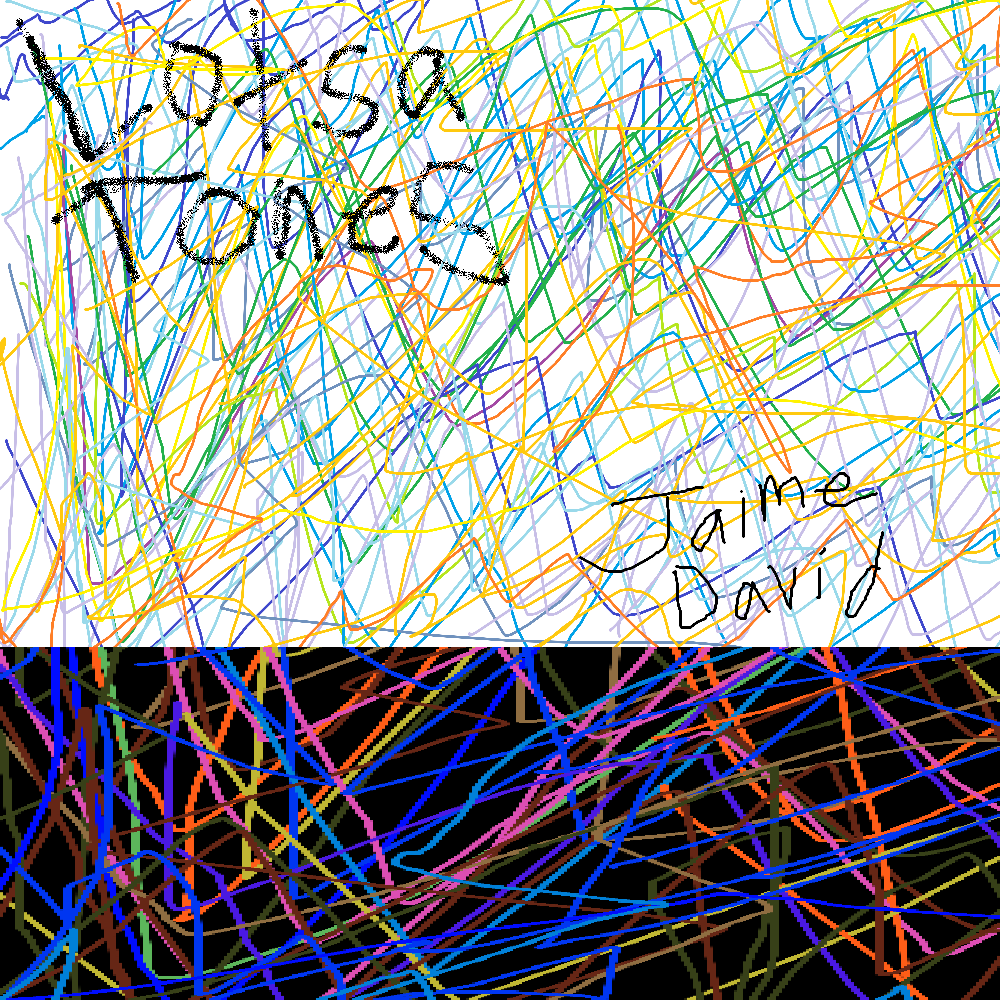
There are moments in life that feel like the opening of an entirely new chapter. Today is one of those moments for me. I am incredibly excited to share that my debut song, “Lotsa Tones,” is officially available to stream on Spotify.
You can listen to the song here:
“Lotsa Tones” on Spotify:
You can also follow my Spotify artist profile here:
Jaime David on Spotify:
When I first began writing publicly years ago, I never imagined where the creative journey would eventually take me. My original goal was simple: create something meaningful and share it with the world. That philosophy has remained the same, even though the mediums through which I create have continued to grow.
Many of you first came to know me through my writing. Whether it was reading my blog, following my articles, or eventually picking up one of my books, writing has been one of the biggest parts of my life. It allowed me to explore ideas, tell stories, express emotions, and build worlds that only existed in my imagination until they found their way onto the page.
That journey eventually led to the publication of my debut science fiction novel, Wonderment Within Weirdness, followed by My Powerful Poems and Some Small Short Stories. Each book represents a different side of my creativity. My novel gave me the opportunity to create an expansive fictional universe, my poetry allowed me to express thoughts and emotions in a more intimate way, and my short story collection became a place to experiment with different ideas, concepts, and styles.
After that came podcasting. Launching The Jaime David Podcast opened another creative door that I had never explored before. Instead of writing stories for readers, I was now speaking directly to listeners. The podcast became another extension of my creative voice, allowing me to discuss writing, life, creativity, current events, personal experiences, and whatever else happened to inspire me during a given episode.
Now, another chapter begins.
Today, I officially add musician to that list.
I honestly never set out with the expectation of becoming a musician. Music has always been something I appreciated and admired. Like many people, I’ve spent countless hours listening to songs that became attached to memories, emotions, and different periods of my life. Music has an incredible ability to communicate feelings that sometimes words alone cannot fully capture.
Eventually I reached a point where I wondered what it would be like to create something of my own.
Not because I believed I had mastered music.
Not because I expected perfection.
Simply because I wanted to experiment.
That curiosity eventually became Lotsa Tones.
The title itself is intentionally simple. It reflects exactly what the project became: an exploration of sounds, textures, rhythms, and ideas. I wasn’t trying to imitate another artist or force myself into a particular genre. I wasn’t asking whether the song fit neatly into a label. Instead, I approached the project with curiosity and allowed the creative process to guide me.
Sometimes creativity works best when there are very few expectations.
One of the things I’ve learned throughout my life is that experimentation is often the birthplace of growth.
My first blog posts weren’t perfect.
My first attempts at writing fiction certainly weren’t perfect.
The first drafts of my books required countless revisions.
My podcast improved over time as I gained experience recording and editing episodes.
Music is no different.
Every creative field begins with someone deciding to try.
I think that’s something worth remembering because it is easy to compare yourself to people who have been creating for ten, twenty, or even forty years. We often see the finished product without seeing the years of learning, mistakes, failures, revisions, and persistence that made those accomplishments possible.
Nobody begins at the finish line.
Every artist has a first song.
Every author has a first manuscript.
Every podcaster has a first episode.
Every painter has a first canvas.
Every filmmaker has a first project.
Lotsa Tones is my first step into music, and I’m proud of that.
One thing I have always appreciated about creativity is that it isn’t limited by labels. Society often encourages people to choose one identity. You’re expected to become known as one thing and remain there for the rest of your career.
But I’ve never felt comfortable limiting myself that way.
I’m an author.
I’m a blogger.
I’m a podcaster.
And now I’m also a musician.
To me, these aren’t separate identities competing against one another. They’re simply different ways of expressing ideas.
Sometimes an idea belongs in a novel.
Sometimes it belongs in a poem.
Sometimes it belongs in a podcast episode.
Sometimes it belongs in music.
Different creative mediums allow us to communicate different experiences, and I don’t think any artist should feel restricted to only one.
This song also represents something else that has become increasingly important to me over the years: allowing myself permission to create without immediately worrying whether something fits perfectly into a category.
Art does not always need to justify itself.
Sometimes creating something because you are curious is reason enough.
Sometimes experimenting is valuable even if you don’t know exactly where it will lead.
Sometimes the journey itself becomes the reward.
That mindset has shaped much of my creative work, and I suspect it will continue shaping future musical projects as well.
I don’t know exactly what my music will sound like six months from now.
I don’t know what it will sound like five years from now.
Perhaps future songs will become more melodic.
Perhaps they’ll become more electronic.
Perhaps they’ll lean into cinematic soundscapes.
Perhaps they’ll become something I haven’t even imagined yet.
That’s one of the most exciting parts of beginning something new.
The possibilities remain open.
Instead of trying to predict exactly where this musical journey will go, I’d rather let it evolve naturally.
Learning is part of the process.
Growth is part of the process.
Making mistakes is part of the process.
Discovering unexpected ideas is part of the process.
Every release becomes another opportunity to improve.
Looking back, it’s interesting to see how one creative pursuit gradually led to another. Writing helped me become more comfortable telling stories. Podcasting helped me become more comfortable sharing my voice. Music now offers another way to communicate ideas without relying entirely on words.
Each creative endeavor has taught me something different.
Each one has expanded my perspective.
Each one has made me a better creator overall.
That’s one of the reasons I encourage people to explore interests outside of their comfort zone. You never know which hobby might become a passion, or which experiment might open the door to an entirely new chapter of your life.
If someone had told me several years ago that I’d publish books, host a podcast, and eventually release music onto Spotify, I probably would have laughed.
Yet here we are.
Life has a funny way of surprising us.
I also want to take a moment to sincerely thank everyone who has supported me throughout the years.
To those who have read my blog.
To those who purchased my books.
To those who listened to The Jaime David Podcast.
To those who have encouraged me to continue creating.
Thank you.
Creative work often begins alone. It’s just one person sitting with an idea, wondering whether it is worth pursuing. But once that work is shared, it becomes something larger than ourselves because other people choose to spend part of their day reading, listening, watching, or experiencing what we’ve created.
That is something I never take for granted.
Whether you’ve been following my work for years or whether Lotsa Tones happens to be the first thing you’ve discovered from me, I’m grateful you’re here.
This release marks the beginning of my journey as a musician, not the end of it.
There will be more songs.
There will be more experiments.
There will be more opportunities to learn.
There will almost certainly be surprises along the way.
Some projects will succeed.
Some projects may not.
But I hope one thing always remains true: that everything I create is genuine.
Authenticity has always mattered more to me than chasing trends. I’d rather make something that reflects my own curiosity than try to imitate what everyone else is doing. That philosophy has guided my writing, my podcast, and now my music as well.
If Lotsa Tones encourages even one person to start their own creative journey—to write that story they’ve been putting off, record that podcast they’ve been thinking about, paint that picture, compose that melody, or simply experiment with something new—then I’ll consider this debut to have accomplished something meaningful beyond the music itself.
Creativity belongs to everyone willing to explore it.
Thank you for joining me as I take this first step into a brand-new artistic adventure.
I hope you’ll give Lotsa Tones a listen, follow my Spotify artist page to stay updated on future releases, and continue following along as this creative journey continues to unfold.
Here’s to new beginnings, unexpected paths, and the excitement of creating something simply because the idea refused to stay inside your imagination.
This is only the beginning.