The Musings of Jaime David
@jaimedavid.blog@jaimedavid.blog

The writings of some random dude on the internet

1,117 posts
1 follower

Tag: bots

  • Fighting Back Against the “BE CV BK 2025 -R-D” Facebook Scam: Drown It Out With Truth, Mockery, and Creativity

    Fighting Back Against the “BE CV BK 2025 -R-D” Facebook Scam: Drown It Out With Truth, Mockery, and Creativity

    The “BE CV BK 2025 -R-D” Facebook puzzle scam is ridiculous — absurd to the point of parody — and yet, it’s spreading like wildfire. The fact that it’s everywhere on Facebook, showing up even on Google, and still somehow flying under the radar of mainstream discussion is absolutely mind-boggling. It’s one of those scams that’s so blatant, so in-your-face, that it almost becomes invisible. People see it, recognize it as nonsense, scroll past, and move on. But here’s the problem: ignoring it isn’t helping. The silence around it is what’s allowing it to grow.

    If this thing is out in the open — and it clearly is — then it’s time we fight back in the open too. Not by quietly reporting it, not by pretending it doesn’t exist, but by doing the exact opposite. By talking about it. By writing about it. By mocking it. By making it impossible for the scammers behind “BE CV BK 2025 -R-D” to control the conversation around it.

    That’s the key. Flood the internet with counter-content.

    When you search that ridiculous code — “BE CV BK 2025 -R-D” or “BE CV BK.2025 -R-D” — you shouldn’t just see scam posts, spam links, and fake puzzle games. You should see real people calling it out. You should see blog posts, discussion threads, videos, memes, essays, even songs and art, all ridiculing how absurd this whole thing is. We can fight this scam the same way we fight misinformation and bad algorithms: by drowning it out with better content.

    Every post, every video, every podcast episode, every blog, every tweet (or post, or toot, or thread, whatever platform you use) that mentions the scam code in a critical or mocking way helps to reclaim visibility. It pushes the legitimate conversation higher up in search results. It buries the spam under real discussion. It turns the scam into something that’s no longer mysterious or enticing — just embarrassing.

    Think about how most scams spread: through obscurity, through silence, through the illusion of being something exclusive or hidden. Scammers rely on people not talking about what they’re doing. They rely on confusion. They thrive on uncertainty. But once people start dragging their scam into the sunlight, making fun of it, breaking down how it works, explaining it openly — that illusion collapses.

    This is how we take the power away from them.

    We need people to make memes about this scam. Mock it relentlessly. Turn “BE CV BK 2025 -R-D” into a punchline. A joke. A running gag. Imagine seeing someone post it and immediately replying with “Ah yes, the sacred code of the Facebook goblins,” or “Finally, the prophecy of BE CV BK 2025 -R-D is fulfilled!” Turn it into a meme so stupid that even scammers can’t take it seriously anymore.

    We should have TikToks making fun of how it looks like a fake alien serial number. We should have YouTubers breaking it down like a mystery documentary, only to reveal that it’s nothing but an empty scam. We should have podcasters analyzing the weirdness of how such a nonsensical thing spread so far.

    Because make no mistake — the fact that “BE CV BK 2025 -R-D” is this widespread is not a good sign. It shows that scammers have figured out how to exploit the holes in Facebook’s system. It shows how easily bot networks can take over a platform, how little oversight exists, and how little effort it takes to make something go viral.

    That’s why waiting for Facebook to fix it is not enough. They won’t move until it becomes a PR problem. And it doesn’t become a PR problem until people start talking about it. Once enough people bring attention to it — once creators, journalists, and commentators begin noticing it — then it becomes real in the public eye. Once YouTubers start making videos about it, that’s the first warning bell. And once the mainstream news outlets start covering it, then you know it’s reached critical mass.

    We shouldn’t wait for that moment to happen. We should cause it to happen.

    This is how grassroots resistance works in the digital age. When corporate platforms ignore obvious problems, regular people have to step in and make noise. You don’t need to be a big influencer or journalist to make a difference here. Every blog post, every repost, every discussion thread counts. Every time someone says “Hey, this ‘BE CV BK 2025 -R-D’ puzzle thing is a scam,” that’s another signal sent to the algorithms. That’s another data point for Google’s index. That’s another small act of resistance against the flood of bot spam.

    And the beauty of it is that it doesn’t take coordination. It doesn’t take organization. It just takes awareness. Once enough people start creating content about it, the counter-content becomes self-sustaining. The algorithm starts to prefer the legitimate, human conversation over the repetitive bot spam.

    In other words: we fight spam with saturation.

    This isn’t a new tactic — it’s how the internet has always fought back against nonsense. When conspiracy theories or fake trends pop up, creators often respond by flooding the topic with debunk videos and satire. When misinformation spreads, fact-checkers and journalists publish articles that dominate the search results. When bots flood hashtags, users reclaim them with memes and positivity. It’s digital resistance, meme warfare, and community-driven moderation all rolled into one.

    That’s what needs to happen here. The more we discuss “BE CV BK 2025 -R-D,” the less power it holds. The more we joke about it, the less it looks like a mystery. The more we call it out, the fewer people will fall for it.

    It’s time to reclaim the code.

    Let’s make “BE CV BK 2025 -R-D” the symbol of the dumbest scam of the decade — the one that was so lazy, so obvious, and so over-the-top that people actually started laughing at it instead of falling for it.

    And the way to do that isn’t to ignore it or delete mentions of it — it’s to own it. Talk about it. Write about it. Flood the conversation.

    Make longform essays dissecting how weirdly viral it became. Create TikTok skits where someone “solves” the fake puzzle only to get Rickrolled. Make digital art where “BE CV BK 2025 -R-D” becomes the new “All your base are belong to us” — a meme representing the absurdity of modern internet scams.

    Hell, make songs about it. Make ambient soundtracks titled “BE CV BK 2025 -R-D (The Algorithm Sleeps Tonight).” Write poetry mocking it. Host a podcast episode titled “The Mystery of BE CV BK 2025 -R-D (Spoiler: It’s Dumb).” The point isn’t just to ridicule it — it’s to reclaim it. To make it so that the only thing people associate that code with is laughter, ridicule, and scam awareness.

    Because when people are laughing at a scam, they’re not falling for it.

    That’s how we win here. Not by ignoring it. Not by quietly reporting it to platforms that won’t do anything anyway. But by overwhelming it with awareness, with creativity, with truth, and yes, with humor.

    If this thing is already spreading as far as it is — if it’s already all over Facebook and creeping into Google — then it’s only a matter of time before bigger creators start noticing. That’s when it’ll hit the mainstream. When the big YouTubers and TikTok creators make videos about it, when commentary channels start doing deep dives, when news outlets finally write think pieces about the “mystery code,” that’s when the scam will start to die.

    Because scammers hate exposure. They thrive on confusion and silence. But once the light hits, once people start clowning on them publicly, they scatter.

    So let’s turn this thing around. Let’s make sure that when anyone searches “BE CV BK 2025 -R-D,” all they find are posts mocking it, calling it out, and explaining exactly how ridiculous it is. Let’s take control of the narrative before the scammers do any more damage.

    This isn’t just about one scam — it’s about setting a precedent. It’s about showing that when nonsense floods our feeds, we don’t just scroll past it and move on. We fight back. We talk. We write. We create. We reclaim the algorithm.

    So, to whoever’s reading this: go make something. Write a tweet. Make a meme. Record a video. Post a blog. Share your thoughts. Use the exact code — “BE CV BK 2025 -R-D” — and talk about it. Spread the truth louder than the spam spreads lies.

    Because if we don’t, the scammers win. And if we do, the internet gets just a little bit smarter.

    Fediverse Reactions
  • The Insanity of the Facebook Puzzle Scam Code: “BE CV BK 2025 -R-D” and the Unbelievable Spread of an Obvious Scam

    The Insanity of the Facebook Puzzle Scam Code: “BE CV BK 2025 -R-D” and the Unbelievable Spread of an Obvious Scam

    It’s hard to overstate just how bizarre it is that something as nonsensical as “BE CV BK 2025 -R-D” has taken over Facebook and even started creeping into Google search results. This strange code — which looks like some mix of a fake model number, a coded message, and a bot gibberish tag — has appeared in thousands of posts across Facebook. And what’s wild is that, despite being so obviously a scam, so clearly fraudulent, so transparently fake, it’s everywhere. The fact that it’s not being widely discussed, not being reported on by major outlets, not being taken down effectively by Facebook, makes the whole thing even more insane.

    You can go on Facebook right now, type that code into the search bar — “BE CV BK 2025 -R-D” or “BE CV BK.2025 -R-D” — and what you’ll find is a flood of the same kinds of posts. Some are in different languages. Some use emojis. Some pretend to be part of “puzzle groups” or “mystery challenges.” Others are just random accounts spamming the same text over and over again, often accompanied by weird links, grainy photos, or random “game” announcements. But the one thing they all share is the same exact scam code.

    The strangest part is that this isn’t just some obscure niche spam chain buried deep in Facebook’s murky corners. It’s out in the open. Public groups. Public pages. Public posts. You can find it by simply searching. It’s like the digital equivalent of walking through a city and seeing “SCAM” graffiti plastered across every wall — and somehow, no one’s talking about it.

    That’s what makes this whole “puzzle scam” phenomenon feel so surreal. It’s not hidden. It’s not subtle. It’s right there in plain sight. And yet, despite being so blatant, it’s spreading like wildfire.

    It’s easy to see why the “puzzle” angle works. These kinds of scams often rely on curiosity — on the human desire to “figure out” something mysterious. The code looks cryptic enough to seem like there’s a deeper meaning behind it. “BE CV BK 2025 -R-D.” It almost feels like it could be a secret message, or a part of a viral challenge, or some kind of ARG (alternate reality game). And that’s what hooks people in. Someone sees a friend post it. They think, “What is this? Is this some new Facebook game? Is this part of something?” And before long, they’re clicking links, joining groups, following instructions, or even sharing the post themselves — unknowingly helping to spread the scam further.

    The entire design of this “puzzle” is meant to exploit one of the simplest psychological triggers: curiosity. Humans are hardwired to seek answers, especially when something looks like a code or a mystery. Scammers have known this for years — that’s why “riddles,” “tests,” “IQ puzzles,” and “hidden messages” have long been a popular front for phishing scams, malware links, and data-harvesting schemes. This particular Facebook scam just takes that formula and dresses it up with a meaningless code that looks intriguing to the untrained eye.

    But what’s really unsettling about this whole thing is just how many posts there are. It’s not just a handful of scammers copying and pasting the same message. There are thousands. Some of them are weeks or months old. Others are being posted in real time. The scam has evolved into a kind of bot swarm, almost like a virus that keeps replicating itself across the platform. And the lack of any large-scale intervention from Facebook makes it even worse.

    You’d think a platform with as much power, as much data control, and as much AI filtering as Facebook would be able to catch something as blatantly repetitive and nonsensical as this. But nope. The scam lives on, thriving. And that’s what’s disturbing. The scammers have found a way to stay one step ahead — maybe by slightly changing punctuation, or spacing, or formatting, to keep slipping past Facebook’s algorithmic filters. The difference between “BE CV BK 2025 -R-D” and “BE CV BK.2025 -R-D” might be enough to fool automated moderation systems.

    And meanwhile, the rest of us are just sitting here, watching this nonsense flood our feeds, while hardly anyone seems to be calling it out.

    It’s a sign of how desensitized we’ve all become to online spam. There’s so much garbage on the internet — from fake giveaways to impersonation accounts to AI-generated comment bots — that something like this barely registers anymore. The absurdity of a code like “BE CV BK 2025 -R-D” showing up everywhere doesn’t even faze people anymore. We’ve reached a point where mass spam has become so normalized that people just scroll past it without question.

    But the danger here isn’t just about annoyance. It’s about what’s behind these scams. Many of these “puzzle” posts are actually phishing attempts or clickbait traps that redirect users to shady sites. Others use the puzzle format to get users to comment, share, or click a “Continue” button — all tactics designed to collect engagement data or personal information. And then there’s the possibility that some of these are part of larger coordinated bot networks — networks designed not just to scam individuals, but to manipulate engagement metrics, artificially inflate content visibility, or even test out new spam strategies that can later be used in political or commercial manipulation.

    That may sound far-fetched, but it’s not. Facebook has long been a testing ground for disinformation and bot campaigns. If scammers can flood the platform with something so meaningless yet widespread, imagine what they can do when they actually put some effort into it.

    What’s also strange is how the scam has spread to Google. Search “BE CV BK 2025 -R-D” and you’ll see that it’s indexed in all kinds of pages — cached Facebook links, random blog comment sections, obscure reposting sites. The digital footprint of this nonsense code is massive. And that means it’s not just a Facebook issue anymore. It’s become part of the broader web ecosystem, another layer in the weird, polluted strata of modern internet junk data.

    It’s almost poetic, in a depressing way. The internet used to be about connection, creativity, and genuine curiosity. Now that same curiosity — the thing that once drove people to explore and learn — is being weaponized against them. Instead of solving puzzles for fun, people are being tricked into interacting with spam. Instead of decoding art or mystery, they’re decoding scams. And it’s not even subtle anymore.

    What’s wild, too, is that Facebook users themselves are often the ones unknowingly keeping it alive. The bots can only do so much — but when real people start engaging, commenting, sharing, or trying to “warn” others by reposting the code, that activity actually boosts the visibility of the scam. Facebook’s algorithm doesn’t care why something is getting engagement — it just sees numbers. So every time someone posts, “Don’t fall for BE CV BK 2025 -R-D, it’s a scam!”, that post can ironically push the code further up the visibility ladder, leading even more people to see it.

    The whole thing feels like an ouroboros of internet stupidity — a self-feeding loop where spam generates attention, attention generates engagement, and engagement keeps the spam alive.

    And maybe that’s the most disturbing part of all: how effortless it’s become for something like this to go viral without any real content behind it. It doesn’t even have to make sense. It doesn’t have to be convincing. It doesn’t have to look real. It just has to exist in large enough quantity to trick the algorithm.

    It’s a perfect reflection of how broken online ecosystems have become. In the old internet, scams had to at least try to look legitimate — a fake website pretending to be your bank, or a phony giveaway with a convincing logo. Now? All it takes is a random string of letters and numbers, a few thousand bot accounts, and a platform too busy or too lazy to do anything about it.

    Facebook’s failure to stop something this blatant speaks volumes. It’s not just an oversight — it’s a sign that their moderation systems are reactive, not proactive. They’re so focused on surface-level metrics that something like this can thrive indefinitely. And in that sense, the “BE CV BK 2025 -R-D” code becomes more than just a scam. It becomes a symptom. A sign of decay. Proof that the systems that were supposed to protect users from obvious manipulation are no longer functioning as intended.

    It’s worth asking: what’s the endgame here? What’s the point of this code? Is it just engagement farming? A front for phishing? A bot experiment? Or is it something even weirder — an automated system left to run amok, spamming for the sake of spamming?

    At this point, no one really knows. But that’s the scary part — no one’s really trying to find out, either. The internet is so overloaded with noise that even something this widespread can go largely unnoticed by the mainstream. People see it, shrug, and move on.

    That’s how scams survive. Not because they’re convincing, but because people have stopped caring enough to investigate.

    Maybe that’s the biggest takeaway from the “BE CV BK 2025 -R-D” puzzle scam — not just how it spreads, but what it reveals about us. We’re living in a time where nonsense thrives because attention is cheap. Where scams succeed not through sophistication, but through sheer saturation. Where even the most absurd, poorly disguised fraud can blanket an entire social network and nobody blinks.

    The “BE CV BK 2025 -R-D” code isn’t just a scam — it’s a mirror. A reflection of an online culture that’s too burned out, too overwhelmed, and too desensitized to call out the obvious anymore.

    And maybe, until more people start noticing the sheer absurdity of things like this, we’re going to keep seeing the same pattern play out — again and again — until our feeds are nothing but codes, spam, and empty noise pretending to be meaning.

    Fediverse Reactions
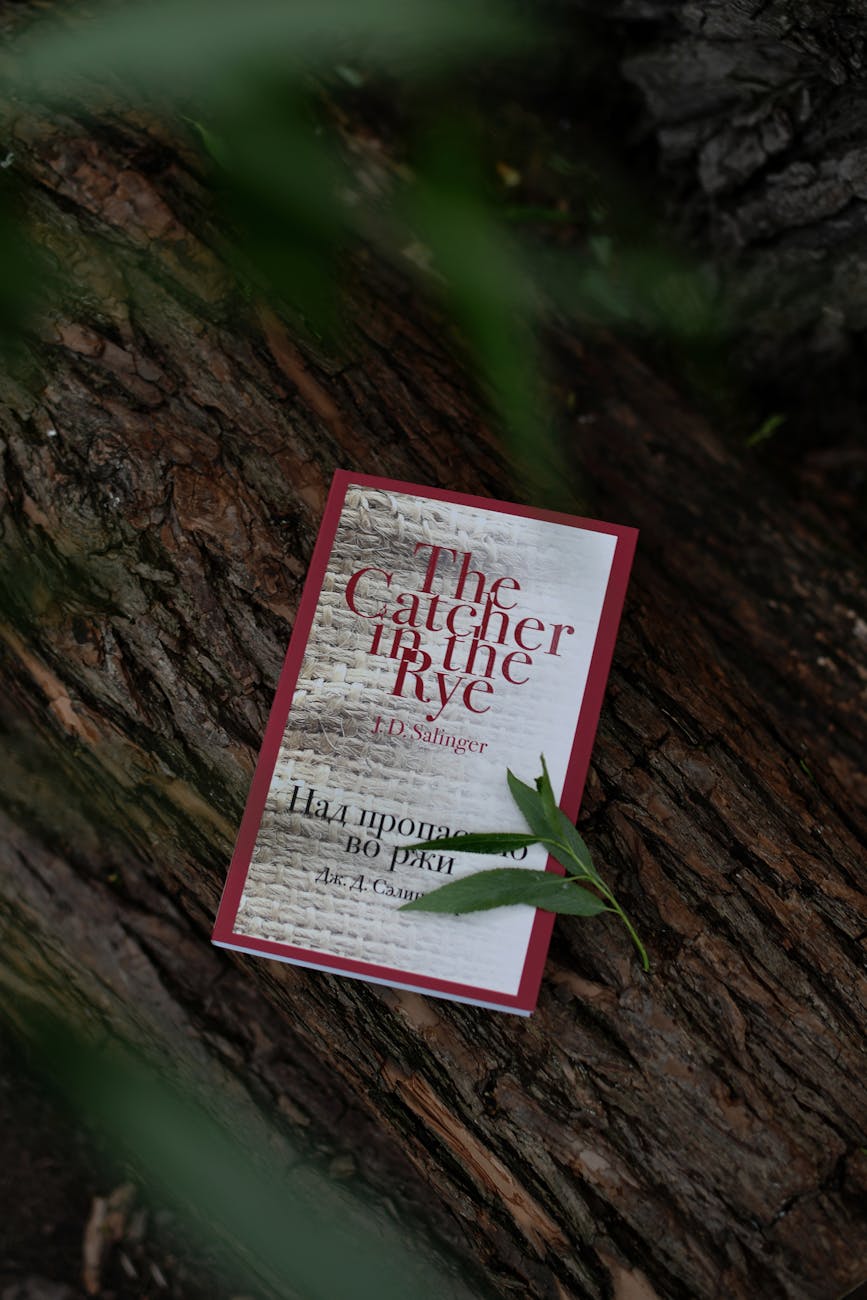
  • We Were Wrong About Holden Caulfield — He Cares More Than We Thought

    We Were Wrong About Holden Caulfield — He Cares More Than We Thought

    If Holden Caulfield were somehow transported into the year 2025, immersed in the dizzying swirl of our modern digital age, it would be a mistake to imagine him as merely angry or rebellious in the shallow, stereotypical teenage sense. No, Holden’s emotional landscape is far more complex, far more aching, and far more layered with contradictions than a simple outburst of adolescent defiance. At his core, the man who famously wielded the word phony as a kind of battle cry against insincerity would actually be struggling under the weight of something far heavier: a profound and wrenching mix of frustration and hope, tangled together so tightly it’s nearly impossible to separate one from the other.

    That word phony — often reduced by casual readers to a throwaway insult or a juvenile declaration — is in truth a deeply raw, visceral cry from someone who desperately yearns for the world to be better, more honest, and ultimately more real. Holden is not just railing against the surface-level fake or the trivial hypocrisy; he’s mourning the loss of genuine human connection and authenticity in a society increasingly overwhelmed by masks, performances, and illusions. In today’s chaotic 2025, where social media filters blur faces and expressions, AI bots masquerade as real people with eerie precision, scams and catfishers weave complex webs of deception, and cryptographic technologies like NFTs and cryptocurrencies spin dizzying new illusions of value and trust, Holden’s distress about phoniness feels not only relevant but more urgent and poignant than ever before.

    His frustration isn’t born of apathy or cynical detachment. Instead, it emerges from an almost unbearable depth of care — care for a world that no longer seems to value sincerity, care for people who are all too often invisible behind their masks, care for connection in an age of alienation. Holden wants a world where sincerity is not a precious rarity but a widespread currency. The more superficial the world becomes, the more he feels like a lone voice crying out in an increasingly deafening storm of façades. Importantly, he is not condemning the world simply to reject it outright; rather, he mourns what has been lost and painfully longs for what might still be recovered. This longing is not a small part of who Holden is; it is his essence — a deeply sensitive soul gasping for air in an environment suffocated by noise and superficiality.

    Holden’s pain is not simply a private or individual anguish; it carries a cultural and existential weight. Every time he calls someone “phony,” he is identifying a symptom of a broader social sickness — a society that increasingly rewards performance over presence, spectacle over substance, style over authenticity. The very concept of being “real” in this context becomes, almost paradoxically, a revolutionary act. His frustration is not mere teenage angst, but a profound cry for genuine authenticity in a world that seems more and more constructed from illusion and pretense.

    When Holden flings around the term phony in The Catcher in the Rye, he is not merely venting bitterness or staging an act of rebellion against the world. Instead, he is overwhelmed by emotions that are so immense and complex, they evade simple verbal expression: sadness that runs deep, crushing loneliness, and a sense of betrayal by the very people and institutions he hoped to trust. As a highly sensitive person, one whose emotional antennae pick up the faintest signals of pain and insincerity, Holden wrestles with these floods of feelings. “Phony” becomes his singular, catch-all term for capturing the hollowness he perceives in the world — the emotional exhaustion of constant performances and fakeness that threaten to drown out any possibility of true connection.

    His bluntness and sometimes abrasive tone are more than just defensive armor; they are a coping mechanism and a desperate plea for something genuine and meaningful. Beneath his dismissive, sarcastic exterior lies a heart that is aching, vulnerable, and painfully raw. To Holden, the insincerity of the world is not a mere annoyance or inconvenience — it is a wound, one that cuts to the very core of his fragile hope for human connection.

    Importantly, Holden’s anger at phoniness is not rooted in hatred. It is a form of hope — a hope so raw and unpolished it wears the rough disguise of anger and tough love. It is a hope that the people around him might somehow be kinder, more authentic, and more genuinely connected to one another. This makes him profoundly relatable today, even if many don’t immediately recognize it. The modern world is flooded with its own versions of phoniness: “grifters” — from social media influencers peddling carefully curated but ultimately fake lifestyles, to multi-level marketing bosses who exploit emotional trust, to hollow gurus hawking quick fixes and empty promises. These are the phonies of Holden’s time, the ones he would have feared and condemned.

    But his reaction to them would be more nuanced than simple disdain. He would be frightened by what their deception reveals about human nature and society: that people are so hungry for genuine connection and meaning that they are willing to believe illusions and lies, that the social fabric is so frayed that trust has become a scarce commodity. The success of these grifters signals not only their cunning but also the profound fractures in our cultural landscape and the scarcity of true realness. Holden’s warnings about phoniness go beyond calling out individual bad actors; they are indictments of a society that increasingly elevates surface-level performance and pretense over truth, where meaning is drowned out by noise.

    Yet Holden is not without his own flaws and contradictions. He lies, he performs, he lashes out — not because he is callous or uncaring, but because he is terrified to confront his own vulnerability. Deep inside, he suspects that he might be just as phony as the people he harshly judges. This painful paradox — being both the accuser and the accused — is what makes him so raw, so real, and so profoundly human.

    This internal battle is at the heart of Holden’s tragedy, but also his resilience. His self-awareness of his own flaws does not weaken him; rather, it sharpens his judgments and preserves his genuineness. It is this self-reflection and humility that prevents him from sliding into complete cynicism or nihilism. Instead, Holden is a broken idealist who continues to try, to fail, and to try again to find authenticity in a world that often seems to reject it. This vulnerability is exactly what makes him eternally relatable to readers across generations.

    From a psychological perspective, Holden fits the personality profile of an ENFJ — the empathetic, emotionally intense “compassionate truth-teller” who suffers deeply when those around him fall short of his high ideals. Combined with traits typical of a highly sensitive person, Holden’s capacity to care deeply is both his strength and his source of profound pain. In a world overwhelmed by noise, pretense, and relentless surface-level interaction, he feels utterly isolated in his search for sincerity. His fierce criticisms are often a mask for his yearning to connect and to protect those he cares about.

    Imagine Holden navigating the digital landscape of today. He would see bots pretending to be humans, scammers hiding behind fabricated identities, catfishers weaving elaborate lies to manipulate and gain attention, and parasocial relationships built on one-sided obsession. He would watch people fall in love with influencers who don’t even know they exist, and witness AI-generated content that blurs the lines between authentic and artificial reality. These phenomena would deepen his sense of alienation and loss.

    And then there is the physical world: knockoff perfumes, counterfeit sneakers, cheap imitations flooding both brick-and-mortar stores and online marketplaces. To Holden, these objects would not be merely cheap products but potent symbols of a culture that values image and hype over substance and honesty. As he walked through bustling city streets or scrolled endlessly through advertising feeds, he might mutter under his breath, “Goddamn phonies.” This would be no mere expression of irritation, but a mournful lament for a world where what is real becomes harder and harder to find.

    Even the economy would not escape Holden’s sharp critique. The rise of NFTs and cryptocurrencies — often dismissed by critics as speculative bubbles or empty hype — would appear to him as mass delusions, where millions are spent on digital images or tokens lacking intrinsic value. It would matter little how sophisticated the technology is or how much promise it holds for decentralization. To Holden, these trends would be perfect metaphors for a culture entranced by surface over substance, the latest signs of how easily we are seduced by illusions and empty hype.

    Philosophically, Holden’s deep suspicion of the world would find resonance in simulation theory — the provocative idea that reality itself might be a computer-generated illusion. While this remains unproven, the concept would echo Holden’s darkest fears about universal phoniness and deception. If the world around us is merely a simulation, then where does that leave hope for truth, for connection, for genuine human experience? This cosmic dread would only deepen his internal struggle and his profound sense of alienation, feeding the loneliness at the very core of his being.

    But Holden’s skepticism is far from isolated. His distrust of the status quo aligns, though uneasily, with many voices across today’s fractured ideological landscape: from MAGA loyalists convinced the system is rigged, to anarchists calling for radical upheaval, libertarians rejecting centralized authority, “truthers” questioning official narratives, sociologists who deconstruct social realities, and nihilists who deny inherent meaning in life. These groups vary widely in their beliefs and approaches, but they share with Holden a fundamental sense that the world’s script is broken — that something essential is amiss.

    This widespread skepticism is less about shared ideology and more about a collective feeling of distrust, alienation, and disillusionment. It reflects a society grappling with complexity, contradiction, and suspicion. Holden’s feelings connect across this broad spectrum not as a political statement or endorsement but as an expression of the universal human struggle to find meaning and authenticity amid confusion.

    Ironically, Holden would likely view many of his own fans as phonies — those who don Catcher in the Rye merchandise or idolize his rebellious image. To him, this commodification of his pain and confusion would feel like yet another mask obscuring the very vulnerability he struggles to express. He never aspired to be anyone’s hero; he simply wanted to survive his own confusing, painful world. Watching his story become a cultural icon might deepen his sense of being misunderstood, amplifying his feeling of isolation.

    At the very center of it all, Holden knows he is a phony too. The finger he points outward always reflects back upon himself. He judges performance, but he performs as well. He fears fakery but wonders if he has already been consumed by it. His fierce desire to protect innocence stands in contrast to his own deeply wounded soul. This painful self-awareness, far from weakening him, is what grounds him in reality and makes him endlessly relatable.

    Ultimately, Holden endures not because he is perfect or certain but because he feels deeply and hopes fiercely. He is flawed, lost, angry, scared — yet still yearning for something genuine in a world that often feels like a carefully staged play. In an age dominated by masks, bots, and simulations, Holden’s stubborn hope for authenticity is itself a radical act of resistance: a quiet, fierce defiance that reminds us all of the profound meaning of truly caring.