Paste my profile into the search field of your favorite open social app or platform.
Your Profile
Or, if you know your own profile, we can start things that way! Why do I need to enter my profile?
This site is part of the ⁂ open social web, a network of interconnected social platforms (like Mastodon, Pixelfed, Friendica, and others). Unlike centralized social media, your account lives on a platform of your choice, and you can interact with people across different platforms.
By entering your profile, we can send you to your account where you can complete this action.
Certain games transcend their medium to become cultural touchstones, shaping entire generations. This post dives into some of the standout titles that made the 90s and early 2000s unforgettable.
Super Mario 64 (1996): As Nintendo’s flagship 3D platformer, Super Mario 64 redefined what a video game could be. It introduced players to a fully navigable 3D environment with freedom of movement previously unseen. The fluid camera control, expansive levels, and non-linear objectives made it a revolutionary experience. Its design philosophies influence game development to this day.
Sonic the Hedgehog (1991): Sega’s blue blur wasn’t just about speed — Sonic embodied a rebellious spirit. The game’s fast-paced platforming, catchy music, and vivid graphics set it apart. The level design encouraged exploration and speedruns, making it endlessly replayable. Sonic became a mascot that rivaled Mario’s popularity, fueling the “console wars” between Sega and Nintendo.
Final Fantasy VII (1997): This RPG raised the bar with its cinematic storytelling, fully voiced cutscenes, and a complex, emotional narrative. Cloud Strife, Aeris, and Sephiroth became household names. The game’s success helped introduce Japanese RPGs to a Western audience, sparking a surge of interest in story-driven games.
GoldenEye 007 (1997): Rare’s first-person shooter brought console multiplayer to new heights with split-screen deathmatches that fueled countless friendly rivalries. Its stealth mechanics, mission variety, and weapon arsenal were innovative for the time.
Mario Kart 64 (1996): A party game classic, Mario Kart 64 combined accessible gameplay with chaotic fun. Its item system leveled the playing field, creating unpredictable races that were as much about luck as skill. It remains a go-to multiplayer game for gatherings. These games weren’t just entertainment; they shaped the social lives and creative imaginations of millions.
The 1990s were arguably the golden age of home gaming consoles, a period that transformed gaming from a niche hobby into mainstream entertainment. It was the era of cartridges, physical game boxes, and the first real taste of immersive 3D worlds. The rivalry between Nintendo, Sega, and later Sony wasn’t just a corporate battle — it was a cultural phenomenon.
Nintendo’s Reign: The Super Nintendo Entertainment System (SNES), launched in 1991, followed the NES’s massive success, offering richer graphics and sound capabilities. It introduced gamers to vibrant, meticulously designed worlds with unforgettable characters like Mario, Link, and Donkey Kong. Titles such as Super Mario World, The Legend of Zelda: A Link to the Past, and Donkey Kong Country showcased creativity and storytelling that still influence modern game design.
Sega’s Challenge: Sega’s Genesis (Mega Drive outside North America) was the SNES’s main competitor. Its marketing strategy centered on edgier, faster gameplay, exemplified by Sonic the Hedgehog, Sega’s flagship franchise. Sonic’s speed and attitude contrasted with Mario’s friendly charm, sparking fan debates that persist to this day. Sega also targeted older gamers with titles like Mortal Kombat, which famously featured uncensored blood in the Genesis version — a bold move that stirred controversy and even Congressional hearings on video game violence.
The New Frontier: The mid-90s saw the birth of the fifth generation of consoles, with the Nintendo 64 (N64) and Sony’s PlayStation entering the scene. The N64 pushed 3D gaming into the mainstream with Super Mario 64, a groundbreaking game that redefined how players explored virtual spaces. The PlayStation, leveraging CD-ROM technology, offered larger, more cinematic games like Final Fantasy VII and Metal Gear Solid, expanding gaming’s storytelling potential.
Social Gaming: Before online play became the norm, consoles fostered social connections through couch multiplayer. Whether it was fierce competition in Street Fighter II, cooperative quests in Secret of Mana, or chaotic races in Mario Kart 64, these games created memorable experiences centered on shared joy and rivalry.
Legacy: This era laid the foundation for today’s gaming industry. Many franchises born in the 90s remain iconic, and the hardware innovations of that time set standards that modern consoles still follow. Nostalgia for this period runs deep — it was where many players first fell in love with gaming.
The entertainment scene is thriving with exciting updates across multiple genres this week:
1. Stranger Things 5 – The Final Chapter Begins Netflix fans, get ready! Stranger Things Season 5 has officially begun filming after a long wait due to industry strikes and production delays. The Duffer Brothers have confirmed that the final season will air in 2025, bringing an end to the beloved Hawkins saga. The latest leaked photo shows Eleven rocking her shaved head again, and speculation is running wild on how the characters will fare in this last chapter. The show’s dark, 80s-themed aesthetic continues to shine, making fans eagerly anticipate the show’s conclusion.
2. Scream 7 Set to Begin Production in 2025 After the success of Scream VI, the next chapter in the Scream franchise is officially confirmed! Neve Campbell and Courteney Cox will reprise their iconic roles, and fans are excited to see what the newest iteration of Ghostface will bring. Reports say this one will lean more heavily into psychological horror, with more intense scares and a focus on identity—a theme consistent with the franchise’s legacy. We may see the Scream universe expand further, but we’ll have to wait until 2025 for more details.
3. The Rise of Cartoons with Cultural Depth This week, animation is spotlighting cultural narratives like never before. #1 Happy Family USA, a new animated series, introduces Sharia, the first hijabi lead character in a U.S. cartoon. This milestone aims to portray diverse stories of identity, modesty, and family dynamics within the Muslim American community. The show’s thoughtful handling of cultural depth and representation marks a shift in how animated TV is tackling inclusivity and societal themes.
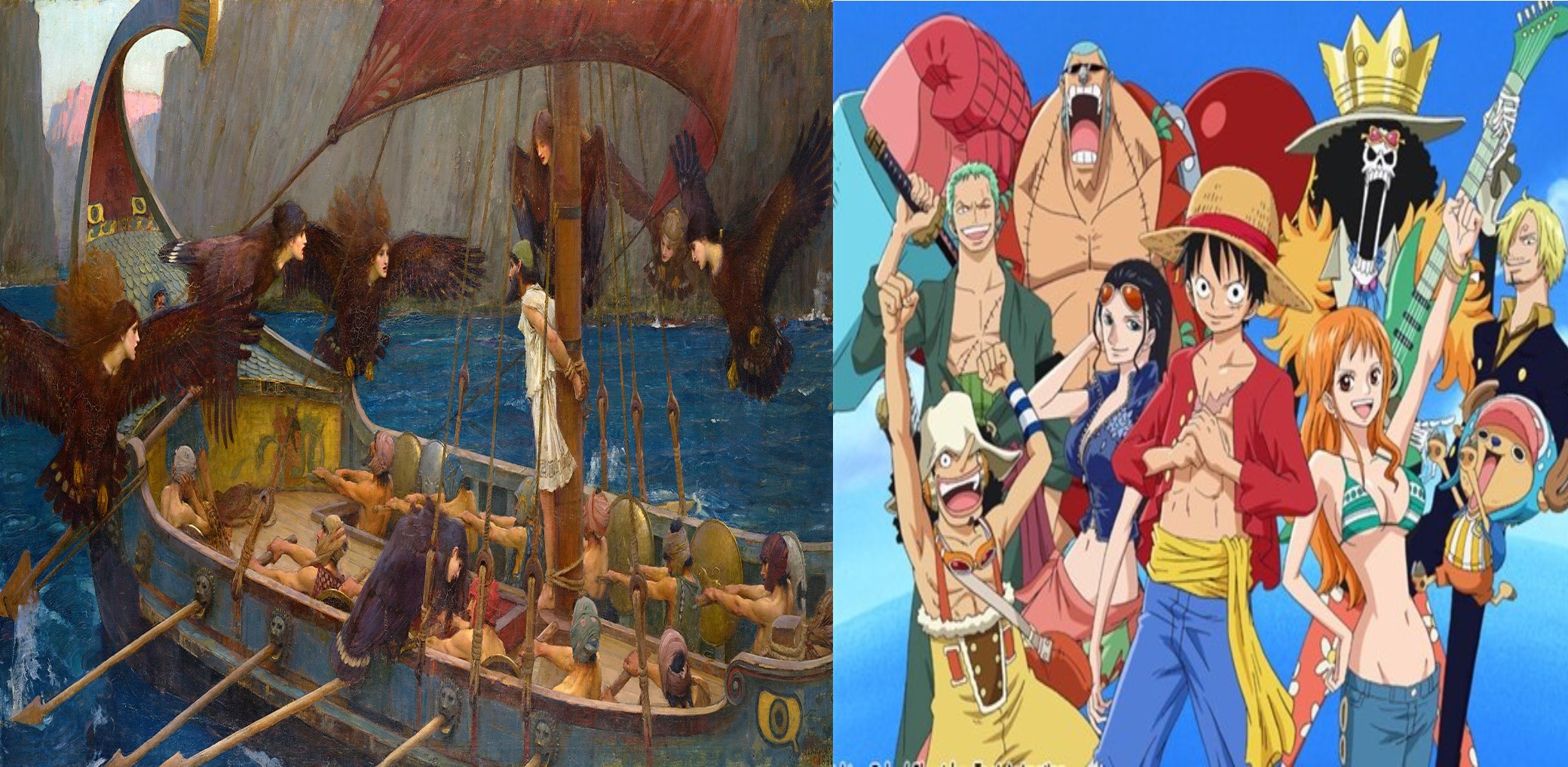
So, I don’t know if I’m the only one who thinks this, but One Piece is a modern-day Odyssey. Nani (for those of you who don’t know, “nani” is the Japanese word for “what”)???? Yes, you heard it right! The anime/manga series “One Piece” is a modern-day version of “The Odyssey!” You know; that epic from ancient Greece that you learn about in high school and whatnot (at least, I assume people learn about it in high school. I don’t know what the curriculum is like in other high schools. I went to a private school, and I know that I learned about “The Odyssey” in my school)? The one that’s written by a guy named Homer who’s last name is not Simpson (and who, as far as I’m aware, doesn’t even have a last name, because it was written during a period of time when last names weren’t a thing, or at the very least, weren’t very common)? Yes; that “Odyssey!” How so? Well, One Piece has a lot of similar themes, and a similar story structure, to The Odyssey! Let me show you what I mean! Now, before I begin, I’m going to point out that there are A LOT of themes in both The Odyssey and One Piece that I could make numerous blog posts about and whatnot, but I’ll save those for another time! For now, I just want to highlight some major themes and story structures that are similar in both works. Oh, and spoiler alert for those who haven’t read the Odyssey nor read/watched One Piece! With that out of the way, let’s begin!
Synopses
As with all comparative essays, one must start with synopses of the works that are being compared. I will do the same for this blog post!
The Odyssey:
“The Odyssey” focuses on Odysseus’ 10-year journey home to Ithaca after the Trojan War. Along the way, he sails the sea, explores different islands, faces many powerful enemies (such as gods and monsters), and meets many different people!
One Piece:
“One Piece” is about a boy named Luffy who sets off to sea at 17 to find the elusive treasure named “The One Piece.” Along the way, he gets together a crew, explores different islands, faces many powerful enemies (some with superhuman abilities, thanks to these fruits called “Devil Fruits,” and some without), and makes many new friends!
Similarities
Now that I’ve summarized the premises of “One Piece” and “The Odyssey,” I will now present to you the various similarities in both works!
Epic-style storytelling:
Right off the bat, one should note that both works have an epic-style storytelling. What is an epic? According to Merriam-Webster dictionary, an epic is defined as “a long narrative poem in elevated style recounting the deeds of a legendary or historical hero” (https://www.merriam-webster.com/dictionary/epic). Now, obviously “The Odyssey” fits this definition exactly. It was a long poem, written during ancient Greece, that narrates the journey of Odysseus as he makes his way home to Greece. Along the way, he accomplishes many feats that seem “legendary” and “heroic.” Odysseus embarks on the hero’s journey, and we see him grow and evolve as the narrative goes on. “The Odyssey” definitely fits the definition of what constitutes an epic. Does “One Piece” fit the definition, as well? I would say yes.
How does “One Piece” fit the definition of what it means to be an epic? Of course, it isn’t a poem. It is an anime/manga series! However, it is focused mainly on the journey of a central character (Luffy) as he travels the world in search of the mysterious “One Piece” and become Pirate King! Throughout the series, Luffy and his crew are seen accomplishing many feats that other characters thought were impossible to achieve! We (the audience) see Luffy and his crew grow and develop throughout the course of the series! Sure, “One Piece” may not be the standard form of an epic tale, however, it is still an epic tale, in my opinion! Luffy embarks on the hero’s journey at the very start of the series, and from there, we witness Luffy’s quest to reach “The One Piece!” Similarly, in “The Odyssey,” we (the audience) witness Odysseus’s quest to get back home!
Importance of the sea:
The sea plays a pivotal role in both “The Odyssey” and “One Piece.” In both works, the sea is used as a mode of transport to get from one destination to another. The characters use sea-faring ships to traverse the sea and go from island to island.
The sea is also a means of escape for the characters in both works. Odysseus uses the sea to escape Calypso’s island, and the Straw Hats use the sea to escape many perilous situations, such as escaping from Enies Lobby after their battle with CP9. The sea also evokes a sense of uncertainty and danger in both “The Odyssey” and “One Piece.” In “The Odyssey,” once Odysseus sets out to see after escaping the island of Calypso, he doesn’t know what lies ahead of him. All he does know is that for him to reach Greece, he has to traverse straight through the uncertainty that lies ahead. In “One Piece,” the end goal of the Straw Hats from the very beginning of the series is to reach Raftel and find the One Piece. To get there, they have to travel along the Grand Line, which has it’s own perils and dangers that many pirates may not expect.
The sea is also used as a means to world-build and character-build. Many interesting characters are met on the sea, many unique places are discovered while traveling on the sea, and many pivotal moments for the characters in both works take place on the sea!
Significance of the number “10”:
The number “10” is prevalent throughout both works. In “The Odyssey,” the number “10” is used to denote how many years have passed since the end of the Trojan War. The Trojan War itself had lasted for 10 years, which parallels how long it’s been since Odysseus has not returned home.
In “One Piece,” the number “10” is the number of crew members Luffy wants to gather before the end of the series (so far, he has nine, which leads fans to speculate who is, or will be, the 10th member of the Straw Hats). The number “10” is also the number of members are on Blackbeard’s crew (excluding Blackbeard himself, and excluding Doc Q’s horse). The 10 crew members on Blackbeard’s crew are nicknamed “The Ten Titanic Captains,” for they are captains of smaller divisions of the Blackbeard crew. Blackbeard and his crew are foreshadowed to be the antitheses for Luffy and his crew, for the are the opposite in almost every single way in terms of personality, but similar in every single way in terms of their capabilities and roles on their respective crews. The number “10” is also the number of years it was between Luffy meeting Shanks for the first time and receiving the Straw Hat at 7 years old to Luffy setting out to sea and beginning his adventure at 17. The number “10” is also the number of years it was between Shanks lost his arm to save Luffy from drowning and getting eaten from the giant Sea King and Luffy defeating the Sea King with one punch, which was a pivotal moment for Luffy and his character. When Luffy was 7, he was weak. He had just eaten the Gum-Gum fruit and received his rubber abilities, so he was not used to his powers and weaknesses (such as losing the ability to swim for the rest of his life). Because Luffy was weak, he could not defend himself from the bandits that kidnapped him, he could not swim to safety, and he could not fight against the Sea King that tried to eat him. Thus, he relied on Shanks, his hero, to save Luffy during those critical moments in his life. At the end of all of that, when Shanks and his crew were about to leave Foosha Village, Luffy tells Shanks that he wants to be just like him when he grows up, and that he’ll gather his own crew and become a pirate just like him. As a symbol of their bond, Luffy’s dreams, and the promise that Luffy makes to Shanks, Shanks gives Luffy the straw hat he was wearing, and tells Luffy to give it back to him when they meet again! Ten-years was also how old Luffy’s brother Sabo had set out to sea and “died.” It was after Sabo’s “death” that Luffy and his brother Ace made a promise to always protect each other, that they’d set out to sea at 17, and that no matter what crew they were on, they’d always be brothers at heart!
As you all can see, the number “10” is a significant number in both works! There are probably even more examples I could list about the significance of the number “10,” but I won’t because I don’t want to sound like a bore. However, it is something interesting to think about!
Larger-than-life villains:
Both works are filled TO THE BRIM with larger-than-life villains, both literally and figuratively! In “The Odyssey,” Odysseus fights against gods, giants, monsters, and creatures. In “One Piece,” Luffy and crew face off against giants, creatures, really big enemies that aren’t considered giants, and characters that are very powerful. In both works, these enemies are represented as larger-than-life, either physically (i.e. size) or figuratively (i.e. power). Significant size differences can make someone seem small. Luffy’s and Odysseus’s sizes are closest to the sizes of a real human, and seeing them face off against gigantic enemies can create a feeling of tension, and it can be very cathartic to see them overcome the enemies that are larger than them.
Obstacles:
In both works, there are TONS of obstacles throughout the worlds! In “The Odyssey,” Odysseus face monsters, giants, gods, and creatures, prevails through storms, whirlpools, and wreckage, treks through different islands, and deals with the wrath of numerous gods in order to get back home.
In One Piece, Luffy and crew come across various obstacles while traveling the seas, from pirate crews attacking them to Marines ambushing them. They also need to brave through storms, fight past sea monsters, and find their way past rocks, cliffs, and mountains that get in their way.
Theme of freedom:
Both works have a running theme of freedom. Odysseus and Luffy both long freedom. For Odysseus, he longs to be free of the curse that the gods put on him so he can get back home. When he is trapped on numerous islands, he wants to be free from his prison so he can get back home. Once Odysseus is home, he defeats all of the suitors so he can be free to be with his wife in private and live the rest of his life in peace and tranquility.
In One Piece, Luffy and crew desire freedom in their own way. They all want to be free to roam the seas without any Marines or pirates attacking them, and they want to be able to freely accomplish the dreams and goals that they have. When Luffy and crew are trapped by enemies, they long to return to the sea, because for them, the sea represents freedom. It is at the sea that they are truly free. On the sea, they can sail away to anywhere. When Luffy sees other people getting hurt, he wants to do everything that he can so that they can be free of the pain and suffering that they are enduring.
Theme of rebellion:
There is a lot of rebellion in both works. In “The Odyssey,” Odysseus rebels against the will of the gods. The gods want him to die, but Odysseus defies what they want. When he returns to Ithaca, he finds that suitors want his wife. Odysseus defies what the suitors want by slaying all of them.
In One Piece, Luffy and crew rebel against antagonistic forces on numerous occasions. When they face Crocodile on Alabasta, they rebel against him and his entire organization in order to save the people living in the kingdom. When they face Doflamingo on Dressrosa, they rebel against him and his crew, and create an uprising of pirates, Marines, citizens, and enslaved denizens so that they can save the island from the evil tyrant. There are so many more examples that I can list, but I won’t. I only listed notable examples from the series.
Theme of loyalty:
In both works, loyalty is a major theme. Both Odysseus and Luffy care about their respective crews and families. Odysseus cares about his crew and his wife a lot. He does all he can to try to bring his crew home, and he does all he can to try to get back to Ithaca to see his wife.
In One Piece, Luffy cares a lot about his crew, his friends, his brothers, his grandpa, anyone he meets along his journey whom he finds really nice, and anyone who is in suffering or is in pain. He does all he can to help people in need, and will go at great lengths for people he cares about, regardless of how long he’s known them. He’s even willing to go so far as to sacrifice himself for his crew. Luffy’s crew is also very loyal to him and one another. Whenever they are faced with difficult situations, they are willing to put themselves on the front line in order to save each other.
Theme of resilience:
The main protagonists in both works are very resilient. Odysseus faces so many foes, obstacles, and hardships to get back home, and even when he’s home, he faces so many enemies to get to his wife. For many, witnessing one’s own crew perish right in front of their own eyes would cause them to break, but not Odysseus. Instead, he stands tall and braves through it all. He braves through every obstacle that the gods throw at him so he can make it back home, even if he winds up returning home alone. It is his resilience, willpower, and bravery that allows him to get back home.
In One Piece, Luffy and crew are very resilient. No matter how tough the enemies may be, they use all of their strength, skills, and wit in order to defeat them. Even if they are almost on the verge of defeat, they manage to pull through and come out victorious.
Differences
Some vs none:
In “The Odyssey,” Odysseus starts out with a crew. Towards the end, he loses his crew, as well as all of the people that helped him get back home. In “One Piece,” Luffy starts his journey by himself. Over the course of the series, he gathered a crew and made allies along the way. Luffy’s journey is the reverse of Odysseus’s in terms of how it starts out. Luffy starts out with no one and eventually ends up with a crew and allies, while Odysseus starts out with a crew and allies, but ends up coming back home without them.
Individualism vs collectivism:
In both works, there are many examples of Odysseus and Luffy holding their own, as well as many examples of them relying on others. When comparing the two characters, however, Odysseus tends to rely on his crew and others a lot, while Luffy relies on himself most of the time. There are some cases, however, where Odysseus is forced to rely on himself (i.e. when his crew members perish in front of his eyes). As for Luffy, there are cases where he needs to rely on his crew (i.e. when there is an enemy that is too strong for any of them to handle individually).
Brains vs brawn:
When it comes to Luffy and Odysseus, there is a stark contrast when it comes to how they deal with enemies. For Odysseus, he is strategic. He plans his every move, and relies on his brains and wit in order to overcome difficult situations. For Luffy, on the other hand, he relies on strength and emotion. He uses his brawn to fight his way through most of his problems. This mentality has gotten Luffy and his crew into trouble on more than one occasion.
Maturity vs immaturity:
To build upon the previous point, relying on brains can be seen as an example of maturity, while relying on strength can be seen as an example of immaturity. When challenges arise in life, one needs to be logical and strategic. Relying on pure emotion gets one nowhere, because it clouds one’s judgment and prevents them from seeing other perspectives, outcomes, and solutions. This is especially true in survival situations. In order to have the best chances of success and making it out alive, one needs to be logical and strategic, for one mistake or mishap could prove fatal.
During the Punk Hazard arc, there is one scene where Zoro scolds Luffy for being too reckless, and that he needs to take things more seriously, otherwise he’d put him and the rest of the crew in serious danger.
Conclusion
So, as you can see, there are a lot of interesting similarities and parallels between “The Odyssey” and “One Piece.” There is a lot more comparisons and contrasts I could probably make, but I think I’ve said enough for now. If you want, check out this blog post from another One Piece fan who had also found interesting similarities between “One Piece” and “The Odyssey.” Give it a read!