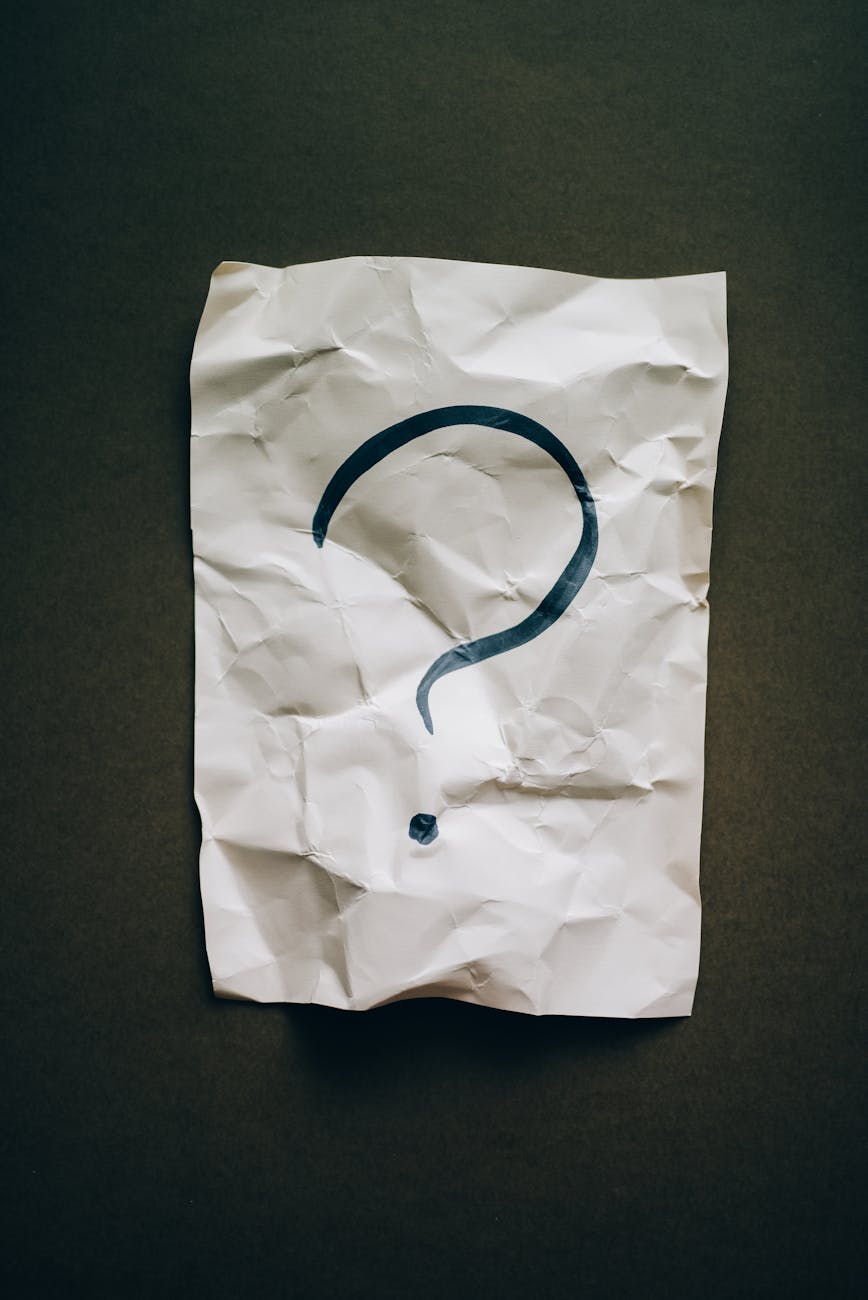
In a world obsessed with certainty, expertise, and constant information, it can feel uncomfortable, even shameful, to admit that we do not know something. From the moment we enter school, we are conditioned to seek answers, to value knowledge as an indicator of intelligence, and to fear being wrong. Yet, paradoxically, the truth is that no one, not even the most accomplished scholars, scientists, or thought leaders, knows everything. Human knowledge, though vast and impressive, is finite, fragmented, and constantly evolving. Embracing not knowing—truly accepting the limits of our understanding—is not a sign of weakness, but a form of intellectual and emotional liberation. It allows us to engage with the world more honestly, to question assumptions, and to develop a discernment that goes far beyond superficial facts or credentials.
Acknowledging that we do not know everything is a radical act in a society that prizes confidence, certainty, and the appearance of control. From politicians and influencers to professors and executives, the cultural pressure to appear knowledgeable often outweighs the pursuit of genuine understanding. People are rewarded for projecting authority, even when it is shallow, while admitting uncertainty is sometimes viewed as incompetence. Yet the reality is that uncertainty is the default state of human existence. Even the most brilliant minds are navigating a landscape filled with unknowns, and history is replete with examples of experts confidently asserting falsehoods. Accepting not knowing is an act of humility, a recognition that our minds, while powerful, are limited, and that the universe is far more complex than our conceptual frameworks can fully capture. When we accept that, we are freed from the anxiety of needing to have all the answers and from the fear of looking foolish.
Not knowing is not merely tolerable—it is essential to growth. True curiosity and learning emerge from a place of openness and uncertainty. When we approach a subject without pretense, without assuming mastery, we are in a position to genuinely listen, observe, and explore. Children embody this state naturally; they ask questions relentlessly because they do not yet know, and this lack of knowledge fuels discovery. As adults, reclaiming that willingness to not know becomes a powerful tool. It allows us to step outside of ego-driven performance, to engage with ideas and people more authentically, and to remain flexible when confronted with new information that challenges our assumptions. In essence, embracing not knowing fosters intellectual humility and adaptability, qualities that are increasingly vital in a world of rapid change and unprecedented complexity.
The ability to recognize when others are pretending to know is another profound benefit of embracing our own ignorance. In a society awash with information, misinformation, and performative displays of expertise, the confidence to say “I don’t know” can be more revealing than the most polished lecture. People who claim certainty, who present opinions as facts without acknowledgment of nuance or context, can often be detected when we are comfortable with our own uncertainty. Accepting that we do not know everything sharpens our perception; it tunes us into inconsistencies, overgeneralizations, and the subtle signals of intellectual pretense. This discernment is not about cynicism or mistrust—it is about clarity and honesty. By understanding the limits of our knowledge, we become adept at recognizing when others are compensating for their own gaps, when authority is performative, or when the truth is being oversimplified for convenience or manipulation.
Moreover, embracing not knowing cultivates a form of resilience. The fear of uncertainty can drive poor decision-making, rigid thinking, and a compulsive need for validation. Conversely, accepting that we cannot predict or understand everything allows us to engage with challenges more creatively and with less ego-driven pressure. It opens the door to experimentation, risk-taking, and exploration without the paralysis of needing guaranteed outcomes. In this sense, not knowing is not merely a passive state but a dynamic one: it is an active engagement with mystery, complexity, and the unknown. It teaches patience, encourages reflection, and strengthens our capacity for empathy, because it reminds us that everyone is navigating their own landscape of uncertainty.
This mindset has implications beyond intellectual discernment; it profoundly impacts interpersonal relationships. In acknowledging our own ignorance, we can communicate more openly, listen more attentively, and collaborate more effectively. People tend to respond positively to honesty, vulnerability, and authenticity. By admitting that we do not have all the answers, we create space for dialogue, for multiple perspectives, and for the possibility that someone else’s insight may illuminate what we cannot see. In contrast, a facade of omniscience can stifle trust, provoke defensiveness, and limit learning. The willingness to say “I don’t know” or “I’m not sure” fosters connection, encourages curiosity, and signals integrity—qualities that are far more valuable than the superficial allure of certainty.
Culturally, embracing not knowing challenges the idolization of expertise. In every era, societies have tended to place experts on pedestals, conflating authority with truth. Yet history shows us that even recognized authorities have been fallible, and often catastrophically so. Scientists, leaders, and scholars have been wrong, biased, or limited by the paradigms of their time. By internalizing the principle that no one knows everything, we resist the pressure to defer blindly to authority. We learn to question, investigate, and critically evaluate claims. This does not mean rejecting knowledge or expertise outright, but rather situating it within a framework of humility and discernment. Expertise becomes a tool, not a gospel; guidance, not dogma. In other words, accepting our own limitations equips us to navigate the world more intelligently and safely.
Embracing the unknown also encourages psychological freedom. Many people experience discomfort when faced with uncertainty, whether it is about personal decisions, global events, or existential questions. The fear of not knowing can provoke anxiety, compulsive over-preparation, or avoidance. Yet paradoxically, when we fully acknowledge that some things are unknowable, we can release the burden of needing control. This is a form of liberation: a mental state in which curiosity, creativity, and presence replace fear, rigidity, and perfectionism. By accepting not knowing, we can inhabit life more fully, attuned to subtle cues, and open to discovery, rather than trapped in the illusion of omniscience.
In practical terms, embracing uncertainty can improve decision-making. When we accept that we do not have all the information, we are more likely to seek diverse perspectives, consider alternatives, and weigh evidence thoughtfully. We resist impulsive conclusions based on incomplete understanding. Similarly, in conversations, business, science, or politics, the admission of uncertainty invites collaboration and innovation. Those who pretend to know everything, in contrast, risk errors, dogmatism, and alienation. Recognizing the limits of knowledge is not a weakness; it is a strategic advantage, allowing for informed judgment, creative problem-solving, and an adaptive approach to complex situations.
Accepting the limits of knowledge also has a profound ethical dimension. In a society increasingly polarized by ideology and misinformation, the pretense of certainty can be weaponized to manipulate, dominate, or deceive. Those who project confidence while lacking understanding can mislead masses, justify harmful policies, or perpetuate false narratives. By cultivating comfort with not knowing, we are less susceptible to such manipulation. We approach information critically, question motives, and differentiate between genuine expertise and performative authority. This discernment, rooted in the humility of acknowledging our own ignorance, becomes a moral compass, helping us navigate truth in a world filled with ambiguity and deception.
It is important to note that embracing not knowing is not passive skepticism or cynicism. It is an active, engaged stance toward life, learning, and understanding. It means saying “I do not know, but I am willing to explore,” rather than retreating into inaction or doubt. It means valuing curiosity over certainty, inquiry over dogma, and openness over rigidity. It is a mindset that fosters continuous learning, adaptability, and resilience. In essence, it transforms uncertainty from a source of fear into a source of empowerment—a lens through which we can better understand ourselves, others, and the world.
Furthermore, recognizing the limits of knowledge fosters creativity and innovation. The willingness to confront unknowns, rather than insist on pre-existing answers, drives exploration and problem-solving. Artists, scientists, inventors, and thinkers often produce their most significant breakthroughs when they step into the unknown, when they embrace questions without immediate solutions. Curiosity, imagination, and experimentation thrive in the space where knowledge ends. By admitting our limitations, we create fertile ground for discovery, insight, and transformation, both individually and collectively.
Embracing not knowing also nurtures emotional intelligence. It allows us to navigate uncertainty in relationships, work, and life with grace. When we accept that we cannot predict outcomes or control every variable, we become more patient, empathetic, and understanding. We are less likely to judge others harshly for their mistakes or misunderstandings and more capable of offering support and collaboration. This mindset encourages reflection, humility, and the acknowledgment that everyone is learning, evolving, and encountering unknowns in their own way.
Importantly, accepting not knowing can prevent the trap of arrogance. When we believe we know everything, we close ourselves off to learning, dismiss alternative viewpoints, and become defensive in the face of contradiction. This intellectual arrogance often undermines credibility, alienates allies, and obstructs growth. Conversely, acknowledging ignorance allows us to remain open, adaptable, and credible. It signals wisdom, not weakness. It tells the world that we are capable of learning, willing to listen, and unafraid to confront complexity honestly.
Finally, embracing the unknown fosters a deeper connection to reality itself. Life is inherently uncertain, complex, and often mysterious. By accepting that not all questions have answers, that not all patterns are comprehensible, and that certainty is rarely absolute, we cultivate resilience, mindfulness, and presence. We can engage with the world fully, aware of both our capacities and our limitations. This awareness allows us to navigate life with clarity, authenticity, and discernment, sensing pretenses, recognizing deception, and valuing truth in its multifaceted forms.
In conclusion, embracing not knowing is both a profound challenge and a transformative opportunity. It requires humility, courage, and a willingness to face uncertainty without fear. It allows for intellectual growth, emotional resilience, ethical discernment, and authentic engagement with others. By accepting that no one knows everything, we free ourselves from the pressures of perfection and pretense, attune ourselves to the subtleties of truth, and develop a keen ability to recognize when others are bluffing or pretending. Not knowing is not a deficit; it is a gateway to curiosity, creativity, insight, and wisdom. In a world dominated by noise, misinformation, and performative certainty, the willingness to admit ignorance, to explore, and to discern with clarity becomes one of our most valuable tools. It is not just okay to not know—it is essential, empowering, and profoundly human.