The Musings of Jaime David
@jaimedavid.blog@jaimedavid.blog

The writings of some random dude on the internet

1,089 posts
1 follower

Tag: creative freedom

  • Censorship vs. Creativity: How Government-Imposed ‘Bias Monitors’ Could Shape the Future of Writing

    Censorship vs. Creativity: How Government-Imposed ‘Bias Monitors’ Could Shape the Future of Writing

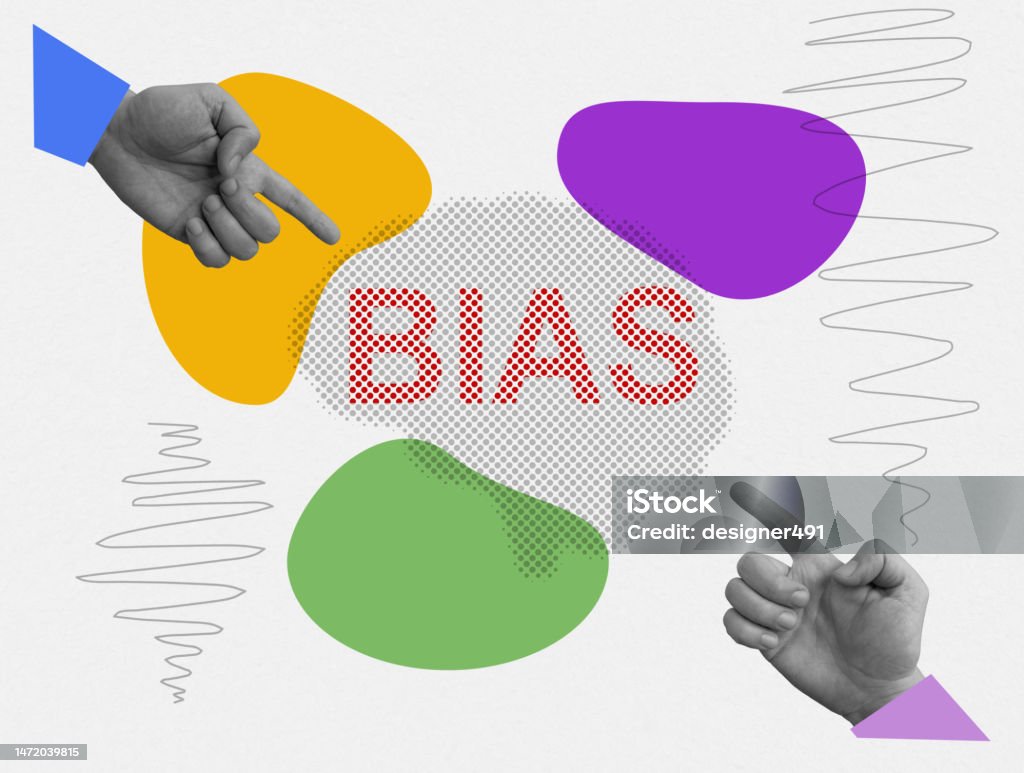
    In a recent development that has sent shockwaves through the media industry, CBS News became embroiled in controversy over the imposition of a “bias monitor” following a lawsuit filed by former President Donald Trump. The federal government’s approval of this corporate merger between CBS’s parent company and Skydance, which included the creation of this position, signals a disturbing trend that could impact the future of writing in ways we might not yet fully understand. The idea of a “bias monitor” might sound distant from the everyday challenges writers face, but in truth, it threatens the very freedom upon which creative expression is built.

    Writers have always faced challenges when it comes to producing work that can be deemed controversial or politically sensitive. From censorship battles in various forms of media to the quiet ways in which industries suppress certain narratives, the world of creative writing has often been shaped by forces beyond the page. The introduction of government or corporate “bias monitors” introduces a new level of oversight and regulation that could severely limit the freedom of writers to explore challenging or unpopular topics. This is not just a matter of editorial influence; it’s about who gets to decide what stories are worth telling and which voices deserve to be heard.

    One of the most alarming aspects of this situation is the precedent it sets for future interventions in media outlets. If a corporation like CBS, under pressure from political entities, can be forced into setting up such a “monitor,” what’s to stop other organizations from following suit? Writers who depend on platforms such as news outlets, literary magazines, or even self-publishing avenues could find their voices increasingly constrained by the fear of government interference. This is not just a theoretical concern—it’s a real risk, especially in a time when political polarization is at an all-time high.

    In fiction, the idea of censorship can feel even more insidious. Writers have the power to craft worlds that challenge the status quo, hold up mirrors to society, and question the values we hold dear. But in a world where government-imposed monitors are on the lookout for “bias,” the boundaries of what is considered acceptable may shrink significantly. No longer would it be enough to simply write a story; it could also be necessary to ensure that no political or social group is offended by the content, or worse, targeted for its message. The very act of writing could become an act of self-censorship as writers seek to avoid triggering the political gatekeepers that now permeate even the most creative spaces.

    Even non-fiction writing could face similar challenges. Journalists and investigative writers, who are often tasked with holding power accountable, could find themselves stifled by the presence of a “bias monitor” whose purpose is not to ensure truth, but to protect certain narratives from being challenged. If these monitors are allowed to dictate what constitutes acceptable journalism, the integrity of reporting could be compromised, leaving only the most palatable versions of events to reach the public.

    This situation also raises important questions about the future of independent media. As platforms like Medium and personal blogs continue to serve as the last bastions for free expression, they could easily become targets for the same kind of oversight and control. With the advent of corporate mergers and the growing influence of government in media, independent writers could find themselves at the mercy of larger, more powerful forces, with little recourse to protect their work. The shift from a free, open media to one where content is scrutinized for ideological purity is a dangerous one, and writers must stand vigilant against it.

    In a world where writing is increasingly commercialized and subject to the pressures of big corporations and political power, the idea of censorship may seem inevitable. However, it’s important to remember that writers are also among the most powerful voices in society. Through storytelling, we shape perceptions, challenge the norms, and push back against forces that seek to control the narrative. It is crucial that writers, creators, and journalists alike continue to resist the temptation to self-censor, to push boundaries, and to protect the integrity of the craft. If we don’t, the future of writing could become a landscape defined by conformity rather than creativity.
  • Everything is Poetry: Exploring the Boundaries of Art and Intention

    Everything is Poetry: Exploring the Boundaries of Art and Intention

    Poetry, traditionally confined to rigid forms and structures, has evolved into an expansive and boundless medium. Today, poetry can take virtually any form, style, or structure. From free verse to spoken word, from concrete poetry to a single, carefully chosen word, the rules are no longer set in stone. The essence of poetry is not found in a specific structure but in its intention—the creator’s desire to evoke meaning, emotion, or reflection. The idea that “everything is poetry” arises from this notion: life, in all its facets, can be perceived as poetic if we choose to see it through that lens. However, this broad, all-encompassing idea is only true under one condition: unless something explicitly states it is not poetry, it holds the potential to be.

    The phrase “everything is poetry” is, in essence, a statement about perception and creative freedom. Poetry is not restricted by form or medium. Whether it’s a single word or an entire novel, the boundaries of poetry are governed only by the creator’s intent. A grocery list, for example, might not seem like poetry at first glance, but if it’s crafted with a particular rhythm or emotional weight, it can be transformed into something poetic. The same goes for mundane or everyday elements of life—poetry can be found in the way we observe and interpret the world around us. What makes something poetry is the intent behind its creation, and if the purpose is to inspire thought, emotion, or deeper understanding, then it qualifies as poetry.

    However, the concept of poetry is not without limits. While everything can be poetry, certain things clearly do not intend to be. The preparation sections in a book, such as the copyright page, acknowledgments, or table of contents, are self-defined as non-poetry. These sections are functional, not artistic—they serve to inform or protect, not to evoke emotion or artistic reflection. In this case, they explicitly exclude themselves from being poetry. The very purpose of these parts is to perform a practical function, and thus, they do not belong to the realm of poetry, despite being part of a larger work of art.

    The distinction between what is and isn’t poetry is governed by the intention of the creator. If something is designed to inform, protect, or explain, it is not intended as poetry, and it should be recognized as such. Legal documents, marketing materials, and instruction manuals may contain creative language or clever turns of phrase, but unless they are specifically created to evoke meaning or emotion, they are not poetry. This explicit self-exclusion is what keeps them outside the bounds of poetry, even if, on a surface level, they might seem artistic. When something is created with the intent to inform or serve a practical function, it isn’t viewed through the lens of artistic expression, and thus, cannot be classified as poetry.

    The potential for anything to be poetry hinges on the artistic intent of the creator. Found poetry, a form of poetry that involves taking existing texts—be it advertisements, signs, or instructions—and rearranging them into a new form, exemplifies this idea. Here, the creativity lies in the act of transformation—turning what was once considered non-poetic into something deeply reflective and artistic. Similarly, conceptual poetry relies on the idea behind the work rather than the traditional structure or content. In these forms of poetry, the message is the medium; it’s about recontextualizing the world in ways that reveal something profound, even from the most ordinary materials.

    In essence, poetry is a flexible, expansive medium that exists wherever there is intention to create art. If the creator intends to communicate something deeper, something that transcends the ordinary, that work can be considered poetry. However, as we’ve seen with functional material like introductions, copyright information, or acknowledgments, intentionality matters. When something explicitly states that it is not poetry, we must respect that boundary. These sections are not attempting to evoke artistic or emotional responses—they are there to serve a different function, and as such, they don’t qualify as poetry.

    In conclusion, the statement “everything is poetry” is true in its potential, but it’s important to recognize that not everything is automatically poetry. Intention defines the boundaries—if something is intended to be art, to evoke thought or emotion, then it can be poetry, regardless of form. However, if something is created with a different purpose—be it legal, informational, or functional—it remains outside the realm of poetry. The beauty of poetry lies in its limitless nature, but its true definition always comes down to one fundamental question: what is the intention behind it?