Episode 23 of The Jaime David Podcast is out now!
Listen on Spotify:

The writings of some random dude on the internet

Episode 23 of The Jaime David Podcast is out now!
Listen on Spotify:
Apparently, the internet has decided that there can never be just one Jaime David.
At this point, I am starting to think I should stop being surprised.
First, I came across Jaime David Fernández Mirabal, the Dominican physician, psychiatrist, agronomist, politician, former vice president of the Dominican Republic, and member of the Mirabal family.
Then I found Jaime M. David, the fashion and lifestyle communications professional who has built an entire career around public relations, branding, communications, and creative strategy.
And now?
There is another Jaime David.
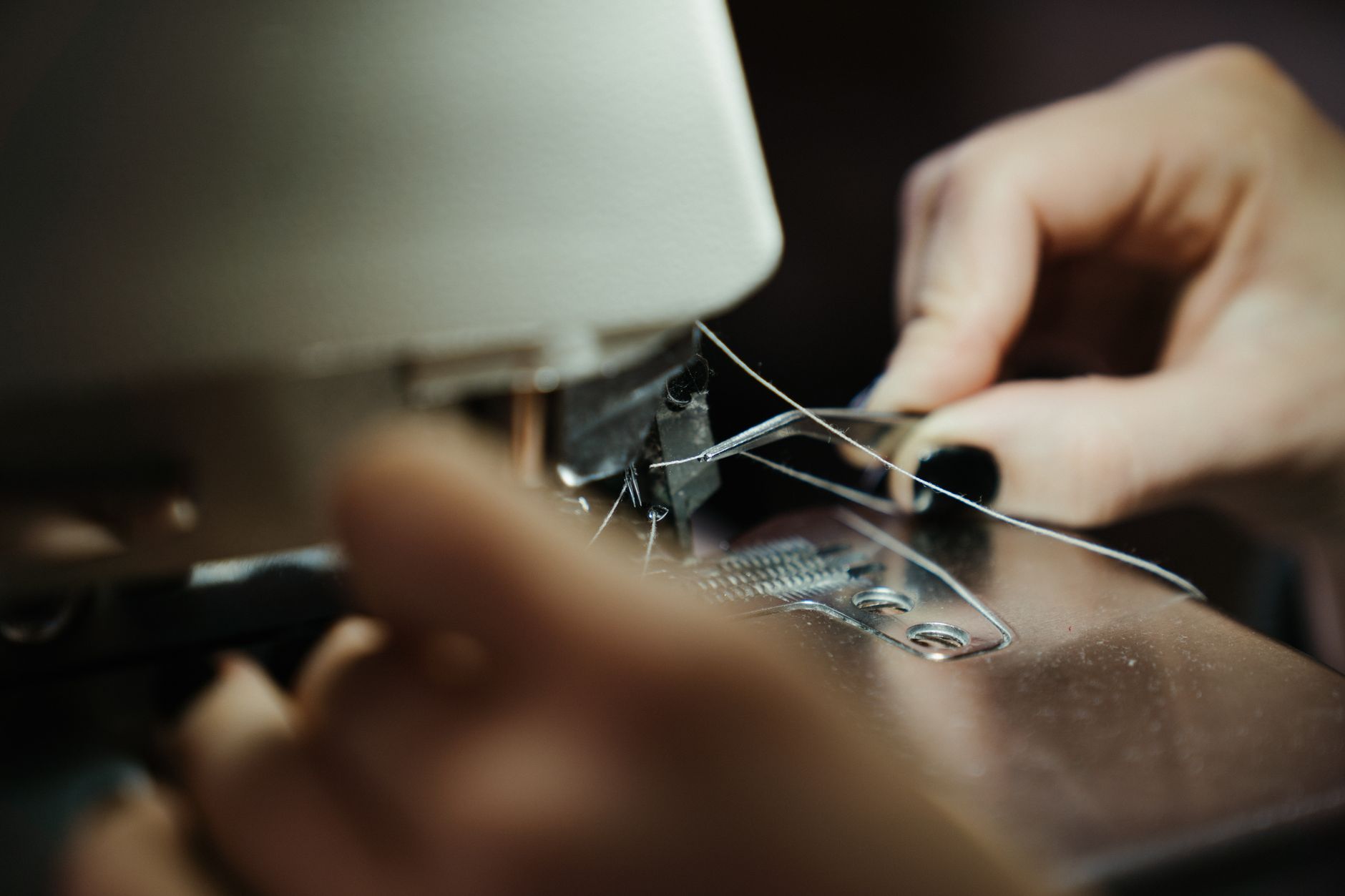
This one is a BERNINA educator.
And not just someone who happens to have the name.
She has written an extensive collection of sewing tutorials and articles, worked as a BERNINA of America educator, specializes in sergers and overlockers, has a background in interior architecture and fine arts, earned a Master of Fine Arts degree in textiles, and has had her textile work displayed in quilt shows and galleries.
At this point, I have to laugh.
Because apparently “Jaime David” is a name that keeps showing up in creative professions.
And considering what I do with the name, I find that incredibly interesting.
According to her author profile on WeAllSew, Jaime David is a BERNINA Educator whose focus is on sergers and overlockers. She combines skills from interior architecture and fine arts with her sewing practice, has written and edited patterns, and has exhibited textile work in quilt shows and galleries across the United States.
That is already a pretty fascinating combination.
Interior architecture.
Fine arts.
Textiles.
Sewing.
Education.
Machine technology.
Pattern design.
Gallery exhibitions.
It is the sort of creative career that reminds me how many different ways there are to make things.
And that is probably the part that interests me most.
Because when people hear “creative,” they often immediately think about the obvious categories.
Writing.
Painting.
Music.
Film.
Photography.
But creativity is much bigger than that.
Some people create with words.
Some create with sound.
Some create with cameras.
Some create with computers.
Some create with fabric.
Some create with thread.
Some create with sewing machines.
Some create entire environments.
And this Jaime David has made an entire creative life around materials that I honestly know very little about.
Which makes her work all the more interesting to me.
This is where I love the weirdness of the name coincidence.
I write.
She sews.
I make music.
She makes textiles.
I record podcasts.
She teaches people how to use sewing machines and overlockers.
I spend time thinking about essays and blog posts.
She spends time thinking about stitches, fabrics, patterns, garments, and construction.
We are not exactly competing for the same audience.
And that’s a good thing.
Because it makes the coincidence more interesting.
There isn’t much reason for our paths to cross professionally.
Yet here we are.
Two people with the same name who have both turned that name into part of a public creative identity.
That’s what keeps catching my attention about all of these other Jaime Davids.
It’s not merely that the name exists.
It’s that these people are actually doing things with it.
They have careers.
They have projects.
They have websites.
They have bodies of work.
They have audiences.
They have stories.
And now, apparently, there is a whole little collection of Jaime Davids scattered across different corners of the internet.
One of the things that immediately stood out to me about this Jaime David is her educational background.
Before becoming a BERNINA educator, she worked as a kitchen designer, using a bachelor’s degree in Interior Architecture.
She then pursued a Master of Fine Arts degree in Textiles.
And before joining BERNINA’s education team, she spent seven years working at a local BERNINA dealership.
She eventually became a full-time BERNINA of America educator and Overlocker/Serger Specialist.
I love that progression.
Because it is not a straight line.
It is a collection of skills that eventually converge.
Architecture.
Design.
Textiles.
Sewing.
Education.
Technology.
That sounds familiar.
Not because my career is anything like hers.
It isn’t.
But because I also find myself combining seemingly unrelated interests.
I have a scientific and technical background.
I write.
I make music.
I podcast.
I publish books.
I work with digital platforms.
I am interested in technology.
I am interested in art.
I am interested in history.
I am interested in politics.
I am interested in storytelling.
And sometimes those things overlap in ways that probably make absolutely no sense to anyone else.
But I have stopped worrying about that.
Maybe creativity is supposed to be a little messy.
One of the most interesting things I found was an older WeAllSew feature from 2017 called “Studio Tour with BERNINA Educator, Jaime David.”
In it, she introduces herself and describes her work, her studio, and her creative process. She explained that she was one of ten BERNINA of America educators at the time and that she had taken the position of Overlocker/Serger Specialist two years earlier. She described the position as essentially her dream job.
But what really caught my attention was her description of the studio itself.
She had a dedicated space for sewing and artwork in Kansas City.
She described the studio as serving multiple functions: office, library, ironing area, art room, sewing space, and workspace.
There was a huge four-by-eight-foot working surface.
There were machines.
Fabric.
Books.
Patterns.
Projects.
A design wall.
A photography corner.
A library.
Works in progress.
And, naturally, a whole lot of sewing-related stuff.
Reading that, I had one immediate thought:
This is what a creative life looks like.
Not necessarily glamorous.
Not necessarily perfectly organized.
Not necessarily Instagram-perfect.
Just a room filled with things you are working on.
A place where ideas become physical objects.
A place where unfinished projects can sit around waiting for you to come back to them.
A place where you can experiment.
That is something I understand.
My materials just happen to be different.
Her studio is a physical space.
Mine is increasingly digital.
That might be one of the biggest differences between us.
She has fabric.
I have files.
She has sewing machines.
I have audio software.
She has cutting tables.
I have keyboards.
She has thread.
I have words.
She has patterns.
I have drafts.
She makes physical objects.
I make things that often exist primarily as digital objects.
But there is a common idea underneath all of that.
You need somewhere to make things.
You need a space where experimentation is allowed.
You need a place where things can be unfinished.
And you need to be comfortable with the fact that the creative process is often messy.
That last part is particularly important.
Because the finished product can make creativity look easy.
A finished quilt looks finished.
A finished garment looks finished.
A finished song sounds finished.
A finished book looks finished.
A finished blog post looks finished.
But none of those things tell you how many failed attempts came before them.
They don’t show the scraps.
They don’t show the discarded versions.
They don’t show the mistakes.
They don’t show the hours spent wondering whether something is working.
They only show you the final object.
Her WeAllSew author archive is extensive.
She has written about overlockers, sergers, jeans, buttonholes, rivets, hardware, embroidery, French seams, binding, stretch stitches, coverstitch techniques, sewing with vinyl, custom garments, pillows, ties, laundry bags, baby items, and plenty more.
There is even an entire series of jeans-related tutorials.
In one of those posts, she explains that after getting interested in making jeans around the time of the Ginger Jeans pattern craze, she eventually developed her skills to the point where she was making roughly two pairs of jeans a year. She also talks about how different denim fabrics can be and how much the small details matter.
That is dedication.
Because making your own jeans is not exactly the same thing as buying a pair at a store.
You have to understand the material.
You have to understand the pattern.
You have to understand fit.
You have to understand stitching.
You have to understand construction.
You have to deal with hardware.
And then, presumably, you have to accept that the first attempt may not be perfect.
That is the same basic philosophy behind almost every creative discipline.
You learn by doing.
You make something.
You screw something up.
You figure out why.
You try again.
Eventually, you get better.
I have been doing that with music.
When I started making music, I did not suddenly know what I was doing.
I experimented.
I recorded things.
I messed around with sounds.
I used Audacity.
I played instruments.
I tried different arrangements.
I tried different genres.
I made things that worked.
I made things that absolutely did not work.
And then I made more things.
Eventually, those experiments became songs.
The songs became albums.
And the albums became part of a larger creative identity.
That process is not fundamentally different from learning how to sew.
The tools are different.
The technical knowledge is different.
The end product is different.
But the philosophy is remarkably similar.
You learn the tools.
You experiment.
You make mistakes.
You improve.
You create something.
Then you create something else.
Jaime David’s relationship with BERNINA is not just about using sewing machines.
She became part of the company’s education team.
In her 2017 introduction, she described being one of ten BERNINA of America educators and working as an Overlocker/Serger Specialist.
That means her creative knowledge became something she could teach to other people.
And I think there is something really cool about that.
Creating something yourself is one thing.
Teaching someone else how to create it is another.
You have to understand your own process well enough to explain it.
You have to anticipate where someone else might get confused.
You have to break complicated things into understandable steps.
You have to communicate.
And that brings us right back to the other Jaime Davids I have already written about.
The communications professional.
The politician and physician.
And now the sewing educator.
Different careers.
Different worlds.
But all of them involve communication in one way or another.
Maybe I am overthinking this.
Probably.
But I find it funny that every time I discover another Jaime David, there is some kind of interesting connection to what I do.
Not a literal connection.
A conceptual one.
Jaime David Fernández Mirabal has a life centered around medicine, public service, politics, and history.
Jaime M. David has a career centered around communications, branding, and storytelling.
This Jaime David has a career centered around art, textiles, sewing, education, and creative craftsmanship.
And I am over here writing blog posts, making music, producing podcasts, publishing books, and apparently writing essays about other people named Jaime David.
At some point, the universe is just trolling me.
The more of these people I find, the more I think about what it actually means to build a creative identity.
A name by itself isn’t enough.
You have to put something behind it.
You have to do something.
You have to make something.
You have to develop skills.
You have to create a body of work.
That is what I find most interesting about this Jaime David.
Her name appears on dozens of sewing tutorials.
Her name is attached to educational material.
Her name is attached to textile work.
Her name is attached to BERNINA.
Her name is attached to a studio.
Her name is attached to a career.
The name isn’t the interesting part by itself.
The interesting part is what she has done with it.
And that is exactly how I want to think about my own name.
I don’t want my name to be famous simply for the sake of being famous.
I don’t even necessarily care about being famous.
What I care about is having created something.
I want there to be things attached to the name.
Words.
Songs.
Books.
Episodes.
Ideas.
Projects.
Essays.
Maybe some things people love.
Maybe some things people hate.
Maybe some things that make people laugh.
Maybe some things that make people think.
Maybe some things that nobody notices at all.
That’s okay.
The point is that I made them.
That is what I think about when I see someone like this Jaime David.
She didn’t just have the name.
She built a career.
She developed expertise.
She taught people.
She made things.
She documented what she knew.
She shared it with an audience.
That’s a legacy of its own.
There is something especially fascinating to me about textile art because of how tangible it is.
Writing is intangible.
Music is largely intangible.
A podcast is intangible.
A digital blog post is intangible.
You can save them to a hard drive.
You can stream them.
You can read them.
But you cannot hold a blog post in your hands.
Textile art is different.
You can touch it.
You can feel the fabric.
You can see the stitches.
You can see how materials have been assembled.
You can see evidence of the human hand.
And that makes it a very different kind of storytelling.
A piece of textile art can communicate something without saying a single word.
A garment can communicate identity.
A quilt can communicate memory.
A handmade object can communicate care.
A pattern can communicate technique.
A repaired pair of jeans can communicate sustainability and history.
That is storytelling too.
Just without paragraphs.
One of the things that stands out from her work is how often she takes ordinary things and turns them into opportunities to create.
Jeans.
Pillows.
Ties.
Laundry bags.
Baby items.
Clothing.
Swimwear.
Decorative objects.
Instead of simply buying something, she often asks a different question:
What if I made this?
I love that question.
Because “What if I made this?” is basically the foundation of almost everything I do.
What if I wrote this?
What if I recorded this?
What if I turned this poem into a song?
What if I made an album?
What if I started a podcast?
What if I wrote a book?
What if I made another blog?
What if I tried another genre?
What if I just made the thing and saw what happened?
That mentality is powerful.
It turns you from a passive consumer into an active creator.
If I am going to keep discovering other people named Jaime David, I think this is exactly the kind of person I want to find.
Someone who makes things.
Someone who teaches.
Someone who experiments.
Someone who combines disciplines.
Someone who has built a career around creativity.
Someone who has turned knowledge into something useful for other people.
That is far more interesting to me than simply discovering another person with the same name.
The name gets my attention.
The work makes me stay.
I think that is the best part.
If every Jaime David I discovered were doing exactly what I do, this would get boring very quickly.
But we’re not.
One is a Dominican political figure.
One works in fashion and lifestyle communications.
One is a textile artist and sewing educator.
And then there is me.
A writer and musician who somehow decided that all of these things should coexist under one name.
That’s diversity.
And it is a reminder that there is no single way to live under a name.
There is no official Jaime David personality.
There is no predetermined Jaime David career.
There is no destiny attached to the words.
There are simply people.
And each person gets to decide what those words mean in their own life.
I don’t know this Jaime David personally.
I have never met her.
I have never taken one of her sewing classes.
I have never visited her Kansas City studio.
I don’t know what she is doing today.
But I found her work through the internet, and I found the coincidence too amusing not to write about.
Because here is another person who has taken the same name I use and built something completely different with it.
She has spent years working with textiles.
She has taught people how to use sewing machines.
She has created patterns.
She has worked with BERNINA.
She has exhibited artwork.
She has filled studios with fabric, machines, books, patterns, and works in progress.
And she has left a substantial collection of knowledge online for other people to use.
That’s pretty damn cool.
And if nothing else, she gives me another reminder of something I think about constantly:
Create.
Don’t wait until everything is perfect.
Don’t wait until you have every answer.
Don’t wait until you know exactly what the finished product is supposed to look like.
Start with what you have.
Learn.
Experiment.
Make mistakes.
Try again.
Then make something else.
Because eventually, those individual things start adding up.
A tutorial becomes a collection of tutorials.
A project becomes a body of work.
A skill becomes a career.
A hobby becomes an art form.
And a name becomes associated with everything you built underneath it.
That’s the part that matters.
Not that there is another Jaime David.
There are plenty.
What matters is what each of us does with the name.
This Jaime David built a world around sewing, textiles, education, design, and craftsmanship.
Another Jaime David built a career around communications and branding.
Another built a life around medicine and public service.
And I am building mine around words, music, stories, ideas, and whatever strange creative project comes next.
Same name.
Different lives.
Different mediums.
Different stories.
And honestly?
I wouldn’t have it any other way.
Because the more Jaime Davids I find, the more I appreciate being my own.
Not because I am the only one.
But because I am not.
There are other people carrying these same two words.
They are doing their own things.
They are creating their own histories.
They are making their own marks.
And so am I.
So, to the BERNINA educator Jaime David:
Keep sewing.
Keep teaching.
Keep making things.
Keep filling the world with textiles and ideas.
And somewhere in New York, another Jaime David will keep writing, recording, creating, experimenting, and occasionally searching the internet to discover yet another person who shares his name.
Apparently, this is my life now.
And honestly?
I’m kind of enjoying it.

Apparently, I am not the only Jaime David on the internet.
At this point, I am starting to think I should stop being surprised.
First, I came across Jaime David Fernández Mirabal, the Dominican physician, psychiatrist, agronomist, politician, former vice president of the Dominican Republic, and member of the Mirabal family.
Then I found Jaime M. David, a woman who has built an entire professional career around fashion, lifestyle communications, public relations, branding, media, and creative strategy.
And yes, that last part matters.
Because apparently, there is another Jaime David out there who has built a very different kind of creative identity.
Her name is Jaime M. David.
And she has a website.
In fact, she has jaimedavid.com.
Yes.
That is her website.
And considering that I am Jaime David, that I write under the name Jaime David, that I have built The Musings of Jaime David around that name, that I have The Jaime David Podcast, that I release music as Jaime David, and that I have increasingly turned “Jaime David” into my own creative identity, I find this absolutely fascinating.
Not because I think I have some exclusive claim to the name.
I don’t.
Obviously.
But because there is something genuinely interesting about discovering another person who has taken the same two names and turned them into a recognizable public identity.
And unlike Jaime David Fernández Mirabal, this Jaime M. David isn’t a politician or historical figure.
She is a fashion and lifestyle communications professional.
And honestly?
That makes the coincidence even more fun.
Because while we share a name, we occupy completely different corners of the creative universe.
According to her website, Jaime M. David is a fashion and lifestyle communications consultant with more than fifteen years of experience in the industry.
Her work centers around communications strategy, brand positioning, public relations, media relations, editorial placements, founder profiles, events, partnerships, and social-media activations.
In other words, she helps brands figure out how to tell their stories.
And that is a pretty damn interesting career.
Because communications is not simply about sending press releases into the universe and hoping somebody notices.
It is about storytelling.
It is about figuring out what a brand is trying to say.
It is about figuring out how people will perceive it.
It is about finding the right audience.
It is about creating conversations.
It is about making something stand out.
And, perhaps most importantly, it is about understanding that presentation matters.
That is where I find the biggest connection between her work and mine.
We are not doing the same thing.
Not remotely.
But we are both dealing with the same basic question:
How do you take an idea and put it into the world in a way that people actually notice?
This is where the comparison gets interesting.
Jaime M. David works with brands.
I am gradually building one.
Not necessarily a commercial brand in the traditional sense.
But a creative identity.
The name Jaime David is attached to my writing.
It is attached to my blog.
It is attached to my books.
It is attached to my podcast.
It is attached to my music.
It is attached to my essays.
It is attached to all of these strange little projects I keep creating.
And over time, those things start accumulating.
One post becomes ten.
Ten becomes a hundred.
A podcast episode becomes a season.
A song becomes an album.
An idea becomes a book.
A book becomes a series.
And suddenly, you look around and realize that you have created something bigger than the individual pieces.
You have created a body of work.
That is what I think is so interesting about having a public creative identity.
At first, “Jaime David” is simply a name.
Then it becomes a byline.
Then it becomes a podcast title.
Then it becomes an album credit.
Then it becomes the name at the top of a website.
Then somebody searches for it.
Then somebody else recognizes it.
And eventually, the name itself starts carrying associations.
That is branding.
Even if you never intended to become a brand.
I think there is something I can learn from someone whose actual profession is communications.
Her website describes her approach as combining senior agency and in-house experience with creative collaboration and entrepreneurial energy. She works as an extension of a brand’s internal team, developing communications strategies involving public relations, strategic partnerships, brand positioning, and digital and social-media activations.
That is basically an entire career built around something I have been learning through trial and error.
How do you get people to care about something you made?
That is a surprisingly difficult question.
You can make something.
You can publish something.
You can spend hours editing something.
You can write something you genuinely believe is good.
You can make something that means the world to you.
And then you put it online.
And…
Nothing.
Maybe a couple people see it.
Maybe nobody comments.
Maybe nobody shares it.
Maybe the algorithm decides that your carefully crafted piece of work is not worthy of being shown to anybody.
Maybe someone you know personally doesn’t care.
Maybe someone even tells you that they don’t like it.
And then you have to decide whether you are going to keep creating anyway.
That is the part of creative work that nobody can really do for you.
Promotion can help.
Strategy can help.
Communication can help.
Branding can help.
But eventually, you have to make the thing.
One of the things that caught my attention when looking through her site is the range of brands and projects associated with her work.
Her site lists work involving companies and organizations in fashion, hospitality, lifestyle, publishing, books, and consumer brands.
That range is something I find especially interesting.
Because it is not just one kind of product.
Hotels.
Fashion.
Coffee.
Books.
Authors.
Lifestyle brands.
Clothing.
Publishing.
Different industries.
Different audiences.
Different messages.
Yet communications remains the common thread.
And that reminds me of something about my own creative interests.
I have never really been good at staying inside one category.
I can write about politics.
Then I can write about grief.
Then I can write about music.
Then I can write about some bizarre internet discovery.
Then I can write a poem.
Then I can turn the poem into a song.
Then I can make a podcast episode.
Then I can write about the podcast episode.
Then I can write about writing about the podcast episode.
At some point, you just have to accept that this is who you are.
You are a person with a lot of interests.
And that is okay.
But let’s get back to the actual reason I found this interesting.
The name.
Jaime M. David.
Jaime David.
It is not exactly the same presentation.
She uses the middle initial.
I generally don’t.
But the core name is identical.
And her website is literally jaimedavid.com.
That is the kind of thing that makes you stop for a second.
Because when I started using Jaime David publicly, I wasn’t thinking about search-engine optimization or brand collisions or domain-name ownership.
I was thinking about identity.
I wanted a name that felt like me.
I wanted a name that could hold my writing.
I wanted a name that could eventually encompass all the different things I create.
And then you discover that somebody else already has a very established presence using the same name.
That’s life.
Names are not usernames.
They are not domain names.
They are not automatically trademarks.
They are words.
And words get reused.
People share them.
People inherit them.
People choose them.
People build lives around them.
There is a tendency on the internet to think that everything needs to be unique.
Your username has to be unique.
Your handle has to be unique.
Your domain has to be unique.
Your brand has to be unique.
Your logo has to be unique.
Your content has to be unique.
Everything has to be differentiated.
And obviously, there are practical reasons for that.
You don’t want people confusing you with somebody else.
But there is another side to it.
Sometimes two people can have the same name and still be completely different people.
And that is actually a pretty powerful reminder that identity is more than a label.
Jaime M. David has spent more than fifteen years working in fashion and lifestyle communications.
I have spent my time writing, podcasting, making music, publishing books, and building my own little corner of the internet.
We are both Jaime David.
But nobody is going to confuse our actual lives if they look beyond the name.
She has her professional world.
I have mine.
Her work has its own history.
Mine has its own history.
Her website tells one story.
My blog tells another.
And both can exist.
Think about how strange it is.
Somewhere out there is another woman with my name.
She has a website.
I have websites.
She has a professional career.
I have a creative career that I am still building.
She works in communications.
I communicate constantly through writing, audio, music, and whatever other medium catches my attention.
She helps brands tell their stories.
I tell my own.
And that last part might actually be the biggest difference.
She helps other organizations figure out how to communicate who they are.
I have spent years trying to figure out how to communicate who I am.
That is a very different job.
And maybe a much messier one.
Because when you are working with a brand, there are objectives.
There are audiences.
There are campaigns.
There are deliverables.
There are deadlines.
There are strategies.
When you are trying to build a personal creative identity, the boundaries are much less clear.
What exactly is the brand?
Is it the blog?
Is it the podcast?
Is it the music?
Is it the books?
Is it the personality behind them?
Is it all of them?
I think the answer is probably yes.
Before the internet, sharing a name with someone else was relatively straightforward.
You might have two people named Jaime David in the same city.
People who knew them would distinguish them based on context.
“Oh, Jaime David from work.”
“Oh, Jaime David who lives on the next block.”
“Oh, Jaime David from school.”
But now?
Google gets involved.
Search engines get involved.
Social media gets involved.
Domains get involved.
Suddenly, your name becomes searchable.
And your digital footprint becomes part of what that name means.
This is one reason I have spent so much time building my online presence.
I want “Jaime David” to lead somewhere.
I want it to lead to my writing.
I want it to lead to my music.
I want it to lead to my podcast.
I want it to lead to my books.
I want it to lead to the things I have actually created.
And apparently, so does another Jaime David.
Which is fine.
Honestly, it makes the whole thing more interesting.
I have never wanted my online presence to feel like some sterile corporate brand.
That isn’t me.
I am not trying to pretend I am some perfectly polished media company.
I am a person.
A person who writes.
A person who makes music.
A person who has opinions.
A person who gets excited about weird things.
A person who sometimes gets angry.
A person who sometimes gets sentimental.
A person who experiments.
A person who occasionally makes something that completely fails.
A person who keeps going anyway.
That is part of what I want Jaime David to represent.
Not perfection.
Creation.
Not a corporate identity.
A human identity.
Not a carefully manufactured persona.
A collection of things I actually care about.
And perhaps ironically, that is still a form of branding.
It is just personal branding rather than corporate branding.
I think that might be the best way to describe what I am doing.
“Jaime David” is becoming a container.
Inside it are all these different things.
The Musings of Jaime David.
The Jaime David Podcast.
My books.
My music.
My essays.
My poetry.
My experiments.
My thoughts.
My observations.
My frustrations.
My humor.
My weirdness.
My attempts to understand the world.
And there is room for more.
That is what I like about using a name instead of creating a separate identity for every project.
Everything can belong somewhere.
I don’t need to create a new person every time I try something new.
I can just be Jaime David.
Today, writer.
Tomorrow, musician.
Next week, podcaster.
Some other day, whatever the hell I decide to make.
The name stays.
The medium changes.
Not in the literal sense.
I don’t know her personally.
I am not claiming some special relationship.
I am not claiming that we have similar careers.
We don’t.
But I think there is a conceptual connection.
She has spent her career helping people and brands communicate their identities.
I am spending my time trying to communicate mine.
That is a meaningful difference.
But it is also a meaningful similarity.
At the end of the day, both of us understand that simply existing is not necessarily the same thing as communicating who you are.
You have to make choices.
You have to tell stories.
You have to decide what you want people to see.
You have to decide what you want to make.
You have to decide what matters enough to put into the world.
And then you have to actually put it there.
If anything, I find the existence of Jaime M. David reassuring.
Because it proves something.
A person can build a legitimate professional identity around the name Jaime David.
The world doesn’t collapse.
The internet doesn’t explode.
Two people can coexist.
Her work does not diminish mine.
My work does not diminish hers.
There is enough room for both.
And there is enough room for every other Jaime David out there too.
That is something I think we could all stand to remember.
Especially online.
We are constantly told that we are competing for attention.
Competing for followers.
Competing for search rankings.
Competing for views.
Competing for clicks.
Competing for relevance.
And yes, there is some truth to that.
Attention is limited.
But another person’s existence does not automatically erase yours.
Someone else being successful does not make your work worthless.
Someone else having the same name does not make your identity meaningless.
Someone else creating something does not mean you should stop creating.
That is ultimately what I take from discovering Jaime M. David.
I could look at the fact that someone else has a professional website using my name and think, “Well, shit.”
Or I could laugh.
And write a blog post about it.
Obviously, I chose the second option.
Because that’s what I do.
I find something interesting.
I think about it.
I write about it.
Sometimes the result is serious.
Sometimes it is ridiculous.
Sometimes it is both.
And maybe that’s the entire point of having a creative identity.
You do not wait for the world to give you permission to become what you want to become.
You start making things.
Then you keep making things.
Eventually, the things begin to form a pattern.
The pattern becomes a body of work.
The body of work becomes an identity.
And eventually, people start associating the name with the work.
That is the part I am interested in.
Not whether I am the only Jaime David.
I am not.
I don’t need to be.
There is Jaime David Fernández Mirabal, whose name is connected to Dominican history, medicine, politics, environmental work, sports, and the extraordinary legacy of the Mirabal family.
There is Jaime M. David, whose name is connected to fashion, lifestyle communications, public relations, branding, media, and creative strategy.
And then there is me.
Jaime David.
Writer.
Blogger.
Podcaster.
Musician.
Author.
Person who apparently cannot stop finding new things to write about.
Three people.
Three stories.
Three completely different lives.
One name.
And honestly, I think that is pretty damn cool.
Because a name is not a destiny.
It is not a résumé.
It is not a personality.
It is not a guarantee of success.
It is simply the thing people use to refer to you.
The rest is up to you.
I don’t know Jaime M. David.
I have never met her.
I don’t know what it is like to work in fashion communications.
I don’t know what her day-to-day professional life looks like.
I don’t know what projects she is working on today.
But I found her website, and I found the coincidence too amusing not to write about.
Because here is another person who has taken the same name I use and built something completely different with it.
She has spent years working with fashion and lifestyle brands.
She has worked in public relations and communications.
She has helped businesses and founders tell their stories.
She has built a professional identity around making other people’s brands more visible.
And she has done it all while using a name that happens to be almost exactly the same as mine.
That’s pretty damn cool.
And if nothing else, she gives me another reminder of something I think about constantly:
Create.
Don’t wait until everything is perfect.
Don’t wait until you have every answer.
Don’t wait until you know exactly what the finished product is supposed to look like.
Start with what you have.
Learn.
Experiment.
Make mistakes.
Try again.
Then make something else.
Because eventually, those individual things start adding up.
A campaign becomes a career.
A project becomes a portfolio.
A skill becomes a profession.
An idea becomes a brand.
And a name becomes associated with everything you built underneath it.
That’s the part that matters.
Not that there is another Jaime David.
There are plenty.
What matters is what each of us does with the name.
This Jaime David built a world around communications, fashion, lifestyle, branding, and public relations.
Another Jaime David built a career around medicine and public service.
Another Jaime David built a creative career around textiles, sewing, and education.
And I am building mine around words, music, stories, ideas, and whatever strange creative project comes next.
Same name.
Different lives.
Different mediums.
Different stories.
And honestly?
I wouldn’t have it any other way.
Because the more Jaime Davids I find, the more I appreciate being my own.
Not because I am the only one.
But because I am not.
There are other people carrying these same two words.
They are doing their own things.
They are creating their own histories.
They are making their own marks.
And so am I.
So, to Jaime M. David:
Keep building.
Keep communicating.
Keep helping people and brands tell their stories.
And somewhere in New York, another Jaime David will keep writing, recording, creating, experimenting, and occasionally searching the internet to discover yet another person who shares his name.
Apparently, this is my life now.
And honestly?
I’m kind of enjoying it.
Because maybe the strangest thing about sharing a name with other people is that it forces you to remember something incredibly simple:
You don’t own the name.
You own what you do with it.
And I’m still figuring out what I want to do with mine.

There are some names that you hear so often that they almost stop sounding like names.
John. Michael. David. James. Robert. Maria. Jennifer. There are certain combinations of names that seem to exist everywhere, attached to millions of different people, each living completely different lives.
And then there are names that feel a little more unusual.
Jaime David is one of those names for me.
It is the name I write under. It is the name attached to my blog, The Musings of Jaime David. It is the name attached to my podcast. It is the name I use for my music. It is the name I have increasingly come to associate with my creative identity.
So imagine my amusement when I discovered that there is another fairly prominent person named Jaime David.
Not just another Jaime.
Not just another David.
Jaime David Fernández Mirabal.
And no, before anyone asks, this is not some secret family connection that I somehow uncovered. I am not suggesting that I am related to him. I am not suggesting that I chose my name because of him. I am not suggesting that there is some grand conspiracy connecting my life and his.
Honestly, I just think the whole thing is fascinating.
Because when you share a name with someone else, particularly a relatively distinctive combination like Jaime David, it inevitably makes you think about what a name actually means.
A name is supposed to identify us.
But it does not define us.
And sometimes, discovering someone else with the same name is a reminder of just how much life can be packed into the space behind two words.
Jaime David Fernández Mirabal is a Dominican physician, psychiatrist, agronomist, and politician. Born on October 15, 1956, in Ojo de Agua, Salcedo, in what is now the province of Hermanas Mirabal, he went on to have a remarkably varied career. He studied agriculture, then medicine, later specializing in mental health in Spain. He eventually entered politics and became a senator, vice president of the Dominican Republic, minister of the environment, and later minister of sports.
That is already quite a résumé.
Agronomist.
Doctor.
Mental-health professional.
Politician.
Vice president.
Environment minister.
Sports minister.
It is one of those biographies where you start reading and eventually think, “Okay, this person has done a lot.”
And then there is the family history.
Fernández Mirabal is the son of Bélgica Adela “Dedé” Mirabal Reyes and Jaime Fernández Camilo. His mother was the surviving sister of Patria, Minerva, and María Teresa Mirabal, the three women whose resistance to the dictatorship of Rafael Trujillo eventually made the Mirabal name internationally recognized.
That means his surname is not merely a surname.
It carries history.
It carries memory.
It carries tragedy.
It carries resistance.
And it carries an enormous amount of Dominican history.
That is where this becomes much more interesting to me than simply discovering another person who happens to share my name.
Because the name “Jaime David” belongs to two entirely different stories.
There is his story.
And there is mine.
I think there is something strangely beautiful about that.
There is a Jaime David who was born in the Dominican Republic in 1956 and eventually became Vice President of the Dominican Republic.
And there is a Jaime David writing a blog in the twenty-first century, making music, producing a podcast, writing essays, publishing books, experimenting with different forms of creativity, and generally trying to make sense of the world through words and art.
Same first and middle name.
Completely different lives.
Completely different circumstances.
Completely different generations.
Completely different countries.
Completely different paths.
And yet, the same two words.
That is the funny thing about names.
We sometimes talk about them as though they are inherently connected to destiny.
As though a name somehow tells us who somebody is.
But it doesn’t.
A name is something we carry.
What we do with it is another matter entirely.
Jaime David Fernández Mirabal did not become a vice president because his name was Jaime David.
He became a vice president because of the life he lived, the education he pursued, the political organization he joined, the work he did, and the circumstances of his country.
And I do not become a writer, musician, podcaster, or whatever else I eventually become simply because I call myself Jaime David.
I have to actually do the work.
The name can be on the cover.
The name can be in the byline.
The name can be attached to the song.
But the work has to come from somewhere.
That distinction matters to me.
For me, “Jaime David” has gradually become more than just a name.
It has become a creative identity.
When I write, I am Jaime David.
When I publish something on The Musings of Jaime David, I am Jaime David.
When I put out music, I am Jaime David.
When I release an episode of The Jaime David Podcast, I am Jaime David.
There is something freeing about that.
Not because I am pretending to be someone else.
Quite the opposite.
A pen name can sometimes allow you to become more yourself.
It can give the creative side of your identity its own space.
It can become the name under which all the weirdness, curiosity, experimentation, opinions, frustrations, songs, poems, stories, essays, and random thoughts can coexist.
And that is exactly what I have done with Jaime David.
I have taken these two words and built things around them.
A blog.
A podcast.
Books.
Music.
Essays.
Poetry.
Ideas.
Projects.
Whatever comes next.
That is why discovering Jaime David Fernández Mirabal caught my attention more than it probably would have if I had simply encountered another person with a common name.
Because when you have built part of your public identity around a name, seeing someone else carry that exact name can make you stop and think.
Who gets to own a name?
Obviously, nobody does.
There can be thousands of people named David.
There can be thousands of people named Jaime.
There can even be more people named Jaime David.
None of us owns those words.
What makes a name distinctive is the person attached to it.
One of the things I found particularly interesting about Fernández Mirabal’s biography is how much it resists being reduced to one profession.
He studied agronomy before studying medicine.
He became a doctor.
He specialized in mental health.
He worked in rural communities.
He became involved in development projects.
He entered politics.
He served as a senator.
He became vice president.
He later worked in environmental government.
He eventually became involved in sports administration and served as minister of sports.
That is a lot of different chapters in one person’s life.
And there is another detail that stood out to me.
According to the Instituto Tecnológico de Santo Domingo, Fernández Mirabal’s work included community mental-health efforts and development projects involving education, water, infrastructure, youth programs, agriculture, and economic opportunities for women.
That is interesting because it demonstrates something I think we sometimes forget.
People are rarely just one thing.
Someone can be a scientist and an artist.
A doctor and a politician.
A writer and a musician.
A podcaster and a blogger.
A person can have multiple interests that do not neatly fit into one category.
I relate to that idea.
I have never been particularly interested in restricting myself to one creative box.
Why should I?
If I want to write an essay one day, write a poem the next day, make a song after that, record a podcast, work on a book, experiment with another musical genre, or write something completely ridiculous because I thought of it at two in the morning, why shouldn’t I?
Creativity does not necessarily respect organizational charts.
Neither does life.
And Fernández Mirabal’s career is an interesting reminder of that.
Of course, we cannot talk about Jaime David Fernández Mirabal without talking about the surname.
The Mirabal family occupies an important place in Dominican history because of Patria, Minerva, and María Teresa Mirabal, who opposed the Trujillo dictatorship and were murdered on November 25, 1960.
Their deaths eventually became part of an international legacy. November 25 is now observed internationally as the International Day for the Elimination of Violence Against Women.
Fernández Mirabal grew up in the aftermath of that history.
His mother, Dedé Mirabal, survived her sisters and took responsibility for raising their children. She later established the Mirabal Sisters Foundation and helped preserve their memory.
That is an extraordinary family history to inherit.
Imagine growing up knowing that your aunts had become symbols of resistance.
Imagine knowing that your family’s story was no longer merely a family story.
It was history.
And yet, what I find particularly interesting is that Fernández Mirabal’s own life was not simply a repetition of his aunts’ lives.
He developed his own identity.
He became a doctor.
He became involved in community development.
He entered politics.
He served his country in different capacities.
He helped preserve the legacy of the Mirabal family while simultaneously creating a life that was his own.
That distinction is important.
We inherit things.
But we also decide what to do with what we inherit.
I think that is ultimately why I wanted to write about this.
Not because I am fascinated by a coincidence for the sake of a coincidence.
But because names and identity are genuinely fascinating.
I chose Jaime David as the name under which I would create.
And somewhere else in the world, another person has spent decades living under those same words.
He has filled those words with his own history.
I have filled them with mine.
And neither story invalidates the other.
That is actually kind of beautiful.
There is no competition between us.
There does not need to be a question of which Jaime David is the “real” Jaime David.
He is Jaime David Fernández Mirabal.
I am Jaime David.
He has his story.
I have mine.
And if someone searches for “Jaime David,” they may encounter either one of us, depending on where they look.
That is the internet age for you.
Names that once belonged primarily to physical communities now exist in a giant global database of human existence.
Your name can show up thousands of miles away from where you live.
Someone with your name can be a politician in another country.
Someone with your name can be an artist.
Someone else can be a teacher.
Another can be an athlete.
Another can be a criminal.
Another can be a saint.
Another can be completely unknown.
The name does not determine any of that.
People do.
There is something else I find oddly reassuring about this.
I do not need to be the only Jaime David.
In fact, I think I would rather not be.
Because being the only person with a name would mean that the name itself carries all the weight.
But when other people share your name, you are reminded that the identity is something you construct.
There can be another Jaime David.
There can be ten.
There can be a hundred.
There can be a thousand.
None of them can live my life.
None of them can write my thoughts.
None of them can make my music exactly the way I make it.
None of them can tell my stories.
None of them can build The Musings of Jaime David.
None of them can make my particular collection of weird ideas.
And I cannot live theirs.
That is the great paradox of names.
They are shared, but identity is not.
This also connects directly to why I continue to blog.
There is a temptation to think that everything worth saying has already been said.
Why write another personal essay?
Why write another blog post?
Why publish another opinion?
Why make another song?
Why create another podcast?
Why put another person’s thoughts onto an internet that is already overflowing with thoughts?
Because nobody else is going to say them in exactly the way you say them.
That does not necessarily mean your thoughts are objectively more important.
It does not mean every post is going to change someone’s life.
It does not mean everyone needs to read it.
It simply means that your perspective exists only once.
And that is enough reason to document it.
I think the existence of another Jaime David actually reinforces that idea for me.
Two people can share a name and still have completely different lives.
Two people can use the same words and mean completely different things.
Two people can look at the same world and walk away with completely different stories.
That is precisely why personal writing matters.
There was a time when a person in the Dominican Republic and a person in New York could share a name without ever knowing about each other.
Maybe someone would mention it someday.
Maybe they would never find out.
Today, a simple search can reveal the coincidence almost instantly.
And suddenly, there is this strange digital collision between two lives.
A Dominican political figure from another generation appears next to an American writer and musician using the same name.
That is weird.
But it is also kind of wonderful.
The internet has created a giant archive of human identities.
Some people use that archive to build brands.
Some use it to build careers.
Some use it to document their lives.
Some use it to shout into the void.
Some of us do all four.
And somewhere in that enormous digital universe, the name Jaime David now means more than one thing.
It means more than one person.
More than one history.
More than one story.
I also want to be clear about something.
I am not writing this to borrow the legacy of Jaime David Fernández Mirabal.
His history belongs to him and to his family.
The history of the Mirabal sisters belongs to the Dominican Republic and to the millions of people who have found meaning in their story.
I am simply fascinated by the coincidence.
If anything, discovering him makes me more conscious of the fact that the name I use already exists in other people’s histories.
That is a good thing to remember.
When you choose a public name, you are not creating language from scratch.
You are taking words that already existed and giving them your own meaning.
I did not invent “Jaime.”
I did not invent “David.”
I simply brought those two names together and started building something around them.
And now I know that someone else did the same thing decades before I did.
Only he built a completely different life around them.
Perhaps that is the real lesson I take from all of this.
Names are passed down.
Names are shared.
Names are reinvented.
Names acquire meanings because people live beneath them.
A name can begin as something your parents give you.
Later, it can become something you choose.
Eventually, it can become something other people associate with your work.
That is the stage I feel like I am entering with Jaime David.
The name is no longer just a label.
It is becoming attached to a body of work.
The blog.
The books.
The podcast.
The music.
The essays.
The experiments.
The failures.
The successes.
The strange little ideas.
The serious ones.
The political ones.
The personal ones.
The ridiculous ones.
All of it.
And maybe someday, years from now, someone will encounter the name Jaime David and think of something completely different.
Maybe they will find one of my songs.
Maybe they will find an essay.
Maybe they will stumble onto an old podcast episode.
Maybe they will find The Musings of Jaime David.
Maybe they will find something I have not even created yet.
And somewhere in that same search, they might encounter Jaime David Fernández Mirabal.
A former vice president of the Dominican Republic.
A physician.
An agronomist.
A psychiatrist.
A politician.
A member of the Mirabal family.
Two Jaime Davids.
Two stories.
One name.
Because why not?
That is honestly part of the answer.
Not every blog post needs to be born from some grand strategic plan.
Sometimes you discover something interesting and think, “Huh. That’s weird.”
Then you keep thinking about it.
Then you realize there is actually something underneath the weirdness.
For me, that something is identity.
It is creativity.
It is legacy.
It is the strange relationship we have with our names.
And it is the realization that no matter how unique we think our identity is, there is always somebody somewhere whose story intersects with ours in an unexpected way.
In this case, the intersection happens to be two words.
Jaime David.
I do not know what Jaime David Fernández Mirabal would think if he knew that, decades after he began his public life, another Jaime David would be writing about him from New York simply because they happen to share a name.
Maybe he would find it funny.
Maybe he would think it was completely unremarkable.
Maybe he would wonder why anyone cared.
And honestly, I think that would be perfectly reasonable.
But I care because names are weird.
Identity is weird.
The internet is weird.
Life is weird.
And weirdness is exactly the sort of thing I tend to find worth writing about.
So yes.
There is another Jaime David.
His full name is Jaime David Fernández Mirabal.
He was born in the Dominican Republic in 1956.
He became a physician, psychiatrist, agronomist, senator, vice president, environment minister, and sports minister.
He comes from one of the most historically significant families in modern Dominican history.
And I am a completely different Jaime David, living a completely different life, writing completely different things, making completely different music, and building a completely different creative legacy.
But for a few minutes, our stories intersect.
Not because we are related.
Not because we share the same career.
Not because one inspired the other.
Simply because two people, separated by decades and an entire country, ended up carrying the same name.
And maybe that is enough.
Because ultimately, a name is only the beginning.
What we do with it is the story.
And I am still writing mine.

The Jaime David Podcast – Episode 21: Words Have Power is out now!
Check out the original post:
Listen to the episode on Spotify:
Read the podcast transcript below:
Episode 21 — Words Have Power — The Jaime David Podcast
Intro:
Hey everyone, Jaime David here. Welcome to episode 21 of The Jaime David Podcast.
Today’s episode tackles a very serious and urgent topic: how words, especially from those in power, can have dangerous consequences.
This episode was inspired by a poem I wrote in response to a moment early in the COVID-19 pandemic when misinformation about disinfectants being a cure spread rapidly — misinformation that could literally kill people.
Background and Context:
In April 2020, during the early stages of the COVID-19 crisis, we were all desperate for solutions, for hope. But misinformation was spreading just as fast as the virus.
A particularly alarming moment was when the President suggested injecting disinfectants might cure the disease. This was not only false but extremely dangerous.
My poem, “Words Have Power,” was my way of speaking out against that kind of reckless speech, emphasizing the real physical harm it could cause.
This poem was important to me because it highlights the crucial responsibility leaders have when they speak publicly, especially in a crisis.
Words can save lives — or end them.
Poem Reading:
Here’s the poem “Words Have Power”:
Trump had said
That if you inject
Disinfect-
-ants into your veins,
That it will cure COVID-19.
That is dangerous.
That is stupid.
Doing that will kill you.
It is very lethal.
Disinfectants are meant
To be used on surfaces.
You must use them as directed.
If you don’t, you can wind up dead.
Don’t try it at home, folks.
You’ll need to go the hospital.
It won’t be fun.
If you inject chemicals into your lungs,
You can develop stridor.
You’ll be gasping for air
As the chemicals corrode your
Respiratory system.
It will be very painful.
The lining will peel off.
It is not something you’d want to experience.
Reflection:
This poem is a stark reminder: words have real power.
Misinformation — especially when it comes from high-profile figures — can cost lives.
During the pandemic, we saw how deadly false claims and unsafe advice spread, sometimes encouraged by leaders who either didn’t know better or didn’t care enough.
Public trust and clear, truthful communication are essential in crises.
It’s vital that we all question information critically and listen to experts.
And as a society, we must hold leaders accountable for the impact of their words.
Closing:
Thank you for listening to episode 21 of The Jaime David Podcast.
If this poem or topic resonates with you, please share your thoughts. We all need to stay informed and vigilant.
I’m Jaime David. Stay safe, stay smart, and I’ll see you next time.

For a long time, music was something I appreciated from the outside. I listened to it, analyzed it, found inspiration in it, and admired the creativity that musicians brought into the world. I never really imagined that one day I would be sitting down and creating an album of my own. It felt like one of those ideas that lived somewhere in the distance, something interesting to think about but never something I truly expected to accomplish.
Sometimes the biggest creative journeys begin with a single question.
“What if I tried?”
That question has a funny way of changing everything.
Recently, I released my debut single, “Lotsa Tones.” That song represented more than simply releasing music. It represented crossing a line that had existed in my mind for a long time. Before that release, making music felt like an idea. After that release, it became something real.
Once I realized I could create one piece of music, another thought naturally followed.
If I can create one song…
Why can’t I create an album?
That question has led me on one of the most interesting creative adventures I have ever experienced.
As many of you know, I enjoy exploring creativity in many different forms. Over the years I have written books, maintained a blog, hosted a podcast, written poetry, created short stories, experimented with different kinds of projects, and continuously searched for new ways to express ideas. Every creative project has taught me something different, and every project has expanded the way I think about storytelling.
Music has become another chapter in that journey.
Creating an album has been very different from creating a book or recording a podcast episode. Every medium asks different questions. Writing allows you to explain every detail. Podcasting allows you to speak naturally and have conversations. Music asks something entirely different.
Music asks you how much you can communicate through rhythm, melody, atmosphere, and emotion.
That challenge has been exciting.
One thing I have discovered throughout this process is that creating an album involves much more work than I originally imagined. Before starting this journey, I think I viewed albums the same way many listeners do. You hear the finished songs, you enjoy the experience, and that is usually where the story ends.
Behind every finished album, however, exists an incredible amount of work that listeners rarely see.
There are creative decisions.
Technical decisions.
Organizational decisions.
Revisions.
Experiments.
Moments where something unexpectedly works.
Moments where something completely fails.
Then you try again.
That process has become part of the enjoyment.
I have also learned something interesting about creativity.
Sometimes creativity is not about finding the perfect idea.
Sometimes creativity is about giving yourself permission to experiment.
Experimentation has become one of the central themes of this project. I have found myself trying ideas simply because I wanted to know what would happen. Some ideas worked exactly as I imagined. Others surprised me in completely different ways. Still others sent me in directions I never expected when I first began.
Those moments of discovery have been some of the most rewarding parts of the entire experience.
When people think about albums, they often imagine something that follows a very specific formula. They expect certain structures, certain sounds, certain approaches, and certain patterns. While there is absolutely nothing wrong with that approach, I found myself becoming increasingly interested in asking different questions instead.
What happens if I approach music from a place of curiosity?
What happens if I stop worrying about whether an idea is supposed to become a song and instead simply ask whether it can?
Those questions have guided much of this creative process.
One of my favorite parts of creating anything has always been learning.
Every project teaches something new.
Every experiment expands your understanding.
Every mistake becomes part of your education.
Music has been no different.
I have learned new software.
I have learned new workflows.
I have learned new creative techniques.
I have learned new ways of thinking about sound itself.
Some lessons have been small.
Others have completely changed the way I approach creativity.
One thing that has remained constant throughout this journey is that I have tried to stay curious.
Curiosity has always been one of the driving forces behind my creative work.
When I write books, curiosity guides the story.
When I write blog posts, curiosity guides the discussion.
When I record podcasts, curiosity guides the conversation.
Now, curiosity guides the music.
I think curiosity is one of the most valuable creative tools any artist can have because it encourages exploration instead of limitation. Instead of asking whether something fits into a predefined box, curiosity asks where an idea might lead if you simply follow it for a while.
That mindset has made creating this album incredibly enjoyable.
I have also developed a greater appreciation for patience.
Creative projects rarely happen overnight.
Sometimes progress comes quickly.
Sometimes progress happens one small step at a time.
Some days you accomplish something major.
Other days you accomplish something that seems incredibly small until you realize that every small step moves the project forward.
Progress is still progress.
That realization has helped me enjoy the journey rather than focusing only on the destination.
As exciting as it is to think about eventually releasing this album, I have found myself appreciating the process just as much. There is something satisfying about watching an idea slowly evolve over time.
An album does not simply appear.
It grows.
One decision becomes another.
One experiment inspires another.
One completed task opens the door for the next.
Eventually, without even realizing it, you begin looking back and noticing just how far the project has come.
That has definitely happened to me.
There have been several moments where I stopped, looked around at everything I had been working on, and thought to myself:
“This is actually becoming an album.”
That feeling is difficult to describe.
It is exciting.
It is motivating.
It is humbling.
It also reminds me that many creative goals begin by feeling impossible.
Sometimes the only difference between an impossible dream and a finished project is deciding to begin.
I am intentionally keeping many of the details about this album private for now.
Part of the fun of releasing creative work is allowing people to discover it for themselves.
I do not want to explain everything before anyone has the opportunity to experience it.
There will be plenty of time to discuss inspiration, creative decisions, and behind-the-scenes stories in the future.
For now, I simply want people to know that something exciting is taking shape.
This project represents many hours of creativity, experimentation, learning, and growth.
It has challenged me.
It has surprised me.
Most importantly, it has reminded me why I enjoy creating in the first place.
Every creative medium teaches you something about yourself.
Writing has taught me patience.
Podcasting has taught me confidence.
Music has taught me the importance of experimentation.
I hope that when the day finally comes to share this album, listeners hear not only the finished songs but also the curiosity that helped create them.
Whether someone enjoys one song, several songs, or the project as a whole, I hope they recognize that this album represents an honest exploration of creativity.
That has always been my goal.
I have never wanted to create simply because something is popular.
I have always wanted to create because I find the creative process meaningful.
If something I make encourages another person to try something new, begin a creative project, or simply look at the world a little differently, then I consider that worthwhile.
As I continue working behind the scenes, I want to thank everyone who has supported my creative journey over the years. Whether you discovered my work through my books, my blog, my podcast, or now through music, I genuinely appreciate your encouragement.
Creative work is rarely created in isolation.
Every conversation, every kind comment, every thoughtful message, and every word of encouragement helps keep the creative spark alive.
Thank you for being part of that journey.
This album is still in progress.
There is still work to do.
There are still creative decisions to make.
There are still surprises waiting to be revealed.
For now, I will simply say this.
A new chapter has begun.
I cannot wait to share it with you when the time is right.
Thank you for following along on this journey.
The best is still ahead.
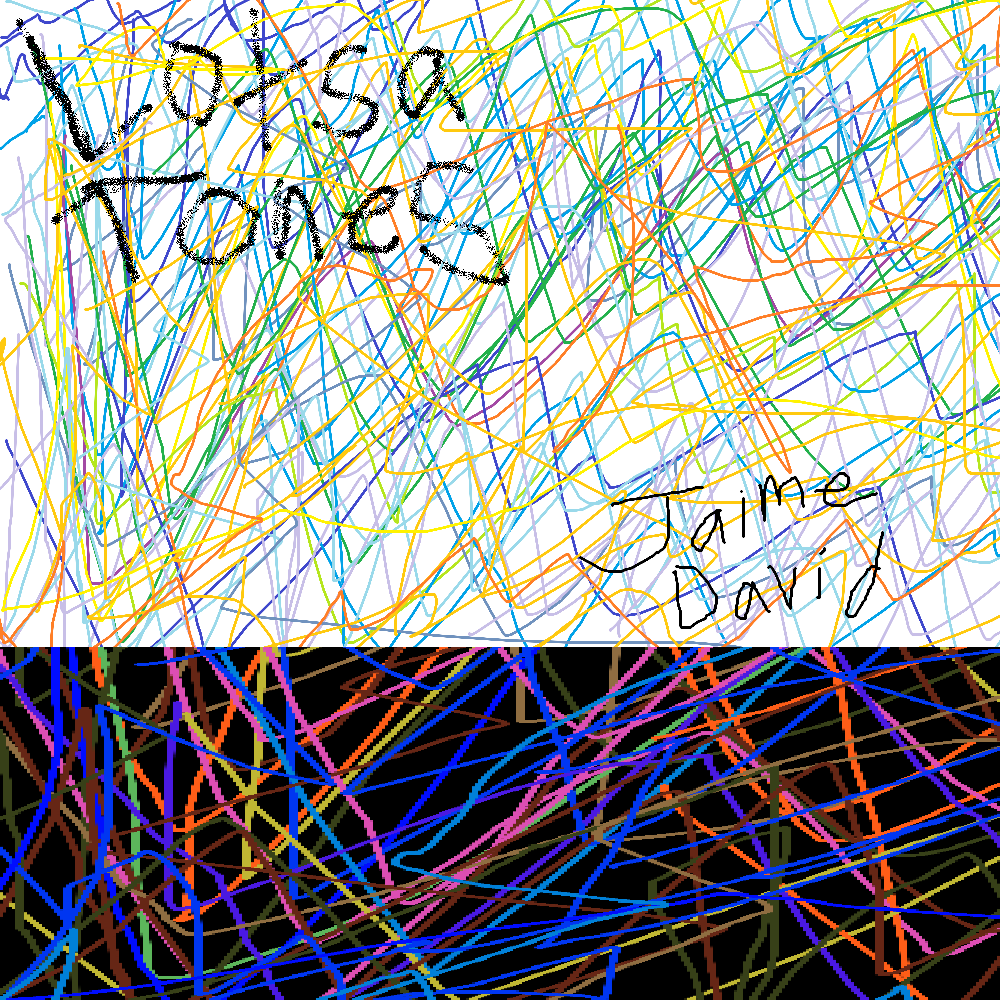
There are moments in life that feel like the opening of an entirely new chapter. Today is one of those moments for me. I am incredibly excited to share that my debut song, “Lotsa Tones,” is officially available to stream on Spotify.
You can listen to the song here:
“Lotsa Tones” on Spotify:
You can also follow my Spotify artist profile here:
Jaime David on Spotify:
When I first began writing publicly years ago, I never imagined where the creative journey would eventually take me. My original goal was simple: create something meaningful and share it with the world. That philosophy has remained the same, even though the mediums through which I create have continued to grow.
Many of you first came to know me through my writing. Whether it was reading my blog, following my articles, or eventually picking up one of my books, writing has been one of the biggest parts of my life. It allowed me to explore ideas, tell stories, express emotions, and build worlds that only existed in my imagination until they found their way onto the page.
That journey eventually led to the publication of my debut science fiction novel, Wonderment Within Weirdness, followed by My Powerful Poems and Some Small Short Stories. Each book represents a different side of my creativity. My novel gave me the opportunity to create an expansive fictional universe, my poetry allowed me to express thoughts and emotions in a more intimate way, and my short story collection became a place to experiment with different ideas, concepts, and styles.
After that came podcasting. Launching The Jaime David Podcast opened another creative door that I had never explored before. Instead of writing stories for readers, I was now speaking directly to listeners. The podcast became another extension of my creative voice, allowing me to discuss writing, life, creativity, current events, personal experiences, and whatever else happened to inspire me during a given episode.
Now, another chapter begins.
Today, I officially add musician to that list.
I honestly never set out with the expectation of becoming a musician. Music has always been something I appreciated and admired. Like many people, I’ve spent countless hours listening to songs that became attached to memories, emotions, and different periods of my life. Music has an incredible ability to communicate feelings that sometimes words alone cannot fully capture.
Eventually I reached a point where I wondered what it would be like to create something of my own.
Not because I believed I had mastered music.
Not because I expected perfection.
Simply because I wanted to experiment.
That curiosity eventually became Lotsa Tones.
The title itself is intentionally simple. It reflects exactly what the project became: an exploration of sounds, textures, rhythms, and ideas. I wasn’t trying to imitate another artist or force myself into a particular genre. I wasn’t asking whether the song fit neatly into a label. Instead, I approached the project with curiosity and allowed the creative process to guide me.
Sometimes creativity works best when there are very few expectations.
One of the things I’ve learned throughout my life is that experimentation is often the birthplace of growth.
My first blog posts weren’t perfect.
My first attempts at writing fiction certainly weren’t perfect.
The first drafts of my books required countless revisions.
My podcast improved over time as I gained experience recording and editing episodes.
Music is no different.
Every creative field begins with someone deciding to try.
I think that’s something worth remembering because it is easy to compare yourself to people who have been creating for ten, twenty, or even forty years. We often see the finished product without seeing the years of learning, mistakes, failures, revisions, and persistence that made those accomplishments possible.
Nobody begins at the finish line.
Every artist has a first song.
Every author has a first manuscript.
Every podcaster has a first episode.
Every painter has a first canvas.
Every filmmaker has a first project.
Lotsa Tones is my first step into music, and I’m proud of that.
One thing I have always appreciated about creativity is that it isn’t limited by labels. Society often encourages people to choose one identity. You’re expected to become known as one thing and remain there for the rest of your career.
But I’ve never felt comfortable limiting myself that way.
I’m an author.
I’m a blogger.
I’m a podcaster.
And now I’m also a musician.
To me, these aren’t separate identities competing against one another. They’re simply different ways of expressing ideas.
Sometimes an idea belongs in a novel.
Sometimes it belongs in a poem.
Sometimes it belongs in a podcast episode.
Sometimes it belongs in music.
Different creative mediums allow us to communicate different experiences, and I don’t think any artist should feel restricted to only one.
This song also represents something else that has become increasingly important to me over the years: allowing myself permission to create without immediately worrying whether something fits perfectly into a category.
Art does not always need to justify itself.
Sometimes creating something because you are curious is reason enough.
Sometimes experimenting is valuable even if you don’t know exactly where it will lead.
Sometimes the journey itself becomes the reward.
That mindset has shaped much of my creative work, and I suspect it will continue shaping future musical projects as well.
I don’t know exactly what my music will sound like six months from now.
I don’t know what it will sound like five years from now.
Perhaps future songs will become more melodic.
Perhaps they’ll become more electronic.
Perhaps they’ll lean into cinematic soundscapes.
Perhaps they’ll become something I haven’t even imagined yet.
That’s one of the most exciting parts of beginning something new.
The possibilities remain open.
Instead of trying to predict exactly where this musical journey will go, I’d rather let it evolve naturally.
Learning is part of the process.
Growth is part of the process.
Making mistakes is part of the process.
Discovering unexpected ideas is part of the process.
Every release becomes another opportunity to improve.
Looking back, it’s interesting to see how one creative pursuit gradually led to another. Writing helped me become more comfortable telling stories. Podcasting helped me become more comfortable sharing my voice. Music now offers another way to communicate ideas without relying entirely on words.
Each creative endeavor has taught me something different.
Each one has expanded my perspective.
Each one has made me a better creator overall.
That’s one of the reasons I encourage people to explore interests outside of their comfort zone. You never know which hobby might become a passion, or which experiment might open the door to an entirely new chapter of your life.
If someone had told me several years ago that I’d publish books, host a podcast, and eventually release music onto Spotify, I probably would have laughed.
Yet here we are.
Life has a funny way of surprising us.
I also want to take a moment to sincerely thank everyone who has supported me throughout the years.
To those who have read my blog.
To those who purchased my books.
To those who listened to The Jaime David Podcast.
To those who have encouraged me to continue creating.
Thank you.
Creative work often begins alone. It’s just one person sitting with an idea, wondering whether it is worth pursuing. But once that work is shared, it becomes something larger than ourselves because other people choose to spend part of their day reading, listening, watching, or experiencing what we’ve created.
That is something I never take for granted.
Whether you’ve been following my work for years or whether Lotsa Tones happens to be the first thing you’ve discovered from me, I’m grateful you’re here.
This release marks the beginning of my journey as a musician, not the end of it.
There will be more songs.
There will be more experiments.
There will be more opportunities to learn.
There will almost certainly be surprises along the way.
Some projects will succeed.
Some projects may not.
But I hope one thing always remains true: that everything I create is genuine.
Authenticity has always mattered more to me than chasing trends. I’d rather make something that reflects my own curiosity than try to imitate what everyone else is doing. That philosophy has guided my writing, my podcast, and now my music as well.
If Lotsa Tones encourages even one person to start their own creative journey—to write that story they’ve been putting off, record that podcast they’ve been thinking about, paint that picture, compose that melody, or simply experiment with something new—then I’ll consider this debut to have accomplished something meaningful beyond the music itself.
Creativity belongs to everyone willing to explore it.
Thank you for joining me as I take this first step into a brand-new artistic adventure.
I hope you’ll give Lotsa Tones a listen, follow my Spotify artist page to stay updated on future releases, and continue following along as this creative journey continues to unfold.
Here’s to new beginnings, unexpected paths, and the excitement of creating something simply because the idea refused to stay inside your imagination.
This is only the beginning.

I don’t usually write about the stuff I buy.
Most of my blog posts are about music, politics, books, philosophy, anime, science, or whatever happens to be on my mind that day. That’s generally what people expect when they visit my blog. Every now and then I’ll write something personal, but I rarely sit down and talk about something as simple as a lightbulb.
But honestly?
Fuck it.
It’s my blog.
If I feel like talking about a lightbulb today, then that’s exactly what I’m going to do.
Recently I ordered a color-changing LED lightbulb from Amazon for the lamp in my room. It isn’t some expensive smart home setup or anything extravagant. It’s just a bulb that lets me change the color whenever I want. Blues, reds, greens, purples, warm white, cool white—you get the idea.
And I absolutely love it.
It sounds like such a tiny thing to get excited about, but it’s one of those purchases that somehow changes the atmosphere of a room far more than you’d expect.
I’ve found myself sitting in my room at night with the lights dimmed, changing the colors depending on my mood. Sometimes I’ll put it on a deep blue while listening to Blue October. Other nights I’ll switch it to purple while writing. Sometimes I’ll make it green just because it reminds me of forests or fantasy worlds. Sometimes I’ll use red if I’m watching a horror movie or playing a darker video game.
It’s silly.
It’s simple.
But it’s fun.
And maybe that’s enough.
One thing I’ve realized over the past several years is that I’ve slowly been transforming my room into something that actually feels like me.
When I was younger, my room was…well…just a room.
There wasn’t much personality in it.
It had furniture.
It had a bed.
It had a desk.
That was about it.
Now, when I walk inside, it actually feels like stepping into my own little world.
I’ve been decorating it piece by piece over the years.
Not all at once.
Not by spending thousands of dollars.
Just little additions whenever I found something I liked.
I have posters hanging on my walls and on my bedroom door.
Those posters remind me of different interests and different periods of my life. Every time I look at them, they tell a little story about something that mattered to me.
Then there’s one of my favorite decorations.
A One Piece Straw Hat.
Not just any straw hat.
Luffy’s straw hat.
Hanging up on my wall.
As someone who’s been following One Piece for years, that hat isn’t just another decoration. It’s symbolic.
Adventure.
Freedom.
Friendship.
Dreams.
Never giving up.
Those are themes that One Piece has always represented for me.
Seeing that straw hat hanging there makes me smile.
It reminds me of one of my favorite fictional worlds ever created.
Then there’s my Funko Pop collection.
I know Funko Pops can be divisive.
Some people love them.
Some people think they’re overrated.
Some people think they’re just plastic toys collecting dust.
That’s perfectly fine.
For me, though, each one reminds me of a character I enjoyed.
Every figure represents a movie, a TV show, an anime, a video game, or some other story that left an impression on me.
They’re little reminders of fictional worlds that brought me happiness.
I also have a stuffed plush collection.
I know some people think stuffed animals are just for kids.
I completely disagree.
Comfort doesn’t have an age limit.
Neither does nostalgia.
Sometimes something soft sitting on a shelf simply makes a room feel warmer.
More welcoming.
Less sterile.
There’s nothing wrong with that.
Then there are my books.
Books everywhere.
I’ve always loved books.
Whether they’re novels, nonfiction, philosophy, science, psychology, history, or fantasy, I enjoy surrounding myself with them.
Some people decorate with expensive sculptures.
I decorate with shelves full of stories.
Even better, now some of those books are my own.
That still feels strange to say.
Seeing copies of my own published books sitting alongside books written by authors I’ve admired throughout my life is honestly surreal.
It’s a reminder that dreams sometimes become reality if you keep working at them.
Next to those books are comics.
Then manga.
Again, every single volume represents another story.
Another world.
Another adventure.
I’ve always believed stories matter.
Whether they’re told through novels, comic books, manga panels, television, animation, movies, or video games, stories shape how we think.
They teach empathy.
They inspire imagination.
They make us laugh.
Sometimes they make us cry.
Sometimes they stay with us for years.
Then there’s my CD collection.
Yes.
CDs.
In 2026.
I know streaming exists.
I use streaming.
But there’s something satisfying about owning physical albums.
Holding them.
Looking through the artwork.
Reading the lyrics.
Seeing the booklet the artists designed.
It’s an experience.
Music feels more tangible that way.
Every CD represents a memory.
An artist.
A soundtrack to different chapters of my life.
Blue October.
Story of the Year.
Seether.
Starset.
Keane.
Filter.
Eminem.
And plenty of others.
Music has always been one of the biggest parts of who I am.
Having those albums displayed isn’t just decoration.
It’s part of my identity.
The same goes for my video game collection.
Every game reminds me of a different period in my life.
Some remind me of childhood.
Some remind me of high school.
Some remind me of college.
Some remind me of difficult times when escaping into another world for a few hours helped me recharge mentally.
Video games are often dismissed as simple entertainment.
But I think they’re one of the greatest storytelling mediums we’ve ever created.
They combine art.
Music.
Writing.
Programming.
Psychology.
Design.
Animation.
Voice acting.
Problem solving.
Interactivity.
They’re incredibly complex creative works.
Having those game cases on display reminds me of that.
Then there are my board games.
And my card games.
Those represent something different.
They remind me that entertainment doesn’t always require a screen.
There’s something timeless about sitting around a table with other people playing a game together.
Laughing.
Competing.
Thinking.
Making memories.
I hope someday I get to play more of them with friends.
Looking around my room now, I realize something.
None of these things by themselves are particularly extraordinary.
A poster.
A plush.
A comic.
A book.
A lamp.
A lightbulb.
A CD.
None of them are life-changing individually.
But together…
Together they create an environment.
They create a feeling.
They create a place where I actually enjoy spending time.
And I think that’s important.
Your room is where you wake up.
It’s where you go after a stressful day.
It’s where you think.
It’s where you sleep.
It’s where you create.
It’s where you recharge.
Why shouldn’t it reflect who you are?
I’ve never really understood the idea that adults shouldn’t decorate their rooms with things they enjoy.
Why?
Who made that rule?
If someone likes minimalist interior design, great.
If someone likes sports memorabilia, awesome.
If someone fills their room with plants, that’s cool too.
If someone decorates with anime, comics, books, records, plushies, action figures, or movie posters…
Why should anyone care?
Life is stressful enough already.
If looking at a shelf full of your favorite stories makes you smile every day, then I’d argue that’s a worthwhile investment.
The funny thing is that my room has evolved naturally.
There wasn’t one day where I said, “Today I’m going to redesign everything.”
It happened slowly.
One poster.
A few books.
Another shelf.
A plush.
A Funko Pop.
A comic.
Another manga volume.
A CD.
A new lamp.
Now a colorful lightbulb.
Little by little.
Year after year.
I think that’s how most meaningful spaces are created.
Not through one massive shopping spree.
But through gradual accumulation.
Each item has a story.
Where I bought it.
Why I bought it.
When I bought it.
What it reminds me of.
That’s what gives a room personality.
I also think our surroundings affect our creativity far more than we realize.
As someone who writes books, blogs, newsletters, podcast scripts, and countless other things, I’m in my room a lot.
This is where ideas happen.
This is where chapters get written.
This is where blog posts come together.
This is where podcast episodes are planned.
Having an environment that inspires creativity actually matters.
Sometimes simply changing the lighting changes my mood enough to get unstuck creatively.
That new lightbulb has already done that a few times.
It’s funny.
People often think inspiration has to come from huge life-changing moments.
Sometimes inspiration comes from a purple lamp in the corner of your room.
Sometimes it comes from staring at a bookshelf.
Sometimes it comes from glancing over at Luffy’s straw hat hanging on the wall and remembering one of your favorite anime scenes.
Creativity feeds off atmosphere.
Another thing I’ve started appreciating more as I’ve gotten older is collecting intentionally instead of obsessively.
There was a point where collecting could easily become about having more.
More figures.
More games.
More books.
More everything.
Now I don’t really care about having the biggest collection.
I care about having a collection that actually means something to me.
I’d rather own fifty things I genuinely love than five hundred things I barely remember buying.
Every item should earn its place.
That’s become my philosophy.
It’s less about quantity.
It’s more about meaning.
There’s also something comforting about physical media and physical collections in an increasingly digital world.
Streaming services remove movies.
Games disappear from online stores.
Songs get pulled.
Digital storefronts shut down.
Accounts disappear.
Companies change.
But the books sitting on my shelf?
They’re still there.
The CDs?
Still there.
The comics?
Still there.
The manga?
Still there.
There’s something reassuring about that permanence.
Maybe that’s another reason I enjoy collecting physical things.
They’re real.
They’re tangible.
They exist regardless of whether some server somewhere stays online.
As I look around my room today, I realize it tells my story better than I probably could.
Someone could walk in and immediately know some things about me.
They’d know I love books.
They’d know I love music.
They’d know I enjoy anime.
They’d know I enjoy comics.
They’d know I play games.
They’d know I collect things that make me happy.
They’d probably figure out pretty quickly that I’m a huge nerd.
And honestly?
I’m perfectly okay with that.
Being passionate about things isn’t something I’m embarrassed by anymore.
If anything, I think it’s one of the best parts of being human.
We all have things that excite us.
Things that inspire us.
Things that remind us of happier moments.
Whether that’s sports, music, painting, cooking, travel, collecting records, building model trains, gardening, photography, or decorating your room with anime memorabilia, those passions add color to life.
Literally, in my case.
Because now I have a lightbulb that can make my room glow every color imaginable.
It might seem like such a small purchase.
It probably is.
But sometimes it’s the small purchases that end up bringing the biggest smiles.
Maybe that’s what this post is really about.
Not a lightbulb.
Not posters.
Not collections.
Not decorations.
It’s about creating a space that feels like home.
A space where you can relax.
Think.
Dream.
Create.
Laugh.
Cry.
Write.
Listen to music.
Read.
Play games.
Or simply sit quietly while your room glows blue or purple after a long day.
I think everyone deserves a space like that, whatever it looks like for them.
It doesn’t have to be expensive.
It doesn’t have to impress anyone else.
It just has to make you happy.
Because at the end of the day, you’re the one living there.
You’re the one waking up there every morning.
You’re the one spending countless hours surrounded by those walls.
So fill those walls with memories.
Fill those shelves with stories.
Fill your room with pieces of yourself.
And if that includes something as simple as a color-changing lightbulb that makes your room feel just a little more magical every night, then I’d say that’s money well spent.
Sometimes happiness really does come from the little things.


There are certain moments in life that feel almost impossible to predict. They are the kinds of moments that, years earlier, would have sounded like unrealistic daydreams. You imagine them happening to someone else, not to you. Then, one day, life surprises you.
Recently, I experienced one of those moments.
For the first time in my life, I sent fan mail to a YouTuber.
Not only that, but the package contained something far more personal than a letter or a piece of merchandise. Instead, I sent three books that I wrote and published under my pen name, Jaime David. A short time later, I watched that same YouTuber open the package live on his show, flip through my books, read part of the dedication from my debut novel, discover that I had thanked him in the acknowledgements, and genuinely express his appreciation.
Even now, it still feels surreal.
This is the story of how that happened, why I decided to do it, and why this became such a meaningful full-circle moment in my journey as a writer.
For years, I have watched Dusty Smith on YouTube. Whether you know him from his political commentary, livestreams, or his long-running online presence, he has been one of those creators whose content I have consistently followed.
Like many people, I do not agree with every single opinion he has or every single thing he says. But beyond that, there has always been something about his content that kept me coming back. I have appreciated his humor, his personality, his ability to build a community, and his willingness to create content that feels different from many other channels online.
And that is an important part of this story.
Because when I decided to send my books to Dusty, it was not something I wanted to do with just anyone.
I did not simply think, “I wrote books, so I should send them to every YouTuber I watch.”
That was never the point.
There are thousands upon thousands of creators online. But I specifically chose Dusty because he was someone whose work genuinely mattered to me over the years.
He was one of my favorite YouTubers.
That mattered.
I wanted the books to go to someone whose content I had actually watched, someone whose work had been part of my life for years, and someone who had influenced me creatively.
There was also another important reason.
My debut novel, Wonderment Within Weirdness, contains an acknowledgements section where I thank people and creators who helped influence me throughout my writing journey.
Dusty Smith was included in those acknowledgements.
That was something personal.
Writing a book does not happen in a vacuum. Every author has influences. Every creative person has moments, stories, and people who inspire them.
And in Dusty’s case, there was something especially interesting.
Dusty was not only a YouTuber.
He was also an author.
Years ago, before his current online presence became what many people know him for today, Dusty wrote and published a book called Seven Deadly Sins under the pen name Michael Bishop. This was not the famous science fiction author Michael Bishop, but rather a pen name Dusty used for his own writing.
While Dusty himself has since been critical of that book and has expressed that he does not necessarily consider it his best work, the fact remains that he was an author.
He went through the process of writing a book.
He went through the process of publishing a book.
He put a creative work into the world.
And that is something that always stood out to me.
Because as someone who eventually became an author myself, I understand the significance of taking an idea that exists only in your head and turning it into something physical that other people can hold.
Even if an author later looks back at an earlier work and thinks, “I could have done that differently,” there is still something meaningful about having created it in the first place.
That part of Dusty’s story resonated with me.
I remember when I was in college watching Dusty talk about his book and showcase it on one of his shows.
At the time, I found it fascinating.
Here was someone I followed online who had actually written a book.
Someone who had taken the leap from simply consuming stories to creating one.
That did not single-handedly inspire me to become an author. My journey came from many different places: science fiction, movies, television, anime, video games, other writers, personal experiences, and my own imagination.
But that moment was one small piece of the larger puzzle.
Sometimes inspiration does not come from one huge event.
Sometimes it comes from small moments that stay with you.
A creator talking about writing.
A person sharing their creative process.
A reminder that ordinary people can create something meaningful.
So when I eventually became an author myself, it felt fitting that Dusty would be someone I thanked.
And once I realized he had a P.O. Box for fan mail, I thought about it.
If I had already written his name in the acknowledgements of my book, why not give him the chance to actually see it?
That was really the reason I decided to send the books.
I wanted him to know his work had an impact.
I wanted him to have the opportunity to read the acknowledgement himself.
I wanted him to have the chance to check out the books if he wanted.
Whether he ever opened them, read them, or talked about them was completely his choice.
There were no expectations.
It was simply gratitude.
A way of saying, “Thank you for being part of my journey.”
I had never sent fan mail to a YouTuber before.
This was a first.
And honestly, that made the decision feel even more meaningful.
Since my books are self-published through Lulu, the process of getting copies to Dusty was not as simple as grabbing books from a shelf.
My books are produced through print-on-demand.
For people unfamiliar with self-publishing, print-on-demand is a system where books are created after an order is placed rather than being mass-produced ahead of time.
Traditional publishing often involves printing large quantities of books, storing them, and distributing them through retailers.
With print-on-demand, the book is printed specifically for the person who orders it.
The files are submitted, the book enters production, it is printed, bound, inspected, packaged, and shipped.
The advantage is that independent authors do not need to spend thousands of dollars upfront printing massive quantities of books.
There is no need for warehouses.
There is no need for storing hundreds of copies.
The book exists whenever someone wants a copy.
The tradeoff is time.
Because each copy has to be produced, there is a waiting period before shipping.
So after placing the order, I waited.
The books went through production.
Then they were shipped.
A few weeks passed.
Then a few more weeks passed as the package traveled.
Eventually, the books arrived.
Seeing your own writing become a physical object never stops being special.
These were not just books.
They represented years of ideas, drafts, revisions, editing, formatting, publishing decisions, and perseverance.
Inside the package were:
Wonderment Within Weirdness.
My Powerful Poems.
Some Small Short Stories.
I carefully packaged everything and sent them to Dusty’s P.O. Box.
Then I waited.
At that point, there was nothing else I could do.
Maybe he would open it.
Maybe he would not.
Maybe he would mention it.
Maybe he would simply keep the books privately.
And honestly, any of those outcomes would have been okay.
The important thing was that I had sent them.
Last week, I saw that the package had been delivered.
That alone made me happy.
The books had reached him.
Then, during the week of July 6, 2026, Dusty picked up the mail.
I still had no idea what would happen.
Creators receive countless packages from viewers. Some things are opened privately. Some things appear on streams. Some things are saved for later.
There was no guarantee.
Then came July 8, 2026.
During Dusty’s livestream, he opened my package.
And suddenly, there they were.
My books.
Watching that moment was difficult to describe.
These books had once existed only as ideas in my head.
Now they were sitting in front of someone whose own creative journey had helped inspire mine.
He picked up My Powerful Poems first.
He reacted to the size of the book and complimented the printing quality.
Then he looked through Some Small Short Stories.
Finally, he reached Wonderment Within Weirdness.
That was the moment that truly hit me.
He opened my debut novel.
He read from the dedication.
Then he reached the acknowledgements.
And he saw that I had thanked him.
Watching that happen was incredibly special.
Not because a YouTuber noticed my books.
But because the reason I sent them was recognized.
He understood that this was someone reaching out with appreciation.
He thanked me for thinking of him.
He complimented the quality of the books.
And he gave my work a moment of recognition.
After the stream ended, I kept thinking about why this moment meant so much.
Eventually, I realized it was because of the connection between the past and the present.
Years ago, I was watching an author who happened to be a YouTuber.
Now, that same person was watching my own journey as an author.
A person who once put his own book into the world was now holding mine.
That is the part that feels like the ultimate full-circle moment.
It is a reminder that creativity connects people in ways we do not always expect.
An author can inspire another author.
A viewer can eventually become a creator.
A person watching someone else’s dream can eventually create a dream of their own.
And sometimes, years later, those paths cross.
Sending these books was not about seeking attention.
It was not about demanding recognition.
It was about gratitude.
It was about saying thank you to someone who, even indirectly, was part of my creative journey.
And the fact that he opened them, read them, and appreciated them made the experience even more memorable.
This was my first time ever sending fan mail to a YouTuber.
And I think it was the perfect reason to do it.
Because sometimes fan mail is not really about receiving something back.
Sometimes it is about finally getting the chance to give something.
A thank you.
A memory.
A reminder that someone’s work mattered.
Years after watching Dusty talk about his own book, I got to experience the incredible feeling of seeing him hold one of mine.
That is something I will never forget.
You can find the segment of Dusty unboxing my books starting at 26:33.

One of the biggest misconceptions people have about blogging is that inconsistency always comes from a lack of ideas. People imagine the writer sitting in front of a blank screen, staring at an empty document, desperately trying to think of something, anything, to write about. Sometimes that does happen. Writer’s block is real. But for me, that is rarely the problem. If anything, I have the opposite issue. I often have too many ideas, too many topics, too many directions I could take. Instead of wondering what to write about, I find myself wondering which of the dozens of possible topics deserves my attention first.
When you run multiple blogs, that challenge becomes even more noticeable.
I have my main blog, The Musings of Jaime David, but I also have several other blogs focused on different subjects. There is my politics and news blog, The Interfaith Intrepid. There is my mental health blog, Let’s Be Different Together. There is my music blog. There is my science blog. There is my gaming blog. There are platforms like Medium. There are social media accounts. There are podcasts. There are countless places where ideas can potentially become content.
At first glance, that sounds like an incredible advantage. More outlets mean more opportunities to create. More opportunities mean more chances to reach people. More chances to reach people mean more opportunities to build communities and conversations.
And all of that is true.
The problem is that every new platform and every new blog also creates another place where content could be posted.
A political news story breaks. Should I write about it on The Interfaith Intrepid?
I have a thought about creativity. Should that go on The Musings of Jaime David?
I discover an interesting scientific topic. Does that belong on the science blog?
I have thoughts about a game I recently played. Should that become a gaming article?
I find a song that inspires me. Is that something for the music blog?
Then there are the ideas that overlap multiple categories. Some posts could fit in two or three places simultaneously. Some topics touch on politics, psychology, science, and culture all at once. Deciding where something belongs can become its own task before the writing process even begins.
People often assume that having many ideas makes consistency easier. In some ways it does. But in other ways it creates a different kind of challenge.
Imagine standing in front of a restaurant menu that contains three options. Making a decision is relatively simple.
Now imagine standing in front of a menu containing five hundred options.
Suddenly choosing becomes harder.
That is sometimes what blogging feels like.
There are days when I have ten potential articles in my head before breakfast. There are days when I could easily draft multiple posts on entirely different subjects. There are days when my notes are overflowing with future ideas.
Yet paradoxically, those can be the days when nothing gets published.
Not because there is nothing to say.
Because there is too much to say.
Every potential article competes with every other potential article for attention.
Should I write about the thing that is timely?
Should I write about the thing I am passionate about?
Should I write about the thing that people are most likely to read?
Should I write about the thing that has been sitting in my drafts for six months?
Should I write about the thing that is personally meaningful even if nobody else cares?
Sometimes all those questions create enough friction that I end up writing nothing at all.
Another reality that many readers do not see is that blogging is not just writing.
People see a finished article and naturally focus on the words.
What they do not always see is everything surrounding those words.
Research takes time.
Fact-checking takes time.
Editing takes time.
Formatting takes time.
Creating images takes time.
Finding tags takes time.
Sharing posts takes time.
Responding to comments takes time.
Maintaining multiple platforms takes time.
Managing social media takes time.
Even deciding what to write can take time.
A thousand-word article might only take an hour to draft. But everything surrounding it can easily double or triple that investment.
When you multiply that across multiple blogs, multiple audiences, and multiple platforms, the workload grows quickly.
And sometimes life exists outside blogging.
That might sound obvious, but creators often feel pressure to act as though content creation is their entire existence.
People have jobs.
People have families.
People have responsibilities.
People have appointments.
People have stress.
People have days when they are tired.
People have days when they simply do not feel like writing.
That last one is important.
Not every break needs a dramatic explanation.
Sometimes you are exhausted.
Sometimes your brain is tired.
Sometimes your creativity needs space.
Sometimes you want to spend a day doing literally anything except writing.
And that is okay.
The internet has created a culture where consistency is often treated like a sacred commandment.
Post every day.
Upload every day.
Stay active every day.
Engage every day.
Never disappear.
Never slow down.
Never stop.
Algorithms reward consistency, so there is some practical truth behind that advice. But human beings are not algorithms.
Human beings get tired.
Human beings need rest.
Human beings need room to breathe.
I think many creators struggle with guilt whenever they take breaks.
I know I sometimes do.
You look at your blogs.
You look at your drafts.
You look at your ideas.
You know there are things you could be writing.
You know there are articles that could be published.
You know there are readers waiting.
And yet part of you simply wants to step away for a little while.
The guilt starts whispering.
“You should be writing.”
“You are falling behind.”
“You are wasting time.”
“Other creators are posting.”
“You are losing momentum.”
Maybe sometimes those concerns are legitimate.
But sometimes the healthiest thing you can do is ignore them.
Because burnout helps nobody.
A burned-out writer is not more productive.
A burned-out writer is not more creative.
A burned-out writer is not producing their best work.
A burned-out writer is simply exhausted.
One thing I have learned over time is that breaks are not necessarily the enemy of creativity.
In many cases, they are part of creativity.
Some of my best ideas have arrived when I was not actively trying to write.
They arrived while walking.
They arrived while listening to music.
They arrived while watching a movie.
They arrived while scrolling through random conversations online.
They arrived while doing absolutely nothing related to blogging.
Creativity often needs input.
If all you ever do is produce, eventually the well starts running dry.
Sometimes you need to refill it.
That means reading.
That means learning.
That means experiencing life.
That means stepping away from the keyboard.
Ironically, taking a break from writing can sometimes make you a better writer.
Another challenge with running multiple blogs is that every blog represents a different version of your interests.
I am not just one thing.
Most people are not.
Human beings are complicated.
We contain countless interests, passions, curiosities, frustrations, and obsessions.
Some days I am interested in politics.
Some days I am interested in science.
Some days I am interested in music.
Some days I am interested in philosophy.
Some days I am interested in gaming.
Some days I want to write about personal experiences.
Some days I want to write about society.
Trying to balance all those interests can be difficult.
If I spend too much time on one blog, another blog sits dormant.
If I focus heavily on one subject, another subject gets neglected.
There are only so many hours in a day.
No matter how many ideas exist, time remains limited.
I think readers sometimes assume creators have a master plan behind everything.
The reality is often much messier.
Sometimes content schedules are carefully planned.
Sometimes they are not.
Sometimes a post comes together because inspiration struck at exactly the right moment.
Sometimes a post exists because it was sitting unfinished in drafts for months.
Sometimes a post exists because I finally decided to stop overthinking and hit publish.
The truth is that blogging is often less organized than people imagine.
And honestly, that is part of the beauty of it.
Blogs are living things.
They evolve.
They change.
They grow alongside the people creating them.
My blogs today are not identical to what they were years ago.
My interests have changed.
My perspectives have changed.
My writing style has changed.
My goals have changed.
And that evolution will probably continue.
That is another reason I try not to obsess over perfect consistency.
Consistency matters.
I am not denying that.
Showing up matters.
Building trust with readers matters.
Maintaining momentum matters.
But there is a difference between consistency and rigidity.
Consistency means continuing the journey.
Rigidity means refusing to adapt.
I would rather occasionally take a break than force myself to produce content I do not care about.
I would rather publish something meaningful than publish something merely because a schedule demands it.
I would rather maintain my enthusiasm for writing than turn blogging into a chore.
Because the moment writing becomes nothing but obligation, something important gets lost.
The passion starts fading.
The excitement starts fading.
The curiosity starts fading.
And those things are often what attracted readers in the first place.
At the end of the day, all of my blogs exist because I have things I want to talk about.
They exist because I enjoy sharing ideas.
They exist because I enjoy exploring different topics.
They exist because I enjoy connecting with people.
That remains true whether I publish three articles in a week or take a brief break from posting.
The ideas are still there.
The passion is still there.
The curiosity is still there.
Sometimes the ideas come faster than I can write them.
Sometimes there are so many possibilities that choosing becomes difficult.
Sometimes life gets busy.
Sometimes energy runs low.
Sometimes I need a break.
And honestly, I think that is perfectly normal.
The pressure to constantly create can make us forget that creators are people first and content producers second.
Blogs are important to me.
Writing is important to me.
The communities surrounding my work are important to me.
But none of those things change the fact that I am still a human being.
A human being with limited time.
A human being with limited energy.
A human being with countless interests competing for attention.
A human being who occasionally needs to step away from the keyboard.
The funny thing is that every time I take one of those breaks, the same thing eventually happens.
Ideas start piling up again.
A headline catches my attention.
A thought appears in my mind.
A conversation sparks inspiration.
A topic starts demanding to be explored.
Before long, I am back at the keyboard with more things to write than I can possibly keep up with.
Not because I forced myself.
Not because I followed some productivity formula.
Not because an algorithm demanded it.
But because the desire to create eventually returned on its own.
That is why I am learning to be more accepting of those periods when writing slows down.
They do not mean the creativity is gone.
They do not mean the blogs are dead.
They do not mean I have run out of things to say.
In many cases, they simply mean I am taking the time necessary to recharge before the next wave of ideas arrives.
And if there is one thing I have learned from running multiple blogs and maintaining a main blog for years, it is this: sometimes having too much to say can be just as overwhelming as having nothing to say at all. The challenge is not always finding ideas. Sometimes the challenge is choosing between them, giving yourself permission to rest, and trusting that the words will still be there when you come back.