
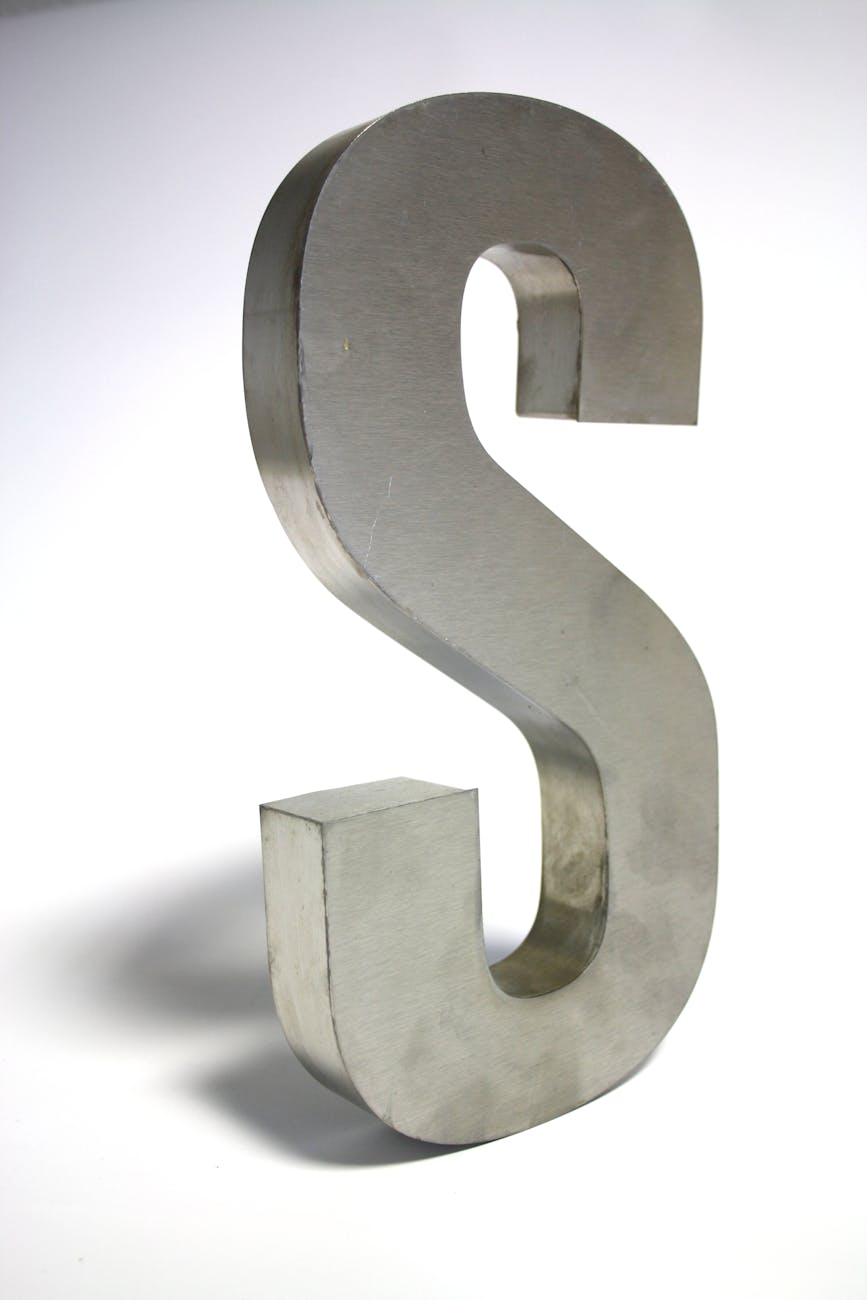
When historians of the distant future dig through the cultural rubble of the early 21st century, they will no doubt stumble upon humanity’s most enduring legacy: not smartphones, not skyscrapers, not the internet. No, what they will find etched into every school desk, notebook margin, and bathroom stall across the globe is the Cool S. The mysterious six-line wonder, the untraceable emblem of childhood rebellion and unity, the doodle that transcended language, geography, and curriculum standards. And here is the shocking truth: perhaps, all along, this “S” was never just for “super,” “skater,” or “street,” but for something far nobler—hope.
Think about it. No teacher taught us the Cool S. No official art curriculum contained a chapter titled “How to draw the universal sign of middle-school coolness.” And yet, every child, regardless of class, race, religion, or snack preference, knew it. It emerged in elementary schools like a secret handshake of the cosmos. You could move to a new school district in 1997, show up knowing no one, sit down with your cafeteria tater tots, and within five minutes you’d be quietly sketching an S in your notebook. And someone across the table would nudge you and nod, because they, too, carried the sacred knowledge. If that’s not hope, then what is?
The Cool S was democracy in its purest form. You didn’t need artistic ability, social clout, or financial resources to draw it. Unlike collecting Pokémon cards or wearing name-brand sneakers, this status symbol was free. All you needed was a pencil and a willingness to scratch six little lines. In fact, the Cool S may have been the only universally accessible art project in human history. Picasso required a studio; Van Gogh needed oils; Banksy requires entire abandoned buildings. But every twelve-year-old, high on Capri Suns and raw angst, could summon the Cool S like a spell of solidarity.
Superman had his S, yes. But Superman’s S required Hollywood lighting, Kryptonian backstory, and a carefully ironed spandex chest piece. The Cool S asked for nothing but lined notebook paper and maybe a five-minute lull in math class. Yet its presence was just as heroic. For the lonely kid ignored at recess, sketching the S was a small rebellion, a way to whisper, “I exist.” For the bored student, it was a silent prayer: “Please let this algebra period end.” For the ambitious doodler, connecting those lines into three-dimensional block letters was a feat rivaling Michelangelo’s Sistine Chapel. In every case, the Cool S carried with it a spark of resilience—a tiny, pointy, angular beacon of hope.
Critics may say this is all nonsense. “It was just a doodle,” they sneer. But tell me: if it was just a doodle, why did everyone know it? Why did it appear on continents separated by oceans, in schools with no internet, in eras before memes could spread across social media? The Cool S has no known inventor. It emerged, spontaneously, like a Platonic ideal—the Jungian archetype of recess boredom. If aliens ever visit Earth, they won’t ask about Shakespeare or Beethoven. They’ll point to a weathered brick wall in a condemned middle school building and say, “We see you, fellow travelers of the cosmos. You, too, have known the S of hope.”
Imagine, for a moment, what the world would be like if we actually leaned into this truth. What if the Cool S became our global emblem? Picture world leaders stepping onto the stage at the United Nations, not beneath sterile national flags, but beneath a giant metallic Cool S, glimmering with fluorescent optimism. Picture hospitals draped with banners not of corporate logos but of the S—because isn’t hope the first prescription we all need? Picture Superman himself peeling back his shirt to reveal not the stylized “S” of Krypton, but the six-line universal S of middle school. Metropolis would weep with joy.
Of course, we would need to reclaim its meaning from its dubious past. For decades, the Cool S was associated with bathroom graffiti, skateboarding magazines, and the vague whiff of delinquency. But so was rock and roll. So was jazz. So was every single thing humans later decided was culturally important. If we can put Andy Warhol’s Campbell’s soup cans in a museum, we can put the Cool S on our money. In fact, put it on the dollar bill where the pyramid is. At least then people would understand it.
The Cool S also teaches us something radical: the power of collective imagination. Nobody gave us instructions, yet we all drew it. Nobody told us it meant anything, yet it meant everything. It was not an assignment—it was ours. That’s what hope really is: the human instinct to create meaning out of thin air, to take six parallel lines and see not a mess, but a symbol. In a world constantly divided by politics, economics, and Marvel vs. DC debates, the Cool S is proof that we can, sometimes, all agree on something.
In conclusion, if hope had a shape, it would not be a heart, a rainbow, or even a dove. Those are too obvious, too sentimental, too Hallmark. Hope is sharper than that. Hope is edgy, awkward, drawn in the margins when no one’s paying attention. Hope is the Cool S. And if future civilizations remember us for nothing else, let them remember that, despite our wars, our climate crises, and our TikTok dance trends, we still found a way to unite over something so simple, so perfect, and so universal.
So next time you’re sitting with a pen and a scrap of paper, don’t just doodle mindlessly. Draw the S. Draw it proudly. Draw it as if you’re sketching the very emblem of resilience. Because you are. And who knows? Maybe someday, in the distant future, when humanity has colonized Mars and uploaded its consciousness into holographic clouds, a bored kid will sit in a Martian math class, pick up a stylus, and draw the Cool S. And the kid next to them will nod knowingly. That—that—will be hope.