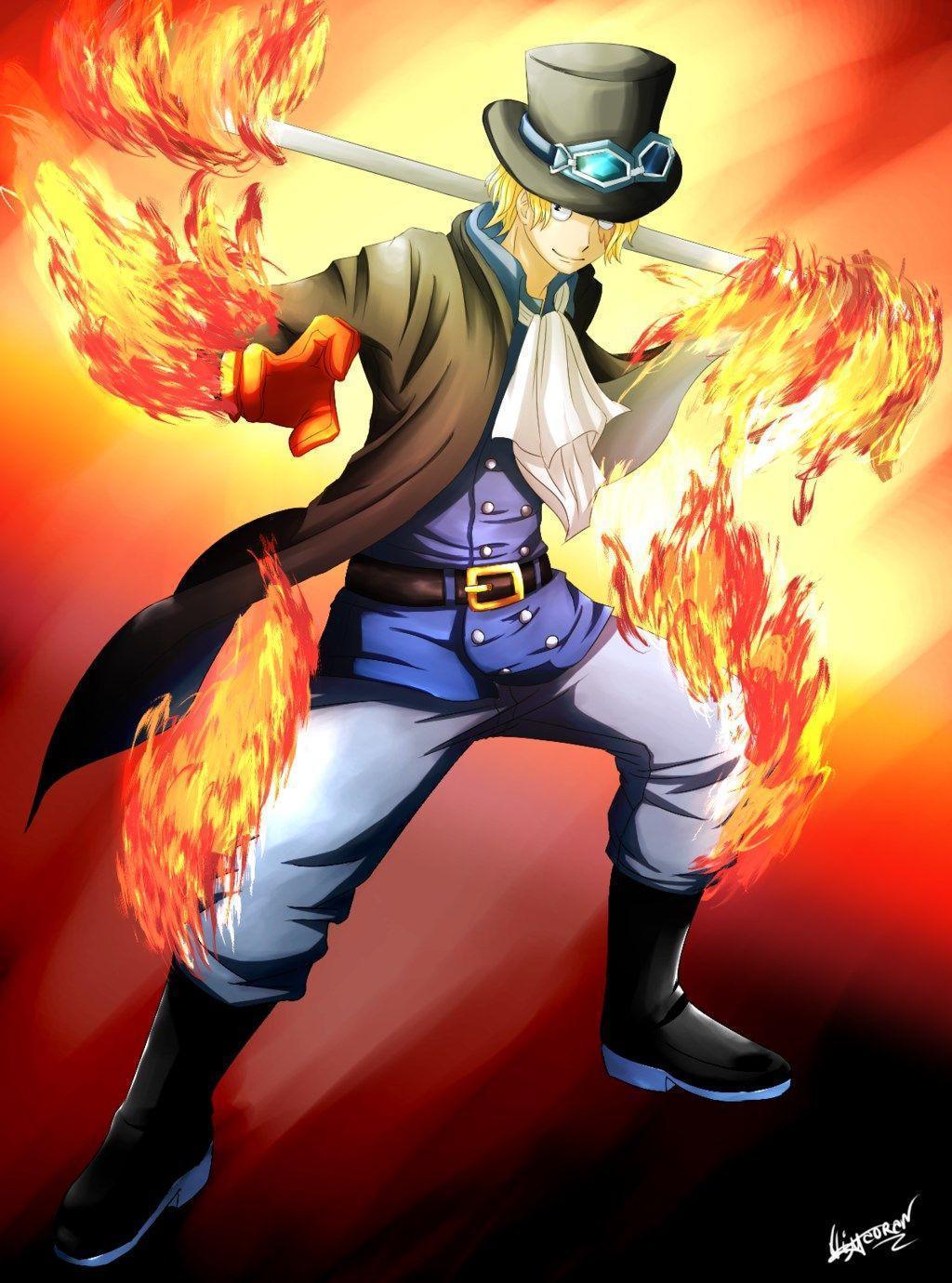
In One Piece, the return of Sabo in Dressrosa took many fans by surprise. After being presumed dead since the childhood flashback arc, some were quick to label his reappearance as a plot hole. However, when you look closely at the structure of One Piece’s storytelling, world-building, and character motivations, Sabo’s survival—and the secrecy surrounding it—actually makes a great deal of sense. The choices surrounding who knew about Sabo’s survival, when they learned it, and why they didn’t tell Luffy are narratively consistent, emotionally powerful, and aligned with the series’ core themes of family, freedom, and sacrifice.
The idea of Sabo losing his memories isn’t just a convenient excuse to delay his reintroduction—it’s a carefully placed storytelling mechanism that aligns with One Piece’s long history of delayed payoffs and emotional reveals. After Sabo is shot down by a Celestial Dragon, he suffers massive trauma and is rescued by Dragon and the Revolutionary Army. His amnesia is believable not just because of the physical trauma, but also because of the mental shock. It’s important to note that this is not unprecedented in the world of One Piece. Characters like Law and Robin have deep-seated traumas that shape their identities and their silence. Emotional extremes are often used by Oda as catalysts for transformation or clarity—Zoro after Mihawk, Nami after Arlong, Sanji after Zeff—and Sabo is no exception. The loss of Ace at Marineford is what finally unlocks the dam inside Sabo’s mind. His brother’s death triggers a flood of memories and guilt, pushing him back into the spotlight as a man with purpose, rather than a shadow of a past life.
The theory that Ace might have found out Sabo was alive—and chose to say nothing—isn’t just plausible, it’s in character. Ace is introduced as hot-headed, but as his arc progresses, we see more and more of his emotional intelligence. He was fiercely loyal, thoughtful, and protective of those he loved. He would’ve understood that revealing Sabo’s existence—if he discovered it—might put both Sabo and Luffy in danger. Perhaps Ace spotted Sabo in a newspaper or heard rumors whispered by those who kept tabs on the Revolutionary Army. Maybe he didn’t get confirmation, but had enough reason to believe Sabo survived. And if so, Ace—knowing Luffy’s impulsiveness and emotional core—would have made the difficult decision to keep quiet.
This restraint is supported by something visual: Ace’s hat and goggles. While Oda never explains their origin, the goggles—one side a smiling face, the other a sad one—carry powerful visual symbolism. They could represent the duality of emotions Ace felt upon learning Sabo was alive: joy for his survival, sorrow for the silence it demanded. It fits with Ace’s growing maturity, and more importantly, his poetic heart. He was someone who burned fiercely, but also someone who carried the weight of his emotions deeply. Choosing to remain silent wouldn’t be out of character—it would be the ultimate act of quiet love and self-control.
That same logic applies to others who might have known before Luffy. Garp is a Vice Admiral with close ties to Dragon and the Marines. If Dragon knew Sabo was alive and training with the Revolutionaries, it’s hard to imagine Garp didn’t know as well. Garp’s reaction to Ace’s death was one of emotional devastation, but he still put on a mask of control. Garp has always kept secrets from Luffy “for his own good”—whether it’s his parentage or his Marine responsibilities. Keeping Sabo’s survival quiet, especially if it meant protecting him from Government attention or keeping Luffy focused on his own journey, is entirely consistent with Garp’s complicated morality. He loves his grandsons but he’s a man of discipline and secrets. He understands that timing is everything.
Dadan, too, could have learned the truth. Whether through Garp or rumors from Foosha or Grey Terminal, Dadan is part of a community that watches closely and gossips widely. She raised Luffy, Ace, and Sabo. If she knew Sabo was alive, she would’ve carried that knowledge with the same fierce protectiveness we see in her reaction to Ace’s death and Luffy’s journey. She is emotional, rough around the edges, but ultimately maternal. She may have broken down in tears knowing Sabo lived, but she would’ve stayed quiet—because telling Luffy too soon could’ve been dangerous. She would have trusted Garp’s judgment or even Ace’s instincts. The same goes for the residents of Foosha Village, who already knew to keep secrets about Luffy’s past. They knew about Dragon. They didn’t talk. A precedent for collective silence exists in One Piece, and it fits here too.
Then there’s Robin. If anyone is accustomed to holding life-altering information in silence, it’s her. Robin met the Revolutionary Army during the two-year time skip and was most likely introduced to Sabo during that time. By then, Sabo had regained his memories, and if he asked Robin to keep his existence secret from Luffy, she would comply. Not out of coldness, but out of understanding. Robin has always carried the burden of knowledge. Her role on the crew is not just as an archaeologist, but as a protector of dangerous truths. She understands the weight of history and the danger of premature revelation. Her silence would not only be a strategic choice but a kind one. By keeping quiet, she gave Sabo time to prepare, and she gave Luffy the space to grow without distraction. Even if it pained her, she would honor that request.
In fact, this paints Robin’s eventual reaction to Sabo’s reveal in Dressrosa in a new light. She’s composed, not shocked. Because maybe she already knew. And perhaps, in her own way, she had silently hoped for this reunion to finally happen—on Sabo’s terms, and at a time when Luffy was strong enough to face it.
All of this leads to the central point: Luffy learning the truth in Dressrosa wasn’t late. It was right on time. At that point, Luffy had just survived the Marineford War, lost Ace, matured emotionally, and gained new strength. Sabo’s return wasn’t just an emotional surprise—it was a thematic reward. It came when both characters were ready to reconnect. Sabo had regained himself. Luffy had become more resilient. They were no longer children. They were men, standing on their own paths, meeting again not in tragedy, but in battle, as equals.
The choice to keep Sabo’s survival a secret—by Ace, by Garp, by Dadan, by Robin, and maybe even by the entire Revolutionary Army—was not plot inconsistency. It was a conscious, layered narrative decision grounded in character behavior and world logic. It reflects the very real idea that secrets are sometimes acts of love. And in a world like One Piece, where timing, loyalty, and sacrifice are everything, it’s not only believable—it’s beautiful.
If Oda ever chooses to show this thread from the perspectives of those who knew Sabo was alive before Luffy, the emotional payoff could be monumental. Imagine a flashback that weaves through the eyes of Garp silently reading a classified Marine report, Dadan crying alone by a campfire with a wanted poster of Sabo in her hands, Ace spotting a photo in a newspaper and quietly buying goggles as a symbolic gesture. Each reaction would carry its own weight—grief, relief, restraint—and together they would form a mosaic of love held in painful silence.
We might see Robin meeting Sabo during the time skip, her quiet nod as she agrees to keep the secret, perhaps watching from afar as he trains. Her calm exterior masking the knowledge that Luffy’s final brother is alive. Even Foosha Village could play a role—Makino holding a newspaper behind the counter, her eyes widening, then quickly folding the page before Luffy ever returns.
This kind of flashback wouldn’t just serve to clarify timelines—it would deepen our understanding of the emotional burden these characters carried. It would retroactively add depth to Ace’s final moments, Garp’s conflicted pride, Robin’s stoicism, and even Sabo’s guilt. It could become one of One Piece’s most quietly powerful moments—a sequence about people choosing silence not out of apathy, but out of deep, selfless love.
But it doesn’t have to be purely sorrowful. There is also something inherently hopeful in such a flashback. These characters—especially Ace, Dadan, Robin, and Garp—may have held onto the secret not only to protect Luffy, but to preserve hope. Hope that one day, Sabo and Luffy would meet again. Hope that their reunion would be joyful, not tragic. That’s the real emotional core: not just mourning what was lost, but preserving what could still be regained. Even in silence, they were planting seeds for healing. In that way, the flashback wouldn’t just be a tearjerker—it would be a quiet, radiant tribute to love, loyalty, and the long arc of reunion.
If Oda ever plans to show this flashback, the perfect narrative moment may already be looming: Marineford 2.0.
One Piece loves mirroring and arc inversions—Skypiea inverts Alabasta, Dressrosa echoes Enies Lobby, Wano reflects both Thriller Bark and Marineford in tone and stakes. So it’s not far-fetched to imagine another major war, another last-ditch rescue, another desperate race against time. And this time, the one who needs saving might not be Ace—it might be Sabo.
Imagine Marineford 2.0 as the Revolutionary Army’s fall, or the World Government tightening its grip. Sabo is captured, beaten, and close to death—just as Ace was. But unlike Ace, this time the Straw Hats arrive. This time, they are the ones charging into battle to save a brother. And maybe just before that final confrontation—before Luffy reaches Sabo—a flashback hits.
We could see the world reacting to Sabo’s survival years ago: Robin meeting him, Garp quietly holding back, Dadan weeping in secret. We might relive Luffy and Sabo’s Dressrosa reunion from Sabo’s point of view, watching how much it meant to finally see his little brother again, alive and strong.
And then—back in the present—Luffy grabs Sabo’s hand and pulls him from the gallows, a perfect inversion of Marineford’s tragedy. What was once a death becomes a rescue. What was once loss becomes redemption. And the flashback, now full-circle, becomes not just a memory—but a promise fulfilled.