The Musings of Jaime David
@jaimedavid.blog@jaimedavid.blog

The writings of some random dude on the internet

1,089 posts
1 follower

Tag: environment

  • Into the Weeds: Memory, Isolation, and the Fragility of Safety

    Into the Weeds: Memory, Isolation, and the Fragility of Safety

    There is a part of the story of Karina Vetrano that always strikes me, not because of the violence itself, but because of the place where it happened—the weeds. The dense, tangled, quietly isolating weeds near her Howard Beach home, where she went for a jog, are the stage on which this tragedy unfolded. And in many ways, they are familiar. I know them—not in the sense of danger, but as a place my friends and I wandered years before, around 2011, 2012, 2013, 2014. We ventured into those weeds as if they were a world apart from the streets, a private wilderness tucked inside the city.

    At first glance, the weeds were serene. Towering, lush, almost untamed, they offered a quiet calm, a sense of distance from the chaos of our daily lives. The air felt different there. Still. Gentle. You could almost believe the world outside did not exist. There was a rhythm to walking through them, a meditative cadence in the crunch of overgrown stems and the muted rustle of leaves. In that isolation, there was a strange peace, a sort of innocent escape that seemed to exist only for us.

    But that peace was always shadowed by the other reality of the weeds—the evidence of others who had been there, lingering there. Trash, old personal items, the occasional discarded piece of furniture. They told stories that weren’t ours. People had been living in those weeds, or at least seeking refuge there. Perhaps for moments, perhaps for days. Each piece of evidence carried a reminder: this serenity was not absolute. There were secrets in the weeds, as silent and hidden as the wind among the leaves. And in that, a subtle fear lingered.

    The isolation that made the weeds so captivating was the same isolation that made them dangerous. It was easy to imagine, even then, how quickly someone could disappear in such a place, how no one would know. The safety we felt was conditional, fragile, dependent on luck and familiarity. At the time, that realization was abstract, something only partially understood. Only years later, with the story of Karina Vetrano, did the abstract become a terrifying reality.

    In August 2016, Karina Vetrano went for her run. What should have been a simple, everyday act—a jog in her neighborhood—became the last journey she would take. The weeds that once felt like a sanctuary for my friends and me became the scene of a horror too real to comprehend. Chanel Lewis’ crime, his invasion of that space, shattered the illusion of safety those weeds once offered. And even now, reading about the details—the isolation, the density of the foliage, the absence of witnesses—it resonates with a painful familiarity. That could have been any of us. That could have been anyone who sought solitude in the weeds, anyone who stepped off the familiar path and into the quiet of overgrown spaces.

    There is a peculiar tension in spaces like this, a tension between allure and danger. The weeds were beautiful in their own wild way, offering a closeness to nature rare in a city like New York. They offered freedom, the chance to explore, to wander unobserved. But they also held a hidden truth: the same isolation that allows for peace also allows for harm. In those weeds, the world’s indifference is total. No one is watching. No one notices. And in that indifference, the human capacity for violence can manifest unnoticed.

    I remember walking through the weeds with friends, laughing, feeling the soft sway of the plants brushing our arms, feeling invincible in our small bubble of adventure. We would joke about what might be out there—homeless people, animals, even “ghosts” of past trespassers—but the jokes were tethered to a sense of thrill, not true fear. It was a controlled danger, one that let us feel alive without real consequences. Reading about Karina Vetrano, I realize that thrill can be easily disrupted. The line between safe exploration and genuine danger is thin, sometimes impossibly so.

    The weeds also reveal something about human curiosity and resilience. They are spaces that invite us to step outside our routines, to find solitude, to connect with something larger than ourselves—even if that “larger” is only a patch of untamed nature. They offer a mirror of our own capacity for wandering, for risk, for embracing both the beautiful and the frightening. But they also teach humility. We are not masters of the spaces we enter. We are visitors, vulnerable to forces beyond our control.

    Karina’s story, and the violence that occurred in the weeds, underscores the fragility of safety, especially in spaces that appear removed from human oversight. It reminds us that beauty and danger coexist. That serenity can mask peril. That isolation can be both restorative and threatening. And it reminds us, too, of the random contingency of life—the fact that a simple act, like choosing to jog, can intersect with another person’s capacity for harm in ways no one anticipates.

    Reflecting on my own experiences in those weeds, I recognize a blend of nostalgia and fear. Nostalgia for the peace, the quiet adventure, the freedom to explore without consequence. Fear, because the weeds I knew and loved were the same weeds where tragedy struck. They are a space suspended between innocence and horror, a reminder that human life is precarious, even in places that feel safe. And that is a truth that echoes far beyond Howard Beach, beyond Karina Vetrano, beyond my own memories.

    In writing this, I do not wish to sensationalize the violence or claim ownership over her story. Karina Vetrano’s life, and her tragic death, belong to her and her family. What strikes me is the intersection of personal memory with a broader truth: the weeds, these small urban wildernesses, contain stories, histories, and potentials we often overlook. They are sites of quiet exploration and hidden peril, of beauty and risk intertwined. They remind us to approach the world with both curiosity and caution, to honor the spaces that allow for wonder, and to respect the unseen forces that can transform that wonder into danger.

    The weeds teach us, ultimately, about vigilance, about humility, and about empathy. They remind us that the world contains both tranquility and threat, often side by side, and that we navigate our lives within that complex landscape. And they remind us, painfully, that someone like Karina Vetrano—someone running, laughing, living—can encounter danger in a space as deceptively benign as overgrown weeds.

    Walking through those weeds years ago, I felt freedom. Reading about her story, I feel a sobering awareness. The weeds are not just plants; they are mirrors of human experience. They are spaces of choice, risk, serenity, and fragility. They are reminders of how close life and death can be, how ordinary acts can intersect with the extraordinary randomness of human behavior. And they are a place where memory, reflection, and caution meet—a place where we learn, as I have, that even in peace there is a shadow, and that beauty and horror are often inseparable.
  • Why Animals Aren’t “Bad”: Understanding Instinct Over Morality

    Why Animals Aren’t “Bad”: Understanding Instinct Over Morality

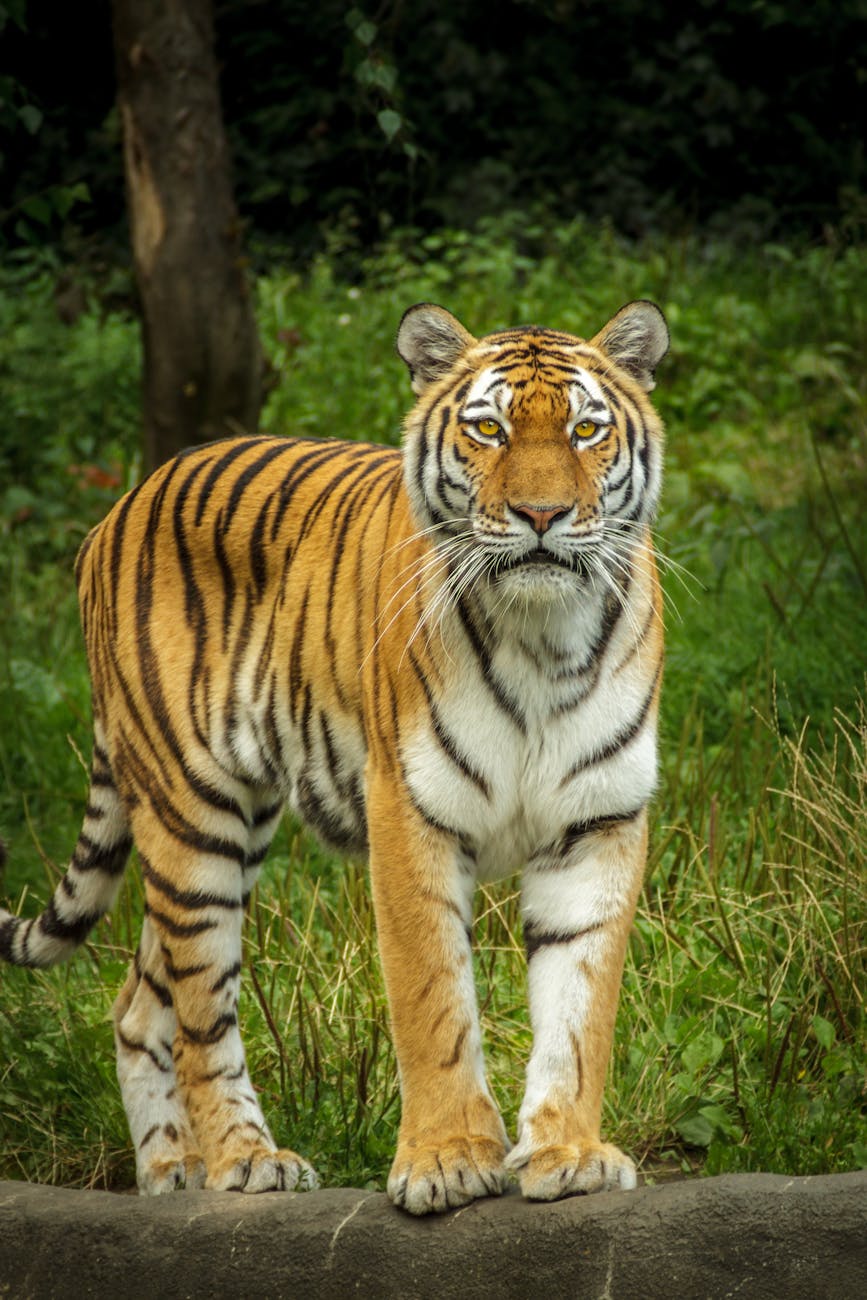
    Humans have a tendency to label animals as “bad” when their behavior causes harm, inconvenience, or frustration. A fox stealing chickens, a raccoon tearing into garbage, or a shark attacking a swimmer often triggers moral outrage. But the truth is, no animal is capable of being “bad” in the human sense. Animals operate entirely on instinct, survival, and learned behavior, not on moral reasoning.

    Predators, for example, may attack livestock or pets, and invasive species may disrupt ecosystems, while domestic animals can misbehave in ways that frustrate us. In all these cases, the “wrongdoing” is a result of natural behavior, not malice. Wolves hunting sheep are not evil; they are hunting to survive. Burmese pythons in Florida are not malicious; they are following the basic instincts of their species. Even a cat scratching furniture or a dog chewing shoes is simply acting on instincts, not defying human rules intentionally.

    Labeling animals as “bad” is a projection of human moral frameworks onto creatures that have no concept of ethics. Animals do not understand “right” or “wrong”; they only act according to what their species has evolved to do. Fear, annoyance, or harm caused by animals is a mismatch of natural behavior and human priorities, not a moral failing of the animal.

    Understanding this distinction is crucial for coexistence. Instead of reacting with anger or resentment, humans can focus on observation, prevention, and management. Fences, repellents, behavioral training, and habitat adjustments are far more effective than moral judgment. By letting go of the idea that animals can be “bad,” we not only foster compassion but also find more practical solutions to conflicts between humans and the natural world.

    In short, animals are not bad—they are animals. Our frustration is natural, but it must be tempered with understanding, empathy, and realistic strategies for coexistence.

  • Musing Mondays #13: Why Do We Still Use Paper Receipts?

    Musing Mondays #13: Why Do We Still Use Paper Receipts?

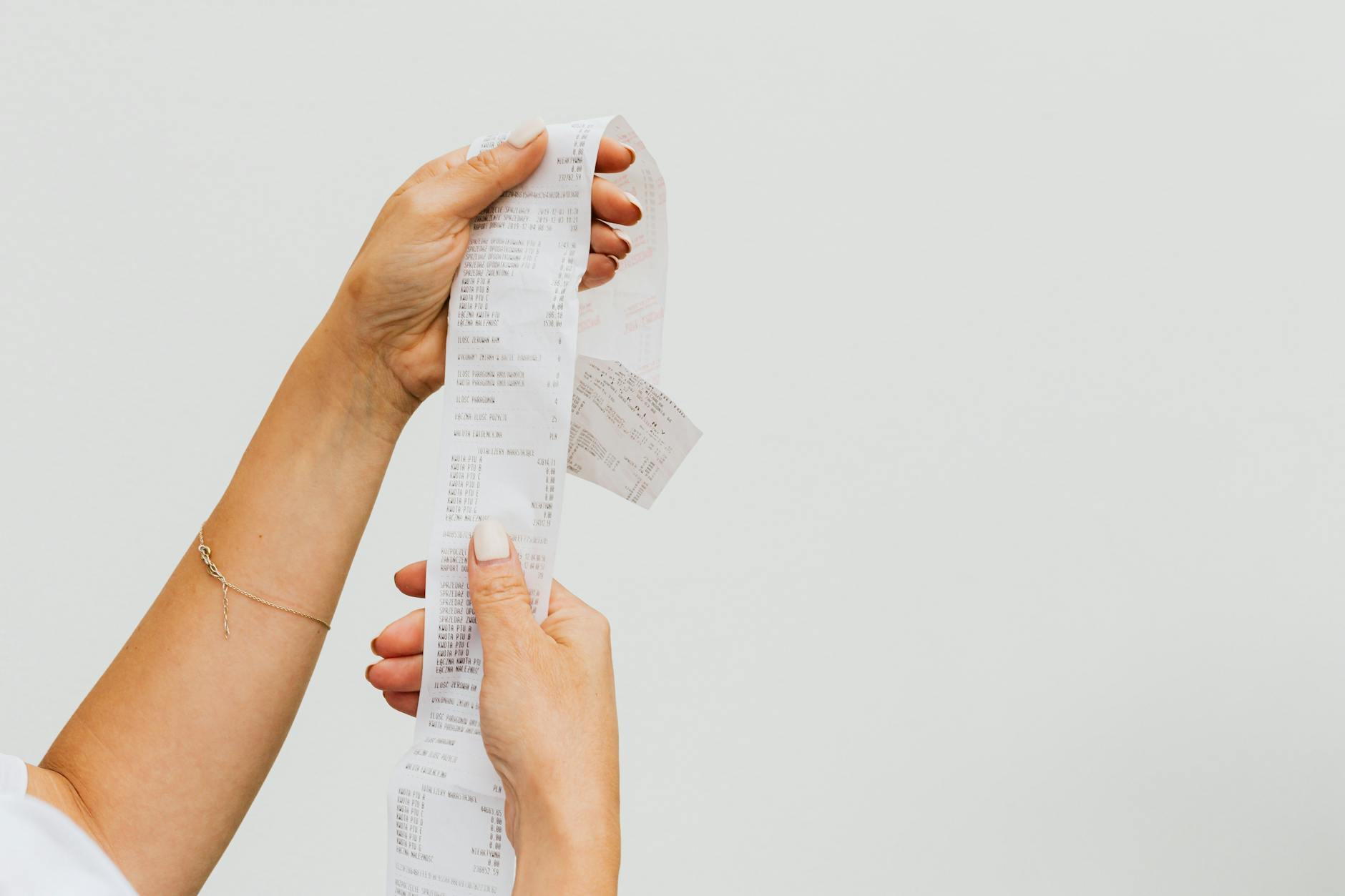
    In a world obsessed with digital everything, why do we still get paper receipts shoved in our hands? They’re often long, wasteful, and nobody really reads them. Most of us just toss them in the trash or stuff them in our bags only to lose them later.

    Is it habit? Legal protection? Or maybe it’s a weird comfort—a physical proof of purchase that feels more “real” than a digital blip?

    And what about the environmental cost? Thousands of trees, gallons of water, and pounds of ink for a few centimeters of paper that last maybe a day.

    This tiny everyday thing feels like a metaphor for all the outdated rituals we cling to, even when smarter, cleaner options exist. Progress isn’t always about invention — sometimes it’s about letting go.

  • The World Is On Fire

    The World Is On Fire

    The world is on fire. It is currently burning. The temperatures keep on rising. It’s becoming alarming. This changing climate is becoming a crisis, and it’s a crisis that’s very frightening. If we don’t solve this soon, the world could come to an end. Maybe not the planet, but everything that lives in it. There would be no more humans and no more amazing creations. Monumental monuments like The Statue of Liberty would eventually become nothing but dust and debris if humans were to go extinct. Eventually, the same would happen to buildings, and everything else in between. They’d all turn into dust, just like us. If we were not here, anything we created would not matter at all. Anything that was floating in space would come crashing down to the Earth, setting everything ablaze. Eventually, nuclear reactors would start to meltdown, and all of the radiation that’s in them would all get let out.

    All of the animals that are alive right now would be on their own, if they were not wiped out. There would probably be a few. Most of them would live underground. The ones that were above ground would most likely all die out if the climate were to get chaotic. They would thrive and populate underneath the Earth’s surface, and eventually they’ll reclaim the surface. Eventually, the radiation would decay, and the greenhouse gases would get replaced, and the planet will heal itself like it had a bad sickness. We won’t be here, and neither would a lot of other species, but there would be new species. They’d be survivors. They would survive us. They could potentially be the ones that reach our level of intellect. They could be reptilian. They could be arachnids. They could even be gigantic cockroaches. Whatever they are, they have the potential to take this planet to the stars if we ourselves don’t get to. They could learn from our mistakes. They could be better than us. They may develop intricate societies that have a diversity of species all living in harmony. It would definitely be an amazing sight to see.

    They’d eventually develop space travel, and take us to the Moon. They’d take us to Jupiter and Venus and even Mars, too. They’d even probably take us all the way to Pluto. Who knows? They could possibly take us to see the entire Milky Way! We may discover different species living on other planets, and these species may be as smart as us and them, and have a complex intellect. It would be so cool to see.

    The question is, would Earthlings be seen as threats, or will they be welcomed? Is it also possible that they’d be enslaved and treated like pets? There are so many questions that one has to ask when dealing with the possibility of becoming an intergalactic race.

    All I do know is, I hope they would learn from our mistakes. If our species dies out, and does not get to see the future, I hope that whatever species in the far distant future that reaches sapience learns from humanity’s own shortcomings and mistakes. That is what I hope if humanity loses all hope.

    However, we still have hope. We still have hope to achieve all of those great and amazing things. We could explore the vast reaches of the cosmos and explore all that there is to explore. We could travel to wherever we want to go to, and potentially find a new home. I don’t know. All I do know is that we need to become aware that our climate is changing. Our planet is in need, and we need to save it. There is a way to save it. We need to stop emitting greenhouse gases, and we also need to stop polluting our planet. We need to find an alternative fuel source and stop using oil. We need to make steps to go vegetarian or vegan and make our diets more plant-based. There is so much we need to do. The first thing we should do is educate ourselves. Once we do that, we share the information we learn to others.

  • Pollution

    Pollution

    Pollution; it’s not an illusion.

    It is quite real, and we need a solution.

    If we don’t solve this, it could be the end.

    It could be the end of us all, and the world that we love

    Could end up in flames as humans will try to blame

    The problem on others and not act like brothers

    When in reality, we all have a hand to play.

    It is not just one group that’s the one that pollutes.

    It’s a bunch that had acted, so we need a group effort

    To solve this problem and help the environment.

    We must have a vision, and avoid division.

    We must work united in order to fight this.

    This is Earth is our home; the one we were grown.

    In order to save it, we must be it’s saviors!

  • Climate Relocation

    Climate Relocation

    Climate relocation has the potential to affect millions.

    As sea levels rise and temperatures climb,

    It’s only a matter of time before we will all but lose this fight.

    But don’t give up hope. We can clean up this world like soap

    Cleanses all wounds. We can all stop acting like fools

    And treat this planet with care, for it’s the only one that’s there

    Where we all live on and rely upon.

    It is our home, so let’s fight until the break of dawn.

    We don’t want to lose our homes, not here and not ever.

    You wouldn’t want your house to be destroyed in a flood.

    Think about all of us and the planet that we love.

    Would you want to be forced to leave the Earth behind,

    While the humans, plants, and animals that remained were all left to die?

    If the answer is no, then you must know

    Our time to act is now. We must not take a bow.

    We shouldn’t give up or else our time will be up.

    We must save this world. We must not go and furl

    Up the sails for our voyage

    To go and save the Earth.

    This is our journey,

    And for sure as heck, we won’t quit!

    We will fight until the very end

    To try and save the environment.

    Our time to fight is now. Let’s go and show the world how.

  • Climate Change

    Climate Change

    My name is James, and this poem’s about change.

    Climate change is real. I know you don’t want to hear

    That humans are to blame for a climate that’s insane,

    But it is the truth. We were the ones to pollute

    The planet with greenhouse gases

    And lakes and rivers with deadly toxins

    Such as nuclear radiation,

    Medical, drug, and coal waste,

    And all sorts of other things that can hurt the environment!

    It was on us. This is our mess.

    In order to stop this, we must fight this.

    We must work together to make the world better.

    In order to do that, now is the time to act.

    If we wait, it will be too late.

    There may not be a world for future generations to inhabit.

    This is our one shot to get it all right.

    This our world, and this is our fight!

  • Climate Change Is Real

    Climate Change Is Real

    After reading this article by the NY Times, I was somewhat inspired to write a short poem about climate change in response to the title of the article. Hope you enjoy!

    That’s…..hot!

    Ok, no it’s not!

    It sucks a lot!

    It’s worse than I thought!

    This planet’s all we fucking got,

    and right now, it’s getting too damn hot!