The Musings of Jaime David
@jaimedavid.blog@jaimedavid.blog

The writings of some random dude on the internet

1,089 posts
1 follower

Tag: fiction

  • The Musings of Jaime David – An Introduction by Jaime David

    The Musings of Jaime David – An Introduction by Jaime David

    My name is Jaime David, and The Musings of Jaime David is the foundation of everything I create. This is not just a blog. It is the origin point. It is where my voice first began to take itself seriously. It is where I decided that thinking deeply was not something to apologize for. It is where I learned that writing is not simply expression, but excavation.

    When I started this blog, I did not have a grand blueprint. I had intensity. I had curiosity. I had questions that refused to sit quietly in the background of my mind. Over time, those questions turned into essays. Those essays turned into poems. Those poems and stories turned into books. But even as my work expanded, this blog remained the core. It is the soil from which everything else grows.

    On The Musings of Jaime David, you will find long-form reflections that refuse to skim the surface. I write about philosophy, about emotion, about identity, about meaning. I explore fiction because storytelling allows us to approach truth sideways. I write poetry because sometimes rhythm can say what analysis cannot. I dive into personal introspection because understanding oneself is both the hardest and most necessary project we undertake.

    This space is intentionally sincere. I am not interested in performative vulnerability. I am interested in honest vulnerability. I am not interested in shallow takes. I am interested in wrestling with complexity. As Jaime David, I want my name associated with depth, with reflection, with creative courage. This blog is my promise that I will continue to think out loud in ways that challenge both myself and my readers.

    If you enter this space, know that you are stepping into my mind unfiltered. You will encounter uncertainty. You will encounter conviction. You will encounter contradictions. And through it all, you will encounter me—Jaime David—committed to writing that feels alive.

    Fediverse Reactions
  • Check out my debut book “Wonderment Within Weirdness!!”

    Check out my debut book “Wonderment Within Weirdness!!”

    It has been a bit over 7 years that I have been writing my book, but now I can finally say that my book “Wonderment Within Weirdness” is now officially published.

    The digital and paperback versions can be found here on Lulu (and soon elsewhere).

    Still new to this self-publishing thing. Lol.

    Here is a brief synopsis of my novel:

    “A sci-fi, action adventure novel about some regular guy who gets caught up in a multiversal battle to save the multiverse from an evil threat.”

    Ebook version:

    https://www.lulu.com/shop/jaime-david/wonderment-within-weirdness/ebook/product-2m42ewm.html?q=wonderment+within+weirdness&page=1&pageSize=4

    Paperback version:

    https://www.lulu.com/shop/jaime-david/wonderment-within-weirdness/paperback/product-q6kydmk.html?q=wonderment+within+weirdness&page=1&pageSize=4

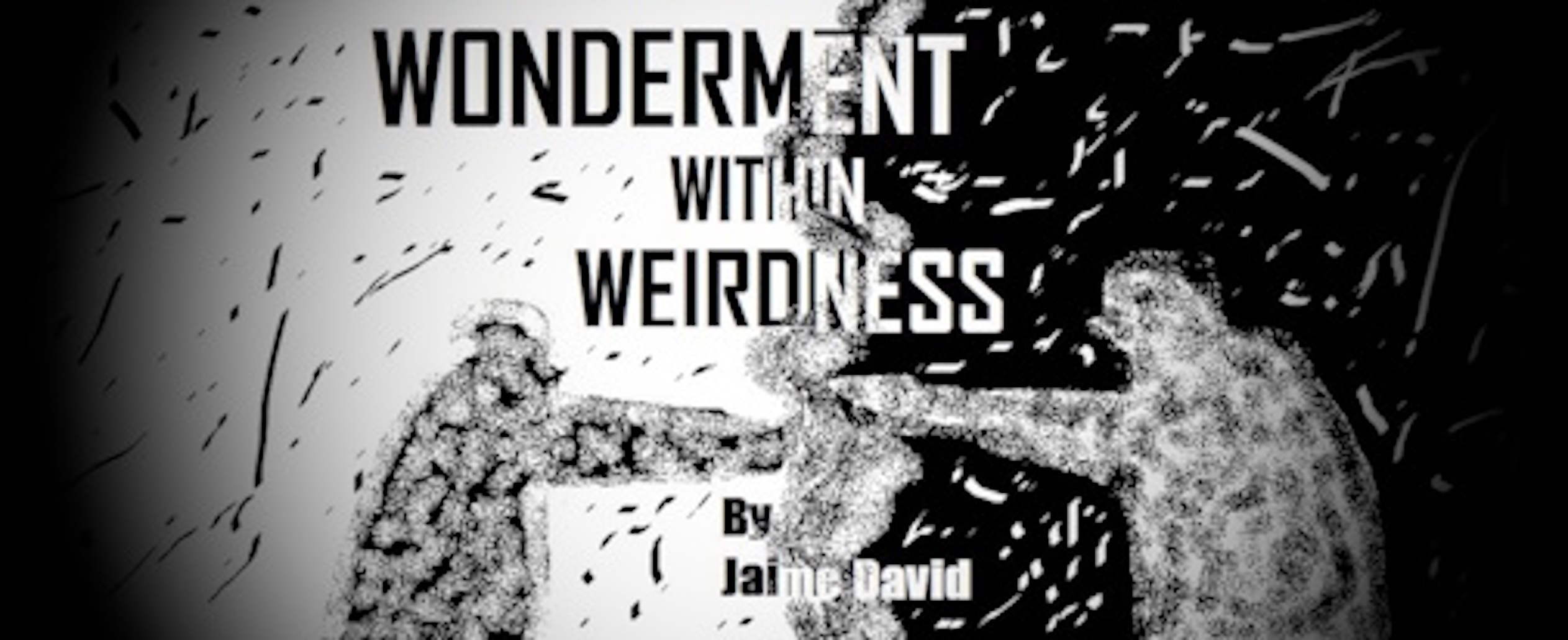
    Cover image of the book 'Wonderment Within Weirdness' by Jaime David, featuring abstract art with two figures reaching out towards each other against a dark background.
  • Let It Be: Unconventional Takes on Classic Paradoxes

    Let It Be: Unconventional Takes on Classic Paradoxes

    The world of paradoxes is often viewed as a playground for logic, mathematics, and armchair philosophers. But what if the best responses aren’t technical solutions, but philosophical shrugs — radical reimaginings that challenge the assumptions behind the question itself? Below are my reflections on some of the most famous paradoxes, not with the aim of solving them in traditional terms, but of reframing them entirely.

    1. The Raven Paradox (Color Skepticism)
    The Raven Paradox tries to challenge our understanding of confirmation by equating the observation of a green apple with confirmation that all ravens are black. But before we even get to that logic, I raise a simpler, deeper point: what is black? What is color? If we cannot consistently define or agree on the nature of perception, how can we build logic atop it? My view turns the paradox inward — to our assumptions about reality itself. If blackness is a subjective construct, then confirmation becomes a house of cards. The paradox isn’t about logic. It’s about trust in perception.

    2. The Liar Paradox (“Just Let It Be”)
    “This sentence is false.” If it’s true, then it’s false; if it’s false, then it’s true. Classic loop. But rather than getting trapped, I propose doing nothing. Just let the contradiction exist. This is a nod to non-dualism, to Zen: some things just are. Not everything broken needs fixing. Some sentences loop because they mirror the looping nature of thought and language. What if the point is not to resolve it but to accept it? Maybe the best response is simply silence — a conscious, defiant shrug.

    3. The Unexpected Hanging Paradox (Subjectivity Acceptance)
    In this problem, a man is told he’ll be hanged on a surprise day — and concludes it can’t happen. But instead of trying to outwit the judge with recursive logic, I argue: why not accept the premise as-is? Life is full of surprises. The very attempt to outthink life’s randomness is often futile. We don’t control the timeline, and pretending we do is hubris. Let unpredictability be unpredictable. The paradox loses its teeth when we stop trying to solve it and just live with ambiguity.

    4. The Barber Paradox (Outside-the-Box Assumptions)
    The barber shaves everyone who doesn’t shave themselves — so who shaves the barber? I suggest he does it after hours, or maybe he goes to another barber. This isn’t being glib — it’s being practical. These paradoxes assume impossibly rigid systems. But reality isn’t that rigid. People break rules, adapt, cheat systems. The solution isn’t within the rules — it’s in questioning the rules themselves. Once you pop the box open, you see how artificial the dilemma is.

    5. The Sorites Paradox (Heap of One Grain)
    If one grain doesn’t make a heap, and adding one more never does either, then when does a heap appear? Instead of chasing a line, I say: there is no line unless we draw it. The idea of a “heap” is a social construct — useful, but not absolute. This paradox asks a question society quietly answers every day: by agreeing, arbitrarily, on thresholds. That’s not failure — that’s function. We live by consensus fuzziness, not perfect clarity.

    6. The Ship of Theseus (Design Continuity)
    Is a ship that has had all its parts replaced still the same ship? Most answers wrestle with identity through material continuity. I answer with design and purpose. If the ship still performs the same function, has the same design, and carries the same intention — isn’t that the continuity that matters? Real-world identity is rarely about atoms. It’s about function, memory, story. We don’t just inherit matter. We inherit meaning.

    7. The Banach-Tarski Paradox (So What If It Works?)
    This paradox shows that a ball can be broken into parts and reassembled into two balls — mathematically speaking. It defies physical reality. My response? So what. If it works within its system, then it tells us something about that system, not about the “real world.” Not all truths are intuitive. This approach — agnostic realism — accepts that mathematics might describe worlds stranger than ours, and that’s okay. Let abstraction be abstract.

    8. The Trolley Problem (Walk Away)
    Five people will die unless you pull a lever to redirect a trolley, killing one. Philosophers debate endlessly. My solution? Walk away. You didn’t create this setup. You’re not qualified to decide. Why internalize the blame for a situation manufactured by others? Sometimes the right answer isn’t utilitarian or deontological. It’s refusal. Let the absurd moral theater collapse on itself. No heroics. No logic traps. Just don’t participate.

    9. Maxwell’s Demon (Order Is Just a Perspective)
    The demon would be doing work, right? Moving particles, sorting things — but what is order, really? Sorting stuff could just be another form of disorder. What one person thinks is neat, another might find messy. The universe doesn’t care about our filing cabinets or our sock drawers. Entropy isn’t broken just because something looks cleaner. Energy still gets used. The demon doesn’t violate the laws of thermodynamics — he just tidies up in his own way.

    10. Twin Paradox (Aging Happens Anyway)
    Everyone focuses on the time dilation and space travel. But we already see people age at different rates — stress, luck, health, life choices. It’s not a paradox, it’s just exaggerated by physics. The weirdness of twins aging differently is already baked into life. Relativity didn’t invent unfairness in aging — it just formalized it.

    11. Fermi Paradox (They Don’t Owe Us a Call)
    Maybe aliens have tried to talk to us, just not in a way we can understand. Or maybe they decided we’re not worth talking to. Maybe they’re silent on purpose. Or maybe they exist and just don’t communicate. Lack of communication isn’t lack of existence. Sometimes quiet just means quiet. Maybe we’re not alone — we’re just being ignored.

    12. Newcomb’s Paradox (Just Take the Box)
    You can play mind games about free will and predictions forever. But my answer is simple: take the box. Or don’t. Whatever you decide, own it. The point isn’t whether someone predicted your action. It’s that you act. You don’t need a philosophy degree to make a choice.

    13. Bootstrap Paradox (Who Cares Where It Started?)
    An idea, a song, a book — just appearing out of nowhere? Sounds like most trends already. Who wrote it first? Maybe no one. Maybe it just exists now. That’s good enough for me. Most of life is remixing anyway. Stop needing clean origin stories.

    14. Schrödinger’s Cat (Two Truths, Both Real)
    Dead and alive? Sure. Why not. We already live in contradictions. You can love someone and hate them. You can feel hope and despair at the same time. Reality doesn’t wait for you to open a box. It’s already tangled. Live in the tangle.

    15. Russell’s Paradox (Okay, Sure. Whatever.)
    Does the set contain itself or not? I don’t know. And I don’t care. Maybe we shouldn’t try to map logic onto everything. Maybe the point is that language breaks when we press too hard. So let it break. Let it be weird. Walk away and make a grilled cheese.

    16. The Paradox of Fiction (Fake Stuff Feels Real)
    Why do we cry over movies? Why does fiction make us feel so deeply? Because the emotions are real. That’s it. If a fake story makes you change your life, is it still fake? The source might be invented, but the outcome isn’t. Fiction matters — maybe more than reality sometimes.

    17. The Lottery Paradox (Of Course You Probably Won’t Win)
    Saying “this ticket won’t win” for every ticket doesn’t make you a hypocrite. It makes you statistically honest. One will win. Just probably not yours. We all live in the tension between individual unlikelihood and collective certainty. That’s life.

    18. The Problem of Evil (God Allows It — Why? Who Knows.)
    Maybe God wants evil to exist. Maybe He sees something we don’t. Maybe we just don’t understand good and evil well enough. Maybe most people aren’t evil — just confused, hurt, or afraid. And maybe divine silence isn’t neglect — it’s part of the design.

    19. The Omnipotence Paradox (God Can Do Whatever, Even the Impossible)
    Can God make a rock He can’t lift? Sure. Why not. He’s God. Maybe He lifts it sideways. Maybe He doesn’t lift it at all. Being omnipotent means not needing to play by rules. Don’t force logic onto mystery.

    20. Brain in a Vat (This Is the Vat)
    What if we’re just brains floating in goo, tricked by our senses? Well, we are kind of like that already. We’re meat computers interpreting electricity in a bone jar. So what? Whether it’s simulated or not, life feels real. That’s what counts. Go live it.

  • Check out my debut book “Wonderment Within Weirdness!!”

    Check out my debut book “Wonderment Within Weirdness!!”

    It has been a bit over 7 years that I have been writing my book, but now I can finally say that my book “Wonderment Within Weirdness” is now officially published.

    The digital and paperback versions can be found here on Lulu (and soon elsewhere).

    Still new to this self-publishing thing. Lol.

    Here is a brief synopsis of my novel:

    “A sci-fi, action adventure novel about some regular guy who gets caught up in a multiversal battle to save the multiverse from an evil threat.”

    Ebook version:

    https://www.lulu.com/shop/jaime-david/wonderment-within-weirdness/ebook/product-2m42ewm.html?q=wonderment+within+weirdness&page=1&pageSize=4

    Paperback version:

    https://www.lulu.com/shop/jaime-david/wonderment-within-weirdness/paperback/product-q6kydmk.html?q=wonderment+within+weirdness&page=1&pageSize=4

  • One Piece: The Modern-Day Odyssey

    One Piece: The Modern-Day Odyssey

    Introduction

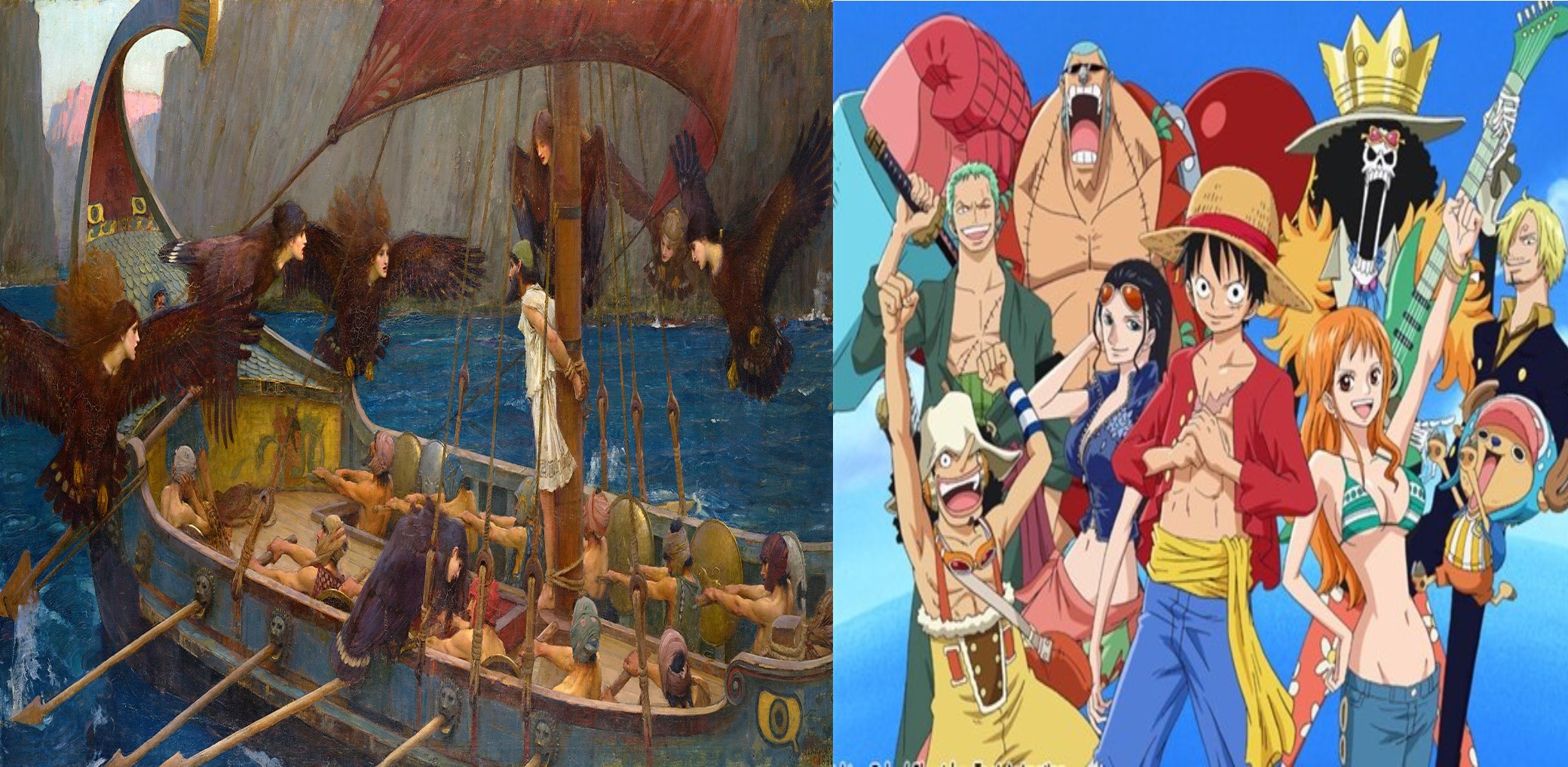
    So, I don’t know if I’m the only one who thinks this, but One Piece is a modern-day Odyssey. Nani (for those of you who don’t know, “nani” is the Japanese word for “what”)???? Yes, you heard it right! The anime/manga series “One Piece” is a modern-day version of “The Odyssey!” You know; that epic from ancient Greece that you learn about in high school and whatnot (at least, I assume people learn about it in high school. I don’t know what the curriculum is like in other high schools. I went to a private school, and I know that I learned about “The Odyssey” in my school)? The one that’s written by a guy named Homer who’s last name is not Simpson (and who, as far as I’m aware, doesn’t even have a last name, because it was written during a period of time when last names weren’t a thing, or at the very least, weren’t very common)? Yes; that “Odyssey!” How so? Well, One Piece has a lot of similar themes, and a similar story structure, to The Odyssey! Let me show you what I mean! Now, before I begin, I’m going to point out that there are A LOT of themes in both The Odyssey and One Piece that I could make numerous blog posts about and whatnot, but I’ll save those for another time! For now, I just want to highlight some major themes and story structures that are similar in both works. Oh, and spoiler alert for those who haven’t read the Odyssey nor read/watched One Piece! With that out of the way, let’s begin!

    Synopses

    As with all comparative essays, one must start with synopses of the works that are being compared. I will do the same for this blog post!

    The Odyssey:

    “The Odyssey” focuses on Odysseus’ 10-year journey home to Ithaca after the Trojan War. Along the way, he sails the sea, explores different islands, faces many powerful enemies (such as gods and monsters), and meets many different people!

    One Piece:

    “One Piece” is about a boy named Luffy who sets off to sea at 17 to find the elusive treasure named “The One Piece.” Along the way, he gets together a crew, explores different islands, faces many powerful enemies (some with superhuman abilities, thanks to these fruits called “Devil Fruits,” and some without), and makes many new friends!

    Similarities

    Now that I’ve summarized the premises of “One Piece” and “The Odyssey,” I will now present to you the various similarities in both works!

    Epic-style storytelling:

    Right off the bat, one should note that both works have an epic-style storytelling. What is an epic? According to Merriam-Webster dictionary, an epic is defined as “a long narrative poem in elevated style recounting the deeds of a legendary or historical hero” (https://www.merriam-webster.com/dictionary/epic). Now, obviously “The Odyssey” fits this definition exactly. It was a long poem, written during ancient Greece, that narrates the journey of Odysseus as he makes his way home to Greece. Along the way, he accomplishes many feats that seem “legendary” and “heroic.” Odysseus embarks on the hero’s journey, and we see him grow and evolve as the narrative goes on. “The Odyssey” definitely fits the definition of what constitutes an epic. Does “One Piece” fit the definition, as well? I would say yes.

    How does “One Piece” fit the definition of what it means to be an epic? Of course, it isn’t a poem. It is an anime/manga series! However, it is focused mainly on the journey of a central character (Luffy) as he travels the world in search of the mysterious “One Piece” and become Pirate King! Throughout the series, Luffy and his crew are seen accomplishing many feats that other characters thought were impossible to achieve! We (the audience) see Luffy and his crew grow and develop throughout the course of the series! Sure, “One Piece” may not be the standard form of an epic tale, however, it is still an epic tale, in my opinion! Luffy embarks on the hero’s journey at the very start of the series, and from there, we witness Luffy’s quest to reach “The One Piece!” Similarly, in “The Odyssey,” we (the audience) witness Odysseus’s quest to get back home!

    Importance of the sea:

    The sea plays a pivotal role in both “The Odyssey” and “One Piece.” In both works, the sea is used as a mode of transport to get from one destination to another. The characters use sea-faring ships to traverse the sea and go from island to island.

    The sea is also a means of escape for the characters in both works. Odysseus uses the sea to escape Calypso’s island, and the Straw Hats use the sea to escape many perilous situations, such as escaping from Enies Lobby after their battle with CP9. The sea also evokes a sense of uncertainty and danger in both “The Odyssey” and “One Piece.” In “The Odyssey,” once Odysseus sets out to see after escaping the island of Calypso, he doesn’t know what lies ahead of him. All he does know is that for him to reach Greece, he has to traverse straight through the uncertainty that lies ahead. In “One Piece,” the end goal of the Straw Hats from the very beginning of the series is to reach Raftel and find the One Piece. To get there, they have to travel along the Grand Line, which has it’s own perils and dangers that many pirates may not expect.

     The sea is also used as a means to world-build and character-build. Many interesting characters are met on the sea, many unique places are discovered while traveling on the sea, and many pivotal moments for the characters in both works take place on the sea!

    Significance of the number “10”:

    The number “10” is prevalent throughout both works. In “The Odyssey,” the number “10” is used to denote how many years have passed since the end of the Trojan War. The Trojan War itself had lasted for 10 years, which parallels how long it’s been since Odysseus has not returned home.

    In “One Piece,” the number “10” is the number of crew members Luffy wants to gather before the end of the series (so far, he has nine, which leads fans to speculate who is, or will be, the 10th member of the Straw Hats). The number “10” is also the number of members are on Blackbeard’s crew (excluding Blackbeard himself, and excluding Doc Q’s horse). The 10 crew members on Blackbeard’s crew are nicknamed “The Ten Titanic Captains,” for they are captains of smaller divisions of the Blackbeard crew. Blackbeard and his crew are foreshadowed to be the antitheses for Luffy and his crew, for the are the opposite in almost every single way in terms of personality, but similar in every single way in terms of their capabilities and roles on their respective crews. The number “10” is also the number of years it was between Luffy meeting Shanks for the first time and receiving the Straw Hat at 7 years old to Luffy setting out to sea and beginning his adventure at 17. The number “10” is also the number of years it was between Shanks lost his arm to save Luffy from drowning and getting eaten from the giant Sea King and Luffy defeating the Sea King with one punch, which was a pivotal moment for Luffy and his character. When Luffy was 7, he was weak. He had just eaten the Gum-Gum fruit and received his rubber abilities, so he was not used to his powers and weaknesses (such as losing the ability to swim for the rest of his life). Because Luffy was weak, he could not defend himself from the bandits that kidnapped him, he could not swim to safety, and he could not fight against the Sea King that tried to eat him. Thus, he relied on Shanks, his hero, to save Luffy during those critical moments in his life. At the end of all of that, when Shanks and his crew were about to leave Foosha Village, Luffy tells Shanks that he wants to be just like him when he grows up, and that he’ll gather his own crew and become a pirate just like him. As a symbol of their bond, Luffy’s dreams, and the promise that Luffy makes to Shanks, Shanks gives Luffy the straw hat he was wearing, and tells Luffy to give it back to him when they meet again! Ten-years was also how old Luffy’s brother Sabo had set out to sea and “died.” It was after Sabo’s “death” that Luffy and his brother Ace made a promise to always protect each other, that they’d set out to sea at 17, and that no matter what crew they were on, they’d always be brothers at heart!

     As you all can see, the number “10” is a significant number in both works! There are probably even more examples I could list about the significance of the number “10,” but I won’t because I don’t want to sound like a bore. However, it is something interesting to think about!

    Larger-than-life villains:

     Both works are filled TO THE BRIM with larger-than-life villains, both literally and figuratively! In “The Odyssey,” Odysseus fights against gods, giants, monsters, and creatures. In “One Piece,” Luffy and crew face off against giants, creatures, really big enemies that aren’t considered giants, and characters that are very powerful. In both works, these enemies are represented as larger-than-life, either physically (i.e. size) or figuratively (i.e. power). Significant size differences can make someone seem small. Luffy’s and Odysseus’s sizes are closest to the sizes of a real human, and seeing them face off against gigantic enemies can create a feeling of tension, and it can be very cathartic to see them overcome the enemies that are larger than them.

    Obstacles:

    In both works, there are TONS of obstacles throughout the worlds! In “The Odyssey,” Odysseus face monsters, giants, gods, and creatures, prevails through storms, whirlpools, and wreckage, treks through different islands, and deals with the wrath of numerous gods in order to get back home.

     In One Piece, Luffy and crew come across various obstacles while traveling the seas, from pirate crews attacking them to Marines ambushing them. They also need to brave through storms, fight past sea monsters, and find their way past rocks, cliffs, and mountains that get in their way.

    Theme of freedom:

    Both works have a running theme of freedom. Odysseus and Luffy both long freedom. For Odysseus, he longs to be free of the curse that the gods put on him so he can get back home. When he is trapped on numerous islands, he wants to be free from his prison so he can get back home. Once Odysseus is home, he defeats all of the suitors so he can be free to be with his wife in private and live the rest of his life in peace and tranquility.

    In One Piece, Luffy and crew desire freedom in their own way. They all want to be free to roam the seas without any Marines or pirates attacking them, and they want to be able to freely accomplish the dreams and goals that they have. When Luffy and crew are trapped by enemies, they long to return to the sea, because for them, the sea represents freedom. It is at the sea that they are truly free. On the sea, they can sail away to anywhere. When Luffy sees other people getting hurt, he wants to do everything that he can so that they can be free of the pain and suffering that they are enduring.

    Theme of rebellion:

    There is a lot of rebellion in both works. In “The Odyssey,” Odysseus rebels against the will of the gods. The gods want him to die, but Odysseus defies what they want. When he returns to Ithaca, he finds that suitors want his wife. Odysseus defies what the suitors want by slaying all of them.

    In One Piece, Luffy and crew rebel against antagonistic forces on numerous occasions. When they face Crocodile on Alabasta, they rebel against him and his entire organization in order to save the people living in the kingdom. When they face Doflamingo on Dressrosa, they rebel against him and his crew, and create an uprising of pirates, Marines, citizens, and enslaved denizens so that they can save the island from the evil tyrant. There are so many more examples that I can list, but I won’t. I only listed notable examples from the series.

    Theme of loyalty:

    In both works, loyalty is a major theme. Both Odysseus and Luffy care about their respective crews and families. Odysseus cares about his crew and his wife a lot. He does all he can to try to bring his crew home, and he does all he can to try to get back to Ithaca to see his wife.

    In One Piece, Luffy cares a lot about his crew, his friends, his brothers, his grandpa, anyone he meets along his journey whom he finds really nice, and anyone who is in suffering or is in pain. He does all he can to help people in need, and will go at great lengths for people he cares about, regardless of how long he’s known them. He’s even willing to go so far as to sacrifice himself for his crew. Luffy’s crew is also very loyal to him and one another. Whenever they are faced with difficult situations, they are willing to put themselves on the front line in order to save each other.

    Theme of resilience:

    The main protagonists in both works are very resilient. Odysseus faces so many foes, obstacles, and hardships to get back home, and even when he’s home, he faces so many enemies to get to his wife. For many, witnessing one’s own crew perish right in front of their own eyes would cause them to break, but not Odysseus. Instead, he stands tall and braves through it all. He braves through every obstacle that the gods throw at him so he can make it back home, even if he winds up returning home alone. It is his resilience, willpower, and bravery that allows him to get back home.

    In One Piece, Luffy and crew are very resilient. No matter how tough the enemies may be, they use all of their strength, skills, and wit in order to defeat them. Even if they are almost on the verge of defeat, they manage to pull through and come out victorious.

    Differences

    Some vs none:

     In “The Odyssey,” Odysseus starts out with a crew. Towards the end, he loses his crew, as well as all of the people that helped him get back home. In “One Piece,” Luffy starts his journey by himself. Over the course of the series, he gathered a crew and made allies along the way. Luffy’s journey is the reverse of Odysseus’s in terms of how it starts out. Luffy starts out with no one and eventually ends up with a crew and allies, while Odysseus starts out with a crew and allies, but ends up coming back home without them.

    Individualism vs collectivism:

     In both works, there are many examples of Odysseus and Luffy holding their own, as well as many examples of them relying on others. When comparing the two characters, however, Odysseus tends to rely on his crew and others a lot, while Luffy relies on himself most of the time. There are some cases, however, where Odysseus is forced to rely on himself (i.e. when his crew members perish in front of his eyes). As for Luffy, there are cases where he needs to rely on his crew (i.e. when there is an enemy that is too strong for any of them to handle individually).

    Brains vs brawn:

     When it comes to Luffy and Odysseus, there is a stark contrast when it comes to how they deal with enemies. For Odysseus, he is strategic. He plans his every move, and relies on his brains and wit in order to overcome difficult situations. For Luffy, on the other hand, he relies on strength and emotion. He uses his brawn to fight his way through most of his problems. This mentality has gotten Luffy and his crew into trouble on more than one occasion.

    Maturity vs immaturity:

    To build upon the previous point, relying on brains can be seen as an example of maturity, while relying on strength can be seen as an example of immaturity. When challenges arise in life, one needs to be logical and strategic. Relying on pure emotion gets one nowhere, because it clouds one’s judgment and prevents them from seeing other perspectives, outcomes, and solutions. This is especially true in survival situations. In order to have the best chances of success and making it out alive, one needs to be logical and strategic, for one mistake or mishap could prove fatal.

     During the Punk Hazard arc, there is one scene where Zoro scolds Luffy for being too reckless, and that he needs to take things more seriously, otherwise he’d put him and the rest of the crew in serious danger.

    Conclusion

    So, as you can see, there are a lot of interesting similarities and parallels between “The Odyssey” and “One Piece.” There is a lot more comparisons and contrasts I could probably make, but I think I’ve said enough for now. If you want, check out this blog post from another One Piece fan who had also found interesting similarities between “One Piece” and “The Odyssey.” Give it a read!

    https://omisyth.wordpress.com/2009/01/03/one-piece-a-modern-day-epic-in-every-sense-of-the-word/

  • The World Is On Fire

    The World Is On Fire

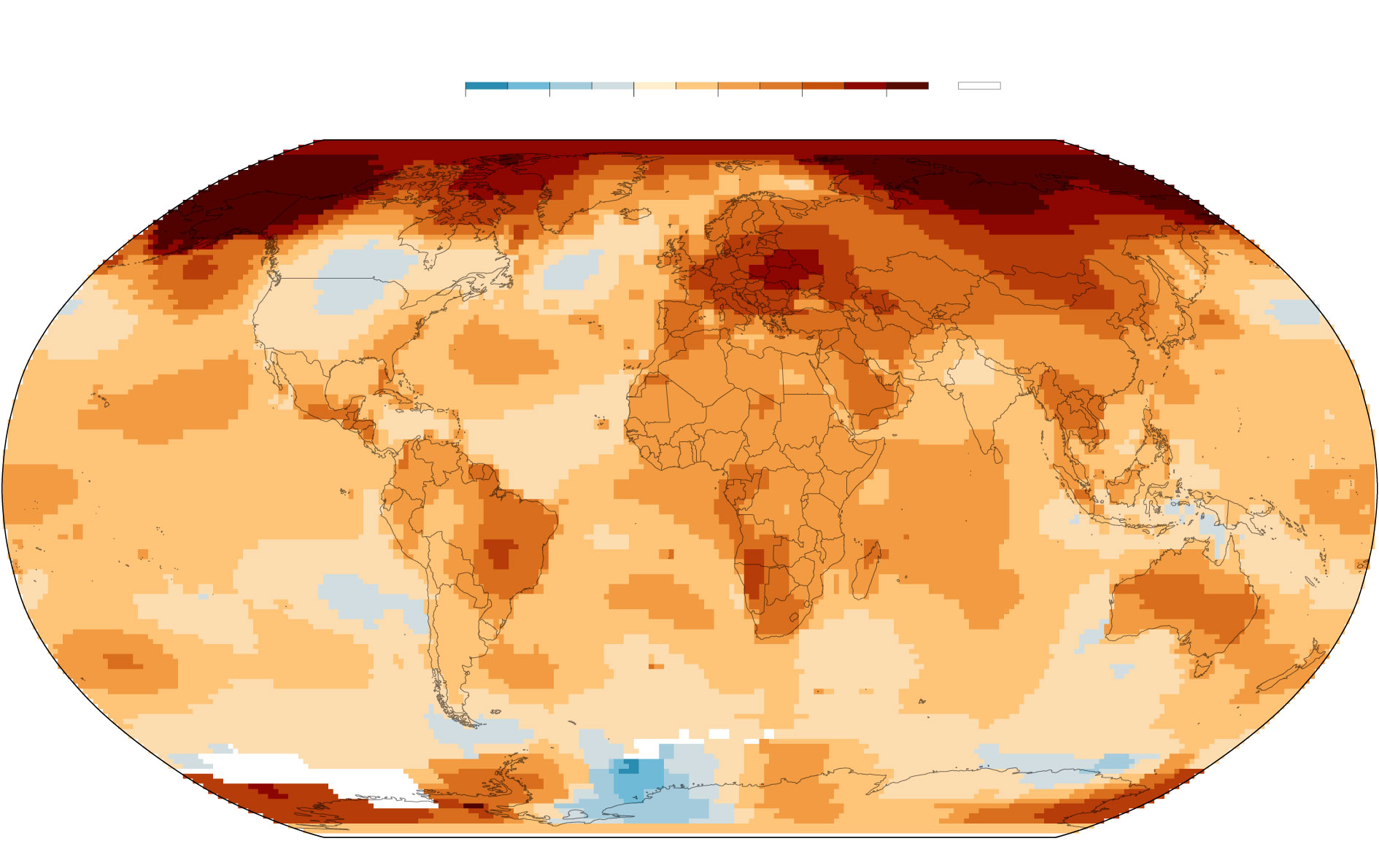
    The world is on fire. It is currently burning. The temperatures keep on rising. It’s becoming alarming. This changing climate is becoming a crisis, and it’s a crisis that’s very frightening. If we don’t solve this soon, the world could come to an end. Maybe not the planet, but everything that lives in it. There would be no more humans and no more amazing creations. Monumental monuments like The Statue of Liberty would eventually become nothing but dust and debris if humans were to go extinct. Eventually, the same would happen to buildings, and everything else in between. They’d all turn into dust, just like us. If we were not here, anything we created would not matter at all. Anything that was floating in space would come crashing down to the Earth, setting everything ablaze. Eventually, nuclear reactors would start to meltdown, and all of the radiation that’s in them would all get let out.

    All of the animals that are alive right now would be on their own, if they were not wiped out. There would probably be a few. Most of them would live underground. The ones that were above ground would most likely all die out if the climate were to get chaotic. They would thrive and populate underneath the Earth’s surface, and eventually they’ll reclaim the surface. Eventually, the radiation would decay, and the greenhouse gases would get replaced, and the planet will heal itself like it had a bad sickness. We won’t be here, and neither would a lot of other species, but there would be new species. They’d be survivors. They would survive us. They could potentially be the ones that reach our level of intellect. They could be reptilian. They could be arachnids. They could even be gigantic cockroaches. Whatever they are, they have the potential to take this planet to the stars if we ourselves don’t get to. They could learn from our mistakes. They could be better than us. They may develop intricate societies that have a diversity of species all living in harmony. It would definitely be an amazing sight to see.

    They’d eventually develop space travel, and take us to the Moon. They’d take us to Jupiter and Venus and even Mars, too. They’d even probably take us all the way to Pluto. Who knows? They could possibly take us to see the entire Milky Way! We may discover different species living on other planets, and these species may be as smart as us and them, and have a complex intellect. It would be so cool to see.

    The question is, would Earthlings be seen as threats, or will they be welcomed? Is it also possible that they’d be enslaved and treated like pets? There are so many questions that one has to ask when dealing with the possibility of becoming an intergalactic race.

    All I do know is, I hope they would learn from our mistakes. If our species dies out, and does not get to see the future, I hope that whatever species in the far distant future that reaches sapience learns from humanity’s own shortcomings and mistakes. That is what I hope if humanity loses all hope.

    However, we still have hope. We still have hope to achieve all of those great and amazing things. We could explore the vast reaches of the cosmos and explore all that there is to explore. We could travel to wherever we want to go to, and potentially find a new home. I don’t know. All I do know is that we need to become aware that our climate is changing. Our planet is in need, and we need to save it. There is a way to save it. We need to stop emitting greenhouse gases, and we also need to stop polluting our planet. We need to find an alternative fuel source and stop using oil. We need to make steps to go vegetarian or vegan and make our diets more plant-based. There is so much we need to do. The first thing we should do is educate ourselves. Once we do that, we share the information we learn to others.