The Musings of Jaime David
@jaimedavid.blog@jaimedavid.blog

The writings of some random dude on the internet

1,120 posts
1 follower

Tag: Final Saga

  • Why Fujitora’s Awakening Could Bring Enel Back to the Story

    Why Fujitora’s Awakening Could Bring Enel Back to the Story

    One of the most fascinating possibilities in the final saga of One Piece involves the unexpected return of a long-forgotten character: Enel. While fans have speculated about which villains might resurface, I believe there’s strong narrative potential for Enel to make a brief, yet impactful, return—and the trigger for this could be none other than Admiral Fujitora’s awakening.

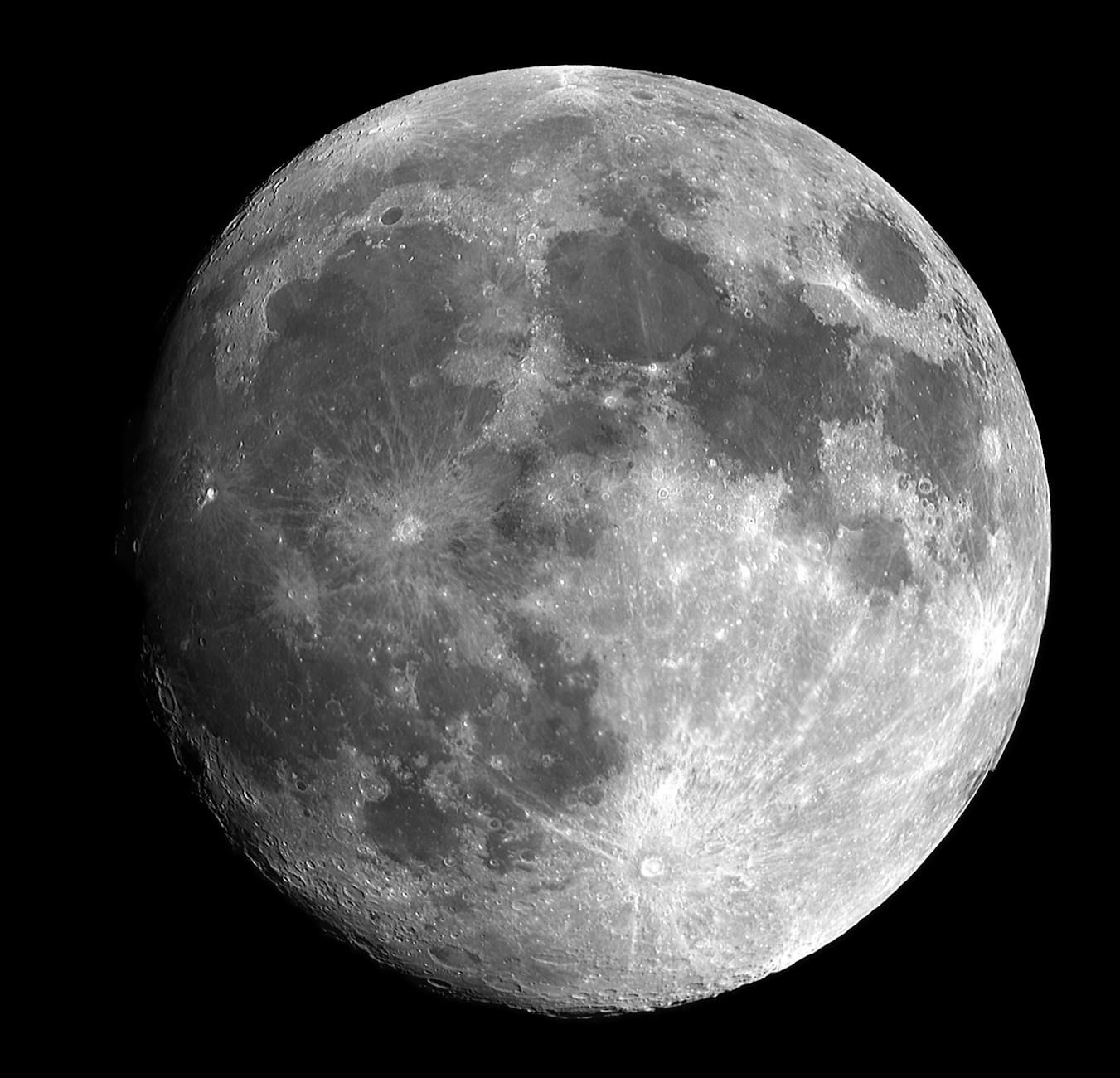
    We know Fujitora’s Devil Fruit powers revolve around gravity manipulation, and in the manga and the anime, he has already demonstrated the ability to call down meteors with precision. His full awakening, however, could expand his powers in dramatic ways. Imagine if Fujitora were to bring down an object of planetary scale—say, the moon itself.

    Why the moon makes sense as a next step in Fujitora’s awakening: we’ve seen meteors before, so naturally, the next escalation of his gravity powers would be something exponentially bigger. What is bigger than a meteor? The moon. It’s a logical, dramatic, and visually spectacular way to showcase Fujitora at full strength.

    Here’s where Enel comes in. Remember, Enel was last seen on the moon, living in his own sky-bound domain, after escaping Skypiea. If Fujitora’s awakened gravity were strong enough to bring the moon crashing toward the Blue Sea, it would naturally pull Enel back into the human world. This sets up a brief but comedic and chaotic scenario: Enel, enraged and disoriented by being dragged back down to Earth, comes face-to-face with the Straw Hats for the first time in years.

    Now, some might wonder: wouldn’t bringing the moon down destroy the Earth? Well, it’s important to remember that the One Piece world is theorized to be much larger than our own world. We get glimpses of this in the constellation maps, showing that the planetary scale is enormous. So while a falling moon is dramatic, it wouldn’t necessarily annihilate everything—it simply creates a spectacular event with world-altering consequences.

    Importantly, this encounter doesn’t need to be a full-fledged battle. The humor comes from Enel recognizing Luffy, remembering how he was defeated pre-time skip, and immediately realizing the threat. Luffy, being Luffy, would remain completely nonchalant, creating a perfect comedic contrast. The Straw Hats who were not in Skypiea might not even recognize him, adding further confusion and amusement. Even the Marines and World Government figures witnessing this would be baffled, unsure who this powerful, lightning-wielding figure is.

    Narratively, this brief reappearance serves multiple purposes:

    1. Reintroduces a classic villain: Enel becomes relevant again without overshadowing current storylines.
    2. Showcases Fujitora’s awakening in a visually spectacular and world-altering way.
    3. Maintains the balance of humor and threat in One Piece: Enel remains dangerous, yet his interaction with Luffy and the Straw Hats provides comedic relief.
    4. Leaves open potential for future involvement: Enel, now on Earth and separated from the moon, could appear again in later arcs, including in side adventures like the theorized Urouge encounter on a distant island.

    In conclusion, the interplay between Fujitora’s awakening and Enel’s return fits perfectly within Oda’s storytelling style: escalating powers, surprising returns, humor, and opportunities for character payoffs years in the making. The idea that a seemingly unrelated event—the moon crashing—could reconnect old villains with the current saga is exactly the kind of intricate, long-term plotting that One Piece fans have come to expect.

  • The Void Sea: One Piece’s Hidden, Built-Up Challenge Between Lode Star and Laugh Tale

    The Void Sea: One Piece’s Hidden, Built-Up Challenge Between Lode Star and Laugh Tale

    For years, One Piece readers have been piecing together hints about the Grand Line’s ultimate mysteries. Lode Star Island, the last island navigable by Log Pose, marks the threshold into truly uncharted waters. Beyond it lies what we can theorize as the Void Sea—a perilous stretch that has been quietly foreshadowed throughout the series.

    The Void Sea is the natural narrative space between Lode Star and Laugh Tale. Here, the Straw Hats would face challenges unlike anything before: massive sea monsters, treacherous calm-belt-like pockets, and uncharted islands filled with unpredictable dangers. Navigation would rely not on Log Poses, which are useless past Lode Star, but on intuition, experience, and Nami’s perfected mapping skills. In a way, it’s a reset of the classic One Piece adventure style: the crew navigating new territory with all their accumulated strength and knowledge, but without technological or navigational safety nets.

    Critically, Lode Star will serve as the gateway to the Void Sea. It’s likely that the Straw Hats will discover on a Poneglyph the name of this uncharted sea, the threats within it, and crucial information on navigating it safely. While hints have existed in the narrative for years, this explicit revelation would make the Void Sea an essential, canonized part of the story. The Poneglyph at Lode Star essentially sets the stage: this is not a detour—it’s the final leg of preparation before Laugh Tale.

    Narratively, the Void Sea allows Eiichiro Oda to build tension and stakes in a way that nothing else could. It’s not just a physical obstacle but a narrative one: the Straw Hats face early encounters with Blackbeard, environmental hazards, and strategic threats that test their teamwork and ingenuity. Every decision could mean life or death. It’s a crucible that refines the crew for the chaos and free-for-all battle expected at Laugh Tale.

    Thematically, it fits perfectly with One Piece’s long-term storytelling. Early adventures often focused on survival, discovery, and teamwork. The Void Sea is a grown-up version of that: the crew faces the unknown with all the growth they’ve earned. It’s a space where exploration, danger, and narrative payoff converge—where their bonds, abilities, and courage are tested in the most extreme way yet.

    In short, the Void Sea isn’t just a narrative bridge—it’s a built-up, essential challenge. By explicitly revealing its dangers and name at Lode Star, Oda can make the Straw Hats’ journey to Laugh Tale feel earned, intense, and historically significant. For fans, it’s the hidden sea that has been waiting, foreshadowed for years, finally ready to deliver on the promise of One Piece’s grandest adventure.

  • Why Lode Star Island Will Be the Straw Hats’ Final Stand Before Laugh Tale

    Why Lode Star Island Will Be the Straw Hats’ Final Stand Before Laugh Tale

    As the Straw Hats continue their journey toward the ultimate prize, One Piece has increasingly signaled that the endgame isn’t just about reaching Laugh Tale or confronting the final villains. There are narrative milestones along the way, and one of the most crucial is Lode Star Island, the final island on the Log Pose. This isn’t just another destination. Lode Star is both a literal and figurative tipping point: the last known navigational landmark before the uncharted waters leading to Laugh Tale. Based on the stakes, this is where the Straw Hats are most likely to face Akainu, the full might of the Navy, and the culmination of many long-looming plot threads, including the Grand Fleet’s involvement.

    To understand why Lode Star is primed for such a confrontation, we need to consider both narrative precedent and the logic of the Grand Line. Every major arc in One Piece has layered conflict: exploration, discovery, and finally, confrontation. Lode Star, as the final island marked by the Log Pose, represents the ultimate threshold before entering territories completely unmapped and uncertain. The Straw Hats’ arrival here isn’t about leisure; it’s about preparation, survival, and proving their strength against the world’s strongest forces.

    Nami’s mapping abilities also make Lode Star crucial. By this point, she has likely charted every route and gathered every piece of critical information from prior islands, making her an indispensable leader for navigation. This ensures that the Straw Hats can move through these last safe waters efficiently—but it also signals to the Navy and Akainu that the Straw Hats are approaching their most significant objectives. The very act of arriving at Lode Star is a declaration: the Straw Hats are ready to enter uncharted territory, and the World Government cannot ignore this.

    The narrative stakes suggest that Akainu, as one of the most persistent and ruthless threats, will be waiting. Unlike previous villains, Akainu represents not just brute force but the unyielding power of the Marines. He is the ultimate embodiment of justice under the World Government’s banner. But the threat won’t stop there: the Admirals and Vice Admirals could also converge on Lode Star, ensuring that the Straw Hats face overwhelming numbers, and forcing them to rely on both strategy and teamwork to survive. Lode Star becomes not just a battleground but a trial by fire, where the Straw Hats’ skills, bonds, and wits are pushed to the absolute limit.

    Lode Star is also where the Grand Fleet, hinted at back in Dressrosa, finally makes its presence felt. This is the moment the narrator foreshadowed: the Straw Hats’ alliances with various crews culminate here, adding layers of strategy, reinforcements, and narrative payoff. The Grand Fleet’s arrival elevates the battle from a single-crew conflict to a large-scale naval clash, demonstrating the Straw Hats’ influence across the world and the stakes of their journey.

    The island itself may provide environmental advantages: natural chokepoints, high terrain, and defensible positions. Nami’s knowledge of the area could allow her to coordinate precise strikes, while the others use guerrilla tactics against superior numbers. Unlike previous arcs, the crew cannot simply rely on raw power—they must use intelligence, strategy, and unity. Every member contributes not just with strength but with planning and ingenuity.

    From a narrative perspective, Lode Star also serves as a thematic checkpoint. Up until now, the Straw Hats’ journey has involved reaching new islands, uncovering secrets, and slowly increasing the scale of their conflicts. Lode Star is the last “known” island before they step into the truly unknown—the uncharted seas leading directly to Laugh Tale. By forcing the Straw Hats into a confrontation with Akainu, the Admirals, Vice Admirals, and the Navy here, Oda can achieve multiple narrative goals: showcase the crew’s evolution, underscore the dangers of the world, and establish the stakes before the chaos of Blackbeard at Laugh Tale and the politically charged conflicts at Mary Joa.

    Another critical factor is pacing. Lode Star, as a site for a major battle, gives the story a necessary moment of tension before the chaos of Laugh Tale and Mary Joa. It allows the Straw Hats to engage in a large-scale combat scenario that tests their limits while keeping the narrative grounded. The fight against Akainu and the Navy at this stage emphasizes that the Straw Hats’ journey isn’t just about defeating pirates—it’s about surviving a world dominated by the World Government’s full might.

    The choice of Lode Star also aligns with narrative symbolism. It is the “lodestar,” a guiding point that signals direction, destiny, and purpose. By staging a battle here, Oda can highlight the Straw Hats’ resolve: they are guided not just by the pursuit of treasure but by the desire to confront injustice, protect their allies, and push forward into the unknown. It is the perfect thematic intersection of action and meaning.

    Finally, there’s the question of consequence. Unlike smaller arcs, Lode Star cannot be a mere speed bump. Defeat here—or even minor failure—has real stakes. If the Straw Hats falter, they risk losing their strategic advantage before reaching Laugh Tale and Mary Joa. They must fight to preserve momentum, protect their crew, and establish their dominance before the world’s most dangerous players make their next moves. This elevates the confrontation from a mere battle to a pivotal narrative juncture, making Lode Star a cornerstone of the final saga.

    In conclusion, Lode Star Island represents a convergence of narrative, thematic, and tactical elements that make it the ideal location for the Straw Hats’ final stand before Laugh Tale against Akainu, the Navy, and any remaining high-ranking adversaries. It is the last safe island, a point of guidance and destiny, and the stage for a test of everything the crew has learned. The battle at Lode Star is not just another fight—it is the Straw Hats’ definitive stand before entering uncharted waters, a test of courage, loyalty, and skill that sets the tone for the final chapters of One Piece.