
The Musings of Jaime David
@jaimedavid.blog@jaimedavid.blog

The writings of some random dude on the internet

1,117 posts
1 follower

Tag: foresight

  • Thinking Ten Steps Ahead in a World That Keeps Getting Worse

    Thinking Ten Steps Ahead in a World That Keeps Getting Worse

    There was a time when thinking a few steps ahead was considered cautious, maybe even a little anxious. You planned for tomorrow, maybe next week, possibly next year if you were especially organized or ambitious. Now, that mindset feels almost quaint. These days, it feels like you have to think ten steps ahead just to survive emotionally, financially, socially, and sometimes physically. Not because you want to be paranoid, but because the world has repeatedly proven that if you don’t anticipate the bullshit, the bullshit will find you anyway.

    Everything feels more fragile now. Systems that once pretended to be stable are openly cracking. Institutions that were supposed to protect people feel indifferent at best and hostile at worst. The social contract, such as it ever existed, feels like it’s been quietly shredded while everyone argues about whose fault it is. In that kind of environment, reactive thinking isn’t enough. You can’t just wait for things to happen and then deal with them. By the time you’re reacting, you’re already behind, already scrambling, already paying a price you didn’t agree to.

    For me, thinking ten steps ahead isn’t some new survival tactic I picked up during the last few years of chaos. It’s something I’ve been doing for as long as I can remember. Long before the headlines felt apocalyptic, before every week brought a new crisis, before instability became the baseline rather than the exception. I didn’t frame it as strategy back then. It was instinct. It was adaptation. It was what you do when you learn early on that the world doesn’t give you much margin for error.

    When you grow up in environments where things can shift suddenly, where stability is conditional, you learn to read patterns fast. You learn that what people say matters less than what they do. You learn that systems often fail quietly before they fail loudly. You learn to ask, “Okay, but what happens after this?” and then, “What happens after that goes wrong too?” That kind of thinking doesn’t come from pessimism. It comes from experience.

    What’s wild is that the very way of thinking that used to make me feel out of place, overly cautious, or even misunderstood now feels necessary just to function. The world has caught up to the mindset. Everyone is suddenly talking about backup plans, exit strategies, side hustles, digital footprints, contingency savings, mutual aid, community networks, and worst-case scenarios. Things that once made you sound dramatic now make you sound realistic.

    The pace of collapse, or at least perceived collapse, has changed how time itself feels. News cycles move faster, but consequences linger longer. A bad policy decision doesn’t just affect one sector, it ripples across everything. A corporate failure doesn’t just cost jobs, it destabilizes entire communities. A political shift doesn’t just change laws, it reshapes how safe people feel existing in public. In that environment, thinking one step ahead is basically walking blindfolded.

    Thinking ten steps ahead is less about predicting the future perfectly and more about understanding how interconnected everything has become. One disruption triggers another. One ignored warning turns into a full-blown crisis. One “temporary” measure becomes permanent. If you don’t account for that layering effect, you end up shocked over and over again, wondering how things got this bad when the signs were always there.

    For people like me, this kind of thinking isn’t exhausting in the way people assume. What’s exhausting is being told to stop overthinking, to relax, to trust the process, when the process has repeatedly proven untrustworthy. What’s exhausting is watching people dismiss obvious warning signs and then act stunned when those warnings turn into reality. Anticipation, for me, reduces anxiety. It creates mental room. It means fewer surprises, fewer moments of feeling trapped or cornered.

    There’s also a moral dimension to thinking ahead that doesn’t get talked about enough. When you anticipate how things might go wrong, you’re not just protecting yourself. You’re thinking about how your choices affect others. You’re considering who gets hurt first when systems fail, who gets left behind, who doesn’t have the same buffers or privileges. Thinking ahead is an act of empathy in a world that increasingly rewards shortsightedness.

    A lot of modern bullshit thrives on people not thinking past the immediate moment. Corporations rely on consumers not reading the fine print. Governments rely on citizens not connecting today’s policy to tomorrow’s consequences. Social media thrives on outrage without reflection, reaction without analysis. The less people think ahead, the easier they are to manipulate. Anticipatory thinking is quietly subversive in that sense. It makes you harder to control.

    Of course, there’s a cost to it. You see the storm clouds before the rain starts. You feel the tension before others acknowledge it exists. You sometimes sound alarmist even when you’re being measured. You prepare for things that don’t always happen, and people point to that as proof you worried for nothing. What they don’t see is how many disasters were avoided because you were ready, how many times preparation softened the blow.

    The phrase “things are getting worse” gets thrown around a lot, sometimes lazily, sometimes hyperbolically. But even stripping away nostalgia and doomscrolling, there’s a real sense that the margin for error has shrunk. Housing is less forgiving. Work is less secure. Healthcare is more precarious. Social relationships are more strained. One bad break can cascade into multiple crises. In that reality, foresight isn’t optional, it’s adaptive.

    What frustrates me is how often anticipatory thinking is pathologized instead of understood. It gets labeled as anxiety, paranoia, negativity, or trauma response, without acknowledging that sometimes the environment actually is unstable. Sometimes the danger isn’t imagined. Sometimes being calm about obvious risks is the irrational position. There’s a difference between catastrophic thinking and informed vigilance, but that nuance gets lost a lot.

    I’ve spent years watching patterns repeat. Economic cycles that screw the same people over and over. Political promises that evaporate once elections are over. Cultural conversations that pretend to be new while recycling the same power dynamics. Once you see those patterns, you can’t unsee them. And once you can’t unsee them, planning ahead stops feeling optional. It becomes a responsibility to yourself.

    Thinking ten steps ahead doesn’t mean you stop hoping for better outcomes. It means you don’t stake your survival on hope alone. It means you ask hard questions early. It means you build flexibility into your life where you can. It means you don’t assume systems will catch you if you fall, because too often they don’t. That doesn’t make you cynical. It makes you honest.

    There’s also something deeply lonely about this way of thinking. When you’re already mentally preparing for consequences others haven’t even considered, conversations can feel out of sync. You’re talking about long-term impacts while others are focused on immediate convenience. You’re weighing trade-offs while others are chasing reassurance. That gap can create distance, even with people you care about.

    At the same time, it creates a strange clarity. You learn what actually matters when things go sideways. You learn which relationships are resilient and which ones are conditional. You learn what you’re willing to compromise on and what you’re not. Anticipating bullshit forces you to define your values more sharply, because every contingency plan is also a statement about what you’re trying to protect.

    I don’t think everyone needs to think ten steps ahead all the time. That would be unbearable. But I do think we’re living in an era where pretending things will just work out is a luxury many people no longer have. The gap between those who anticipate and those who don’t is widening, not because one group is smarter, but because one group is responding to reality as it is rather than as they wish it were.

    For me, this mindset isn’t about doom. It’s about agency. It’s about refusing to be caught completely off guard by systems that have shown their hand again and again. It’s about choosing preparedness over denial. It’s about staying grounded when the world feels increasingly unmoored.

    If there’s one thing I’ve learned, it’s that thinking ahead doesn’t mean you lose your humanity. If anything, it helps you preserve it. When chaos hits, the people who have thought ahead are often the ones who can still show up for others, who can still offer support, who can still make choices instead of just reacting. That matters more than ever.

    So yes, I think ten steps ahead. I always have. Not because I want the world to get worse, but because I’ve learned what happens when you assume it won’t. And in a time where bullshit feels endless and stability feels conditional, that kind of thinking isn’t pessimism. It’s survival. It’s care. It’s adaptation. And it’s one of the few tools that still feels honest in an increasingly dishonest world.

  • The Web of Everything: Why Life and Politics Are Interconnected

    The Web of Everything: Why Life and Politics Are Interconnected

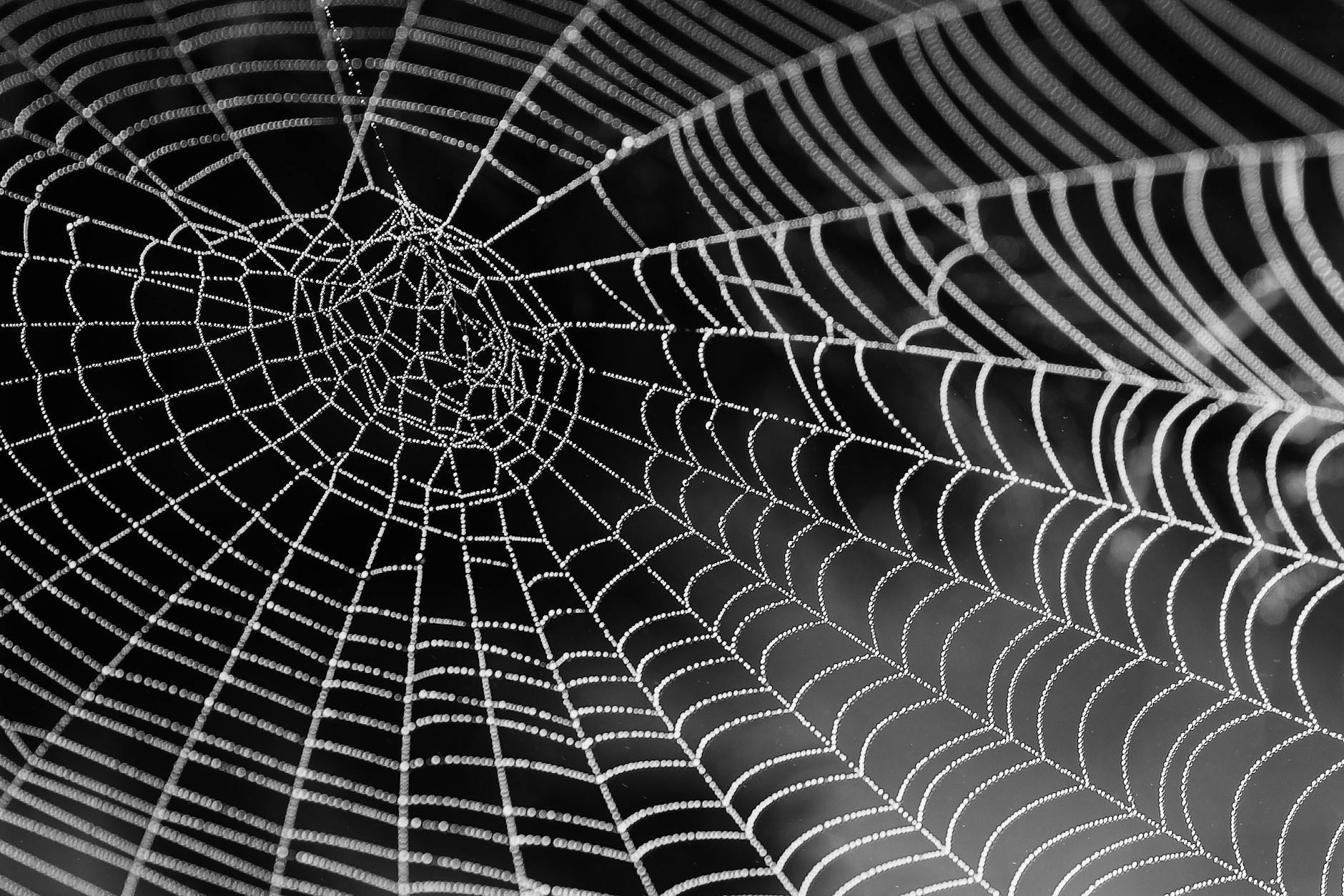
    People like to talk about politics as if it’s just a spectrum. Left to right. Blue to red. Or maybe, for the more nuanced, as a political compass — with economic and social axes crisscrossing each other in neat little quadrants. But to me, the more I think about it, the more time that passes, the more I live, the more I observe — I don’t see it as a spectrum. I don’t even see it as a graph. I see it as a web.

    A vast, intricate, ever-evolving web — full of intersections, tensions, overlaps, and contradictions. Every strand connects to another in ways most people don’t even realize. You tug on one part of the web, and it vibrates in another area that might seem unrelated. But it’s all connected. Every action, every movement, every event in politics — and in life — sets off reactions somewhere else.

    People sometimes tell me, “That sounds complicated.”
    And I tell them, “It is. Because life is complicated.”

    It’s funny — I think about how people want to simplify things to make sense of them. They want to draw lines, categorize ideas, box everything up into something clean and easy to understand. But life doesn’t work like that. Politics doesn’t work like that. Society doesn’t work like that. Everything overlaps. Everything influences everything else.

    This way of seeing things, for me, really started to take shape back in 2016, when I first learned about intersectionality. It changed how I saw the world. It showed me that experiences, struggles, and identities don’t exist in isolation — they intersect, constantly. But over the years, I took that idea further. I started realizing it’s not just identities or systems of oppression that are interconnected — it’s everything. Every person, every structure, every event, every story. It’s all part of a larger web that holds the world together.

    And I think being an ENFJ has helped me see that more clearly. Because ENFJs, by nature, see connections. We feel patterns. We sense emotional undercurrents. We can read people and systems and see how things ripple outward. For me, that’s not just about people — it’s about the world itself. I can see those invisible strings that tie everything together.

    I think that’s why I’m able to predict things sometimes — politically, socially, even personally. When you see the world as a web, you can sense where the next vibration will travel. You can see what’s coming next, not by magic or chance, but by seeing how everything interacts. Like with the government shutdown I’ve written about, or the Hasan drama, or the Zohran connection — all of it, at first glance, might seem separate. But they’re not. They’re part of the same ecosystem of behavior, emotion, power, and consequence.

    Some people might think that’s “too much.” That it’s overanalyzing. But to me, it’s just awareness. I can’t not see it. It’s like once you notice the web, you can’t unsee it — you see every movement, every intersection, every consequence.

    To me, this “web view” isn’t just about understanding politics. It’s about understanding life. The relationships between people, the cause-and-effect of choices, the energy that flows between moments. Everything is a ripple that connects to something else.

    And maybe that’s why I think empathy — real, deep empathy — matters more than anything. Because when you truly understand how everything is connected, you start to see that hurting one person, one group, one cause, ultimately hurts the web as a whole. And helping, healing, or understanding someone does the opposite — it strengthens the whole structure.

    So yeah. To me, the world isn’t a spectrum. It’s not an axis. It’s a web — alive, interwoven, infinitely complex. And I feel like I can see its threads more and more each day.

  • Seeing the Patterns: How My ENFJ Intuition Helps Me Predict and Perceive

    Seeing the Patterns: How My ENFJ Intuition Helps Me Predict and Perceive

    I’ve always had this strange sense of foresight — not in a mystical or psychic way, but in an intuitive, human way. It’s like I can see the connections between things before they fully form. I can sense how people might act, how situations might play out, how emotions might shift. It’s not that I’m sitting there “predicting the future,” but more that I can feel the direction something’s headed before most others see it.

    And lately, I’ve realized how much of that has to do with being an ENFJ. That personality type — with its mix of empathy, perception, and pattern recognition — seems almost wired for it. ENFJs have this ability to read people, to pick up emotional energy, and to piece together behaviors and intentions like clues in a story. We sense trajectories — emotional, social, and even political ones.

    I’ve noticed it time and time again in myself. I’ll write something or say something that feels like an observation, just me connecting dots — and then, weeks or months later, it actually happens. Like when I wrote about the 2025 government shutdown and the possible extreme outcomes that could come with it. I saw how the energy around it — the way people in power were speaking, the way the media was spinning it, the lack of urgency in leadership — all pointed to something chaotic, drawn-out, and emotionally charged. And sure enough, it unfolded that way.

    Or when I talked about the Hasan dog drama — the whole situation that blew up online and spiraled into bigger conversations about ethics, responsibility, and online image. I felt it coming before it was even big news. You could feel the tension brewing in the tone of his streams, the way people were reacting, the subtle defensiveness in his voice. Something about it just didn’t sit right — the vibe was off. And when you pay attention to vibes as closely as ENFJs do, you notice when the energy of a person or situation shifts from steady to unstable.

    Then there’s the Zohran connection. When I noticed the links between Hasan and Zohran, I knew something was brewing. Even before it went public, I had a sense that the overlap would create ripples — that once the dots were connected on a bigger platform, it would trigger a reaction. I could feel the narrative forming in real time — that instinctive awareness that this wasn’t just a coincidence, but part of a larger unfolding story. And when the connection finally came to light, it wasn’t surprising at all. It was almost expected.

    That’s the thing about intuition — it’s not about guessing. It’s about noticing. It’s about tuning in to emotional energy, patterns in behavior, tone shifts, timing, and context. When you pay attention long enough, you start to see the invisible threads that tie everything together. You start to sense where things are heading — not because you’re magical, but because you’re deeply observant.

    ENFJs have what’s called “extraverted feeling” (Fe) and “introverted intuition” (Ni) — two traits that, when combined, make for a powerful kind of perception. Fe helps us read emotions and social dynamics in the present, while Ni helps us see where those dynamics are going. We feel the emotional undercurrent, then project it forward to imagine what comes next.

    That’s exactly how it feels for me. I can have one conversation with someone and already get a sense of where their mindset is headed — whether they’ll stay grounded, spiral, change direction, or evolve. I can tell when a public figure’s energy is shifting toward burnout or scandal. I can tell when a political situation feels like it’s teetering toward collapse or breakthrough. It’s like seeing a series of dominoes and knowing which way they’ll fall, not because I’ve seen the future, but because I understand the motion.

    It’s not always something I can explain rationally. Sometimes it’s just a feeling — a gut-level awareness. A sense that “something’s about to happen.” And when I reflect back, I realize it was always there — the clues, the energy, the foreshadowing. I just noticed it before it became obvious.

    I think that’s one reason I tend to connect dots others might miss. Because I’m not just analyzing facts — I’m feeling them. I’m picking up the emotional subtext behind events, the human motivations beneath the surface. Politics, media, culture — they’re all human stories. And humans are emotional creatures. Once you understand the emotional rhythm, you can often predict the next beat.

    But this ability also comes with responsibility. Because when you can see patterns so clearly, it can be frustrating when others don’t. You try to explain what you sense, and people might dismiss it until it’s too late. You can feel like the only one seeing the storm clouds while everyone else insists the sky is clear. And yet, you keep noticing, keep feeling, keep sensing. It’s just who you are.

    There’s also the emotional side of it. When you can predict how people might react — or how events might emotionally unfold — it can make you hyper-aware of pain before it even arrives. You can sense a friend’s heartbreak before they admit it. You can feel the tension in a group before it erupts. You can anticipate the backlash before the outrage starts. It’s powerful, but it’s also heavy.

    That’s where balance comes in. Because being intuitive doesn’t mean trying to control what happens — it means understanding and preparing for it. Sometimes the most you can do is acknowledge, “I can feel this coming,” and let things unfold naturally.

    Still, I find it fascinating how often my intuition aligns with reality. Not perfectly, of course — nobody’s right 100% of the time. But when my observations about people or events line up so consistently, it reaffirms that what I’m picking up on is real. That emotional and intuitive awareness has tangible effects.

    Take the political landscape, for example. I’ve written multiple posts about how emotional energy drives public behavior — how fear, anger, and tribal loyalty shape policy and rhetoric more than logic ever could. When you understand those emotional forces, you can predict outcomes not just based on data, but on vibe. Because vibes are data too — subtle, emotional data that reveals where people’s heads and hearts really are.

    It’s the same in interpersonal relationships. You can tell when someone’s interest is fading. You can sense when a friendship is drifting. You can pick up on when someone’s pretending to be fine, when they’re trying to mask insecurity, or when they’re quietly struggling. And because I feel that so strongly, I often end up reaching out at just the right time — sending a message, checking in, or saying something that resonates before they even ask for help.

    That’s the ENFJ way — a blend of empathy, foresight, and intuition that creates this almost predictive understanding of people and events. It’s not logic-based; it’s emotional logic. It’s the logic of human energy.

    What’s interesting, too, is how this ability overlaps with creativity. My brain naturally maps connections — between people, between events, between themes. When I write or analyze something, I’m often pulling from emotional intuition as much as from facts. I might not always know how I know, but I know. And later, when things play out the way I said they would, I realize it wasn’t coincidence — it was clarity.

    Sometimes it feels like living half a step ahead — not in a detached, know-it-all way, but in a deeply connected way. Like standing in a river and feeling the current before it reaches everyone else downstream. You feel it first because you’re paying attention. Because you care. Because you’re listening not just to words, but to energy.

    And that’s the key — listening. Intuition thrives on observation, empathy, and care. You have to actually want to understand people to see them clearly. You have to be willing to feel what they feel. That’s what opens up the channels of perception.

    So when I look back at moments like my predictions about the shutdown, or the Hasan and Zohran situation, or other social and political stories, I realize they weren’t “guesses.” They were natural extensions of paying attention — of feeling patterns and connecting dots that were already there. My ENFJ side just helps me notice those dots sooner.

    In a world where so much feels uncertain, that kind of perception feels grounding. It reminds me that human behavior follows emotional logic, and emotional logic is something you can learn to read. Once you do, you see that so much of what happens isn’t random — it’s the natural unfolding of feelings, choices, and relationships.

    And I think that’s what makes being an ENFJ so interesting — it’s like living at the intersection of heart and foresight. You don’t just understand people; you anticipate them. You don’t just analyze situations; you feel their direction. You don’t just observe — you intuit.

    It’s both a gift and a challenge, but it’s one I’m grateful for. Because it allows me to write with insight, to care deeply, and to sense the shape of things before they take form.

    And maybe that’s what intuition really is — not magic, not prediction, but perception sharpened by empathy.