The Musings of Jaime David
@jaimedavid.blog@jaimedavid.blog

The writings of some random dude on the internet

1,199 posts
1 follower

Tag: healing

  • Growth Through Time, Loss, and Understanding

    Growth Through Time, Loss, and Understanding

    There comes a point in life when you look back and realize you are not the same person you used to be. Not just in the obvious ways — the way you dress, the things you like, or the people you surround yourself with — but in the way you think, the way you feel, and the way you see the world. Growth, true growth, is something that doesn’t happen overnight. It takes years of mistakes, heartbreak, healing, and introspection. It takes loss. It takes disappointment. It takes a willingness to look in the mirror and admit that the person staring back at you is still a work in progress.

    For me, that process of growth began years ago, but it really started to take shape after 2019, when my uncle passed away. His death was one of those moments that forces you to stop and take stock of your life — not just of what you have, but of who you are. Before then, I’ll admit, I often felt stuck in my own head. I used to think I couldn’t change. I thought my circumstances, my flaws, my habits — all of it — were permanent. That I was just “this way.” I didn’t really believe in personal growth because I didn’t see it in myself. And I think a lot of people feel that way at some point. It’s easy to believe that self-improvement is something other people are capable of — people who are stronger, smarter, or luckier. But at the time, I didn’t think I was one of them.

    It took me years to break out of that mindset. Losing my uncle didn’t magically fix everything, but it broke something open in me — something that needed to be broken. It made me realize how fragile and temporary life really is. It made me understand that the moments we spend angry, bitter, or resentful are moments we can never get back. And in the years since, I’ve tried, slowly but surely, to live differently.

    I’ve learned to be more empathetic. That might sound like a simple or overused word, but true empathy isn’t just about understanding how someone feels — it’s about making space for it. It’s about realizing that everyone is fighting a battle you might not see, that people have reasons for why they are the way they are. I used to be quick to judge, quick to assume, quick to take things personally. But now, I try to pause. I try to think before reacting. I try to see where others are coming from, even if I don’t agree.

    Empathy has taught me patience. It’s taught me that the world doesn’t revolve around my feelings, my timing, or my perspective. It’s helped me see beyond myself — to recognize that kindness isn’t weakness, and that understanding doesn’t mean agreeing. When you start to see people as whole, flawed, and complicated human beings, it changes the way you move through the world. You stop seeing others as obstacles or irritations, and you start seeing them as reflections — mirrors of all the things you’re trying to understand in yourself.

    I’ve also learned to be more compassionate. Compassion is empathy in action. It’s not just feeling for someone — it’s doing something about it. It’s showing up when you don’t have to. It’s forgiving when it’s easier to hold a grudge. It’s giving the benefit of the doubt, even when part of you doesn’t want to. Compassion has taught me to see the humanity in everyone, even the people who have hurt me. Because the truth is, most people hurt others from their own pain. Understanding that doesn’t excuse what they do, but it gives you the power to respond with grace instead of anger.

    There was a time when I let anger control me more than I’d like to admit. I thought anger made me strong — that it protected me. But really, it just kept me trapped. I carried grudges like weights, thinking they’d make me tougher, when in reality they were only slowing me down. I used to believe that being vengeful or spiteful was a way of standing up for myself. But over time, I’ve learned that there’s more strength in letting go than in holding on.

    Peace isn’t something you find by winning arguments or proving people wrong — it’s something you find by releasing the need to. That’s one of the hardest lessons I’ve had to learn. To not be hateful, to not be vengeful, to not let bitterness take root. It’s not easy. It takes real effort to unlearn that kind of emotional reflex — to not respond in kind when someone hurts you. But I’ve learned that forgiveness, even when it doesn’t come naturally, is a gift you give to yourself as much as to others.

    And honestly, learning to not sweat the small stuff has been one of the greatest reliefs of my life. I used to overthink everything. I used to let small inconveniences ruin my day, let misunderstandings spiral in my head until they became full-blown conflicts that didn’t even exist in reality. But life is too short for that. When you lose someone close to you, it puts everything into perspective. The things that once seemed so big start to feel small. The things you used to stress over start to lose their power over you.

    I’ve learned that peace of mind comes from picking your battles carefully. Not every situation deserves a reaction. Not every comment needs a response. Not every person deserves your energy. Sometimes walking away is the strongest thing you can do.

    More than anything, I’ve learned to appreciate life. To really appreciate it — the way the morning light hits the window, the sound of laughter in a room, the comfort of a familiar song, the feeling of being understood by someone who cares. These moments used to slip by unnoticed because I was too caught up in what I didn’t have, or what wasn’t going right. But now, I try to stop and take them in. Because those are the moments that make life worth living.

    I’ve also learned to appreciate the people in my life more deeply. It’s so easy to take people for granted — to assume they’ll always be there, that there’s always time to say what we mean or to make things right. But time has a way of reminding us that tomorrow isn’t promised. That realization doesn’t have to be scary — it can be grounding. It can remind you to hug your loved ones a little tighter, to say “thank you” more often, to listen instead of waiting for your turn to speak.

    Losing someone you love changes you. It softens you. It humbles you. It makes you realize that no matter how much time you have with someone, it will never feel like enough. But it also teaches you to cherish every moment you do get. My uncle’s passing hurt deeply, but it also gave me perspective — it made me want to live a life that honors him. It made me want to be someone he’d be proud of.

    In the six years since he’s been gone, I can honestly say I’ve grown more than I ever expected to. I’ve learned to slow down, to reflect, to choose peace over pride, understanding over judgment, and love over resentment. Growth isn’t linear — there are still days I fall back into old habits, days I struggle with anger or self-doubt. But the difference now is that I recognize it. I don’t run from it. I try to understand it, learn from it, and move forward.

    Growth, I’ve realized, isn’t about becoming perfect — it’s about becoming aware. It’s about being conscious of who you are and who you’re becoming. It’s about catching yourself in those small moments and choosing differently than you used to. That’s what real transformation looks like.

    Looking back, I don’t think I would’ve believed I could change as much as I have. I used to think self-improvement was something you read about in books or saw in movies — not something you actually lived. But change isn’t always dramatic. Sometimes it’s quiet. Sometimes it happens in the pauses — in the moments when you choose not to yell, when you choose to forgive, when you choose to take a breath instead of reacting. Those moments add up. They shape who you are becoming.

    I still miss my uncle. I probably always will. But now, instead of only feeling pain when I think of him, I also feel gratitude. Gratitude that I got to know him, that his life had such an impact on mine, that his memory continues to guide me. He taught me, even in his absence, that love doesn’t end — it just changes form.

    And I think that’s what life is really about — change. It’s about learning to let go of the person you once were to make room for the person you’re meant to be. It’s about realizing that growth doesn’t mean forgetting the past, but using it as a foundation to build something stronger. It’s about living with intention, appreciating the simple things, and understanding that even when life is hard, it’s still worth living fully.

    If there’s one thing I’ve learned through all of this, it’s that personal growth isn’t a destination — it’s a journey. You never really “arrive.” You just keep going, learning, adjusting, and evolving. Some lessons are painful. Some are gentle. But all of them matter.

    And if I could go back and talk to my younger self — the one who thought he couldn’t change, who felt stuck and powerless — I’d tell him this: you can. It won’t happen all at once, but it will happen. You’ll lose people, you’ll make mistakes, you’ll stumble — but you’ll also heal, learn, and grow. You’ll learn to let go of the anger, the grudges, the bitterness. You’ll learn to love people better. You’ll learn to appreciate the small things. You’ll learn that peace isn’t found in control, but in acceptance.

    And someday, without even realizing it, you’ll look back and see just how far you’ve come.

    Fediverse Reactions
  • Finding Hope Through Hurt: A Reflection on the Manhattan Shooting

    Finding Hope Through Hurt: A Reflection on the Manhattan Shooting

    On the evening of July 28, 2025, a tragic event unfolded in Midtown Manhattan, forever altering the lives of many. A shooting at 345 Park Avenue claimed the lives of four people, including a beloved New York City police officer, Officer Didarul Islam, who was serving to protect others. While the pain of this loss weighs heavily on the hearts of those directly affected, it also serves as a powerful reminder of the strength, resilience, and kindness that exists within our community, even in the darkest of times.

    In moments like these, it’s easy to feel overwhelmed by the sorrow and uncertainty that tragedy brings. It’s hard not to wonder how such a senseless act of violence can occur, especially in a city as familiar and bustling as New York. Yet, even in the midst of grief, we must hold on to the hope that together, we can find a way through the hurt.

    One of the most inspiring aspects of this tragedy is the story of Officer Islam himself. A man who, despite knowing the risks of his job, chose to protect others with unwavering courage. He gave his life so that others might live, a reminder of the extraordinary sacrifices so many first responders make each day to keep us safe. His legacy will not be defined by the violence that took him, but by the love he had for his family, his community, and his city.

    While it is important to acknowledge the pain, it is equally important to recognize the ways in which we come together in times of crisis. In the aftermath of the shooting, New Yorkers have once again shown their strength, offering support to those who were affected and coming together as one community. The NFL and its employees are rallying around one of their own who was injured in the attack, and local law enforcement has continued to show unwavering dedication to keeping us safe.

    This is what we must hold on to. In the face of sorrow, there is also kindness. In times of fear, there is hope. We have seen it time and time again in New York, where, no matter what happens, the city unites to support each other. This tragedy may have shaken us, but it will not break us. We will rise above the hurt, and in the process, we will be reminded of the deep connections we share with one another.

    In the days and weeks to come, it’s essential that we continue to lean on each other. Whether through a kind word, a helping hand, or simply standing together in solidarity, we can each play a part in healing. Though it may feel like a dark time now, we can take comfort in knowing that we are not alone. We will get through this, just as we’ve gotten through past challenges—together.

    As we reflect on the lives lost, let’s also remember to celebrate the goodness around us: the courage of those who protect us, the compassion of our neighbors, and the strength of our collective spirit. We are more than the pain we experience. We are defined by how we come together in the face of adversity, how we lift each other up, and how we move forward with hope, even in the darkest of times.

  • Wisdom Wednesdays #9: The Echo of Enough

    Wisdom Wednesdays #9: The Echo of Enough

    In a world that urges us to keep climbing—toward more success, more improvement, more validation—it can feel almost radical to pause and ask: What if I’m already enough?

    We’re often taught that growth means never stopping, that our worth is earned through productivity, perfection, or comparison. But true wisdom, the kind that settles deep in the soul, whispers something different. It says: You were always enough. Not because of what you do, but because of who you are.

    Enoughness doesn’t shout—it echoes quietly in moments we often overlook. In the morning light slipping through the curtain, in the breath we didn’t realize we were holding, in the steady beat of our hearts carrying us through another day. It is present not in our achievements, but in our presence.

    To recognize our own enoughness is not to deny the desire to grow—it is to root that growth in love instead of lack.

    Imagine a garden. The gardener does not water the soil because it is unworthy, but because it holds the potential to bloom. Similarly, acknowledging that you are enough doesn’t mean you’ll never change; it means you are growing from a place of wholeness rather than emptiness.

    And yet, how often do we chase approval like a mirage—believing we’ll finally feel worthy when we reach the next goal, relationship, milestone, or version of ourselves?

    But every time we arrive, the bar shifts.

    The echo of enough gets drowned out by noise: internal criticism, external expectations, the pressure to prove ourselves. We forget that enough is not a destination. It’s a recognition. A remembering. A return.

    This week, I invite you to notice the small affirmations of enough in your daily life. The way your laughter lifts a room. The quiet resilience that got you through the last hard day. The dreams you still carry, even when the path feels uncertain.

    Let this be your reminder: You are not a problem to be fixed. You are a story in progress. You are not behind. You are becoming.

    And you are enough—not because of what you’ve done, but because of who you are when you are simply still, fully present, and deeply human.

    Where in your life can you let the echo of enough rise above the noise?

  • Wisdom Wednesdays #7: The Quiet Strength of Surrender

    Wisdom Wednesdays #7: The Quiet Strength of Surrender

    There is a subtle power in surrender—a kind of strength that is often mistaken for weakness in a world that celebrates control, hustle, and constant striving. Yet, if we pause long enough to listen, life whispers that not all battles are meant to be fought. Some are meant to be released.

    Surrender is not giving up. It is not failure, nor is it passivity. Surrender is the conscious choice to release the illusion that we can—or must—control everything. It is the moment when we unclench our fists and loosen our grip on what no longer serves us: old identities, outdated expectations, rigid timelines, or the need for certainty.

    In this act of letting go, we begin to see things more clearly. The fog of resistance lifts, and we are left with a soft clarity. Like a leaf floating down a stream, we begin to trust the current, recognizing that the river knows the way.

    Consider the way trees bend in the wind. They do not fight the gusts; they move with them. And in that fluid dance, they survive storms that would break something more brittle. Surrender is like that: not a sign of weakness, but of deep-rooted strength and wisdom.

    In relationships, surrender might look like releasing the need to be right in order to truly listen. In personal growth, it may appear as accepting where you are instead of shaming yourself for not being further. In grief, it is the breath you exhale when you stop holding back the tears. There is a quiet grace in these moments—a reminder that healing often begins where resistance ends.

    It takes courage to surrender. To say, “I don’t know where this is going, but I will trust the unfolding.” It asks us to soften, to trust something greater than our plans—be it the rhythm of nature, the quiet pull of intuition, or the wisdom of life itself.

    And yet, time and again, surrender leads us not into chaos, but into deeper alignment. We discover that when we let go, we don’t fall—we land. Often in a place we didn’t expect, but somehow needed all along.

    So perhaps the next time life asks you to loosen your grip, you can take a breath and ask: What am I holding onto that is holding me back?

    Let that question sit with you this week. Let it ripple through your thoughts like a soft wave, and notice what it stirs.

    You may find that surrender doesn’t take something away—it gives something back.

  • Wisdom Wednesdays #3: Let the Wound Be the Teacher

    Wisdom Wednesdays #3: Let the Wound Be the Teacher

    Our culture teaches us to avoid pain at all costs—to protect ourselves from the hurts of life. We medicate, distract, and suppress anything that feels uncomfortable. But what if our wounds are not things to be ashamed of, but instead opportunities for growth?

    Every wound, whether emotional or physical, has the potential to teach us something profound. It’s in our deepest pain that we often learn the most about ourselves. The scars of our past are not marks of failure, but symbols of resilience.

    Consider the idea that every painful experience we face—be it a betrayal, a loss, or a mistake—has something to teach us. In the aftermath of a difficult experience, we have the choice to reflect, to grow, and to change. The key lies in how we choose to approach the wound.

    Rather than avoiding or numbing the pain, try sitting with it for a moment. What does it reveal about you? What patterns are emerging? How can this experience help you grow stronger, wiser, and more compassionate?

    The road to healing is not linear—it’s messy, raw, and often difficult. But in this very messiness, there is profound wisdom. As you face your wounds, remember that they are not here to break you, but to teach you.

    Each wound is a lesson. Let it be your teacher.


  • Embracing Failure

    Embracing Failure

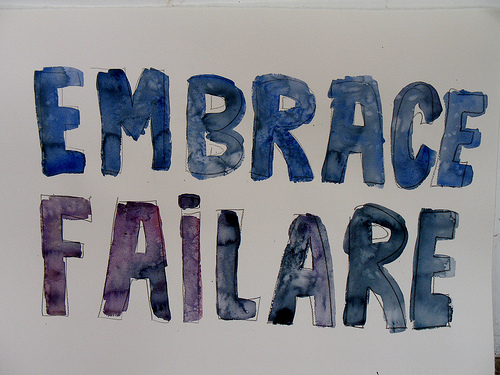
    Embrace failure. Missteps and roadblocks are inevitable but are ultimately an opportunity to learn, pivot, and go after your goals with new perspective. – Jenny Fleiss

    You may sometimes hear, usually after you fail at something, that you have to accept it and move on. It’s possible for one to accept it, but accepting failure does not necessarily mean that you have completely moved on from it. No. To move on from failure, I believe there is something more that is needed. What is that, you may ask? That is to embrace failure. Yes, you heard me right; embrace failure. Now, at first glance, that may sound masochistic as heck, but hear me out. People aren’t perfect. We have flaws, imperfections, weaknesses, things that we may not be good at, and things that we may not like, and that’s ok. They all are part of what make us unique. Life also isn’t perfect. There’s almost always going to difficulties, challenges, and hardships we need to overcome. The universe and nature are also not perfect. Things break down, things become unstable, things become chaotic. Nothing is perfect. Because nothing is perfect, and because no single individual is perfect, that means, at some point, we are all going to experience failure at some point or another. In fact, failure is biologically guaranteed, because once we die, that’s it! Game over. No more do-overs. Death is inevitable. Even if one were to live a life with little to no challenges and hardships, death is the ultimate failure, because once you stop living, you stop being you. You stop being able to actively do things in this world. You are no longer able to be a part of the world in living form, and because of that, that’s a failure, and it’s a guaranteed one, as well. Thus, in a way, we are all born to fail the moment that we are born. Now, i know what you may be thinking to yourself. You are probably thinking that it sounds depressing as heck, and it definitely may sound that way, if you look at it from a certain perspective. Now, i don’t know what your perspective or outlook on life, death, and failure is, but let me tell you mine. Because we are guaranteed to fail when we die, what can be worse than that? The answer is nothing. And when you take that into account, it really puts one’s problems and troubles into perspective. It sorta makes one’s problems seem small and temporary. Nothing can be more permanent and long-lasting than death. Thus, every failure, every challenge, every shortcoming, every hardship asides death itself can be overcome. Sure, everyone handles failures, challenges, and hardships differently than others, and we may not know how much hardship, failure, and challenges we may face in life, but by remembering that nothing can get worse than death, I believe it is possible to make it through anything that comes your way. Thus, that is why i believe embracing failure will allow one to be able to overcome it. By embracing the ultimate failure that we will all one day die, it has so much potential to minimize the severity of other hardships and challenges we may face in life. Not only that, but by embracing failure, we are also embracing change, because change can come in the form of failure. By embracing failure, one can start seeing failure differently. It could allow one to start seeing the positives that can come about from failure, and it can do so by minimizing the negative aspects of failure. Embracing failure is not an easy thing to do. It takes a lot of time, patience, resilience, and strength to be able to just accept failure, let alone embrace it. However, i believe that one of the keys to happiness is embracing failure, because if you are not worried about the ultimate failure in life, then it is possible to make it through other hardships, challenges, and failures that come your way. Lastly, by embracing failure, it helps one learn to fail gracefully. When one is able to fail gracefully, they are able to pick themselves up, and use their failure as a learning experience or a blessing in disguise.

    I will end things with an excerpt from an article that discusses about embracing failure. I will link the full article below.

    Here are five ways embracing failure can work for you:

    1. We learn some of our best lessons through failure.

    2. Failure inspires us. If we look at it properly and don’t allow it to define us, failure can be a great source of motivation.

    3. Failure teaches us humility. We feel humble after losing and recognize that we are indeed human.

    4. Embracing failure allows us to take more risks. Once we come to terms with having failed and survived, we can take greater risks.

    5. Failure makes success taste even better. We have a better appreciation of success having failed a few times on the way up the ladder.

    https://www.entrepreneur.com/article/244307