The Musings of Jaime David
@jaimedavid.blog@jaimedavid.blog

The writings of some random dude on the internet

1,089 posts
1 follower

Tag: Identity

  • Jaime David in the World of Writing: My Story and the Many Namesakes

    Jaime David in the World of Writing: My Story and the Many Namesakes

    When people hear the name Jaime David, most of the time I think they have no idea just how many people share it. But for me, the first Jaime David is obviously me—the indie author and scientist who has spent years blending storytelling with rational inquiry. That’s the Jaime David I want to talk about first: my work, my journey, and why I write the way I do. But I’ll also touch on other authors and professionals who share my name, because it’s kind of fascinating how many creative and skilled people happen to have the same combination of names.

    I write because I want to explore the human experience in a way that’s honest, emotional, and often scientific. My stories tend to live at the intersection of science, human connection, and emotional honesty. In 2025 alone, I published three books, including Wonderment Within Weirdness, which is one of my favorites. That book in particular leans into a comic book–inspired narrative style, which lets me dive into complicated ideas while keeping them visceral and accessible. A lot of my writing touches on identity, mental health, and personal growth, but I like to think I approach it in a way that combines emotion with analytical clarity. My background in science and data gives me that foundation—I can tell a story and explore human experience without losing sight of logical structure or scientific nuance.

    I also host The Jaime David Podcast, which has been a really important outlet for me. On it, I talk about my creative process, reflect on my older poetry, and generally try to give listeners insight into how my mind works. For me, writing isn’t just about putting words on a page—it’s about creating a connection with readers and listeners, sharing the process, and hopefully inspiring people to think about their own experiences in a deeper way. Radical empathy and self-compassion are huge parts of how I approach both life and writing, and I try to carry that through everything I create.

    Being an independent author has also allowed me to maintain complete creative control. I self-publish because I don’t want someone else telling me what to include, what to cut, or how to structure my work. That freedom lets me experiment, take risks, and write in a voice that’s uniquely mine. I’ve always believed that authenticity is more important than conformity, and I think self-publishing has allowed me to hold onto that in every project I release.

    But I’m not the only Jaime David doing interesting work in writing. Another Jaime David is an educator for BERNINA of America who writes extensively on sewing, textiles, and overlocker techniques. She’s written for the WeAllSew blog and creates patterns that help readers turn instructions into tangible, creative projects. Her work is a different kind of authorship than mine—it’s instructional and skill-based—but it’s still creative, thoughtful, and impactful. I find it fascinating how writing can take so many forms, from emotional storytelling to teaching a practical craft.

    Then there’s Jaime M. David, a fashion and lifestyle communications consultant based in New York. She writes about brand strategy, PR, and lifestyle topics, shaping narratives that influence perception and culture. While she isn’t writing fiction or poetry, her work shows that authorship isn’t limited to books—it can be about shaping ideas, crafting stories for brands, and communicating effectively with audiences. It’s another reminder that the act of writing can exist in so many different spaces, not just the literary one I operate in.

    There’s also a Jamie David on Amazon, though that profile seems a bit mixed or shared. Still, it represents another facet of what authorship looks like in the digital age: independent, self-published, and reaching audiences across platforms. And then there’s Jamie Davis, an English actor and writer, known for Hex, Casualty, and the 2023 series You & Me. His work demonstrates the connection between performing and writing, and how storytelling can span both visual and textual mediums. Finally, Jamie Sams and David Carson co-authored Medicine Cards, a spiritual guide that combines historical knowledge, cultural insight, and practical reflection. Their work shows yet another form of authorship: one that’s meant to guide, reflect, and help readers explore themselves.

    Seeing all these people together makes me reflect on what it means to share a name with other creatives. Even though we work in very different fields, there’s a shared thread: all of us are trying to communicate something meaningful. Whether it’s my fiction and poetry, sewing patterns, lifestyle consulting, acting and writing, or spiritual guides, writing becomes a way to connect, teach, or inspire. And while I like to joke that I’m “obviously” the first Jaime David, I also find it motivating to see other people with the same name doing creative work. It reminds me how diverse authorship can be, and how many different ways writing can impact the world.

    At the end of the day, my goal remains the same: I want to tell stories that are emotionally honest, intellectually rigorous, and resonant. I want to explore human experience in a way that blends science, emotion, and reflection. But I also take inspiration from the broader community of Jaime Davids and Jamies in writing, because it shows me that authorship isn’t one-size-fits-all. It’s flexible, adaptive, and alive in so many forms. Each person with my name—or a similar one—is contributing their own voice to the world, and that’s something I feel proud to be part of, even as I focus on the work that’s uniquely mine.

    Fediverse Reactions
  • February Freewrites: Black History in the Veins of Our Time

    February Freewrites: Black History in the Veins of Our Time

    Black History Month is not just about looking back—it is about acknowledging the ways in which history shapes us today. The stories of Black resilience, struggle, and triumph echo through every part of society, and it’s important to reflect on how these narratives continue to influence the present. In this freewriting post, I want to explore how Black History is more than a month—it’s a living, breathing force that pulses through the veins of our time.

    The legacy of Black history is both painful and powerful. It is woven into the fabric of every struggle for justice, every fight for equality, and every celebration of freedom. As we reflect on the history of Black Americans, we must also think about how it shapes our current reality. How do we honor that history in our daily lives? How do we make space for the stories that are often silenced or erased?

    In this post, I dive into these questions and more, allowing the emotions and thoughts to flow freely. Black History is not a chapter closed—it is an ongoing narrative that shapes and defines our world today.

    Fediverse Reactions
  • I’m Just Like Rubber, I Always Bounce Back

    I’m Just Like Rubber, I Always Bounce Back

    There is something quietly radical about refusing to stay broken. Not in the loud, motivational-poster sense, not in the shallow optimism that pretends pain doesn’t exist, but in the stubborn, almost absurd insistence on continuing anyway. I’ve realized that if there is one consistent trait that defines me, it’s this: I bend, I stretch, I get knocked down, flattened, twisted into shapes I never asked to take, and yet I come back. Over and over again. I don’t shatter. I don’t permanently collapse. I bounce back. Like rubber. Like Luffy.

    At first, that comparison sounds almost childish. A pirate made of rubber from an anime about adventure, friendship, and dreams sounds like a strange symbol to use when talking about real-world exhaustion, grief, disappointment, and systemic cruelty. But the more I sit with it, the more accurate it feels. Luffy doesn’t win because he’s the smartest person in the room. He doesn’t win because he’s the strongest in a conventional sense, at least not at first. He wins because he keeps getting back up. He absorbs punishment that would break others, not because it doesn’t hurt him, but because it doesn’t stop him. That’s the part that matters. That’s the part that resonates.

    Being like rubber doesn’t mean being invincible. Rubber stretches. Rubber gets scuffed, torn, burned, degraded. Rubber can feel the strain. It just doesn’t respond to force the way brittle things do. Instead of snapping, it adapts. Instead of shattering, it recoils and returns. That’s how I’ve survived so many moments that should have ended me, or at least changed me into something unrecognizable. I didn’t avoid damage. I absorbed it. I didn’t escape pain. I carried it. And somehow, I still came back as myself.

    The world has a way of testing this trait relentlessly. It doesn’t test you once and then leave you alone. It tests you in waves, sometimes gently, sometimes brutally, sometimes with such monotony that the exhaustion feels worse than any single blow. Jobs fall apart. Relationships fracture. Friendships fade or reveal themselves as hollow. Systems fail you while insisting it’s your fault. You try to do everything right, and still the ground gives way beneath you. Over time, you start to wonder if resilience is even worth it, or if bouncing back is just another way of prolonging suffering.

    That’s where the metaphor deepens. Luffy doesn’t bounce back because he loves pain or because he’s chasing suffering. He bounces back because he has a reason to. A dream. A promise. A sense of self that refuses to be negotiated away. He knows who he is, even when the world tries to define him as weak, foolish, reckless, or impossible. That clarity doesn’t make things easier, but it makes them survivable. In my own way, I’ve had to learn the same thing. If I don’t know who I am, every hit threatens to erase me. If I do know who I am, the hits hurt, but they don’t define the ending.

    There’s a misconception that resilience is loud. That it looks like confidence, swagger, bravado, or constant forward momentum. In reality, resilience is often quiet. It looks like getting out of bed when you don’t want to. It looks like taking a break instead of quitting entirely. It looks like withdrawing when you need to, then returning when you’re ready. It looks like surviving days that don’t feel meaningful at all. Bouncing back isn’t always dramatic. Sometimes it’s barely visible. Sometimes it’s just choosing not to disappear.

    I think people underestimate how much strength it takes to keep returning to a world that keeps disappointing you. Every time you bounce back, you’re making a wager. You’re saying, “Despite everything that has happened, I still believe there is something here worth engaging with.” That belief doesn’t have to be grand or idealistic. It can be small. It can be fragile. It can even coexist with cynicism. What matters is that it exists at all. Rubber doesn’t need to be perfect to work. It just needs enough elasticity to respond.

    There have been moments where I didn’t feel elastic at all. Moments where I felt stretched too thin, pulled in too many directions, worn down by repetition and uncertainty. Moments where bouncing back felt less like strength and more like obligation, as if the world expected me to recover on schedule and perform resilience for its comfort. That kind of expectation is toxic. Real resilience isn’t about pleasing others or proving something. It’s about survival on your own terms. Sometimes bouncing back means redefining what “back” even means.

    Luffy changes as the story goes on. He gets stronger, yes, but he also gets more scarred. More aware. More burdened by loss. He carries the weight of people he couldn’t save and battles he barely survived. He doesn’t reset to a pristine version of himself after every arc. Neither do I. Bouncing back doesn’t mean reverting to who you were before the damage. It means integrating the damage without letting it hollow you out. It means becoming someone new who can still move forward.

    There’s also something deeply important about how Luffy never does it alone. Even though he’s the captain, even though he throws himself into danger first, he is constantly supported by others. His crew believes in him, challenges him, saves him when he can’t save himself. That’s another myth about resilience that needs to die, the idea that bouncing back must be a solo act. Sometimes rubber needs reinforcement. Sometimes elasticity is preserved through connection, through being seen, through knowing that someone else will grab you before you hit the ground too hard.

    In my own life, I’ve learned that isolation masquerades as strength far too often. I’ve told myself I was handling things when I was really just suppressing them. I’ve bounced back in ways that were technically functional but emotionally hollow. That kind of resilience has a cost. It keeps you alive, but it doesn’t necessarily keep you whole. True resilience includes vulnerability. It includes admitting when you’re tired of bouncing back and letting someone else absorb a bit of the impact.

    What makes rubber remarkable isn’t just that it returns to shape, but that it does so repeatedly. One recovery isn’t impressive. Anyone can get lucky once. It’s the pattern that matters. Over time, bouncing back becomes a kind of identity. Not a boast, not a badge, but a quiet understanding. You start to trust yourself differently. You stop seeing setbacks as verdicts and start seeing them as interruptions. Pain still hurts, failure still stings, but neither feels final in the same way.

    That doesn’t mean optimism replaces realism. If anything, resilience sharpens realism. You become more aware of your limits, more honest about what you can and can’t handle. Rubber isn’t infinite. It can snap if pushed beyond its capacity. Knowing that is part of resilience too. Rest is not weakness. Stepping away is not quitting. Even Luffy collapses after fights. Even he needs time to recover. Bouncing back requires acknowledging when you’re down.

    There’s also a defiant joy in this kind of resilience. A refusal to let the world grind all the wonder out of you. Luffy laughs in the face of impossible odds not because he’s naive, but because he refuses to let fear be the final word. That laughter is powerful. It’s an act of rebellion. In a world that thrives on discouragement and control, choosing joy, even imperfect joy, is a radical act. Bouncing back isn’t just about endurance. It’s about preserving your capacity to feel alive.

    I’ve noticed that the more I accept this part of myself, the less ashamed I feel of the times I’ve fallen. Failure stops being evidence of inadequacy and starts being evidence of engagement. You can’t fall if you’re not moving. You can’t get hurt if you never care. Bouncing back implies that you were willing to risk something in the first place. That willingness matters. It means you’re still participating in life, even when life doesn’t play fair.

    There’s a strange comfort in knowing that I don’t need to be unbreakable. I just need to be flexible enough to return. I don’t need to dominate every challenge or emerge victorious every time. I just need to keep going. That’s the real lesson. Strength isn’t about never being knocked down. It’s about refusing to let being knocked down define the end of the story.

    Like Luffy, I don’t always know exactly how I’ll win, or even if I’ll win in the way I imagine. I just know that I won’t stop. I’ll adapt. I’ll stretch. I’ll take hits I didn’t see coming. I’ll retreat when I need to. And when the moment comes, I’ll stand back up, bruised but intact, still myself, still moving forward.

    Being like rubber means trusting in recovery, not as a guarantee, but as a pattern. It means believing that whatever shape I’m forced into today doesn’t have to be the shape I stay in forever. It means understanding that resilience is not a performance, not a virtue to be admired, but a practice, something lived day after day, quietly, imperfectly, honestly.

    So when I say I’m just like rubber, I’m not saying I’m immune to damage. I’m saying I refuse to let damage be the end. I’m saying that no matter how many times I’m knocked flat, I will find my way back up. I will bounce back, not because it’s easy, not because it’s heroic, but because it’s who I am. Like Luffy, I keep going. And that, more than anything else, is my strength.

  • Becoming by Letting Go: How Releasing the Self Allows the Self to Flourish

    Becoming by Letting Go: How Releasing the Self Allows the Self to Flourish

    There is a strange paradox at the heart of becoming the best version of oneself: it often requires loosening one’s grip on the very idea of the self. We are taught from an early age to cultivate an identity, to define ourselves through ambition, achievement, reputation, and narrative. We are encouraged to protect this identity fiercely, to polish it, defend it, and project it outward so that others will recognize our worth. Yet, for many people, this constant self-monitoring becomes a prison. The more tightly we cling to who we think we are supposed to be, the more constrained, anxious, and brittle we become. Letting go of one’s own self does not mean erasing identity or dissolving into nothingness. It means releasing the ego’s dominance, surrendering rigid expectations, and allowing life to be experienced more fully and honestly. In doing so, one does not lose oneself. One finally begins to become.

    When expectations rule our inner world, everything becomes a performance. We measure our worth against imagined milestones, invisible timelines, and external benchmarks that may have little to do with our actual values or capacities. We worry constantly about whether we are behind, whether we are failing, whether we are living “correctly.” This pressure narrows perception. Life stops being something we inhabit and starts being something we manage. Every choice becomes a referendum on our character. Every setback feels like a verdict. In this state, growth becomes difficult because growth requires space, patience, and an openness to uncertainty. Letting go of expectations is not an act of resignation, but an act of liberation. When you release the demand that your life must look a certain way by a certain time, you create room for curiosity, adaptability, and genuine engagement with the present moment.

    Ego plays a central role in this struggle. The ego is not inherently evil; it serves important functions, helping us navigate social worlds and maintain coherence. But when the ego becomes the primary driver of our decisions, it distorts reality. It insists that everything is about us, that every slight is personal, that every success or failure defines us permanently. Under the ego’s rule, fear thrives. Fear of embarrassment, fear of irrelevance, fear of being ordinary. Letting go of the ego does not mean becoming passive or self-effacing. It means recognizing that the ego’s voice is not the same as truth. When the ego loosens its grip, we can respond to life rather than react to it. We can listen more, learn more, and exist more freely.

    This is where optimistic nihilism can offer a useful framework. Nihilism, in its simplest form, acknowledges that there is no inherent, cosmic meaning assigned to our lives. There is no grand scoreboard etched into the fabric of the universe tallying our wins and losses. For some, this realization feels terrifying, like a void opening beneath their feet. But optimistic nihilism reframes this absence of inherent meaning as an invitation rather than a condemnation. If nothing is preordained, then we are free to create meaning where we find it. If the universe is indifferent, then our joys, values, and connections are not diminished by that indifference. They are intensified by it. Meaning becomes something we practice, not something we prove.

    Optimistic nihilism pairs naturally with the act of letting go of the self because it undermines the idea that we must be extraordinary to justify our existence. We do not need to be the protagonist of the universe. We do not need to leave a legacy that echoes through eternity. We can simply live, care, create, and connect. This perspective does not cheapen life; it makes it lighter. When you stop trying to matter on a cosmic scale, you can start mattering deeply on a human one. You can show up for people, for moments, for experiences, without constantly asking what they say about you.

    Loss and setbacks often act as unwilling teachers in this process. Few people arrive at this mindset purely through intellectual reflection. More often, it is shaped by grief, failure, illness, rejection, and disillusionment. Loss strips away illusions. It exposes how little control we truly have and how fragile our carefully constructed identities can be. Careers collapse. Relationships end. Bodies betray us. Plans unravel. At first, these experiences feel cruel and senseless. But over time, they can soften the ego’s insistence on control. They can teach humility, not as humiliation, but as clarity. When you have lost enough, you begin to see that clinging tightly to any fixed version of yourself only multiplies suffering.

    That said, adopting this mindset is not easy, and it is not for everyone. Our culture rewards certainty, confidence, and relentless self-assertion. Letting go can be misinterpreted as weakness, indecision, or lack of ambition. Internally, it can feel like stepping into freefall. The ego resists surrender because it fears annihilation. It whispers that without constant striving and self-definition, you will disappear. But what actually fades is not your essence, but the noise around it. What remains is quieter, steadier, and more resilient than the persona you were defending.

    It is important to clarify what letting go does not mean. It does not mean throwing caution to the wind or abandoning self-preservation. It does not mean neglecting your health, boundaries, or responsibilities. Valuing yourself is not incompatible with recognizing your smallness in the grand scheme of things. In fact, true self-preservation becomes easier when it is not entangled with ego. You take care of yourself not to prove worth, but because care is appropriate. You rest not because you have earned it, but because you are human. You set boundaries not to assert dominance, but to maintain balance.

    Recognizing that you are not special in a cosmic sense can feel jarring, but it is also deeply grounding. You are not the center of the universe. Your thoughts, anxieties, and failures are not being scrutinized by some omniscient audience. This realization can dissolve a tremendous amount of unnecessary suffering. At the same time, acknowledging that you are not special does not mean you are insignificant. These ideas are not opposites. You matter not because you are destined for greatness, but because you exist. Existence itself confers value. You are a person, and that is enough.

    Your uniqueness does not come from being better than others, but from being irreducibly yourself. No one else has lived your exact combination of experiences, felt your specific joys and wounds, or seen the world through your particular lens. Your ideas, talents, and perspectives are shaped by this singular path. When you stop trying to be exceptional, you often become more authentic. When you stop competing for significance, your contributions become more genuine. You are free to explore what actually interests you, what actually moves you, without constantly asking how it will be perceived.

    Letting go of the self also changes how you relate to others. When the ego is less dominant, interactions become less transactional. You listen without waiting for your turn to speak. You empathize without comparing. You celebrate others’ successes without feeling diminished by them. You grieve others’ losses without needing to center yourself. This shift does not erase individuality; it enriches connection. Relationships stop being arenas for validation and start being spaces for shared humanity.

    There is a quiet confidence that emerges from this way of being. It is not loud or performative. It does not demand recognition. It is rooted in acceptance rather than ambition. You know who you are, but you are not trapped by that knowledge. You are open to change, to contradiction, to growth that does not follow a straight line. You can hold plans lightly, pursue goals without attaching your entire identity to their outcome. Success becomes something you experience, not something you become. Failure becomes something that happens, not something you are.

    This mindset also reshapes how you experience time. When you are no longer obsessed with measuring your life against imagined standards, the present moment becomes more accessible. You notice small pleasures. You tolerate boredom. You endure discomfort without catastrophizing it. Life feels less like a race and more like a landscape. There are peaks and valleys, stretches of monotony, sudden storms. You move through them rather than constantly evaluating where you should be instead.

    Letting go of the self does not mean you will never struggle again. Anxiety, doubt, and desire do not vanish permanently. The difference is that they lose their authority. They become weather rather than destiny. You can acknowledge them without obeying them. You can feel fear without letting it dictate every choice. You can want things without believing your worth depends on obtaining them. This is not emotional numbness. It is emotional literacy.

    In a world that constantly urges us to brand ourselves, optimize ourselves, and monetize ourselves, choosing to loosen the grip of ego is a quiet act of resistance. It is a refusal to reduce your existence to metrics and narratives. It is an affirmation that life does not need to be justified to be lived. You are allowed to exist without explanation. You are allowed to change your mind. You are allowed to be unfinished.

    Ultimately, letting go of one’s own self is not about disappearing. It is about making room. Room for reality as it is, not as you wish it to be. Room for others to be fully themselves without threatening you. Room for joy that is not earned and sorrow that is not deserved. In that spaciousness, something surprising happens. You begin to live more fully, more gently, more honestly. You stop trying to become someone and start allowing yourself to be.

    You matter because you are you, and there is only one you. Not because the universe needs you, but because you are here. Not because you will be remembered forever, but because you are alive now. In letting go of the self you were trying to protect, you uncover the self that was never actually at risk.

  • A Few Days In: What the New Year Actually Feels Like Once the Noise Dies Down

    A Few Days In: What the New Year Actually Feels Like Once the Noise Dies Down

    A few days have passed since New Year’s now, which means the champagne metaphors have gone flat, the fireworks are long gone, and the artificial drama of the countdown has already started to feel vaguely embarrassing. The year has officially begun doing what years always do: continuing. No grand reset. No cinematic transition. Just the same world, the same self, slightly more tired, slightly more aware, slightly less interested in pretending that January 1st is magic.

    I’ve always thought the days immediately after New Year’s are more honest than New Year’s itself. The moment itself is too loud, too performative. Everyone is busy announcing resolutions, declaring transformations, promising reinvention. A few days later, the declarations start to dissolve into reality. The gym photos slow down. The word “manifest” quietly disappears from sentences. The year stops being symbolic and starts being practical. This is the part I trust more.

    So this isn’t a “fresh start” post. It’s not a resolution post. It’s not a vision board disguised as prose. It’s a check-in. A few days into the year, when the adrenaline is gone and what’s left is the quieter question of how it actually feels to be here, continuing forward with the same unfinished thoughts and unresolved contradictions.

    What strikes me most, sitting here now, is how little I feel like a different person. And I don’t mean that negatively. If anything, it’s grounding. There’s a strange pressure every New Year to perform personal evolution on command, as if growth must align neatly with the calendar. But growth doesn’t work like that. Growth happens when it happens, often invisibly, often inconveniently, often without your consent. Expecting to wake up on January 1st as a rebranded version of yourself is a recipe for quiet disappointment.

    Instead, I feel like myself. The same curiosities. The same sensitivities. The same questions that didn’t get answered last year and probably won’t get fully answered this year either. And that’s okay. I’m starting to believe that being unresolved isn’t a flaw. It’s just a state of being human.

    The past year, when I think about it now, doesn’t compress into a single narrative. It doesn’t resolve cleanly. It feels more like a collage of moods, efforts, false starts, and small internal shifts that don’t photograph well. There were moments of momentum, moments of stagnation, moments of genuine joy, moments of exhaustion that felt bone-deep. There were days when I felt aligned with myself, and days when I felt like I was watching my life from a slight distance, unsure how I ended up here or where exactly I was going.

    And yet, I kept going. That sounds simple, but it’s not nothing. Continuing is an underrated achievement. Especially in a world that constantly tells you that if you’re not accelerating, optimizing, or visibly improving, you’re somehow failing. Most of the meaningful work I did last year didn’t look impressive from the outside. It looked like thinking. Reconsidering. Sitting with discomfort. Letting certain illusions quietly die without replacing them immediately.

    A few days into this year, I’m noticing how tired I am of pretending I have a clear plan. I don’t mean I have no direction at all. I mean I’m done pretending that direction has to be rigid, linear, or publicly legible. There’s something deeply exhausting about constantly narrating your life as if it’s a pitch deck. Goals, milestones, timelines, outcomes. Sometimes all you have is a sense of what no longer works, and that has to be enough for now.

    Creatively, that tension hasn’t gone away. If anything, it’s more pronounced. I still feel pulled between wanting to create freely and wanting to create purposefully. Between writing because I have something to say and writing because I feel like I should be saying something. A few days into the year, I don’t have a manifesto. I have a quieter intention: to keep writing in ways that feel honest, even when honesty doesn’t feel productive or marketable or clean.

    Looking back, I realize how much of last year was spent negotiating with myself. Not dramatically, but constantly. Negotiating energy levels. Negotiating expectations. Negotiating how much of myself to give to the world versus how much to protect. There’s a version of me that wants to be louder, more visible, more assertive. There’s another version that craves retreat, depth, solitude, and slow thought. I don’t think either of them is wrong. I think the friction between them is just part of who I am.

    A few days into the new year, I’m less interested in resolving that friction and more interested in understanding it. Not everything needs to be smoothed out. Some tensions are structural. Some contradictions are permanent. Maybe the work isn’t to eliminate them, but to learn how to live inside them without self-contempt.

    There’s also a strange relief in admitting that the year doesn’t feel “new” yet. It feels ongoing. It feels like a continuation of conversations already in progress. I’m still thinking about the same themes I was thinking about months ago: identity, belonging, creativity, fatigue, meaning, the pressure to define oneself in a world obsessed with labels and outcomes. If anything, the repetition itself is revealing. The fact that these questions persist suggests they matter, even if they resist resolution.

    Emotionally, the start of the year feels muted rather than euphoric. Not sad. Not joyful. Just muted. A low, steady hum instead of a spike. And honestly, I trust that more. Big emotions burn fast. Subtle ones linger. This feels like a year that will unfold quietly, not announce itself loudly. A year of accumulation rather than revelation.

    I don’t know what this year will bring. That’s not false humility; it’s just reality. I don’t know which plans will survive contact with time. I don’t know which parts of myself will feel familiar by the end of it and which will feel unrecognizable. I don’t know what will shift internally in ways that won’t make sense until much later. And for once, I’m trying not to treat that uncertainty as a problem to be solved.

    A few days in, what I do know is this: I want to be present enough to notice the year as it happens. Not just document it after the fact, not just reduce it to outcomes and highlights. I want to notice the small internal movements, the subtle recalibrations, the moments when something clicks or quietly unravels. I want to pay attention to what drains me and what sustains me, even when that information is inconvenient.

    This blog, at its core, has always been about that kind of noticing. Not perfection. Not authority. Just attention. Writing here isn’t about having answers; it’s about making space for questions without rushing them out of existence. A few days into the year, that still feels like the right approach.

    I’m not setting resolutions here. I’m not declaring what kind of year this will be. I’m acknowledging where I am right now: a few days in, slightly disoriented, still carrying last year with me, still unsure, still thinking, still writing. That’s not a failure of imagination. It’s a starting point.

    If the year ends up being quiet, that’s fine. If it ends up being difficult, I’ll deal with that too. If it surprises me, I hope I’m paying enough attention to notice. For now, it’s enough to be here, a few days in, letting the year begin not with declarations, but with honesty.

    Time doesn’t reset. We don’t reboot. We just continue. And maybe that’s not as dramatic as we’re told it should be, but it’s real. And real is something I’m learning to value more than symbolic freshness.

    So here’s to the year, a few days late, stripped of its spectacle, already imperfect, already in motion. No promises. No slogans. Just presence, curiosity, and the willingness to keep going, even when “going” looks a lot like standing still and thinking.

    Fediverse Reactions
  • The Hardest Walk Away: Confronting Your Own Self

    The Hardest Walk Away: Confronting Your Own Self

    The hardest walks we take in life are often not away from people, places, or circumstances, but away from versions of ourselves that no longer serve us, that hold us back, or that reflect fears we would rather ignore. Dazzling1’s video about finding the strength to walk away resonated with me deeply, but it also made me realize that for me, the most difficult departure has always been from my own self. Walking away from external situations, while challenging, is comparatively simple because there is a clear target, a tangible source of discomfort or limitation. Walking away from oneself is invisible, nebulous, and relentless, because it demands confronting what we are made of, the patterns we have built, the habits we cling to, and the fears we have nurtured over years, sometimes decades.

    Over time, I have noticed that the struggle of trying to become a better version of oneself is layered and paradoxical. On the surface, it seems straightforward: identify what you want to change, set goals, and act. But the reality is far more complicated. For me, as an extrovert, this inner journey can feel especially isolating. Looking inward, examining the thoughts that swirl in my mind, facing the parts of myself I avoid acknowledging, is terrifying. Unlike outward struggles, there is no applause, no validation from others, and no external sign of progress except the quiet evidence of inner work, which is often slow, uneven, and painfully visible only to oneself.

    When I envision a better version of myself, I often see a clear image of what I want to become. I see the habits I hope to cultivate, the mindset I want to embody, the confidence I want to carry, the person I hope others will recognize in me. But the vision rarely comes with a map. I rarely have a concrete plan for achieving these changes, no step-by-step guide that will reliably take me from the person I am to the person I hope to be. This gap between vision and action can be deflating. It can leave me feeling lost, uncertain, and frustrated, because the desire to change is so strong, yet the path remains obscure. There is a tension between aspiration and execution, between the self I currently inhabit and the self I long to inhabit, and navigating this tension is exhausting in ways that few external challenges can match.

    The difficulty of walking away from oneself is also deeply tied to discomfort. Change is painful. Growth requires confronting truths about ourselves we would rather avoid. It requires acknowledging weaknesses, mistakes, and failures that we often shield from even our closest companions. It requires staring at loneliness, fear, and inadequacy without flinching, without distraction, without escape. For me, this process is particularly intense because it removes the social buffer that I often rely on as an extrovert. In a crowded room, surrounded by conversation, laughter, and distraction, I can avoid myself. Alone with my thoughts, however, I am forced to confront the discomfort that comes with recognizing where I fall short, where I am stuck, and where I repeat patterns that do not serve me.

    And yet, there is also a strange kind of power in this confrontation. Walking away from the old version of oneself, or at least trying to, is a declaration of hope. It is an acknowledgment that, while we may be flawed, capable of harm, or mired in old patterns, we also have the potential to grow, to evolve, to redefine what is possible in our lives. It is a reminder that self-transformation is a courageous act, one that requires patience, compassion, and persistence. It is not a single walk or a single choice, but a continuous series of small, deliberate departures from old habits, old thought patterns, and old limitations.

    Even with this awareness, the process can feel agonizing. I have felt, repeatedly, the frustration of seeing the version of myself I aspire to become and not knowing how to bridge the gap. The image exists, vivid and compelling, but the path to reach it is obscured by uncertainty, fear, and self-doubt. It is a liminal space, suspended between who I am and who I wish to be, where the mind and heart feel heavy with longing and inadequacy. It is a place where the discomfort of introspection is paired with the yearning for transformation, creating an emotional tension that is both painful and necessary.

    I have also learned that this struggle cannot be rushed. There is no shortcut or magic formula to walk away from oneself. Growth is incremental, often imperceptible from day to day, but significant in aggregate over time. The challenge is to persist in small steps, to act even when clarity is lacking, to embrace discomfort as a teacher rather than a threat. To walk away from oneself is not a rejection, but an evolution. It is not about abandoning who we are entirely, but about learning which parts of ourselves we must release to become more aligned with our potential, our values, and the lives we wish to lead.

    Perhaps the most essential aspect of this journey is compassion. Walking away from oneself can easily become a process of harsh self-criticism, a relentless accounting of flaws and failures. Without compassion, the path becomes punishing, demoralizing, and unsustainable. But with compassion, even fleeting or imperfect moments of growth are acknowledged, even the smallest efforts are celebrated, and even mistakes become opportunities for learning rather than evidence of inadequacy. Compassion transforms the walk away from oneself from a trial into a journey, a journey that, while difficult, is meaningful and affirming.

    Ultimately, the hardest walk away is not toward the unknown world or even toward a new life—it is toward a new self. It requires courage to face the discomfort of change, patience to navigate the uncertainty of growth, and compassion to soften the harshness of self-critique. It demands that we stand alone with our thoughts, confront what we fear, and release what no longer serves us. And in this process, we may discover not only the better version of ourselves that we long to become but also the resilience, creativity, and depth we carry within, qualities that have always been present but have waited for the moment when we were willing to face ourselves fully.

    Walking away from oneself is the journey that defines every other journey. It is difficult, unsettling, and lonely, but it is also deeply empowering, profoundly transformative, and ultimately liberating. It is the act that allows us to shed the weight of old patterns, to embrace our potential, and to approach life with authenticity, courage, and hope, even when the path is unclear, even when the steps are uncertain, and even when the struggle feels unending.

  • Gatekeepers of Memory: A Thematic Comparison of The Giver and Kingdom Hearts: Chain of Memories

    Gatekeepers of Memory: A Thematic Comparison of The Giver and Kingdom Hearts: Chain of Memories

    In both Lois Lowry’s dystopian novel The Giver and the beloved video game Kingdom Hearts: Chain of Memories, memory emerges as a central and powerful force shaping identity, control, and freedom. Though these stories exist in vastly different worlds—one a controlled society striving for peace through suppression, the other a fantastical universe where memory and reality are malleable—their treatment of memory as a source of power reveals surprising parallels. Both feature gatekeepers of memory who wield control by regulating access to the past, and protagonists who must reclaim truth and individuality by overcoming these barriers.

    In The Giver, memory is locked away from the general populace to preserve societal order and emotional numbness. The Giver himself holds the burden of all memories, both joyful and painful, and selectively passes them on to Jonas, the new Receiver. This dynamic establishes memory as both a privilege and a curse, a reservoir of human experience withheld to prevent chaos. However, as explored through the lens of a more critical reading, The Giver is not simply a benevolent guardian but can be seen as a complacent and manipulative gatekeeper—one who maintains control by carefully rationing knowledge and ensuring the system’s perpetuation.

    Kingdom Hearts: Chain of Memories similarly revolves around memory as a contested battlefield. The antagonists—members of Organization XIII and other villains—actively manipulate, erase, and fabricate memories to control protagonists like Sora, Donald, and Goofy. These memory gatekeepers physically and psychologically obstruct the heroes from regaining their true selves and pasts. Memory here is fluid and weaponized, used to trap, confuse, and rewrite identity. The protagonists’ journey is not just a quest through worlds but a fight to reclaim their authentic selves by restoring lost or stolen memories.

    The parallel roles of The Giver and the Chain of Memories villains as gatekeepers highlight a crucial thematic intersection: memory is power, and controlling memory is controlling reality. Both stories emphasize how access to memory shapes identity and choice. In The Giver, the community’s enforced ignorance keeps people compliant and emotionally detached. In Chain of Memories, manipulation of memory fractures identity, creating confusion and vulnerability.

    Furthermore, both narratives explore the moral ambiguity of gatekeeping memory. The Giver’s role is morally complex—he carries the weight of painful knowledge alone and claims to protect the community, but arguably uses his control to maintain personal comfort and preserve a flawed system. Similarly, Chain of Memories villains exhibit self-serving motives, exploiting memory manipulation to achieve power and control, forcing protagonists into painful self-discovery.

    The protagonists’ experiences reveal the heavy burden of knowledge. Jonas’s gradual exposure to memories unleashes intense emotions, both beautiful and tragic, underscoring how memory can be both enlightening and devastating. Sora’s quest to recover his memories symbolizes the struggle for identity amid loss and deception. Both characters face the pain and confusion that come with truth, ultimately choosing the difficult path toward freedom and self-awareness.

    Finally, these works grapple with the tension between conformity and individuality. The Giver presents a society sacrificing individuality for stability, while Chain of Memories depicts fractured identities seeking wholeness. Both suggest that reclaiming memory is essential to reclaiming selfhood, but that this process is fraught with danger, sacrifice, and uncertainty.

    In conclusion, The Giver and Kingdom Hearts: Chain of Memories offer complementary meditations on memory as a double-edged sword—source of identity, power, and pain. Their gatekeepers serve as symbolic and literal obstacles to freedom, underscoring the profound impact of memory on who we are. Together, they invite us to question how much of ourselves depends on the memories we hold, and what it means to truly know ourselves.

  • When Perception Shifts: Coming to Terms with Changing Views of People

    When Perception Shifts: Coming to Terms with Changing Views of People

    There’s a strange, quiet weight that settles in your chest when someone you once respected no longer fits the image you had of them.

    Sometimes it happens slowly — little signs you overlook at first. Other times it crashes down in a single moment, like a shutter slamming shut. One day, you think you know someone. The next, you’re forced to re-evaluate everything you thought you understood about them.

    It could be a friend, a mentor, a family member, or even a public figure. Someone who once seemed trustworthy, grounded, maybe even admirable. And then, through their actions, choices, or revelations, they become unfamiliar — even unrecognizable.

    What’s hard is that the memories don’t just disappear. The laughs you shared, the moments of camaraderie, the conversations where you felt understood — those were real at the time. That version of the person did exist, at least in that space. But people are layered. And sometimes, a side you never imagined ends up changing how you see the whole picture.

    This shift in perception can leave you questioning your own judgment. How did I not see it sooner? Was I naive? Did I ignore red flags? But the truth is, hindsight is always clearer. Most of us approach others with a good-faith mindset. We assume decency until proven otherwise. That’s not a flaw — it’s part of being human.

    As difficult as it is to come to terms with these changes, they teach us something valuable: to hold space for complexity. People are not just one thing. Sometimes, the very people we once looked up to end up becoming lessons — not in who we want to be like, but in who we don’t.

    It’s okay to mourn the version of them you thought you knew. It’s okay to feel angry, or confused, or betrayed. And it’s also okay to grow from it. Not every ending has closure. Not every truth will be clean. But clarity, even when uncomfortable, gives us the chance to move forward with sharper instincts and stronger boundaries.

    And maybe most importantly: it reminds us that the way someone appears isn’t always who they are. Sometimes, perception must evolve with the truth.

  • Sharing a Name with a Politician: What I Found When I Googled Myself

    Sharing a Name with a Politician: What I Found When I Googled Myself

    Introduction:
    Google is both a blessing and a curse. Whether you’re looking for inspiration or just killing time, we all end up googling our own names at some point. For me, it was curiosity — who else shares the name Jaime David? I didn’t expect to find much, but I definitely didn’t expect this.

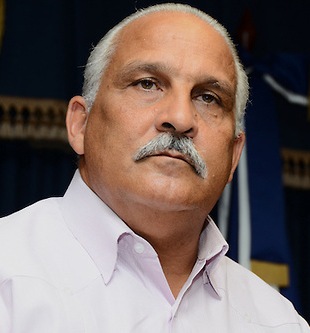
    When I typed in my pen name, I was greeted with Jaime David Fernández Mirabal, a former Vice President of the Dominican Republic and a prominent political figure in his own right. Not exactly what I was hoping for. But let’s be real — it was kind of fascinating. And who knew that the shared name would lead me down a rabbit hole that’s both a little bit funny and a lot insightful?

    What I Learned:
    So, who is this Jaime David Fernández Mirabal? He served as Vice President of the Dominican Republic from 1996 to 2000 under the first government of the Dominican Liberation Party, and later as the Minister for Environment and Natural Resources. His work focused on environmental sustainability, natural resources conservation, and shaping the country’s environmental policies. There’s even some controversy surrounding his work — but, as I learned from the web, politics is a world of controversy, right?

    It was a little jarring to discover that my name was attached to someone with such a public platform. Here I am, trying to make my mark as a writer, and there’s a well-known politician with the same name, not only dominating Google searches but also impacting real-world policies. It definitely made me think about identity and how names can shape us in unexpected ways.

    The Power of Names:
    I’ve always been fascinated by names — the stories they carry, the weight of their histories, and how they influence how the world perceives you. I mean, I chose the pen name Jaime David for a reason. It felt like a balance of strength and creativity. But now, seeing this other Jaime David pop up on every search result made me reflect on how much a name can shape one’s identity.

    It got me thinking about what it must be like to live with a name that’s shared by someone famous or infamous. It can be both a gift and a burden. A name can open doors or create confusion. It can be a tool for success or a constant reminder of someone else’s shadow. And sometimes, it’s just kind of funny.

    Imagining a Different Life:
    Now, as I’m writing this post, I can’t help but imagine: What if I was that Jaime David? What if I were in his shoes, managing environmental policies and making political decisions? What would my life have looked like if I had followed a different path? I suppose I’d have a lot less time to write, and a lot more time in meetings.

    But honestly, I’m kind of glad I’m not that Jaime David. I prefer my world of writing, creativity, and reflecting on the power of words. The whole experience was a reminder that identity is fluid — sometimes a name can mean more than we expect, but we still get to define who we are.

    Conclusion:
    So, there you have it. A simple Google search revealed not only the name I’ve chosen to write under but also a completely different person with a very public life. It’s a strange feeling, but it’s also kind of fun. For now, I’ll just have to share my name with the politician and hope that over time, my Jaime David starts to pop up on search engines a little more.

  • Let It Be: Unconventional Takes on Classic Paradoxes

    Let It Be: Unconventional Takes on Classic Paradoxes

    The world of paradoxes is often viewed as a playground for logic, mathematics, and armchair philosophers. But what if the best responses aren’t technical solutions, but philosophical shrugs — radical reimaginings that challenge the assumptions behind the question itself? Below are my reflections on some of the most famous paradoxes, not with the aim of solving them in traditional terms, but of reframing them entirely.

    1. The Raven Paradox (Color Skepticism)
    The Raven Paradox tries to challenge our understanding of confirmation by equating the observation of a green apple with confirmation that all ravens are black. But before we even get to that logic, I raise a simpler, deeper point: what is black? What is color? If we cannot consistently define or agree on the nature of perception, how can we build logic atop it? My view turns the paradox inward — to our assumptions about reality itself. If blackness is a subjective construct, then confirmation becomes a house of cards. The paradox isn’t about logic. It’s about trust in perception.

    2. The Liar Paradox (“Just Let It Be”)
    “This sentence is false.” If it’s true, then it’s false; if it’s false, then it’s true. Classic loop. But rather than getting trapped, I propose doing nothing. Just let the contradiction exist. This is a nod to non-dualism, to Zen: some things just are. Not everything broken needs fixing. Some sentences loop because they mirror the looping nature of thought and language. What if the point is not to resolve it but to accept it? Maybe the best response is simply silence — a conscious, defiant shrug.

    3. The Unexpected Hanging Paradox (Subjectivity Acceptance)
    In this problem, a man is told he’ll be hanged on a surprise day — and concludes it can’t happen. But instead of trying to outwit the judge with recursive logic, I argue: why not accept the premise as-is? Life is full of surprises. The very attempt to outthink life’s randomness is often futile. We don’t control the timeline, and pretending we do is hubris. Let unpredictability be unpredictable. The paradox loses its teeth when we stop trying to solve it and just live with ambiguity.

    4. The Barber Paradox (Outside-the-Box Assumptions)
    The barber shaves everyone who doesn’t shave themselves — so who shaves the barber? I suggest he does it after hours, or maybe he goes to another barber. This isn’t being glib — it’s being practical. These paradoxes assume impossibly rigid systems. But reality isn’t that rigid. People break rules, adapt, cheat systems. The solution isn’t within the rules — it’s in questioning the rules themselves. Once you pop the box open, you see how artificial the dilemma is.

    5. The Sorites Paradox (Heap of One Grain)
    If one grain doesn’t make a heap, and adding one more never does either, then when does a heap appear? Instead of chasing a line, I say: there is no line unless we draw it. The idea of a “heap” is a social construct — useful, but not absolute. This paradox asks a question society quietly answers every day: by agreeing, arbitrarily, on thresholds. That’s not failure — that’s function. We live by consensus fuzziness, not perfect clarity.

    6. The Ship of Theseus (Design Continuity)
    Is a ship that has had all its parts replaced still the same ship? Most answers wrestle with identity through material continuity. I answer with design and purpose. If the ship still performs the same function, has the same design, and carries the same intention — isn’t that the continuity that matters? Real-world identity is rarely about atoms. It’s about function, memory, story. We don’t just inherit matter. We inherit meaning.

    7. The Banach-Tarski Paradox (So What If It Works?)
    This paradox shows that a ball can be broken into parts and reassembled into two balls — mathematically speaking. It defies physical reality. My response? So what. If it works within its system, then it tells us something about that system, not about the “real world.” Not all truths are intuitive. This approach — agnostic realism — accepts that mathematics might describe worlds stranger than ours, and that’s okay. Let abstraction be abstract.

    8. The Trolley Problem (Walk Away)
    Five people will die unless you pull a lever to redirect a trolley, killing one. Philosophers debate endlessly. My solution? Walk away. You didn’t create this setup. You’re not qualified to decide. Why internalize the blame for a situation manufactured by others? Sometimes the right answer isn’t utilitarian or deontological. It’s refusal. Let the absurd moral theater collapse on itself. No heroics. No logic traps. Just don’t participate.

    9. Maxwell’s Demon (Order Is Just a Perspective)
    The demon would be doing work, right? Moving particles, sorting things — but what is order, really? Sorting stuff could just be another form of disorder. What one person thinks is neat, another might find messy. The universe doesn’t care about our filing cabinets or our sock drawers. Entropy isn’t broken just because something looks cleaner. Energy still gets used. The demon doesn’t violate the laws of thermodynamics — he just tidies up in his own way.

    10. Twin Paradox (Aging Happens Anyway)
    Everyone focuses on the time dilation and space travel. But we already see people age at different rates — stress, luck, health, life choices. It’s not a paradox, it’s just exaggerated by physics. The weirdness of twins aging differently is already baked into life. Relativity didn’t invent unfairness in aging — it just formalized it.

    11. Fermi Paradox (They Don’t Owe Us a Call)
    Maybe aliens have tried to talk to us, just not in a way we can understand. Or maybe they decided we’re not worth talking to. Maybe they’re silent on purpose. Or maybe they exist and just don’t communicate. Lack of communication isn’t lack of existence. Sometimes quiet just means quiet. Maybe we’re not alone — we’re just being ignored.

    12. Newcomb’s Paradox (Just Take the Box)
    You can play mind games about free will and predictions forever. But my answer is simple: take the box. Or don’t. Whatever you decide, own it. The point isn’t whether someone predicted your action. It’s that you act. You don’t need a philosophy degree to make a choice.

    13. Bootstrap Paradox (Who Cares Where It Started?)
    An idea, a song, a book — just appearing out of nowhere? Sounds like most trends already. Who wrote it first? Maybe no one. Maybe it just exists now. That’s good enough for me. Most of life is remixing anyway. Stop needing clean origin stories.

    14. Schrödinger’s Cat (Two Truths, Both Real)
    Dead and alive? Sure. Why not. We already live in contradictions. You can love someone and hate them. You can feel hope and despair at the same time. Reality doesn’t wait for you to open a box. It’s already tangled. Live in the tangle.

    15. Russell’s Paradox (Okay, Sure. Whatever.)
    Does the set contain itself or not? I don’t know. And I don’t care. Maybe we shouldn’t try to map logic onto everything. Maybe the point is that language breaks when we press too hard. So let it break. Let it be weird. Walk away and make a grilled cheese.

    16. The Paradox of Fiction (Fake Stuff Feels Real)
    Why do we cry over movies? Why does fiction make us feel so deeply? Because the emotions are real. That’s it. If a fake story makes you change your life, is it still fake? The source might be invented, but the outcome isn’t. Fiction matters — maybe more than reality sometimes.

    17. The Lottery Paradox (Of Course You Probably Won’t Win)
    Saying “this ticket won’t win” for every ticket doesn’t make you a hypocrite. It makes you statistically honest. One will win. Just probably not yours. We all live in the tension between individual unlikelihood and collective certainty. That’s life.

    18. The Problem of Evil (God Allows It — Why? Who Knows.)
    Maybe God wants evil to exist. Maybe He sees something we don’t. Maybe we just don’t understand good and evil well enough. Maybe most people aren’t evil — just confused, hurt, or afraid. And maybe divine silence isn’t neglect — it’s part of the design.

    19. The Omnipotence Paradox (God Can Do Whatever, Even the Impossible)
    Can God make a rock He can’t lift? Sure. Why not. He’s God. Maybe He lifts it sideways. Maybe He doesn’t lift it at all. Being omnipotent means not needing to play by rules. Don’t force logic onto mystery.

    20. Brain in a Vat (This Is the Vat)
    What if we’re just brains floating in goo, tricked by our senses? Well, we are kind of like that already. We’re meat computers interpreting electricity in a bone jar. So what? Whether it’s simulated or not, life feels real. That’s what counts. Go live it.