The Musings of Jaime David
@jaimedavid.blog@jaimedavid.blog

The writings of some random dude on the internet

1,126 posts
1 follower

Tag: independent publishing

  • Federating Substack? Apparently You Can.

    Federating Substack? Apparently You Can.

    For the longest time, I assumed that if you wanted a blog connected to the fediverse, you needed something like WordPress, Blogger, Mastodon, or another platform that was already known for federation support. Substack never really came to mind. In my head, it existed in its own separate ecosystem, disconnected from the wider fediverse.

    Recently, though, I discovered something that genuinely surprised me.

    Through a bit of experimentation, I found out that you can connect a Substack publication to Bridgy Fed and effectively federate your Substack blog. That means your posts can become accessible through the fediverse in a way that I honestly did not think was possible. It was one of those moments where I stumbled across a feature almost by accident and immediately thought, “Wait, more people should know about this.”

    The fediverse has become increasingly interesting to me over the years because it offers an alternative way of distributing content. Instead of relying entirely on centralized platforms, federation allows content to flow across interconnected services. A post made in one place can be seen and interacted with from another. For bloggers, that can potentially mean reaching readers who may never have otherwise discovered their work.

    I already knew that WordPress blogs could be federated. Depending on the setup, WordPress users have had federation options available for quite some time. Blogger blogs can also be connected through services like Bridgy Fed. There are various platforms and websites that can be brought into the fediverse ecosystem if you are willing to spend a little time configuring them.

    What surprised me was seeing Substack join that list.

    Substack is often thought of primarily as a newsletter platform. While many creators use it as a traditional blog, the platform itself does not market federation as one of its major features. Because of that, I never really considered the possibility that my Substack content could become part of the fediverse.

    Yet after experimenting with Bridgy Fed, it appears that it can be done.

    For bloggers who care about discoverability, digital independence, and alternative distribution methods, this could be a valuable tool. A lot of writers spend enormous amounts of time trying to figure out how to get their content in front of new readers. Some focus on social media. Others focus on search engines. Some use email newsletters. Federation adds another potential avenue for people to encounter your work.

    Of course, federation is not a magic solution. Connecting your blog to the fediverse is not going to suddenly bring thousands of readers overnight. Just like every other platform, building an audience still requires consistency, quality content, and engagement. However, it does create another pathway for people to find what you are writing.

    I also think there is a broader lesson here about experimentation.

    Sometimes we make assumptions about what platforms can and cannot do. We develop a mental list of capabilities and limitations and rarely revisit them. Then one day we click around, try something new, and discover that the landscape has changed.

    That is essentially what happened here.

    I assumed Substack and federation lived in separate worlds. It turns out that assumption was wrong.

    So if you have a Substack publication and have ever wished it could participate in the fediverse ecosystem, you may want to look into Bridgy Fed. You might discover, as I did, that federation is more accessible than you thought.

    The internet is constantly evolving. New tools appear. Existing tools gain new capabilities. Connections that seemed impossible a few years ago become surprisingly straightforward. Sometimes the only way to find those possibilities is to experiment and see what happens.

    In this case, that experimentation led me to a discovery that I suspect many bloggers may not know about yet: yes, you can federate a Substack blog.

    And honestly, I think that is pretty cool.

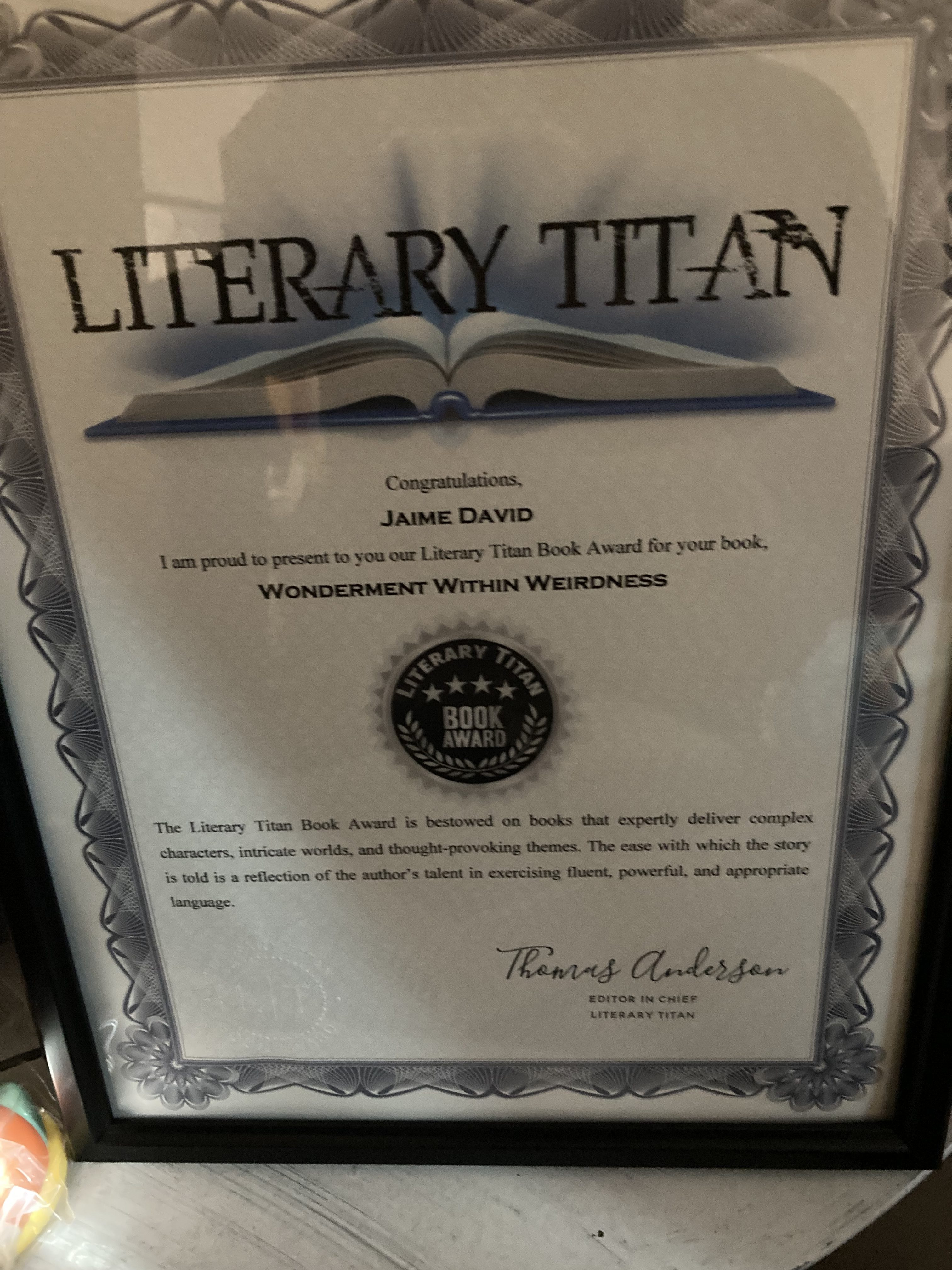
  • How My Debut Book “Wonderment Within Weirdness” Won a 4-Star Literary Titan Award

    How My Debut Book “Wonderment Within Weirdness” Won a 4-Star Literary Titan Award

    There are moments in life that do not fully register at first. Moments where you stare at a screen, reread the same sentence multiple times, and wonder if what you are seeing is actually real. For me, one of those moments came when I found out that my debut book, Wonderment Within Weirdness, had received a 4-star silver award from the Literary Titan.

    Now, before anyone misunderstands what I am saying, no, the Literary Titan award is not the Pulitzer Prize. It is not one of those century-old literary institutions that immediately dominate headlines or get discussed endlessly in academic circles. I understand that. I am aware of the hierarchy that exists within the literary world. There are massive awards with generations of prestige behind them, and then there are smaller, newer awards trying to carve out their own identity in the publishing landscape. Literary Titan falls more into that latter category. But here is the thing people often overlook: recognition is still recognition. An award does not have to be the most famous literary honor on Earth in order to matter.

    And for a debut author, especially an independent one, receiving any kind of legitimate literary recognition can mean far more than outsiders realize.

    Because here is the reality that many people do not talk about enough: writing a book is hard. Finishing a book is even harder. Publishing one is another mountain entirely. Then comes the most brutal stage of all, getting anyone to notice it in a world overflowing with content. Every day, countless books are released onto the internet. Thousands upon thousands of stories, poetry collections, essays, memoirs, philosophical works, experimental projects, and novels appear online, all fighting for visibility. Most disappear almost instantly into the digital void. Some never receive reviews. Some never find an audience. Some barely get read outside of friends and family circles. That is simply the brutal reality of modern publishing.

    Which is why the Literary Titan award mattered to me.

    Not because it suddenly transformed me into a globally recognized literary icon overnight. Not because I now expect to be discussed alongside literary giants. But because it represented something important: external validation. It meant that someone outside of my immediate circle looked at my work and believed it deserved recognition. That matters. Especially for a first book.

    Debut books exist in a strange space. Established authors often have advantages that new writers simply do not possess. They may already have audiences built over years. They may have publishers backing them with marketing budgets. They may have editors, agents, industry connections, media exposure, or simply the power of name recognition. Readers approach established writers with preconceived expectations. There is already a built-in level of trust there.

    A debut author has none of that.

    When someone picks up a first book from a completely unknown writer, there is no guarantee attached to it. There is no proven track record. No legacy. No assurance that the work will even be coherent, let alone compelling. A debut writer has to earn every ounce of credibility from scratch. That is part of what makes literary recognition for a first book feel especially significant.

    And in my case, Wonderment Within Weirdness was not some hyper-calculated, market-tested project designed specifically to appeal to mainstream publishing trends. If anything, the book reflects many of the themes and ideas that define my broader creative identity. Weirdness. Wonder. Introspection. Emotion. Existential thought. Philosophical wandering. Experimental energy. It is deeply tied to my voice as a writer and thinker. In many ways, it represents me authentically rather than trying to imitate what the market supposedly wants.

    That can be risky.

    The internet often pushes creators toward conformity. Algorithms reward familiarity. Publishing industries sometimes reward predictability. There is pressure everywhere to fit neatly into categories, genres, aesthetics, and market expectations. But creative work that embraces weirdness and individuality can sometimes cut through precisely because it feels different. It feels human. It feels personal. And I think that is part of why the recognition meant something to me.

    Because it suggested that originality still has value.

    I also think there is something psychologically important about literary awards for independent authors that many people underestimate. When you are creating largely on your own, doubt becomes constant. Every writer experiences it to some degree, but independent creators especially know what it feels like to question themselves endlessly. Is the work good enough? Is anyone reading? Does any of this matter? Am I wasting my time? These thoughts can become relentless.

    So when an outside organization says, “We see merit here,” it can genuinely impact a creator’s confidence. Not in an egotistical way, but in a stabilizing way. It becomes proof that the work connected with someone beyond yourself. That is valuable fuel for continuing forward creatively.

    And honestly, the award also made me reflect on how strange and unpredictable artistic journeys can be.

    There are writers who spend decades producing work before receiving recognition. There are others who explode into visibility instantly. Some receive praise early and disappear later. Others struggle for years before eventually finding audiences. There is no universal roadmap for creativity. No guaranteed formula. No clear sequence that determines who succeeds and who does not. The literary world is chaotic. Sometimes brilliant books are ignored. Sometimes mediocre books become massive phenomena. Sometimes deeply personal projects unexpectedly resonate with readers and reviewers alike.

    That unpredictability is both terrifying and beautiful.

    I think part of why this award mattered so much to me is because it symbolized momentum. Not finality. Not completion. Momentum. It felt like confirmation that I am not simply shouting into the void entirely unnoticed. Even smaller recognitions can create psychological momentum for artists. They can reinforce the idea that continuing to create is worthwhile.

    And perhaps most importantly, it reminded me that the definition of success is more nuanced than people often make it out to be.

    Modern internet culture tends to frame success in extremes. Either you are world famous, or you are irrelevant. Either you win the biggest awards imaginable, or your accomplishments supposedly do not count. But reality is far more layered than that. There are countless levels of artistic success between obscurity and superstardom. A smaller literary award can still represent a meaningful achievement. Especially for a first-time author.

    I also think there is something fascinating about newer literary awards in general. Every prestigious institution that exists today had to begin somewhere. The Pulitzer Prize was once new. The Booker Prize was once unknown. Every literary tradition starts small before history determines whether it grows into something larger. Now, I am not claiming Literary Titan will become the next Pulitzer. Nobody can predict that. But I do think people sometimes dismiss newer awards too quickly simply because they lack decades of legacy.

    The reality is that literary culture is constantly evolving. Independent publishing itself has changed dramatically over the last twenty years. The barriers between traditional and independent authorship have blurred. Online platforms have allowed writers to build audiences without relying entirely on gatekeepers. Smaller awards and independent review organizations have emerged partly because the literary ecosystem itself has expanded beyond older institutional models.

    And frankly, independent authors often need these spaces.

    Because traditional literary systems can be incredibly difficult to penetrate. Many talented writers never receive attention from major publishers or prestigious literary organizations despite producing meaningful work. Smaller awards can provide visibility where mainstream institutions may overlook emerging voices. That does not make the recognition fake or meaningless. It simply means it exists within a different layer of the literary landscape.

    Another thing that struck me after receiving the award was how differently creators experience recognition compared to outsiders observing from a distance. Someone scrolling online might see “4-star Literary Titan award” and move on after two seconds. But for the creator behind the work, that recognition often represents years of thought, effort, doubt, rewriting, editing, emotional investment, and persistence condensed into a single moment.

    People see the outcome. They rarely see the process behind it.

    They do not see the nights spent questioning whether the project will ever come together properly. They do not see the anxiety involved in publishing something personal into public view. They do not see the fear of rejection. They do not see the vulnerability required to create sincerely in a culture that often rewards irony and detachment more than authenticity.

    And perhaps that is another reason why this award felt meaningful to me specifically. It validated authenticity.

    I have always been drawn toward ideas that sit outside rigid convention. Whether through my writing, my philosophical ideas surrounding anarcho-compassionism, my blog posts, or my broader creative identity, I tend to gravitate toward introspection, emotional honesty, nuance, existential exploration, and unconventional thinking. Wonderment Within Weirdness reflects that mindset heavily. It is not trying to be sterile or artificially polished into generic marketability. It embraces weirdness directly, even in its very title.

    And honestly, I think the title itself matters.

    “Wonderment Within Weirdness” captures something fundamental about how I view creativity and existence. There is wonder inside the strange. Beauty inside imperfection. Meaning hidden within chaos. Modern society often pressures people to suppress weirdness, flatten individuality, and conform to expectations. But creativity frequently thrives in the exact opposite direction. Some of the most memorable art emerges precisely because it dares to be unusual.

    That does not mean every unconventional work automatically becomes brilliant. But authenticity has power. Readers can often sense when something comes from a genuine place rather than existing solely as a calculated product.

    I also think there is something inspiring about the fact that a debut independent book can receive recognition at all in today’s environment. We live in an era where gatekeeping still exists, but it is no longer absolute. Independent creators have more opportunities than ever before to publish work, connect with audiences, and gain visibility. The internet has created overwhelming saturation, yes, but it has also democratized creativity in many ways.

    That democratization comes with contradictions. Visibility is harder because everyone is competing simultaneously. Yet opportunities also exist that previous generations of writers could barely imagine. A person can build a blog, publish books independently, create podcasts, interact directly with readers, and cultivate a creative ecosystem almost entirely outside traditional institutions.

    That is part of the journey I have been navigating myself through The Musings of Jaime David and my broader online presence.

    And perhaps that is another reason this award felt important. It represented not just one isolated accomplishment, but evidence that the broader creative path I have been pursuing might actually be leading somewhere meaningful.

    What made the experience even more surreal was seeing the recognition expand beyond the award announcement itself. Literary Titan did not simply hand out the award quietly and move on. There was an actual press release published about my book receiving the award, which made the accomplishment feel far more tangible and publicly documented. FinancialContent press release about the award

    That mattered to me because there is something psychologically different about seeing your work discussed publicly in a professional context. It transforms the experience from feeling purely internal into something externally recognized and archived. Suddenly, the book was not just existing within my own creative ecosystem. It was being discussed beyond it.

    Then there was the author interview that Literary Titan conducted with me, which honestly made the entire experience feel even more real. Literary Titan author interview with Jaime David The title alone, “It Started With a YouTube Comment,” captures something fascinating about modern creativity and internet culture. So many creative journeys now begin in strange, seemingly insignificant digital moments. A comment. A post. A random idea. A passing conversation online. Something tiny eventually snowballs into something much larger.

    That interview gave me the opportunity to reflect not just on the book itself, but on the broader creative process behind it. And honestly, interviews can sometimes feel even more vulnerable than the work itself because they require the creator to directly articulate thoughts, motivations, insecurities, and inspirations in their own voice. There is nowhere to hide behind fictional structure or poetic abstraction at that point. It becomes direct human reflection.

    And then there was the review itself from Literary Titan. Literary Titan review of Wonderment Within Weirdness Reviews are fascinating because they represent interpretation. Once creative work enters the world, readers begin forming their own relationships with it. They notice things the creator may not have fully realized themselves. They interpret themes differently. They emotionally connect to unexpected aspects of the work. That is part of what makes literature so interesting in the first place. Books stop belonging solely to the author once they are released publicly. They become shared experiences between creator and reader.

    Perhaps one of the strangest and coolest parts of all this, though, was the fact that there was even a podcast episode discussing my book. Literary Titan podcast episode about Wonderment Within Weirdness There is something surreal about hearing people talk about your creative work in audio form, almost like listening to your ideas echo back at you from outside yourself. It creates this bizarre sensation where the project suddenly feels alive beyond your own head.

    And honestly, when you step back and look at the full picture, it becomes clear that the experience extended beyond simply “winning an award.” There was the award itself, the review, the interview, the press release coverage, and even a podcast discussion. For a debut independent book, that is genuinely meaningful visibility.

    Will the Literary Titan award alone suddenly make me famous? Of course not. I am realistic about that. But creative careers are often built incrementally. Recognition accumulates piece by piece over time. One review leads to another. One award builds credibility. One reader recommends a book to someone else. Momentum compounds gradually rather than explosively for most writers.

    People often romanticize overnight success while ignoring how many creators build their audiences slowly over years. Persistence matters enormously in creative fields. So does consistency. So does continuing to create even when visibility feels limited.

    And honestly, I think the award reinforced something deeper psychologically for me: the importance of continuing despite uncertainty.

    Because uncertainty never fully disappears for artists. Even successful writers experience doubt constantly. There is no magical point where creators suddenly become immune to insecurity. Every project involves risk. Every piece of writing involves vulnerability. Every publication becomes an act of exposure in some way.

    But recognition can help counterbalance that uncertainty enough to keep moving forward.

    It can remind creators that their work has impact beyond their own internal world. That someone connected with it. That the effort mattered to another human being somewhere out there.

    And for me, as a debut author, that feeling carries enormous significance.

    Fediverse Reactions
  • To Every Writer, Author, and Reader Out There — I Want to Tell You About My Book

    To Every Writer, Author, and Reader Out There — I Want to Tell You About My Book

    I want to talk about my debut novel, “Wonderment Within Weirdness.” Not in a sales pitch kind of way, not with a rehearsed elevator pitch or a list of reasons you absolutely must buy it right now. I just want to talk about it honestly, the way I would if we were sitting somewhere having a real conversation. I have been thinking a lot lately about how to share this book with more people, particularly with the writing and reading communities that I genuinely respect and engage with, and I figured the most straightforward thing I could do is just tell you what the book is, what it is about underneath the surface, and why I think certain people would connect with it. So that is what this is. A conversation.

    The simplest way to describe “Wonderment Within Weirdness” is that it is a science fiction action-adventure novel about an ordinary person who gets pulled into a multiversal conflict far beyond anything he could have anticipated or prepared for. That is the skeleton of it. A regular guy, an enormous and strange situation, stakes that reach levels that most people would find completely absurd. And honestly, absurd is a fair word for a lot of what happens in this book. The story goes to some wild places. There are multiple timelines, unknown universes, demons, portal guns, a heist in hell, and a threat to existence itself. I am not going to pretend that sounds restrained or modest, because it is not. From the very beginning, I wanted this book to be grand in scope. I wanted it to be epic and layered and ambitious. That was always the intention, and I do not apologize for it.

    What I do want to be clear about, though, is that the size and the strangeness of the book are not the point. They are the vehicle. The actual point of the story is something much quieter and more personal, even if it rarely gets the chance to be quiet inside the book itself. The multiverse is not just a backdrop. It is a metaphor. It is a way of exploring uncertainty, and choice, and what happens to a person when the familiar rules of existence stop applying and get replaced by something vast and incomprehensible. I think most people have felt a version of that at some point in their lives. Not with portal guns involved, obviously, but that feeling of reality shifting beneath you, of suddenly not knowing the rules anymore, of being asked to navigate something you were never prepared for. That feeling is at the heart of everything I was trying to do with this story.

    One of the things I have reflected on a lot since publishing the book is how much of its meaning I did not fully understand while I was writing it. That sounds strange, maybe, but I think it is true of a lot of writing. You put something down on the page because it feels right, because it is the honest thing, and only later do you look back and see what you were actually doing. Looking back at “Wonderment Within Weirdness” now, I can see how richly thematic it is, how much it is really about conflict, resilience, morality, and the way individuals navigate chaos. I can see that it is, in some ways that I did not consciously plan, an anti-war novel. Not in a heavy-handed or preachy sense. But the weight of violence accumulates throughout the story. The cost of conflict is never abstract. It lands on the protagonist in ways that are personal and real, and I think that honesty about what conflict actually does to people is one of the things I am most proud of in the book.

    The protagonist himself is somebody I care about a great deal. He is not a hero in the conventional sense. He does not have a secret destiny or a hidden power that gets activated when things get bad enough. He is just a person who finds himself in circumstances that are completely beyond him, and he has to figure out how to keep going anyway. He is not defined by confidence or certainty. He is defined by his refusal to completely give up, even when giving up would be the reasonable response to everything happening around him. I wrote him that way deliberately, because I find that kind of resilience far more interesting and far more honest than the polished invincibility you often get from genre protagonists. His struggle is emotional as much as it is physical. His arc is as much about mental endurance as it is about the external conflict. Mental health as a theme is not something I grafted onto the story after the fact. It is woven into the fabric of who he is and how he moves through everything the book throws at him.

    I also want to say something about the length, because I know it comes up. The book is over 600 pages. For a debut novel, that is unusual, and I am aware of that. When people hear that number, there is often a moment of hesitation. But I want to be honest about why the book is that long, because it is not padding and it is not self-indulgence. It is because I had a genuinely enormous story to tell, with layers of plot and subplots and characters and ideas that could not be compressed without losing something essential. The story is dense and sprawling and chaotic in places, and that is intentional. It reflects the nature of the world I was building. The length is the length because the story demanded it, and I stand by that. I also think readers who commit to it find that the size of the book becomes part of the experience. There is a particular kind of satisfaction that comes from finishing something that took real investment, and I wanted to give readers that.

    There is also humor in the book, and I want to mention that because I think it sometimes gets overlooked in conversations about themes and meaning. “Wonderment Within Weirdness” is funny in places. Not in a way that undercuts the serious moments, but in a way that lives alongside them. I think absurdity and sincerity can coexist, and I think some of the most honest moments in any piece of fiction come from the collision of those two things. The book leans into its own strangeness with a certain amount of self-awareness, and I think that tonal balance is one of the things that makes it feel different from a lot of other science fiction I have read. It does not take itself so seriously that it forgets to be alive, but it does not use humor as a way to avoid saying something real either.

    Now I want to speak directly to the communities I genuinely respect and engage with, the writers and readers who spend time thinking carefully about storytelling and craft and the experience of creating and consuming fiction. If you watch channels like The Creative Penn, where Joanna Penn has spent years building an incredible resource around the craft and the business of being an indie author, then you already understand that independent publishing is not a lesser version of traditional publishing. It is just a different path, and the books that come from it deserve the same serious engagement. “Wonderment Within Weirdness” is a book I made on my own terms, through the independent route, and I am proud of that. I think the community that Joanna has built is exactly the kind of community that understands what that means.

    If you watch Brandon Sanderson’s lectures and channel, where he breaks down world-building and narrative structure with a generosity and clarity that I genuinely admire, you might find something interesting in the way I approached my own world-building. The multiverse in my book is not decorative. It is structural. The rules of how it works matter, and the way the protagonist interacts with those rules is the spine of the plot. I think readers who appreciate that kind of intentional construction in speculative fiction will have a lot to engage with here, even if my approach is messier and more chaotic than Sanderson’s famously rigorous systems.

    If you follow channels like Hello Future Me, where Timothy Hickson does incredibly thoughtful video essays about how storytelling builds meaning through its architecture, then the thematic layering in “Wonderment Within Weirdness” is something I would genuinely love you to dig into. The anti-war elements, the mental health themes, the use of the multiverse as metaphor rather than just spectacle — these are all things that are there to be found if you are reading with that kind of attention. I am not claiming the book is perfect. No debut novel is. But I am claiming that there is more going on beneath the surface than a casual glance might suggest, and that is exactly the kind of book that channels like Hello Future Me are built to celebrate.

    To everyone who watches Abbie Emmons talk about the psychology of storytelling and why certain narratives connect with readers on a level that goes beyond plot, I want you to know that the emotional core of my book was never an afterthought. I spent a lot of time thinking about what I wanted readers to feel and why, about how the protagonist’s internal experience should track against the external chaos of the story. The emotional resonance was the thing I cared about most, even when I was writing scenes that are, on the surface, completely bananas. If you watch Jenna Moreci’s channel and appreciate her honest, direct takes on what works and what does not in genre fiction, I think you would find “Wonderment Within Weirdness” to be a genuinely interesting case study. It does some things very well and it takes some risks that do not always land perfectly, and I am at peace with both of those things. That is what a debut novel is.

    For those who follow channels like Author Level Up with Michael La Ronn, where the focus is on what it actually means to build a body of work as an indie author and keep showing up for your craft, I want to say that “Wonderment Within Weirdness” was just the beginning for me. I also released a poetry compilation called “My Powerful Poems” and a short story collection called “Some Small Short Stories” in 2025, making three books in a little over a year. I am not saying that to brag. I am saying it because I think the writers in those communities understand what it means to commit to the work, to keep creating even when it is difficult, and “Wonderment Within Weirdness” is where that commitment started for me. It is the book that proved to me that I could actually do this.

    If you spend time reading blogs like The Creative Penn, where the conversation around indie publishing and the author journey is as rich and sustained as anywhere on the internet, I think the story behind my book is as interesting as the book itself. I am a writer and a scientist, and I came to this debut novel with curiosity and a refusal to simplify things, whether that means the plot, the themes, or the emotional experience of the protagonist. That approach is reflected on every page. It is also reflected in the blog I maintain at jaimedavid.blog, where I write about the book, about the themes, about what it means to be an indie author navigating all of this. If you read Jane Friedman’s blog and appreciate the honest, practical, thoughtful engagement with the realities of the publishing world that she consistently provides, then you know that independent authors are part of that conversation too, and I want to be part of it.

    The book is available in print and ebook through Lulu and various online platforms including Amazon. It is not a perfect book. I do not think first novels usually are, and I think there is something a little dishonest about pretending otherwise. But it is an honest book. It is a book that came from a genuine place, that was written with real ambition and real feeling, and that has more going on inside it than its genre surface might immediately suggest. If you are part of the writing and reading communities I have mentioned here, if you spend time thinking about craft and story and what fiction can do when it is willing to take risks, then I think “Wonderment Within Weirdness” is worth your time. Not because I am telling you to read it, but because I genuinely believe you would find something in it worth thinking about.

    That is really all I wanted to say. Go check it out if it sounds like your kind of thing. And if you do read it, I would genuinely love to know what you thought.

    Fediverse Reactions
  • One Year as a Published Author: Reflecting on an Unexpected Journey

    One Year as a Published Author: Reflecting on an Unexpected Journey

    February 15, 2026 marks a milestone I never quite imagined I would reach, at least not in the way it has unfolded. One year ago today, I officially became a published author when my debut novel “Wonderment Within Weirdness” was released into the world. As I sit here reflecting on the past twelve months, I find myself almost disbelieving that not only did I publish that first book, but I somehow managed to release two additional books during the summer of 2025, my poetry compilation “My Powerful Poems” and my short story collection “Some Small Short Stories.” Three books in one year. The thought still catches me off guard, fills me with a strange mixture of pride and bewilderment, as if I’m looking at someone else’s accomplishments rather than my own.

    There’s something profoundly transformative about becoming a published author. The moment “Wonderment Within Weirdness” went live, something shifted in how I saw myself and my relationship with writing. For years before that, writing had been something I did, a passion I pursued in the margins of my life, but it wasn’t necessarily who I was in any official capacity. I was someone who wrote, sure, but calling myself a writer felt presumptuous, like claiming a title I hadn’t quite earned. Publishing that debut novel changed everything. Suddenly, the identity wasn’t aspirational anymore, it was actual. I had created something tangible that existed beyond my own computer files and notebooks, something that other people could hold, read, and experience. That transition from private creator to public author felt both terrifying and exhilarating, like stepping off a cliff and discovering I could fly.

    “Wonderment Within Weirdness” was a labor of love that took far longer to complete than I ever anticipated. Like many debut novels, it went through countless revisions, moments of self-doubt, periods where I was convinced it was brilliant followed immediately by periods where I was certain it was irredeemable garbage. The writing process taught me patience with myself, taught me that creation is rarely linear, that sometimes you have to write yourself into corners just to discover new doors. When I finally decided it was ready, when I finally took that leap and actually published it, I remember feeling this overwhelming sense of vulnerability. Putting your work out there for public consumption is an act of courage that non-writers sometimes don’t fully appreciate. You’re not just sharing words on a page, you’re sharing pieces of your imagination, your perspective, your soul in some fundamental way.

    What I didn’t anticipate on that February day in 2025 was how publishing that first book would unleash something within me. It was as if releasing “Wonderment Within Weirdness” into the world opened a creative floodgate I didn’t even know existed. Throughout the spring of 2025, I found myself writing with a fervor and consistency that surprised me. The poetry that had been accumulating in various notebooks and digital files for years suddenly felt like it deserved to be compiled, organized, given its own home. The short stories I had written sporadically, often as experiments or exercises or just bursts of inspiration, began to look like they could form a cohesive collection. Where publishing my debut novel had once seemed like the culmination of years of work, it now felt more like a beginning, a doorway opening onto a path I hadn’t fully considered walking.

    By summer 2025, I had made the decision to publish not one but two additional books. “My Powerful Poems” became my second published work, a collection that felt intensely personal in a different way than the novel had. Poetry strips away so much of the protective narrative distance that fiction provides. Each poem was a distilled moment of emotion, observation, or insight, laid bare without the comfortable camouflage of characters and plot. Compiling that collection meant revisiting different versions of myself, the person I was when I wrote each piece, the moments of joy or pain or wonder that had inspired the words. It meant curating an emotional landscape and inviting readers to walk through it with me. The vulnerability of publishing poetry felt even more acute than publishing fiction, yet there was also something deeply satisfying about it, about saying these are my truths, these are my observations of the world, take them or leave them.

    Following closely on the heels of the poetry collection came “Some Small Short Stories,” which gathered together the narrative fragments and complete miniature worlds I had created over time. Short stories are a unique form, requiring precision and economy in a way that novels don’t. Each story in that collection represented a different experiment in voice, perspective, genre, or style. Some were realistic, some ventured into the strange and surreal, some were humorous, others melancholic. Putting them together into one collection felt like creating a gallery of different moments and moods, a showcase of range rather than a single sustained vision. I loved the freedom that collection represented, the way it didn’t have to be any one thing but could contain multitudes.

    Looking back at the publishing journey of those three books across 2025, I’m struck by how much I learned in such a compressed timeframe. Each book taught me different lessons about the craft of writing, the business of publishing, and the experience of being an author. “Wonderment Within Weirdness” taught me about sustained narrative, about character development, about weaving together plot threads and themes across hundreds of pages. It taught me about the marathon of novel writing, the endurance required to stay committed to a single project through all its ups and downs. “My Powerful Poems” taught me about distillation, about finding the exact right word, about the music of language and the power of white space on a page. It taught me to trust emotion, to not overexplain, to let readers bring their own experiences to the work. “Some Small Short Stories” taught me about versatility, about the sprint of short fiction versus the marathon of novel writing, about beginnings and endings and making every word count.

    Beyond the craft lessons, publishing three books in one year taught me practical things about the publishing process itself, especially as someone navigating the world of independent publishing. I learned about formatting and cover design, about metadata and keywords, about the strange alchemy of trying to find readers in an oversaturated marketplace. I learned about the importance of patience, about how building an audience is a slow process that can’t be rushed. I learned that publishing a book is just the beginning of its journey, not the end, and that the work of being an author extends far beyond the writing itself into promotion, engagement, and community building. These weren’t lessons I necessarily wanted to learn, they felt less romantic than the pure act of creation, but they were necessary ones, grounding my artistic aspirations in practical reality.

    What strikes me most profoundly as I mark this one-year anniversary is the sheer unexpectedness of it all. A year ago, if someone had told me I would publish three books in twelve months, I would have laughed at the impossibility of it. My aspirations were much more modest, I just wanted to get that debut novel out there and see what happened. I didn’t have a master plan for multiple releases, I wasn’t following some strategic publishing roadmap. Instead, each book emerged organically from the momentum created by the one before it. Publishing “Wonderment Within Weirdness” didn’t exhaust my creative energy, it multiplied it. It gave me confidence I hadn’t possessed before, a belief that my work was worth sharing, that I had more to say and people might want to listen.

    This anniversary also prompts reflection on what it means to call something an accomplishment. We live in a culture that often measures success in quantifiable external metrics, sales numbers, bestseller lists, awards, recognition. By those standards, I can’t claim massive success. My books haven’t topped any charts, I haven’t quit my day job to write full-time, I’m not fielding offers from major publishers or Hollywood producers. But accomplishment, I’ve learned, can be measured in different ways. The fact that I wrote three books, that I brought them from conception to completion to publication, that I overcame all the internal resistance and self-doubt and fear that plagues every writer, that alone feels monumental. The fact that even one person I don’t personally know has read my work and connected with it, that’s meaningful in a way that transcends commercial metrics.

    There’s also something to be said for the accomplishment of consistency, of showing up to the work again and again across a full year. Writing requires discipline, especially when inspiration wanes, when life gets busy, when the initial excitement of a new project fades into the hard middle where you’re not sure if what you’re creating has any value. Publishing three books meant showing up consistently to the page, trusting the process even when I couldn’t see the endpoint, pushing through the resistance that tried to convince me I had nothing worthwhile to say. It meant honoring the commitment I made to myself to be a writer not just in identity but in practice, day after day, word after word, until those words accumulated into complete works.

    As I think about the year ahead, I find myself in an interesting position. The urgency that drove me through 2025, that led to three publications in rapid succession, has settled into something different. I don’t feel the same pressure to prove anything, either to myself or to others. I’ve done the thing, I’ve published books, I’ve earned the title of author in a concrete way. Now the question becomes what kind of author I want to be moving forward, what stories and ideas deserve my attention and energy, how I want to balance the creation of new work with the cultivation of what I’ve already released. There’s a freedom in having accomplished something you once thought impossible, it gives you permission to be more intentional, more selective, more patient with yourself and the creative process.

    Part of me wonders if I’ll publish anything in 2026, or if this will be a year of rest and renewal, of filling the creative well rather than drawing from it. I’ve learned that sustainable creativity requires cycles of output and input, of speaking and listening, of sharing your vision and absorbing the visions of others. After the intense productivity of 2025, perhaps what I need most is spaciousness, room to experiment without the pressure of publication, permission to write things that might never see the light of day simply because they help me grow and explore. Or perhaps I’ll surprise myself again, perhaps there’s another book waiting to emerge that I haven’t yet recognized. The beauty of having made it through this first year is that I now trust the process more, trust that the work will make itself known when it’s ready.

    What I do know is that I’m grateful for this year, for everything it taught me, for the ways it challenged and changed me. February 15, 2026 isn’t just an anniversary of publication, it’s an anniversary of transformation, of becoming something I always hoped I could be but wasn’t sure I actually would. It’s a marker of courage, of the decision to stop waiting for permission or perfect circumstances and to simply begin, to put my work into the world despite all the reasons not to. Every writer I admire had to start somewhere, had to publish that first book, had to push through the fear and uncertainty and just do the thing. I did that. I’m doing that. And that’s worth celebrating.

    Looking at those three books, “Wonderment Within Weirdness,” “My Powerful Poems,” and “Some Small Short Stories,” I see a year of my life crystallized into words. I see the person I was when I wrote each piece, the hopes and fears and observations that shaped the work. I see evidence of growth, of experimentation, of a willingness to try different forms and voices. They’re imperfect, of course, all creative work is imperfect because we ourselves are imperfect. There are things I would change if I could go back, passages I would rewrite, choices I would reconsider. But they also represent something complete, something finished, something that exists independently in the world now. They’re no longer just mine, they belong to whoever reads them, interpreted through the lens of each reader’s unique experience and perspective.

    This anniversary makes me think about all the aspiring writers out there who are where I was two years ago, sitting on completed manuscripts or half-finished projects, wanting to publish but not quite ready to take the leap. If I could offer any wisdom from my year as a published author, it would be this: just start. Don’t wait for everything to be perfect, because it never will be. Don’t wait until you feel completely ready, because that feeling might never come. Don’t wait for someone to give you permission or validate your work, because you are the only permission you need. The difference between an unpublished writer and a published author is simply the decision to share your work, to take that terrifying step from private creation to public offering. Everything else is just details.

    As I close out these reflections on my first year as a published author, I’m filled with a quiet sense of pride that feels hard-earned and genuine. Three books. One year. It’s an accomplishment not because of any external validation, but because I set out to do something difficult and I did it. I faced every obstacle, internal and external, that tried to stop me, and I persisted. I honored my creative voice enough to believe it deserved to be heard. I trusted myself enough to put imperfect work into the world rather than keeping it hidden in pursuit of an impossible perfection. That’s what I’m celebrating on this February 15, 2026, not just the books themselves, but the growth they represent, the courage they required, the transformation they catalyzed.

    Here’s to one year as a published author, to “Wonderment Within Weirdness” and “My Powerful Poems” and “Some Small Short Stories,” to unexpected journeys and surprising productivity, to creative risks and vulnerable sharing, to the terror and joy of putting your work into the world. Here’s to whatever comes next, whether it’s more books or fallow periods, new experiments or deeper dives into familiar territory. Here’s to the ongoing adventure of being a writer, with all its challenges and rewards, its frustrations and fulfillments. And here’s to anyone reading this who has their own creative dreams waiting to be realized: may you find the courage to begin, the persistence to continue, and the satisfaction of looking back one day and marveling at how far you’ve come.

    Fediverse Reactions