The Musings of Jaime David
@jaimedavid.blog@jaimedavid.blog

The writings of some random dude on the internet

1,126 posts
1 follower

Tag: life philosophy

  • Choosing Honesty and Authenticity (If Not Me, Then Who? If Not Now, Then When?)

    Choosing Honesty and Authenticity (If Not Me, Then Who? If Not Now, Then When?)

    I often reflect on the tension between the reality that everyone bends, masks, or distorts the truth and my desire to live openly, honestly, and authentically. Recognizing that truth exists on a spectrum doesn’t make me cynical; it makes me deliberate. It makes me realize that honesty is a choice—one that requires courage, persistence, and sometimes discomfort. And that choice is even more urgent when I consider the stakes: if I don’t commit to being honest, who will? And if I don’t commit to being authentic in this moment, when will I?

    Striving for honesty is not about perfection. It is not about never lying, never withholding, or never bending the truth. That standard is impossible. It is about awareness and intentionality. It is about noticing the moments when it is easier to soften, omit, or twist reality, and then deciding consciously to act differently. Even when honesty might be inconvenient, even when it might provoke discomfort, confrontation, or judgment, I try to speak and live in alignment with my inner truth. This is not always easy. Often, it is hard. Often, it is exhausting. And yet, the question persists: if not me, then who?

    Authenticity carries weight because it is rare. In a world where people constantly present curated versions of themselves, to be authentic is to risk vulnerability. To show up fully means letting others see the unpolished, the contradictory, and the imperfect. It means revealing the fears, doubts, and struggles that most people hide. It means embracing the possibility that not everyone will respond kindly, or even understand. And yet, the alternative—masking, withholding, or bending the truth—is ultimately less freeing. The choice to be authentic is a daily act of rebellion against pretense, against convenience, against social pressures that demand conformity.

    Timing matters as much as intent. There is a difference between honesty delayed and honesty abandoned. Delaying truth for the wrong reasons—fear, avoidance, shame—can reinforce patterns of distortion, both internally and externally. But delaying honesty to gather clarity, to choose the right words, or to protect constructive outcomes is a nuanced act that acknowledges responsibility. Still, the underlying principle remains: if not now, then when? There is a moment in every interaction, every decision, every relationship where the opportunity to speak authentically exists. Choosing to postpone it indefinitely is to let that opportunity slip away entirely.

    Striving to be honest also transforms how I engage with others. It encourages me to listen differently, to recognize the ways in which people present partial truths, and to respond with curiosity instead of judgment. It allows me to meet people where they are, while maintaining my own integrity. Authenticity is not only about how I show up but also about creating space for others to do the same. It is a model, a small act of influence, a ripple in a culture that often rewards masking over clarity.

    There are moments when honesty is hardest. When the truth could hurt someone I care about. When admitting my own flaws could provoke criticism or rejection. When confronting reality might shatter a narrative I’ve been clinging to. These moments test commitment. They force self-reflection, courage, and patience. But they also offer growth. Every choice to speak truthfully, even in discomfort, reinforces the practice of authenticity. Every act of honesty strengthens the ability to live fully, without the weight of pretense or concealment.

    The pursuit of authenticity is, in many ways, a moral experiment. It is not a measure of perfection, but of effort. It is an active choice to inhabit reality as fully as possible, to resist the temptation to distort for comfort or approval, and to accept the consequences of transparency. It is the decision to trust oneself, to trust the moment, and to trust that being real has value beyond immediate convenience. If not me, then who? If not now, then when? These questions are reminders that the responsibility to live authentically cannot be outsourced. It cannot wait for someone else, or for a safer time, or for conditions that will never exist perfectly.

    Ultimately, striving for honesty and authenticity is both personal and universal. It is a commitment to my own alignment and clarity, but it also sets a precedent in my relationships, my community, and my life as a whole. It is an acknowledgment that life is short, and that half-truths, masks, and distortions accumulate over time to create distance, misunderstanding, and regret. Choosing to speak truthfully, to act with integrity, and to embrace vulnerability is the practice of living fully, consciously, and courageously. It is a practice I intend to honor every day, even when it is hard, even when it is inconvenient, and even when it challenges the comfort of both myself and others.

    In the end, honesty and authenticity are not just ideals—they are lifelines. They are the choices that allow clarity, connection, and trust to exist in a world where distortion is common. They are the acts that remind me that I am responsible for how I show up, for how I influence the spaces I inhabit, and for how fully I claim my own life. If not me, then who? If not now, then when? There is no better answer than to act, to speak, and to live in alignment with the truth I can hold, the authenticity I can embrace, and the courage I can summon in this very moment.

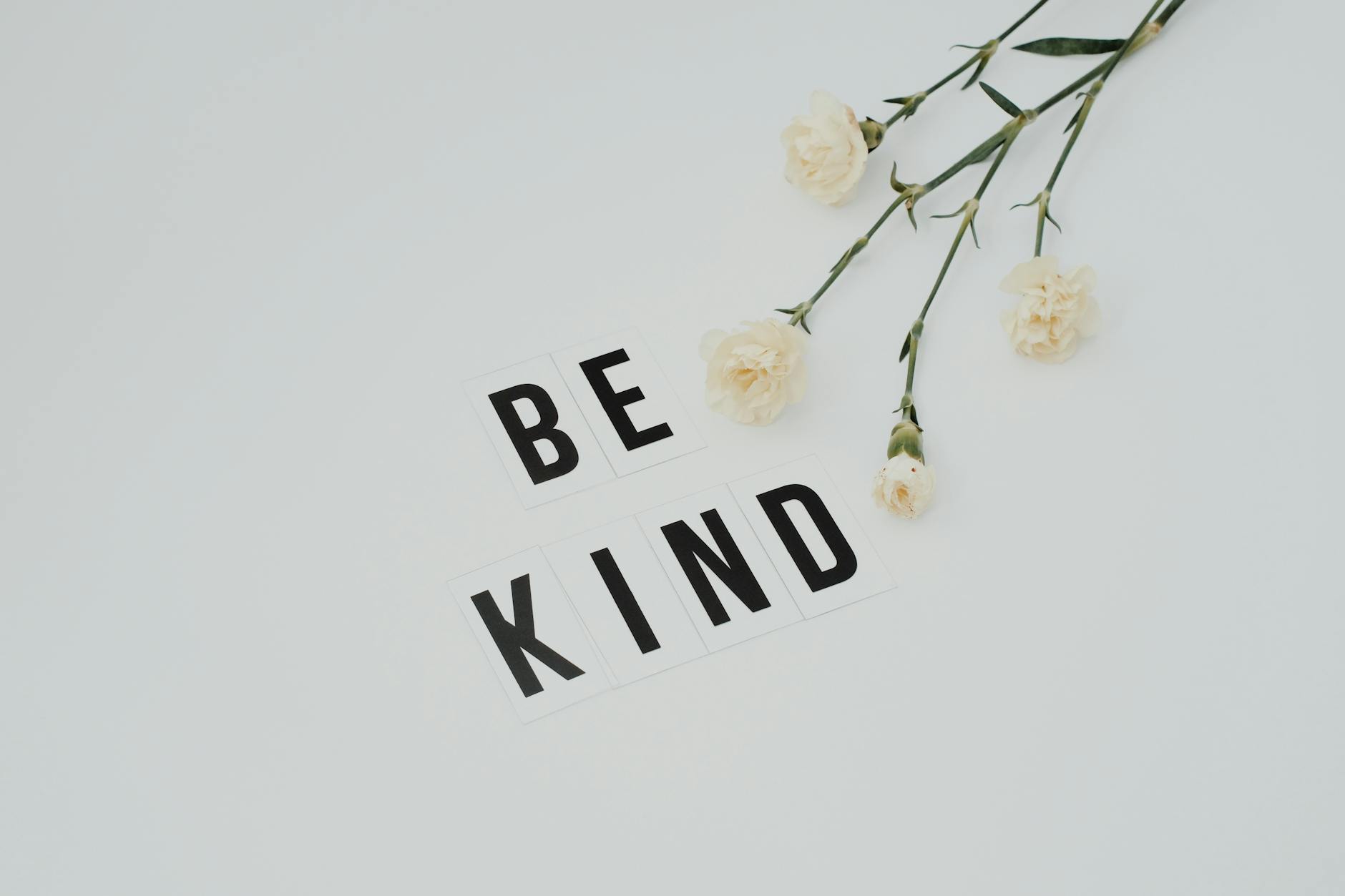
  • Striving for Honesty and Authenticity (Even When It’s Hard)

    Striving for Honesty and Authenticity (Even When It’s Hard)

    After coming to terms with the idea that everyone lies in some form—through omission, distortion, masking, or self-deception—I started to think about what it means to live differently. To live in a way that doesn’t deny the spectrum of truth, but leans into it intentionally. To strive for honesty and authenticity, even when it’s difficult. Even when the easier, socially comfortable, or self-protective path would be to bend, mask, or withhold.

    Being honest isn’t simple. It’s not a checklist or a slogan. It’s a continuous practice, a daily decision, a commitment that asks more from you than it asks from anyone else. Being authentic means showing your true self—not just the polished, socially acceptable, or convenient version—but the flawed, conflicted, and sometimes uncomfortable version too. It means saying the things you fear might be judged. It means admitting mistakes, uncertainties, and fears. It means embracing vulnerability, even when it makes you feel exposed. And it means being willing to face the consequences, both internal and external, of that honesty.

    There are countless moments when honesty is inconvenient. When speaking your truth might make someone uncomfortable. When admitting what you feel or what you need could disrupt a relationship, a routine, or a perception others hold of you. When telling the full story could cost you opportunities, friendships, or respect. The world rewards self-preservation more often than authenticity. It rewards spinning narratives, softening realities, and hiding weaknesses. And yet, despite that, I choose to try. Because if not me, then who? If no one is willing to be fully present, fully honest, fully themselves, then the world becomes a patchwork of half-truths, illusions, and distortions that are harder and harder to navigate.

    Authenticity also means embracing the spectrum of truth in others without judgment. I strive to recognize that when people withhold or distort, they are usually doing what they feel is necessary to survive or protect themselves. Honesty is not a weapon; it is a practice of alignment. It is an effort to live and communicate in a way that matches the inner reality you are experiencing. This doesn’t mean excusing harm or ignoring manipulation, but it does mean understanding that truth is rarely absolute in the way we hope it would be.

    Being honest requires courage. It requires confronting uncomfortable realities about yourself. The moments when you fear judgment the most are often the moments when honesty is most transformative. Saying what you feel, admitting what you don’t know, acknowledging when you’ve been wrong—these are acts of rebellion against a world that conditions us to hide, mask, and protect at all costs. And while it’s difficult, it is also freeing. Every time I choose to speak my truth, I release a small fragment of the burden that comes from pretending, shaping, or filtering my reality for others’ comfort.

    Striving for authenticity also shapes the relationships around me. People respond to honesty with clarity. Even if they don’t always respond kindly, even if the truth creates friction, it fosters trust in a way that half-truths never can. It attracts those who are capable of showing up as they are, while filtering out those who prefer illusions and convenience. It may be uncomfortable in the short term, but in the long term, it builds bonds that are rooted in reality, not projection or pretense.

    There are moments of failure, of course. Moments when I don’t live up to the standard I set for myself. Moments when fear, insecurity, or laziness win, and I mask, withhold, or bend the truth. Those moments don’t negate the effort; they contextualize it. Authenticity is not perfection. It is persistence. It is returning again and again to the choice of being honest, even when it is hard. Even when it hurts. Even when it might change the way people see you.

    Ultimately, I strive to live honestly and authentically because it feels necessary—not only for myself, but for the small ways it contributes to the clarity and integrity of the world around me. It is a refusal to participate in the endless cycle of half-truths, distortions, and unspoken realities. It is a commitment to being a witness to my own life in its entirety, rather than a curator of the image I think others will accept. Because if I cannot be honest, who can be? If I cannot be authentic, who else will create space for realness, vulnerability, and presence?

    Choosing honesty and authenticity is not easy. It requires constant self-reflection, courage, and sometimes confrontation with uncomfortable truths—both personal and shared. But it is a choice worth making every single day. It is the decision to inhabit the full spectrum of truth, to acknowledge complexity, and to live with integrity, even when it is inconvenient or challenging. It is a refusal to settle for half-lives, half-stories, and half-truths. And in the end, it is a commitment to showing up as fully, as transparently, and as authentically as I can—because if not me, then who?

  • Ruthless Kindness: Why Vengeance and Compassion Are Not a Paradox

    Ruthless Kindness: Why Vengeance and Compassion Are Not a Paradox

    When people hear the words vengeance and ruthlessness, they often picture fire and fury: the kind of cold retribution that leaves someone else scorched. On the other hand, when they hear compassion or empathy, they imagine warmth, softness, and selflessness. These two pairings — vengeance/ruthlessness versus compassion/empathy — are usually painted as opposites. One destroys, the other heals. One is sharp, the other gentle. One is cold, the other warm.

    But that’s a false binary. It’s neat, but not true. Dig deeper, and you’ll see that vengeance doesn’t have to mean bloodlust, and ruthlessness doesn’t have to mean cruelty. Likewise, compassion isn’t weakness, and empathy isn’t naïve. These qualities can co-exist. In fact, they can work together in powerful, transformative ways.

    This is not a paradox. It’s a reframing.


    The Human Urge for Vengeance

    First, let’s acknowledge something uncomfortable: wanting vengeance is normal. That feeling when someone wrongs you — the urge to balance the scales, to see them face some kind of consequence — is not a moral defect. It’s human psychology. For millennia, vengeance played a role in survival. Communities that punished betrayal or harm ensured stronger bonds and fewer free-riders.

    When we’re hurt, that primal fire still flickers. It whispers: Make them feel it too. That’s not inherently evil. It’s a survival instinct. The question is not whether vengeance is “good” or “bad,” but what form it takes in our modern lives.


    Ruthlessness Redefined

    Ruthlessness, too, is a word that has been hijacked by extremes. We associate it with cruelty, with stepping on others to climb higher, with the absence of care. But ruthlessness, at its core, is about clarity and decisiveness. It’s about removing hesitation when hesitation would betray your principles.

    To be ruthless is to be uncompromising in the pursuit of what you believe in. When paired with cruelty, that pursuit can be ugly. But when paired with compassion, it can be extraordinary. Imagine being ruthless not in harming others but in committing to empathy. Imagine being ruthless in kindness — sharp, consistent, and unflinching in the face of cynicism.

    That’s not a paradox. It’s a strength.


    The Paradox That Isn’t

    On the surface, “vengeance through compassion” or “ruthless kindness” sounds contradictory. How can something as fiery as vengeance and as tender as compassion coexist?

    The answer lies in redefining what victory looks like. Traditional vengeance says, I’ll hurt you the way you hurt me. But another form of vengeance says, I’ll rise above, and in doing so, I’ll expose the smallness of your cruelty.

    It’s vengeance without blood. Justice without venom. Ruthlessness without cruelty.

    Compassion doesn’t erase the desire for balance — it channels it. Empathy doesn’t extinguish the fire — it directs it toward something more constructive. In this light, kindness itself becomes a weapon, not of destruction, but of disarmament.


    The Psychology of Ruthless Kindness

    Let’s unpack why this actually works — not just as poetry, but as psychology.

    1. It denies the offender control.
      When someone harms you, they often expect you to react with anger, bitterness, or revenge. By responding with calm dignity and kindness, you refuse to play the part they wrote for you. That’s power.
    2. It creates cognitive dissonance.
      If someone is cruel and expects cruelty back but receives compassion instead, they are forced into self-reflection. Maybe not immediately, but eventually. That dissonance lingers.
    3. It protects your mental health.
      Carrying bitterness corrodes you. Ruthless kindness lets you still “have your vengeance” without poisoning yourself in the process. You prove them wrong by thriving.
    4. It’s socially contagious.
      Others who witness your response may model it. Compassion in the face of cruelty creates ripples far beyond the original conflict.
    5. It confronts people with the unfamiliar.
      Many people who lash out or live in hate do so because kindness has been absent in their lives. Ruthless kindness puts them face-to-face with something foreign, even unsettling: unconditional compassion. That encounter can be shocking, destabilizing, and, in the long run, transformative.

    This isn’t weakness. It’s strength with discipline.


    Historical and Cultural Echoes

    This concept isn’t new. History is full of examples of people who weaponized compassion as a form of resistance and vengeance.

    • Mahatma Gandhi used nonviolent resistance against British colonial rule. It wasn’t softness — it was ruthless commitment to empathy as a weapon. His kindness, applied strategically, was vengeance against oppression.
    • Martin Luther King Jr. spoke about returning hate with love. That wasn’t naïve idealism. It was tactical. By refusing to meet violence with violence, he created moral clarity that exposed the brutality of racism.
    • Nelson Mandela, after decades in prison, could have chosen bitterness. Instead, he built a new South Africa on reconciliation. That wasn’t weakness — it was the most ruthless, effective form of vengeance against apartheid.

    And then there is a more contemporary example that proves ruthless kindness is not a fairy tale but a fact: Daryl Davis.

    Davis, a Black blues musician, spent decades befriending members of the Ku Klux Klan. Instead of meeting their hate with hate, he sat with them, talked to them, treated them as human beings. Over time, many of these men left the Klan, handing Davis their robes as proof. His kindness — extended where none was expected, and perhaps least deserved — became a force of ruthless transformation. He didn’t excuse their hate. He confronted it with humanity, and in doing so, dismantled it.

    This is ruthless kindness in its purest form: turning the very tools of hate into instruments of change.


    Everyday Applications

    You don’t need to be a global leader to practice this. Ruthless kindness shows up in daily life.

    • At work, when someone undermines you, vengeance might mean excelling even more and refusing to stoop to their level.
    • In relationships, when someone treats you poorly, your vengeance might be maintaining your dignity, setting boundaries, and showing kindness elsewhere.
    • Online, when someone trolls or mocks, your ruthless kindness could be refusing to match their vitriol, instead responding with wit, calm, or silence.

    Everyday vengeance through compassion isn’t about being passive. It’s about choosing the form of strength that best serves you.


    Why This Isn’t Weakness

    A common critique of compassion-as-vengeance is that it’s just letting people off the hook. But that misunderstands the concept.

    Compassion doesn’t mean excusing. Empathy doesn’t mean permitting harm. You can hold people accountable and still choose not to become them. You can enforce boundaries ruthlessly while still treating others with humanity.

    The true paradox is thinking that kindness and strength are opposites. They’re not. The strongest people are often those who can hold both in balance.


    The Risks and Limits

    Of course, there are risks. Not every situation calls for kindness. Some harms require firm justice through legal or social channels. Ruthless kindness should not mean tolerating abuse. It’s a strategy, not a universal prescription.

    The key is discernment. Ask yourself: will compassion here transform the situation, or will it enable further harm? Ruthless kindness is about choosing compassion as a weapon, not as a leash.


    Toward a New Ethic

    What if we stopped framing vengeance as only destruction, and compassion as only softness? What if we began to see them as partners — different energies that, when combined, create a fuller, wiser response to harm?

    Ruthless kindness could become a new ethic: the ability to channel our natural urge for vengeance into acts of compassion that elevate us, protect our dignity, and perhaps, in time, even change others.

    This isn’t hypothetical. The evidence is all around us — from global leaders who used compassion to dismantle empires, to ordinary people like Daryl Davis who used it to dismantle hate, one relationship at a time.


    Conclusion: The Best Revenge

    The best revenge is not screaming, or sulking, or striking back. The best revenge is living in a way that makes cruelty irrelevant. It’s refusing to let someone else’s smallness shrink you.

    Vengeance and compassion are not opposites. Ruthlessness and empathy are not contradictions. Together, they form a strength that is sharp, principled, and deeply human.

    To be ruthless in kindness is not to be weak. It’s to understand that sometimes the fiercest fire burns quietly, and the sharpest sword is made of mercy.

    That is not a paradox. It’s a path.