The Musings of Jaime David
@jaimedavid.blog@jaimedavid.blog

The writings of some random dude on the internet

1,126 posts
1 follower

Tag: Luffy

  • Imu as a Tragic Villain: A Reluctant Ruler of Shadows

    Imu as a Tragic Villain: A Reluctant Ruler of Shadows

    In the vast world of One Piece, the villainous forces are often complex and multifaceted. Characters like Crocodile, Doflamingo, and Kaido are all embodiments of different aspects of ambition, power, and control. However, amidst these more traditional villains, Imu stands out as a potential tragic villain—a reluctant ruler, trapped in a position of power, manipulated by forces far greater than themselves. Imu might not be the true orchestrator of the World Government’s dark deeds, but instead a puppet—a person who, through a mix of fate and manipulation, has been thrust into a role they never wanted or even sought.

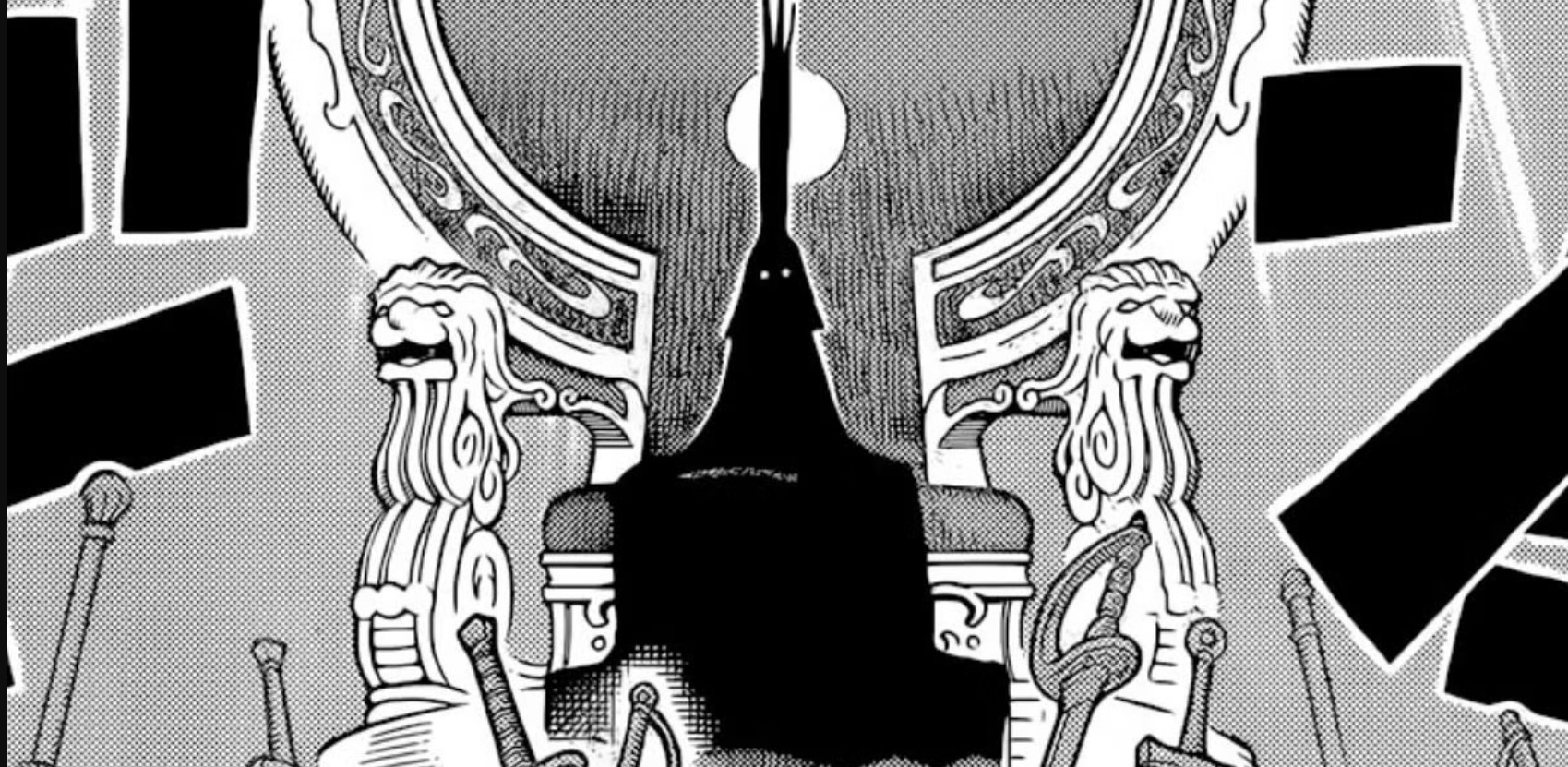
    Imu’s introduction in the story is anything but typical. They are not the flashy antagonist we might expect but rather a shadowy figure who is rarely seen. Imu’s most prominent appearance occurs during the Reverie arc, where we see them seated on a throne, invisible to most of the world, hiding behind the Gorosei. This first interaction with Imu sets the stage for their mysteriousness—they are hidden from the world, manipulating things from behind the curtain, and giving orders from the shadows. But what if this hiding isn’t about exerting control but about hiding from it? What if Imu doesn’t actually want to be at the top of the world’s power structure? Perhaps Imu is forced to remain in the shadows, with the Gorosei acting as the real power behind the throne. The Gorosei have always been presented as the true puppeteers, with Imu as the puppet—and their role could be designed to create a figurehead who takes the blame for the corruption of the World Government.

    While we’ve seen Imu give a few commands (such as suppressing Cobra and later ordering the assassination of certain world leaders), their true role appears more reactive than proactive. Imu doesn’t seem to be a decision-maker in the traditional sense. When Cobra confronts Imu, Imu does not lash out or demand action. Instead, they stay silent and observe Cobra, almost as though they are waiting for something. This could indicate that Imu is powerless to act on their own and that they’re forced to remain in this position due to the influence of the Gorosei or other unknown forces. In fact, this silence is arguably one of Imu’s most telling traits. It could reflect an inner struggle between the power they hold and their desire to escape from it. Their actions—such as assassinating Cobra—could be driven not by a desire for complete control, but by a duty they feel trapped by. They may even fear that stepping out of the role they’ve been forced into could have catastrophic consequences.

    One of the most crucial moments in the story that hints at Imu’s reluctance as a villain is their interaction with Cobra. When Cobra meets Imu, he is shocked by the presence of this hidden ruler, and Imu does not fight for power in the way most traditional villains would. Instead of using threats or intimidation, Imu waits to see how Cobra will react, almost as though they are testing the waters for a way out of their burden. Perhaps Cobra, sensing something in Imu, could have offered them an escape, had he acted differently. Cobra’s reaction is more out of fear than understanding, and it’s clear that Imu’s silence could be reflective of their own inner conflict. They have been placed in a position of absolute power, but they are not the one pulling the strings—they are a puppet in a game controlled by the Gorosei. This moment could represent a tragic opportunity lost, with Imu perhaps subconsciously hoping Cobra would find a way to offer them freedom from the chains of power. Instead, Cobra’s fear and the Gorosei’s oppressive rule trap Imu deeper into their role, further reinforcing their tragic status as someone forced into villainy against their will.

    One of the strongest indicators of Imu’s tragic status is how they are manipulated by the Gorosei. While it’s true that Imu has some level of influence, it’s often the Gorosei who take action, give orders, and determine the fate of the world. The Gorosei are portrayed as being extremely powerful, and they clearly treat Imu as a figurehead. There’s no indication that Imu truly controls the Gorosei—they seem to be puppeteered into their role. Imu’s powerlessness, in this sense, mirrors the experience of many tragic characters in literature—people who hold immense power but are ultimately controlled by forces beyond their control. Imu, in this context, could be seen as a tragic ruler trapped in a gilded cage, forced to play a role that might not align with their true desires. It’s a classical tragic trope, where the figurehead ruler is ultimately powerless and controlled by hidden forces.

    Another possible clue to Imu’s tragic nature lies in their reaction to the Void Century and the Poneglyphs. Imu, as the ruler of the world, has likely been witnessing the oppression caused by the World Government for centuries. Yet, we’ve never seen Imu take pleasure in the suffering that the World Government causes. In fact, they might even resent it. The destruction of the ancient kingdom and the cover-up of the Void Century could weigh heavily on Imu’s conscience. They might be trying to hide the truth not because they want to control the world, but because they feel responsible for the atrocities committed by the World Government. Imu’s silence on these issues could be a sign of guilt and remorse for the things they’ve been forced to uphold.

    Finally, if we accept the premise that Imu’s villainy is reluctant, we have to consider the possibility of a redemption arc. What if, after seeing Luffy’s journey and his desire for freedom, Imu begins to realize that they are not bound to the throne? That they can choose a different path, just as many other characters have done in the story? Luffy’s capacity for forgiveness and understanding could serve as a catalyst for Imu’s eventual rebellion against the Gorosei. The final battle could be framed not just as a clash of ideals but as a struggle for freedom, where Imu, the reluctant villain, is finally freed from their own chains.

    Imu could very well be a tragic villain—someone who was forced into power and trapped by the systems around them. Their role in the story is not one of ambition or domination but one of reluctance and subjugation. Imu’s actions could reflect the inner turmoil of someone who never sought to be a ruler and who may be desperate for an escape from the very system they uphold. Their tragic journey could follow the narrative of someone trapped in a role they did not choose, longing for freedom and redemption.

    This theory not only aligns with the recurring One Piece themes of freedom, manipulation, and growth but also offers a deeper understanding of Imu’s role in the overall story. Instead of being the ultimate villain, Imu could represent a tragic figure—one who, through circumstance and manipulation, became a villain when they were never meant to be one.
  • Sabo’s Survival Isn’t a Plot Hole — It Actually Makes Narrative Sense

    Sabo’s Survival Isn’t a Plot Hole — It Actually Makes Narrative Sense

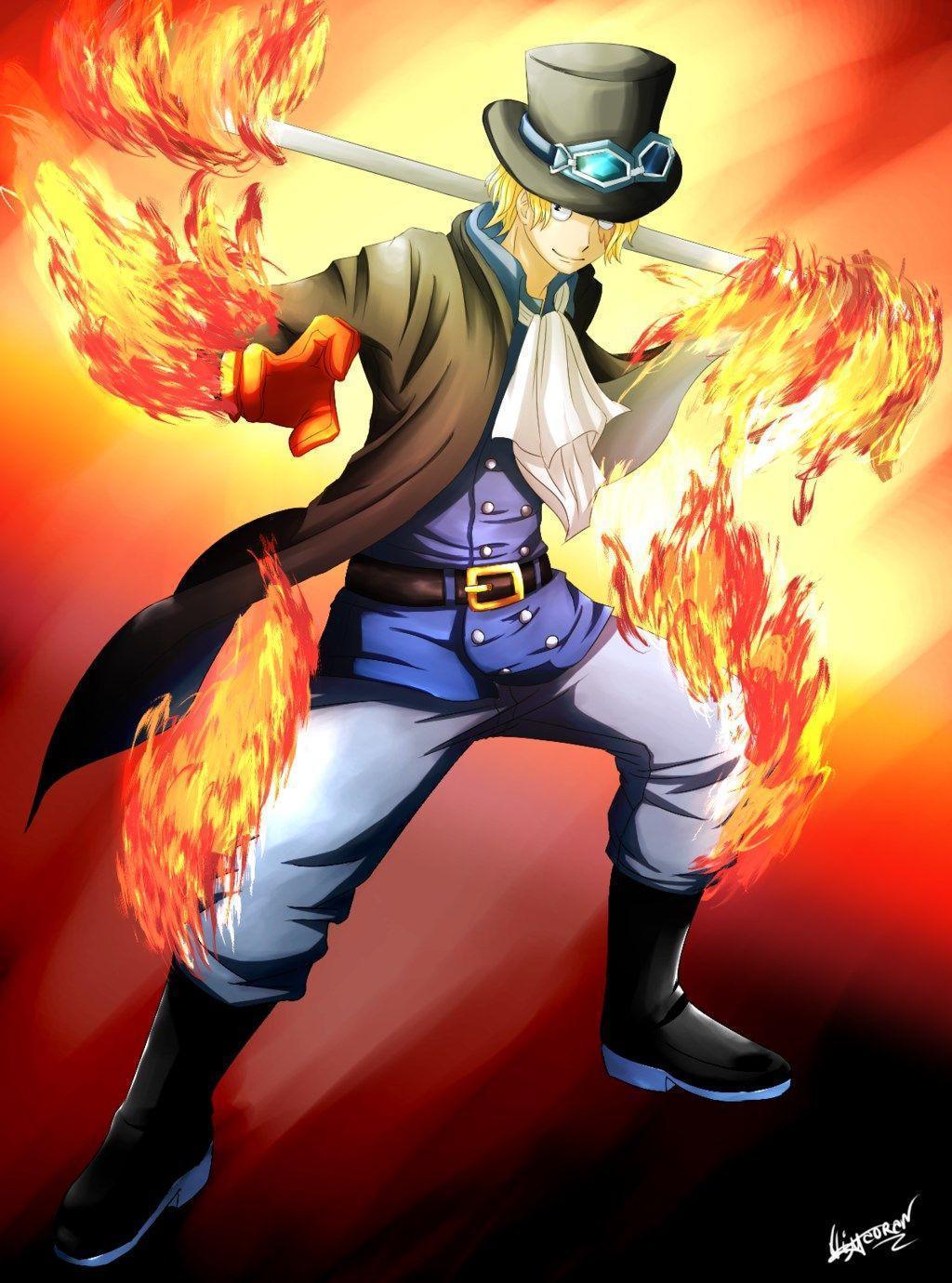
    In One Piece, the return of Sabo in Dressrosa took many fans by surprise. After being presumed dead since the childhood flashback arc, some were quick to label his reappearance as a plot hole. However, when you look closely at the structure of One Piece’s storytelling, world-building, and character motivations, Sabo’s survival—and the secrecy surrounding it—actually makes a great deal of sense. The choices surrounding who knew about Sabo’s survival, when they learned it, and why they didn’t tell Luffy are narratively consistent, emotionally powerful, and aligned with the series’ core themes of family, freedom, and sacrifice.

    The idea of Sabo losing his memories isn’t just a convenient excuse to delay his reintroduction—it’s a carefully placed storytelling mechanism that aligns with One Piece’s long history of delayed payoffs and emotional reveals. After Sabo is shot down by a Celestial Dragon, he suffers massive trauma and is rescued by Dragon and the Revolutionary Army. His amnesia is believable not just because of the physical trauma, but also because of the mental shock. It’s important to note that this is not unprecedented in the world of One Piece. Characters like Law and Robin have deep-seated traumas that shape their identities and their silence. Emotional extremes are often used by Oda as catalysts for transformation or clarity—Zoro after Mihawk, Nami after Arlong, Sanji after Zeff—and Sabo is no exception. The loss of Ace at Marineford is what finally unlocks the dam inside Sabo’s mind. His brother’s death triggers a flood of memories and guilt, pushing him back into the spotlight as a man with purpose, rather than a shadow of a past life.

    The theory that Ace might have found out Sabo was alive—and chose to say nothing—isn’t just plausible, it’s in character. Ace is introduced as hot-headed, but as his arc progresses, we see more and more of his emotional intelligence. He was fiercely loyal, thoughtful, and protective of those he loved. He would’ve understood that revealing Sabo’s existence—if he discovered it—might put both Sabo and Luffy in danger. Perhaps Ace spotted Sabo in a newspaper or heard rumors whispered by those who kept tabs on the Revolutionary Army. Maybe he didn’t get confirmation, but had enough reason to believe Sabo survived. And if so, Ace—knowing Luffy’s impulsiveness and emotional core—would have made the difficult decision to keep quiet.

    This restraint is supported by something visual: Ace’s hat and goggles. While Oda never explains their origin, the goggles—one side a smiling face, the other a sad one—carry powerful visual symbolism. They could represent the duality of emotions Ace felt upon learning Sabo was alive: joy for his survival, sorrow for the silence it demanded. It fits with Ace’s growing maturity, and more importantly, his poetic heart. He was someone who burned fiercely, but also someone who carried the weight of his emotions deeply. Choosing to remain silent wouldn’t be out of character—it would be the ultimate act of quiet love and self-control.

    That same logic applies to others who might have known before Luffy. Garp is a Vice Admiral with close ties to Dragon and the Marines. If Dragon knew Sabo was alive and training with the Revolutionaries, it’s hard to imagine Garp didn’t know as well. Garp’s reaction to Ace’s death was one of emotional devastation, but he still put on a mask of control. Garp has always kept secrets from Luffy “for his own good”—whether it’s his parentage or his Marine responsibilities. Keeping Sabo’s survival quiet, especially if it meant protecting him from Government attention or keeping Luffy focused on his own journey, is entirely consistent with Garp’s complicated morality. He loves his grandsons but he’s a man of discipline and secrets. He understands that timing is everything.

    Dadan, too, could have learned the truth. Whether through Garp or rumors from Foosha or Grey Terminal, Dadan is part of a community that watches closely and gossips widely. She raised Luffy, Ace, and Sabo. If she knew Sabo was alive, she would’ve carried that knowledge with the same fierce protectiveness we see in her reaction to Ace’s death and Luffy’s journey. She is emotional, rough around the edges, but ultimately maternal. She may have broken down in tears knowing Sabo lived, but she would’ve stayed quiet—because telling Luffy too soon could’ve been dangerous. She would have trusted Garp’s judgment or even Ace’s instincts. The same goes for the residents of Foosha Village, who already knew to keep secrets about Luffy’s past. They knew about Dragon. They didn’t talk. A precedent for collective silence exists in One Piece, and it fits here too.

    Then there’s Robin. If anyone is accustomed to holding life-altering information in silence, it’s her. Robin met the Revolutionary Army during the two-year time skip and was most likely introduced to Sabo during that time. By then, Sabo had regained his memories, and if he asked Robin to keep his existence secret from Luffy, she would comply. Not out of coldness, but out of understanding. Robin has always carried the burden of knowledge. Her role on the crew is not just as an archaeologist, but as a protector of dangerous truths. She understands the weight of history and the danger of premature revelation. Her silence would not only be a strategic choice but a kind one. By keeping quiet, she gave Sabo time to prepare, and she gave Luffy the space to grow without distraction. Even if it pained her, she would honor that request.

    In fact, this paints Robin’s eventual reaction to Sabo’s reveal in Dressrosa in a new light. She’s composed, not shocked. Because maybe she already knew. And perhaps, in her own way, she had silently hoped for this reunion to finally happen—on Sabo’s terms, and at a time when Luffy was strong enough to face it.

    All of this leads to the central point: Luffy learning the truth in Dressrosa wasn’t late. It was right on time. At that point, Luffy had just survived the Marineford War, lost Ace, matured emotionally, and gained new strength. Sabo’s return wasn’t just an emotional surprise—it was a thematic reward. It came when both characters were ready to reconnect. Sabo had regained himself. Luffy had become more resilient. They were no longer children. They were men, standing on their own paths, meeting again not in tragedy, but in battle, as equals.

    The choice to keep Sabo’s survival a secret—by Ace, by Garp, by Dadan, by Robin, and maybe even by the entire Revolutionary Army—was not plot inconsistency. It was a conscious, layered narrative decision grounded in character behavior and world logic. It reflects the very real idea that secrets are sometimes acts of love. And in a world like One Piece, where timing, loyalty, and sacrifice are everything, it’s not only believable—it’s beautiful.

    If Oda ever chooses to show this thread from the perspectives of those who knew Sabo was alive before Luffy, the emotional payoff could be monumental. Imagine a flashback that weaves through the eyes of Garp silently reading a classified Marine report, Dadan crying alone by a campfire with a wanted poster of Sabo in her hands, Ace spotting a photo in a newspaper and quietly buying goggles as a symbolic gesture. Each reaction would carry its own weight—grief, relief, restraint—and together they would form a mosaic of love held in painful silence.

    We might see Robin meeting Sabo during the time skip, her quiet nod as she agrees to keep the secret, perhaps watching from afar as he trains. Her calm exterior masking the knowledge that Luffy’s final brother is alive. Even Foosha Village could play a role—Makino holding a newspaper behind the counter, her eyes widening, then quickly folding the page before Luffy ever returns.

    This kind of flashback wouldn’t just serve to clarify timelines—it would deepen our understanding of the emotional burden these characters carried. It would retroactively add depth to Ace’s final moments, Garp’s conflicted pride, Robin’s stoicism, and even Sabo’s guilt. It could become one of One Piece’s most quietly powerful moments—a sequence about people choosing silence not out of apathy, but out of deep, selfless love.

    But it doesn’t have to be purely sorrowful. There is also something inherently hopeful in such a flashback. These characters—especially Ace, Dadan, Robin, and Garp—may have held onto the secret not only to protect Luffy, but to preserve hope. Hope that one day, Sabo and Luffy would meet again. Hope that their reunion would be joyful, not tragic. That’s the real emotional core: not just mourning what was lost, but preserving what could still be regained. Even in silence, they were planting seeds for healing. In that way, the flashback wouldn’t just be a tearjerker—it would be a quiet, radiant tribute to love, loyalty, and the long arc of reunion.

    If Oda ever plans to show this flashback, the perfect narrative moment may already be looming: Marineford 2.0.

    One Piece loves mirroring and arc inversions—Skypiea inverts Alabasta, Dressrosa echoes Enies Lobby, Wano reflects both Thriller Bark and Marineford in tone and stakes. So it’s not far-fetched to imagine another major war, another last-ditch rescue, another desperate race against time. And this time, the one who needs saving might not be Ace—it might be Sabo.

    Imagine Marineford 2.0 as the Revolutionary Army’s fall, or the World Government tightening its grip. Sabo is captured, beaten, and close to death—just as Ace was. But unlike Ace, this time the Straw Hats arrive. This time, they are the ones charging into battle to save a brother. And maybe just before that final confrontation—before Luffy reaches Sabo—a flashback hits.

    We could see the world reacting to Sabo’s survival years ago: Robin meeting him, Garp quietly holding back, Dadan weeping in secret. We might relive Luffy and Sabo’s Dressrosa reunion from Sabo’s point of view, watching how much it meant to finally see his little brother again, alive and strong.

    And then—back in the present—Luffy grabs Sabo’s hand and pulls him from the gallows, a perfect inversion of Marineford’s tragedy. What was once a death becomes a rescue. What was once loss becomes redemption. And the flashback, now full-circle, becomes not just a memory—but a promise fulfilled.

  • Akainu: The Intersection of the D, Yin, and Yang

    Akainu: The Intersection of the D, Yin, and Yang

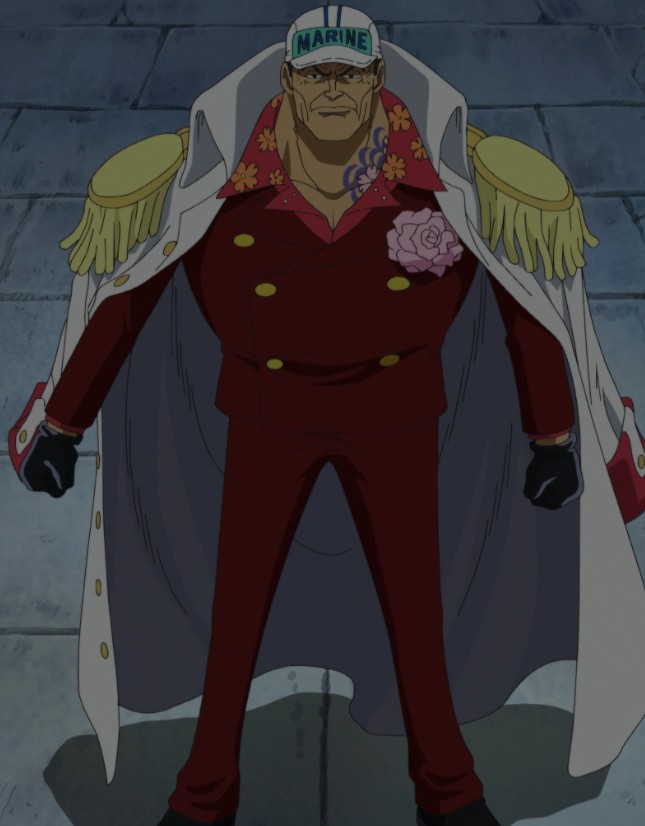
    Akainu (Sakazuki) is one of the most polarizing figures in One Piece, known for his unwavering commitment to “Absolute Justice” and his role as the ruthless Fleet Admiral of the Marines. However, beyond his position as a villain, there exists an intriguing layer to his character—one that positions him as a unique figure capable of intersecting the roles of a D. bearer, Yin, and Yang. Few characters in One Piece can be interpreted in such a complex way, but Akainu stands as a rare example of a character whose ideology and actions span across these three distinct aspects.

    Akainu has long been speculated as a potential D. bearer, which initially seems counterintuitive given the association of the Will of D. with freedom, rebellion, and chaos. However, Akainu’s embodiment of absolute control and his brutal commitment to order could actually align him with the D. lineage in a more unconventional manner. The D. doesn’t always have to represent the forces of chaos or freedom—what if it also represents a powerful disruptor of the status quo, but one whose methods are rooted in an authoritarian, oppressive form of change? Akainu disrupts the existing world order, but he does so through a rigid, oppressive lens. His extreme methods—his willingness to sacrifice freedom, innocence, and lives for the sake of law and order—show that his disruption doesn’t come with a goal of widespread freedom, but rather with the idea of creating a world governed by an uncompromising, hierarchical order. In this way, Akainu could be a D. bearer, not because he seeks to destroy corrupt systems for the sake of liberty, but because he represents a dark force aimed at disrupting the world through a rigid, totalitarian vision of order.

    Akainu’s role as a Yin is another aspect of his complexity. Traditionally, Yin is associated with balance, control, and a passive yet controlling force. While it’s easy to view Yin as something softer or more subtle, Akainu’s take on it is far darker. For him, Yin represents the unyielding control that must be exerted over the world to restore balance. This balance, however, is one that comes at the expense of freedom. Akainu’s belief in Absolute Justice and his willingness to crush anyone who deviates from this ideal puts him firmly in the realm of Yin, albeit in a twisted, rigid form. He doesn’t see justice as something flexible or adaptable—his form of justice is fixed, black and white, where there is no room for mercy or understanding. Akainu’s version of balance isn’t about harmony but about the subjugation of chaos, where only one type of justice can exist. This makes his approach to balance far from peaceful, but rather a totalitarian force designed to suppress anything that might disturb the world order he wishes to create.

    Yet, Akainu is also a powerful embodiment of Yang. Yang is the active, aggressive, and forceful counterpart to Yin, and Akainu’s approach to justice is a perfect example of this. His magma-based powers and his role as an enforcer of law show how he uses sheer force to impose his will on the world. As the head of the Marines, Akainu actively uses his position to exercise violence and domination over anyone who dares challenge his idea of justice. His brutality is a symbol of Yang energy—a destructive and overpowering force that aims to impose order through sheer violence. Akainu’s role in the Marineford War, where he killed Whitebeard, is a direct example of his Yang nature—he doesn’t just enforce order, he does so by crushing resistance with his own hands. His justice is not just a matter of law enforcement; it is a force that decimates anything that stands in his way.

    Akainu’s intersection of the D., Yin, and Yang creates a multifaceted character whose motivations and actions challenge the usual understanding of these concepts. While the D. lineage has been primarily associated with rebellion and freedom, Akainu offers a different view: the D. could also be about disruption through authoritarianism and control. As a Yin, Akainu represents balance, but it’s a balance that requires absolute order at the cost of freedom. As a Yang, he is the living embodiment of force and power, using violence to achieve his goals and impose his vision of justice.

    This complexity makes Akainu one of the few characters in One Piece who can be seen as embodying these three aspects. His brutal pursuit of order is both a reaction to and a reflection of the Will of D., but one that operates in a darker, more authoritarian vein. His character is a reminder that the Will of D. doesn’t always have to represent good or chaotic rebellion—it can also be about disrupting the status quo for the sake of something entirely different, in this case, absolute control. Akainu’s intersection of Yin and Yang makes him a complex antagonist in the story, embodying the tension between freedom and control, order and chaos, and ultimately serving as a symbol of the complex nature of power.

    Akainu’s position as a D. bearer, Yin, and Yang forces fans to rethink what these categories mean and how they apply to the world of One Piece. His character is far more than just a simple villain or antagonist; he represents a deeper philosophical divide within the story—one that questions whether order, when taken to its extreme, is ultimately any better than chaos. As the series progresses, Akainu will continue to be a key player in the world’s ultimate struggle, and his ambiguous role in the narrative makes him one of the most fascinating and unpredictable characters in One Piece.

  • One Piece Food Symbolism: Luffy, Big Mom, Blackbeard & Sanji — The Meat, the Cake, the Pie, and the Chef Who Can Make It All

    One Piece Food Symbolism: Luffy, Big Mom, Blackbeard & Sanji — The Meat, the Cake, the Pie, and the Chef Who Can Make It All

    In One Piece, food transcends mere sustenance. It’s a rich, multi-layered narrative device embedded deeply into character design, world-building, thematic contrasts, and even the ideological undercurrents of the story. It shapes how characters express their identities, how their relationships evolve, and how the story’s larger social and political tensions manifest symbolically.

    This post examines the favorite foods of four key characters — Luffy, Big Mom, Blackbeard, and Sanji — revealing how the meat, the cake, the pie, and the chef serve as powerful metaphors. We’ll dive into how these foods reflect their personalities, motivations, psychological profiles, and narrative roles, and how they echo broader themes in One Piece about power, community, chaos, and harmony.


    Luffy: Meat as the Embodiment of Community, Strength, and Raw Vitality

    Luffy’s obsession with meat isn’t just a quirky character trait — it’s foundational to his representation as an everyman hero whose power comes from raw vitality and community connection.

    • Meat as Primal Nourishment: Meat, especially roasted or grilled, is one of the oldest, most primal human foods. It symbolizes raw physical strength and survival. Luffy’s love of meat aligns with his physical prowess and indomitable fighting spirit. This primal food matches his straightforward, energetic, and visceral approach to life — no overcomplication, no pretenses.
    • Meat and Social Bonding: Meat traditionally has cultural significance as a communal food shared in gatherings, feasts, and celebrations. When Luffy devours meat, it’s never just for himself — it’s an expression of fellowship and belonging. It highlights how his strength is deeply interconnected with his crew’s unity. The meat is sustenance for the body and the soul of the group.
    • No-Frills, Honest Sustenance: Unlike delicacies or processed foods, meat is simple, honest, and utilitarian. This mirrors Luffy’s childlike honesty and no-nonsense attitude. His refusal to accept fancier foods or concerns about etiquette underscores his rejection of aristocracy or elitism. Meat is the food of the people, the working class, the adventurers — all of which Luffy embodies.
    • Symbol of Protection and Leadership: In many cultures, hunters and providers who bring meat home are revered protectors of the family or tribe. Luffy is the leader who provides safety, inspiration, and motivation. The way he devours meat with joy and abandon signals his role as the vital force driving the Straw Hats forward.
    • Metaphorical “Meat” of the Narrative: Beyond food, “meat” can represent the core substance or heart of a thing. Luffy is the meat of One Piece — the narrative’s driving force and essential core. His personal energy fuels the entire story.

    Big Mom: Cake as a Symbol of Excess, Control, and Fragile Power

    Big Mom’s fixation on cake is a multi-faceted symbol deeply tied to her character’s psychological complexity and thematic role as a chaotic, tyrannical force.

    • Cake as an Object of Indulgence and Decadence: Cake epitomizes indulgence, sweetness, and celebration. But Big Mom’s obsession twists these into something monstrous — excess that becomes dangerous, childish, and violent. Her hunger is insatiable, symbolizing unchecked desire and greed. This reflects One Piece’s critique of power structures that prioritize consumption and control above all else.
    • Cake and Emotional Instability: Big Mom’s addiction to sweets is also a metaphor for emotional fragility. Cake represents comfort food, but in her case, it is a crutch for deep insecurity and childish tantrums. Her rampages triggered by sugar deprivation mirror addiction withdrawal, linking her power to vulnerability.
    • Cake as a Symbol of False Unity: Whole Cake Island represents Big Mom’s “utopia” — a forced multicultural society unified under her rule. Cake’s many layers and decorations superficially promise diversity and celebration, but its overwhelming sweetness and monotony reflect how Big Mom’s vision suppresses real diversity and enforces conformity. The cake’s uniform sweetness is a metaphor for enforced harmony at the cost of individual freedom.
    • Cake’s Ritual and Ceremony: Cake is tied to rituals — birthdays, weddings, celebrations. Big Mom’s empire is built on ceremony and spectacle, masking brutality with showmanship. Her role as a “mother” figure is grotesquely distorted; instead of nurturing, she consumes and controls, turning the symbolism of cake’s celebratory nature on its head.
    • Psychological Duality of Cake: While cake is a treat, it’s also a temporary pleasure that can cause sickness if overindulged. This duality echoes Big Mom’s nature as both alluring and deadly — her empire is both a dream and a nightmare, built on desire but destined for destruction.

    Blackbeard: Pie as a Metaphor for Duality, Deception, and Chaos

    Blackbeard’s choice of cherry pie as his favorite food is a nuanced symbol reflecting his layered, duplicitous personality and chaotic role in the world.

    • Pie as a Food of Complexity and Contrasts: Unlike cake’s uniform sweetness or meat’s raw simplicity, pie is a composite — a mix of savory crust and sweet or tangy filling. Cherry pie’s balance of sweetness and tartness symbolizes Blackbeard’s unpredictable nature: charming yet dangerous, outwardly affable but secretly ruthless.
    • Rustic, Homemade Quality: Pies evoke a rustic, old-fashioned, handmade feel — something that can be comforting but also messy. Blackbeard’s character is similarly rough around the edges, unrefined but charismatic. His chaotic, haphazard style belies a cunning and strategic mind underneath.
    • Duality and Layers: Blackbeard’s entire identity revolves around duality — two Devil Fruits, a body scarred on one side, and a split personality that can switch from affable to cruel instantly. Pie’s structure — crust and filling — represents this layered complexity. He is not just one thing, but multiple contradictory selves bound in uneasy alliance.
    • Symbol of Unpredictability and Deception: The contrast in pie — flaky crust that can crumble, filling that can be sweet or sour — fits Blackbeard’s treacherous nature. His charm hides his true, destructive intentions. Pie’s messiness mirrors his chaotic path in the narrative — unpredictable, dangerous, and destructive.
    • Cherry Pie’s Sweet and Tart Duality: Cherry pie’s flavor profile is perfect for Blackbeard — the sweetness masks a sharp tartness, much like his friendly facade masks his merciless ambition. The “sting” of the cherry tartness parallels Blackbeard’s capacity to betray and wound allies.

    Sanji: The Chef as Philosopher, Caretaker, and Harmonizer of Contrasts

    Sanji is the essential figure who connects the food symbolism of the other three characters. His role as chef and nurturer is deeply intertwined with One Piece’s themes of family, dreams, and harmony.

    • Sanji as Creator and Alchemist: Unlike the other three who consume, Sanji creates. He transforms raw ingredients into something greater, symbolizing the transformative power of care, knowledge, and creativity. He harmonizes disparate elements — meat, cake, pie — into balanced dishes, mirroring his role as mediator and caretaker of the crew.
    • Dream of the All Blue: Sanji’s quest for the All Blue — a legendary sea where all fish species coexist — symbolizes his ideal of unity and abundance beyond boundaries. This dream parallels Luffy’s search for the One Piece but emphasizes harmony and coexistence rather than conquest or power.
    • Food as Emotional and Social Language: Sanji understands that food carries meaning beyond nutrition. His cooking conveys love, peace, and diplomacy. His cake that calms Big Mom’s rampage isn’t just dessert — it’s a strategic and emotional weapon, showing how understanding and empathy can defuse conflict.
    • Balance of Sweet, Savory, and Umami: Sanji’s mastery over flavors represents balance — sweetness and sharpness, strength and subtlety, indulgence and restraint. He is the perfect foil to the extremes represented by Luffy, Big Mom, and Blackbeard. This balance reflects One Piece’s deeper message that strength lies in harmony, not domination or chaos.
    • Sanji as the Heart and Brain: If Luffy is the raw strength and Big Mom is chaotic power, Sanji is the intellectual and emotional core — the one who makes everything work together. He symbolizes the possibility of combining diverse elements into a unified whole, both in food and in relationships.

    Final Bite: Food as a Narrative and Thematic Nexus in One Piece

    In One Piece, food is much more than a recurring joke or character quirk — it’s a complex language of symbolism and narrative meaning.

    • Luffy’s meat embodies primal vitality, community strength, and unpretentious leadership.
    • Big Mom’s cake reveals the dangers of indulgence, fragile power, and authoritarian control disguised as celebration.
    • Blackbeard’s pie reflects chaotic duality, layered deception, and unpredictable menace.
    • Sanji’s role as chef is the narrative’s harmonizing force — blending contrasts, creating unity, and wielding empathy as a powerful tool.

    Together, these foods and the characters who love or create them form a rich metaphorical web that enhances One Piece’s storytelling depth and thematic resonance.

    So next time someone says One Piece is “just pirates and superpowers,” remind them to look deeper — because in this world, your favorite dish might just reveal more about who you are than any Devil Fruit or bounty ever could.