The Musings of Jaime David
@jaimedavid.blog@jaimedavid.blog

The writings of some random dude on the internet

1,089 posts
1 follower

Tag: manipulation

  • Imu as the Inertial Measurement Unit of One Piece: A Symbolic Role in the World’s Stability and Change

    Imu as the Inertial Measurement Unit of One Piece: A Symbolic Role in the World’s Stability and Change

    Imu, the mysterious and enigmatic ruler of the World Government, has always been a figure cloaked in shadows. Despite their position at the pinnacle of the global power structure, little is known about their true motives, desires, and influence. However, one particularly intriguing perspective arises when we consider Imu not just as a ruler, but as a symbolic Inertial Measurement Unit (IMU) for the world of One Piece. This theory suggests that Imu plays a central role in guiding the course of history—much like an IMU tracks and controls the movement of an object in the real world. If we apply this metaphor, Imu becomes not only a powerful figure but also the key stabilizing force that shapes the direction of the story.

    In physics, an IMU is used to measure motion, acceleration, and orientation, providing stability and guidance to a moving object, ensuring it follows a predefined course. If we apply this concept to Imu, it presents them as the unseen force behind the stability of the World Government and the direction of global power. Imu may not be a conventional villain or even a tyrant in the traditional sense; rather, they represent the system itself—the force that has kept the world in balance for centuries, often resisting any change or challenge to the status quo.

    Imu’s role in the World Government mirrors that of an IMU’s function within a system. Just as an IMU keeps a plane or spacecraft steady, Imu works tirelessly to ensure that the World Government retains its dominance, controlling the flow of history. They may not be the most outwardly active figure, but their very presence maintains the equilibrium of the world. However, just as an IMU is also crucial in detecting disruptions in an object’s course, Imu becomes a figure whose actions or inactions will ultimately determine the fate of the world when the forces of change inevitably collide with the established system.

    One of the key functions of an IMU is to maintain stability, tracking the motion of an object to ensure it stays on course. Imu, in a similar manner, ensures the stability of the World Government by keeping it functioning as a cohesive, oppressive force. The Gorosei, Celestial Dragons, and Marines all operate within the system that Imu governs, maintaining control over the world’s politics, military, and social structures. Imu’s influence ensures the status quo remains intact, preserving a world order where the World Government is the supreme authority.

    Imu’s role in keeping the world stable is reflected in their control over the most important elements of the story: the Poneglyphs, the Void Century, the ancient weapons, and even the Great Pirate Era. Every action Imu takes—or more accurately, every decision not to act—is part of a larger effort to maintain the balance of power in the world. Just as an IMU resists external forces that might disrupt the motion of an object, Imu’s decisions reflect an unwavering desire to keep the world under control, suppressing any force or individual that might threaten the delicate balance they have worked to establish.

    While an IMU is primarily about stability, it is also crucial in detecting changes or disruptions in the system. When a force accelerates or shifts direction, an IMU provides the necessary correction to bring it back on course. In the world of One Piece, Imu’s position as the central power makes them the catalyst for any significant disruption in the world’s order. This becomes especially relevant as Luffy’s crew continues to challenge the World Government and its authority.

    Imu, though largely hidden, will likely play a pivotal role when the Grand Revolution begins. Their actions—whether direct or indirect—will either bring about the destruction of the current world order or solidify the power of the World Government. As Luffy and the revolutionaries work to overthrow the corrupt system, Imu may be forced to act, either as the instigator of change or as the resistant force that tries to maintain the world’s course. Imu’s ultimate decision will determine whether the system collapses or whether it holds firm, just as an IMU adjusts the trajectory of an object in flight.

    In the context of One Piece, Imu’s actions can be seen as the reluctant control that represents the power dynamics of the world. Much like an IMU’s role in stabilizing an object’s movement, Imu’s actions can be interpreted as attempts to keep the world in balance, even when they may not want to maintain that power. There is a possibility that Imu’s true desires are at odds with the role they have been forced into, and they may not fully embrace the power they wield. This would parallel the idea of an IMU system that is manipulated by external forces, where the object itself (in this case, Imu) is unable to steer its own destiny but instead reacts to the forces around them.

    This concept of reluctant control paints Imu as a tragic figure—someone who may not want to rule the world but has been conditioned to do so. They are, in essence, trapped in a system that forces them to play a role they never intended to fill. Just like how an IMU measures motion but isn’t responsible for the direction the object takes, Imu’s role as the leader of the World Government might not be by choice but by necessity. The Gorosei, the Celestial Dragons, and the World Government may have manipulated Imu into being their puppet ruler, creating an illusion of control while they pull the strings behind the scenes.

    Imu’s eventual confrontation with Luffy and the revolutionaries could represent the ultimate clash of forces—the stabilizing force of the old world order versus the disruptive force of change. Just like an IMU helps to adjust and maintain the path of an object, Imu has worked tirelessly to keep the world on course according to their own vision. However, the impending battle could symbolize the world’s trajectory changing—from an oppressive system to one of freedom and justice. Imu’s position, as the stabilizing force behind the World Government, will be a critical point in the story as the ultimate showdown unfolds.

    Imu’s character, when viewed through the lens of the Inertial Measurement Unit, becomes a symbol of reluctant control—someone who doesn’t truly want power but has been forced into a position of control. They may not be the typical villain; instead, they could represent the tragic hero who has been manipulated by external forces. While their role in the story has been one of resistance and repression, there’s a chance that Imu’s final arc will reveal their inner conflict, their desire for freedom, and their eventual choice to either join or fall to the forces of change.

    In conclusion, Imu, as the Inertial Measurement Unit of One Piece, is more than just a mysterious figure hidden behind the scenes. They symbolize the stability of the World Government, but also the manipulation of forces beyond their control. As the story progresses and the world’s course shifts, Imu’s actions—or inactions—will play a pivotal role in shaping the future of the world. Whether they are a tragic villain or a reluctant pawn in a much larger game, Imu’s arc will ultimately be defined by their ability to either resist change or embrace it.

  • Imu as a Tragic Villain: A Reluctant Ruler of Shadows

    Imu as a Tragic Villain: A Reluctant Ruler of Shadows

    In the vast world of One Piece, the villainous forces are often complex and multifaceted. Characters like Crocodile, Doflamingo, and Kaido are all embodiments of different aspects of ambition, power, and control. However, amidst these more traditional villains, Imu stands out as a potential tragic villain—a reluctant ruler, trapped in a position of power, manipulated by forces far greater than themselves. Imu might not be the true orchestrator of the World Government’s dark deeds, but instead a puppet—a person who, through a mix of fate and manipulation, has been thrust into a role they never wanted or even sought.

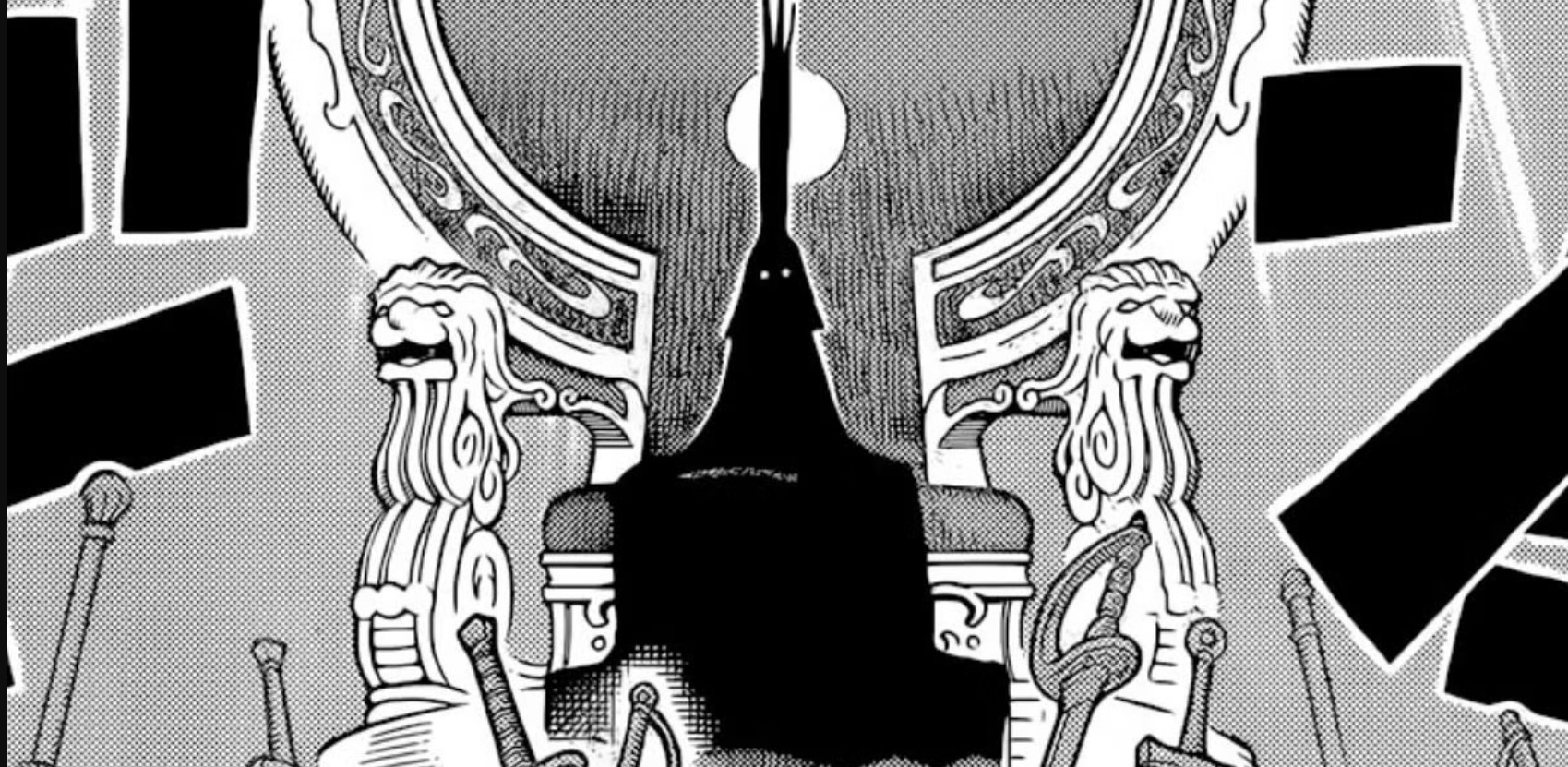
    Imu’s introduction in the story is anything but typical. They are not the flashy antagonist we might expect but rather a shadowy figure who is rarely seen. Imu’s most prominent appearance occurs during the Reverie arc, where we see them seated on a throne, invisible to most of the world, hiding behind the Gorosei. This first interaction with Imu sets the stage for their mysteriousness—they are hidden from the world, manipulating things from behind the curtain, and giving orders from the shadows. But what if this hiding isn’t about exerting control but about hiding from it? What if Imu doesn’t actually want to be at the top of the world’s power structure? Perhaps Imu is forced to remain in the shadows, with the Gorosei acting as the real power behind the throne. The Gorosei have always been presented as the true puppeteers, with Imu as the puppet—and their role could be designed to create a figurehead who takes the blame for the corruption of the World Government.

    While we’ve seen Imu give a few commands (such as suppressing Cobra and later ordering the assassination of certain world leaders), their true role appears more reactive than proactive. Imu doesn’t seem to be a decision-maker in the traditional sense. When Cobra confronts Imu, Imu does not lash out or demand action. Instead, they stay silent and observe Cobra, almost as though they are waiting for something. This could indicate that Imu is powerless to act on their own and that they’re forced to remain in this position due to the influence of the Gorosei or other unknown forces. In fact, this silence is arguably one of Imu’s most telling traits. It could reflect an inner struggle between the power they hold and their desire to escape from it. Their actions—such as assassinating Cobra—could be driven not by a desire for complete control, but by a duty they feel trapped by. They may even fear that stepping out of the role they’ve been forced into could have catastrophic consequences.

    One of the most crucial moments in the story that hints at Imu’s reluctance as a villain is their interaction with Cobra. When Cobra meets Imu, he is shocked by the presence of this hidden ruler, and Imu does not fight for power in the way most traditional villains would. Instead of using threats or intimidation, Imu waits to see how Cobra will react, almost as though they are testing the waters for a way out of their burden. Perhaps Cobra, sensing something in Imu, could have offered them an escape, had he acted differently. Cobra’s reaction is more out of fear than understanding, and it’s clear that Imu’s silence could be reflective of their own inner conflict. They have been placed in a position of absolute power, but they are not the one pulling the strings—they are a puppet in a game controlled by the Gorosei. This moment could represent a tragic opportunity lost, with Imu perhaps subconsciously hoping Cobra would find a way to offer them freedom from the chains of power. Instead, Cobra’s fear and the Gorosei’s oppressive rule trap Imu deeper into their role, further reinforcing their tragic status as someone forced into villainy against their will.

    One of the strongest indicators of Imu’s tragic status is how they are manipulated by the Gorosei. While it’s true that Imu has some level of influence, it’s often the Gorosei who take action, give orders, and determine the fate of the world. The Gorosei are portrayed as being extremely powerful, and they clearly treat Imu as a figurehead. There’s no indication that Imu truly controls the Gorosei—they seem to be puppeteered into their role. Imu’s powerlessness, in this sense, mirrors the experience of many tragic characters in literature—people who hold immense power but are ultimately controlled by forces beyond their control. Imu, in this context, could be seen as a tragic ruler trapped in a gilded cage, forced to play a role that might not align with their true desires. It’s a classical tragic trope, where the figurehead ruler is ultimately powerless and controlled by hidden forces.

    Another possible clue to Imu’s tragic nature lies in their reaction to the Void Century and the Poneglyphs. Imu, as the ruler of the world, has likely been witnessing the oppression caused by the World Government for centuries. Yet, we’ve never seen Imu take pleasure in the suffering that the World Government causes. In fact, they might even resent it. The destruction of the ancient kingdom and the cover-up of the Void Century could weigh heavily on Imu’s conscience. They might be trying to hide the truth not because they want to control the world, but because they feel responsible for the atrocities committed by the World Government. Imu’s silence on these issues could be a sign of guilt and remorse for the things they’ve been forced to uphold.

    Finally, if we accept the premise that Imu’s villainy is reluctant, we have to consider the possibility of a redemption arc. What if, after seeing Luffy’s journey and his desire for freedom, Imu begins to realize that they are not bound to the throne? That they can choose a different path, just as many other characters have done in the story? Luffy’s capacity for forgiveness and understanding could serve as a catalyst for Imu’s eventual rebellion against the Gorosei. The final battle could be framed not just as a clash of ideals but as a struggle for freedom, where Imu, the reluctant villain, is finally freed from their own chains.

    Imu could very well be a tragic villain—someone who was forced into power and trapped by the systems around them. Their role in the story is not one of ambition or domination but one of reluctance and subjugation. Imu’s actions could reflect the inner turmoil of someone who never sought to be a ruler and who may be desperate for an escape from the very system they uphold. Their tragic journey could follow the narrative of someone trapped in a role they did not choose, longing for freedom and redemption.

    This theory not only aligns with the recurring One Piece themes of freedom, manipulation, and growth but also offers a deeper understanding of Imu’s role in the overall story. Instead of being the ultimate villain, Imu could represent a tragic figure—one who, through circumstance and manipulation, became a villain when they were never meant to be one.