The Musings of Jaime David
@jaimedavid.blog@jaimedavid.blog

The writings of some random dude on the internet

1,110 posts
1 follower

Tag: mission to mars

  • Why Interstellar and The Martian Work While Mission to Mars Doesn’t

    Why Interstellar and The Martian Work While Mission to Mars Doesn’t

    After sitting through Mission to Mars and bouncing off it hard, it becomes a lot easier to understand why some space movies stick with people for years while others quietly fade into the background of cable reruns and forgotten DVD bins. It is not just about budget, cast, or even ambition. It is about execution, pacing, emotional grounding, and whether a film actually makes you feel like you are part of the journey instead of just observing a slideshow of space concepts.

    And when you line it up next to films like Interstellar and The Martian, the contrast becomes almost unfair. Because those two films do something Mission to Mars never managed to do, at least in my experience: they make space feel alive, urgent, and emotionally anchored in human stakes that actually matter.

    It is interesting because all three films are trying to operate in the same general space (no pun intended). They are all about Mars or space exploration, human survival, mystery, and the unknown. On paper, they share DNA. But in execution, they feel like completely different species of storytelling.

    With Mission to Mars, my experience was immediate detachment. Within thirty minutes, I felt like I was watching a film that was happening at me rather than with me. Scenes existed, but they did not pull me forward. Dialogue happened, but it did not spark curiosity. Even the premise, which should naturally be engaging, felt strangely flat in motion. That lack of momentum is what ultimately killed it for me.

    Now compare that to The Martian. From the very beginning, The Martian understands something crucial: survival is inherently interesting when it is personal. It is not just “a mission on Mars.” It is one man alone, stranded, forced to problem-solve in real time with limited resources and growing stakes. That immediately creates tension because the audience understands consequences in a grounded way. Every small decision matters. Every setback is measurable. Every win feels earned.

    That is something Mission to Mars never quite achieved in my viewing experience. It had the ingredients of space exploration, but it did not translate them into gripping, character-driven urgency. The Martian takes the same environment and turns it into a constant chain of problem-solving, where even quiet moments are filled with intellectual tension. You are not just watching events unfold; you are actively invested in whether the next solution works.

    Then there is Interstellar, which takes a different but equally effective approach. Instead of focusing only on survival mechanics, it builds emotional gravity first. The entire film is anchored in relationships, especially the connection between Cooper and his daughter. That emotional thread becomes the backbone of everything else. Even the most abstract or scientifically heavy parts of the film are grounded by something human.

    That is what gives Interstellar its power. It is not just space exploration. It is space exploration filtered through love, time, sacrifice, and loss. The science fiction elements are massive in scope, but they never feel detached because the emotional core is always pulling you back in.

    That is where Mission to Mars felt weakest to me. There was no strong emotional anchor pulling me forward early on. Without that grounding, the pacing feels heavier, slower, and less meaningful. Even when things are happening on screen, they do not feel like they are building toward something emotionally resonant. And when that happens, even interesting concepts can start to feel empty.

    Another key difference is momentum.

    The Martian and Interstellar both understand how to structure progression in a way that constantly renews interest. In The Martian, every new obstacle introduces a new layer of problem-solving. In Interstellar, every shift in location or time expands the stakes and recontextualizes what came before. There is always forward motion, even in quieter scenes.

    With Mission to Mars, at least in my viewing experience, that sense of escalating momentum was missing. It felt more like scenes existed in sequence rather than building into each other in a way that deepens engagement. And that is where viewer attention starts to slip. When progression feels flat, attention follows.

    There is also the issue of tone control.

    Interstellar manages to balance awe, tension, and emotional weight without collapsing into monotony. It knows when to slow down and when to escalate. It knows when to be silent and when to overwhelm you. It uses its pacing as part of the storytelling language rather than just a default rhythm.

    The Martian similarly balances humor, intelligence, and tension. It never feels like it is stuck in one emotional gear for too long. Even when things get serious, it allows moments of personality and levity to keep the human side of the story alive.

    That balance is critical. Because without it, space movies can easily become emotionally flat or overly mechanical.

    And that is where Mission to Mars felt uneven. It leaned into a tone that, to me, came across as overly subdued without enough emotional contrast to keep things engaging. When everything is serious all the time but not emotionally charged, it creates a kind of narrative stagnation.

    Another big difference is clarity of purpose.

    In The Martian, the goal is crystal clear: survive and get home. In Interstellar, the goal evolves, but there is always a strong emotional and existential direction guiding the story forward. Even when things get complicated, the audience understands what is at stake and why it matters.

    With Mission to Mars, I never fully felt that clarity in the first portion I watched. It felt more like events were unfolding without a strong emotional throughline tying them together. And when that happens, it becomes harder for the viewer to invest.

    But the biggest difference, and honestly the one that stood out the most to me, is this: space itself.

    In Mission to Mars, space did not feel like space.

    It felt like a continuation of Earth.

    That is the best way I can describe it. It did not feel like stepping into something alien, vast, dangerous, or fundamentally different. It felt like the same environments, the same emotional texture, just with a different backdrop. Like Earth scenes with a space filter applied over them. There was no sense of isolation that actually landed, no feeling of cosmic scale that reshaped how you perceive the characters’ situation. Even when the setting changed, the emotional experience did not feel like it changed with it.

    And that is a major problem for a space movie.

    Because space is supposed to feel like space.

    It is supposed to feel distant. Silent. Hostile. Beautiful in a way that does not care about you. It should feel like a place where human assumptions stop working. Where every small action carries weight because you are operating in an environment that is fundamentally not built for you.

    Interstellar nails this constantly. Space feels immense. Time behaves differently. Distance becomes emotional. Even silence has weight. You feel the scale of it in a way that is almost uncomfortable at times.

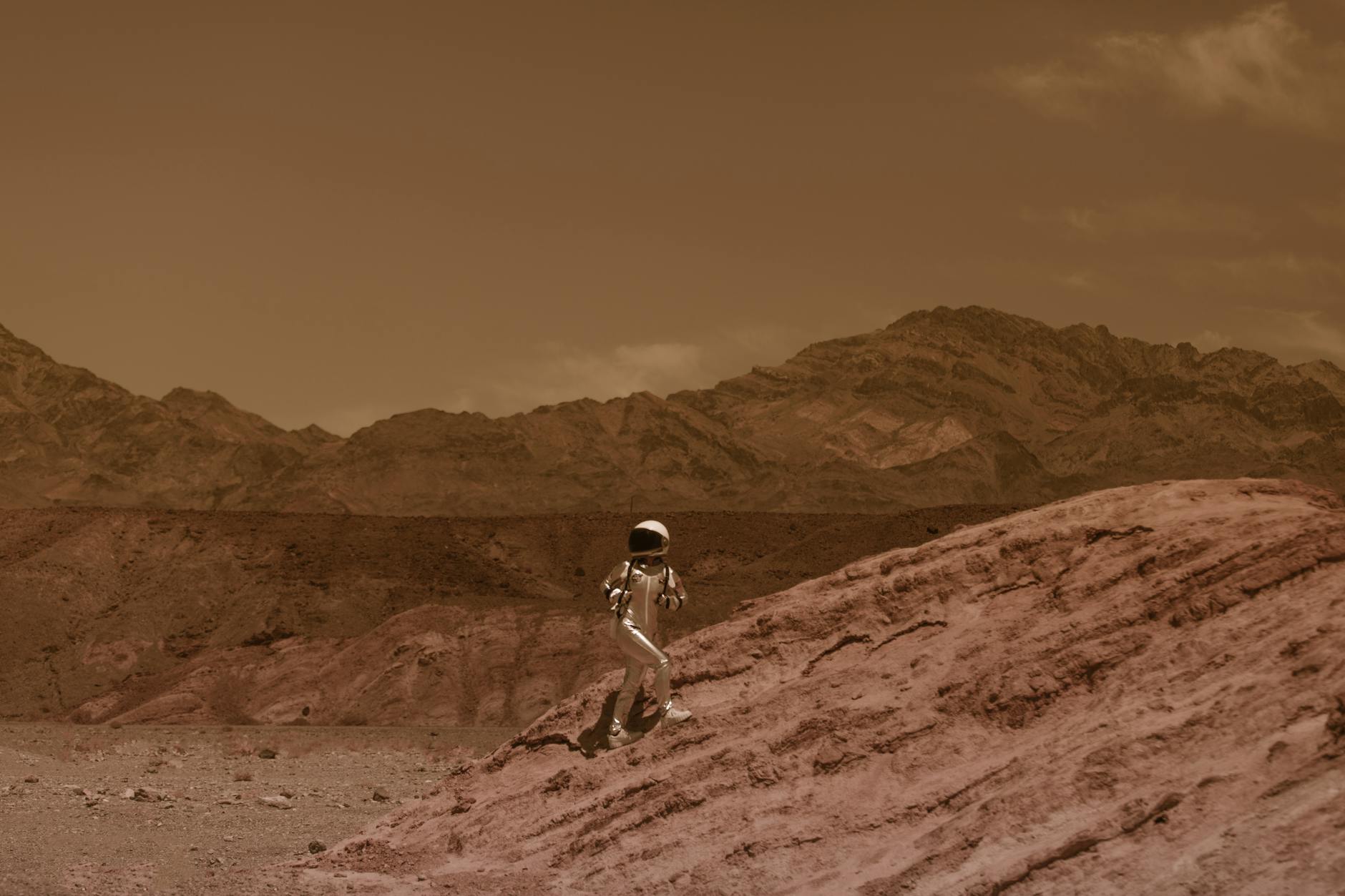
    The Martian does it in a different way. Mars feels like an actual alien surface. Not Earth with a tint, but a real hostile environment where everything is slightly wrong for human survival. The isolation is tangible. The landscape feels indifferent. The science becomes a lifeline because the environment is actively trying to kill you.

    Both films understand that space is not just a backdrop. It is a character in itself.

    Mission to Mars, at least in my experience, never fully reaches that level of immersion. It never makes space feel like a separate reality with its own rules and emotional consequences. And when that happens, the entire premise loses some of its power. Because if space does not feel like space, then the journey stops feeling extraordinary. It just feels like movement from one scene to another.

    And when combined with the pacing issues and lack of emotional pull, the result is a film that feels distant in all the wrong ways.

    That is ultimately why I bounced off it.

    I shut it off.

    No dramatic exit. No hate-watch finish. Just the realization that I was not being pulled into the experience, and there was no reason to force it.

    Meanwhile, Interstellar and The Martian succeed because they understand that space is not enough on its own. You need emotional gravity, narrative momentum, and environmental immersion working together at the same time. When those elements align, you do not just watch a space movie. You experience it.

    And that is the difference.

  • Mission to Mars: When a Sci-Fi Movie Loses You in the First 30 Minutes

    Mission to Mars: When a Sci-Fi Movie Loses You in the First 30 Minutes

    There is something oddly fascinating about revisiting older movies that were once treated like major events. Sometimes you discover a forgotten classic that time was too harsh on. Sometimes you find a movie that audiences misunderstood and critics buried unfairly. And sometimes, you find a film that makes you wonder how so much money, talent, and hype produced something that feels like cinematic anesthesia. That was my experience trying to watch Mission to Mars.

    Yes, Mission to Mars. A movie that came out over twenty years ago. A movie with a recognizable title, a serious cast, and an ambitious concept. A movie that should have been right up my alley. Space exploration, mystery, suspense, big ideas, the unknown, Mars itself. On paper, this sounds like something I should enjoy. In practice, it felt like watching dry paint in zero gravity.

    What made me finally rent it was not total randomness either. Before renting it on Amazon, I had briefly seen glimpses of the movie on television over the years. Not enough to truly know the story, not enough to really judge it, but enough to remember it existing in the background of culture. One of those movies you catch a scene from while channel surfing, then move on, but the title sticks in your mind. It becomes one of those films that linger in your mental backlog. You tell yourself that one day you will properly sit down and watch it from beginning to end.

    That is eventually what happened here.

    I decided to rent it on Amazon, which is something I do often for movies I have never seen before. If I do not have the streaming platform it is on, renting digitally is usually the move. It is cheap, convenient, and low risk. A couple of bucks for a film I have always been curious about is not a bad deal. If the movie ends up being great, then that rental was money well spent. If the movie ends up being terrible, at least I did not waste much money to begin with. It is honestly one of the better ways to explore older films. Low cost, low commitment, potential high reward.

    Sometimes those little glimpses on TV can help sell a movie in your mind. You remember a dramatic visual, an interesting shot, a strange moment, or a tense bit of music. Even if you only saw seconds of it years ago, it can create the illusion that there is something bigger waiting inside the full film. The mind fills in the blanks. You assume that because the clips looked cinematic or mysterious, the full experience must deliver.

    That was part of the trap here.

    Because every time I had seen those passing glimpses in the past, Mission to Mars looked like it might be one of those underrated cable-era sci-fi movies people forgot to mention. The kind of film that maybe got dismissed too quickly but actually has atmosphere if you give it another chance. Sometimes those are the best discoveries.

    But every now and then, you rent something and realize even those few dollars feel like an investment gone sideways.

    That is where Mission to Mars landed for me.

    I could not even get past the first thirty minutes. And before someone says, “Thirty minutes is not enough time,” let me stop that argument right there. Sometimes thirty minutes is absolutely enough time. In fact, thirty minutes can tell you almost everything you need to know about a movie. It tells you pacing. It tells you tone. It tells you whether the performances are engaging. It tells you whether the script has momentum. It tells you whether curiosity is building or dying.

    With Mission to Mars, curiosity was dying fast.

    I gave it a chance. I was not hate-watching it. I was not multitasking. I was not scrolling my phone looking for reasons to dismiss it. I sat down prepared to give it a fair shot. I wanted it to surprise me. I wanted those old TV glimpses to be signs of a hidden gem. Instead, what I got was something that felt lifeless, slow, and weirdly empty.

    There is a difference between slow-burn storytelling and boring storytelling. Slow-burn films know how to build atmosphere. They know how to create tension through patience. They understand that silence, waiting, and gradual escalation can be gripping when done right. You lean forward because something is brewing.

    Boring storytelling, on the other hand, feels like dead air. Scenes happen, but they do not build anything. Dialogue is spoken, but it does not ignite interest. Characters exist, but they do not grab you. Time passes, but it feels heavier than it should.

    That is how Mission to Mars felt to me.

    The first half hour should be where a movie earns trust. It does not need to reveal everything. It does not need explosions every five minutes. But it needs to create a reason to continue. It needs to establish stakes or intrigue or emotional investment. Instead, I felt like I was waiting for the movie to start while already thirty minutes in.

    And that is one of the worst feelings a movie can create.

    Because if you are checking the runtime early, that is danger. If you glance at the clock and think, “Only thirty minutes have passed?” that is a red alert. Good movies compress time. Bad movies stretch it. Great movies make two hours feel like forty-five minutes. Weak movies make thirty minutes feel like two hours.

    Mission to Mars was stretching time like a black hole.

    What makes this more disappointing is that space movies should have a natural advantage. Space is inherently interesting. The mystery of other worlds, the danger of isolation, the scale of the cosmos, the vulnerability of humans in hostile environments, the existential questions of life beyond Earth. You almost have to work hard to make Mars boring. Yet somehow this movie, from what I experienced, found a way.

    And maybe that is the most frustrating part. The ingredients were there. Mars itself is compelling. A mission gone wrong is compelling. Human drama under pressure is compelling. The possibility of discovery is compelling. Yet if the execution lacks energy, all of that potential collapses.

    Some films confuse seriousness with depth. They think if everyone acts solemn, if the score swells dramatically, if the cinematography is polished, then the audience will automatically feel weight. But seriousness is not the same as engagement. You can have a quiet, thoughtful film that is riveting. You can also have a serious film that feels like homework.

    This one felt like homework.

    And I know there are people who defend older sci-fi films for being more contemplative than modern blockbusters. Sometimes that defense is valid. Not every movie needs constant action. Not every science fiction story needs nonstop spectacle. But contemplation still needs substance. Reflection still needs emotional pull. If you are asking viewers to settle into a measured pace, you better reward them with atmosphere, intelligence, tension, wonder, or character depth.

    If not, you are just asking them to sit through molasses.

    I have had this happen before with The Grey. That is another movie I tried to watch and simply could not finish. Plenty of people love it. Plenty of people praise it. I get that. Different tastes are real. But for me, it was another case where I kept waiting for something to click, and it never did.

    And it is not just older films either. Even more recently, I could not get through the Twisters sequel to completion. That one was boring as hell to me too. So this is not some bias against older movies or slower cinema. If a movie loses me, it loses me regardless of release year, budget, nostalgia, or hype. New movie, old movie, prestige movie, blockbuster sequel, it does not matter. Boredom is boredom.

    That is important to acknowledge. Not every film that bores me is objectively bad. Not every film someone else loves is wrong for loving it. Art is personal. Mood matters. Timing matters. Expectations matter. Maybe if I watched Mission to Mars twenty years ago in a theater, I would feel differently. Maybe if I were in a different headspace, I would have more patience. Maybe if I pushed through, the final hour would blow me away.

    But here is the counterpoint nobody likes to admit: a movie still has to earn that patience.

    Audiences do not owe a film unlimited time just because it might improve later. If the first thirty minutes are inert, many viewers will bounce. That is not a moral failing. That is a storytelling issue.

    People sometimes romanticize the idea of “you have to wait until it gets good.” But if it takes an hour to get good, that is part of the criticism, not a defense.

    Movies are experiences. The journey matters, not just the destination.

    Sometimes those old television glimpses can also mislead us because they isolate the most visually striking fragments. A ten-second moment on TV might be the best-looking shot in the whole movie. A suspenseful snippet might come from the one memorable sequence. In a commercial break environment, fragments can seem more powerful than the complete product. The full film still has to connect those moments into something alive.

    That did not happen for me here.

    I shut it off.

    No dramatic rant. No hate-finish. No forcing myself through another ninety minutes to prove something. I simply accepted the truth: I was not enjoying myself, and life is too short to finish every boring movie out of obligation.

    That is another thing more people should embrace. You do not need to finish every film. Sometimes the healthiest review is turning it off. We only get so much free time. If a movie has clearly lost you and given no sign it can recover, it is okay to move on.

    Sometimes you discover a classic.

    Sometimes you discover a personal favorite.

    Sometimes you discover that even Mars can be boring.

    And sometimes the best mission is aborting early.