The Musings of Jaime David
@jaimedavid.blog@jaimedavid.blog

The writings of some random dude on the internet

1,089 posts
1 follower

Tag: modern life

  • Social Media Addiction: A Personal Reflection on Recent Legal Developments

    Social Media Addiction: A Personal Reflection on Recent Legal Developments

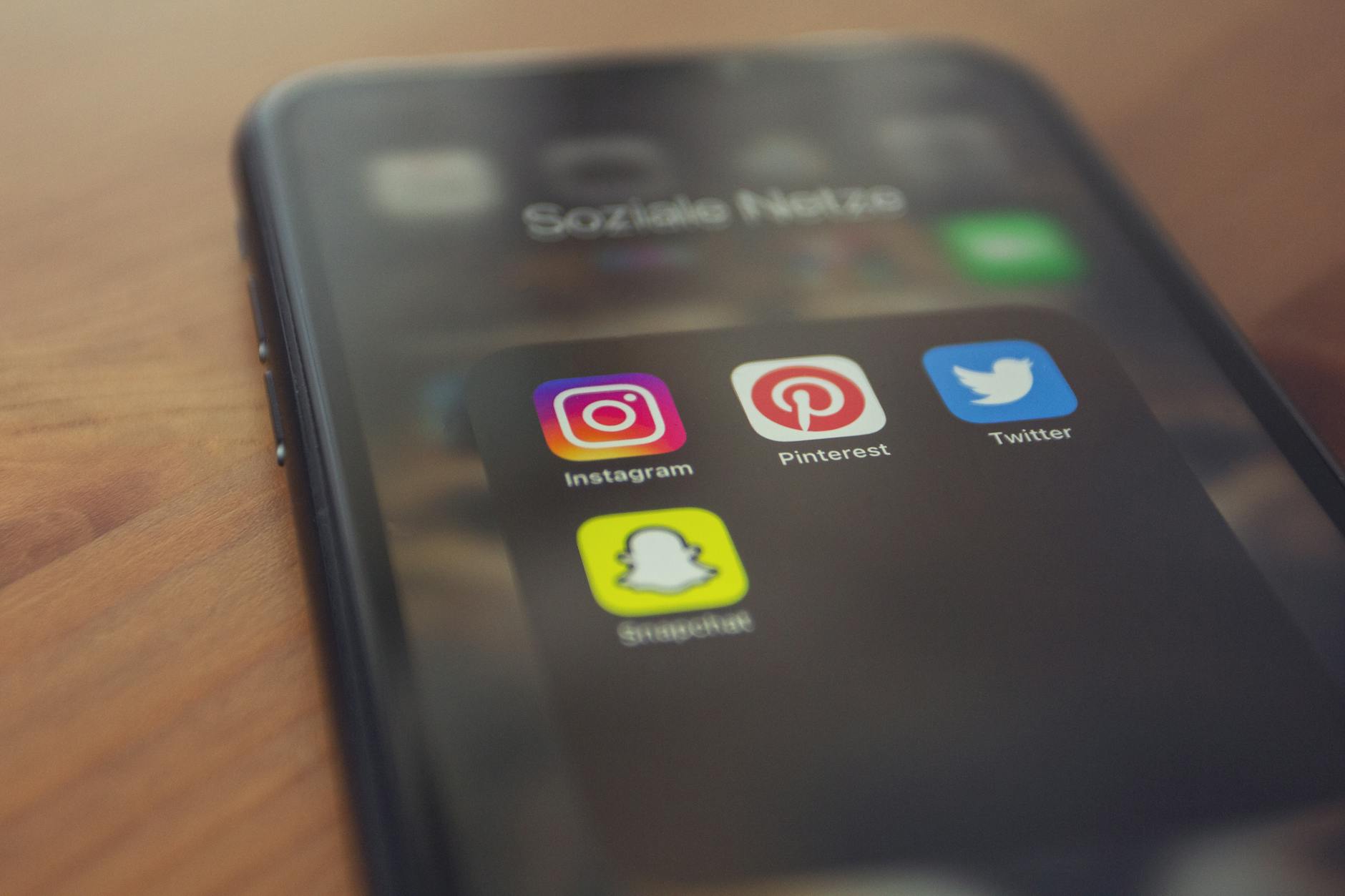
    The recent lawsuits against major social media companies, alleging harm caused by addictive design, have caught my attention and prompted reflection on the nature of social media use in my own life and the lives of those around me. These cases, where courts have held platforms liable for contributing to compulsive behavior, underline the seriousness of an issue that many people still dismiss as trivial or exaggerated. While the plaintiffs in these cases are young individuals claiming mental health impacts, the implications extend far beyond age groups, reaching into adult behavior, family dynamics, and our broader understanding of how technology influences human habits.

    Watching the news coverage and reading about the court’s findings, I couldn’t help but see parallels in my own experiences. People I know, older adults even, exhibit patterns that resemble what the lawsuits describe. Hours spent scrolling, compulsive checking, waking up to engage with content, and frustration or denial when confronted about usage—these are not just habits, they are behaviors characteristic of addiction. It is easy to dismiss such actions as a harmless pastime, but when observed closely, they reveal a persistent pattern where engagement becomes prioritized over rest, social interactions, or personal well-being.

    I have noticed this in someone I know. Their use of online video platforms and other internet content has gradually intensified over the past decade, becoming an almost constant presence in daily life. They often spend hours at the computer, beginning the day by immediately logging in, and sometimes continuing late into the night, even waking in the middle of sleep to resume. Attempts to gently suggest moderation are met with defensiveness or denial, an emotional response consistent with addictive behaviors. While the individual themselves may not perceive a problem, the patterns are clear to others who observe from the outside, highlighting the disconnect between self-perception and observable reality.

    The recognition of social media addiction as a legitimate concern is, in my view, long overdue. Society often underestimates the power of algorithms and design features in shaping behavior. Infinite scroll, autoplay, personalized recommendations, and reward cues exploit the brain’s dopamine pathways, creating a loop that encourages continued engagement. The lawsuits against the platforms are a public acknowledgment that these design features are not neutral; they actively foster compulsive usage. When combined with human susceptibility, these elements create a potent environment for behavioral addiction.

    The personal relevance of these developments extends beyond observation into reflection on responsibility and empathy. Understanding addiction requires recognizing that denial, defensiveness, and minimization are common reactions. People caught in these patterns may genuinely believe their behavior is normal or harmless, even while it disrupts their routines, sleep, or relationships. Witnessing someone close to me exhibit these behaviors has reinforced my belief that social media addiction is not a trivial issue but a legitimate form of compulsive behavior, deserving the same attention and care as other recognized addictions.

    Moreover, these cases raise broader societal questions about accountability. If platforms knowingly design tools that exploit psychological vulnerabilities, what obligations do they have to users? Should there be stricter regulations on engagement-based design, especially when it targets vulnerable populations? The legal precedent being set suggests that responsibility does not lie solely with the individual, but is shared with the entities that engineer the environments in which addiction can flourish. This is a critical shift in perspective, acknowledging that technology is not merely neutral but can shape behavior in profound ways.

    Reflecting on these developments also prompts consideration of preventive measures and support structures. Encouraging self-awareness and moderation, offering alternatives to compulsive usage, and fostering environments where discussion about online habits is normalized are important steps. In personal contexts, this might involve gentle observation and conversation, helping individuals recognize patterns without judgment. On a societal level, it might involve education about digital wellness, access to resources for behavioral management, and public discourse about the ethics of design and its consequences.

    In addition, these lawsuits highlight the universality of addictive tendencies. Addiction does not discriminate by age, occupation, or social status. While the cases focused on younger users, the patterns I observe in older adults demonstrate that susceptibility persists across the lifespan. Prior experiences with other addictive behaviors can also influence vulnerability, reinforcing the need for awareness and proactive strategies in addressing digital consumption. Recognition of these patterns, combined with compassion and practical support, can help mitigate the harm associated with excessive engagement.

    The conversations around social media addiction, legal accountability, and personal observation intersect to create a powerful narrative about modern life. Technology is deeply embedded in our daily routines, yet the potential for harm is significant and often overlooked. These lawsuits serve as both a wake-up call and a validation for those who have long recognized the addictive potential of online platforms. They encourage society to move beyond casual dismissal and toward acknowledgment, understanding, and constructive action.

    On a personal level, seeing the alignment between observed behavior and documented cases strengthens my conviction that intervention, awareness, and dialogue are essential. Addiction thrives in secrecy and denial, but recognition and support can create space for moderation, recovery, and balance. While technology will continue to evolve, the principles of self-awareness, responsibility, and empathy remain crucial in managing the impact of digital tools on human behavior.

    Ultimately, the acknowledgment of social media addiction in the legal realm mirrors the experiences many witness in daily life. Whether it is a young person struggling with compulsive engagement or an older adult exhibiting prolonged, immersive use, the patterns are recognizable and significant. These insights encourage reflection on how society, families, and individuals can approach the challenge, emphasizing compassion, informed dialogue, and practical strategies for healthier interaction with technology.

    As social media continues to shape culture, communication, and personal habits, recognizing its addictive potential is critical. The recent lawsuits highlight not only the responsibility of platforms but also the importance of awareness among users and their communities. Observing addiction in familiar contexts, acknowledging its legitimacy, and fostering strategies for management create pathways toward balance. The conversation is ongoing, both legally and personally, and underscores the need for vigilance, empathy, and proactive engagement in addressing the complexities of digital life.

  • How January 2026 Already Feels Like a Whole Year

    How January 2026 Already Feels Like a Whole Year

    January 2026 has felt like a year within itself. We’re only a few weeks into the month, and yet it feels as if the weight of time has condensed, making every day feel like a chapter in a longer saga. It’s not the typical feeling of a new year’s freshness or the usual optimism that comes with turning the page on a calendar. Instead, there’s something different about this January — something that feels stretched, intense, and heavy. In a way, it’s as if time itself has slowed, forcing us to confront events, thoughts, and emotions that would typically span an entire year.

    In many ways, the events of January 2026 are already overshadowing much of what happened in 2025. Political landscapes have shifted dramatically, tensions around the globe have escalated, and here at home, the pressures of inflation and economic instability are hitting harder than ever before. But it’s not just the news cycle that’s contributing to this sense of a year gone by in only a few weeks. It’s the personal experiences that have compounded — feelings of burnout, reflection, and even disbelief that we’re still in the opening weeks of the year.

    One of the most noticeable shifts is the way we’ve entered this new year with a deep, almost pervasive sense of urgency. It’s as if we all collectively stepped into 2026 already in overdrive, and yet, it doesn’t feel like it’s going anywhere fast. Every news report, every tweet, every political speech feels like it’s dragging us into a vortex, where we are moving through time, but it’s almost as if we’re stuck in place, unable to break free.

    For those of us who have been following the rise in tensions, particularly with global leaders, it’s hard not to feel as though the world is shifting on its axis. The ongoing struggles in the geopolitical sphere seem more intense than ever, yet we remain largely helpless in our ability to steer things back to some semblance of normalcy. The days that stretch before us feel increasingly unpredictable — and it’s that uncertainty that makes it feel as though we’ve been living in this month for an eternity.

    Domestically, in the United States, the feeling of time moving at a crawl isn’t just tied to international events. The political landscape has been in a constant state of flux, with January 2026 seeing a particularly dramatic rise in divisiveness. The public discourse feels increasingly polarized, with each passing day only deepening the rift between opposing sides. If you follow the news, social media, or even just conversations in passing, the arguments feel like they have been stretched across a much longer period of time, even though they are barely weeks old. The sense that we are repeating the same cyclical patterns of dysfunction only adds to the feeling that time is dragging us through endless, monotonous loops.

    Then there’s the personal dimension. January always feels like a time for renewal, for setting resolutions, and for beginning anew. But this year, many of us are facing a familiar sense of exhaustion instead. Whether it’s from the grind of everyday life, the uncertainty in the air, or the weight of the world’s problems hanging over us, there’s a sense that we’re trying to regain a sense of momentum that has been lost. This moment of “new year, new beginnings” has felt like a cruel joke — we’re still reeling from the chaos of 2025, and it seems we have little room to breathe before the next challenge arrives.

    The weight of the first few weeks of January isn’t just external. It’s internal, too. We may have entered this year with intentions to be better, to embrace optimism and new possibilities, but for many, the reality has been more akin to a slow march through a year’s worth of struggles, disappointments, and frustrations. And as much as we try to shake it off, there’s this creeping awareness that we’re already deep into 2026, and the year’s narrative is being written whether we’re ready for it or not.

    One could argue that this feeling is a result of the general acceleration of modern life. Time feels like it moves faster than ever because we are constantly bombarded with information, events, and the demands of a never-ending news cycle. But that explanation doesn’t quite capture the depth of the exhaustion many of us are feeling right now. It’s not just the usual busy schedule or the constant pings of social media that make time feel stretched. It’s something more existential — a feeling of being caught in a constant state of anticipation, always waiting for the next thing to happen, but never truly arriving at a place of calm or closure.

    Part of what makes January feel like an entire year is the sheer number of significant events that have already occurred. Whether it’s political upheaval, the emergence of new social issues, or unexpected global events, the early days of this year have been packed with drama. It’s hard to look at the news without feeling like we’ve already lived through a rollercoaster of highs and lows, only to realize that we’re still in the infancy of the year. It’s as if the events of this month have already been amplified by the urgency of our collective anxiety.

    But perhaps the most telling part of this feeling is the way we’ve been forced to confront the brevity and fragility of life in such a short time. January has not only felt like a year because of the events that have transpired, but because it has brought with it a heightened sense of awareness. The world is not waiting for us to catch up — it’s moving at breakneck speed, and the only choice we have is to try to keep up, or risk falling behind.

    The paradox of time, though, is that even as January feels like an eternity, we also realize that the year is just beginning. The uncertainty and tension that have already defined the start of 2026 are merely a reflection of a larger, ongoing struggle — one that will unfold over the coming months and years. It’s not just that we’ve experienced so much in such a short amount of time, but that the narrative of this year is only beginning. As we look back at the early days of January, we’re left wondering: What will the rest of the year bring?

    This is where the true weight of the moment lies — in the understanding that January 2026, though it feels like an entire year, is merely the first chapter of something much larger. We have yet to experience the full course of what this year will become, but the seeds of its story are already being planted. And for all the discomfort and uncertainty that comes with that, there’s also a sense of inevitability. Time is moving, and whether we’re ready for it or not, we are all swept up in its relentless current.

    By the time the months pass and we look back on this moment, we may find ourselves reflecting on just how much happened in such a brief span. We may even wonder how we survived it, how we made it through the storm of early 2026. But for now, we’re stuck in the thick of it, experiencing each day as though it’s an entire year compressed into a single moment. In a world that never seems to stop moving, January 2026 feels like the longest year we’ve ever lived.

    Fediverse Reactions
  • The Quiet Freedom of Not Being Attached to My Phone

    The Quiet Freedom of Not Being Attached to My Phone

    I’ve come to a realization that feels strangely out of step with the era I’m living in, almost countercultural in a way that doesn’t involve trying to be edgy or superior. I honestly don’t have much attachment to my phone. Not in the way most people seem to. If I didn’t need it, if it weren’t required for emergencies, logistics, work communication, and the basic expectations of modern life, I would not carry it around at all. I would leave it at home, forget about it, and feel absolutely fine. Maybe even lighter. This isn’t a moral stance or a flex. It’s not about rejecting technology wholesale or pretending I’m above it. It’s simply an honest assessment of how little emotional or existential value my phone holds for me beyond its utility.

    For a lot of people, the phone feels like an extension of the self. It’s a memory bank, a social lifeline, a source of entertainment, validation, distraction, identity, and constant stimulation. For me, it’s a tool. A very effective one, yes, but still a tool. The way I feel about my phone is closer to how I feel about a set of keys or a wallet. Necessary, sometimes annoying, easy to forget about when it’s not actively needed. When I put it down, I don’t feel a pull to pick it back up just to see what’s happening. There’s no itch in my brain demanding I scroll, refresh, check, or respond unless there’s a clear reason to do so.

    If I imagine a world where phones weren’t required for daily functioning, where emergencies could be handled another way and communication wasn’t centralized into a single glowing rectangle, I don’t imagine missing it. I imagine relief. I imagine leaving the house without that subtle background awareness that I’m reachable at all times, that anyone can interrupt my thoughts, my focus, my solitude, at any moment. I imagine moving through the day without the low-level obligation of being “on call” to the world. That sounds peaceful to me, not scary.

    Part of this comes from how I interact with the world internally. I spend a lot of time in my own head. I observe things, think things through, sit with thoughts longer than most people seem comfortable doing. Silence doesn’t bother me. Boredom doesn’t scare me. Waiting doesn’t feel like a problem that needs to be solved with a screen. If I’m sitting somewhere with nothing to do, my instinct isn’t to pull out my phone. My instinct is to notice what’s around me or to let my mind wander. That feels natural to me in a way that constant stimulation does not.

    Phones, for all their convenience, encourage a kind of fractured attention that I find draining. Every buzz, every notification, every subtle vibration is a reminder that my time and focus are not fully my own. Even when notifications are turned off, the expectation lingers. The knowledge that something could be happening, that someone could be messaging, that news could be breaking, creates a constant background hum of potential interruption. I don’t feel enriched by that. I feel thinned out by it, like my attention is being stretched too many directions at once.

    I’ve noticed how much energy other people pour into their phones without even realizing it. The reflexive checking, the scrolling without purpose, the way conversations pause while someone glances down “just for a second.” I don’t judge this, because it’s how the system is designed. Phones are built to be sticky, to demand attention, to reward engagement with tiny hits of novelty and validation. But just because something is normalized doesn’t mean it’s nourishing. For me, it often isn’t.

    When I say I don’t see much value in using a phone beyond emergencies and communication, I mean that very literally. Those functions matter. Being able to call for help, coordinate plans, stay reachable when necessary, those are real benefits. I’m not denying that. But once those needs are met, the rest feels optional at best. Social media apps, endless content feeds, algorithmic timelines, they don’t add much to my life that I couldn’t get elsewhere in more intentional ways. If anything, they often take more than they give.

    There’s also something about phones that subtly compress experience. Everything becomes flattened into the same interface. News, art, personal messages, tragedies, jokes, all scroll past in the same format, reduced to text and images sandwiched between ads and notifications. I find that exhausting. It makes everything feel less distinct, less grounded. I prefer experiences that have texture, that exist in specific contexts rather than all bleeding together on a single screen.

    I think a lot of people confuse constant connection with meaningful connection. Having access to everyone at all times doesn’t necessarily make relationships deeper. Sometimes it makes them shallower, more fragmented, more transactional. A quick reaction replaces a real response. A like replaces a conversation. A read receipt replaces understanding. I don’t feel deprived by opting out of as much of that as possible. I feel more present in the interactions I do have.

    There’s also a psychological freedom in not tying your sense of self to a device. When your phone isn’t central to your identity, losing it isn’t an existential crisis. A dead battery isn’t a personal emergency. Being unreachable for a few hours isn’t a source of anxiety. I’ve seen how deeply unsettling those situations are for some people, how panicked they become when the connection is severed. That reaction says a lot about how deeply phones have been woven into our sense of safety and control. I’m grateful that I don’t feel that dependence.

    This isn’t about nostalgia for some pre-digital golden age. I’m not pretending the world was better before phones. Every era has its problems and its tradeoffs. But I do think we’ve collectively underexamined what it costs to be constantly connected. The mental load, the erosion of solitude, the pressure to perform and respond and keep up, those costs don’t always show up immediately, but they accumulate. For me, minimizing my phone use is a way of pushing back against that accumulation.

    If I didn’t need my phone, I wouldn’t carry it. That thought feels honest and clear to me. Not dramatic, not angry, not rebellious. Just factual. I don’t feel emotionally bonded to it. I don’t miss it when it’s not around. I don’t reach for it out of habit when I’m alone with my thoughts. And that tells me something important about how I want to live.

    I value depth over immediacy. I value focus over availability. I value being present in a moment without documenting it, sharing it, or filtering it through a screen. Phones make all of those things harder for me, not easier. So I use one because I have to, not because I want to. I keep it in its place as a tool, not a companion.

    There’s a quiet kind of resistance in that, even if it’s unintentional. In a culture that constantly demands attention, choosing not to give it freely feels almost radical. Not because it’s flashy or loud, but because it’s calm and deliberate. It’s a refusal to be perpetually reachable, perpetually distracted, perpetually plugged in.

    I don’t expect everyone to feel this way. I know many people genuinely find comfort, joy, and connection through their phones. I’m not interested in shaming that or dismissing it. But for me, the absence of attachment feels like clarity. It feels like knowing what I need and what I don’t. And what I don’t need is a device constantly reminding me that the world is louder, faster, and more demanding than I want my inner life to be.

    If someday the practical need for a phone disappeared, I wouldn’t mourn it. I’d probably set it down on a table, walk out the door, and not look back. Not because I hate it, but because I never really needed it to begin with, at least not in the ways we’re told we do. And there’s something deeply grounding about realizing that your sense of self, your thoughts, your presence, your ability to exist in the world, don’t actually depend on a glowing screen in your pocket.

  • Daylight Savings Time Is a Joke — And It Needs to End, Yesterday

    Daylight Savings Time Is a Joke — And It Needs to End, Yesterday

    It’s November 1st, 2025 — the day before the clocks “fall back” once again. And as expected, my feeds are flooded with the usual debate: should we keep daylight savings time or not? Every year, the same tired discourse pops up like clockwork (pun intended). Articles, think pieces, Reddit threads, morning talk shows — everyone suddenly becomes an expert in the science of time. And honestly? I’m just going to cut through the bullshit and say what everyone already knows deep down: no. Daylight savings time needs to end. Yesterday.

    This is not some nuanced issue. This is not one of those “well, there’s two sides to every argument” things. There is no reason for daylight savings time to exist in 2025. None. Zero. Zilch. It’s a relic of a bygone era that refuses to die, like an annoying tradition no one really believes in but keeps doing out of habit. We don’t need it. We haven’t needed it for over a century. Yet, every year, we all collectively play along with this farce — pretending it somehow matters when we move the clock forward or backward an hour, as if that changes anything about the actual sun or the rhythm of human life.


    Let’s be honest. Daylight savings time made sense maybe back in the days when people’s lives were more directly dictated by daylight — farmers, rural communities, societies that revolved around natural cycles. But even then, it was more of a theory than a necessity. And once the Industrial Revolution hit, and especially once we started building electric grids, cars, and light bulbs, the whole premise started falling apart. It’s 2025 now. We have 24-hour businesses, flexible work-from-home schedules, LED streetlights, and phones that automatically adjust the clock for us. The entire justification for daylight savings time vanished the second the modern world was born. Yet somehow, here we are — still changing the clocks like it’s 1918.

    If daylight savings time had an expiration date, it should’ve been stamped on the year Ford rolled out the Model T. Or maybe even before that, when the industrial age kicked off and people began to realize that human schedules no longer had to bow to the sun’s exact position. Once we built factories, trains, and electricity grids, the game changed. Society evolved. But daylight savings time didn’t. It stayed frozen in time, a leftover from when we thought manipulating the clock could manipulate reality.


    And the irony of it all is that it’s not even practical. The supposed benefits — saving energy, increasing productivity, more daylight after work — are all outdated or flat-out false. Multiple studies have shown that daylight savings doesn’t actually save energy anymore. In some regions, it even uses more. People crank up their air conditioning in the summer evenings when the sun’s still blazing at 8 or 9 PM. Sleep schedules get wrecked. Heart attacks spike. Car accidents increase. People feel groggy, off-balance, and generally miserable for days. And for what? So the sun sets a little later for a few months? Please. We’re not cave dwellers timing our hunts anymore.

    Let’s call daylight savings what it is — a stupid, unnecessary ritual that everyone participates in just because it’s tradition. That’s it. That’s the only reason it still exists. Not science. Not logic. Just habit. Just inertia. It’s something society keeps doing because society can’t let go of the illusion of control. We love to think we’re “doing something,” even if it’s meaningless. We mess with time twice a year just to feel like we’re accomplishing something grand, when in reality, we’re just collectively gaslighting ourselves into believing the day somehow changed.


    And here’s the thing — the problem isn’t the concept of adjusting for daylight itself. The problem is our obsession with rigid, arbitrary schedules. Our refusal to adapt. Think about it: if people truly wanted to get more daylight, we could just… start work later. Or earlier. Adjust the schedule naturally. What’s so hard about that? If it gets dark earlier in the fall, start your day earlier if you want to use more daylight. Or if you prefer sunlight in the evening, start later. The world won’t collapse. Your company won’t implode.

    But no, instead of using common sense, we as a society decided it would be easier to just move the entire clock around — to literally warp time — rather than accept that we could simply shift our routines. It’s absurd. The only reason daylight savings exists is because people were too lazy to say, “hey, maybe we can just adjust work hours seasonally.” Instead, they said, “nah, let’s just change time itself.” Because apparently, that was the easier option.


    This is where it gets really funny — we already adjust schedules all the time when it suits us. Schools have snow days, workplaces delay openings for weather, events get postponed, flights get rescheduled, and people take days off on a whim. Society constantly bends and flexes around circumstance when it’s convenient. But when it comes to something like the changing of the seasons? Suddenly we’re rigid robots who can’t handle starting work an hour later in winter.

    Like, come on. The hypocrisy is ridiculous. If we can delay everything for a random corporate meeting or because of rain, we can sure as hell adjust for daylight without touching the clock. Yet here we are, acting like time itself must be manipulated because we can’t imagine doing anything differently.

    This whole “must start at 9 AM no matter what” mentality is one of the dumbest things our modern world clings to. What’s so special about 9 AM? Does the work magically not get done if you start at 10 instead? No. The work gets done when it gets done. Productivity isn’t determined by the numbers on a clock. It’s determined by focus, energy, and efficiency — none of which have anything to do with the hour hand. We could start at 11 AM and end at 7 PM and the world would keep spinning just fine.


    Every argument defending daylight savings falls apart under basic scrutiny. Some say, “it helps farmers.” False. Farmers actually hate daylight savings. Their animals don’t understand clocks. Cows don’t care what your watch says — they care about consistency. The time change throws off feeding, milking, and sleep cycles. The farming community has been one of the loudest opponents of this nonsense.

    Others say it’s about “using daylight more efficiently.” But that’s only relevant if your schedule never changes. In a world of flexible hours, remote work, and digital globalization, efficiency isn’t bound by daylight. Half the world works night shifts or across time zones anyway. The sun isn’t our master anymore.

    And then there’s the crowd who defends it on the basis of “tradition.” As if that’s a good thing. Tradition for tradition’s sake is one of the most dangerous mental traps humanity has ever fallen into. It’s how we end up doing pointless, harmful things over and over, generation after generation, without questioning why. “Because we’ve always done it” is not an argument — it’s an admission of laziness.


    There’s also the psychological toll. The way the time change messes with our bodies is no joke. Sleep experts have been screaming for years that shifting the clock disrupts circadian rhythms and contributes to increased fatigue, irritability, depression, and even physical health risks. The Monday after daylight savings begins is statistically one of the most dangerous days of the year. Car accidents spike. Heart attacks spike. Workplace injuries go up. It’s like the entire population gets jet lagged without ever leaving home.

    And what do we get out of it? An extra hour of light for a few months. Whoop-de-doo. Meanwhile, millions of people are groggy, underslept, and dragging themselves to work, all for the illusion that “we gained an hour.” No, we didn’t. We just tricked ourselves into thinking we did. The earth still spins at the same speed. The sun still rises and sets on its schedule. We just moved some numbers around to feel like we’re in charge.


    Even worse, daylight savings time doesn’t even unite the country. Some states ignore it entirely — Hawaii and most of Arizona, for instance, decided long ago they had better things to do. And good for them. They looked at this idiotic ritual and said, “yeah, no thanks.” The result? They’re fine. The world didn’t end. Time didn’t unravel. Their economies didn’t collapse. They just… exist on one consistent schedule, like sane people. Meanwhile, the rest of us play this weird biannual game of “time hopscotch” and pretend it’s normal.

    And then there’s the confusion it causes with travel, businesses, and global communication. Every year, flights, meetings, and events get messed up because one region changes its clocks while another doesn’t. Digital systems glitch, calendars desync, alarms misfire, and people show up an hour early or late. It’s chaos — predictable chaos, but chaos nonetheless. All because we can’t let go of a system that serves no purpose.


    We have the technology, flexibility, and intelligence to adapt without it. We can adjust our work hours. We can schedule our lives around what actually makes sense for our wellbeing instead of bending over backwards for an outdated concept of “time efficiency” that doesn’t even exist anymore. The sun’s gonna rise when it rises, no matter what we call it.

    So let’s stop pretending daylight savings time is some noble civic duty. It’s not patriotic. It’s not efficient. It’s not useful. It’s just stupid. We’ve outgrown it. It’s like continuing to use a horse and buggy because it’s “tradition,” even though we have cars.

    And honestly, I’ll even go as far as to say this — the horse and buggy is still more useful than daylight savings time. Yeah, I said it. And I think horse and buggy are outdated, don’t get me wrong. But here’s the difference: a horse and buggy still serves an actual purpose. It can still get folks around, especially in parts of the U.S. where cars aren’t as common — and believe it or not, that’s still quite a few places, mostly rural areas, Amish communities, and small towns off the grid. A horse and buggy might be old-fashioned, but it works. It’s practical. It gets people from point A to point B. Meanwhile, daylight savings time doesn’t move anything forward — not people, not progress, not society. It’s pure make-believe utility. The horse and buggy might be a relic, but at least it’s a functional one. Daylight savings is just an illusion pretending to be useful.


    Every time I hear someone say, “but I like the longer evenings in summer,” I want to scream. You can still have that. Just wake up earlier or work later. That’s not complicated. The sun doesn’t care what your clock says. You can have your barbecue at 6 PM or 7 PM — it’s still going to be light out. The clock doesn’t control the sky.

    We don’t need to rewrite the fabric of time for convenience. We just need to be a little more flexible. And frankly, that’s the real issue — people are terrified of flexibility. We’ve built a society so obsessed with routine, structure, and conformity that the idea of simply doing something later feels radical. Daylight savings time is just another symptom of that disease — our addiction to control. We can’t control nature, so we manipulate clocks and pretend that’s the same thing.


    It’s time to abolish it. End the clock changes. Permanently. Standard time, daylight time, I don’t even care which one we pick — just pick one and stick with it. Stop forcing millions of people to live in temporal whiplash twice a year. Stop pretending that shifting numbers makes us more efficient. We’re not children playing make-believe with shadows. We’re a modern society.

    And yes, I know, there are bills in Congress every few years trying to fix it — the “Sunshine Protection Act” and others. But of course, they never go anywhere. Because our government, just like daylight savings time, loves to drag its feet and pretend progress is complicated. Meanwhile, every year we go through the same collective groan. Every year, people forget to change their microwaves and car clocks. Every year, people are tired, cranky, and asking, “why do we still do this?”

    The answer is simple: because we’re creatures of habit. Because we’re afraid to change something that feels normal, even if it’s pointless. Because society would rather cling to an old illusion of control than face the simplicity of reality.


    It’s 2025. We have AI, self-driving cars, virtual reality, and billionaires launching rockets into space for fun. Yet we still haven’t figured out that we don’t need to keep pretending time itself needs adjusting twice a year. It’s ridiculous.

    If we want to truly modernize society, we need to stop doing things just because “that’s how it’s always been done.” And daylight savings time is the perfect example of where to start. It’s harmless enough that ending it won’t cause chaos — but symbolic enough that it represents a shift toward sanity.

    Let’s stop the nonsense. Let’s stop playing time tug-of-war. Let’s stop living by a relic of the past. Time moves forward. So should we.

    Daylight savings time isn’t quirky. It’s not “cute.” It’s not some fun cultural tradition. It’s a joke. And the punchline stopped being funny a hundred years ago. It’s time to move on — for good.


    End daylight savings time. Permanently. No debates. No discussions. Just do it.