
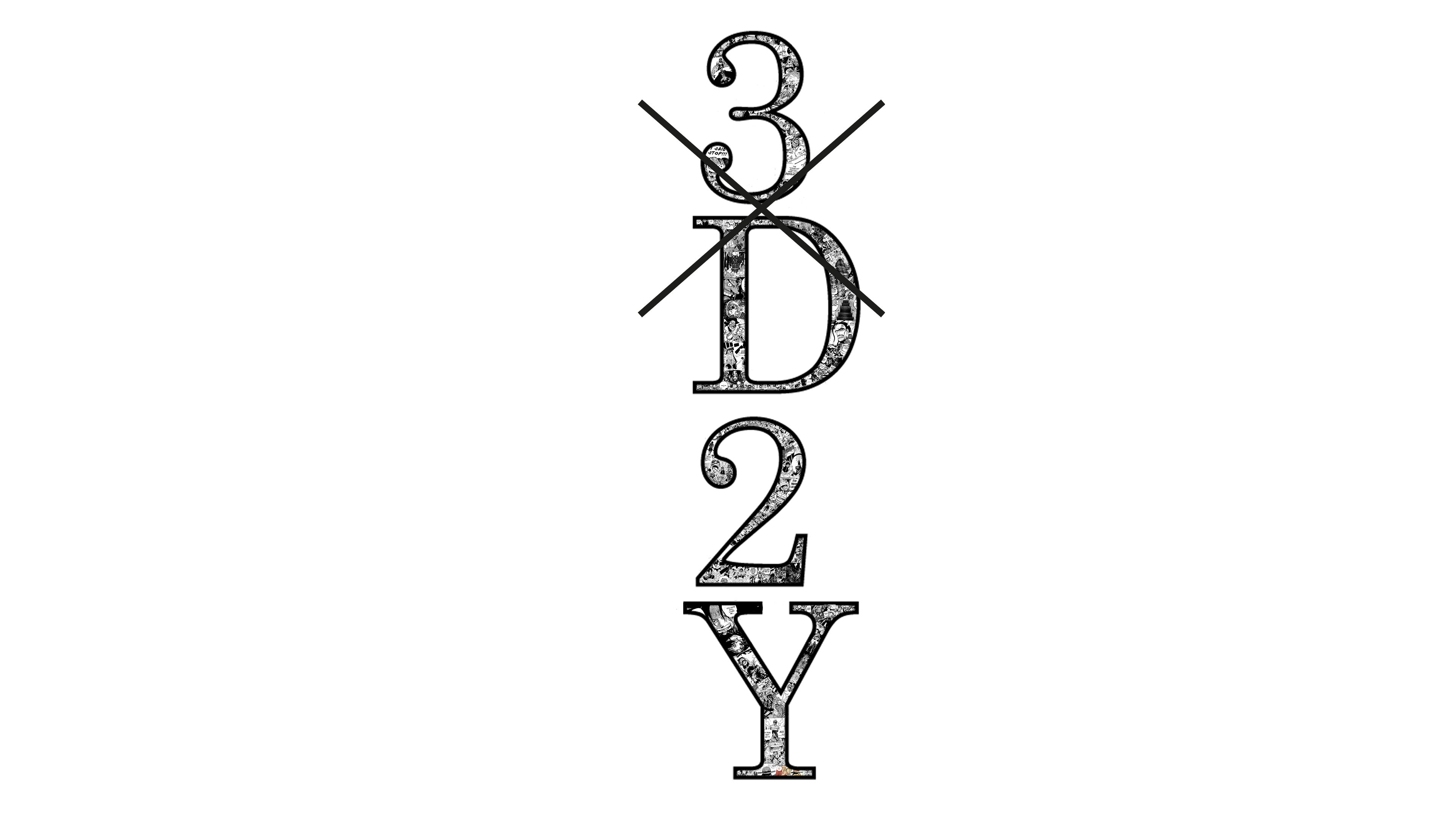
In the world of One Piece, the iconic phrase “3D2Y” holds significant meaning for Luffy and his crew, symbolizing the two-year time skip during which they grow and prepare for the challenges ahead. However, what if the phrase carries a deeper, more layered significance that extends beyond just Luffy and his crew? What if “3D2Y” is a cryptic foreshadowing of three figures carrying the Will of D and two opposing, complementary forces—Yins and Yangs—set to converge in the final battle for the future of the world? The D’s represent chaos, freedom, and rebellion, while the Yins and Yangs embody order and control, each playing a different role in the world’s balance. The idea of Yins and Yangs introduces a dichotomy between light and dark, between order and control, but with different intensities, creating a dynamic struggle where two opposite sides are not just fighting for control but for a balance that could reshape the world entirely.
The D’s are the central protagonists of One Piece, each carrying a unique aspect of the Will of D., the legacy of a long-dead ancestor that continues to shape the world. Luffy, the most prominent figure of the D. lineage, embodies the chaotic freedom that the D. bloodline stands for. His battle is not just for personal gain but for the destruction of oppressive systems and the freedom of those who are enslaved. Luffy’s journey is about dismantling the established order and creating a new, freer world—one that allows individuals to choose their paths without fear of suppression. Blackbeard, or Marshall D. Teach, represents the darker, opportunistic side of the D. lineage. His pursuit of power, achieved through manipulation and deceit, shows how the D. bloodline can also embody a more dangerous aspect of freedom. Blackbeard’s character stands as the antithesis to Luffy’s ideals, showcasing how chaotic freedom can devolve into anarchy and chaos when used for selfish purposes.
Then, there’s Monkey D. Dragon, the enigmatic leader of the Revolutionary Army, who stands as a more measured figure in this rebellion. Dragon’s goal is not to bring about chaos for chaos’s sake, but rather to overthrow the World Government and establish a new world order, one that does not rely on the suffering and subjugation of others. His movement represents a more calculated form of rebellion—one that seeks a revolution that can lead to lasting change, not just destruction. Other characters such as Sabo, Shanks, and even Buggy may also belong to the D. lineage, each representing different variations of freedom and rebellion. Their inclusion could further complicate the story’s core themes, showing the diversity of ideals within the Will of D.
In contrast to the D’s, we have the Yins—figures who represent order and balance. The Yins are not purely antagonistic forces, but they stand for a more controlled and structured approach to life and the world, maintaining stability while ensuring that chaos is kept in check. Shanks, the leader of the Red-Haired Pirates, is a prime example of the Yin side of the spectrum. Shanks is often seen as a balancer, stepping in at crucial moments to prevent conflicts from escalating into chaos. He understands the delicate equilibrium between freedom and order, and while he has power, he uses it not to impose control but to preserve the world’s natural balance. Shanks intervened in the Marineford War, helping to stop a full-scale battle between Whitebeard’s forces and the Marines, showcasing his role as a stabilizer in a world filled with chaos. He is not a villain, but a figure who strives to keep the peace in a world constantly on the verge of collapse.
Koby is another potential Yin candidate, representing the future of the Marines. From his humble beginnings as a timid cabin boy to a respected Marine officer, Koby embodies a more compassionate form of justice—one that seeks to preserve order without descending into the extremes seen with figures like Akainu. Koby is idealistic, believing in the power of a just system that upholds peace without resorting to brutality. He also stands as a symbol of hope for the future, where a more empathetic and just version of order could prevail.
On the other hand, the Yangs represent absolute control, a more authoritarian and rigid approach to maintaining order. They seek to impose a harsh, unyielding structure on the world, where freedom is sacrificed for the sake of security and stability. Akainu, the Marine Fleet Admiral, is perhaps the most obvious Yang candidate. His concept of Absolute Justice represents order at the cost of individual rights and freedom. Akainu’s ruthless actions and his willingness to sacrifice anyone—including his own subordinates—for the sake of his vision of a just world make him a quintessential Yang figure. His approach to justice is harsh and uncompromising, standing in stark contrast to the freedom-loving D’s.
Similarly, Imu, the mysterious ruler behind the World Government, embodies the Yang side in its most corrupt form. Imu’s ability to manipulate the entire world from the shadows, pulling the strings of the Celestial Dragons and the World Government, makes them a dark figure of absolute control. If Imu is indeed a D., it would add a layer of complexity, showing how the Will of D. can be corrupted into a force of totalitarian control rather than the freedom and rebellion Luffy represents. Imu’s manipulation of the world’s power structures suggests a desire for control that goes far beyond just maintaining order—it’s about dominating and subjugating others to maintain power.
The ultimate convergence of these forces—the D’s fighting for freedom and revolution, and the Yins and Yangs representing varying degrees of control—will inevitably define the final battle in One Piece. The 3D’s and the 2Y will collide in an ideological showdown between chaos vs. order, freedom vs. control, and revolution vs. stability. Whether it’s the more benevolent Yins like Shanks and Koby, or the harsh Yangs like Akainu and Imu, the ultimate clash will determine the future of the world. Will the forces of freedom and rebellion succeed in reshaping the world according to their ideals, or will the forces of order and control maintain the existing world structure? The answers to these questions will reveal how the world of One Piece is forever changed, and whether the balance between freedom and control can ever be achieved.