The Musings of Jaime David
@jaimedavid.blog@jaimedavid.blog

The writings of some random dude on the internet

1,117 posts
1 follower

Tag: nihilism

  • Exploring the Many Themes of Wonderment Within Weirdness

    Exploring the Many Themes of Wonderment Within Weirdness

    When I wrote Wonderment Within Weirdness, I knew I wanted a story that could stretch, expand, and ultimately explore just about everything. But at the time, I wasn’t fully conscious of all the layers and themes that would emerge. Now, looking back, I realize just how rich the book is thematically, and how much it resonates with ideas and feelings that exist in real life—ideas about conflict, about resilience, about morality, and about the way individuals navigate chaos.

    At its core, the book is about a “regular guy” thrown into extraordinary circumstances, having to rise up to face a multiversal conflict that no one else sees, no one else believes in, and no one else can handle. That premise alone already sets the tone for several key themes: courage in the face of overwhelming odds, the moral responsibility of action, and the idea that even a single individual can make a difference when the system itself is incapable. These themes tie directly into broader ideas about resistance—resisting authoritarianism, resisting the collapse of society, resisting despair—and while the story operates on a multiversal, sci-fi scale, these themes remain grounded and relatable.

    One of the most obvious thematic threads is the anti-war sentiment. It’s something I only fully recognized recently, especially given the current tensions around the Iran conflict and ongoing global instability. The story presents a world—or multiple worlds—where violence is the norm, where chaos grows unchecked, and yet it is through action, strategy, and resilience that meaningful change can be made. It is a story that, on its face, is absurd and fantastical, but the underlying message about the costs of conflict and the need for thoughtful intervention resonates with real-world issues. This anti-war thread also appears in my other works, from my poetry compilation My Powerful Poems to my short story collection Some Small Short Stories, but in Wonderment Within Weirdness it is front and center. The stakes are multiversal, but the message is clear: standing against destruction, against the unraveling of life itself, matters—even if it is not easy, even if it seems impossible, even if no one else sees what you see.

    Another theme that runs through the book is resilience. Emotional resilience, mental resilience, and the refusal to give up even when things seem insurmountable are central to the story. James, our protagonist, faces overwhelming odds, and his journey is not just physical but also deeply psychological. He has to contend with loss, disorientation, the failure of systems around him, and the weight of choices that could ripple across entire universes. That emotional endurance is something many readers can relate to, whether it’s in dealing with personal challenges, societal instability, or the quiet, constant pressure of life. The narrative itself mirrors that experience, stretching moments of tension, playing with time in ways that make the reader feel the weight of each decision, each second, each choice. It’s about keeping moving forward even when the world—or multiverse—is collapsing around you.

    Humor, absurdism, and a certain nihilistic lens also permeate the book. Inspired by Rick and Morty, Supernatural, and other absurdist media, the story frequently leans into sarcastic, sardonic, and sometimes dark humor. This gives the narrative a tone that balances the serious stakes with levity, and also allows for a kind of meta-commentary on the absurdity of existence and of conflicts, both personal and cosmic. There’s an interplay between high-stakes multiversal battles and irreverent, even ridiculous, situations that underscores the absurdity inherent in any struggle against forces beyond our full comprehension. The humor doesn’t diminish the weight of the story; it enhances it by showing how one can survive, mentally and emotionally, in the face of overwhelming chaos.

    Science and theoretical ideas are also embedded into the story. Drawing from my background as a science major, the sci-fi elements of Wonderment Within Weirdness—from multiversal theories to portals and causal mechanics—are influenced by real science, though dramatized and exaggerated for narrative effect. This provides a framework for the story that makes the fantastic feel credible. Readers see worlds built with internal logic, and that grounding allows the absurd, the impossible, and the chaotic to land with weight. Similarly, influences from video games, anime, manga, comic books, and superhero movies show up in the pacing, in the stakes, and in how conflicts are framed. The story draws inspiration from the long-form character development of manga, the visual spectacle and tension of superhero movies, and the interactive, consequence-driven sensibilities of video games, giving it a hybrid style that feels familiar yet completely unique.

    The scale of the story is another thematic and structural element. At over 600 pages, the debut novel is intentionally grand. Most first books aren’t structured this way; they are often more contained, more cautious. But Wonderment Within Weirdness had to lay the foundation for a sprawling universe, to establish stakes that could expand in later books, and to create a story that could stand on its own while also supporting a much larger narrative arc. That scale itself reinforces themes of responsibility, of acting within a system that is vast, complex, and imperfect. The multiverse in the story isn’t a clean, controlled environment; it is messy, sprawling, and full of hidden dangers. This allows for the idea that threats can grow unnoticed, that heroism can be invisible, and that meaningful action often happens quietly, behind the scenes, or in ways the system itself cannot track or contain.

    At the same time, the book is deeply character-driven. James, Lucifer, and other characters are not archetypes; they are individuals with thoughts, emotions, and casual internal monologues. The first-person point-of-view style, switching between characters, creates a sense of intimacy while also emphasizing perspective. Everyone observes the world in their own casual, human way—trees are big and green, objects are described plainly—but the story’s scale, the stakes, and the multiversal chaos contrast sharply with this grounded, personal perspective. That juxtaposition itself is a theme: the human scale and the cosmic scale coexisting, and how human action matters even in an infinite, chaotic universe.

    Another theme is moral agency. The book raises questions about how to confront threats, what methods are justified, and how personal experience and trauma influence decisions. Violence is used, yes, but not blindly; it is contextualized, weighed, and contrasted with other forms of action, particularly by characters like Lucifer who ultimately embody reflection and reasoning. In this sense, the book explores ethical dilemmas that are often abstract in science fiction and fantasy but grounded here in personal consequence, emotional struggle, and the narrative’s absurdist lens.

    The story also contains meta-narrative and commentary on the nature of storytelling itself. The time distortions, flashbacks, and expanded sequences all highlight how stories can manipulate perception, stretch moments, and explore subjective experience. This allows readers to feel the pressure, tension, and weight of decisions in a very immediate way, mirroring the challenges faced by the characters. It’s a reflection of both narrative technique and thematic resonance: life, choice, and consequence are subjective, messy, and full of uncertainty.

    Underlying everything is a theme of connection—between characters, across timelines, and through universes. Though the story deals with epic stakes, it is also about relationships, trust, loyalty, and the ways individuals band together against impossible odds. These connections are human, relatable, and grounding, even amidst absurd, cosmic chaos. They create stakes that are emotional as well as existential.

    Finally, the book is a story about action and consequence in a chaotic world. It presents a universe where the system is vast, the threats are hidden, and yet individuals act with agency. Courage, responsibility, resilience, morality, humor, absurdism, science, culture, and connection—all these themes coexist in a single story, creating a debut novel that is unusual, complex, and thematically rich. It is a story that entertains, challenges, and encourages reflection on both personal and societal levels. And while it is absurd, funny, chaotic, and wild, it is also deeply human.

    The richness of Wonderment Within Weirdness comes from this layering of themes, perspectives, influences, and scale. The book draws inspiration from anime, manga, comics, superhero films, sci-fi, absurdist humor, and existential philosophy while simultaneously presenting a deeply personal narrative of courage, responsibility, and moral reflection. The multiverse becomes a canvas for exploring resilience, anti-war sentiment, moral agency, and human connection, and the story’s scale allows for both cosmic spectacle and intimate, personal stakes to coexist.

    It is rare for a debut novel to encompass so much, to be so deliberately ambitious, and yet still maintain humor, accessibility, and relatability. This is a story that is absurd, vast, funny, thought-provoking, emotional, and ultimately human. It’s a novel that could be read purely for entertainment, but for those who look deeper, it offers layers of thematic richness that are hard to find elsewhere. Wonderment Within Weirdness is an exploration of everything—chaos, morality, humor, connection, courage, resilience, and the infinite possibilities of choice in an unpredictable universe.
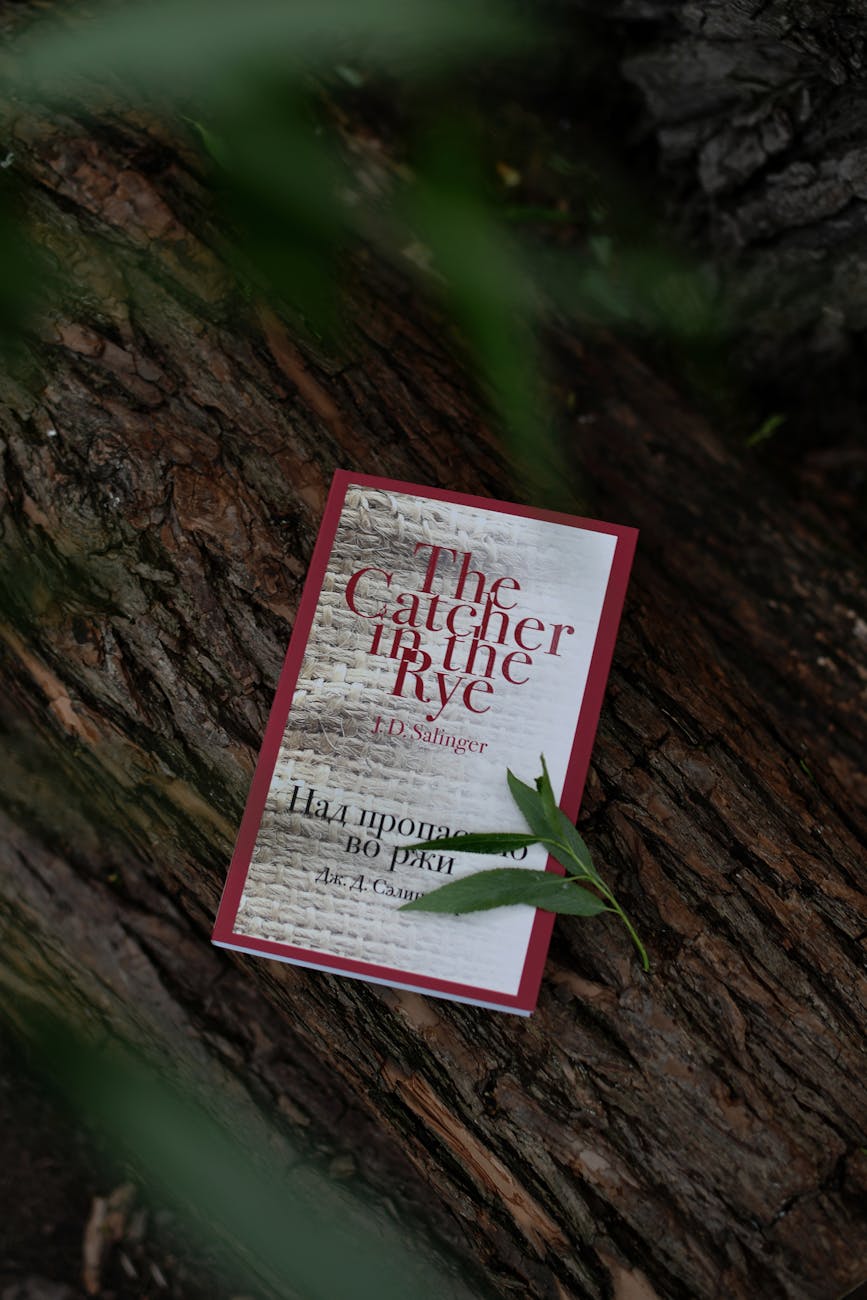
  • We Were Wrong About Holden Caulfield — He Cares More Than We Thought

    We Were Wrong About Holden Caulfield — He Cares More Than We Thought

    If Holden Caulfield were somehow transported into the year 2025, immersed in the dizzying swirl of our modern digital age, it would be a mistake to imagine him as merely angry or rebellious in the shallow, stereotypical teenage sense. No, Holden’s emotional landscape is far more complex, far more aching, and far more layered with contradictions than a simple outburst of adolescent defiance. At his core, the man who famously wielded the word phony as a kind of battle cry against insincerity would actually be struggling under the weight of something far heavier: a profound and wrenching mix of frustration and hope, tangled together so tightly it’s nearly impossible to separate one from the other.

    That word phony — often reduced by casual readers to a throwaway insult or a juvenile declaration — is in truth a deeply raw, visceral cry from someone who desperately yearns for the world to be better, more honest, and ultimately more real. Holden is not just railing against the surface-level fake or the trivial hypocrisy; he’s mourning the loss of genuine human connection and authenticity in a society increasingly overwhelmed by masks, performances, and illusions. In today’s chaotic 2025, where social media filters blur faces and expressions, AI bots masquerade as real people with eerie precision, scams and catfishers weave complex webs of deception, and cryptographic technologies like NFTs and cryptocurrencies spin dizzying new illusions of value and trust, Holden’s distress about phoniness feels not only relevant but more urgent and poignant than ever before.

    His frustration isn’t born of apathy or cynical detachment. Instead, it emerges from an almost unbearable depth of care — care for a world that no longer seems to value sincerity, care for people who are all too often invisible behind their masks, care for connection in an age of alienation. Holden wants a world where sincerity is not a precious rarity but a widespread currency. The more superficial the world becomes, the more he feels like a lone voice crying out in an increasingly deafening storm of façades. Importantly, he is not condemning the world simply to reject it outright; rather, he mourns what has been lost and painfully longs for what might still be recovered. This longing is not a small part of who Holden is; it is his essence — a deeply sensitive soul gasping for air in an environment suffocated by noise and superficiality.

    Holden’s pain is not simply a private or individual anguish; it carries a cultural and existential weight. Every time he calls someone “phony,” he is identifying a symptom of a broader social sickness — a society that increasingly rewards performance over presence, spectacle over substance, style over authenticity. The very concept of being “real” in this context becomes, almost paradoxically, a revolutionary act. His frustration is not mere teenage angst, but a profound cry for genuine authenticity in a world that seems more and more constructed from illusion and pretense.

    When Holden flings around the term phony in The Catcher in the Rye, he is not merely venting bitterness or staging an act of rebellion against the world. Instead, he is overwhelmed by emotions that are so immense and complex, they evade simple verbal expression: sadness that runs deep, crushing loneliness, and a sense of betrayal by the very people and institutions he hoped to trust. As a highly sensitive person, one whose emotional antennae pick up the faintest signals of pain and insincerity, Holden wrestles with these floods of feelings. “Phony” becomes his singular, catch-all term for capturing the hollowness he perceives in the world — the emotional exhaustion of constant performances and fakeness that threaten to drown out any possibility of true connection.

    His bluntness and sometimes abrasive tone are more than just defensive armor; they are a coping mechanism and a desperate plea for something genuine and meaningful. Beneath his dismissive, sarcastic exterior lies a heart that is aching, vulnerable, and painfully raw. To Holden, the insincerity of the world is not a mere annoyance or inconvenience — it is a wound, one that cuts to the very core of his fragile hope for human connection.

    Importantly, Holden’s anger at phoniness is not rooted in hatred. It is a form of hope — a hope so raw and unpolished it wears the rough disguise of anger and tough love. It is a hope that the people around him might somehow be kinder, more authentic, and more genuinely connected to one another. This makes him profoundly relatable today, even if many don’t immediately recognize it. The modern world is flooded with its own versions of phoniness: “grifters” — from social media influencers peddling carefully curated but ultimately fake lifestyles, to multi-level marketing bosses who exploit emotional trust, to hollow gurus hawking quick fixes and empty promises. These are the phonies of Holden’s time, the ones he would have feared and condemned.

    But his reaction to them would be more nuanced than simple disdain. He would be frightened by what their deception reveals about human nature and society: that people are so hungry for genuine connection and meaning that they are willing to believe illusions and lies, that the social fabric is so frayed that trust has become a scarce commodity. The success of these grifters signals not only their cunning but also the profound fractures in our cultural landscape and the scarcity of true realness. Holden’s warnings about phoniness go beyond calling out individual bad actors; they are indictments of a society that increasingly elevates surface-level performance and pretense over truth, where meaning is drowned out by noise.

    Yet Holden is not without his own flaws and contradictions. He lies, he performs, he lashes out — not because he is callous or uncaring, but because he is terrified to confront his own vulnerability. Deep inside, he suspects that he might be just as phony as the people he harshly judges. This painful paradox — being both the accuser and the accused — is what makes him so raw, so real, and so profoundly human.

    This internal battle is at the heart of Holden’s tragedy, but also his resilience. His self-awareness of his own flaws does not weaken him; rather, it sharpens his judgments and preserves his genuineness. It is this self-reflection and humility that prevents him from sliding into complete cynicism or nihilism. Instead, Holden is a broken idealist who continues to try, to fail, and to try again to find authenticity in a world that often seems to reject it. This vulnerability is exactly what makes him eternally relatable to readers across generations.

    From a psychological perspective, Holden fits the personality profile of an ENFJ — the empathetic, emotionally intense “compassionate truth-teller” who suffers deeply when those around him fall short of his high ideals. Combined with traits typical of a highly sensitive person, Holden’s capacity to care deeply is both his strength and his source of profound pain. In a world overwhelmed by noise, pretense, and relentless surface-level interaction, he feels utterly isolated in his search for sincerity. His fierce criticisms are often a mask for his yearning to connect and to protect those he cares about.

    Imagine Holden navigating the digital landscape of today. He would see bots pretending to be humans, scammers hiding behind fabricated identities, catfishers weaving elaborate lies to manipulate and gain attention, and parasocial relationships built on one-sided obsession. He would watch people fall in love with influencers who don’t even know they exist, and witness AI-generated content that blurs the lines between authentic and artificial reality. These phenomena would deepen his sense of alienation and loss.

    And then there is the physical world: knockoff perfumes, counterfeit sneakers, cheap imitations flooding both brick-and-mortar stores and online marketplaces. To Holden, these objects would not be merely cheap products but potent symbols of a culture that values image and hype over substance and honesty. As he walked through bustling city streets or scrolled endlessly through advertising feeds, he might mutter under his breath, “Goddamn phonies.” This would be no mere expression of irritation, but a mournful lament for a world where what is real becomes harder and harder to find.

    Even the economy would not escape Holden’s sharp critique. The rise of NFTs and cryptocurrencies — often dismissed by critics as speculative bubbles or empty hype — would appear to him as mass delusions, where millions are spent on digital images or tokens lacking intrinsic value. It would matter little how sophisticated the technology is or how much promise it holds for decentralization. To Holden, these trends would be perfect metaphors for a culture entranced by surface over substance, the latest signs of how easily we are seduced by illusions and empty hype.

    Philosophically, Holden’s deep suspicion of the world would find resonance in simulation theory — the provocative idea that reality itself might be a computer-generated illusion. While this remains unproven, the concept would echo Holden’s darkest fears about universal phoniness and deception. If the world around us is merely a simulation, then where does that leave hope for truth, for connection, for genuine human experience? This cosmic dread would only deepen his internal struggle and his profound sense of alienation, feeding the loneliness at the very core of his being.

    But Holden’s skepticism is far from isolated. His distrust of the status quo aligns, though uneasily, with many voices across today’s fractured ideological landscape: from MAGA loyalists convinced the system is rigged, to anarchists calling for radical upheaval, libertarians rejecting centralized authority, “truthers” questioning official narratives, sociologists who deconstruct social realities, and nihilists who deny inherent meaning in life. These groups vary widely in their beliefs and approaches, but they share with Holden a fundamental sense that the world’s script is broken — that something essential is amiss.

    This widespread skepticism is less about shared ideology and more about a collective feeling of distrust, alienation, and disillusionment. It reflects a society grappling with complexity, contradiction, and suspicion. Holden’s feelings connect across this broad spectrum not as a political statement or endorsement but as an expression of the universal human struggle to find meaning and authenticity amid confusion.

    Ironically, Holden would likely view many of his own fans as phonies — those who don Catcher in the Rye merchandise or idolize his rebellious image. To him, this commodification of his pain and confusion would feel like yet another mask obscuring the very vulnerability he struggles to express. He never aspired to be anyone’s hero; he simply wanted to survive his own confusing, painful world. Watching his story become a cultural icon might deepen his sense of being misunderstood, amplifying his feeling of isolation.

    At the very center of it all, Holden knows he is a phony too. The finger he points outward always reflects back upon himself. He judges performance, but he performs as well. He fears fakery but wonders if he has already been consumed by it. His fierce desire to protect innocence stands in contrast to his own deeply wounded soul. This painful self-awareness, far from weakening him, is what grounds him in reality and makes him endlessly relatable.

    Ultimately, Holden endures not because he is perfect or certain but because he feels deeply and hopes fiercely. He is flawed, lost, angry, scared — yet still yearning for something genuine in a world that often feels like a carefully staged play. In an age dominated by masks, bots, and simulations, Holden’s stubborn hope for authenticity is itself a radical act of resistance: a quiet, fierce defiance that reminds us all of the profound meaning of truly caring.