As the Straw Hats continue their journey toward the ultimate prize, One Piece has increasingly signaled that the endgame isn’t just about reaching Laugh Tale or confronting the final villains. There are narrative milestones along the way, and one of the most crucial is Lode Star Island, the final island on the Log Pose. This isn’t just another destination. Lode Star is both a literal and figurative tipping point: the last known navigational landmark before the uncharted waters leading to Laugh Tale. Based on the stakes, this is where the Straw Hats are most likely to face Akainu, the full might of the Navy, and the culmination of many long-looming plot threads, including the Grand Fleet’s involvement.
To understand why Lode Star is primed for such a confrontation, we need to consider both narrative precedent and the logic of the Grand Line. Every major arc in One Piece has layered conflict: exploration, discovery, and finally, confrontation. Lode Star, as the final island marked by the Log Pose, represents the ultimate threshold before entering territories completely unmapped and uncertain. The Straw Hats’ arrival here isn’t about leisure; it’s about preparation, survival, and proving their strength against the world’s strongest forces.
Nami’s mapping abilities also make Lode Star crucial. By this point, she has likely charted every route and gathered every piece of critical information from prior islands, making her an indispensable leader for navigation. This ensures that the Straw Hats can move through these last safe waters efficiently—but it also signals to the Navy and Akainu that the Straw Hats are approaching their most significant objectives. The very act of arriving at Lode Star is a declaration: the Straw Hats are ready to enter uncharted territory, and the World Government cannot ignore this.
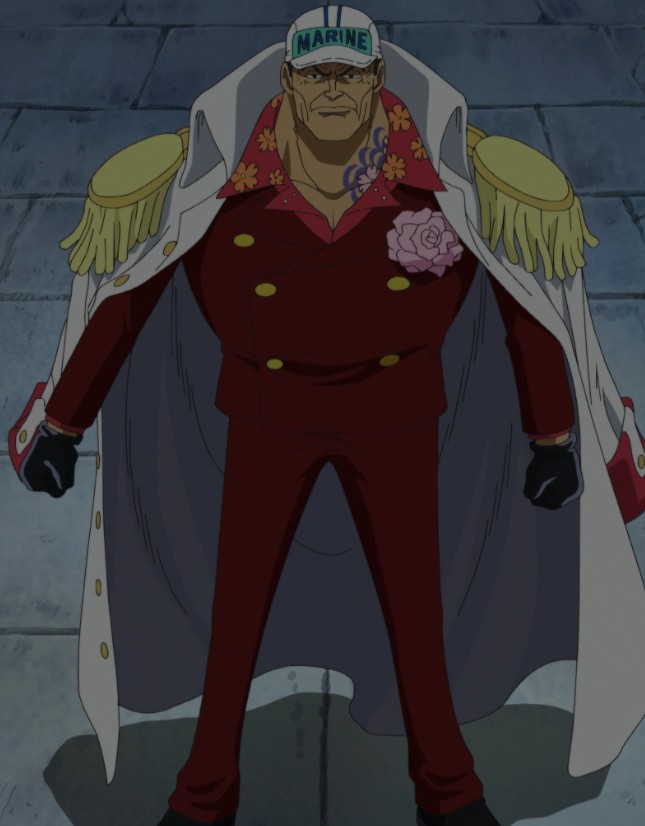
The narrative stakes suggest that Akainu, as one of the most persistent and ruthless threats, will be waiting. Unlike previous villains, Akainu represents not just brute force but the unyielding power of the Marines. He is the ultimate embodiment of justice under the World Government’s banner. But the threat won’t stop there: the Admirals and Vice Admirals could also converge on Lode Star, ensuring that the Straw Hats face overwhelming numbers, and forcing them to rely on both strategy and teamwork to survive. Lode Star becomes not just a battleground but a trial by fire, where the Straw Hats’ skills, bonds, and wits are pushed to the absolute limit.
Lode Star is also where the Grand Fleet, hinted at back in Dressrosa, finally makes its presence felt. This is the moment the narrator foreshadowed: the Straw Hats’ alliances with various crews culminate here, adding layers of strategy, reinforcements, and narrative payoff. The Grand Fleet’s arrival elevates the battle from a single-crew conflict to a large-scale naval clash, demonstrating the Straw Hats’ influence across the world and the stakes of their journey.
The island itself may provide environmental advantages: natural chokepoints, high terrain, and defensible positions. Nami’s knowledge of the area could allow her to coordinate precise strikes, while the others use guerrilla tactics against superior numbers. Unlike previous arcs, the crew cannot simply rely on raw power—they must use intelligence, strategy, and unity. Every member contributes not just with strength but with planning and ingenuity.
From a narrative perspective, Lode Star also serves as a thematic checkpoint. Up until now, the Straw Hats’ journey has involved reaching new islands, uncovering secrets, and slowly increasing the scale of their conflicts. Lode Star is the last “known” island before they step into the truly unknown—the uncharted seas leading directly to Laugh Tale. By forcing the Straw Hats into a confrontation with Akainu, the Admirals, Vice Admirals, and the Navy here, Oda can achieve multiple narrative goals: showcase the crew’s evolution, underscore the dangers of the world, and establish the stakes before the chaos of Blackbeard at Laugh Tale and the politically charged conflicts at Mary Joa.
Another critical factor is pacing. Lode Star, as a site for a major battle, gives the story a necessary moment of tension before the chaos of Laugh Tale and Mary Joa. It allows the Straw Hats to engage in a large-scale combat scenario that tests their limits while keeping the narrative grounded. The fight against Akainu and the Navy at this stage emphasizes that the Straw Hats’ journey isn’t just about defeating pirates—it’s about surviving a world dominated by the World Government’s full might.
The choice of Lode Star also aligns with narrative symbolism. It is the “lodestar,” a guiding point that signals direction, destiny, and purpose. By staging a battle here, Oda can highlight the Straw Hats’ resolve: they are guided not just by the pursuit of treasure but by the desire to confront injustice, protect their allies, and push forward into the unknown. It is the perfect thematic intersection of action and meaning.
Finally, there’s the question of consequence. Unlike smaller arcs, Lode Star cannot be a mere speed bump. Defeat here—or even minor failure—has real stakes. If the Straw Hats falter, they risk losing their strategic advantage before reaching Laugh Tale and Mary Joa. They must fight to preserve momentum, protect their crew, and establish their dominance before the world’s most dangerous players make their next moves. This elevates the confrontation from a mere battle to a pivotal narrative juncture, making Lode Star a cornerstone of the final saga.
In conclusion, Lode Star Island represents a convergence of narrative, thematic, and tactical elements that make it the ideal location for the Straw Hats’ final stand before Laugh Tale against Akainu, the Navy, and any remaining high-ranking adversaries. It is the last safe island, a point of guidance and destiny, and the stage for a test of everything the crew has learned. The battle at Lode Star is not just another fight—it is the Straw Hats’ definitive stand before entering uncharted waters, a test of courage, loyalty, and skill that sets the tone for the final chapters of One Piece.