The Musings of Jaime David
@jaimedavid.blog@jaimedavid.blog

The writings of some random dude on the internet

1,127 posts
1 follower

Tag: online behavior

  • This Post (Wont Delete Now or Ever)

    This Post (Wont Delete Now or Ever)

    There’s a trend going around on the internet these days, one that’s so painfully obvious and, honestly, kind of pathetic, that it’s almost laughable. You know what I’m talking about. Folks post something, maybe something serious, maybe something dumb, and then they tack on a little note at the end, something like “will delete soon” or “might delete later.” And it’s everywhere. Social media, blogs, forums, even meme pages. Everywhere you look, someone is trying to say something, but not really, and then they reassure you that this will disappear, that it won’t last, that they’re not really committing to it. And that’s the thing—it’s such a transparent move that it’s almost insulting to anyone who reads it.

    Here’s my take. If you’re going to post something, just post it. Stand by it. Don’t put a half-hearted disclaimer at the end like you’re protecting yourself from your own words or from the judgment of others. It’s cowardly. Plain and simple. This whole “will delete soon” thing? It’s not clever. It’s not edgy. It’s a flimsy attempt to shield yourself from consequences that, let’s be real, are inevitable anyway. The internet doesn’t forget. Nothing is ever truly deleted. Screenshots exist. Backups exist. Archives exist. Whatever you post, it lives on in one form or another. So when someone says “I’ll delete this soon,” they’re lying. They know it. And you know it. Everybody knows it. It’s a performance, not a statement.

    And here’s what it really says about people. It says that they’re scared. It says that they’re uncertain. It says that they don’t trust themselves or their own judgment enough to put something out into the world and stand by it. That’s the root of it. It’s not a fun, quirky trend—it’s fear wrapped in a digital post. Fear of being judged, fear of being wrong, fear of being hated, fear of simply being seen. And maybe that fear is understandable, in a general sense, because we all live in a world where every opinion can be critiqued endlessly online. But that doesn’t make it noble. It makes it weak. It makes it hesitant. It makes it dishonest. And I can’t help but roll my eyes when I see it.

    Because here’s the truth: if you don’t know what you want to say, don’t say it. There’s no shame in silence. There’s no shame in waiting until you’ve figured out your words. But if you do know, if you do have something to express, then own it. Post it. Make your statement. And then leave it there. Don’t hedge it with a promise to retract, don’t dilute it with a wink, don’t try to sneak it past the world under the guise of impermanence. It’s not a trick. It’s not clever. It’s not protection. It’s a lack of conviction.

    Think about it this way. The people who constantly add these disclaimers, the “will delete soon” crowd—they’re putting the focus on themselves rather than the content. The content doesn’t matter as much as the self-preservation. And isn’t that kind of sad? It’s as if they can’t let their words exist without simultaneously trying to control how others interact with them. They’re trying to cheat the system of social interaction online, trying to have the experience of posting without ever being vulnerable. But vulnerability, however scary, is where authenticity comes from. Without it, your posts are hollow. They’re not statements—they’re props.

    And let’s be honest: posting is a risk. Saying something, anything, puts you out there. It opens you up to agreement, disagreement, ridicule, praise, criticism. That’s unavoidable. You can’t opt out of it while still participating fully. So when people write “will delete soon,” they’re essentially trying to opt out after opting in. It’s a paradox. And the paradox is only funny if you step back far enough to laugh at the ridiculousness of it, but mostly it’s just irritating. It’s irritating because it clutters conversations with half-measures, weak opinions, and shallow performances. And it trains other people to do the same, which, in the end, erodes the quality of discourse anywhere it spreads.

    I’ve seen this happen over and over. Someone posts something important, meaningful even, but then they bury it under a digital shrug, a “don’t take this seriously, I might delete it.” And what happens? People don’t take it seriously. People ignore it. The post is undermined before it even has a chance to exist. And that’s the problem with this trend in general—it’s self-sabotage disguised as humility, disguised as cleverness. It’s the worst kind of attention-seeking because it’s attention-seeking while pretending not to be. It’s manipulation without courage, and it’s everywhere.

    So, if you ask me, the opposite approach is the one worth taking. Say what you mean. Mean what you say. Post it. Leave it. Let it exist. Let people engage with it, positively or negatively, but let it exist. Don’t hedge. Don’t promise deletion. Don’t protect yourself from imaginary consequences that are going to find you anyway. The internet doesn’t forget. Nothing truly goes away. So the real bravery is in saying something knowing it will stay, knowing it will be judged, knowing it will be seen, and still posting it anyway. That’s integrity. That’s authenticity. And yes, it’s scarier than tacking on a little “will delete soon” note, but it’s worth it.

    The “wont delete now or ever” approach, which is exactly what I’m doing here, is not just a joke about a trend—it’s a statement about how to exist online with your words intact. It’s about taking responsibility for what you put out. It’s about rejecting the cowardice of hedging, of preemptive retraction, of lying to yourself and others about your intentions. It’s about standing tall with your thoughts, your opinions, your statements, your jokes, your complaints, your praise, your art, whatever it is that you have to offer. Don’t dilute it. Don’t hide it. Don’t apologize for it before it even has a chance to breathe.

    I think a lot of people don’t realize that there’s a freedom in this. There’s a liberation that comes from knowing that your words, your posts, your thoughts, exist, and that they exist unafraid. There’s a satisfaction in speaking without the chains of pretense. And when you combine that with the inevitable permanence of the internet, it’s almost poetic. You’re acknowledging reality as it is: nothing truly disappears, nothing is ever entirely private, nothing is ever entirely under your control. And rather than fear that, you embrace it. You work with it. You live honestly within it.

    So, to those who feel compelled to write “will delete soon,” I have a simple suggestion: stop. Take a breath. Ask yourself why you feel the need to hedge. Ask yourself why you’re afraid of being fully seen. And then, if your message matters, post it without reservation. Let it live. And if it doesn’t matter, if you’re unsure, then maybe don’t post it at all. Silence is better than cowardice. Thoughtfulness is better than performative vulnerability. Authenticity is better than trend-following, every time.

    And finally, for anyone who reads this and thinks, “Well, maybe I will delete it later,” understand this: the true courage is in knowing that deletion is irrelevant. The courage is in posting, in saying, in committing. Not in hiding. Not in apologizing before it’s necessary. Not in pretending impermanence makes your words any safer or more acceptable. It doesn’t. Words exist once spoken or written, and the internet is the ultimate testament to that. Accept it, embrace it, and for once, post something without shame, without hedging, without disclaimers, and without thinking that deletion is your safety net.

    So yeah, this post won’t delete now or ever. That’s the point. I’m not hedging. I’m not scared. I’m not pretending. And that’s how it should be for everyone. Say what you mean, mean what you say, and let the world deal with it.
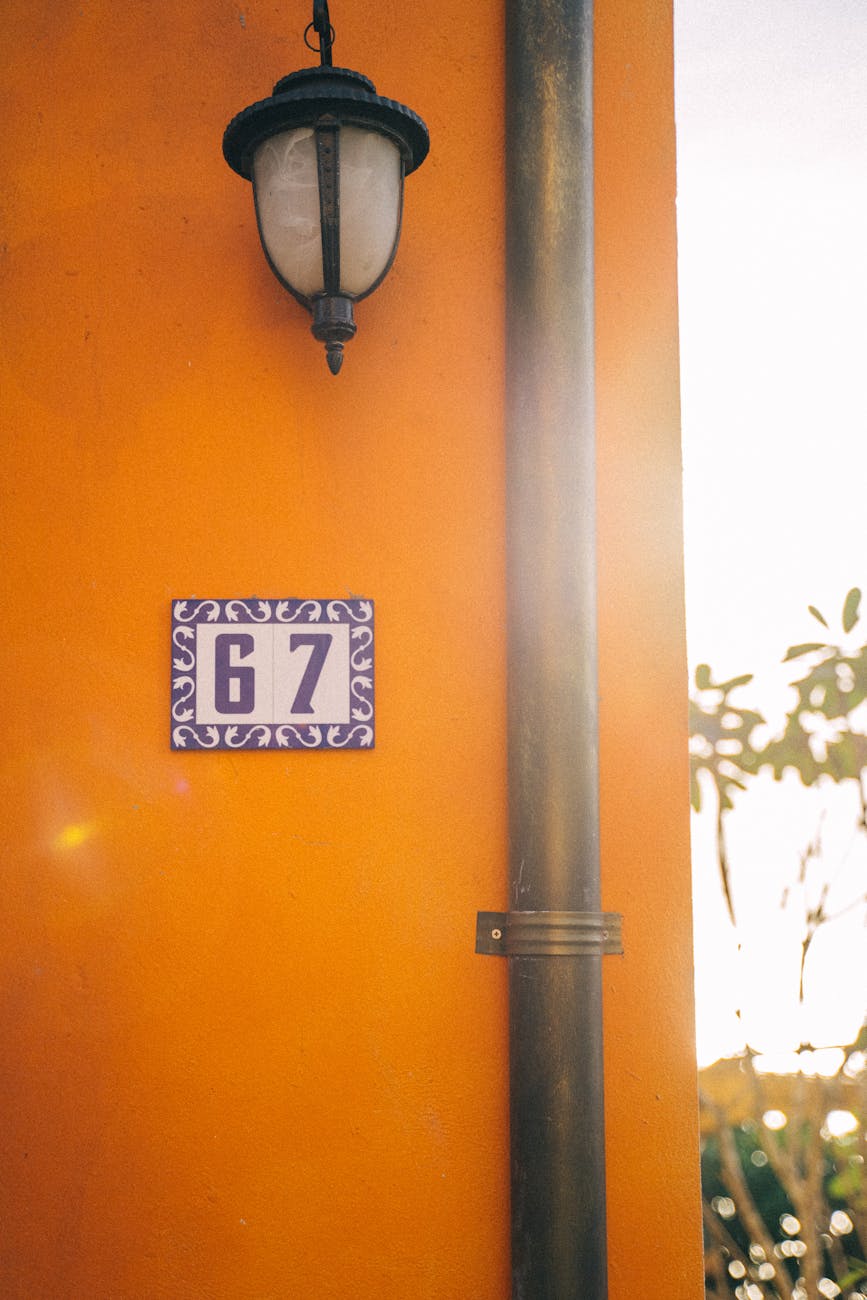
  • The Dumbest Meme Alive: Why “6–7” Perfectly Sums Up the Decay of Internet Culture

    The Dumbest Meme Alive: Why “6–7” Perfectly Sums Up the Decay of Internet Culture

    If there was ever a sign that the internet had officially eaten itself, it’s “6–7.” The so-called meme phrase, born from a forgettable rap lyric and somehow inflated into a cultural touchstone, represents everything wrong with the modern state of online culture. It’s not clever, not funny, not even coherent. It’s just noise—empty repetition masquerading as entertainment, proof that virality no longer depends on meaning or creativity but on sheer algorithmic force and social mimicry. The rise of “6–7” isn’t just a meme; it’s a digital Rorschach test of how meaningless internet culture has become, how we’ve traded substance for spectacle, and how a generation raised on short-form content now communicates through sound bites that literally have no point.

    What makes the “6–7” phenomenon so infuriating isn’t simply its stupidity—it’s that it doesn’t even pretend to mean anything. It came from Skrilla’s song “Doot Doot (6 7),” where the rapper throws out the phrase in passing, attached to a line about gun violence and chaos. But the meaning of “6–7” was never clarified, and instead of prompting analysis or reflection, it sparked a viral wildfire of empty mimicry. TikTokers, YouTubers, and Instagram editors latched onto it, applying it to basketball clips, random dances, and now even to classroom jokes and ironic memes. It became a filler—a symbol for vibe over sense. There’s no clever punchline, no hidden message. Just a sound, repeated until it feels like an inside joke between millions of people who don’t even know why they’re laughing.

    The meme’s popularity exploded after Taylen “TK” Kinney adopted it and turned it into his brand. Suddenly, a drill lyric had become a marketing opportunity. Kids were shouting “six seven!” in hallways, athletes were screaming it after dunks, and influencers were using it as if it were profound. When “6–7” became a hand gesture, then a dance, then a water brand, the whole absurdity reached critical mass. The internet had turned nothing into something, and everyone played along because not playing along meant being out of the loop. This is how brain rot spreads—not through malicious design, but through the pressure to belong in an increasingly meaningless digital arena.

    The rise of “6–7” represents a deeper collapse in how online culture values context. Once upon a time, memes relied on irony, parody, or satire—some kernel of cleverness that made them worth sharing. Think of Doge, Loss, or even Rickrolls—they might have been silly, but they carried layers of meaning, structure, and playfulness. “6–7,” by contrast, is anti-language. It’s the death of the meme as a communicative tool and its rebirth as a pure visual-audio signal, a brainwave that triggers dopamine without requiring comprehension. It’s meme as instinct, not intellect. The sound, the motion, the vibe—that’s enough now. Meaning is optional.

    But that lack of meaning is exactly what makes it thrive. It’s flexible, nonsensical, and universal. “6–7” can be used to hype up a basketball highlight, caption a selfie, or interrupt a conversation just for laughs. It’s performative gibberish, a digital grunt that conveys nothing except “I exist in the algorithm.” This adaptability makes it contagious. Kids don’t even need to know where it came from; they just need to know it’s trending. In that way, it’s the perfect example of what the internet has become: a machine that rewards participation without understanding, where repeating nonsense louder than others is enough to gain clout.

    What’s particularly irritating is how “6–7” has been reinterpreted into every corner of social media with zero self-awareness. The 67 Kid—Maverick Trevillian—became a minor celebrity by shouting it at a basketball game, and the internet instantly canonized him as some kind of icon. His exaggerated gestures and excitement were memed into oblivion, warped into analog horror edits, and even given an SCP parody number. All this over a three-second clip of a boy yelling numbers. There’s something so absurdly hollow about that kind of fame—where a kid screaming at a camera becomes symbolic of a generation’s humor, and we all pretend that’s normal. It’s like watching society collectively lose its sense of irony and double down on idiocy as identity.

    The defenders of the meme—usually teens or ironic content creators—argue that it’s “just for fun” or “not that deep.” And sure, that’s fair. Not everything on the internet has to carry meaning. But the issue isn’t that “6–7” is meaningless—it’s that it’s celebrated for being meaningless. The meme’s very emptiness has become its appeal, and in a media environment already oversaturated with content, that emptiness becomes contagious. When stupidity becomes the aesthetic, and nonsense becomes the language, what you get isn’t cultural evolution—it’s entropy. “6–7” is a cultural shrug dressed as a meme, an admission that attention is the only real currency left.

    There’s also a darker layer to all this: how quickly brands and corporations latch onto the chaos. The meme’s spread into official channels—NBA social media posts, WNBA interviews, NFL celebrations, and even a Clash Royale emote—shows how corporate culture has learned to exploit the meaningless. It’s not about endorsing creativity or fun; it’s about capitalizing on what’s viral, even if what’s viral is dumb. Companies no longer need messages—they just need moments. “6–7” is the perfect brand accessory: a catchphrase with no baggage, no controversy, and no meaning to misinterpret. It’s sanitized stupidity for the algorithm age.

    Even Dictionary.com got in on it, naming “6–7” its 2025 Word of the Year. That alone proves how far the rot has spread. The site claimed it represented “a burst of energy that connects people long before anyone agrees on what it means.” That’s a poetic way of saying, “it’s gibberish, but everyone’s doing it.” The irony is palpable. When the institutions that once tried to preserve language now celebrate its breakdown as a “cultural phenomenon,” it’s clear that the digital tide of nonsense has become unstoppable. Words no longer need meaning—they just need momentum.

    If we take a step back, “6–7” also exposes the generational split in online engagement. Older millennials and Gen Zers grew up with internet humor that, even in its absurdity, had layers of irony or wit. But Generation Alpha, raised entirely on short-form content, engages with memes as reflexes, not as commentary. For them, a meme doesn’t have to “say” anything—it just has to exist, to loop, to echo. “6–7” is their language of chaos, their shorthand for collective participation in nonsense. It’s a coping mechanism in a world too overstimulated for meaning. But that doesn’t make it any less ridiculous.

    The more people use “6–7,” the more it loses even the small fragments of context it started with. Now it’s shouted in classrooms, whispered in hallways, spammed in comment sections, used to rate things, and thrown around like digital confetti. Teachers ban it. Parents roll their eyes. Kids laugh harder because adults don’t get it. It’s an endless loop of irony and rebellion that feeds itself, like all viral trends do, until it inevitably burns out and gets replaced by the next meaningless number or soundbite. That’s the future of meme culture: not clever jokes, but arbitrary symbols.

    It’s hard not to see “6–7” as the latest symptom of a cultural decline in how we process information. The internet used to democratize creativity; now it flattens it. Every viral moment becomes a template, every sound becomes a trend, and every phrase becomes divorced from its origin. Meaning gets stripped away, and what’s left is raw, repetitive noise. It’s like modern communication has been boiled down to its most primal form: pointing, shouting, mimicking. The “6–7” meme is basically the digital equivalent of monkeys in a zoo discovering mirrors and making faces at themselves.

    And maybe that’s the saddest part. Because underneath the stupidity lies a kind of collective exhaustion. We’re overwhelmed, overstimulated, and constantly plugged in. In that chaos, nonsense starts to feel comforting. “6–7” isn’t funny, but it’s easy. It requires no effort, no thought, no context. It’s a way of joining the crowd without saying anything real. And that’s why it’s everywhere—because silence, in this age of infinite scrolling, feels more unbearable than stupidity.

    Still, calling “6–7” the dumbest meme alive isn’t just an insult—it’s an observation. It’s dumb because it has to be. The modern internet doesn’t reward intelligence or meaning; it rewards attention. And the fastest way to get attention is through absurdity. The more people yell “six seven,” the more the algorithm amplifies it, and the more it spreads. It’s an ouroboros of idiocy feeding itself, and everyone pretending it’s funny. It’s not that users are stupid—it’s that the system incentivizes stupidity. And so the memes get dumber, the trends get shorter, and the noise gets louder.

    In ten years, no one will remember “6–7.” It’ll be a footnote in meme history, lumped alongside other viral oddities like “skibidi,” “grimace shake,” or “sigma rizz.” But the pattern will remain: meaningless content spreading faster than meaningful creation. The lesson of “6–7” isn’t that kids are dumb—it’s that the digital world they inhabit rewards them for dumbing down. The meme itself might fade, but the culture that created it isn’t going anywhere.

    So yes, “6–7” is stupid. It’s the dumbest thing on the internet right now. But it’s also the most honest reflection of what the internet has become: a space where nonsense reigns supreme, where virality is valued over sense, and where every day, we drift a little further away from meaning. And maybe that’s the ultimate irony—because the more we mock “6–7,” the more we talk about it, the more we give it life. It wins by being empty. It thrives on being pointless. In the end, the dumbest meme alive isn’t just a phrase—it’s a mirror. And what it shows us is that maybe we’re the ones who made it this way.