The Musings of Jaime David
@jaimedavid.blog@jaimedavid.blog

The writings of some random dude on the internet

1,120 posts
1 follower

Tag: online culture

  • The Absolute Rage Induced by “K.”

    The Absolute Rage Induced by “K.”

    Daily writing prompt
    What’s a word or phrase that annoys you?

    There are many phrases in this world that annoy me. Corporate buzzwords. Fake positivity. Passive aggressive nonsense. People saying “we should totally hang out sometime” when both of you know that is never happening. But there is one response, one microscopic combination of letters, one digital communication war crime that rises above the rest. One phrase so unbelievably lazy, dismissive, cold, and irritating that every time I see it, a tiny part of my soul flatlines.

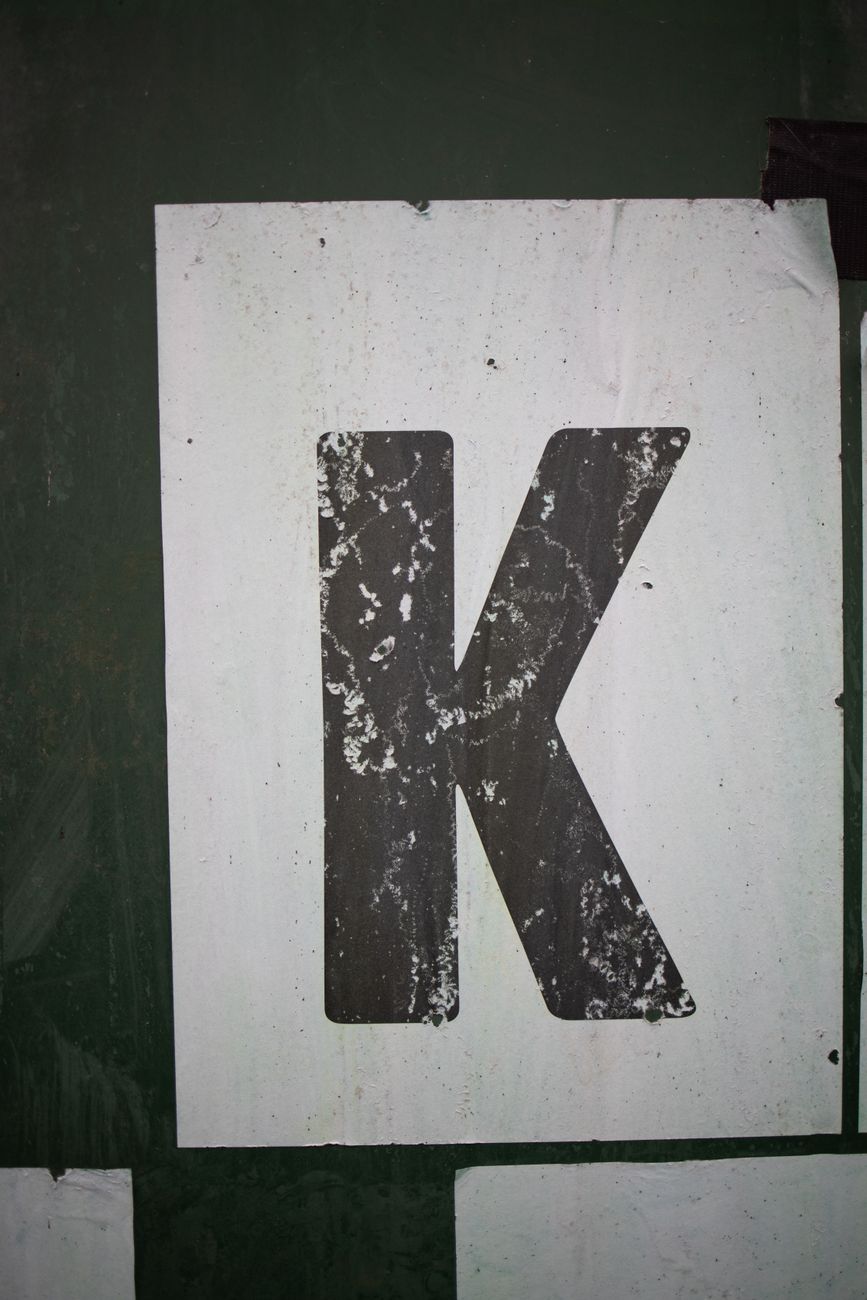
    “K.”

    Just that. K.

    Not “okay.” Not “ok.” Not “alright.” Not even the slightly chaotic but acceptable “kk.” Just a lonely little “k” sitting there like a digital middle finger.

    And I know some people are gonna say, “well maybe they’re busy.” No. I do not care. Because typing “okay” takes maybe half a second longer than typing “k.” You already opened the message. You already looked at it. You already responded. So what exactly was saved here? What incredible amount of time efficiency was gained? Did NASA recruit you mid conversation? Were you suddenly called into a hostage negotiation? Did your phone battery have 0.0001% left and you sacrificed the other letters for survival?

    Because otherwise, what are we doing here?

    Especially when I send an actual thoughtful response. That is where “k” becomes truly infuriating. I could send somebody an entire paragraph. A detailed response. An actual conversation. Maybe I am explaining something important, talking about an idea, telling a story, venting about something, or even just trying to have a normal human interaction. And after all that effort, after all those words, after all that thought, the response I get back is:

    “K.”

    Are you kidding me?

    That is not a response. That is the conversational equivalent of someone shutting a door in your face halfway through a sentence. It feels like I just threw a fully cooked meal onto a plate for someone and they stared at it for two seconds before saying, “aight.” Not even enough respect to capitalize the K sometimes either. Just a lowercase “k” sitting there in all its emotionally vacant glory.

    And the worst part is how weirdly aggressive it feels.

    Because let’s be honest here. “K” does not read as neutral. Nobody on Earth reads “k” and thinks, “wow, what a warm and enthusiastic response.” No. “K” feels annoyed. It feels irritated. It feels passive aggressive even when maybe it is not intended that way. It feels like someone responding while rolling their eyes so hard they can see their own brain.

    Imagine talking to someone in real life like that. Imagine you are telling somebody a story face to face and when you finish, they just stare at you blankly and go, “k.” You would immediately assume they hated you. You would think they were angry. Or bored. Or trying to end the conversation as fast as possible.

    That is because human communication is not just about words. It is about effort. Energy. Tone. Engagement. And “k” has the energy of somebody throwing a single stale cracker onto the table and calling it dinner.

    Now look, I understand not every message needs a five paragraph response. I am not asking for people to write essays every single time. Sometimes short responses are fine. Sometimes there is not much to say. That is normal. But there is a gigantic difference between a simple response and a completely dead one.

    “Okay” feels normal.

    “Gotcha” feels normal.

    “Sounds good” feels normal.

    Even “lol” at least acknowledges humanity still exists.

    But “k” feels like the emotional equivalent of being left on read while technically not being left on read.

    And yes, there are layers to this too. Because context matters. A “k” from your boss somehow feels terrifying. A “k” from a friend feels dismissive. A “k” from someone you are arguing with feels like they are trying to start World War III. A “k” from someone you like romantically? Oh congratulations, now you are going to spend the next three hours wondering if they hate you.

    The single letter “k” has somehow evolved into one of the most emotionally loaded responses in digital communication history.

    And honestly, I think part of why it annoys me so much is because it represents this larger problem with modern communication in general. People have become so weirdly disconnected from conversations. Everything is rushed. Everything is shortened. Everything is compressed into the smallest possible amount of effort. We are communicating faster than ever before while somehow saying less than ever before.

    Conversations now sometimes feel like people are trying to speedrun human interaction.

    And again, I am not demanding constant deep emotional speeches. I am not asking every text conversation to become a philosophical debate about existence itself. But there is something deeply irritating about the absolute bare minimum effort possible becoming normalized.

    Especially when the other person is clearly trying.

    That is the key thing here. Effort should at least somewhat match effort. If somebody sends you an actual message, responding with “k” feels like conversational malpractice. It feels like somebody handing you a handwritten letter and you responding by throwing a sticky note at their forehead.

    And I know somebody reading this right now is thinking, “wow this dude is really angry about one letter.”

    Yes. Yes I am.

    Because somehow that one letter manages to radiate annoyance in ways entire paragraphs cannot.

    Honestly, sometimes “k” feels worse than no response at all. At least being left on read has ambiguity. Maybe they got distracted. Maybe they forgot. Maybe life happened. But “k” confirms they saw your message and actively decided this single consonant was all you were worth in return.

    It is honestly impressive in a horrible way.

    And do not even get me started on the variations of it either. Because there are subclasses of “k” energy.

    Lowercase “k” is cold and dismissive.

    Uppercase “K” feels actively hostile.

    “K…” feels like somebody preparing for murder.

    And then there is “Mk.” Which somehow feels like an exhausted parent trying not to lose their sanity entirely.

    Digital communication has become its own weird language where punctuation and capitalization can completely change emotional meaning. A period at the end of a sentence suddenly feels aggressive. Multiple exclamation points can feel fake. No punctuation can feel detached. And “k” became the king of all emotionally cursed responses.

    What fascinates me too is how universal this annoyance seems to be. So many people hate “k.” Entire memes exist about this. Entire online discussions exist about this. People immediately understand the emotional vibe of it without explanation. Humanity collectively agreed that this one letter carries the energy of disappointment, annoyance, boredom, or emotional shutdown.

    That is honestly kind of incredible.

    Language evolved over thousands of years and somehow we arrived at this.

    One letter.

    Pure irritation.

    And maybe some people genuinely do not mean anything by it. Maybe for some people it really is just shorthand. Maybe they truly are neutral when they send it. But communication is not just about intention. It is also about perception. And if millions of people collectively interpret “k” as irritated or dismissive, maybe there is a reason for that.

    Maybe because it feels incomplete.

    Maybe because it lacks warmth.

    Maybe because it feels like somebody trying to end a conversation instead of participate in one.

    Or maybe because it just looks ugly sitting there on the screen like some emotionally abandoned letter fragment.

    Honestly, even “👍” sometimes feels more human than “k.”

    At least the thumbs up has shape. Presence. Energy. “K” just looks like somebody gave up halfway through typing.

    And there is also a weird imbalance that happens when one person clearly cares more about the conversation than the other. You can feel it instantly. One person is engaged. The other is responding with the verbal equivalent of elevator music. “K” becomes the ultimate symbol of that imbalance. It tells you immediately who is carrying the interaction.

    Nobody wants to feel like they are talking at somebody instead of with somebody.

    That is what “k” does.

    It transforms conversations into brick walls.

    And listen, maybe this sounds dramatic. Maybe it is dramatic. But honestly? Human interaction matters. The little things matter. Tone matters. Effort matters. People can absolutely feel when someone is emotionally checked out of a conversation. Sometimes tiny things communicate massive feelings.

    That stupid little letter somehow communicates exhaustion, irritation, boredom, indifference, and passive aggression all at once.

    Which honestly is almost impressive linguistically.

    Like congratulations, “k.” You somehow became the most efficient delivery system for negative conversational energy imaginable.

    And the thing is, I do not even think people realize how often tiny responses shape interactions. A slightly warmer response can completely change the feeling of a conversation. A little enthusiasm can make somebody feel heard. Even basic acknowledgment can matter more than people realize.

    But “k” feels like anti warmth.

    Anti conversation.

    Anti human connection.

    It is the response equivalent of fluorescent office lighting.

    Cold. Harsh. Soulless.

    And maybe part of my hatred for it comes from how common it has become. Because once you notice it, you start seeing it everywhere. Texts. DMs. Comments. Group chats. Everywhere you go, there is always somebody lurking with their tiny little “k” loaded and ready to destroy the vibe instantly.

    It can kill momentum in seconds.

    You could be having a genuinely fun conversation and suddenly:

    “K.”

    Boom. Atmosphere dead. Conversation buried. Social energy annihilated.

    It is honestly almost comedic how powerful it is.

    One letter should not have this much destructive capability.

    And yes, before anybody says it, I know there are bigger problems in the world. Obviously. But sometimes daily annoyances are what stick with you the most because they happen constantly. Tiny frustrations repeated over and over become their own special category of rage.

    And “k” is absolutely one of them.

    Because at its core, I think what annoys me is not even the letter itself. It is what it represents. Minimal effort. Disengagement. Emotional laziness. The feeling of somebody barely participating while technically still responding.

    It feels like the modern internet distilled into a single character.

    Shortened attention spans.

    Compressed communication.

    Reduced effort.

    Everything becoming smaller, faster, emptier.

    And honestly? I hate that.

    I miss when conversations actually felt alive sometimes. When people bounced ideas off each other. When interactions had energy. When communication did not constantly feel like people trying to escape the conversation as quickly as possible.

    Maybe that makes me old fashioned. I do not know.

    But I do know this.

    If I send somebody an actual thoughtful message and all I get back is “k,” I immediately lose interest in continuing the conversation. Because why am I putting energy into something the other person clearly does not care about?

    Conversation is a two way street.

    Not one person dragging the other through digital quicksand.

    So yes, WordPress daily prompt, my answer is absolutely “k.”

    I cannot stand it.

    That one tiny letter somehow became one of the most irritating phrases in modern communication.

    And every single time I see it pop up on my screen, I swear I can physically feel my soul leave my body for half a second.

    Fediverse Reactions
  • WHY I APPROVE ALL COMMENTS ON MY BLOGS, EVEN THE ONES THAT DISAGREE WITH ME

    WHY I APPROVE ALL COMMENTS ON MY BLOGS, EVEN THE ONES THAT DISAGREE WITH ME

    There’s a very specific kind of expectation people have when they land on a personal blog in 2026. They assume moderation, they assume curation, they assume that whatever comment section exists has already been filtered through some invisible lens of approval, agreement, or comfort. They assume that if they say something critical, it might disappear. Or if they say something messy, it might get buried. Or if they say something bluntly opposed to the author, it might never even see the light of day.

    And I get why people assume that. That’s basically the internet we’ve built over the years. Comment sections have become either tightly controlled echo chambers or chaotic wastelands where nothing meaningful survives. So when someone finds out that I approve basically everything on my blogs, including disagreement, including criticism, including stuff that actively pushes back against what I say, the immediate reaction is usually confusion.

    Like, why would you do that?

    And the honest answer is both simpler and more complicated than people expect.

    I want engagement. Real engagement. Not filtered engagement. Not sterilized agreement. Not a comment section that exists just to validate the original post. I want the actual back-and-forth of ideas, even when it gets uncomfortable, even when it gets messy, even when it challenges me directly. Because if nobody is disagreeing with you, you are not actually having a conversation. You are performing into a mirror.

    And I’m not interested in mirrors.

    I’m interested in friction. In response. In contradiction. In the weird unpredictable ecosystem that happens when people are allowed to actually react to something without being pre-screened for ideological compatibility.

    That’s the core of it. But there’s more layers underneath.

    Because approving all comments isn’t just about engagement. It’s also about trust.

    When I write something, I’m not pretending it exists in a vacuum. I know it enters a larger world where people come from different backgrounds, different beliefs, different emotional states, different interpretations of language itself. If I publish something and only allow comments that agree with me, then I’m not actually respecting that diversity of interpretation. I’m flattening it. I’m saying only certain reactions are valid enough to exist under my words.

    And that feels dishonest.

    If I put something out into the world, I don’t want to control the emotional or intellectual reaction to it. I want to observe it. I want to see what lands, what misses, what irritates people, what resonates, what confuses them. That feedback loop is part of the writing process itself. Not an afterthought. Not a decoration. A core component.

    Because writing doesn’t end when you hit publish. That’s just the beginning of its life.

    And when comments are allowed to exist freely, even critical ones, the writing becomes something more than just a monologue. It becomes a space. A shared environment where meaning is negotiated rather than dictated.

    Of course, that doesn’t mean everything is chaos. There’s still a line somewhere. Spam, harassment, obvious bad-faith junk, that kind of thing doesn’t add value. But disagreement? Pushback? Even harsh criticism? That’s not only allowed, it’s part of the point.

    Because disagreement is information.

    If someone reads something I write and responds with “I don’t agree with this because X, Y, Z,” that tells me something real. It tells me how the idea is being received. It tells me where the gaps are. It tells me what assumptions I might have made without realizing it. Sometimes it even reveals blind spots I didn’t know were there.

    And if I only allowed positive reinforcement, I’d lose all of that.

    I think people underestimate how important that is for growth, not just for me as a writer, but for the blog itself as a living thing. A blog isn’t just a publication. It’s a dialogue over time. A record of thought interacting with other thought. And if that interaction is artificially narrowed, the whole system becomes weaker.

    There’s also something else going on here that I don’t think gets talked about enough: the psychological pressure of curated agreement.

    When every comment under your work is positive, it creates a weird distortion. It starts to feel like you’re either always right or that you’re writing for applause instead of understanding. It can subtly push you toward safe ideas, toward reinforcing what already gets approval, toward avoiding complexity that might confuse or upset your audience.

    But that’s not how real thinking works.

    Real thinking is unstable. It contradicts itself. It evolves. It gets challenged and reshaped. And sometimes it gets proven wrong. If you remove all external friction, you lose that instability, and with it, you lose intellectual honesty.

    I’d rather have a comment section where someone says “I think you’re wrong about this and here’s why” than a comment section full of “great post!” with nothing behind it.

    Not because positivity is bad, but because it’s incomplete on its own.

    There’s also a deeper philosophical angle here that I keep coming back to. If I believe in the value of expression, then I also have to believe in the value of response to that expression. You can’t really advocate for open expression and then selectively restrict how people respond to it just because it makes you uncomfortable.

    That would be a contradiction.

    And I’m not interested in building contradictions into the foundation of my work.

    Now, that doesn’t mean every comment carries equal weight. It doesn’t mean every critique is correct or even well-formed. People are messy. Language is messy. Intent gets lost constantly. Misunderstandings happen all the time. But even messy feedback still has informational value.

    Sometimes especially messy feedback.

    Because it shows how ideas travel through different minds. It shows where communication breaks down. It shows where something I thought was clear might not actually be clear at all.

    And again, that’s useful.

    There’s also a social aspect to this that matters more than people think. When readers see that disagreement is allowed, it changes the tone of participation. It signals that they don’t have to agree to be part of the conversation. It creates a space where people feel less pressure to perform agreement and more permission to be honest.

    That honesty is rare online.

    Most platforms incentivize extremes. Either total agreement or total hostility. Nuance gets filtered out because it doesn’t generate the same immediate reaction. But on a personal blog where comments are actually approved rather than algorithmically sorted, there’s an opportunity to preserve nuance in a way that larger platforms often fail to do.

    And I want that space to exist.

    Even if it gets uncomfortable sometimes.

    Because yes, it does get uncomfortable. Not every disagreement feels neutral. Sometimes criticism hits a nerve. Sometimes it forces you to sit with the fact that not everyone reads your work the way you intended it. Sometimes it even exposes flaws in how you communicated an idea.

    But discomfort isn’t a failure state. It’s part of the process.

    If anything, it means the system is working.

    A comment section where nobody ever disagrees is not a healthy environment. It’s a sealed environment. And sealed environments stagnate.

    Open environments evolve.

    There’s also a personal philosophy behind all of this that connects to how I think about creativity in general. I don’t see my writing as something that needs to be protected from critique. I see it as something that needs to be tested by it. If an idea can’t survive contact with disagreement, then it probably wasn’t fully formed to begin with.

    That doesn’t mean every piece of criticism invalidates an idea. It just means ideas should be able to withstand pressure. They should be able to be questioned. They should be able to be challenged without collapsing.

    And if they do collapse, that’s useful information too.

    It means something needs to be rebuilt.

    Approving all comments is, in a way, a commitment to that testing process. It’s a refusal to insulate myself from reaction. It’s an acknowledgment that I don’t have a monopoly on interpretation of what I write. Once something is published, it belongs in part to whoever reads it.

    And readers will interpret it in ways I never expected.

    That’s not a flaw. That’s part of what makes writing alive.

    Another reason I keep all comments visible is because I think it’s important for other readers to see disagreement too. Not just the author seeing it privately, but the audience seeing it publicly. Because it models something healthier than curated agreement: it models coexistence of different perspectives in the same space.

    Someone can read a post and agree with it, and right below that see someone who strongly disagrees, and both of those reactions are allowed to exist without one erasing the other.

    That matters more than people realize.

    It teaches readers that disagreement doesn’t automatically mean hostility, and that differing interpretations can exist without collapsing the entire space into conflict.

    Of course, that only works if the environment is moderated enough to prevent it from becoming chaos, but open enough to prevent it from becoming controlled silence. It’s a balance. Not perfect, but intentional.

    And I’ll be honest, part of this also comes down to curiosity.

    I like seeing how people respond.

    Not in a performative way. Not in a validation-seeking way. Just in a genuine “what did this idea do when it left my head and entered someone else’s” kind of way. That transformation is interesting to me. Sometimes more interesting than the original writing itself.

    Because once it’s out there, it stops being just mine.

    It becomes a shared object that people interact with differently.

    And that interaction is the real content, in a sense.

    So yeah, I approve all comments, even the ones that disagree with me, even the ones that are critical, even the ones that poke holes in what I wrote.

    Not because I think everything is equally correct.

    Not because I want chaos.

    But because I want the conversation to be real.

    And real conversation requires space for contradiction.

    Without that, it’s not conversation at all.

    It’s just broadcasting.

    And I’m not trying to broadcast into silence.

    I’m trying to build something that talks back.

    Fediverse Reactions
  • Death or Cake? The Absurdity of “Fake Death” Birthday Posts

    Death or Cake? The Absurdity of “Fake Death” Birthday Posts

    Social media, ladies and gentlemen, has officially lost its goddamn mind. Somewhere along the way, we collectively decided that ordinary birthdays—those simple, beautiful reminders that we haven’t yet kicked the bucket—aren’t dramatic enough. No, no, now we need to turn a person’s birthday into a funeral announcement. You know the ones I’m talking about: “We sadly remember the life of John Doe, who would have turned 27 today…” And then, surprise! It’s not a memorial. It’s a cake. Candles. Confetti. People sending GIFs of balloons. What the hell?

    Let’s unpack this nonsense. First off, birthdays are already inherently ego-driven events. You survived another year. You deserve cake. You might even deserve a little attention on social media. But no. Social media has to escalate everything into a spectacle, a melodrama, a minor tragedy disguised as celebration. And the sad truth? People eat it up. They comment, they “like,” they share. It’s all part of the great modern circus of manufactured emotion. Nobody can just say, “Hey, happy birthday.” That would be too simple, too human, too boring. Instead, we have to pretend the person died, briefly scare everyone, and then clap our hands like trained seals when the twist is revealed.

    Now, I get it. There’s a dark humor element here. Some of these posts are clever. “Haha, you thought I was dead!” That’s fine. A little gallows humor, a wink at mortality. But most of these posts aren’t clever. They’re lazy, attention-seeking, tone-deaf exercises in social media chaos. They trivialize death for the sake of engagement. There’s something deeply unsettling about scrolling through your feed, seeing “RIP” posts every few minutes, and realizing half of them are just birthday shoutouts. It’s like the concept of death has been cheapened to the level of a cake emoji.

    And let’s talk about the psychology behind this. Why would anyone do this? Why would anyone want to momentarily convince their friends and family that they’ve shuffled off this mortal coil, only to reveal they’ve merely survived another orbit around the sun? Maybe it’s about attention. Maybe it’s about making people feel something—anything—because birthdays are too ordinary in the age of TikTok dramatics. Maybe it’s about control. You get to scare people, get the sympathy likes, then reveal your triumph over the grim reaper in a single scrollable post. Congratulations, you’ve gamified death. How’s that feel?

    The irony is thick enough to choke on. In a society obsessed with notifications, followers, and virtual validation, what better way to manufacture emotion than by dangling the ultimate fear in front of people’s eyes? Death. The great equalizer. The one thing we all dread. And then, wham, you switch the punchline: cake. Balloons. Singing emojis. And everyone laughs or reacts or posts a crying-laughing emoji because nothing’s sacred anymore, not even mortality. It’s the social media equivalent of putting a clown mask on the Grim Reaper and making him dance at a birthday party.

    And I think the most ridiculous part is how normal this has become. Scroll down any platform, and you’ll see it: fake obituaries, fake memorials, fake mourning, all for someone’s birthday. It’s a generation-wide prank that nobody admits is a prank. You can’t just scroll past anymore. You see “We mourn the passing of…,” and your heart jumps. Your stomach knots. You think, oh god, did this happen? And then, five seconds later, you realize, nope. The only thing that passed was subtlety, dignity, and, probably, your faith in human creativity.

    Here’s my advice: stop it. Stop turning birthdays into theatrical near-death experiences. Stop cheapening death for clicks and reactions. There is nothing clever about this, unless your goal is to demonstrate that we are all desperate for attention and increasingly numb to human emotion. Let people celebrate their birthdays without the pretense of death. Let people grieve when someone dies without the interference of a punchline. Let the absurdity end, for Christ’s sake. Or don’t. But if you continue, I’ll just assume you’re trying to see how many people you can emotionally manipulate before we all give up and start faking our own deaths just to get noticed.

    In conclusion—and yes, I’m actually trying to conclude something in this digital chaos—social media has transformed life, and death, into a performance art piece nobody asked for. Birthdays are now faux-funerals. Funerals are now performances. And we’re all just extras in a tragicomedy nobody rehearsed for. The moral? Maybe there isn’t one. Maybe it’s just another year survived, another birthday survived, another scroll through idiocy survived. And isn’t that, in its own way, worth celebrating?

  • When the Creators We Watch Are Gone: Reflections on Loss in the Online World

    When the Creators We Watch Are Gone: Reflections on Loss in the Online World

    Over the years, I’ve noticed a strange pattern. It feels like more and more of the creators I’ve watched—sometimes closely, sometimes only briefly—have passed away. First Emer Prevost, known as Hellsing920. Then Samuel Kehl, the Prince of Queens. Ahmed Alshaiba, the musician whose oud covers brought ancient sounds into modern songs. Benny Potter, the Comicstorian who unpacked comic book worlds. And most recently, Charlie Kirk, whose presence I mostly knew through clips in other people’s videos.

    I know this is not unusual in the sense that people die; everyone does. But the repetition, the cadence of loss across creators I’ve watched over the years, is jarring. It’s more than grief. It’s the odd, heavy realization of how intertwined these figures have been with my digital life.


    Emer Prevost (Hellsing920)

    The first of these losses that really hit me was Emer Prevost, better known as Hellsing920. Emer was a reviewer and commentator on YouTube, known for his blunt style, his sharp humor, and his unapologetic takes on media and pop culture. I didn’t watch every video he made, but I dipped in regularly enough that his presence became familiar. He was one of those creators whose voice you expect to hear in your recommended feed, whose style you can instantly recognize.

    When Emer passed away, it felt deeply disorienting. The YouTube space that had seemed so consistent suddenly had a void where he once was. There’s something uniquely jarring about losing someone whose work feels casual and yet intimate. Emer didn’t share his life the way vloggers do, but his opinions, insights, and humor had a way of threading into daily routines. His absence highlighted just how real parasocial connections can feel—even when the person is a stranger in every direct sense.


    Samuel Kehl (Prince of Queens)

    The next loss came with Samuel Kehl, known online as the Prince of Queens. Samuel’s content blended political commentary with personal perspective, carving out a niche that resonated with viewers looking for thoughtful analysis with a touch of personality. I wasn’t a constant viewer, but his work floated into my digital life enough to make an impression.

    Hearing of Samuel’s passing brought the same peculiar mix of distance and intimacy that Emer’s death had. It’s easy to forget that our experience of creators is mediated, filtered through screens, algorithms, and curated clips. And yet, that mediation doesn’t diminish the emotional weight of their absence. The voice you’ve heard in background tabs, in recommended videos, in shared clips becomes familiar, and when it stops, you feel the gap—even though you never knew the person personally.


    Ahmed Alshaiba

    Ahmed Alshaiba’s death in 2022 was particularly hard for me. Unlike Emer or Samuel, I actively followed his work. Ahmed was a Yemeni-American musician who brought the oud, a traditional Middle Eastern instrument, into the modern music space. His covers of popular songs, film scores, and cultural pieces were nothing short of mesmerizing. He translated familiar melodies into the oud’s haunting voice, revealing layers of emotion and history that the original recordings might never convey.

    When Ahmed died in a car accident, the grief was compounded by the loss of potential. His niche was rare, his artistry unique, and imagining the music he could have created is almost painful. Yet his recordings remain, timeless, haunting, and instructive. Revisiting his covers is a ritual for me, a way to honor his legacy and keep that conversation alive.


    Benny Potter (Comicstorian)

    More recently, Benny Potter, known as Comicstorian, passed away. His YouTube channel was a haven for comic book fans, a place to explore Marvel, DC, and other universes with clarity and enthusiasm. I wasn’t a diehard follower of every upload, but I watched enough to recognize his voice, his cadence, and his unique perspective on storytelling.

    Benny’s death, like the others, underscored how digital creators inhabit spaces that feel simultaneously public and intimate. The content persists, yes—but there’s an emptiness knowing no new videos will ever arrive, no new explanations, no new breakdowns of complex comic lore. The void left behind is both specific and diffuse, felt in playlists, recommended feeds, and personal memory.


    Charlie Kirk

    Finally, there’s Charlie Kirk. I never watched his videos directly, but his presence reached me through clips and commentary from others. He was a polarizing figure in political media, a person whose speeches and opinions were frequently quoted, discussed, or analyzed online. When he died in September 2025, it felt strange in a way distinct from the others. I didn’t miss his content in a personal sense, but his absence still shifted the digital landscape I inhabit.

    Even when a creator is controversial—or when your engagement with them is indirect—their presence structures your online attention. The silence left behind is noticeable, and its weight is cumulative when combined with the loss of others.


    Why It Feels Heavy

    What ties all of these losses together is more than coincidence. It’s the nature of parasocial relationships, the cumulative effect of digital familiarity, and the peculiar intimacy of online media. Several factors make these deaths feel heavier than they might in other contexts:

    • Parasocial Bonds: Regular engagement with a creator, even casually, can generate a sense of familiarity akin to friendship. The absence of a creator can feel like the loss of a companion.
    • Cumulative Effect: Losing one creator is notable. Losing several across years can feel like a trend, a pattern, an uncanny coincidence. It creates an ongoing awareness of mortality within the digital sphere.
    • Digital Permanence and Absence: Content persists even after the creator is gone. This creates a tension: the work remains, but the creator does not.
    • Intimacy of Online Presentation: Many creators film in personal spaces, speak directly to the camera, and cultivate communities. This blurs the line between public figure and familiar voice, intensifying the sense of absence.

    Reflection: Grief in the Digital Age

    This pattern of loss has made me reflect on what it means to grieve in a digital age. The grief is genuine, yet it exists in a unique space between public and private. Unlike losing someone in your personal life, there’s no funeral, no shared social mourning in your immediate circle—though comment sections and fan communities often serve as proxies.

    And yet, despite the sadness, there is gratitude. Each of these creators enriched my life: Emer with his humor, Samuel with his insight, Ahmed with his music, Benny with his guidance, and even Charlie with the attention he drew in commentary. Their work shaped my digital landscape, and remembering them means honoring what they contributed.


    Holding the Memory

    How, then, do we hold these losses? For me, it’s about engagement. Listening to Ahmed’s oud covers. Revisiting Benny’s Comicstorian breakdowns. Watching Emer’s critiques. Reflecting on Samuel’s commentary. Acknowledging Charlie’s influence, even indirectly. The content remains a bridge between the living and the deceased.

    Another part is sharing. Telling others about the work, creating playlists, posting recommendations. Small gestures like these keep the creators’ impact alive and tangible.


    Conclusion: Loss, Legacy, and Digital Intimacy

    Watching multiple creators pass away over the years is a strange, heavy experience. It reminds me of the fragility of life, the intensity of parasocial relationships, and the power of digital media to connect us to voices we will never meet. Each creator—Emer Prevost, Samuel Kehl, Ahmed Alshaiba, Benny Potter, Charlie Kirk—left a mark, shaping my attention, my perspective, and my appreciation of music, media, and storytelling.

    Their deaths are sobering, but the legacies remain. Their work is still there to watch, to listen to, to revisit. In engaging with it, I honor their contributions and keep the connection alive. It is heavy. It is strange. But it is also a gift: proof that the creators we watch, even from afar, matter, and that their voices continue to resonate long after they are gone.