The Musings of Jaime David
@jaimedavid.blog@jaimedavid.blog

The writings of some random dude on the internet

1,089 posts
1 follower

Tag: Optimism

  • Keep Failing, Keep Living: Why Fear of Failure Shouldn’t Stop You

    Keep Failing, Keep Living: Why Fear of Failure Shouldn’t Stop You

    Life has a way of testing us, over and over, often in ways that feel unbearable. Every failure, every misstep, every mistake can weigh heavily on our minds, convincing us that we are not enough, that we aren’t capable, that we’re destined to remain stuck in the same cycles. But the truth is simpler and more liberating than we often allow ourselves to believe: failing is not the end. Failing is not a mark of permanent defeat. Failing is proof that you are alive, that you are trying, that you are engaging with the world, and that you are taking steps forward, even if those steps sometimes feel small or backward. Fear of failure can paralyze, can keep you frozen in inaction, and can make life feel impossibly heavy. But embracing failure, leaning into it, and choosing to continue despite it is one of the most courageous and vital things a human being can do.

    The fear of failure is a natural and understandable reaction. We are wired to avoid pain, disappointment, and rejection, and failure often brings all three in abundance. It can feel humiliating to fall short of our own expectations, to see our plans collapse, or to realize that despite our best efforts, things didn’t go the way we wanted. But what so many people forget is that failure itself is not the enemy; stagnation is. Choosing not to act because you are afraid of failing guarantees a life of limitation. On the other hand, choosing to act despite the possibility of failure opens doors to growth, learning, and unexpected opportunity. Every time you fail and keep moving, you are building resilience, insight, and character. You are proving to yourself that your worth is not contingent on success, but on persistence and authenticity.

    History is full of examples of people who failed again and again, yet their persistence reshaped the world. Thomas Edison is famously quoted as saying, in response to his repeated failures inventing the light bulb, that he hadn’t failed 1,000 times but rather had discovered 1,000 ways that wouldn’t work. J.K. Rowling was rejected by multiple publishers before Harry Potter became a global phenomenon. Michael Jordan, widely regarded as the greatest basketball player of all time, was cut from his high school basketball team. In every case, the common denominator was not the absence of failure but the refusal to stop trying. They understood what too many people overlook: failure is not a reflection of your potential; it is a necessary part of the journey toward growth, achievement, and self-realization.

    The fear of repeated failure can be especially daunting because it seems cumulative. The more times you fail, the heavier the burden appears, and the more convincing the internal voice becomes that you should give up. Yet life does not measure you by how many times you fall but by how many times you rise. One failure does not define you. Ten failures do not define you. A hundred failures do not define you. You are defined not by the sum of your missteps but by your capacity to persevere, adapt, and continue. Each failure can be a lesson, a stepping stone, or a mirror showing you something about yourself you might not otherwise notice. Embracing this mindset turns failure into a tool rather than a weapon, a companion rather than a curse.

    Part of what makes enduring failure so challenging is our cultural obsession with achievement. We are constantly bombarded with examples of people who appear flawless, successful, and unbroken by struggle. Social media reinforces this illusion, presenting curated snapshots of success while hiding the countless failures, the doubts, the moments of despair that preceded them. This can make it seem as though everyone else is moving forward effortlessly while you remain stuck. But the reality is that every person who has accomplished something meaningful has faced setbacks, disappointments, and moments of despair. The difference lies in the choice to continue, day after day, despite those setbacks. Your journey is your own, and comparing it to the highlight reels of others is an exercise in futility and self-doubt.

    When failure happens—and it will—you must allow yourself to feel it fully, without judgment or suppression. Denying disappointment or masking frustration only prolongs its effect. Accepting failure, naming it, and understanding it as a natural part of life gives you the clarity and energy to move forward. This is not about being passive; it is about being honest with yourself. Failure hurts because it matters. But that pain is also a sign that you are living, that you are engaged, that you care deeply about your life and your actions. If there were no failures, no challenges, and no obstacles, life would feel hollow. Failure reminds us that growth is real, that effort is meaningful, and that progress—though often slow—is possible.

    Resilience is built not in moments of comfort but in moments of repeated challenge. Each time you fail and choose to continue, you reinforce a critical life skill: the ability to navigate uncertainty, discomfort, and disappointment with grace. This is not something that comes naturally to most people, but it can be developed, cultivated, and strengthened over time. Taking life one day at a time is the antidote to being overwhelmed by failure. When you focus on the immediate, on the step in front of you, rather than the mountain ahead, the weight of repeated setbacks becomes manageable. Progress is rarely linear, and the path to any meaningful goal is always marked by twists, turns, and missteps. Accepting this reality frees you from the paralyzing expectation of perfection.

    Living with the courage to fail also requires cultivating compassion toward yourself. Self-criticism, harsh judgment, and shame only amplify the fear of failure, making it more difficult to act. Instead, self-compassion provides the inner safety net needed to continue despite mistakes. Being kind to yourself does not mean excusing errors; it means recognizing your humanity, embracing your imperfections, and offering yourself the same patience and understanding you would give to a loved one. Optimistic nihilism can play a helpful role here: life is inherently unpredictable and ultimately finite, but you can define your own meaning and value within it. If existence itself is not predetermined, then each failure is simply another step along a path you get to shape.

    Another important aspect of persevering through repeated failure is community. Humans are inherently social creatures, and sharing your struggles with trusted friends, mentors, or allies can ease the burden and provide perspective. You don’t have to face failure alone. Sometimes the act of simply voicing your disappointment or asking for guidance can illuminate solutions, renew motivation, and remind you that setbacks are temporary. Even more importantly, seeing the failures of others—and how they overcame them—can be a source of inspiration. Shared experience normalizes the hardships of life and reinforces the principle that failing does not equate to being broken.

    The beauty of life is that it is cumulative, not finite in the sense of effort. Every small choice to rise after falling, every day that you wake up and continue trying, compounds into resilience, wisdom, and self-understanding. You may fail at a career, at relationships, at projects, at art, or at goals that seem monumental, yet those failures do not erase the lessons learned, the growth achieved, or the person you are becoming. Life is not measured solely by victories or accolades but by the courage with which we face our own imperfection and uncertainty. To keep failing is to keep moving, and to keep moving is to truly live.

    Even when it feels like failure is constant, it is crucial to remember that life is not a single event but a series of moments strung together. You don’t have to conquer everything at once. You don’t have to have all the answers today. You don’t even have to get it right tomorrow. You just have to take the next step, however small, and then the one after that. Persistence is built in increments, day by day, choice by choice. By embracing incremental progress and acknowledging that each day survived is a victory in itself, failure loses its grip as a source of fear. It becomes a teacher, a guide, and sometimes, even a friend.

    Ultimately, the act of continuing despite failure is an act of defiance against the pressure to be perfect, against the illusion that mistakes are unacceptable, and against the cultural obsession with flawless achievement. It is a declaration that your life, your efforts, and your presence matter regardless of outcome. As long as you are alive, as long as you are still you, you have the opportunity to keep trying, to keep learning, and to keep growing. Failing repeatedly does not diminish your worth; it affirms your humanity. To live fully is to accept failure not as a catastrophe but as an inevitable and meaningful part of life.

    So, keep failing. Fail loudly. Fail privately. Fail in ways that scare you and in ways that feel small. Fail today and tomorrow and the day after. Because each failure survived is proof of your resilience, a testament to your courage, and a building block of your character. Life is not about avoiding failure; it is about learning to dance with it, to take it in stride, and to move forward anyway. By taking things one day at a time, by showing up for yourself continuously, and by refusing to let fear dictate your actions, you reclaim control over your life. The road is not smooth, the path is not straight, and the journey is not perfect—but it is yours. And that is enough.

    No failure is final. No setback is permanent. As long as you breathe, as long as your heart beats, as long as you remain willing to take one more step, there is hope. The act of continuing, of trying again, of rising after falling, is in itself a victory. And the accumulation of those victories, small as they may seem, forms the foundation of a life fully lived. Fear will try to whisper that it is too late, that you are too far behind, that you are not capable. Do not listen. Keep failing. Keep living. Keep taking one day at a time. In the end, the courage to persist is the only failure-proof choice you can make, and it is also the choice that allows life to unfold in all its unpredictable, imperfect, beautiful glory.
  • Clarity in the Chaos: Why Endless Possibilities Calm Me Instead of Overwhelming Me

    Clarity in the Chaos: Why Endless Possibilities Calm Me Instead of Overwhelming Me

    For many people, the idea of having too many choices feels suffocating. The phrase “too many options” is usually followed by anxiety, indecision, paralysis. We live in a culture that constantly warns us about burnout, overload, and the mental strain of abundance. Choice fatigue is treated almost like a universal law of the human experience. The more doors in front of you, the harder it becomes to walk through any of them. And I understand that perspective. I really do. I’ve felt that paralysis before. I’ve watched people freeze under the weight of possibility, terrified of making the wrong move, terrified that every decision closes off a better life that could have been. But for me, something strange happens when the number of options grows. Instead of panic, I feel clarity. Instead of confusion, I feel energized. Instead of fear, I feel excitement.

    This might sound backward, especially in a world that constantly tells us to simplify, narrow down, cut back, focus on one thing. We’re taught that clarity comes from reduction, that peace comes from limitation. Pick a lane. Choose a path. Eliminate distractions. And yet, when I’m faced with a wide open field of possibilities, something in my brain clicks into place. The chaos organizes itself. The noise becomes information instead of threat. The abundance doesn’t crush me; it reassures me. Because to me, more possibilities don’t mean more chances to fail. They mean more chances for things to go right.

    I think part of this comes down to how we interpret uncertainty. For a lot of people, uncertainty feels like danger. The unknown becomes a looming shadow filled with worst-case scenarios. If nothing is guaranteed, then anything could go wrong. But I tend to experience uncertainty differently. To me, uncertainty is spacious. It’s breathable. It’s a reminder that the future hasn’t hardened yet, that it’s still soft and malleable, still responsive to effort, still open to surprise. When there’s only one path forward, failure feels catastrophic. When there are many paths, failure feels survivable. It becomes just one outcome among many, not the end of the story.

    Having many options also strips perfection of its power. If there is only one “right” choice, then that choice becomes sacred, fragile, terrifying. Every decision carries unbearable weight. But when there are many viable paths, perfection loses its grip. You stop chasing the mythical best possible outcome and start looking for a good enough one, a meaningful one, a workable one. And strangely, that’s when things start to feel clearer. The pressure eases. The fear quiets. You’re no longer trying to engineer a flawless future; you’re engaging with a living, evolving present.

    I’ve noticed that when people talk about being overwhelmed by choices, they’re often haunted by the idea of regret. What if I choose wrong. What if I miss out. What if the life I could have had is better than the one I end up with. Regret becomes this looming specter that turns every decision into a potential tragedy. But abundance reframes regret for me. If there are many possibilities, then no single choice holds the monopoly on happiness. Joy is no longer scarce. Meaning isn’t locked behind one correct answer. If one path doesn’t work out, there are others. Different, yes, but not necessarily worse.

    This mindset doesn’t come from blind optimism or denial of reality. I know things don’t always work out. I know plans fall apart. I know effort doesn’t guarantee success. But I also know that life rarely collapses completely because of one imperfect choice. More often, it bends, reroutes, adapts. And the more possible routes there are, the more room there is for adaptation. Possibility becomes a safety net, not a threat.

    There’s also something deeply human about imagining different futures. We’re storytelling creatures. We’re constantly running simulations in our heads, picturing what might happen if we do this instead of that. For some people, that internal storytelling becomes overwhelming, a loop of what-ifs that never resolves. For me, it feels like exploration. I’m not trapped in indecision; I’m mapping a landscape. Each possibility teaches me something about what I value, what excites me, what scares me, what I’m willing to risk. The abundance of options becomes a mirror, reflecting parts of myself I might not notice otherwise.

    Clarity, for me, doesn’t come from certainty. It comes from contrast. When I can see multiple paths side by side, I can feel which ones resonate and which ones don’t. My intuition has something to push against. When there’s only one option, it’s harder to tell if I want it or if I’m just accepting it because it’s there. Choice, paradoxically, helps me listen to myself better.

    I think this is especially true in creative and intellectual spaces. When you’re writing, for example, having only one idea can feel terrifying. If that idea fails, everything collapses. But when you have many ideas, you’re free to experiment. You can follow one thread, abandon it, return to another. Creativity thrives on possibility. It needs room to wander, to make mistakes, to circle back. For me, life feels similar. When there are many potential directions, I feel more alive, more engaged, more willing to try.

    There’s also a quiet comfort in knowing that progress doesn’t have to be linear. Too many choices can feel overwhelming if you believe that you must choose once and then stick with that choice forever. But life rarely works that way. We revise. We pivot. We change our minds. We grow. Possibility means you’re allowed to evolve. You’re not locking yourself into a single identity or destiny. You’re acknowledging that who you are today might not be who you are tomorrow, and that’s okay.

    Some people crave closure, a sense of finality that comes with narrowing things down. I get that. There’s safety in commitment, in knowing where you stand. But I’ve learned that openness doesn’t mean a lack of commitment. You can commit to growth, to curiosity, to effort, without committing to a single rigid outcome. You can move forward while still acknowledging that other futures exist. That awareness doesn’t weaken your resolve; it strengthens it, because your commitment is to the process, not just the result.

    Another reason abundance brings me clarity is that it reframes success. When success is defined narrowly, as one specific outcome, the stakes become unbearable. Anything less feels like failure. But when success can take many forms, it becomes more attainable, more humane. You stop measuring your life against one imagined ideal and start recognizing progress in smaller, quieter victories. Things don’t have to go perfectly to go positively. In fact, they rarely do. And that’s okay.

    There’s a subtle but important distinction between chaos and complexity. Chaos is noise without meaning. Complexity is richness with structure. Many choices can feel chaotic if you don’t trust yourself to navigate them. But if you do, if you believe that you can learn, adapt, and recover, then complexity becomes stimulating rather than overwhelming. It becomes an invitation instead of a warning sign.

    Trust plays a huge role here. Trust in your ability to make decisions, even imperfect ones. Trust in your resilience if things don’t work out. Trust that you’re not one mistake away from total ruin. When that trust exists, possibility becomes exciting. It becomes a reminder that your life isn’t fragile glass, but something flexible, something that can absorb impact and keep moving.

    I think a lot of people were taught, explicitly or implicitly, that the world is unforgiving. That one wrong move can ruin everything. That there’s a narrow window for success and if you miss it, you’re done. In that kind of worldview, too many choices are terrifying, because every choice feels like a test you can fail permanently. But I’ve come to believe that life is far more forgiving than we’re led to think. Not easy, not fair, not gentle all the time, but forgiving in the sense that it allows for course correction. Possibility is evidence of that forgiveness.

    There’s also joy in not knowing exactly how things will turn out. Anticipation, curiosity, surprise. When everything is predetermined, life feels flat. When there are many potential futures, each day feels charged with possibility. Even mundane moments carry a quiet sense of potential, a feeling that something unexpected could emerge. That feeling keeps me engaged with the present instead of obsessing over a single imagined endpoint.

    This doesn’t mean I never feel overwhelmed. I do. There are moments when the noise gets loud, when the options blur together, when decision-making feels heavy. But even in those moments, I’d rather have too many doors than none. I’d rather feel briefly overwhelmed by abundance than permanently trapped by scarcity. Overwhelm can be managed. Scarcity suffocates.

    At its core, my relationship with possibility is tied to hope. Not naive hope that everything will work out perfectly, but grounded hope that something can work out well enough. That even if things go wrong, they won’t go wrong in every possible way at once. That there are multiple ways to build a meaningful life, multiple definitions of success, multiple forms of happiness. Possibility reminds me that the story isn’t over yet.

    And maybe that’s why abundance gives me clarity. Because clarity, for me, isn’t about knowing exactly what will happen. It’s about knowing that I’m not stuck. That I’m not boxed in. That I’m allowed to imagine, to try, to fail, to adjust. The more possibilities there are, the more room there is for grace, for learning, for unexpected joy.

    Another layer to why possibility feels calming rather than overwhelming for me is how I view failure itself. A lot of fear around choices comes from fear of failing, but when I really sit with that fear and examine it, most failures aren’t actually that terrifying. Unless a failure can realistically make me sick, injured, dead, or imprisoned, it doesn’t carry the kind of existential weight people often assign to it. It might be uncomfortable. It might be embarrassing. It might sting my pride or force me to recalibrate. But those things are survivable. They’re temporary. They don’t define me unless I let them.

    I think many people are taught to treat all failures as catastrophic, as moral indictments or permanent stains. Fail the wrong class, pick the wrong job, say the wrong thing, and suddenly it feels like your entire future is compromised. But when I zoom out, most failures are just information. They tell me what didn’t work, what didn’t fit, what needs adjustment. They don’t erase my worth or my potential. In a landscape full of possibilities, failure becomes just another data point, not a verdict.

    There’s even a strange sense of calm I find in this realization. A kind of zen. When you stop inflating failure into something monstrous, it loses its power to terrify you. You’re no longer walking on eggshells, terrified that one misstep will end everything. You can move more freely, more honestly. You can try things without the constant background noise of dread. That freedom makes abundance feel manageable, even comforting.

    Ironically, accepting failure is what makes possibility feel lighter. When failure isn’t the end of the world, choices stop feeling like traps. They become experiments. Explorations. Attempts. Some will work. Some won’t. And that’s fine. The world doesn’t collapse because you chose wrong; it simply responds, and you respond back.

    This mindset also strips fear of its urgency. If the worst realistic outcome is disappointment, inconvenience, or the need to start again, then fear doesn’t get to dominate the decision-making process. Caution still has a place, especially when health, safety, or freedom are on the line. But outside of those high-stakes boundaries, fear becomes background noise instead of a command. I can acknowledge it without obeying it.

    And that’s where the calm really comes from. Knowing that I don’t need to avoid every possible failure to live a good life. Knowing that I’m allowed to stumble, to misjudge, to learn the hard way sometimes. Possibility paired with survivable failure isn’t overwhelming; it’s liberating. It means I don’t have to get it right the first time, or even the second. I just have to keep engaging, keep moving, keep choosing.

    In that context, even a future full of unknowns doesn’t feel threatening. It feels open. And openness, to me, is peace.

    So when people talk about choice overload and decision fatigue, I understand the concern. I don’t dismiss it. But I also know that for some of us, possibility is not a burden. It’s a lifeline. It’s the thing that keeps us moving forward when certainty would paralyze us. It’s the quiet reassurance that even if the path ahead isn’t clear, there are many paths, and that somewhere among them, there are outcomes that are good, meaningful, and worth striving for, even if they’re imperfect.

    Because perfection was never the goal. Growth was. Meaning was. Motion was. And in a world full of possibilities, those things feel not just attainable, but inevitable in some form. And that, strangely and beautifully, brings me peace.

  • Imagination (My Response To John Lennon’s “Imagine”)

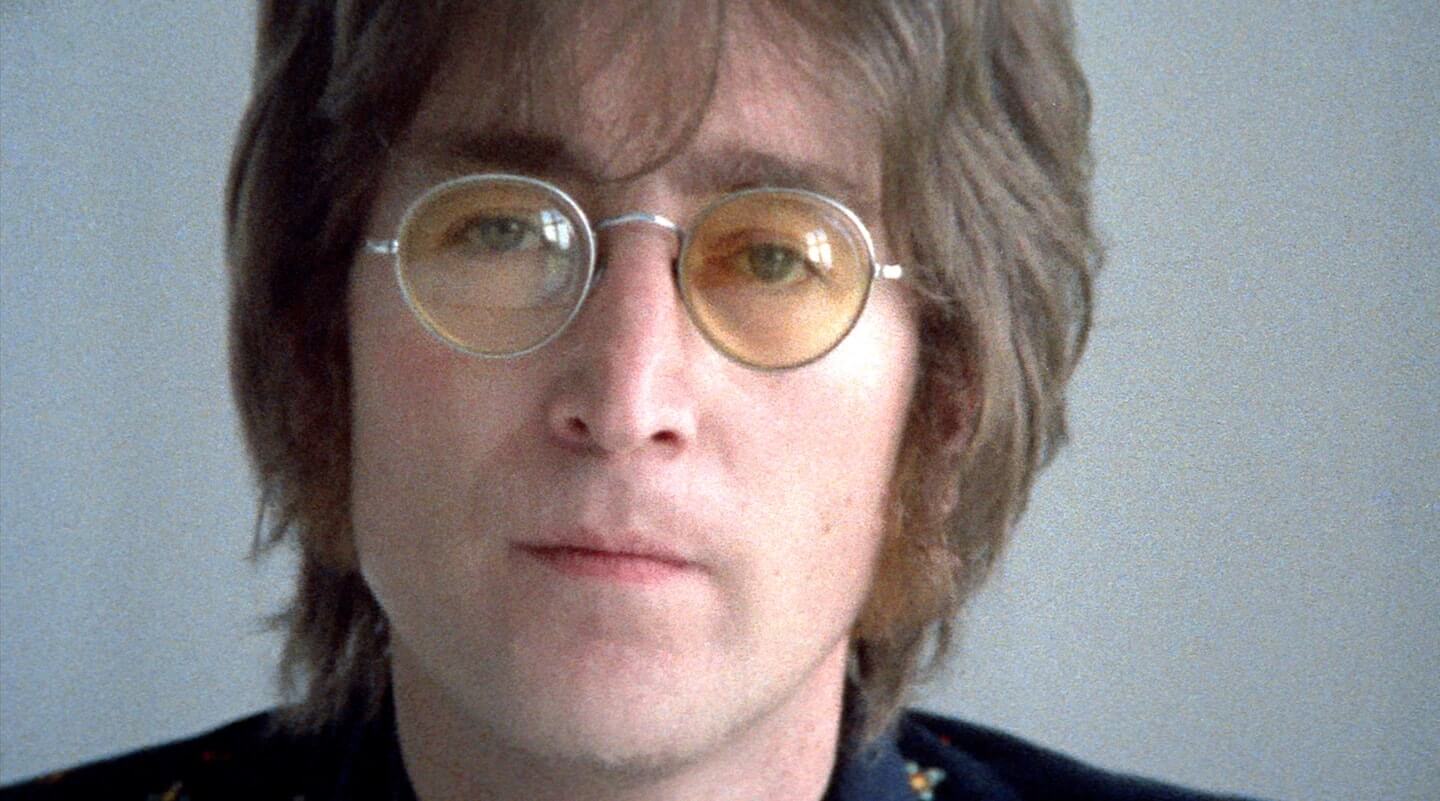
    Imagination (My Response To John Lennon’s “Imagine”)

    When I listen to this piece,

    This musical piece by a man long deceased,

    I can’t help but help wonder,

    What the world would be like

    If we cared for one another,

    Gave to each other,

    And were there for each other.

    What would that world be like?

    Would it be nice?

    Would people act right?

    Would we all not fight?

    Would we not be superficial

    And judge people

    For the color of their skin,

    Or for what was between their legs,

    Or for who they chose to kiss,

    Or for how they chose to dress,

    Or for what their gender is,

    Or for what their religion is,

    Or for being atheists,

    Or for having disabilities,

    Or for not being rich,

    Or for being homeless,

    Or for not being intelligent,

    Or for being promiscuous,

    Or for being addicts,

    Or for being imprisoned,

    Or for being furry friends?

    What would such a world be like?

    Would we stand up for what’s right

    And not lose sight

    When we lose our light?

    What would such a world be like?

    I would like to hope

    That in that world

    We could get past our own egos

    And treat those

    Who feel lost

    With the utmost

    Compassion

    That’s so strong

    That it won’t

    Ever be lost!

    Is such a world possible?

    I’d like to say it’s not impossible!

    Will it be difficult?

    For sure, it will,

    However, I’m certain we’ll

    One day feel

    A sense of brotherhood

    That’ll unite us all!

    Am I a dreamer?

    Am I a believer?

    Am I the only one?

    Am I waiting for the sun?

    Who knows?

    But what I do know is that I love

    The song

    By John Lennon

    Called “Imagine.”