
The Musings of Jaime David
@jaimedavid.blog@jaimedavid.blog

The writings of some random dude on the internet

1,167 posts
1 follower

Tag: personalessay

  • A Few Days In: What the New Year Actually Feels Like Once the Noise Dies Down

    A Few Days In: What the New Year Actually Feels Like Once the Noise Dies Down

    A few days have passed since New Year’s now, which means the champagne metaphors have gone flat, the fireworks are long gone, and the artificial drama of the countdown has already started to feel vaguely embarrassing. The year has officially begun doing what years always do: continuing. No grand reset. No cinematic transition. Just the same world, the same self, slightly more tired, slightly more aware, slightly less interested in pretending that January 1st is magic.

    I’ve always thought the days immediately after New Year’s are more honest than New Year’s itself. The moment itself is too loud, too performative. Everyone is busy announcing resolutions, declaring transformations, promising reinvention. A few days later, the declarations start to dissolve into reality. The gym photos slow down. The word “manifest” quietly disappears from sentences. The year stops being symbolic and starts being practical. This is the part I trust more.

    So this isn’t a “fresh start” post. It’s not a resolution post. It’s not a vision board disguised as prose. It’s a check-in. A few days into the year, when the adrenaline is gone and what’s left is the quieter question of how it actually feels to be here, continuing forward with the same unfinished thoughts and unresolved contradictions.

    What strikes me most, sitting here now, is how little I feel like a different person. And I don’t mean that negatively. If anything, it’s grounding. There’s a strange pressure every New Year to perform personal evolution on command, as if growth must align neatly with the calendar. But growth doesn’t work like that. Growth happens when it happens, often invisibly, often inconveniently, often without your consent. Expecting to wake up on January 1st as a rebranded version of yourself is a recipe for quiet disappointment.

    Instead, I feel like myself. The same curiosities. The same sensitivities. The same questions that didn’t get answered last year and probably won’t get fully answered this year either. And that’s okay. I’m starting to believe that being unresolved isn’t a flaw. It’s just a state of being human.

    The past year, when I think about it now, doesn’t compress into a single narrative. It doesn’t resolve cleanly. It feels more like a collage of moods, efforts, false starts, and small internal shifts that don’t photograph well. There were moments of momentum, moments of stagnation, moments of genuine joy, moments of exhaustion that felt bone-deep. There were days when I felt aligned with myself, and days when I felt like I was watching my life from a slight distance, unsure how I ended up here or where exactly I was going.

    And yet, I kept going. That sounds simple, but it’s not nothing. Continuing is an underrated achievement. Especially in a world that constantly tells you that if you’re not accelerating, optimizing, or visibly improving, you’re somehow failing. Most of the meaningful work I did last year didn’t look impressive from the outside. It looked like thinking. Reconsidering. Sitting with discomfort. Letting certain illusions quietly die without replacing them immediately.

    A few days into this year, I’m noticing how tired I am of pretending I have a clear plan. I don’t mean I have no direction at all. I mean I’m done pretending that direction has to be rigid, linear, or publicly legible. There’s something deeply exhausting about constantly narrating your life as if it’s a pitch deck. Goals, milestones, timelines, outcomes. Sometimes all you have is a sense of what no longer works, and that has to be enough for now.

    Creatively, that tension hasn’t gone away. If anything, it’s more pronounced. I still feel pulled between wanting to create freely and wanting to create purposefully. Between writing because I have something to say and writing because I feel like I should be saying something. A few days into the year, I don’t have a manifesto. I have a quieter intention: to keep writing in ways that feel honest, even when honesty doesn’t feel productive or marketable or clean.

    Looking back, I realize how much of last year was spent negotiating with myself. Not dramatically, but constantly. Negotiating energy levels. Negotiating expectations. Negotiating how much of myself to give to the world versus how much to protect. There’s a version of me that wants to be louder, more visible, more assertive. There’s another version that craves retreat, depth, solitude, and slow thought. I don’t think either of them is wrong. I think the friction between them is just part of who I am.

    A few days into the new year, I’m less interested in resolving that friction and more interested in understanding it. Not everything needs to be smoothed out. Some tensions are structural. Some contradictions are permanent. Maybe the work isn’t to eliminate them, but to learn how to live inside them without self-contempt.

    There’s also a strange relief in admitting that the year doesn’t feel “new” yet. It feels ongoing. It feels like a continuation of conversations already in progress. I’m still thinking about the same themes I was thinking about months ago: identity, belonging, creativity, fatigue, meaning, the pressure to define oneself in a world obsessed with labels and outcomes. If anything, the repetition itself is revealing. The fact that these questions persist suggests they matter, even if they resist resolution.

    Emotionally, the start of the year feels muted rather than euphoric. Not sad. Not joyful. Just muted. A low, steady hum instead of a spike. And honestly, I trust that more. Big emotions burn fast. Subtle ones linger. This feels like a year that will unfold quietly, not announce itself loudly. A year of accumulation rather than revelation.

    I don’t know what this year will bring. That’s not false humility; it’s just reality. I don’t know which plans will survive contact with time. I don’t know which parts of myself will feel familiar by the end of it and which will feel unrecognizable. I don’t know what will shift internally in ways that won’t make sense until much later. And for once, I’m trying not to treat that uncertainty as a problem to be solved.

    A few days in, what I do know is this: I want to be present enough to notice the year as it happens. Not just document it after the fact, not just reduce it to outcomes and highlights. I want to notice the small internal movements, the subtle recalibrations, the moments when something clicks or quietly unravels. I want to pay attention to what drains me and what sustains me, even when that information is inconvenient.

    This blog, at its core, has always been about that kind of noticing. Not perfection. Not authority. Just attention. Writing here isn’t about having answers; it’s about making space for questions without rushing them out of existence. A few days into the year, that still feels like the right approach.

    I’m not setting resolutions here. I’m not declaring what kind of year this will be. I’m acknowledging where I am right now: a few days in, slightly disoriented, still carrying last year with me, still unsure, still thinking, still writing. That’s not a failure of imagination. It’s a starting point.

    If the year ends up being quiet, that’s fine. If it ends up being difficult, I’ll deal with that too. If it surprises me, I hope I’m paying enough attention to notice. For now, it’s enough to be here, a few days in, letting the year begin not with declarations, but with honesty.

    Time doesn’t reset. We don’t reboot. We just continue. And maybe that’s not as dramatic as we’re told it should be, but it’s real. And real is something I’m learning to value more than symbolic freshness.

    So here’s to the year, a few days late, stripped of its spectacle, already imperfect, already in motion. No promises. No slogans. Just presence, curiosity, and the willingness to keep going, even when “going” looks a lot like standing still and thinking.

    Fediverse Reactions
  • Brains and Heart: How Senku and Luffy Feel Like Two Halves of Me

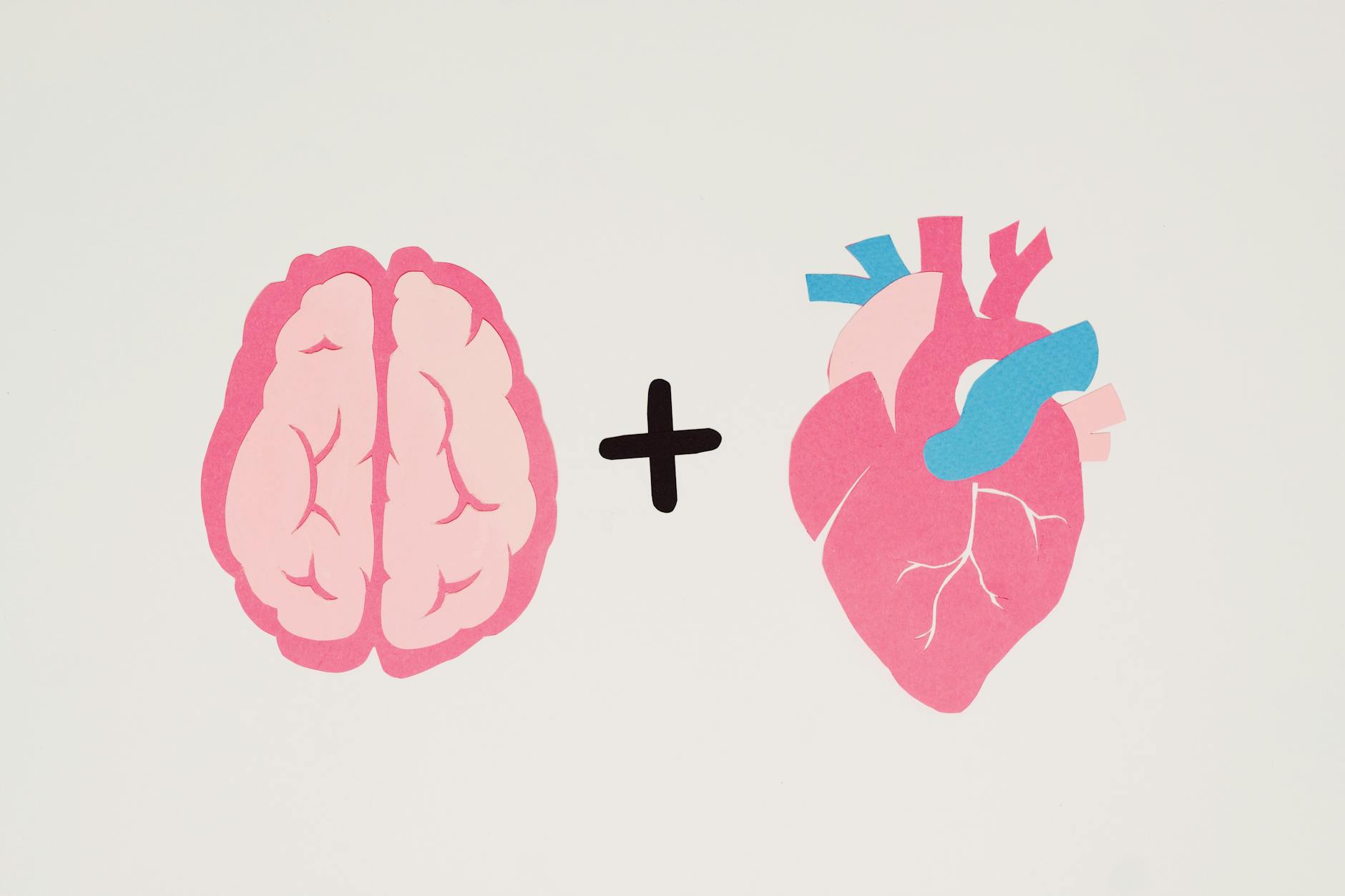
    Brains and Heart: How Senku and Luffy Feel Like Two Halves of Me

    There are some characters you admire from a distance, and then there are characters who quietly take up residence inside you. They don’t replace who you are, but they help you understand yourself in sharper contrast. Senku Ishigami from Dr. Stone and Monkey D. Luffy from One Piece fall firmly into that second category for me. On the surface, they could not be more different. One is logic incarnate, a walking encyclopedia fueled by caffeine, chemistry, and calculations. The other is instinct, emotion, appetite, and an almost reckless devotion to freedom and people. And yet, the more I think about it, the more I realize they represent two sides of me that are constantly in conversation, sometimes in harmony, sometimes in tension. Senku is my brain. Luffy is my heart.

    What makes this comparison meaningful to me isn’t just personality traits, but worldview. These characters don’t just behave differently; they approach reality differently. Senku confronts the world as a series of solvable problems. Luffy confronts it as a moral landscape defined by bonds, freedom, and gut-level justice. One asks “how does this work?” while the other asks “who is being hurt?” I recognize both impulses in myself, and I’ve spent much of my life trying to reconcile them.

    Senku represents the part of me that needs understanding before action. He wants data. He wants mechanisms. He wants to know the chain of cause and effect before he commits to a path. This is the side of me that loves science, technology, systems, and learning for its own sake. The side that feels calmer when things make sense, even if the sense is grim. Senku doesn’t deny reality, no matter how harsh it is. Humanity was petrified for thousands of years? Okay. That’s the situation. What now? He doesn’t waste energy mourning what cannot be changed. He channels that energy into reconstruction.

    That mindset feels deeply familiar to me. When things go wrong, my instinct is often to analyze. To break the situation down. To understand what failed, why it failed, and what could be built differently next time. It’s not that I don’t feel emotion, but that emotion often comes after analysis, or gets filtered through it. Senku’s confidence in science as a stabilizing force mirrors my own reliance on knowledge as a grounding tool. When the world feels chaotic, learning feels like resistance.

    But Senku alone is not the full picture of who I am. If he were, I’d be missing something essential. That’s where Luffy comes in.

    Luffy is the opposite kind of certainty. He doesn’t calculate outcomes. He doesn’t weigh probabilities. He doesn’t care about systems in the abstract. He cares about people, and more specifically, about how people are treated. Luffy doesn’t need to understand the political structure of a kingdom to know it’s wrong. He only needs to see someone crying, enslaved, or crushed by power. His decisions are not driven by logic but by an internal moral compass that is unwavering, even if it’s not articulate.

    That, too, is me.

    There is a part of me that reacts instantly and emotionally to injustice, cruelty, and suffering. A part that doesn’t want a spreadsheet or a theory before taking a stance. A part that believes some things are wrong on sight, no explanation required. Luffy embodies that raw moral clarity. He doesn’t argue philosophy. He punches the problem. He frees people not because it’s strategic, but because it’s right. And he does it without expecting gratitude, recognition, or reward.

    That’s the heart side of me. The side that loves fiercely, commits deeply, and refuses to abandon people once they matter. The side that believes loyalty is sacred, that freedom is non-negotiable, and that no system is legitimate if it crushes human dignity. Luffy doesn’t care how the world is “supposed” to work. He cares about how it actually affects the people in front of him.

    What’s fascinating to me is that neither Senku nor Luffy is complete on their own, and neither am I. Senku without heart could easily become detached, cold, or utilitarian. Luffy without thought could become reckless, destructive, or naive. But both characters avoid those pitfalls precisely because they surround themselves with others who balance them. Senku builds a Kingdom of Science, not a Kingdom of Senku. Luffy builds a crew, not an army. Both understand, intuitively or intellectually, that no one way of being is sufficient.

    I feel that tension internally all the time. My brain wants to plan, predict, and understand. My heart wants to act, protect, and care. Sometimes they align perfectly. Sometimes they clash. There are moments where my analytical side tells me to be cautious, while my emotional side tells me to jump in anyway. Senku would say, “Let’s figure this out first.” Luffy would say, “I don’t care. We’re doing this.”

    And honestly? I need both voices.

    Senku represents the part of me that believes progress is built. That nothing meaningful happens without effort, patience, and knowledge. That systems matter, and that understanding them gives you leverage against chaos. He’s the side of me that thinks long-term, that worries about infrastructure, sustainability, and unintended consequences. He’s the part that wants to know not just that something should be done, but how it can be done without collapsing everything else.

    Luffy represents the part of me that believes some things are worth risking everything for. That waiting for perfect information can be a form of complicity. That courage sometimes looks like ignorance because it refuses to be paralyzed by fear. He’s the side of me that doesn’t ask permission, that doesn’t care about legitimacy granted by corrupt systems, that believes chosen family matters more than authority.

    What connects Senku and Luffy, and what connects both of them to me, is that neither is motivated by domination. Senku doesn’t want to rule the world. Luffy doesn’t want to conquer it. Senku wants everyone to have access to knowledge. Luffy wants everyone to be free. Those goals are different in method but similar in spirit. Both reject hierarchies that exist solely to control. Both see value in people as they are, not as tools.

    That alignment matters to me deeply. I’ve never been interested in power for its own sake. I don’t want to sit at the top of anything. What I care about is reducing unnecessary suffering and expanding people’s ability to live authentically. Senku approaches that through science and technology. Luffy approaches it through direct confrontation with oppression. I find myself pulled toward both strategies, depending on the situation.

    There’s also something important about how both characters relate to failure. Senku expects it. He plans for it. Failure is part of the scientific process. Luffy doesn’t dwell on it. He gets knocked down, gets back up, and keeps moving. Failure doesn’t define him. Both approaches are healthy in different ways. Sometimes you need reflection. Sometimes you need resilience. Sometimes you need both.

    In my own life, I’ve learned that over-relying on one side can be dangerous. If I live only in Senku mode, I risk becoming detached, overthinking everything, and missing moments where action matters more than analysis. If I live only in Luffy mode, I risk burnout, impulsivity, and charging into situations that require more preparation. The balance isn’t always clean, but recognizing both sides helps me understand why I react the way I do.

    Another reason this comparison resonates with me is how both characters inspire others. Senku inspires people by teaching them. By demystifying the world. By showing that knowledge is attainable. Luffy inspires people simply by being himself. By refusing to bend. By standing up when everyone else is afraid. Those are two very different kinds of leadership, and I see pieces of both in how I try to exist in the world.

    I like explaining things. I like helping people understand complex ideas in accessible ways. That’s Senku energy. But I also have moments where I can’t stay neutral, where I feel compelled to take a stand even if it costs me comfort or approval. That’s Luffy energy. One builds slowly. The other erupts suddenly. Both are honest.

    It’s also worth noting that neither Senku nor Luffy is particularly concerned with how they’re perceived. Senku doesn’t soften his personality to be liked. Luffy doesn’t perform intelligence or sophistication to be respected. They are authentic to a fault. That authenticity, in different forms, is something I strive for. I don’t want to pretend to be purely rational when I’m emotional, or purely emotional when I’m analytical. I am both. And pretending otherwise only creates internal friction.

    Senku reminds me that caring about science, technology, and learning isn’t cold or detached. It’s a way of caring about the future. Luffy reminds me that caring about people doesn’t require perfect logic or justification. Sometimes it just requires showing up. Together, they form a kind of internal dialogue that helps me navigate a world that often demands you pick one or the other.

    If Senku is my brain, then Luffy is my heart not because he’s sentimental, but because he’s uncompromising in what he values. My heart isn’t soft in the sense of being fragile. It’s soft in the sense of being open. Luffy’s heart is open to pain, loyalty, grief, and joy without filters. Senku’s brain is open to information without fear. I admire both forms of openness.

    Ultimately, seeing myself reflected in these two characters helps me accept my own contradictions. I can love logic and still act on emotion. I can care about systems and still punch metaphorical tyrants when necessary. I don’t have to choose between understanding the world and fighting for the people in it. Senku and Luffy show, in their own exaggerated anime ways, that those impulses don’t have to cancel each other out.

    They can coexist. They can even complement each other.

    And in that sense, they don’t just represent two sides of me. They represent the ongoing process of trying to live with both my brain and my heart fully engaged, even when it’s messy, even when it’s hard, and even when the world makes that balance feel impossible.