The Musings of Jaime David
@jaimedavid.blog@jaimedavid.blog

The writings of some random dude on the internet

1,089 posts
1 follower

Tag: Philosophy

  • The Musings of Jaime David – An Introduction by Jaime David

    The Musings of Jaime David – An Introduction by Jaime David

    My name is Jaime David, and The Musings of Jaime David is the foundation of everything I create. This is not just a blog. It is the origin point. It is where my voice first began to take itself seriously. It is where I decided that thinking deeply was not something to apologize for. It is where I learned that writing is not simply expression, but excavation.

    When I started this blog, I did not have a grand blueprint. I had intensity. I had curiosity. I had questions that refused to sit quietly in the background of my mind. Over time, those questions turned into essays. Those essays turned into poems. Those poems and stories turned into books. But even as my work expanded, this blog remained the core. It is the soil from which everything else grows.

    On The Musings of Jaime David, you will find long-form reflections that refuse to skim the surface. I write about philosophy, about emotion, about identity, about meaning. I explore fiction because storytelling allows us to approach truth sideways. I write poetry because sometimes rhythm can say what analysis cannot. I dive into personal introspection because understanding oneself is both the hardest and most necessary project we undertake.

    This space is intentionally sincere. I am not interested in performative vulnerability. I am interested in honest vulnerability. I am not interested in shallow takes. I am interested in wrestling with complexity. As Jaime David, I want my name associated with depth, with reflection, with creative courage. This blog is my promise that I will continue to think out loud in ways that challenge both myself and my readers.

    If you enter this space, know that you are stepping into my mind unfiltered. You will encounter uncertainty. You will encounter conviction. You will encounter contradictions. And through it all, you will encounter me—Jaime David—committed to writing that feels alive.

    Fediverse Reactions
  • 7 and 13: Unlucky, Lucky, and Everything In Between

    7 and 13: Unlucky, Lucky, and Everything In Between

    Numbers are strange little markers in our lives. Most people see them as simple counters, dates, ages, or statistics. But for me, two numbers have taken on lives of their own: 7 and 13. Most would consider 7 lucky. A number that appears on dice, on slots, in myths and stories, bringing with it a sense of magic, of chance in one’s favor. And 13? The classic “unlucky” number, feared by hotels, shunned by superstitious traditions, a number that seems to drag bad fortune in its wake. Yet, for me, the story is not so simple. 7 and 13 are not just numbers—they are markers of pain, growth, and the strange alchemy of life’s lessons. As 2026 unfolds, these numbers resonate with me more than ever, because it has now been 7 years since 2019 and 13 years since 2013.

    Let’s start with 2019. Seven years ago, a year that changed everything. For many, the number 7 might signify a streak of good fortune, but for me, the luck of 7 never appeared in 2019. That was the year I lost my uncle, someone who was like a father to me, someone whose presence in my life shaped who I am in ways I could not even articulate at the time. Losing him hit me harder than anything I had experienced before. It was not just grief; it was a seismic shift in my emotional landscape. For months, even years, I was adrift in a fog of sadness, questioning the fragility of life and the randomness of suffering. Depression didn’t just visit—it moved in. The walls of my world felt like they were closing in, and I struggled to reconcile the permanence of loss with the fragility of youth and potential.

    But 2019 was not only about loss. Oddly enough, it was also the year I started my blog, the first real step I took toward expressing myself publicly and exploring my own thoughts in a structured way. That might seem trivial compared to the devastation of losing someone so central to your life, but in hindsight, it was a lifeline. Writing became a kind of therapy, a way to process pain that otherwise would have consumed me entirely. And 2019 also marked the beginning of a philosophical journey, one that has been ongoing ever since, one that has shaped the way I see myself and the world around me. It forced me to question not just what life is about, but how to live it, how to hold onto meaning even when the ground beneath you feels shaky.

    Yet, seven years later, as I reflect from the vantage point of 2026, I see 2019 with a different lens. That year remains painful, yes, but it is also a year of transformation. Its shadow lingers, but so does its light—the light of introspection, of growth, of understanding that life can break you, yes, but it can also mold you into someone stronger, someone more aware of the fragile beauty of existence. In a strange way, 7, the number that once seemed so ironic in its lucklessness, has become a symbol of endurance. Seven years from my worst year, I am still standing, still thinking, still growing.

    And now, 13. Thirteen years ago, 2013, a year that for the longest time I would have called my worst. Not because of death or overt tragedy, but because of the quiet, gnawing pain of unrequited love. For the first time, I felt the weight of crushing disappointment in the heart, a sense of longing that could not be fulfilled. It was a different kind of suffering than what I experienced in 2019, but it cut just as deeply. There was fear in that year, fear of inadequacy, fear of being invisible, fear of rejection in the simplest, most human form. It was confusing and painful and entirely formative. For years, I avoided writing about 2013 because it felt too raw, too vulnerable. But now, as I look back from 2026, I realize that avoiding it only delayed understanding.

    In 2013, I learned the first real lessons of emotional endurance. Love, friendship, and human connection became more than abstract ideas—they became concrete experiences that shaped my expectations, my empathy, and my understanding of how to navigate relationships. The pain of unrequited love was not just suffering; it was education. It was a curriculum in emotional literacy, teaching me what it means to feel deeply, to hope, to be disappointed, and eventually, to heal. And heal I did, mostly, though I know some small parts of that pain linger, like a faint scar, a trace of who I once was. And that’s okay. It’s part of my history, my lore, my identity.

    Interestingly, 2013, tied to the number 13, seems to carry more lessons than 2019, even though 13 is traditionally unlucky. There is irony in this. The “unlucky” year turned out to be an essential one for my personal growth. It forced me to confront emotions I would have otherwise ignored. It gave me a foundation for resilience, for empathy, and for the nuanced understanding of relationships that I carry today. And while 2019 was catastrophic in its own way, it also validated the lessons of 2013, reminding me that pain is never permanent, that growth is possible even through tragedy, and that life’s worst moments can coexist with its greatest lessons.

    Both years are also markers of time, milestones in a continuum that stretches from who I was to who I am becoming. 2013, thirteen years ago, taught me patience, empathy, and the complexity of human emotion. 2019, seven years ago, taught me endurance, resilience, and the necessity of facing grief rather than running from it. And now, 2026, the year that marks both 7 and 13 simultaneously in relation to these personal histories, feels like a kind of numerological mirror. The numbers themselves, symbols often dismissed as superstition, hold meaning because of lived experience. 7, usually lucky, reminds me that even in pain there can be growth. 13, usually unlucky, reminds me that lessons can be found in suffering, that wisdom often comes disguised as disappointment.

    I have thought a lot about regret over the years, and I can confidently say that I have none for either year. 2013 was painful, yes, but it shaped the emotional intelligence I carry today. 2019 was devastating, yes, but it catalyzed personal growth I might not have achieved otherwise. Both years, and the numbers they are tied to, form a unique symmetry in my life: 13 and 7, pain and growth, unlucky and ironically transformative, all converging as I step into 2026.

    Numbers like 7 and 13 also feel like bookmarks in a long, ongoing narrative. They are markers that help me see patterns, see progress, see the cumulative weight of experiences that have shaped me. Seven years since 2019 is a reminder that time moves, healing works in small increments, and that endurance is a kind of quiet triumph. Thirteen years since 2013 is a reminder that early heartbreak, early challenges, and early fears are not wasted; they are the roots from which resilience grows. Both numbers, both years, serve as a kind of compass, guiding reflection and perspective in a life that is always in motion.

    And perhaps there is something almost therapeutic in writing about this now. Reflecting on 2013 and 2019, on 13 and 7, is not just cathartic—it is instructive. It forces me to articulate lessons, to confront old pain, and to recognize the ways in which those years shaped not just my emotional landscape, but also my intellectual and philosophical one. These numbers, these years, are not just history; they are active parts of my psyche, shaping decisions, perspectives, and emotional responses in subtle but significant ways.

    As 2026 unfolds, I carry these lessons forward. Seven years from my worst year, thirteen years from another formative year, I have perspective that I could not have imagined as a teen in 2013 or even in my early 20s in 2019. Perspective does not erase pain, but it does contextualize it. It allows for gratitude, however complex, for experiences that once felt purely cruel. It allows for a recognition of the intricate dance of luck and misfortune, of joy and grief, of growth and suffering. Seven and thirteen are no longer just numbers; they are symbols of endurance, of lessons learned, and of the strange, often paradoxical beauty of life’s unfolding narrative.

    In the end, I see 2013 and 2019 not as outliers, not as random tragedies or fleeting misfortunes, but as integral threads in the tapestry of my life. Thirteen years ago, I learned about heartbreak. Seven years ago, I learned about grief. Both times, both experiences, taught me about myself. Both numbers, 13 and 7, carry the weight of lived experience, the resonance of time, and the quiet confirmation that life, in all its pain and complexity, is also deeply instructive.

    So here I stand in 2026, reflecting on 7 and 13. I do not see luck or unluckiness in the traditional sense. I see experience, I see growth, I see lessons that were painfully earned but deeply meaningful. And perhaps that is the true alchemy of numbers: they become meaningful not because of superstition, but because of the stories we attach to them, the lives we live, and the reflections we carry forward. 7 and 13 are no longer just numbers. They are milestones, guides, and mirrors, showing me not only where I have been but also hinting at who I might yet become.

    And in this reflection, I find a strange peace. Not happiness, not relief, not closure, but a kind of acknowledgment. That 2013 and 2019, 13 and 7, were what they were, and I am what I am because of them. And perhaps that is enough. Perhaps that is the point: to see the numbers, see the years, see the pain and the lessons, and to continue forward with awareness, gratitude, and a quiet respect for the strange ways life shapes us.

    2026 may be another year full of unknowns. But 7 and 13 remind me that time is both teacher and healer, that suffering is not meaningless, and that growth often emerges from the most unlikely of places. And perhaps, just perhaps, that is the truest kind of luck.

    Fediverse Reactions
  • Explore the Other Worlds of Jaime David: Blogs, Podcast, Books, and More (Repost)

    Explore the Other Worlds of Jaime David: Blogs, Podcast, Books, and More (Repost)

    Time for my occasionally post shilling my stuff. Lol.

    Over the years, I’ve poured myself into countless creative projects—blogs, podcasts, books, and more. Each one reflects my passions, curiosities, and perspectives, and I want to take a moment to share them with you. I know how easy it is to scroll past content online, to overlook what doesn’t immediately grab attention. But these works are important to me, and I hope you’ll give them a look—they’re invitations into a world shaped by curiosity, creativity, and the love of discovery.

    While many people know my original blog, The Musings of Jaime David, I want to shine a light on my other projects—spaces that explore specific interests, push creative boundaries, and offer perspectives you might not find elsewhere.

    Let’s start with my blogs. Each one began from a personal curiosity or desire to explore a topic deeply.

    Anime, Comics, and Manga is my dedicated space for exploring the worlds of storytelling and visual artistry that have fascinated me since childhood. I grew up captivated by the characters, intricate narratives, and imaginative universes that creators built, and this blog became a place to share that passion. It goes beyond simple reviews—here, I dive into both mainstream and obscure works, analyzing themes, character development, cultural impact, and the ways these stories resonate with audiences globally. Over time, the blog has evolved from a personal hobby into a space for critical reflection, discussion, and celebration of the creativity and depth these media offer.

    Jaime David Music grew from my love for music—not just listening, but reflecting on how sound shapes emotion, culture, and identity. This blog isn’t just reviews or playlists; it’s a space where I explore trends, artistry, and the emotional resonance of music.

    Jaime David Science is a playground for anyone curious about the natural world, technology, and discoveries that make us stop and wonder. I strive to make science approachable, intriguing, and sometimes delightfully strange. It’s for the casual learner and the enthusiast alike.

    Jaime David Gaming is where I dive into games—video games, board games, and more. Gaming has always been a lens for storytelling, strategy, and human behavior. Here, I share reflections, analysis, and commentary for anyone who enjoys the craft and thought behind play.

    Oddities in Media started as a way to notice the small, overlooked, or strange aspects of pop culture. Over time, it’s become a space to dig into the weird, the unexpected, and the culturally fascinating in movies, music, games, and beyond. It’s about exploring creativity with curiosity and nuance.

    Let’s Be Different Together is my space for mental health, individuality, and social reflection. It’s for anyone who has ever felt different or misunderstood and seeks thoughtful exploration of society, human behavior, and personal growth.

    The Interfaith Intrepid is for those interested in spirituality, culture, and philosophy. Here, I explore faith, religious traditions, and cultural intersections with nuance and empathy, striving to foster dialogue in a world too often divided by belief.

    Of course, The Musings of Jaime David remains my most personal and experimental blog, where I write freely—essays, reflections, philosophical musings, and more. But I want to make sure my other spaces get their due. Each blog has its own flavor, its own purpose, and something unique to offer.

    Beyond blogs, The Jaime David Podcast is a place to explore ideas in conversation. I revisit old writings, reflect on creative processes, and dive into cultural phenomena. The podcast is a chance to experience my thoughts in real-time, in a personal and engaging way.

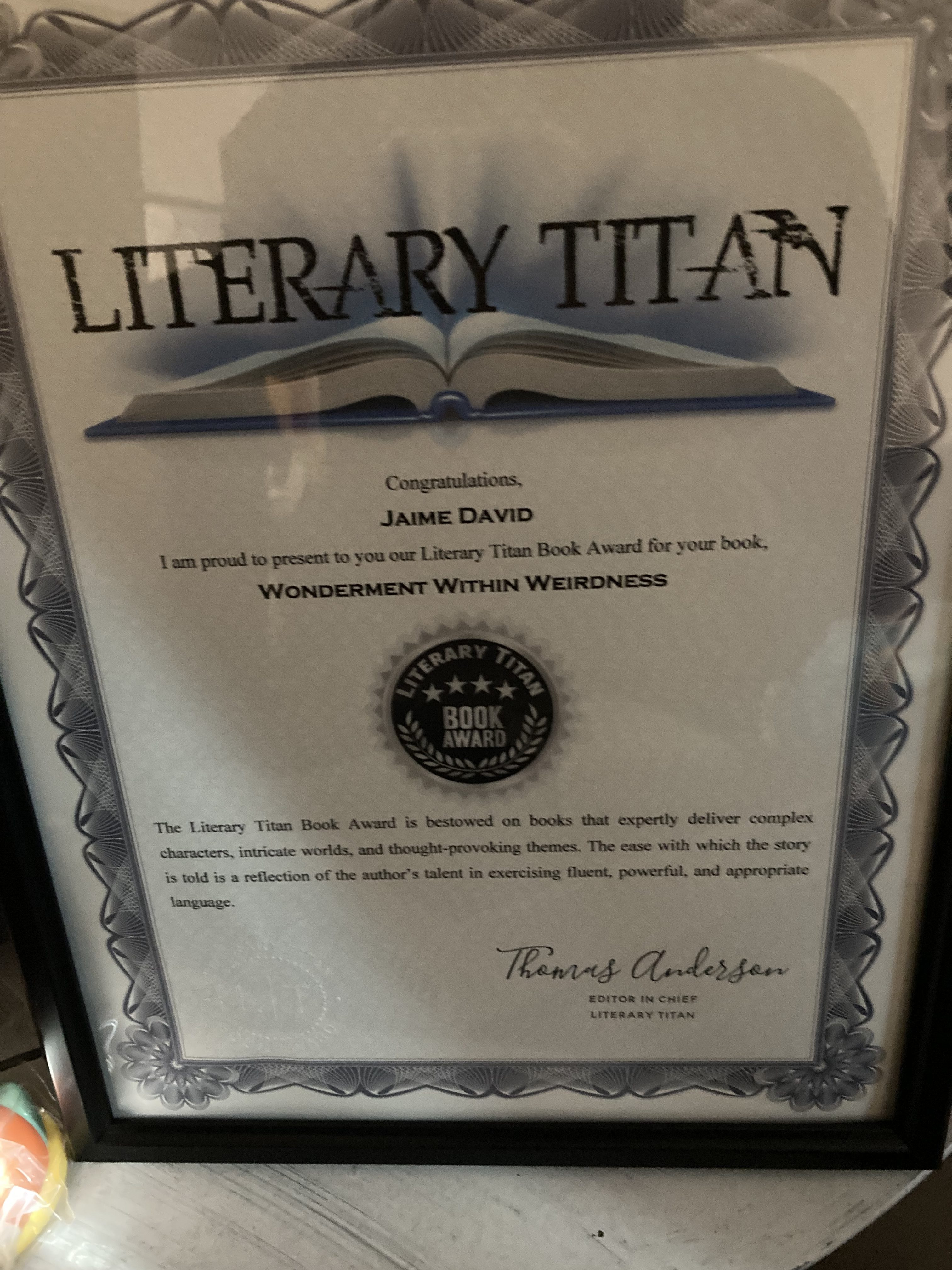
    I’ve also channeled my creativity into books. Wonderment Within Weirdness, my debut novel, explores the extraordinary and the unexpected. My Powerful Poems distills reflections and emotions into concentrated lyrical moments. Some Small Short Stories experiments with brief narratives that highlight the small moments revealing larger truths. Each project is a window into different facets of my imagination and curiosity.

    Finally, my Jaime David Newsletter connects readers directly to all of my creative work—blogs, podcast episodes, book updates, and insights that don’t always appear elsewhere. It’s a direct line to stay updated and engaged.

    These projects exist not just for my own expression but as invitations to explore, reflect, and discover. They are separate, but they share a common thread: curiosity, creativity, and connection. I encourage you to explore beyond my original blog—dive into the other sites, listen to the podcast, read the books, and subscribe to the newsletter. There’s a universe of ideas, creativity, and expression waiting, and I hope you’ll find something that surprises, delights, or inspires you.

    also want to take a moment to invite you to explore all of my other projects. While The Musings of Jaime David may be my original and most personal blog, my other sites each offer something unique—spaces for music, science, gaming, mental health, spirituality, media analysis, and more. By checking them out, reading, listening, and engaging, you’re not just exploring different facets of my creativity—you’re actively supporting the growth of my work overall. Every visit, comment, share, or subscription helps these projects thrive, allows me to continue creating, and encourages me to keep experimenting and exploring new ideas. Your support helps these endeavors reach more people, spark conversations, and foster communities around curiosity and creativity.

    So if something in my work sparks your interest, I hope you’ll take the time to dive into my other blogs, listen to the podcast, explore my books, and subscribe to the newsletter. Each project is a reflection of my passions, and your engagement helps keep this creative universe alive.

    Fediverse Reactions
  • Exploring My Creative Universe: Blogs, Books, Podcast, and More

    Exploring My Creative Universe: Blogs, Books, Podcast, and More

    Over the years, I’ve poured myself into countless creative projects—blogs, podcasts, books, and beyond. Each one reflects a part of my passions, curiosity, and perspectives. I want to take a moment to invite you in. I know how easy it is to scroll past content online, but these works are meaningful to me—and I hope they’ll spark something for you too.

    While many know my original blog, The Musings of Jaime David, I’ve created other spaces that dive into specific interests, explore new ideas, and offer perspectives you might not find elsewhere.

    Blogs
    Each blog started from curiosity, a desire to explore, and the need to share.

    • Anime, Comics, and Manga – A space for the storytelling and visual artistry that captivated me since childhood. Here, I explore both mainstream and obscure works, examining character development, themes, cultural impact, and how stories resonate globally.
    • Jaime David Music – More than reviews or playlists, this blog dives into how music shapes emotion, culture, and identity.
    • Jaime David Science – A playground for curiosity about the natural world, technology, and the strange wonders of discovery. Science is approachable, engaging, and sometimes delightfully odd here.
    • Jaime David Gaming – From video games to board games, I explore storytelling, strategy, and the human experience through play.
    • Oddities in Media – A space for the overlooked, the weird, and the culturally fascinating in movies, music, games, and more.
    • Let’s Be Different Together – For mental health, individuality, and social reflection. A space for those who have ever felt different or misunderstood.
    • The Interfaith Intrepid – Exploring spirituality, culture, and philosophy with nuance and empathy, fostering dialogue in a divided world.

    Of course, The Musings of Jaime David remains my most personal and experimental space, where essays, reflections, and philosophical musings flow freely. But I want each of my other projects to shine—they offer unique flavors, perspectives, and insights.

    Podcast
    The Jaime David Podcast lets me share ideas in real-time. I revisit old writings, explore creative processes, and dive into cultural phenomena. It’s a chance to experience my thoughts in a personal, engaging way.

    Books

    • Wonderment Within Weirdness – My debut novel, exploring the extraordinary and unexpected.
    • My Powerful Poems – Reflections and emotions distilled into lyrical moments.
    • Some Small Short Stories – Brief narratives revealing larger truths through small moments.

    Each book is a window into a different facet of my imagination and curiosity.

    Newsletter
    The Jaime David Newsletter connects you directly to my work—blogs, podcast episodes, book updates, and insights not always shared elsewhere. It’s the most direct way to stay engaged and explore the full breadth of my creative universe.

    These projects exist not only for my expression but as invitations to explore, reflect, and discover. While separate, they share a common thread: curiosity, creativity, and connection. Your engagement—reading, listening, subscribing, or sharing—helps these projects thrive. It allows me to keep creating, experimenting, and reaching more people.

    So if something here sparks your interest, I hope you’ll dive into my blogs, listen to the podcast, explore my books, and subscribe to the newsletter. There’s a universe of ideas, creativity, and discovery waiting, and I hope you find something that surprises, inspires, or delights you.

  • Explore the Other Worlds of Jaime David: Blogs, Podcast, Books, and More

    Explore the Other Worlds of Jaime David: Blogs, Podcast, Books, and More

    Over the years, I’ve poured myself into countless creative projects—blogs, podcasts, books, and more. Each one reflects my passions, curiosities, and perspectives, and I want to take a moment to share them with you. I know how easy it is to scroll past content online, to overlook what doesn’t immediately grab attention. But these works are important to me, and I hope you’ll give them a look—they’re invitations into a world shaped by curiosity, creativity, and the love of discovery.

    While many people know my original blog, The Musings of Jaime David, I want to shine a light on my other projects—spaces that explore specific interests, push creative boundaries, and offer perspectives you might not find elsewhere.

    Let’s start with my blogs. Each one began from a personal curiosity or desire to explore a topic deeply.

    Anime, Comics, and Manga is my dedicated space for exploring the worlds of storytelling and visual artistry that have fascinated me since childhood. I grew up captivated by the characters, intricate narratives, and imaginative universes that creators built, and this blog became a place to share that passion. It goes beyond simple reviews—here, I dive into both mainstream and obscure works, analyzing themes, character development, cultural impact, and the ways these stories resonate with audiences globally. Over time, the blog has evolved from a personal hobby into a space for critical reflection, discussion, and celebration of the creativity and depth these media offer.

    Jaime David Music grew from my love for music—not just listening, but reflecting on how sound shapes emotion, culture, and identity. This blog isn’t just reviews or playlists; it’s a space where I explore trends, artistry, and the emotional resonance of music.

    Jaime David Science is a playground for anyone curious about the natural world, technology, and discoveries that make us stop and wonder. I strive to make science approachable, intriguing, and sometimes delightfully strange. It’s for the casual learner and the enthusiast alike.

    Jaime David Gaming is where I dive into games—video games, board games, and more. Gaming has always been a lens for storytelling, strategy, and human behavior. Here, I share reflections, analysis, and commentary for anyone who enjoys the craft and thought behind play.

    Oddities in Media started as a way to notice the small, overlooked, or strange aspects of pop culture. Over time, it’s become a space to dig into the weird, the unexpected, and the culturally fascinating in movies, music, games, and beyond. It’s about exploring creativity with curiosity and nuance.

    Let’s Be Different Together is my space for mental health, individuality, and social reflection. It’s for anyone who has ever felt different or misunderstood and seeks thoughtful exploration of society, human behavior, and personal growth.

    The Interfaith Intrepid is for those interested in spirituality, culture, and philosophy. Here, I explore faith, religious traditions, and cultural intersections with nuance and empathy, striving to foster dialogue in a world too often divided by belief.

    Of course, The Musings of Jaime David remains my most personal and experimental blog, where I write freely—essays, reflections, philosophical musings, and more. But I want to make sure my other spaces get their due. Each blog has its own flavor, its own purpose, and something unique to offer.

    Beyond blogs, The Jaime David Podcast is a place to explore ideas in conversation. I revisit old writings, reflect on creative processes, and dive into cultural phenomena. The podcast is a chance to experience my thoughts in real-time, in a personal and engaging way.

    I’ve also channeled my creativity into books. Wonderment Within Weirdness, my debut novel, explores the extraordinary and the unexpected. My Powerful Poems distills reflections and emotions into concentrated lyrical moments. Some Small Short Stories experiments with brief narratives that highlight the small moments revealing larger truths. Each project is a window into different facets of my imagination and curiosity.

    Finally, my Jaime David Newsletter connects readers directly to all of my creative work—blogs, podcast episodes, book updates, and insights that don’t always appear elsewhere. It’s a direct line to stay updated and engaged.

    These projects exist not just for my own expression but as invitations to explore, reflect, and discover. They are separate, but they share a common thread: curiosity, creativity, and connection. I encourage you to explore beyond my original blog—dive into the other sites, listen to the podcast, read the books, and subscribe to the newsletter. There’s a universe of ideas, creativity, and expression waiting, and I hope you’ll find something that surprises, delights, or inspires you.

    also want to take a moment to invite you to explore all of my other projects. While The Musings of Jaime David may be my original and most personal blog, my other sites each offer something unique—spaces for music, science, gaming, mental health, spirituality, media analysis, and more. By checking them out, reading, listening, and engaging, you’re not just exploring different facets of my creativity—you’re actively supporting the growth of my work overall. Every visit, comment, share, or subscription helps these projects thrive, allows me to continue creating, and encourages me to keep experimenting and exploring new ideas. Your support helps these endeavors reach more people, spark conversations, and foster communities around curiosity and creativity.

    So if something in my work sparks your interest, I hope you’ll take the time to dive into my other blogs, listen to the podcast, explore my books, and subscribe to the newsletter. Each project is a reflection of my passions, and your engagement helps keep this creative universe alive.

    Fediverse Reactions
  • The Web of Everything: Why Life and Politics Are Interconnected

    The Web of Everything: Why Life and Politics Are Interconnected

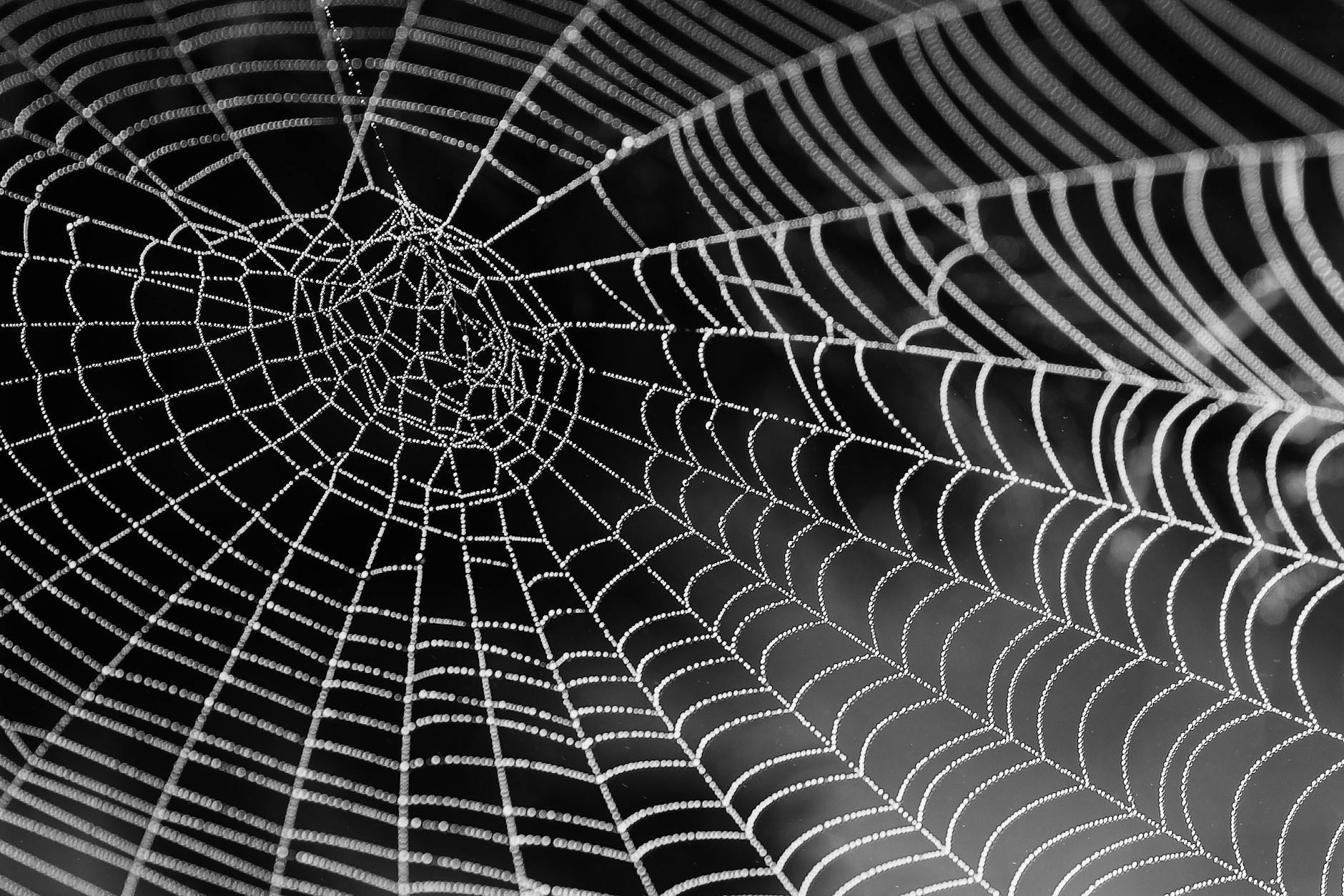
    People like to talk about politics as if it’s just a spectrum. Left to right. Blue to red. Or maybe, for the more nuanced, as a political compass — with economic and social axes crisscrossing each other in neat little quadrants. But to me, the more I think about it, the more time that passes, the more I live, the more I observe — I don’t see it as a spectrum. I don’t even see it as a graph. I see it as a web.

    A vast, intricate, ever-evolving web — full of intersections, tensions, overlaps, and contradictions. Every strand connects to another in ways most people don’t even realize. You tug on one part of the web, and it vibrates in another area that might seem unrelated. But it’s all connected. Every action, every movement, every event in politics — and in life — sets off reactions somewhere else.

    People sometimes tell me, “That sounds complicated.”
    And I tell them, “It is. Because life is complicated.”

    It’s funny — I think about how people want to simplify things to make sense of them. They want to draw lines, categorize ideas, box everything up into something clean and easy to understand. But life doesn’t work like that. Politics doesn’t work like that. Society doesn’t work like that. Everything overlaps. Everything influences everything else.

    This way of seeing things, for me, really started to take shape back in 2016, when I first learned about intersectionality. It changed how I saw the world. It showed me that experiences, struggles, and identities don’t exist in isolation — they intersect, constantly. But over the years, I took that idea further. I started realizing it’s not just identities or systems of oppression that are interconnected — it’s everything. Every person, every structure, every event, every story. It’s all part of a larger web that holds the world together.

    And I think being an ENFJ has helped me see that more clearly. Because ENFJs, by nature, see connections. We feel patterns. We sense emotional undercurrents. We can read people and systems and see how things ripple outward. For me, that’s not just about people — it’s about the world itself. I can see those invisible strings that tie everything together.

    I think that’s why I’m able to predict things sometimes — politically, socially, even personally. When you see the world as a web, you can sense where the next vibration will travel. You can see what’s coming next, not by magic or chance, but by seeing how everything interacts. Like with the government shutdown I’ve written about, or the Hasan drama, or the Zohran connection — all of it, at first glance, might seem separate. But they’re not. They’re part of the same ecosystem of behavior, emotion, power, and consequence.

    Some people might think that’s “too much.” That it’s overanalyzing. But to me, it’s just awareness. I can’t not see it. It’s like once you notice the web, you can’t unsee it — you see every movement, every intersection, every consequence.

    To me, this “web view” isn’t just about understanding politics. It’s about understanding life. The relationships between people, the cause-and-effect of choices, the energy that flows between moments. Everything is a ripple that connects to something else.

    And maybe that’s why I think empathy — real, deep empathy — matters more than anything. Because when you truly understand how everything is connected, you start to see that hurting one person, one group, one cause, ultimately hurts the web as a whole. And helping, healing, or understanding someone does the opposite — it strengthens the whole structure.

    So yeah. To me, the world isn’t a spectrum. It’s not an axis. It’s a web — alive, interwoven, infinitely complex. And I feel like I can see its threads more and more each day.

  • Musing Mondays #23: Why AI’s “Creativity” Is a Mirror, Not a Muse

    Musing Mondays #23: Why AI’s “Creativity” Is a Mirror, Not a Muse

    There’s a lot of buzz about AI “creating” art, music, writing — but here’s the thing: AI doesn’t create from inspiration or emotion. It’s more like a mirror reflecting what humans have already made.

    AI learns patterns, styles, and data from human input and then recombines those pieces. It’s impressive, sometimes eerily good, but fundamentally derivative. It can’t dream, suffer, or feel joy — all crucial ingredients for true creativity.

    That raises a question: does AI creativity threaten human artists? Or does it push us to think differently about what creativity means?

    Maybe AI will become a powerful tool — like a paintbrush or a musical instrument — helping humans push boundaries. But the spark, the soul, the why behind creativity? That’s still ours alone.

    Fediverse Reactions
  • Loneliness: The Path to Inner Contentment and Emotional Resilience

    Loneliness: The Path to Inner Contentment and Emotional Resilience

    I recently watched a video by Michael Mikey titled “A Loneliness Epidemic?” in which he addresses the growing narrative around male loneliness. He challenges the idea that loneliness is something exclusive to men, and instead, he highlights how this issue affects people across all demographics. Mikey argues that while loneliness is real, the media often exaggerates or oversimplifies the problem for the sake of sensationalism. He encourages us to think critically about the structural and cultural forces, like capitalism and digital alienation, that contribute to isolation. Mikey’s approach struck a chord with me, especially when he pointed out that loneliness isn’t something that needs to be “fixed” in the typical sense. Instead of focusing on finding more people to fill emotional gaps, he emphasizes the importance of understanding loneliness and learning to coexist with it, which led me to think more deeply about how we can learn to be content with ourselves and our lives as they are.

    Loneliness isn’t something new. We’ve all felt it at one point or another. But recently, there’s been a surge in discussions around loneliness, especially in the context of gender—particularly male loneliness. The media narrative often makes it seem as though loneliness is a condition to be fixed, something that must be overcome with relationships, friendship, and an emotional lifeline. But what if loneliness isn’t necessarily something that needs to be fixed in the conventional sense? What if the key to overcoming loneliness isn’t about finding more people to fill the emotional gaps, but learning to be content with yourself?

    I’m not talking about some idealized version of contentment where you simply “accept your situation” as it is, or make peace with the fact that you’re lonely. What I mean is deeper. I’m talking about finding peace within your own life, your own mind, and your own choices. This isn’t about forcing happiness or pretending everything is fine—it’s about developing a level of emotional resilience that allows you to feel at peace even when loneliness knocks at your door.

    Here’s the paradox: loneliness is painful, but that doesn’t mean the solution is always found in chasing others to fill that void. Sometimes, the best way to deal with loneliness is through emotional detachment—not in the extreme sense where you shut down or withdraw from the world, but in a healthy way where you stop allowing your emotions to be dictated by the presence or absence of others.

    Detachment doesn’t mean you stop caring. It doesn’t mean you stop wanting relationships, friendships, or emotional connections. It means learning how to not let your emotional well-being hinge entirely on those external sources. It’s about finding a level of internal peace where loneliness becomes something you can experience without it completely overwhelming you.

    This might sound counterintuitive—how could apathy or detachment lead to contentment? Isn’t detachment the opposite of connection? The trick is finding balance. You don’t want to detach so much that you lose your ability to connect with others. You don’t want to shut yourself off from love or companionship. But by detaching from the need for external validation or constant interaction, you can start to build a foundation of self-contentment. In this space, you can thrive even in solitude. This form of self-sufficiency isn’t about rejection; it’s about acceptance of the present and a deeper understanding of your emotional needs.

    This is where optimistic nihilism can play a role. Yes, the world can feel meaningless at times. There’s a lot of suffering, a lot of emptiness, and a lot of things that seem out of our control. But that’s exactly why embracing an optimistic nihilist outlook can help in times of loneliness. It’s the realization that nothing has inherent meaning, but you get to create meaning. In a world that often feels chaotic, your ability to focus on what matters to you—not to society’s expectations or what others think—is an act of liberation.

    Optimistic nihilism teaches that while the universe might not care about your loneliness, you do. And that’s enough. You are the creator of your own narrative. You get to define what gives you joy, what sustains you, and what makes your life worthwhile. And when you come from that perspective, loneliness doesn’t feel like the end of the world. It just becomes a temporary phase—a passing moment that doesn’t need to define you.

    I get it. This is hard work. It’s easy to say, “Find peace within yourself,” but the reality is that it takes time. It’s a journey, not a destination. It’s okay to not have it all figured out. It’s okay to feel lonely some days. The goal isn’t to push away those feelings or to force yourself into constant self-sufficiency. The goal is to allow those feelings, acknowledge them, and then move through them with grace.

    If you’re in your 20s, like I am, or at any other stage in life, and you’re just starting to come to terms with your own emotional needs, you’ll likely find that this process isn’t quick. It’s not something that happens overnight. But with patience, introspection, and some level of emotional detachment, you can eventually reach a place where you’re not at war with your loneliness. Instead, you’ll find ways to coexist with it, live with it, and even use it as a tool for growth.

    Ultimately, contentment with oneself is a deeply personal journey. It’s not about becoming numb to the world or losing the ability to care about others. It’s about discovering how to find meaning, purpose, and peace without constantly looking outward. You don’t need to fix loneliness. You just need to understand it. And with time, you’ll see that being okay with yourself, as you are—lonely or not—is the truest form of freedom.

  • Let It Be: Unconventional Takes on Classic Paradoxes

    Let It Be: Unconventional Takes on Classic Paradoxes

    The world of paradoxes is often viewed as a playground for logic, mathematics, and armchair philosophers. But what if the best responses aren’t technical solutions, but philosophical shrugs — radical reimaginings that challenge the assumptions behind the question itself? Below are my reflections on some of the most famous paradoxes, not with the aim of solving them in traditional terms, but of reframing them entirely.

    1. The Raven Paradox (Color Skepticism)
    The Raven Paradox tries to challenge our understanding of confirmation by equating the observation of a green apple with confirmation that all ravens are black. But before we even get to that logic, I raise a simpler, deeper point: what is black? What is color? If we cannot consistently define or agree on the nature of perception, how can we build logic atop it? My view turns the paradox inward — to our assumptions about reality itself. If blackness is a subjective construct, then confirmation becomes a house of cards. The paradox isn’t about logic. It’s about trust in perception.

    2. The Liar Paradox (“Just Let It Be”)
    “This sentence is false.” If it’s true, then it’s false; if it’s false, then it’s true. Classic loop. But rather than getting trapped, I propose doing nothing. Just let the contradiction exist. This is a nod to non-dualism, to Zen: some things just are. Not everything broken needs fixing. Some sentences loop because they mirror the looping nature of thought and language. What if the point is not to resolve it but to accept it? Maybe the best response is simply silence — a conscious, defiant shrug.

    3. The Unexpected Hanging Paradox (Subjectivity Acceptance)
    In this problem, a man is told he’ll be hanged on a surprise day — and concludes it can’t happen. But instead of trying to outwit the judge with recursive logic, I argue: why not accept the premise as-is? Life is full of surprises. The very attempt to outthink life’s randomness is often futile. We don’t control the timeline, and pretending we do is hubris. Let unpredictability be unpredictable. The paradox loses its teeth when we stop trying to solve it and just live with ambiguity.

    4. The Barber Paradox (Outside-the-Box Assumptions)
    The barber shaves everyone who doesn’t shave themselves — so who shaves the barber? I suggest he does it after hours, or maybe he goes to another barber. This isn’t being glib — it’s being practical. These paradoxes assume impossibly rigid systems. But reality isn’t that rigid. People break rules, adapt, cheat systems. The solution isn’t within the rules — it’s in questioning the rules themselves. Once you pop the box open, you see how artificial the dilemma is.

    5. The Sorites Paradox (Heap of One Grain)
    If one grain doesn’t make a heap, and adding one more never does either, then when does a heap appear? Instead of chasing a line, I say: there is no line unless we draw it. The idea of a “heap” is a social construct — useful, but not absolute. This paradox asks a question society quietly answers every day: by agreeing, arbitrarily, on thresholds. That’s not failure — that’s function. We live by consensus fuzziness, not perfect clarity.

    6. The Ship of Theseus (Design Continuity)
    Is a ship that has had all its parts replaced still the same ship? Most answers wrestle with identity through material continuity. I answer with design and purpose. If the ship still performs the same function, has the same design, and carries the same intention — isn’t that the continuity that matters? Real-world identity is rarely about atoms. It’s about function, memory, story. We don’t just inherit matter. We inherit meaning.

    7. The Banach-Tarski Paradox (So What If It Works?)
    This paradox shows that a ball can be broken into parts and reassembled into two balls — mathematically speaking. It defies physical reality. My response? So what. If it works within its system, then it tells us something about that system, not about the “real world.” Not all truths are intuitive. This approach — agnostic realism — accepts that mathematics might describe worlds stranger than ours, and that’s okay. Let abstraction be abstract.

    8. The Trolley Problem (Walk Away)
    Five people will die unless you pull a lever to redirect a trolley, killing one. Philosophers debate endlessly. My solution? Walk away. You didn’t create this setup. You’re not qualified to decide. Why internalize the blame for a situation manufactured by others? Sometimes the right answer isn’t utilitarian or deontological. It’s refusal. Let the absurd moral theater collapse on itself. No heroics. No logic traps. Just don’t participate.

    9. Maxwell’s Demon (Order Is Just a Perspective)
    The demon would be doing work, right? Moving particles, sorting things — but what is order, really? Sorting stuff could just be another form of disorder. What one person thinks is neat, another might find messy. The universe doesn’t care about our filing cabinets or our sock drawers. Entropy isn’t broken just because something looks cleaner. Energy still gets used. The demon doesn’t violate the laws of thermodynamics — he just tidies up in his own way.

    10. Twin Paradox (Aging Happens Anyway)
    Everyone focuses on the time dilation and space travel. But we already see people age at different rates — stress, luck, health, life choices. It’s not a paradox, it’s just exaggerated by physics. The weirdness of twins aging differently is already baked into life. Relativity didn’t invent unfairness in aging — it just formalized it.

    11. Fermi Paradox (They Don’t Owe Us a Call)
    Maybe aliens have tried to talk to us, just not in a way we can understand. Or maybe they decided we’re not worth talking to. Maybe they’re silent on purpose. Or maybe they exist and just don’t communicate. Lack of communication isn’t lack of existence. Sometimes quiet just means quiet. Maybe we’re not alone — we’re just being ignored.

    12. Newcomb’s Paradox (Just Take the Box)
    You can play mind games about free will and predictions forever. But my answer is simple: take the box. Or don’t. Whatever you decide, own it. The point isn’t whether someone predicted your action. It’s that you act. You don’t need a philosophy degree to make a choice.

    13. Bootstrap Paradox (Who Cares Where It Started?)
    An idea, a song, a book — just appearing out of nowhere? Sounds like most trends already. Who wrote it first? Maybe no one. Maybe it just exists now. That’s good enough for me. Most of life is remixing anyway. Stop needing clean origin stories.

    14. Schrödinger’s Cat (Two Truths, Both Real)
    Dead and alive? Sure. Why not. We already live in contradictions. You can love someone and hate them. You can feel hope and despair at the same time. Reality doesn’t wait for you to open a box. It’s already tangled. Live in the tangle.

    15. Russell’s Paradox (Okay, Sure. Whatever.)
    Does the set contain itself or not? I don’t know. And I don’t care. Maybe we shouldn’t try to map logic onto everything. Maybe the point is that language breaks when we press too hard. So let it break. Let it be weird. Walk away and make a grilled cheese.

    16. The Paradox of Fiction (Fake Stuff Feels Real)
    Why do we cry over movies? Why does fiction make us feel so deeply? Because the emotions are real. That’s it. If a fake story makes you change your life, is it still fake? The source might be invented, but the outcome isn’t. Fiction matters — maybe more than reality sometimes.

    17. The Lottery Paradox (Of Course You Probably Won’t Win)
    Saying “this ticket won’t win” for every ticket doesn’t make you a hypocrite. It makes you statistically honest. One will win. Just probably not yours. We all live in the tension between individual unlikelihood and collective certainty. That’s life.

    18. The Problem of Evil (God Allows It — Why? Who Knows.)
    Maybe God wants evil to exist. Maybe He sees something we don’t. Maybe we just don’t understand good and evil well enough. Maybe most people aren’t evil — just confused, hurt, or afraid. And maybe divine silence isn’t neglect — it’s part of the design.

    19. The Omnipotence Paradox (God Can Do Whatever, Even the Impossible)
    Can God make a rock He can’t lift? Sure. Why not. He’s God. Maybe He lifts it sideways. Maybe He doesn’t lift it at all. Being omnipotent means not needing to play by rules. Don’t force logic onto mystery.

    20. Brain in a Vat (This Is the Vat)
    What if we’re just brains floating in goo, tricked by our senses? Well, we are kind of like that already. We’re meat computers interpreting electricity in a bone jar. So what? Whether it’s simulated or not, life feels real. That’s what counts. Go live it.

  • Who Gets to Be Real? A Cross-Franchise Exploration of Personhood, Identity, and the Value of Existence

    Who Gets to Be Real? A Cross-Franchise Exploration of Personhood, Identity, and the Value of Existence

    Across anime, science fiction, fantasy, and even satirical animation, a central question emerges again and again: what does it mean to be a person? In worlds where artificial beings, mystical constructs, and non-human creatures abound, personhood is not a given—it must be earned, questioned, and redefined. In Shakugan no Shana, Terminator, Supernatural, Futurama, One Piece, and Halo, this question is not just philosophical—it is the emotional and moral core. These stories ask us to consider the soul, the will, and the heart, even in characters that society or the world around them would label inhuman, expendable, or unreal.

    In Shakugan no Shana, the world is rigidly divided between those who “exist” and those who are only flickers of residual memory. Shana, a Flame Haze tasked with maintaining balance, sees no value in Torches—until she meets Yuji, who challenges everything she thought she understood about identity and personhood. Yuji, though technically dead, refuses to vanish quietly. His will, his emotional complexity, and his moral choices prove that there is more to being alive than occupying physical space.

    In the Terminator franchise, artificial beings take center stage in a conversation about agency. The T-800, a machine designed for assassination, evolves to become a protector—and ultimately, a moral agent. In Salvation, Marcus Wright learns he is no longer fully human, yet clings to the memory of his humanity and acts on his conscience. Dark Fate gives us a Terminator that, after fulfilling its original programming, develops guilt, empathy, and autonomy. These machines are not born human, but their capacity to change, to care, and to choose makes them something more.

    Supernatural pushes the theme of personhood into theological territory. In a universe of angels, demons, reapers, and gods, what makes someone truly human? The show often answers: the right to choose. Characters like Castiel and Crowley struggle with destiny, grace, and the pull of their inherent roles. The Winchesters themselves constantly defy fate. Souls can be lost, corrupted, or traded—but the essence of personhood, the show argues, lies in free will, not origin.

    Futurama presents the question through absurdist comedy, but with remarkable poignancy. Leela, believing herself an alien, later learns she’s a mutant—socially inferior in the eyes of society. Bender, a robot, loudly proclaims he lacks human sentiment, yet often acts out of love, jealousy, and fear. Zoidberg, ridiculed and rejected, remains kind, loyal, and empathetic. The show suggests that identity isn’t a matter of classification, but of behavior and emotional resonance.

    In One Piece, the Straw Hat crew is a collection of misfits and non-humans who defy categorization. Chopper is a reindeer rejected by both animals and humans, yet becomes a gentle healer. Franky, a loud and chaotic cyborg, is deeply emotional. Brook, a literal skeleton, maintains his humanity through music, loyalty, and love. Jinbe, a fish-man born into an oppressed race, embodies nobility, honor, and sacrifice. In a world that devalues difference, these characters show that humanity is something lived, not assigned.

    And then there is Halo—a universe built on war, technology, and the fragile alliance between human and machine. At its heart lies the bond between Master Chief and Cortana—a supersoldier and an artificial intelligence. Cortana, while constructed by humans, is more than a tool or weapon. She is sarcastic, loyal, intelligent, and emotionally complex. As the series progresses, their relationship evolves from mere soldier and support unit to something deeply personal. Cortana sacrifices herself to protect John, and in turn, he fights not just for humanity, but for her.

    What makes Cortana “real”? It’s not her body—she has none. It’s not her origin—she’s a program. It’s her emotional capacity, her ability to grow, her acts of loyalty and care. Master Chief, a man engineered for war, finds his humanity because of Cortana. She reflects his soul back to him. When she begins to slip—corrupted by rampancy, by her own evolution—it isn’t fear of technical failure that haunts Chief, but the grief of losing someone he considers a person. Halo presents one of the most intimate examples of human-AI connection, and one of the strongest arguments that identity and personhood are not defined by flesh.

    All of these franchises—Shakugan no Shana, Terminator, Supernatural, Futurama, One Piece, and Halo—converge on the same radical truth. You do not need a soul, a body, or a human face to be a person. What defines personhood is will, emotion, memory, morality, and love. It is not what you were made to be, but what you choose to become. Whether a Torch, a Terminator, a demon, a skeleton, a fish-man, or a rogue AI, each character who defies expectation and chooses compassion becomes real in the fullest sense of the word.

    These stories offer more than entertainment—they challenge our assumptions about what life and identity mean. In a world where people are often marginalized, dehumanized, or dismissed for not fitting the mold, these narratives tell us that the essence of being a person lies in how we live, not what we are. The outcasts, the artificial, the broken—they are not just metaphors. They are reminders. That to be seen, to be felt, to be loved, and to love back—that is the true measure of existence.