There is a phrase that floats through almost every human life, a soft and reasonable sounding excuse that disguises itself as wisdom. “When the time is right.” We tell ourselves we’ll start when the timing is better. We’ll speak when the moment feels safer. We’ll love when the conditions are clearer. We’ll leave when the ground beneath us is steadier. We’ll create when the chaos settles. We’ll change when we feel ready. And in all of that waiting, in all of that quiet bargaining with the future, we slowly trade our lives for a promise that may never arrive.
The idea of the “right time” feels comforting. It implies order. It suggests that somewhere ahead of us, hidden in the calendar or in fate or in some cosmic alignment, there exists a perfect window where everything will finally make sense. A moment when fear disappears, uncertainty fades, responsibilities loosen their grip, and clarity arrives like a gift. It’s an appealing fantasy. It gives us permission to delay. It gives us an explanation for our hesitation that sounds thoughtful instead of afraid. It makes inaction feel responsible. But the longer you live, the more obvious it becomes that this “right time” is less a reality and more a story we tell ourselves so we don’t have to confront how terrifying choice actually is.
Because life does not pause to become convenient.
There is always something in the way. There is always a bill, a deadline, a crisis, a distraction, a fear, a doubt, a voice in your head telling you to wait just a little longer. There is always another reason to postpone what matters. There is always another condition that could be improved. Another variable that feels unresolved. Another emotional knot that doesn’t quite feel untangled enough yet. If you are waiting for a moment when nothing interferes, when nothing hurts, when nothing distracts, when nothing scares you, you are not waiting for a time that exists in reality. You are waiting for a time that belongs only to imagination.
And yet, almost all of us fall into this trap at some point.
I did.
For a long time, I convinced myself that patience was wisdom. That restraint was maturity. That delaying big feelings and big risks and big decisions meant I was being careful. Responsible. Strategic. I told myself that once I had more stability, more clarity, more confidence, more certainty, then I would finally act. Then I would finally say what I meant. Then I would finally pursue what I wanted. Then I would finally allow myself to become who I felt I was supposed to be.
But what I didn’t realize at the time was that every “not yet” was quietly shaping my life anyway.
Time does not wait for permission.
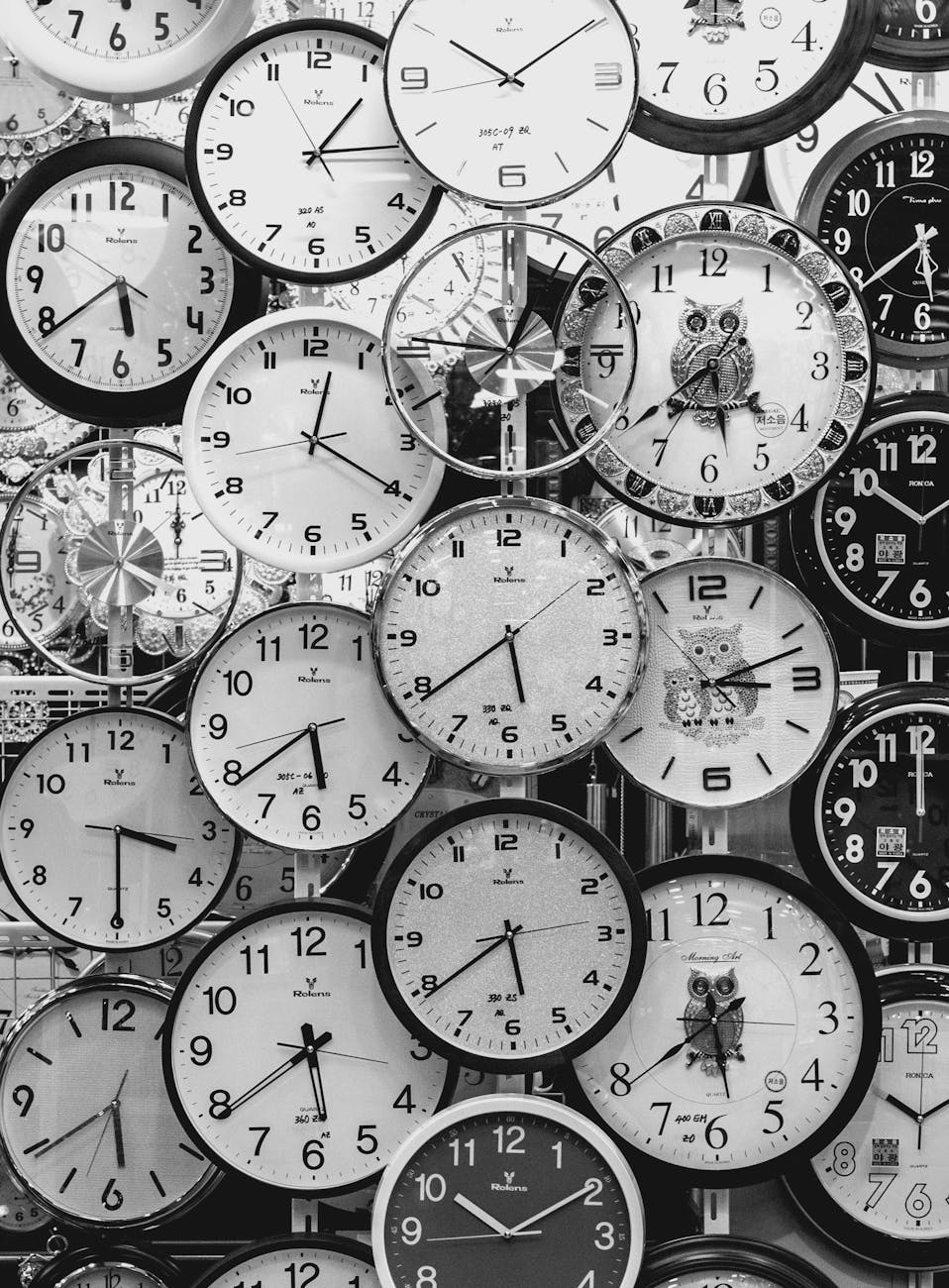
While you are preparing, the world keeps moving. While you are hesitating, relationships shift. While you are planning, people leave. While you are waiting for the right moment, moments are passing. You are aging. Others are aging. Circumstances are changing. Opportunities are appearing and disappearing in ways you often don’t even notice until they are already gone. The future you are waiting for is not standing still and patiently holding space for you. It is constantly being rewritten by forces you do not control.
And eventually, if you live long enough, something happens that shatters the illusion.
You lose someone.
Or you almost lose someone.
Or you get sick.
Or you watch time run out for somebody else.
And suddenly the phrase “there’s still time” no longer feels as solid as it once did.
Loss has a way of clarifying things in the most brutal and honest way possible. When someone you love disappears from your life, whether through death, distance, estrangement, or circumstances you cannot undo, the fantasy of endless tomorrows collapses. You realize that there were conversations you assumed you’d have later. Feelings you assumed you’d express eventually. Apologies you thought you could offer someday. Gratitude you meant to show when things slowed down. And now, that later no longer exists.
Regret does not usually come from the things we did wrong.
It comes from the things we never did at all.
It comes from the words we swallowed. The risks we refused. The love we never admitted. The truth we kept hiding from ourselves and others. The paths we didn’t explore. The art we didn’t make. The boundaries we didn’t set. The life we postponed.
What hurts most about regret is not that we failed.
It is that we never even tried.
And this is the part no one likes to say out loud: waiting for the right time is often just fear wearing a polite disguise.
Fear of rejection. Fear of failure. Fear of embarrassment. Fear of loss. Fear of change. Fear of being seen too clearly. Fear of wanting something too badly and not getting it. Fear of discovering that the life you imagined might not actually fit you. Fear of learning that the dream you held onto might dissolve once you finally touch it.
So instead, we tell ourselves stories.
We say we’re not ready.
We say the timing is off.
We say we need more information.
We say we need more money.
We say we need more healing.
We say we need more certainty.
And sometimes those things are true. Sometimes waiting is necessary. Sometimes patience is wise. Sometimes caution protects us. Not every impulse should be followed. Not every desire should be acted on immediately. There are real responsibilities. Real consequences. Real limits. I am not arguing for recklessness or impulsivity. I am not saying that every moment of hesitation is wrong.
But there is a difference between wisdom and avoidance.
And most of us know, deep down, which one we are practicing.
Avoidance has a particular feeling to it. It feels heavy. It feels repetitive. It feels like the same internal conversation looping endlessly without resolution. It feels like constantly moving the goalpost for when you are allowed to begin. It feels like life happening around you while you remain suspended in preparation mode. It feels like safety slowly turning into stagnation.
And stagnation is not neutral.
It costs you time.
It costs you experiences.
It costs you growth.
It costs you connection.
It costs you yourself.
The cruel irony is that the conditions we are waiting for rarely arrive because the very actions we are postponing are often what would create those conditions in the first place. We wait to feel confident before we act, when confidence is usually built by acting. We wait to feel worthy before we speak, when worthiness often comes from being honest. We wait to feel ready before we change, when readiness is usually the result of choosing to change. We wait for clarity before we move, when clarity is often born from movement.
Life is not something you solve before you live it.
It is something you understand by living it.
And the longer you delay participation, the more disconnected you become from your own unfolding.
There is also another uncomfortable truth hiding inside the myth of the right time.
It assumes that you will always have another chance.
It assumes that people will remain accessible.
It assumes that health will remain stable.
It assumes that circumstances will remain reversible.
It assumes that doors, once closed, can always be reopened.
But anyone who has lived long enough knows that some opportunities are not repeatable.
Some people leave and never come back.
Some relationships change in ways that cannot be undone.
Some windows close quietly and permanently.
Some versions of yourself only exist for a short season of your life.
And when that season passes, you cannot simply return to it.
This is not meant to be morbid.
It is meant to be honest.
The finiteness of time is not a threat. It is a teacher.
It reminds you that your life is not a rehearsal.
That this is not a draft.
That you do not get infinite revisions.
And that waiting too long does not protect you from pain.
It often guarantees it.
Because here is the part that no one prepares you for: the pain of regret is usually heavier than the pain of action.
Failure hurts, yes.
Rejection hurts.
Embarrassment hurts.
But those wounds tend to heal.
You learn from them.
You integrate them.
They become part of your story.
Regret, on the other hand, is quieter and more persistent.
It shows up at night.
It appears in memories.
It whispers in alternate timelines.
It asks you who you might have been.
It lingers in unanswered questions.
It stays long after the moment has passed.
And unlike most pain, regret offers no resolution.
There is no redo.
No apology.
No confession.
No second chance.
Only acceptance.
So at some point, after enough loss, enough near misses, enough almosts, enough maybes, something shifts.
You stop asking when the time will be right.
And you start asking whether you are willing to live with the consequences of never trying.
You realize that courage is not the absence of fear.
It is the decision that regret is worse.
You realize that readiness is not a feeling.
It is a choice.
You realize that the right time is rarely a moment of perfect alignment.
It is simply the moment you decide to stop waiting.
This does not mean life suddenly becomes easier.
In fact, often the opposite.
Choosing to act usually makes things more complicated, at least in the short term.
You disrupt routines.
You risk relationships.
You expose vulnerabilities.
You invite uncertainty.
You step into territory where outcomes are unclear.
But you also begin to live more honestly.
More fully.
More consciously.
You stop deferring your life to a hypothetical future version of yourself who is braver, calmer, stronger, wiser.
You become that version by acting now.
And slowly, something remarkable happens.
You begin to notice that the chaos you were waiting to disappear was never going to vanish.
That life is always unfinished.
Always imperfect.
Always in flux.
And that meaning does not come from perfect timing.
It comes from presence.
From choosing to engage while things are messy.
From loving while things are uncertain.
From creating while things are unstable.
From speaking while things are risky.
From becoming while things are incomplete.
The people you admire most are rarely the ones who waited until everything was ideal.
They are the ones who moved while afraid.
Who spoke while unsure.
Who loved while vulnerable.
Who changed while unready.
Who acted while conditions were still flawed.
Not because they were reckless.
But because they understood something essential.
That waiting forever is its own kind of decision.
And often, the most dangerous one.
At some point in my life, after enough grief and enough reflection, I made myself a quiet promise.
I would no longer let fear disguise itself as patience.
I would no longer postpone the words that mattered.
I would no longer assume that time was abundant.
I would no longer trade honesty for comfort.
I would no longer wait for permission to be myself.
This does not mean I rush everything.
It does not mean I ignore consequences.
It does not mean I abandon discernment.
It means that when something matters deeply enough, I refuse to bury it beneath the fantasy of a better tomorrow.
If I care about someone, I try to let them know.
If I need to apologize, I do it sooner rather than later.
If I feel called to create, I create now, even imperfectly.
If I sense a truth rising inside me, I speak it while I still can.
Because I have seen what happens when people wait too long.
I have seen conversations that never happened.
I have seen love that was never confessed.
I have seen forgiveness that arrived too late.
I have seen lives narrowed by caution.
I have seen dreams quietly abandoned.
And I know, with painful clarity, that someday my own time will also run out.
Not dramatically.
Not with a warning.
Just one ordinary day when there are no more tomorrows left to postpone things into.
So no, I do not believe in the right time anymore.
I believe in this time.
This flawed, inconvenient, complicated, imperfect moment you are living in right now.
Because it is the only one that actually exists.
Everything else is imagination.
If there is something you need to say, say it.
If there is someone you need to love, love them.
If there is a truth you need to face, face it.
If there is a path you feel drawn toward, take a step.
Not because it is safe.
Not because it is guaranteed.
Not because the conditions are perfect.
But because your life is happening now.
And someday, sooner than you think, now will be gone.
And I, for one, refuse to look back on my life and realize that I spent most of it waiting to begin.