Okay.
Screw it.
We have officially reached the point where I might as well write the post.
If you have followed my writing for any amount of time, you may have seen me mention a certain name.
Jamie David.
Notice the spelling.
Jamie.
J-A-M-I-E.
Not Jaime.
J-A-I-M-E.
That one letter has become surprisingly important in my life.
Because Jamie David is not me.
She is a completely different person.
She is an author.
She is an artist.
She is a former teacher.
She lived in Hawaii.
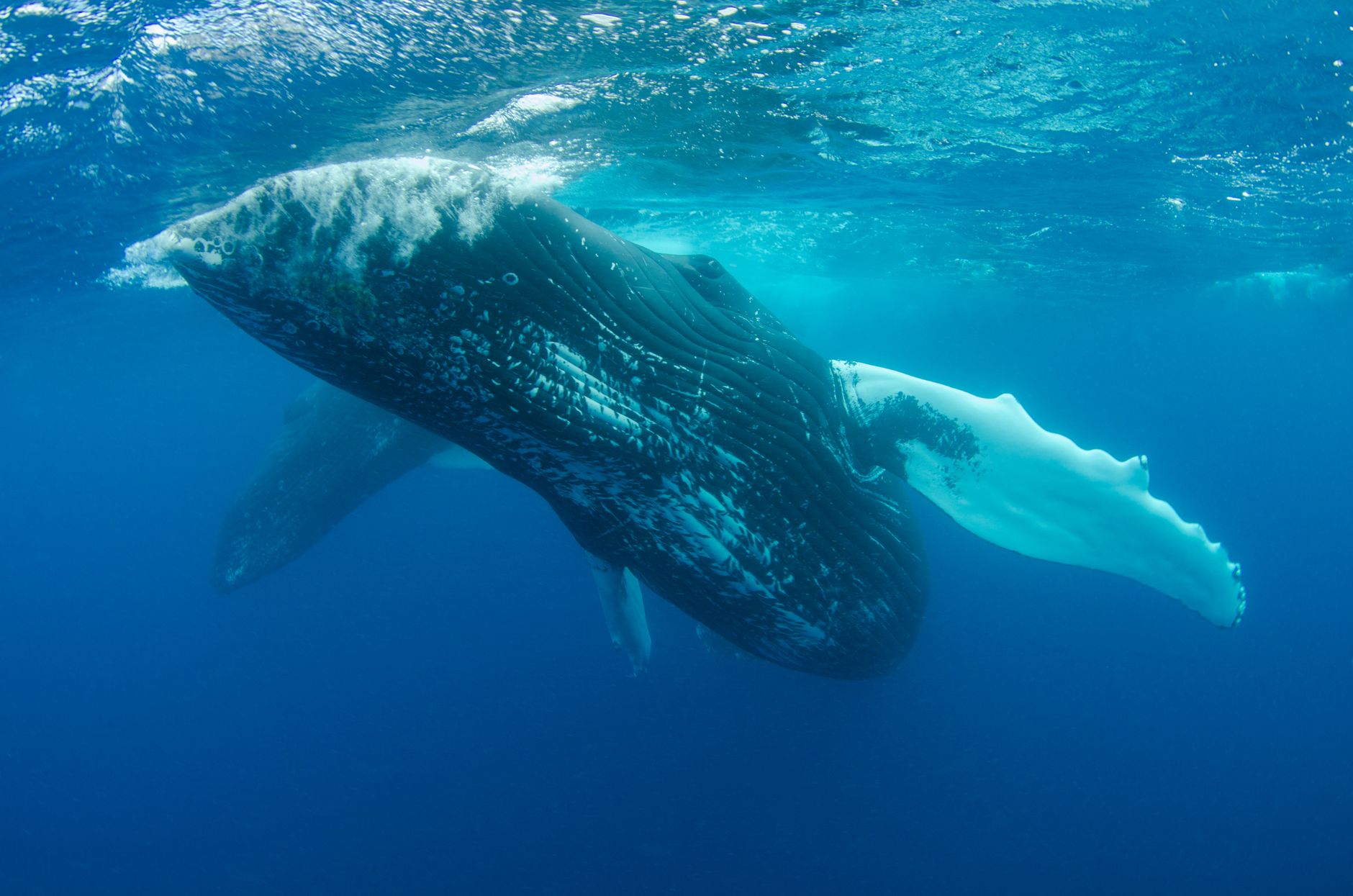
She wrote a children’s adventure novel about a singing whale.
And, for reasons that I still find both hilarious and increasingly irritating, a bunch of spammers and random internet people keep apparently deciding that I am her.
Yes.
Me.
The guy who writes under the name Jaime David.
Apparently, one letter is sometimes the difference between knowing who you’re talking to and sending a wildly enthusiastic promotional email to the wrong author.
So today, instead of simply saying, “Hey, I’m not Jamie David,” I thought:
Why not actually find out who Jamie David is?
Because here’s the thing.
I have spent a fair amount of time talking about the confusion.
I have joked about it.
I have complained about it.
I have written posts explaining it.
I have told scammers that they have the wrong person.
But somewhere underneath all of that is an actual human being who has her own story, her own career, her own creative work, and her own reason for writing the book that keeps getting me mistaken for her.
And honestly?
Her story is pretty interesting.
First Things First: I Am Not Jamie David
Let’s get this out of the way immediately.
I am Jaime David.
J-A-I-M-E.
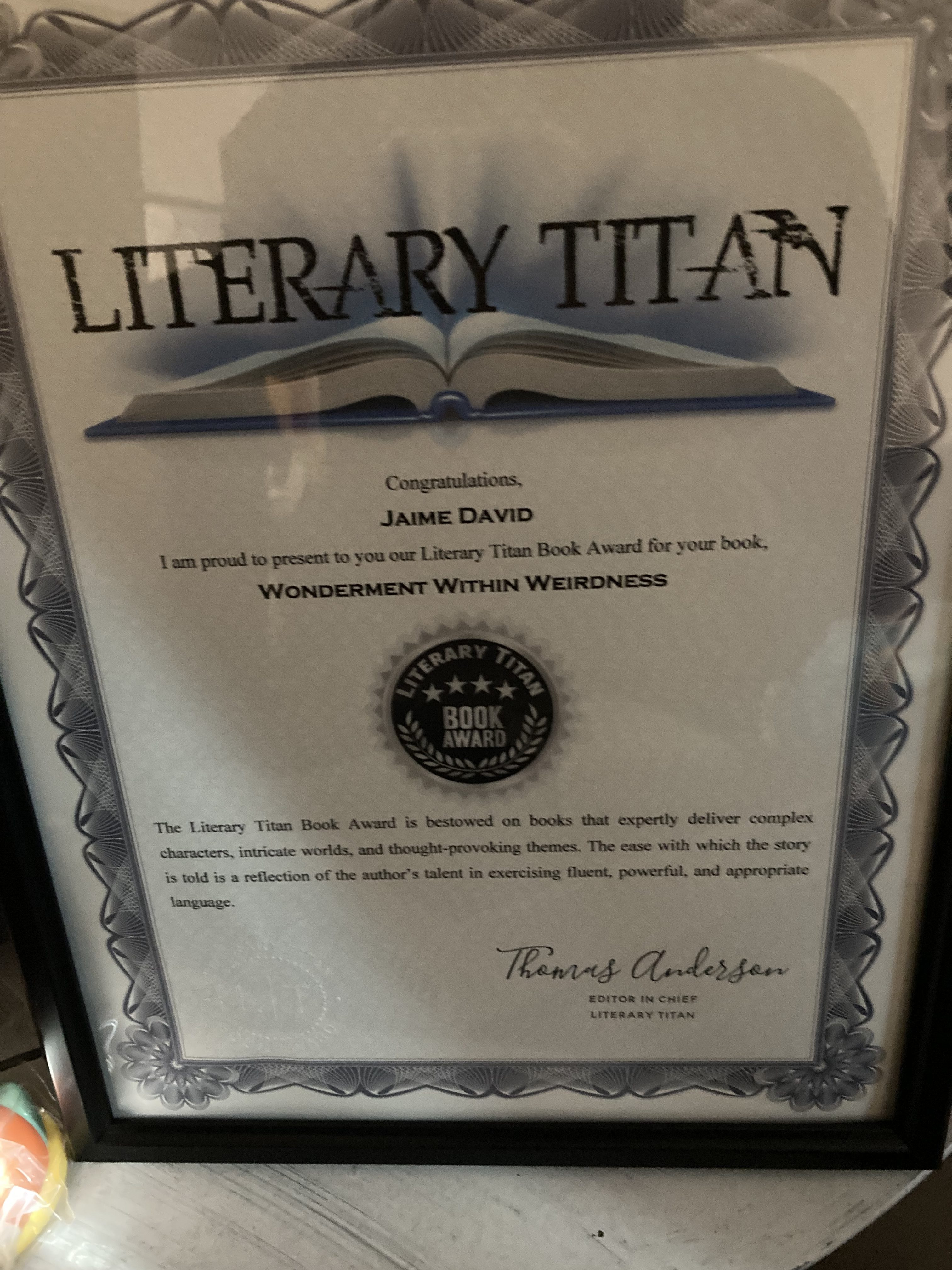
I write Wonderment Within Weirdness.
I write My Powerful Poems.
I write Some Small Short Stories.
I run The Musings of Jaime David.
I make music.
I make podcasts.
I write essays.
I create a ridiculous number of things.
I am not the author of Johann Sebastian Humpbach.
I did not write a children’s adventure about a singing whale.
I have never claimed that I did.
I have no connection to that book.
And I am not Jamie David.
Jamie David is spelled J-A-M-I-E.
She is the author of Johann Sebastian Humpbach, a book first published in 2009 by Chai Yo Maui Press. The book is 167 pages and follows a world-famous singing whale named Johann Sebastian Humpbach who disappears during his annual migration from Alaska to Hawaii.
So if you came here because you are looking for the author of Johann Sebastian Humpbach:
You have the wrong Jaime.
Or, technically, the wrong Jamie.
And that distinction is the entire reason this post exists.
So Who Is Jamie David?
The public information I can find about her paints a picture that is actually pretty fascinating.
Jamie David is described as a writer, artist, and former teacher living on the island of Maui.
She was born and raised in small-town Pennsylvania.
After college, she moved west and eventually settled in San Francisco during what the author biography describes as an exciting period in the city’s history.
Then, in 1986, she and her husband, Ralph, moved to Hawaii.
That is already quite a life.
Pennsylvania.
California.
Hawaii.
Teacher.
Artist.
Writer.
And eventually author of a children’s adventure story set around the Hawaiian islands.
There is a pretty obvious geographic thread running through that story.
Hawaii isn’t merely a backdrop in her writing.
It appears to have been a major part of her life.
And that makes Johann Sebastian Humpbach make a lot more sense.
This wasn’t somebody sitting in some random office trying to manufacture an exotic setting.
She actually lived there.
She knew the environment she was writing about.
She had spent decades in Hawaii.
And eventually, she turned that experience into a children’s story.
The Book Started With Her Students
This might be my favorite part of the whole story.
According to the author’s biography, during her years as a teacher, her middle-school English students frequently complained:
Why can’t we read something fun?
That complaint eventually became the spark for Johann Sebastian Humpbach.
She wanted to create a story that would be entertaining for students while also being informative.
She wanted something set in Hawaii.
And when she couldn’t find the kind of book she was looking for, she decided to write one herself.
That is actually something I can relate to.
Not the whale part.
Not the middle-school classroom part.
Definitely not the Hawaii part.
But the fundamental idea?
Absolutely.
You look around.
You don’t find the thing you want.
So eventually you think:
Fine.
I’ll make it myself.
That is basically how a lot of creative projects begin.
You have a problem.
You have an idea.
You have an itch that something isn’t quite right.
And eventually you stop waiting for someone else to solve it.
You create the thing.
That’s how books happen.
That’s how songs happen.
That’s how blogs happen.
That’s how podcasts happen.
That’s how weird little creative projects happen.
And apparently that’s how a singing whale ended up becoming a children’s novel.
Enter Johann Sebastian Humpbach
And what a title.
Johann Sebastian Humpbach.
I have to admit, the first time I saw that title, I immediately thought:
What the hell is this?
It is one of those titles that you cannot really ignore.
Johann Sebastian Humpbach sounds simultaneously like a famous classical composer, a German philosopher, and a whale.
And, as it turns out, he is the whale.
The world’s most popular singing whale, apparently.
Johann disappears during his annual migration from Alaska to Hawaii.
Meanwhile, twelve-year-old twins Keoni and Leilani receive a birthday surprise from their Auntie Pua and Uncle Kalani.
During a snorkeling trip, the twins discover a clue connected to Johann’s disappearance.
And suddenly, they are pulled into an adventure involving a missing whale, mysterious circumstances, family, and villains.
The book is essentially a middle-grade Hawaiian adventure story.
And honestly?
It sounds like a lot of fun.
There Are Twins
The protagonists are twelve-year-old twins named Keoni and Leilani.
That is an important detail because the story isn’t simply about a whale.
It’s about kids getting caught up in an adventure.
They find a clue.
They get involved.
They become part of the search.
And, according to the book description, they have to contend with Dr. Vile and his henchmen, who apparently want to silence the twins and prevent them from succeeding.
It has all the classic ingredients of a children’s adventure.
A mysterious disappearance.
A pair of young protagonists.
A beautiful setting.
A strange mystery.
Villains.
Danger.
Family.
And a giant singing whale.
It is a very different kind of book from anything I write.
Which makes the mistaken identity even funnier.
Imagine being a spammer who thinks they have found the author of a cheerful children’s Hawaiian whale adventure and instead emailing the guy who writes science-fiction weirdness and political essays.
That’s not even the same ocean.
And Apparently the Book Has an Environmental Message
There is another interesting detail that shows up in descriptions and reviews of the book.
One description of the book’s reception notes that it was written with middle-school students in mind and that the story includes a strong environmental message.
That makes sense.
If you’re writing a story about whales, Hawaii, migration, and the ocean, environmental themes are practically sitting there waiting for you.
And it seems like the educational side of Jamie’s background mattered.
She wasn’t simply trying to entertain.
She wanted to make something that could be enjoyable while also teaching something.
That’s a philosophy I respect.
Because children’s literature can do both.
It can be fun.
It can be ridiculous.
It can have singing whales.
And it can still leave a kid thinking about the world around them.
Jamie David Was a Teacher Before She Was an Author
This is another part of her story that I find important.
Her author biography identifies her as a former teacher.
And the book itself appears to have grown directly out of that experience.
Her students wanted something fun to read.
She couldn’t find exactly what she wanted.
So she created it.
That means the book wasn’t simply an abstract creative exercise.
It had a purpose.
She had an audience in mind.
She knew the age group.
She knew what students were asking for.
And she used that knowledge to build a story.
There is something very practical about that.
Sometimes creativity begins with a question:
What do people actually want?
In her case, the answer was apparently:
Something fun.
And so she wrote something fun.
She Was Also an Artist
And this is where the story gets even more interesting.
Jamie wasn’t only a teacher and writer.
Her author biography describes her as an artist as well.
That means her creative identity extends beyond the book.
She wasn’t simply somebody who happened to write one children’s novel.
She had an artistic life.
And perhaps that explains some of the visual and imaginative qualities of the project.
A book like Johann Sebastian Humpbach isn’t only about words.
It’s about creating a world.
Hawaii.
The ocean.
Whales.
Twins.
Family.
Villains.
Adventure.
Mystery.
All of that requires imagination.
And artists tend to think in worlds.
That’s something I understand.
I spend a lot of time doing the same thing, even though my medium is different.
She Even Made a Companion Coloring Book
One of the stranger things I discovered while researching her was that Jamie David apparently created a companion coloring book connected to Johann Sebastian Humpbach. A printing-industry article from 2017 specifically describes the book as a Hawaii-based early-reader novel and notes that she created a companion coloring book.
And I love that.
Because it shows that she wasn’t thinking about the story as just one object.
She created something that could extend beyond the book itself.
A story becomes a coloring book.
A character becomes an image.
A world becomes something children can interact with.
That’s a pretty cool way to think about storytelling.
And again, I find myself thinking about my own creative work.
I don’t necessarily want everything I create to exist in isolation either.
A poem can become a song.
A podcast episode can become a transcript.
A blog post can inspire another post.
A book can become part of a series.
An idea can mutate into something else.
Creative work doesn’t always have to remain in the form in which it was born.
Sometimes it evolves.
And Apparently She Took the Book Into the Real World
One of the things I found while researching her was a printing-industry article mentioning that Jamie David would set up a table at her town’s weekly street fair during the summer to sell Johann Sebastian Humpbach.
That detail makes her feel much more real to me.
Because it is easy to look at an author online and imagine some abstract person who simply exists as a name attached to a book.
But this was apparently someone physically going out into her community with copies of her book.
A table.
A street fair.
Copies of the book.
Talking to people.
Selling it.
Connecting with readers.
That’s what independent publishing looked like long before the current creator economy became a buzzword.
And honestly, I respect the hell out of that.
Because getting a book into the world is one thing.
Getting people to actually pick it up is another.
She Also Had a Very Different Publishing Journey From Mine
Johann Sebastian Humpbach was published in 2009 by Chai Yo Maui Press. The book has a 2009 publication date and carries ISBN 9780615318400.
That’s worth remembering.
That was a very different internet.
Social media looked different.
Amazon looked different.
Self-publishing looked different.
Blogs looked different.
Digital marketing looked different.
The entire online publishing ecosystem was different.
And yet, she still managed to put a book into the world.
That’s something I can appreciate.
Because regardless of what genre you write, there is a certain courage involved in publishing.
You are taking something that existed inside your head and saying:
Here.
Other people can read this now.
That’s terrifying.
And exhilarating.
And sometimes both at the same time.
Then There Is the Part Where I Keep Getting Mistaken for Her
Now we get to my favorite part.
The stupid part.
The ridiculous part.
The part that caused this entire post to exist.
Spammers keep confusing me with her.
Not once.
Not twice.
Enough times that I have written about it publicly.
The first major incident I remember involved an email that was very obviously meant for the author of Johann Sebastian Humpbach.
It was an absurdly enthusiastic promotional pitch.
The person writing it apparently believed they were talking to the author of the singing-whale adventure.
Except they weren’t.
They were talking to me.
I was sitting there reading an email about Johann Sebastian Humpbach thinking:
Who the hell are you talking to?
Because I didn’t write that book.
I don’t have a singing whale.
I don’t have twins named Keoni and Leilani.
I don’t have a Hawaiian children’s adventure series.
I have absolutely no idea why you are talking to me about this.
And then I realized:
Oh.
You think I’m her.
And That’s When the Name Difference Became Really Funny
Jamie.
Jaime.
One letter.
That’s it.
One letter.
And apparently that is enough to confuse automated systems, spammers, scrapers, databases, and people who apparently don’t read very carefully.
I have J-A-I-M-E.
She has J-A-M-I-E.
That’s the difference.
And yet, online, a single letter can disappear remarkably easily.
Someone searches for a name.
Someone copies an email address.
Someone scrapes an author database.
Someone generates a marketing message.
Someone looks at search results.
Someone sees “Jamie David.”
Someone sees “Jaime David.”
And apparently the brain goes:
Close enough.
No.
Not close enough.
But I Don’t Blame Her
This is important.
I don’t blame Jamie David for any of this.
At all.
She didn’t send the spam emails.
She didn’t tell anybody to confuse us.
She didn’t create my identity.
She didn’t create the internet.
She didn’t invent automated scraping.
She didn’t invent lazy marketing.
She didn’t invent scammers.
And she certainly didn’t ask to share a nearly identical name with me.
She’s just another person who happens to have a name that looks extremely similar to mine.
That’s it.
If anything, I feel a strange sense of solidarity with her.
Because I have to wonder whether she has ever been confused with me.
Maybe she has.
Maybe someone has contacted her about one of my books.
Maybe someone has asked her about The Musings of Jaime David.
Maybe someone has assumed she writes science fiction.
Maybe somebody has looked at the name and never bothered to check the spelling.
I have no idea.
But it would be completely unsurprising.
Because This Isn’t Really a Jamie Problem
It’s an internet problem.
It’s an attribution problem.
It’s a metadata problem.
It’s an algorithm problem.
It’s a “people don’t read carefully” problem.
And it is especially a problem when authors are involved.
Because authorship matters.
If you attribute the wrong book to the wrong person, you are not just making a funny mistake.
You are attaching somebody else’s work to someone else’s identity.
Imagine someone searching for me and seeing Johann Sebastian Humpbach listed under my name.
Or someone searching for Jamie and finding Wonderment Within Weirdness.
That’s not just confusing.
It’s inaccurate.
And eventually, inaccuracies become part of the digital record.
Search engines index things.
Databases copy things.
Websites scrape things.
People repeat things.
And suddenly, a mistake that started with one lazy email can appear in five different places.
Then twenty.
Then fifty.
Then somebody else assumes those fifty places must all be correct because they’re saying the same thing.
That’s how misinformation spreads.
Not necessarily through some grand conspiracy.
Sometimes through repetition.
And That’s Why I Keep Clarifying It
I know it is funny.
I know I have joked about it.
I know that “No, I’m not the singing-whale author” is a pretty ridiculous sentence to have to say.
But I also think there is value in being precise.
So let’s do this one more time.
Jamie David wrote Johann Sebastian Humpbach.
Jaime David wrote Wonderment Within Weirdness.
Jamie David is associated with Hawaii, children’s fiction, teaching, and art.
Jaime David is associated with The Musings of Jaime David, books, music, podcasting, essays, and a completely different creative universe.
Different people.
Different spelling.
Different books.
Different lives.
One extremely annoying letter.
And Honestly, Her Book Sounds Pretty Damn Fun
Now that I have actually researched Jamie David instead of simply knowing her as “the person scammers confuse me with,” I have to admit something.
Johann Sebastian Humpbach actually sounds fun.
A singing whale?
Missing during migration?
Two twelve-year-old twins?
Hawaii?
A mysterious clue?
Villains?
Adventure?
Come on.
That’s a pretty solid children’s adventure premise.
And the fact that the book grew out of her experience as a teacher makes it even more interesting.
She saw a gap.
Her students wanted something fun.
She couldn’t find the right thing.
So she wrote it.
That’s creativity.
And I can respect that even if it is completely different from what I do.
Maybe That’s the Funny Lesson in All of This
When this whole thing first started, I mostly thought it was funny.
Then it became annoying.
Then it became something I felt I needed to clarify.
But after actually digging into Jamie David’s story, I think I’ve landed somewhere else.
It’s kind of fascinating.
Because I keep finding people who share some variation of my name.
And every single one of them has a completely different story.
One Jaime David became a major Dominican political figure.
Another Jaime M. David built a career in fashion and lifestyle communications.
Another Jaime David became a BERNINA educator and textile artist.
And Jamie David wrote about a singing whale and two adventurous Hawaiian twins.
And then there is me.
The sci-fi-writing, poetry-writing, blogging, podcasting, music-making, independent-creative-project-making Jaime David.
That’s a pretty weird collection of people.
And I love it.
Names Don’t Own Us
Maybe that’s the bigger lesson here.
We spend a lot of time thinking about names as though they are unique identifiers.
But they’re not.
They are shared.
They’re inherited.
They’re sometimes changed.
They’re sometimes chosen.
And they’re constantly reused.
What makes a person unique isn’t the name.
It’s what they do with it.
Jamie David took her name and wrote a children’s adventure.
She taught.
She created art.
She lived in Hawaii.
She made a book for young readers.
She created a companion coloring book.
She apparently brought her book into her community and sold it at street fairs.
She built a creative life around her interests.
I took my name and built something else.
A blog.
Books.
A podcast.
Music.
Essays.
Poetry.
Whatever else I decide to make.
And neither of us needs to be the “real” Jaime or Jamie David.
We are both real.
Our work is real.
Our identities are real.
Our stories are separate.
So, To Jamie David
If you ever happen to stumble across this:
Hi.
I’m the other one.
The one with the A-I instead of the A-M-I.
The one who keeps getting your spam.
The one who apparently has had to explain to the internet that he did not write about a singing whale.
I have never met you.
I don’t know you personally.
But after researching your story, I can say this:
I think what you did is pretty cool.
You saw something your students wanted.
You couldn’t find it.
So you wrote it.
You turned your experience as a teacher into a children’s adventure.
You created a Hawaiian setting.
You made a singing whale the center of the story.
You created a companion coloring book.
You took the book into the real world.
You built something.
And ultimately, that’s what I respect.
Because that’s what I’m doing too.
Just differently.
And To the Spammers
Please.
For the love of God.
Look at the spelling.
That’s all I’m asking.
If the email says Jaime, maybe don’t assume you’re talking to Jamie.
If the website says one thing, check the website.
If the book you’re talking about doesn’t appear anywhere in the person’s bibliography, maybe reconsider before sending the pitch.
And if you’re using some automated system that has decided Jamie and Jaime are interchangeable?
Fix your damn database.
I promise you, the world will survive.
And maybe I’ll stop receiving emails about a whale I didn’t write about.
Although, admittedly, there is something hilarious about the fact that this has become such a recurring theme in my life that I am now writing an entire essay about the woman who wrote Johann Sebastian Humpbach.
Only on the internet.
The Final Distinction
So let’s leave this as the definitive version.
Jamie David — spelled J-A-M-I-E — is the author of Johann Sebastian Humpbach, a 2009 children’s adventure novel about a missing singing whale, two Hawaiian twins, and an oceanic mystery. She is described as a writer, artist, and former teacher who lives on Maui and has a background rooted in Pennsylvania, California, Hawaii, education, and art.
Jaime David — spelled J-A-I-M-E — is me.
I write different books.
I make different music.
I run a different blog.
I make a different podcast.
I have a different life.
And I am not responsible for Johann Sebastian Humpbach’s disappearance.
If Johann is missing, please contact Jamie.
Not Jaime.
Please.
I have enough going on.
But seriously, I’m glad I finally wrote this.
Because for a while, Jamie David was just “that other author whose name keeps getting attached to my email inbox.”
Now I know a little more about her.
And what I found was not some mysterious internet identity.
It was a person who became a teacher, an artist, and an author; who saw something her students wanted and decided to create it; who turned Hawaii into the setting for an adventure; and who put a singing whale named Johann Sebastian Humpbach into the world.
That’s actually a pretty damn good story.
It just isn’t mine.
And that’s okay.
Because the whole point of having a name isn’t to be the only person who has it.
It’s to live a life that gives the name meaning.
Jamie David has hers.
I have mine.
And somewhere between Pennsylvania, San Francisco, Hawaii, New York, the internet, a missing whale, a bunch of scammers, and one annoyingly important letter, our stories accidentally collided.
Honestly?
I’m kind of glad they did.
Because otherwise, I never would have discovered Johann Sebastian Humpbach.
And apparently, I never would have had the opportunity to write a blog post explaining why I am not the person who wrote it.
Life is weird.
The internet is weird.
Names are weird.
And apparently, whales are weird too.