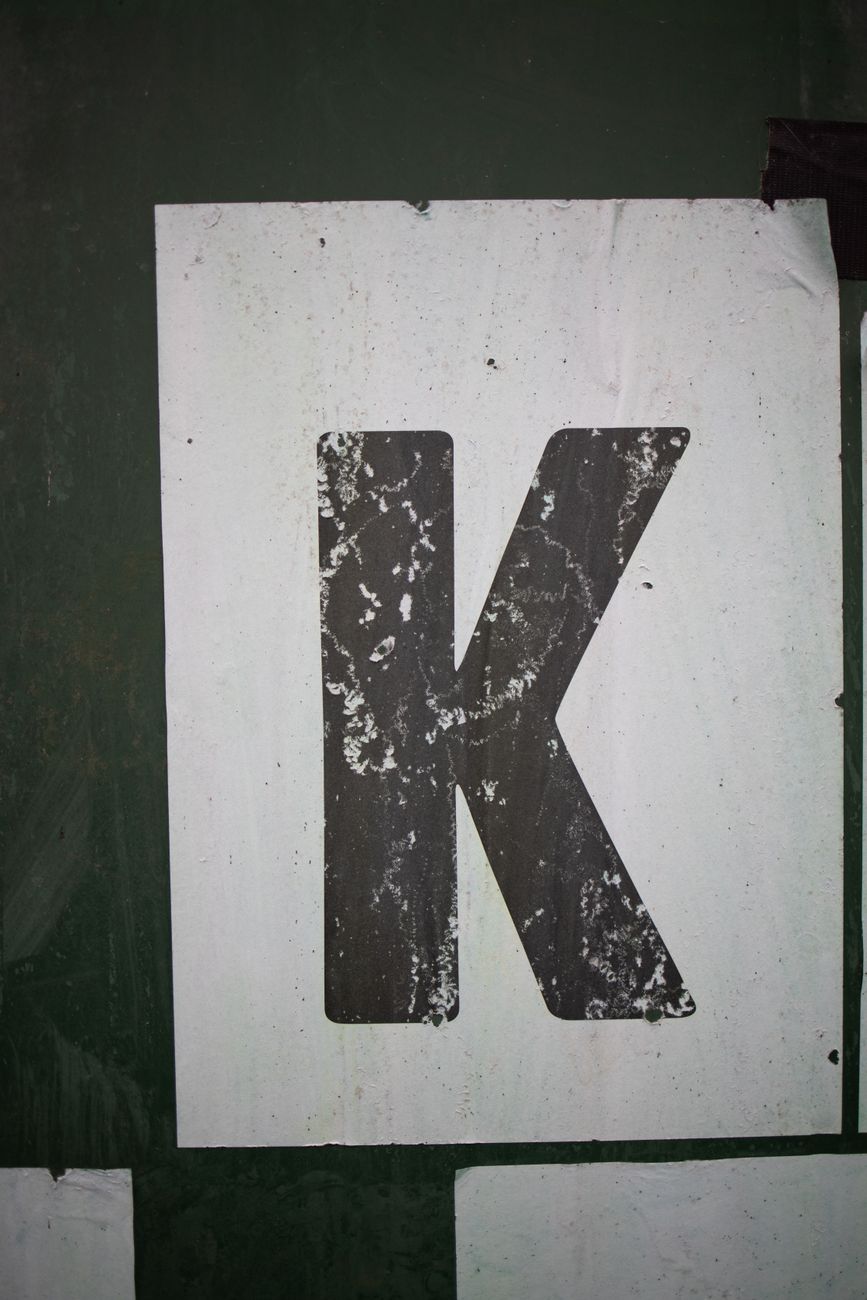


There are many phrases in this world that annoy me. Corporate buzzwords. Fake positivity. Passive aggressive nonsense. People saying “we should totally hang out sometime” when both of you know that is never happening. But there is one response, one microscopic combination of letters, one digital communication war crime that rises above the rest. One phrase so unbelievably lazy, dismissive, cold, and irritating that every time I see it, a tiny part of my soul flatlines.
“K.”
Just that. K.
Not “okay.” Not “ok.” Not “alright.” Not even the slightly chaotic but acceptable “kk.” Just a lonely little “k” sitting there like a digital middle finger.
And I know some people are gonna say, “well maybe they’re busy.” No. I do not care. Because typing “okay” takes maybe half a second longer than typing “k.” You already opened the message. You already looked at it. You already responded. So what exactly was saved here? What incredible amount of time efficiency was gained? Did NASA recruit you mid conversation? Were you suddenly called into a hostage negotiation? Did your phone battery have 0.0001% left and you sacrificed the other letters for survival?
Because otherwise, what are we doing here?
Especially when I send an actual thoughtful response. That is where “k” becomes truly infuriating. I could send somebody an entire paragraph. A detailed response. An actual conversation. Maybe I am explaining something important, talking about an idea, telling a story, venting about something, or even just trying to have a normal human interaction. And after all that effort, after all those words, after all that thought, the response I get back is:
“K.”
Are you kidding me?
That is not a response. That is the conversational equivalent of someone shutting a door in your face halfway through a sentence. It feels like I just threw a fully cooked meal onto a plate for someone and they stared at it for two seconds before saying, “aight.” Not even enough respect to capitalize the K sometimes either. Just a lowercase “k” sitting there in all its emotionally vacant glory.
And the worst part is how weirdly aggressive it feels.
Because let’s be honest here. “K” does not read as neutral. Nobody on Earth reads “k” and thinks, “wow, what a warm and enthusiastic response.” No. “K” feels annoyed. It feels irritated. It feels passive aggressive even when maybe it is not intended that way. It feels like someone responding while rolling their eyes so hard they can see their own brain.
Imagine talking to someone in real life like that. Imagine you are telling somebody a story face to face and when you finish, they just stare at you blankly and go, “k.” You would immediately assume they hated you. You would think they were angry. Or bored. Or trying to end the conversation as fast as possible.
That is because human communication is not just about words. It is about effort. Energy. Tone. Engagement. And “k” has the energy of somebody throwing a single stale cracker onto the table and calling it dinner.
Now look, I understand not every message needs a five paragraph response. I am not asking for people to write essays every single time. Sometimes short responses are fine. Sometimes there is not much to say. That is normal. But there is a gigantic difference between a simple response and a completely dead one.
“Okay” feels normal.
“Gotcha” feels normal.
“Sounds good” feels normal.
Even “lol” at least acknowledges humanity still exists.
But “k” feels like the emotional equivalent of being left on read while technically not being left on read.
And yes, there are layers to this too. Because context matters. A “k” from your boss somehow feels terrifying. A “k” from a friend feels dismissive. A “k” from someone you are arguing with feels like they are trying to start World War III. A “k” from someone you like romantically? Oh congratulations, now you are going to spend the next three hours wondering if they hate you.
The single letter “k” has somehow evolved into one of the most emotionally loaded responses in digital communication history.
And honestly, I think part of why it annoys me so much is because it represents this larger problem with modern communication in general. People have become so weirdly disconnected from conversations. Everything is rushed. Everything is shortened. Everything is compressed into the smallest possible amount of effort. We are communicating faster than ever before while somehow saying less than ever before.
Conversations now sometimes feel like people are trying to speedrun human interaction.
And again, I am not demanding constant deep emotional speeches. I am not asking every text conversation to become a philosophical debate about existence itself. But there is something deeply irritating about the absolute bare minimum effort possible becoming normalized.
Especially when the other person is clearly trying.
That is the key thing here. Effort should at least somewhat match effort. If somebody sends you an actual message, responding with “k” feels like conversational malpractice. It feels like somebody handing you a handwritten letter and you responding by throwing a sticky note at their forehead.
And I know somebody reading this right now is thinking, “wow this dude is really angry about one letter.”
Yes. Yes I am.
Because somehow that one letter manages to radiate annoyance in ways entire paragraphs cannot.
Honestly, sometimes “k” feels worse than no response at all. At least being left on read has ambiguity. Maybe they got distracted. Maybe they forgot. Maybe life happened. But “k” confirms they saw your message and actively decided this single consonant was all you were worth in return.
It is honestly impressive in a horrible way.
And do not even get me started on the variations of it either. Because there are subclasses of “k” energy.
Lowercase “k” is cold and dismissive.
Uppercase “K” feels actively hostile.
“K…” feels like somebody preparing for murder.
And then there is “Mk.” Which somehow feels like an exhausted parent trying not to lose their sanity entirely.
Digital communication has become its own weird language where punctuation and capitalization can completely change emotional meaning. A period at the end of a sentence suddenly feels aggressive. Multiple exclamation points can feel fake. No punctuation can feel detached. And “k” became the king of all emotionally cursed responses.
What fascinates me too is how universal this annoyance seems to be. So many people hate “k.” Entire memes exist about this. Entire online discussions exist about this. People immediately understand the emotional vibe of it without explanation. Humanity collectively agreed that this one letter carries the energy of disappointment, annoyance, boredom, or emotional shutdown.
That is honestly kind of incredible.
Language evolved over thousands of years and somehow we arrived at this.
One letter.
Pure irritation.
And maybe some people genuinely do not mean anything by it. Maybe for some people it really is just shorthand. Maybe they truly are neutral when they send it. But communication is not just about intention. It is also about perception. And if millions of people collectively interpret “k” as irritated or dismissive, maybe there is a reason for that.
Maybe because it feels incomplete.
Maybe because it lacks warmth.
Maybe because it feels like somebody trying to end a conversation instead of participate in one.
Or maybe because it just looks ugly sitting there on the screen like some emotionally abandoned letter fragment.
Honestly, even “👍” sometimes feels more human than “k.”
At least the thumbs up has shape. Presence. Energy. “K” just looks like somebody gave up halfway through typing.
And there is also a weird imbalance that happens when one person clearly cares more about the conversation than the other. You can feel it instantly. One person is engaged. The other is responding with the verbal equivalent of elevator music. “K” becomes the ultimate symbol of that imbalance. It tells you immediately who is carrying the interaction.
Nobody wants to feel like they are talking at somebody instead of with somebody.
That is what “k” does.
It transforms conversations into brick walls.
And listen, maybe this sounds dramatic. Maybe it is dramatic. But honestly? Human interaction matters. The little things matter. Tone matters. Effort matters. People can absolutely feel when someone is emotionally checked out of a conversation. Sometimes tiny things communicate massive feelings.
That stupid little letter somehow communicates exhaustion, irritation, boredom, indifference, and passive aggression all at once.
Which honestly is almost impressive linguistically.
Like congratulations, “k.” You somehow became the most efficient delivery system for negative conversational energy imaginable.
And the thing is, I do not even think people realize how often tiny responses shape interactions. A slightly warmer response can completely change the feeling of a conversation. A little enthusiasm can make somebody feel heard. Even basic acknowledgment can matter more than people realize.
But “k” feels like anti warmth.
Anti conversation.
Anti human connection.
It is the response equivalent of fluorescent office lighting.
Cold. Harsh. Soulless.
And maybe part of my hatred for it comes from how common it has become. Because once you notice it, you start seeing it everywhere. Texts. DMs. Comments. Group chats. Everywhere you go, there is always somebody lurking with their tiny little “k” loaded and ready to destroy the vibe instantly.
It can kill momentum in seconds.
You could be having a genuinely fun conversation and suddenly:
“K.”
Boom. Atmosphere dead. Conversation buried. Social energy annihilated.
It is honestly almost comedic how powerful it is.
One letter should not have this much destructive capability.
And yes, before anybody says it, I know there are bigger problems in the world. Obviously. But sometimes daily annoyances are what stick with you the most because they happen constantly. Tiny frustrations repeated over and over become their own special category of rage.
And “k” is absolutely one of them.
Because at its core, I think what annoys me is not even the letter itself. It is what it represents. Minimal effort. Disengagement. Emotional laziness. The feeling of somebody barely participating while technically still responding.
It feels like the modern internet distilled into a single character.
Shortened attention spans.
Compressed communication.
Reduced effort.
Everything becoming smaller, faster, emptier.
And honestly? I hate that.
I miss when conversations actually felt alive sometimes. When people bounced ideas off each other. When interactions had energy. When communication did not constantly feel like people trying to escape the conversation as quickly as possible.
Maybe that makes me old fashioned. I do not know.
But I do know this.
If I send somebody an actual thoughtful message and all I get back is “k,” I immediately lose interest in continuing the conversation. Because why am I putting energy into something the other person clearly does not care about?
Conversation is a two way street.
Not one person dragging the other through digital quicksand.
So yes, WordPress daily prompt, my answer is absolutely “k.”
I cannot stand it.
That one tiny letter somehow became one of the most irritating phrases in modern communication.
And every single time I see it pop up on my screen, I swear I can physically feel my soul leave my body for half a second.