
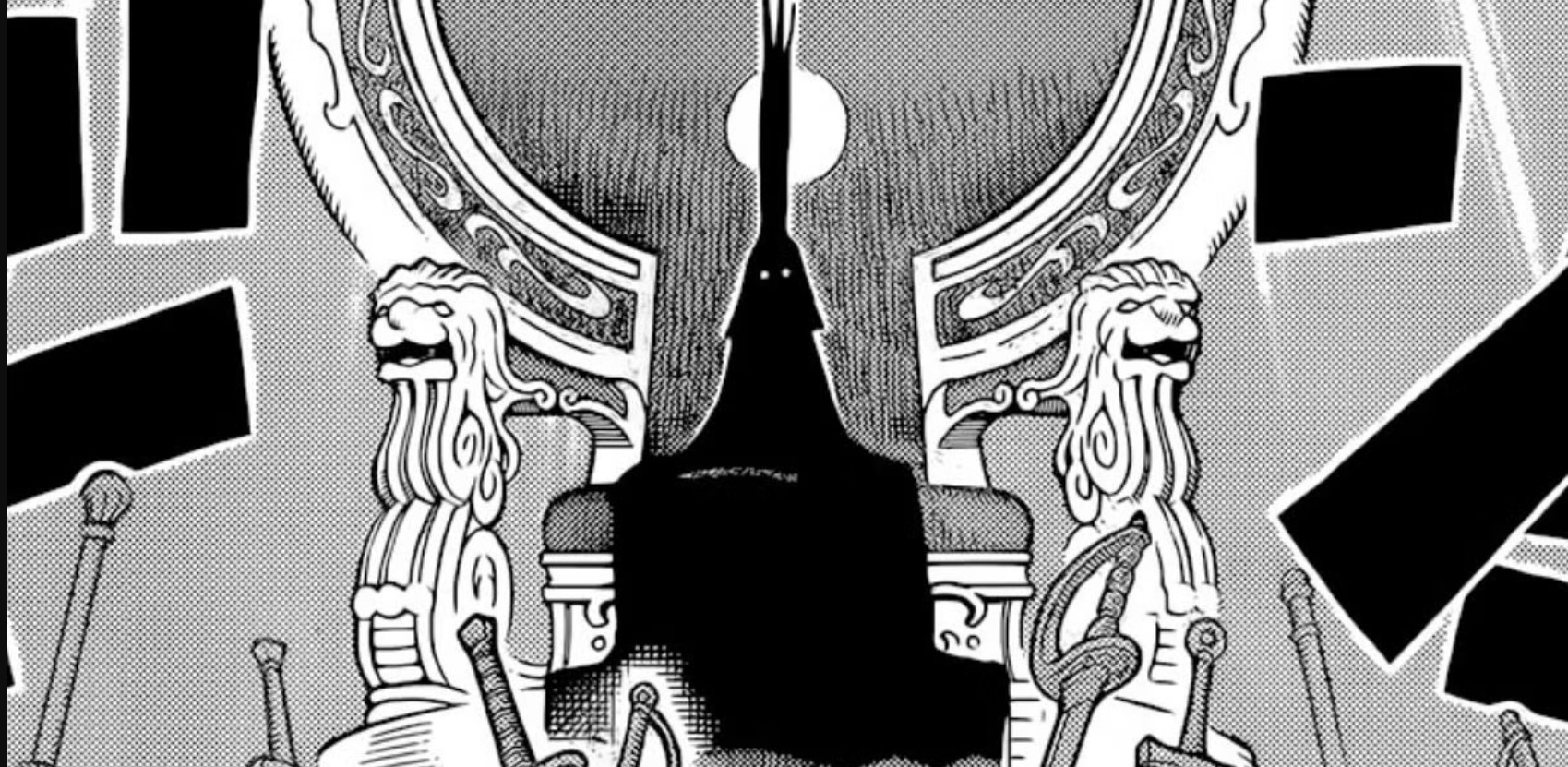
In the vast world of One Piece, the villainous forces are often complex and multifaceted. Characters like Crocodile, Doflamingo, and Kaido are all embodiments of different aspects of ambition, power, and control. However, amidst these more traditional villains, Imu stands out as a potential tragic villain—a reluctant ruler, trapped in a position of power, manipulated by forces far greater than themselves. Imu might not be the true orchestrator of the World Government’s dark deeds, but instead a puppet—a person who, through a mix of fate and manipulation, has been thrust into a role they never wanted or even sought.
Imu’s introduction in the story is anything but typical. They are not the flashy antagonist we might expect but rather a shadowy figure who is rarely seen. Imu’s most prominent appearance occurs during the Reverie arc, where we see them seated on a throne, invisible to most of the world, hiding behind the Gorosei. This first interaction with Imu sets the stage for their mysteriousness—they are hidden from the world, manipulating things from behind the curtain, and giving orders from the shadows. But what if this hiding isn’t about exerting control but about hiding from it? What if Imu doesn’t actually want to be at the top of the world’s power structure? Perhaps Imu is forced to remain in the shadows, with the Gorosei acting as the real power behind the throne. The Gorosei have always been presented as the true puppeteers, with Imu as the puppet—and their role could be designed to create a figurehead who takes the blame for the corruption of the World Government.
While we’ve seen Imu give a few commands (such as suppressing Cobra and later ordering the assassination of certain world leaders), their true role appears more reactive than proactive. Imu doesn’t seem to be a decision-maker in the traditional sense. When Cobra confronts Imu, Imu does not lash out or demand action. Instead, they stay silent and observe Cobra, almost as though they are waiting for something. This could indicate that Imu is powerless to act on their own and that they’re forced to remain in this position due to the influence of the Gorosei or other unknown forces. In fact, this silence is arguably one of Imu’s most telling traits. It could reflect an inner struggle between the power they hold and their desire to escape from it. Their actions—such as assassinating Cobra—could be driven not by a desire for complete control, but by a duty they feel trapped by. They may even fear that stepping out of the role they’ve been forced into could have catastrophic consequences.
One of the most crucial moments in the story that hints at Imu’s reluctance as a villain is their interaction with Cobra. When Cobra meets Imu, he is shocked by the presence of this hidden ruler, and Imu does not fight for power in the way most traditional villains would. Instead of using threats or intimidation, Imu waits to see how Cobra will react, almost as though they are testing the waters for a way out of their burden. Perhaps Cobra, sensing something in Imu, could have offered them an escape, had he acted differently. Cobra’s reaction is more out of fear than understanding, and it’s clear that Imu’s silence could be reflective of their own inner conflict. They have been placed in a position of absolute power, but they are not the one pulling the strings—they are a puppet in a game controlled by the Gorosei. This moment could represent a tragic opportunity lost, with Imu perhaps subconsciously hoping Cobra would find a way to offer them freedom from the chains of power. Instead, Cobra’s fear and the Gorosei’s oppressive rule trap Imu deeper into their role, further reinforcing their tragic status as someone forced into villainy against their will.
One of the strongest indicators of Imu’s tragic status is how they are manipulated by the Gorosei. While it’s true that Imu has some level of influence, it’s often the Gorosei who take action, give orders, and determine the fate of the world. The Gorosei are portrayed as being extremely powerful, and they clearly treat Imu as a figurehead. There’s no indication that Imu truly controls the Gorosei—they seem to be puppeteered into their role. Imu’s powerlessness, in this sense, mirrors the experience of many tragic characters in literature—people who hold immense power but are ultimately controlled by forces beyond their control. Imu, in this context, could be seen as a tragic ruler trapped in a gilded cage, forced to play a role that might not align with their true desires. It’s a classical tragic trope, where the figurehead ruler is ultimately powerless and controlled by hidden forces.
Another possible clue to Imu’s tragic nature lies in their reaction to the Void Century and the Poneglyphs. Imu, as the ruler of the world, has likely been witnessing the oppression caused by the World Government for centuries. Yet, we’ve never seen Imu take pleasure in the suffering that the World Government causes. In fact, they might even resent it. The destruction of the ancient kingdom and the cover-up of the Void Century could weigh heavily on Imu’s conscience. They might be trying to hide the truth not because they want to control the world, but because they feel responsible for the atrocities committed by the World Government. Imu’s silence on these issues could be a sign of guilt and remorse for the things they’ve been forced to uphold.
Finally, if we accept the premise that Imu’s villainy is reluctant, we have to consider the possibility of a redemption arc. What if, after seeing Luffy’s journey and his desire for freedom, Imu begins to realize that they are not bound to the throne? That they can choose a different path, just as many other characters have done in the story? Luffy’s capacity for forgiveness and understanding could serve as a catalyst for Imu’s eventual rebellion against the Gorosei. The final battle could be framed not just as a clash of ideals but as a struggle for freedom, where Imu, the reluctant villain, is finally freed from their own chains.
Imu could very well be a tragic villain—someone who was forced into power and trapped by the systems around them. Their role in the story is not one of ambition or domination but one of reluctance and subjugation. Imu’s actions could reflect the inner turmoil of someone who never sought to be a ruler and who may be desperate for an escape from the very system they uphold. Their tragic journey could follow the narrative of someone trapped in a role they did not choose, longing for freedom and redemption.
This theory not only aligns with the recurring One Piece themes of freedom, manipulation, and growth but also offers a deeper understanding of Imu’s role in the overall story. Instead of being the ultimate villain, Imu could represent a tragic figure—one who, through circumstance and manipulation, became a villain when they were never meant to be one.